Reviewed · WHITE TEMPLE & BLUE TEMPLE TOURS
Chiangma: Wat ban den, Blue Temple & Sticky Waterfall.
The star of this outing is Bua Thong Sticky Waterfall, where mineral-coated limestone gives your feet surprising grip. You can walk and climb up the flowing rock instead of merely looking at the water from a viewpoint. I also like Wat Ban Den for its colorful zodiac pagodas and quiet Lanna-style buildings, a sharp change from Chiang Mai’s more familiar city temples.
The second strong point is the personal service. Didi and Peter handled one recent outing, with Peter taking photos and videos that were sent to the guests by AirDrop. Hotel pickup, drinking water, and a small group of no more than eight make the $57 price easier to justify. One caution: the advertised title mentions a Blue Temple, but the stated schedule includes Wat Ban Den and Bua Thong Sticky Waterfalls only, so confirm the exact stops before paying.
Key points at a glance
- Climb a limestone waterfall: Bua Thong’s textured rock lets you walk upward beside flowing water with less slipping than you might expect.
- See Wat Ban Den’s twelve zodiac pagodas: Each pagoda represents a Chinese zodiac sign and adds a very different look to the temple grounds.
- Walk to the Seven-Colored Fountain: A short wooded trail leads to the sacred source of the waterfall.
- Use hotel, bus station, or airport pickup: Transport is arranged within Chiang Mai city and includes a driver.
- Keep the group small: The tour accepts up to eight people, and private-feeling departures may be possible when few people book.
- Pack for both temple and water: Cover shoulders and knees at the temple, then bring swimwear, water shoes, sunscreen, and a shoulder-covering cloth for the fountain.
Wat Ban Den and its twelve zodiac pagodas
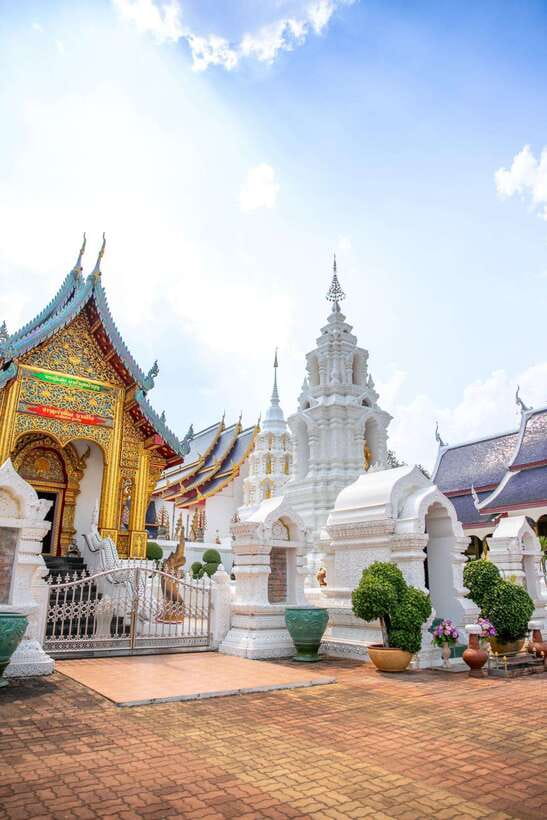
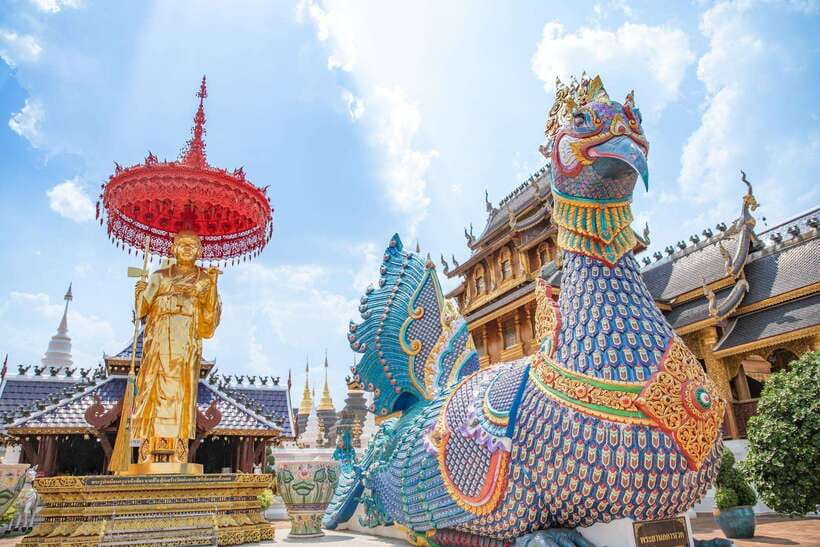
Your first stop is Wat Ban Den, also called Wat Bandensali Si Mueang Kaen, in Mae Taeng district. The drive from Chiang Mai takes about an hour, so this is not a quick city-temple visit. You get a look at the countryside outside central Chiang Mai, then about an hour to walk through the temple grounds with your guide.
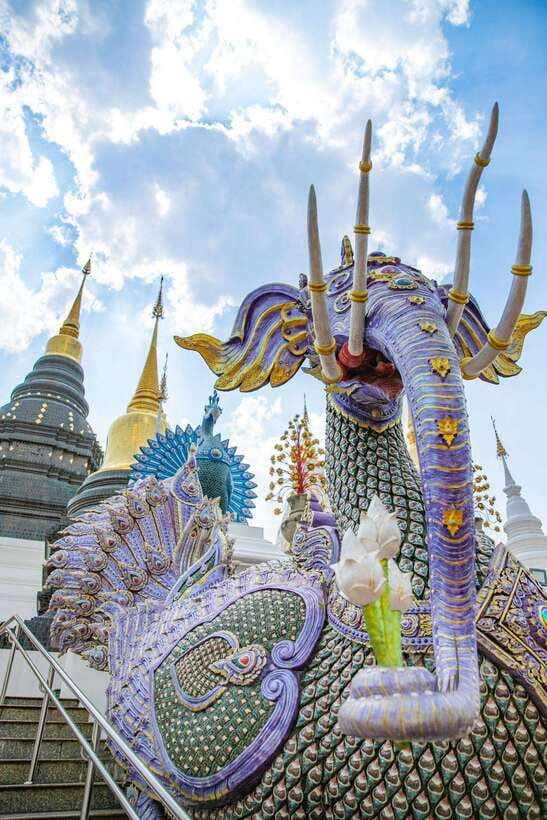
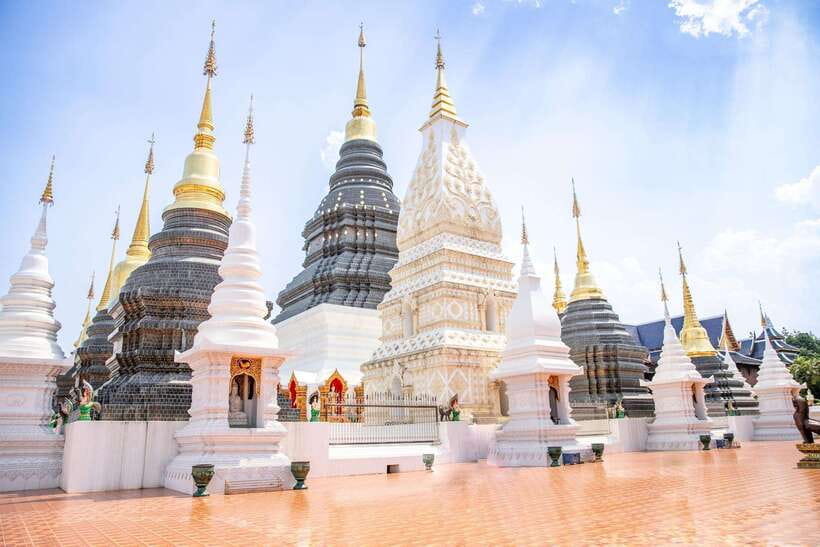
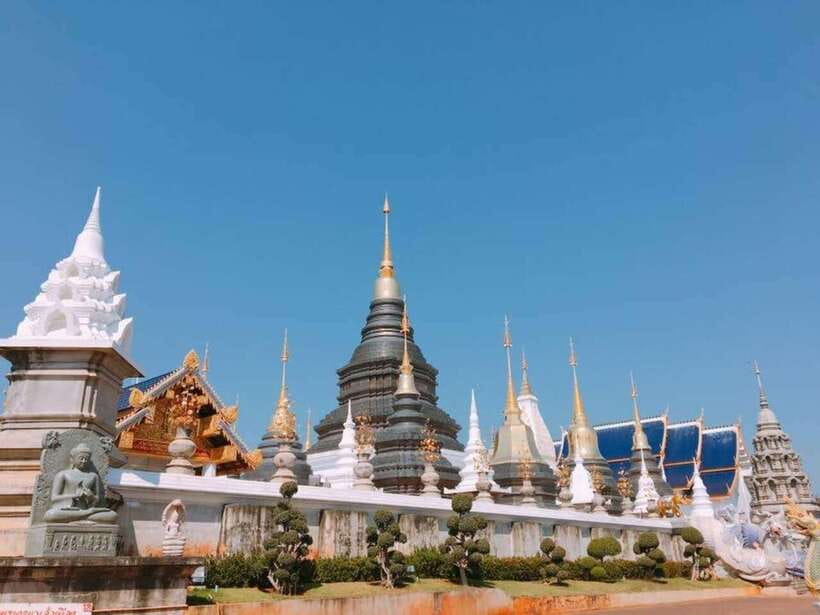
The complex is known for its twelve zodiac pagodas. Each one represents a sign of the Chinese zodiac, and the group of pagodas gives the site its most distinctive feature. Colorful mosaics, carved details, and repeated decorative patterns make this a rewarding stop if you enjoy architectural photography.
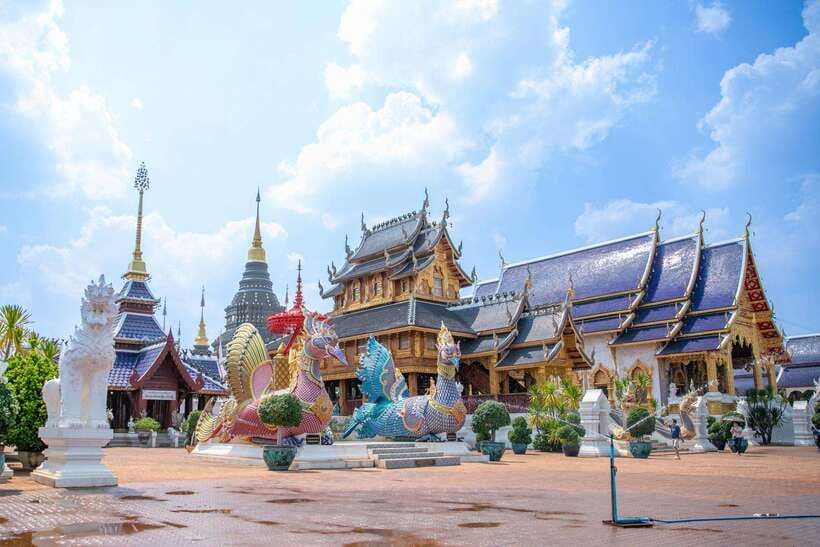
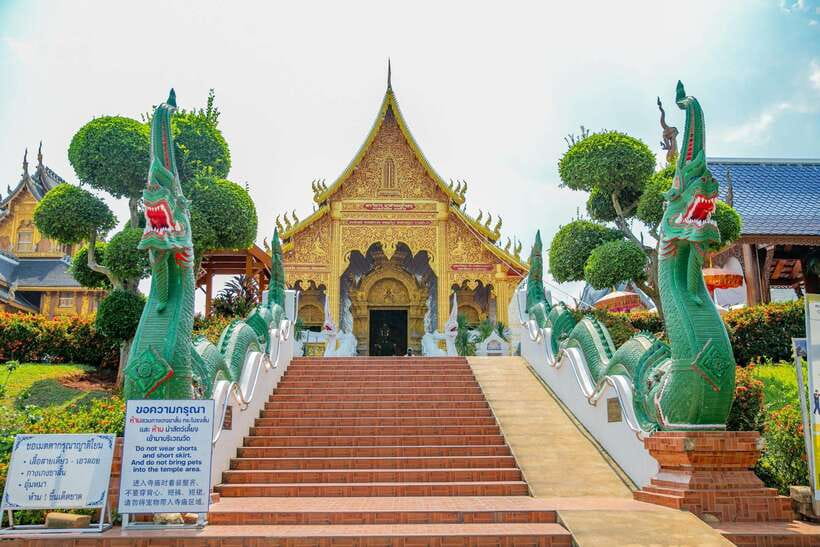
The temple also shows traditional Lanna design. Look for curved rooflines, decorated gables, and detailed woodwork. The main hall, or ubosot, contains Buddha statues and murals illustrating Buddhist teachings. Your guide can help you understand what you are seeing, but this is still a place where a slow walk and close look matter more than rushing from one building to the next.
I like Wat Ban Den because it offers a different visual experience from the old temples in Chiang Mai’s center. The buildings are ornate and colorful, but the grounds are described as peaceful rather than crowded. That quiet gives you time to notice roof decorations, carved surfaces, and small architectural details that are easy to miss on a fast city tour.
Dress with temple etiquette in mind. Women should cover their shoulders and knees before entering the temple area. Carrying a light scarf or shawl is useful, especially since it can also help at the sacred fountain later in the day.
More Temple and Waterfall Tours in Chiang Mai
- Chiang Mai: Doi Suthep Temple and Waterfall by Songtaew Trio
★ 4.7 · 429 reviews - Chiang Mai: Elephants, Sticky Waterfalls, Market and Temple
★ 4.9 · 227 reviews - Visit Dantewada(Angel Land), Blue Temple, and Sticky Waterfall
★ 5.0 · 120 reviews
The transfer to Bua Thong Sticky Waterfalls
After Wat Ban Den, the drive to Bua Thong takes about 30 minutes. The waterfall stop is listed at roughly 90 minutes, which is enough time for a guided look, a climb, and a short walk to the water source if you keep moving.
Bua Thong is not a classic big-drop waterfall viewed from a distant platform. It runs over pale limestone terraces, and the mineral surface creates traction under your feet. That is why the waterfall has earned its sticky nickname. You can climb beside the flowing water, using the rock for support, instead of treating the falls as a place for photographs only.
The rock is not magically slip-proof. The information for the tour describes it as slightly slippery, and the guide can assist you. I would still take each step carefully, use your hands when needed, and avoid treating the climb like a race. Bare feet are acceptable, and water shoes are also suggested if you have them.
You may get wet, but you do not have to. The practical choice depends on how you want to spend the stop:
- Wear regular clothes if you plan to climb without swimming.
- Bring a swimsuit if you want to use the small pool at the bottom.
- Pack water shoes if you own them, though walking barefoot is also possible.
- Bring a towel and a change of clothes if you expect to get properly wet.
The waterfall suits active visitors who want to do something rather than simply take pictures. It can also work for people who prefer a gentler visit, since you can look around the lower area and decide how far up the rocks you want to go. The main limitation is that wet limestone and uneven footing demand care, so this is not the best stop if you need completely level paths.
The short walk to the Seven-Colored Fountain
If you want to see where the water begins, a small trail leads through the trees to the Seven-Colored Fountain. The walk is brief, but it changes the mood of the visit. Instead of climbing the open limestone, you move beneath the trees and listen for birds along the way.
The fountain is described as the source of the waterfall and is considered sacred. Treat it as a religious site, not just a natural feature. Women should bring a cloth to cover their shoulders, particularly if they have changed into swimwear for the lower pool.
This short hike is one of the most worthwhile additions to the waterfall stop. It explains the connection between the spring, the stream, and the limestone cascades below. You get a little nature walk, a quieter setting, and a chance to see the origin of the water rather than stopping at the most obvious part of the falls.
Do not expect a long forest trek. The stated plan calls it a small hiking trail, so its value comes from the setting and the fountain itself, not from distance or difficulty.
What the four-hour schedule really means
The advertised duration is four hours, but the listed journey times deserve a close look. The schedule gives one hour from Chiang Mai to Wat Ban Den, 30 minutes to Bua Thong, and 80 minutes to return to Chiang Mai. That is 2 hours and 50 minutes in the vehicle alone. The two stops add another 2 hours and 30 minutes.
That adds up to more than five hours if every listed time is accurate. Traffic, pickup order, road conditions, and the amount of time spent at each stop may change the actual day, but I would not book this assuming a strict four-hour return. Ask KiKi CM Tour to confirm the expected pickup and drop-off times, especially if you have a flight, train, or another paid activity afterward.
The schedule also gives you a clue about the tour’s pace. Wat Ban Den receives about an hour, and the waterfall receives about 90 minutes. That is enough for a clear introduction to both, but not for a long temple visit, an extended swim, and a leisurely forest walk all at once. If you want to climb, swim, and reach the fountain, tell your guide early so the available time is used well.
More Temple and Waterfall Tours in Thailand
- Doi Suthep Temple and Bau Thong Waterfalls Private Tour
★ 5.0 · 114 reviews - Chiang Mai: Sticky Waterfall scenic loop unseen lake &temple
★ 4.9 · 94 reviews - Chiang Mai: Doi Suthep Temple & Sticky Waterfall Trip
★ 4.6 · 91 reviews - From Chiang Mai: Temples, Sticky Waterfall, and Orchid Farm
★ 4.8 · 52 reviews
Transport, group size, and personal service
The tour includes an English-speaking guide, a car with driver, hotel transfer, and drinking water. Pickup is available from a hotel, bus station, or airport in Chiang Mai. That makes this useful if you do not want to arrange a taxi, find a local driver, or work out two rural stops by yourself.
The group limit is eight people. A small group matters here because the waterfall stop involves movement over wet rock, and a guide has a better chance of keeping track of everyone in a compact group. It also makes the temple visit less hurried than a large coach outing.
On one Tuesday morning, only two people joined the excursion. Didi and Peter handled the service, and Peter took many photos and videos before sending them by AirDrop at the end. You should not assume every departure will have the same staff arrangement or photo service, but it is worth asking if you would like help with pictures while climbing.
Hotel pickup also adds value for a short rural trip. You can leave the navigation and driving to someone else, carry your change of clothes in the car, and return to your accommodation without arranging a second ride. The trade-off is that the overall cost includes transport and staff time, so the $57 price is higher than simply paying for entry to a waterfall or temple on your own.
Is $57 a fair price?
At $57 per person, the tour is not a bare sightseeing ticket. It includes an English-speaking guide, driver, car, pickup, return transfer, and drinking water. For a solo visitor or a pair, that can be fair value because the two attractions are outside central Chiang Mai and are not naturally linked by ordinary city transport.
The value is strongest if you want convenience and explanation. You are paying to combine Wat Ban Den and Bua Thong in one outing without negotiating a private car, planning the route, or handling the return journey. The small group limit also makes the price more reasonable than a large bus excursion.
The value is weaker if you already have a car and are happy to arrange the route yourself. Food is not included, and personal expenses are extra, so carry money for anything you may want during the day. Since the stops are fairly active and the schedule may be longer than the stated four hours, confirm the timing before you commit.
Free cancellation up to 24 hours before departure and the reserve-now, pay-later option give you some flexibility. Still, the most important booking question is not cancellation. It is whether the Blue Temple named in the tour title is actually part of your departure. The detailed plan names Wat Ban Den and Bua Thong Sticky Waterfalls, so ask for written confirmation if seeing a Blue Temple is essential to you.
Who will enjoy this outing most
I would recommend this trip to you if you want two very different experiences in one day. Wat Ban Den provides architecture, religious art, and quiet grounds. Bua Thong adds movement, water, and a chance to climb. The contrast keeps the morning from feeling repetitive.
It is especially suitable for:
- People staying in Chiang Mai who want to get beyond the central temple district.
- Visitors who enjoy unusual natural features and want to climb a waterfall.
- Small groups, couples, and solo visitors who value arranged transport.
- Photographers looking for colorful temple details and action pictures at the falls.
- Families or friends who can manage uneven, wet rock with care.
Think twice if you want a slow temple study, a long swim, or a full-day nature outing. The visit to Wat Ban Den is about an hour, and the waterfall portion is about 90 minutes. You will see both places, but the schedule is designed for variety rather than a deep, unhurried stay at either one.
What to pack and what to wear
Wear clothing that lets you move safely on the rocks, but keep temple rules in mind. Shoulders and knees should be covered at Wat Ban Den, and a light cloth is useful for the sacred Seven-Colored Fountain.
Pack:
- Sunscreen, sunglasses, and an umbrella for sun protection.
- Water shoes or footwear suitable for wet limestone.
- A swimsuit if you want to use the pool.
- A change of clothes if you expect to get wet.
- A shoulder-covering cloth for the temple and fountain.
- A small bag for personal items while climbing.
The tour provides drinking water, but food is not included. If you need a snack, plan ahead or ask the guide about the day’s practical arrangements.
My booking recommendation
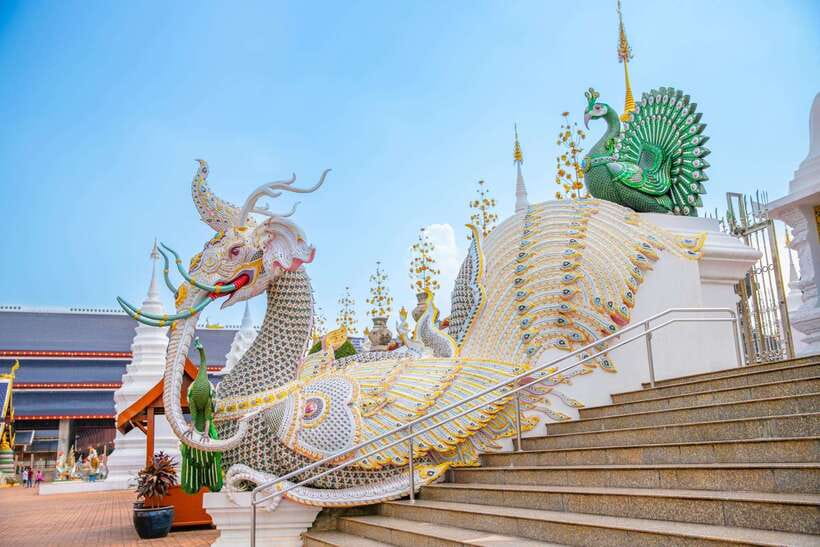
I would book this tour if you want an efficient Chiang Mai escape built around architecture and an active waterfall, and if arranged pickup is worth paying for. The zodiac pagodas at Wat Ban Den are the cultural highlight, while Bua Thong gives you something hands-on and memorable.
Before booking, confirm two details with KiKi CM Tour: the actual total duration and whether the Blue Temple is included. If the answer matches the Wat Ban Den and Sticky Waterfall plan, this is a good fit for a small group that wants personal service, easy transport, and a lively half-day outside the city. If you need a strict four-hour schedule or a confirmed Blue Temple visit, choose only after those points are settled.
FAQ
How long does the tour last?
The activity is advertised as four hours. However, the stated transfer and stop times add up to more than four hours, so confirm the expected schedule with KiKi CM Tour before booking other activities.
What places are included?
The detailed schedule includes Wat Ban Den Temple and Bua Thong Sticky Waterfalls. The tour title mentions a Blue Temple, but the supplied schedule does not list one, so ask the provider to confirm whether it is included.
Is hotel pickup available?
Yes. Pickup is included from hotels, the bus station, and the airport in Chiang Mai.
Is the tour conducted in English?
Yes. An English-speaking live guide is included.
How many people can join the group?
The group is limited to eight participants.
What should women wear?
Women should wear clothing that covers the shoulders and knees at the temple. A cloth to cover the shoulders is also recommended at the sacred Seven-Colored Fountain.
Can I swim at Bua Thong Sticky Waterfalls?
Yes. There is a small swimming pool at the bottom. Bring a swimsuit and a change of clothes if you want to swim. If you do not plan to swim, regular clothes are suitable, and you can walk barefoot or bring water shoes for the waterfall.
More White Temple and Blue Temple Tours in Chiang Mai
- Chiang Rai White Temple and Blue Temple Day Tour
★ 4.6 · 3,366 reviews - From Chiang Mai: White Temple & Golden Triangle Day Trip
★ 4.6 · 1,193 reviews - Chiang Rai White Temple, Blue Temple and more from Chiang Mai
★ 4.5 · 605 reviews - Chiang Mai: Chiang Rai Temples, Golden Triangle & Boat Tour
★ 4.6 · 518 reviews
Newly written up around Chiang Mai
- Monk trails hike, Wat Phalat, Monk chanting, Wat Doi Suthep.★ 5.0 · 3 reviews
- Long Neck Village, Silver Temple & Chiang Mai Top Sites★ 4.7 · 17 reviews
- Lalita Cafe & Chiang Rai Temple(White+Blue) from Chiangmai★ 4.8 · 5 reviews
- Private : Sticky Waterfall & Secret Temple & Karen Village.★ 5.0 · 9 reviews
- Chiang Mai: Temples & Culture Tour★ 4.7 · 64 reviews
- From Chiang Mai: White Temple, Blue Temple & Black House★ 4.5 · 15 reviews
- Chiang Mai: Chiang Rai Temples & Black House Discovery Tour★ 4.4 · 12 reviews
- From Chiang Mai: Lamphun and Lampang Temples Tour★ 4.9 · 33 reviews
White Temple & Blue Temple Tours, compared.
Chiang Rai White Temple and Blue Temple Day Tour
Read our review →
Chiang Rai White Temple, Blue Temple and more from Chiang Mai
Read our review →
Chiang Rai Temples, Golden Triangle & Boat Tour
Read our review →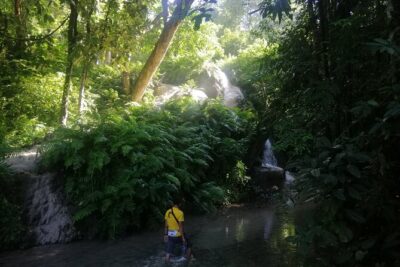
Visit Dantewada(Angel Land), Blue Temple, and Sticky Waterfall
Read our review →