
Reviewed · BANGALORE TEMPLE TOURS
Day trip from Bangalore to Lepakshi for Temple architecture & paintings
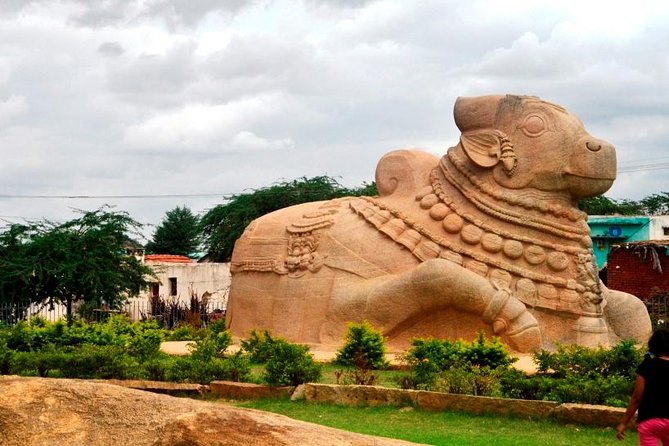
A 15-foot stone Nandi, carved from one block of granite, is the first sign that Lepakshi is no ordinary temple stop. Inside the Virabhadra Temple, painted ceilings, carved pillars, and the famous hanging pillar tell the story of the Vijayanagara period in a way that is far easier to grasp with a guide beside you.
I like the private car and guide, which turn a long trip from Bangalore into a relaxed day rather than a transport puzzle. I also like the vegetarian South Indian lunch, included in the price. The main drawback is the long road day: you leave at 7:30 am, return around 4 pm, and spend much of the experience getting to and from Andhra Pradesh.
Key points at a glance
- See an enormous single-stone Nandi: The bull is about 15 feet tall and 27 feet long, with carved jewelry including a bell chain and earrings.
- Read the temple through its details: Your guide explains the Mukha Mandapa, Artha Mandapa, Garbha Griha, wedding hall, paintings, and legends.
- Travel privately from Bangalore: Pickup, drop-off, a private car, and a private guide are included.
- Study a rare painting style: Lepakshi’s murals use elegant line work against orange-red backgrounds.
- Break up the day with local food: A South Indian vegetarian lunch is provided, but drinks and extra food cost more.
- Expect a full 10-hour outing: The early start and long return drive make this best for an unhurried day away from Bangalore.
Why Lepakshi is worth a full day from Bangalore
Lepakshi lies in Andhra Pradesh, but it is close enough to Bangalore for a long day trip. The point is not simply to tick off another temple. You come here to see how sculpture, painting, architecture, ritual, and legend work together in one compact site.
The centerpiece is the Veerabhadra, or Virabhadra, Temple, a 16th-century creation of the Vijayanagara period. This was an era known for large temple complexes, strong stone construction, elaborate carvings, and close links between religion, royal power, music, and dance.
A guide matters here because the temple does not explain itself at every turn. You can admire a carved pillar on your own, but you may miss why a particular hall was built, what the painted figures represent, or how the temple’s unusual pillars fit into its story. Guides including Vignesh, Hareesh, and Mayuri have been praised for clear explanations, patience, and careful organization. Your assigned guide may differ, but the private format gives you room to ask questions.
The trip also gives you a change of pace from Bangalore. Instead of moving between crowded city sights, you spend time with stone carvings, old murals, village surroundings, and local religious life. The tradeoff is simple: Lepakshi takes time to reach, so you need to be happy giving up most of a day.
More Day Trips in Bangalore:
- From Bangalore: Lepakshi Temple and Adiyogi Statue Day Trip
★ 5.0 · 9 reviews - Lepakshi Temple and Nandi Hills Day Trip from Bangalore
★ 4.5 · 3 reviews - Athens: Cape Sounion & Poseidon Temple Sunset Half-Day Trip
★ 4.8 · 8,241 reviews
The 7:30 am start and the private ride
The day begins with hotel pickup at 7:30 am. From there, you travel in a private car with your group and guide. Pickup and drop-off at your original departure point are included, so you do not need to arrange separate transport for the return.
That private setup is one of the strongest practical features. You can ask the driver to pause when needed, discuss the site at your own pace, and avoid being tied to strangers’ schedules. The driving has been described as smooth and safe, with Thippesh specifically praised for courteous driving and handling the traffic well.
Still, keep your expectations sensible. This is not a quick nearby excursion. The total experience lasts about 10 hours, with departure from Lepakshi around 4 pm. The road time is part of the cost of seeing a major Andhra Pradesh temple from Bangalore. If you prefer short sightseeing blocks with little driving, this may feel demanding.
The early start is useful. It gives you a full visit before the return journey and keeps the day from stretching too late into the evening. Wear practical clothing for a temple visit, and plan to walk around the grounds in the heat. The supplied information does not specify a dress code or detailed accessibility arrangements, so ask the operator before booking if you need those details.
The giant Lepakshi Bull
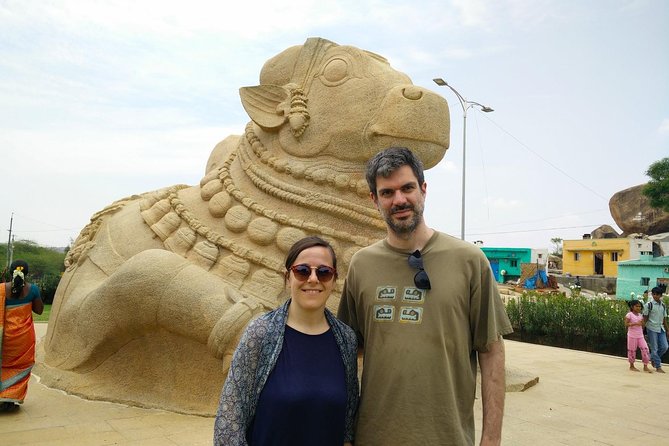
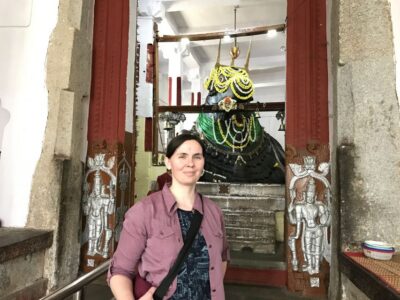
The Nandi Bull is the first scheduled stop and takes about 30 minutes. It is carved from a single granite block and measures roughly 15 feet high and 27 feet long. For scale, look at the people near it. The comparison makes the size easier to understand than any photograph.
Nandi is the sacred bull associated with Shiva, and this one is shown wearing carved ornaments. Look for the kaasu malai, or coin necklace, along with a bell chain, earrings, and other jewelry. The details soften what could otherwise feel like a massive block of stone.
You have time to walk around the statue and take photographs. The stop is short, but it is not a throwaway photo break. It gives you an immediate introduction to the skill and confidence of Vijayanagara stone workers. The bull’s calm pose also contrasts with the scale of the carving.
A practical point: this stop comes before lunch and before the temple visit. If you are especially interested in architecture, you may wish you had longer here, but the 30-minute schedule is enough to see the sculpture from several angles and take pictures without using up the time needed inside the temple.
Entering the Virabhadra Temple
The main temple visit lasts about two hours. That is a useful amount of time for Lepakshi. You can walk through the major spaces without rushing, while your guide adds the stories and religious meaning that help the carvings make sense.
The first major area is the Mukha Mandapa, a hall used for dance and other cultural activities. This tells you that the temple was not only a place for private prayer. Music, performance, ceremony, and community life were part of its purpose.
Next comes the Artha Mandapa, associated with royal worship. Its connection with the king gives the building a political dimension as well as a religious one. Temples of this scale required money, labor, planning, and royal support. Your guide can connect those facts to the architecture in front of you.
The inner Garbha Griha houses the deity. This is the most sacred part of the temple, and it helps to understand the movement from the public outer halls toward the central shrine. The temple’s design is not random decoration. It guides you from activity and ceremony toward worship.
Take your time with the pillars. Their carved surfaces reward a slow look, and a guide can point out figures and scenes you might otherwise pass without noticing. Several people have particularly valued the mythological stories used to explain the sculptures and paintings. Those stories are practical tools for reading the site, not just extra entertainment.
Other temple visits near Bangalore we have written up
- Tipu Palace + Koté Vishnu + Fort + KR Market + Jain Temple = Bengaluru Pété Walk
★ 5.0 · 150 reviews - Bangalore: Palace, Temples, Fort & Markets Walking Tour
★ 4.9 · 97 reviews - World heritage Somnathpur sculptures and Talakadu temple mystery
★ 5.0 · 79 reviews - Old Bangalore Historical Walk thro Palace, Temples, Fort & Market
★ 5.0 · 60 reviews
The unusual wedding hall and the famous pillar
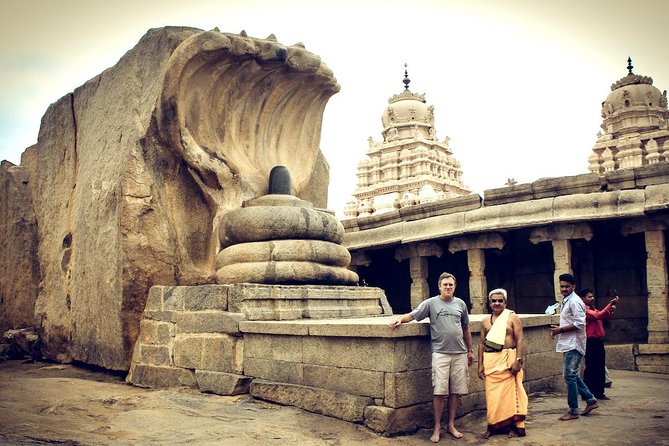
One of Lepakshi’s memorable features is a wedding hall made from grey sandstone. It has 38 carved monolithic pillars and is linked to the traditional story of Shiva and Parvati’s marriage.
Treat the legend as part of the place’s cultural life, while also paying attention to the physical structure. The pillars show how a building could serve a ceremonial purpose and still become a showcase for sculpture. The hall is a good place to pause and consider the labor behind each carved surface.
The temple is also known for a pillar that appears to hang above the floor. Accounts describe the building as balanced by this single pillar, and guides point out the small gap beneath it. This is one of the site’s most talked-about details, but it is best viewed carefully rather than treated as a stunt. Do not push furniture, cloth, or objects under it, and follow any local instructions around the structure.
The combination of engineering, ritual, and legend makes this section especially rewarding. You are not only looking at old stone. You are seeing a building still explained through stories passed down over generations.
Lepakshi’s ceiling paintings and orange-red style
The paintings may be the most delicate part of the visit. Lepakshi’s murals are known for elegant line work set against an orange-red background. The effect is different from the heavy stone carving outside. The drawings can feel lighter, more graceful, and more narrative.
Look upward as you move through the temple. The ceiling paintings are easy to miss if you focus only on the pillars and ground-level sculpture. Your guide can identify scenes involving Shiva, Krishna, and other deities, and explain the mythological links between them.
The paintings are also a reminder that the temple was designed as a complete visual experience. Stone, color, sacred images, performance space, and worship all belong together. You get more from the visit if you alternate between looking closely at small details and stepping back to see how the halls work as a whole.
Because these are historic paintings, do not expect every image to be equally clear. Age, weather, and the condition of the building affect what you can see. That is not a flaw in the tour, but it does mean you should avoid treating the temple like a polished museum gallery. Some details may require patience and a guide’s explanation.
Lunch and the rhythm of the day
A South Indian vegetarian lunch is included. Beverages are not included, and food ordered beyond the provided meal costs extra. This is a useful arrangement for a day away from Bangalore because you do not need to search for a restaurant during the visit.
The meal also fits the setting better than a generic packaged snack would. You get a proper pause between sightseeing stops and a chance to regain energy before more walking and the return drive. If you have dietary restrictions beyond vegetarian preferences, ask the operator before the trip because the available details only confirm a vegetarian South Indian meal.
The timing places lunch after the Nandi visit and before or around the main temple exploration. Exact timing may vary with road conditions and the pace of your group. Keep some flexibility. The best part of a private tour is that your guide can spend more time on a carving or story if that matters to you, but the return drive still needs to happen.
What the private format really adds
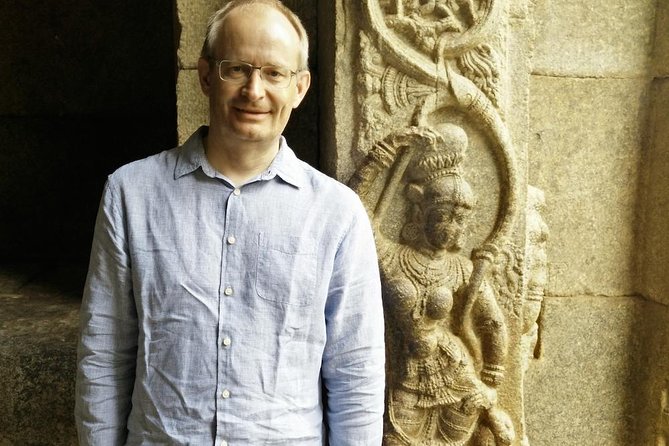
A private tour is more than a smaller vehicle. At Lepakshi, it changes how you use the temple. You can ask why a figure is shown in a certain pose, request another explanation of a myth, or spend longer with the paintings instead of moving on because a large group is waiting.
The guides associated with this experience have drawn particular praise for being informative, friendly, organized, and willing to answer questions. Mayuri has been described as attentive and well organized. Vignesh has been praised for detailed explanations of the main temple, while Hareesh has been noted for clear interpretation of the paintings and sculptures.
You should still tell your guide what interests you. If you care most about architecture, ask for more time with the halls and pillars. If Indian mythology is your main interest, ask for the stories behind the images. The supplied schedule gives you a private visit, not an unlimited one, so clear priorities help.
The private car also removes the need to combine public transport, local rides, and temple arrangements. For a site across the state border, that convenience has real value. You pay $145 per person, which is not a budget outing, but the price includes a private guide, private car, pickup, drop-off, lunch, and admission to the listed stops. For a solo visitor, the price may feel high. For two or more people sharing the benefits of private transport and guiding, it becomes easier to justify.
Who should book this Lepakshi day trip?
I would choose this tour if you are interested in Indian temple architecture, religious art, sculpture, or the Vijayanagara period. It also suits you if you want to see a major site beyond Bangalore without working out a long-distance transport plan yourself.
It is a good fit for first-time visitors who want context, not just photographs. The private guide can explain the purpose of each hall and connect the art to mythology and royal worship. It also suits couples, families, and small groups who value a flexible day.
I would hesitate if you dislike early starts, long car journeys, or warm outdoor sightseeing. The day is full, and Lepakshi cannot be reduced to a quick stop. You should also be comfortable with a vegetarian lunch and paying separately for beverages.
Cancellation is free if you cancel at least 24 hours before the local start time. Changes or cancellations inside that window are not accepted for a refund. Confirmation is provided at booking, and most people can participate.
FAQ
What time does the tour start?
Hotel pickup begins at 7:30 am.
How long does the day trip last?
The experience lasts about 10 hours. The departure from Lepakshi is scheduled for around 4 pm, followed by drop-off at the original departure point in Bangalore.
Is the tour private?
Yes. Only your group participates, with a private car and private guide.
What is included in the price?
The price includes a private guide, private car, pickup and drop-off, admission to the listed attractions, and a South Indian vegetarian lunch.
Are drinks included with lunch?
No. Beverages are excluded, as is any additional food ordered beyond the included vegetarian lunch.
What will I see at Lepakshi?
The visit includes the 15-foot Lepakshi Nandi Bull and the Veerabhadra Temple, including the Mukha Mandapa, Artha Mandapa, Garbha Griha, wedding hall, carved pillars, and painted ceilings.
Should you book it?
Book this trip if you want Lepakshi explained rather than simply photographed. The giant Nandi is an easy highlight, but the temple’s painted ceilings, dance hall, royal worship space, wedding hall, and hanging pillar are what give the day its lasting interest.
At $145 per person, the value rests in the private transport and guiding, not just the admission ticket. You are paying to make a difficult day trip from Bangalore simple and to have someone explain what you are seeing. If that sounds worthwhile, this is a strong choice. If you want the cheapest possible outing or a short excursion, the long drive and full-day schedule may not suit you.
Newly written up around Bangalore
- Bandipur Tiger Reserve with Somnathpur Temple Tour★ 5.0 · 21 reviews
- Full Day Private Tour of Temples of Bengaluru★ 5.0 · 5 reviews
- Lepakshi Temple and Nandi Hills Day Trip from Bangalore★ 4.5 · 3 reviews
- Bull temple layout Heritage walk★ 5.0 · 13 reviews
- Lepakshi Temple Day Tour from Bangalore★ 5.0 · 3 reviews
- Lalbagh+Bull Temple+Tipu Palace+Market+Lunch=Bangalore City Tour★ 5.0 · 9 reviews
- From Bangalore: Lepakshi Temple and Adiyogi Statue Day Trip★ 5.0 · 9 reviews
- Bangalore: Basavanagudi Walking Tour with Bull Temple★ 4.9 · 12 reviews
Bangalore Temple Tours, compared.
Tipu Palace + Koté Vishnu + Fort + KR Market + Jain Temple = Bengaluru Pété Walk
Read our review →
World heritage Somnathpur sculptures and Talakadu temple mystery
Read our review →
Old Bangalore Historical Walk thro Palace, Temples, Fort & Market
Read our review →
World heritage site of Belur & Halebid with temple sculptures
Read our review →
Bandipur Tiger Reserve with Somnathpur Temple Tour
Read our review →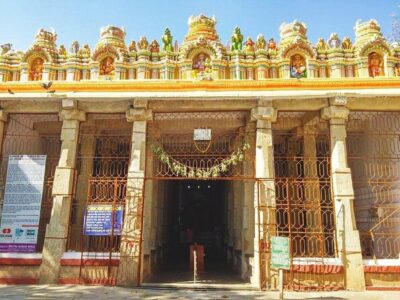
Browse the lists this tour appears in