
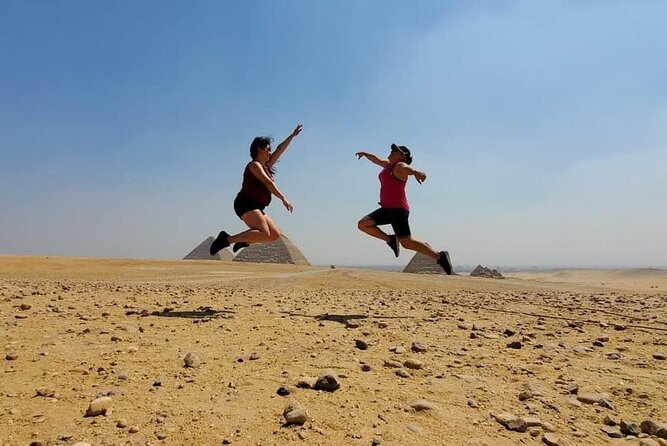
Reviewed · CAIRO TEMPLE TOURS
Giza Epic Adventure: Pyramids, Sphinx & Khafre’s Valley Temple
The Great Pyramid, the Sphinx, and Khafre’s Valley Temple all appear on this private Cairo tour, but the real advantage is having a guide connect them into one story. Hosni, the guide most often associated with this experience, is praised for clear English, flexible pacing, and keeping both children and older family members involved.
I like the door-to-door pickup, which removes much of Cairo’s transport hassle, and the private format, which lets you ask questions and adjust the pace. The main drawback is time: four and a half hours gives you a useful first look, but not an unhurried study of every corner or a full Cairo sightseeing day.
Key points to know before booking
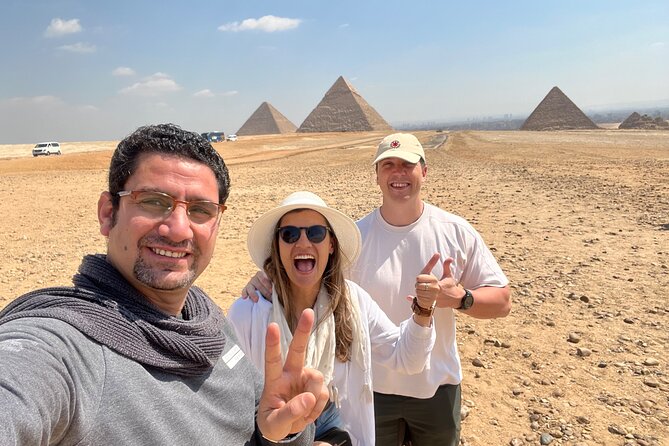
- Three pyramids in one morning: See Khufu, Khafre, and Menkaure across the Giza Plateau.
- A guide-led visit: An Egyptologist explains the monuments instead of leaving you to decode them alone.
- Private hotel transport: Pickup and drop-off are included for hotels within the stated service area.
- Khafre’s Valley Temple: Visit the granite temple linked to the mummification rites of King Khafre.
- Main-area admission included: Entry fees cover the main site, while extra experiences may cost more.
- Strong family fit: The private vehicle and flexible approach suit groups with children, seniors, or mixed interests.
For many people, the Giza Plateau is the one place in Egypt that cannot be skipped. The pyramids are familiar from books and screens, yet their scale is difficult to grasp until you are close enough to see the huge blocks, uneven surfaces, and long sloping sides rising above the desert.
This tour gives you roughly four hours and thirty minutes with a private guide and vehicle. That is enough to visit the main pyramid area, hear the basic story of the royal tombs, reach the Sphinx, and see Khafre’s Valley Temple without spending a full day on one site.
The package includes an Egyptologist guide, hotel pickup and drop-off, bottled water, taxes, government permission costs, and main-area entry fees. Tipping, personal purchases, and any extra activity not named in the schedule are separate.
At $70 per person, the value depends on your group size and priorities. For one person, it is not the cheapest way to reach the pyramids. For a family or small group, private transport and a dedicated guide can make the price reasonable, especially if you want a smooth visit rather than arranging taxis, tickets, and explanations yourself.
Pickup is offered from your Cairo hotel, followed by transport to the Giza Plateau. The private setup matters more than it may sound. You are not waiting for a large bus to collect people from several hotels, and your group is not tied to strangers who may want a different pace.
The vehicle also gives you a place to rest between viewpoints. Giza involves sun, uneven ground, and walking over stone and sand. That break is useful for families with young children and groups that include older adults.
Hotels outside the city may carry an extra pickup charge. Check that point before booking, since the advertised price does not cover every possible pickup location.
The schedule lists about two hours for the pyramid area, thirty minutes for the Sphinx, and ten minutes for Khafre’s Valley Temple. The remaining time is used for driving, positioning the vehicle, explanations, and moving between parts of the plateau. The exact order can change with site conditions and your guide’s judgment.
The first major stop covers the three principal pyramids.
The Great Pyramid of Khufu is the oldest and largest. It was built around 2580 to 2560 BC and originally reached about 146.6 meters, or 481 feet. The monument used roughly 2.3 million stone blocks, a figure that helps explain the enormous labor and planning behind it.
You will not simply see one giant pyramid in isolation. From the plateau, the three structures create a useful lesson in royal scale. Khufu’s pyramid dominates, Khafre’s is slightly smaller but often appears taller because of its higher ground and remaining casing stones near the top, and Menkaure is much smaller at about 65 meters.
That contrast is one of the strongest parts of the visit. A guide can point out how size, position, and surviving stone affect what your eyes tell you. Without that help, it is easy to assume that the pyramid with the smooth cap is the tallest.
The two-hour pyramid visit should allow time for the main viewpoints and photographs, though it is not a guarantee of a long interior exploration. The included entry is described as main-area admission only. If entering a pyramid is important to you, ask the operator in advance about availability, cost, and whether it fits the schedule.
The plateau is exposed, so bring sun protection and wear shoes suited to rough ground. Bottled water is included, but you should still plan for heat, especially during warmer months. The tour is described as suitable for most people, but the amount of walking and the uneven surface are worth considering if mobility is limited.
The Sphinx receives about thirty minutes on the listed schedule. That may sound brief, but it gives you enough time to see the monument from the main viewing area, listen to an explanation, and take the classic frontal photograph.
The statue has the body of a lion and a human head and is commonly linked with King Khafre of the Fourth Dynasty. Its proximity to Khafre’s pyramid helps explain why the two monuments are often presented together, rather than as unrelated sights.
This is where a good guide can make a short stop useful. The Sphinx is smaller than many first-time visitors expect, and its lower position can make it difficult to appreciate from a distance. Hosni is praised for pointing out photo angles and for explaining details that are easy to miss.
Keep your expectations practical. Thirty minutes is not enough for a long, quiet meditation at the site, particularly if the area is busy. It is a focused stop, designed to give you the monument’s main story and the essential photographs before moving on.
The final listed stop is Khafre’s Valley Temple, with about ten minutes set aside for the visit. The time is short, but the site is important because it helps you understand what happened before a royal burial.
The temple is associated with the mummification process for King Khafre. You will also see the opening connected with the discovery of Khafre’s famous diorite statue. The dark, polished stone of that statue is one of the best-known examples of royal sculpture from ancient Egypt.
A ten-minute visit makes this more of a compact explanation than a full architectural study. You will want to stay close to the guide so you do not miss the details. If the Sphinx or the pyramids hold your attention longer than expected, this is the stop most likely to feel rushed.
Still, the temple adds useful context. The pyramids are the dramatic symbols, but the Valley Temple helps show the ceremonial work tied to the royal burial complex. It turns the visit from a series of enormous monuments into a connected plan.
The central reason to book this format is the guide. The pyramids are easy to recognize, but their purpose, sequence, and relationship to one another are not always obvious when you are standing in the sun with hundreds of visual distractions around you.
Hosni is frequently praised for strong English, an easy manner, and the ability to adjust explanations for different ages. Families with children as young as seven have found his approach engaging, while groups with seniors have valued his attention to comfort and practical needs.
That flexibility is especially useful in a private tour. You can ask for more detail about construction, royal burial customs, sculpture, or the Sphinx rather than listening to a fixed speech aimed at a generic group.
The guide can also help with photographs. The Giza Plateau is full of familiar postcard views, but a guide who knows the area can help position your group and make better use of limited time. Do not expect a professional photography session, but practical help with group photos is part of the appeal.
A private tour does not guarantee a particular guide, so confirm whether Hosni will lead your visit if that matters to you. The company’s tour experience also includes larger custom family outings, but this product is described as a private activity for your own group.
This tour suits people who want the main Giza sights without giving up an entire day.
Families benefit from the private car, bottled water, and the ability to ask the guide to change the pace. Children often respond better when explanations are short, visual, and connected to the huge stones in front of them. Hosni’s record with children and teenagers suggests a good fit for family groups, though you should still prepare young children for heat and walking.
Older adults may appreciate the hotel pickup and the chance to return to the vehicle between stops. The tour company has handled groups with elderly parents, but the plateau is not a flat indoor museum. Anyone with mobility concerns should ask about the walking distance and the easiest access points before confirming.
This also works well if Cairo is a brief stop on a longer Egyptian trip. You get the essential Giza experience in half a day, leaving room for another activity later. The trade-off is that this tour does not provide a full survey of Cairo museums, mosques, bazaars, or Old Cairo.
The $70 price covers more than site access. You are paying for a private vehicle, hotel pickup and return, an Egyptologist guide, bottled water, main-area entry fees, taxes, and government permission expenses.
That bundle has clear value if you dislike negotiating transport or trying to coordinate a major archaeological site on your own. It is also useful for a group that wants one person responsible for the route and explanations.
The price does not include tipping, personal items, or extras not listed in the schedule. Pickup from hotels outside the city can cost more. Main-area tickets are included, but do not assume that every interior visit or optional activity is covered. Ask before arrival if you want pyramid interiors, camel rides, shopping, or other additions.
The tour’s strongest value is convenience, not luxury. It gives you a private, guided introduction to the most famous ancient site near Cairo. If you want long time inside monuments or several additional Cairo attractions, choose a longer custom tour instead.
Confirmation is provided when you book, and the tour accepts a mobile ticket. Free cancellation is available up to 24 hours before the local start time for a full refund. Cancellations or changes made within 24 hours are not refunded or accepted.
Plan to carry sun protection, comfortable footwear, and modest clothing suitable for an important religious and archaeological setting. Water is supplied, but a small personal bag with essentials is sensible.
The tour is private, yet the monuments themselves are public sites. Crowds, access rules, and the pace of the plateau can affect how long each photo stop takes. Treat the schedule as a useful framework rather than a minute-by-minute promise.
Book it if you want the pyramids, Sphinx, and Khafre’s Valley Temple handled in one private half-day outing. The combination of hotel transport, an Egyptologist guide, and a family-friendly approach is especially helpful for first-time visitors, parents, seniors, and anyone with only one day in Cairo.
The tour is less suitable if you want to explore every pyramid interior, spend hours photographing the plateau, or add the Egyptian Museum and Old Cairo in the same compact schedule. In that case, ask for a longer private itinerary.
For most people seeking a clear first encounter with Giza, $70 is a fair price for the time saved and the help provided. Confirm the pickup area, the exact inclusions, and whether Hosni is available, then book at least 24 hours ahead if you want the option of a full refund.
FAQ
Other temple visits near Cairo we have written up
- Cairo Old Coptic Church and Monastery St Simon Cave Church
★ 5.0 · 66 reviews - Luxury Cruise from Aswan to Luxor 4 Days with Abu Simble Temple
★ 5.0 · 60 reviews - Giza Pyramids and Sphinx with Camel ride & Mummification Temple
★ 5.0 · 38 reviews
How long does the Giza tour last?
The tour lasts approximately four hours and thirty minutes.
What sites are included?
The tour includes the Giza Pyramids, the Great Sphinx, and Khafre’s Valley Temple. The pyramid area includes views of Khufu, Khafre, and Menkaure.
Is hotel pickup included?
Yes. Hotel pickup and drop-off are included, though hotels outside the city may require an additional pickup charge.
A different set of gates, same trip:
- Private Giza pyramid,sphinx, Mummification temple& inside pyramid
★ 5.0 · 32 reviews - St Simon Monastery ,Cave Church , Garbage City and Coptic Cairo Private day tour
★ 5.0 · 29 reviews - Tours Giza pyramidS,sphinx,Mummification temple,Inside 3rdPyramid
★ 5.0 · 24 reviews - Overnight Tour Moses Mountain St. Catherine Monastery from Cairo
★ 5.0 · 21 reviews
Is this a private tour?
Yes. Only your group participates in the activity.
Are entry fees included?
Main-area entry fees are included. Extras not named in the itinerary are not included, so ask about any additional access before booking.
Is a guide included?
Yes. An Egyptologist guide is included. Hosni is the guide associated with many of the company’s private Cairo experiences.
What is not included in the price?
Tipping, personal items, pickup charges for hotels outside the city, and extras not mentioned in the itinerary are not included.
Can I cancel for a full refund?
Yes. You can cancel at least 24 hours before the local start time for a full refund. Cancellations or changes within 24 hours are not accepted or refunded.
Newly written up around Cairo
- Monastery St Simon with Cave Church and Garbage City Private Tour★ 5.0 · 15 reviews
- St Simon Monastery ,Cave Church , Garbage City and Coptic Cairo Private day tour★ 5.0 · 29 reviews
- half-day Saint Simon monastery and miracle of Moqqatam mountain★ 4.0 · 4 reviews
- Pyramids of Giza & Sphinx & valley temple Tour with Camel Ride & Egyptian lunch★ 5.0 · 5 reviews
- Shared Tour To Abu Simbel Temple From Aswan★ 5.0 · 7 reviews
- Tour to Giza Pyramids, Sphinx, Valley Temple, Camel Ride & Lunch★ 5.0 · 7 reviews
- Pyramids of Giza & Sphinx & valley temple Tour with Egyptian lunch★ 5.0 · 7 reviews
- Overnight Tour Moses Mountain St. Catherine Monastery from Cairo★ 5.0 · 21 reviews
Cairo Temple Tours, compared.
Cairo Old Coptic Church and Monastery St Simon Cave Church
Read our review →
Luxury Cruise from Aswan to Luxor 4 Days with Abu Simble Temple
Read our review →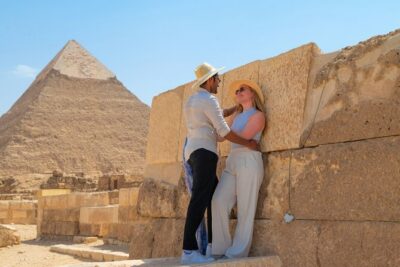
Giza Pyramids and Sphinx with Camel ride & Mummification Temple
Read our review →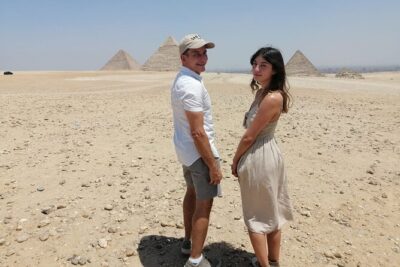
Private Giza pyramid,sphinx, Mummification temple& inside pyramid
Read our review →
St Simon Monastery ,Cave Church , Garbage City and Coptic Cairo Private day tour
Read our review →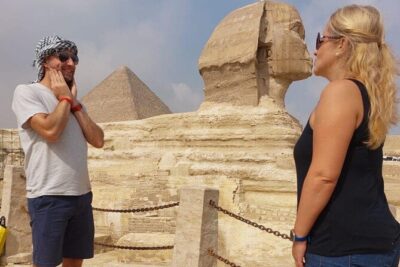
Tours Giza pyramidS,sphinx,Mummification temple,Inside 3rdPyramid
Read our review →
Overnight Tour Moses Mountain St. Catherine Monastery from Cairo
Read our review →
Luxor East and West Bank: Valley of the kings, Habu Temple,Karnak&Luxor Temples
Read our review →Browse the lists this tour appears in