
Reviewed · ANGKOR WAT TOURS
Shared day tour with Spanish-speaking guide at Angkor Temple.
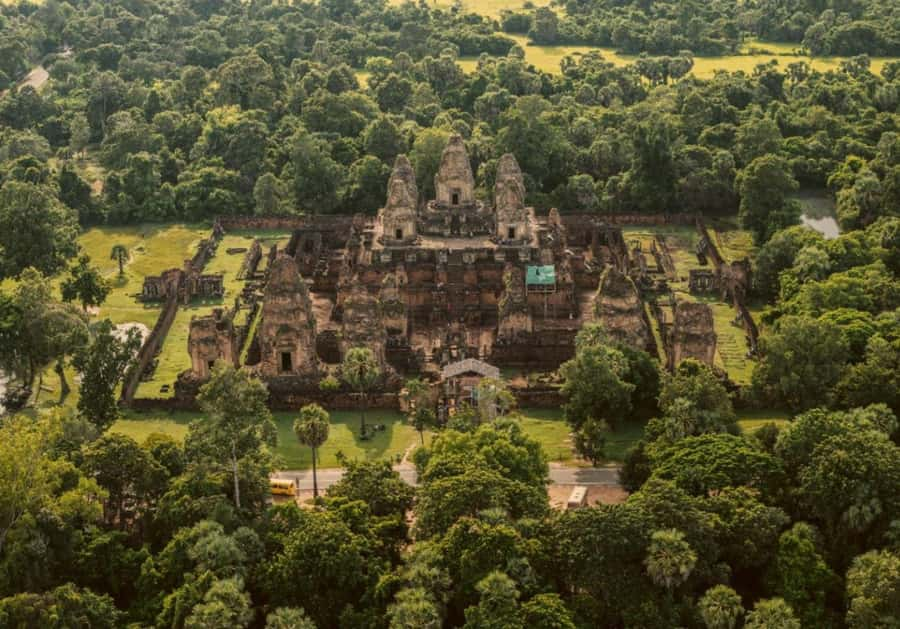
Angkor is not one temple but a vast ancient capital, and this eight-hour route gives you a strong first look at its most important monuments. You enter Angkor Thom through a causeway lined with gods, demons, and a giant naga, then move from Bayon’s enormous stone faces to the jungle-held ruins of Ta Prohm before reaching Angkor Wat.
I like the small group of up to nine and the choice of Spanish, Portuguese, or English guiding. I also like the order: the morning is given to Angkor Thom and Ta Prohm, while the afternoon is saved for Angkor Wat, the grandest and most demanding stop. The main consideration is pace. Four major sites in eight hours means a full day of walking, stairs, heat, and visual overload.
Key points at a glance
- Four major Angkor sights in one day: Angkor Thom, Bayon, the Terraces of the Elephants and Leper King, Ta Prohm, and Angkor Wat.
- A small shared group: The tour is limited to nine participants, a useful middle ground between a large bus and a costly private outing.
- Spanish-speaking guidance: Spanish, Portuguese, and English are available, with guide Sem specifically praised for detailed explanations.
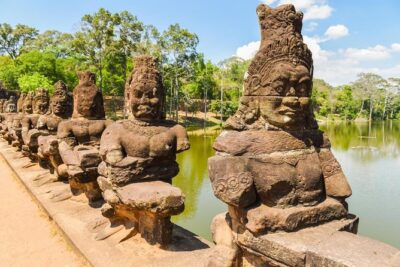
- A dramatic South Gate entrance: The approach to Angkor Thom features rows of gods and demons holding a giant naga.
- Angkor Wat gets the afternoon: You have time to see the temple’s huge grounds rather than treating it as a quick photo stop.
- Flexible booking terms: You can cancel up to 24 hours before departure for a full refund and reserve without paying immediately.
Why this Angkor day tour works for first-time visitors
The best feature here is focus. Angkor covers a huge area, and a first visit can easily become a tiring hunt for temples on a map. This route gives you a clear sequence and a guide to explain why each place matters.
You begin with Angkor Thom, the fortified royal city that covers about 10 square kilometers. That scale matters. You are not simply walking into a single monument. You are entering the remains of a planned capital, with gates, terraces, temple structures, and long stone approaches spread across a large area.
The route then builds in drama. Bayon gives you close views of the famous carved faces. Ta Prohm changes the mood with its jungle setting and comparatively untouched appearance. Angkor Wat arrives later, when you have already seen the city around it and can better understand why it was built on such a grand scale.
I like this progression because it mixes types of sightseeing. You get a monumental city gate, a sculptural temple, royal terraces, a jungle ruin, and the largest temple complex of the day. The day is not built around one repeated style of stonework.
The tradeoff is that this is an overview, not a slow study of every corner. If you want long stretches for photography, quiet pauses, or close inspection of carvings, a private or two-day program may suit you better. If you want the major sights in one organized day, the schedule makes sense.
More Angkor Wat Tours in Siem Reap:
- Angkor Wat Sunrise or Sunset Tour with Guide from Siem Reap
★ 5.0 · 12,109 reviews - Siem Reap: Angkor Wat: Small-Group Sunrise or Sunset Tour
★ 5.0 · 9,444 reviews - Siem Reap: Angkor Wat 2-Day Tour with Sunrise and Sunset
★ 4.9 · 4,429 reviews
Entering Angkor Thom through the South Gate
The morning begins with hotel pickup in Siem Reap. The first major stop is Angkor Thom, whose name is often translated as Great City. Its South Gate provides one of the most memorable approaches in the entire complex.
A causeway leads toward the gate. On both sides, rows of statues represent demons and gods, each connected with a giant naga. This entrance is more than a grand doorway. It sets up the symbolic and architectural world you will see throughout the day.
Take your time as you cross the causeway. The approach gives you a chance to see the gate from a distance before you pass beneath it. A guide can also help you follow the visual story of the statues, rather than treating them as a line of unrelated figures.
The large scale can be hard to grasp from a vehicle or from a quick stop. Once you know that Angkor Thom covers roughly 10 square kilometers, the fortified walls and broad approaches make more sense. You are looking at a capital city, not a small temple compound.
This is also where the guide adds real value. Without explanation, the South Gate can become a dramatic entrance followed by a few photographs. With context, you begin to read the causeway as part of the city’s design.
Bayon and the faces that define Angkor
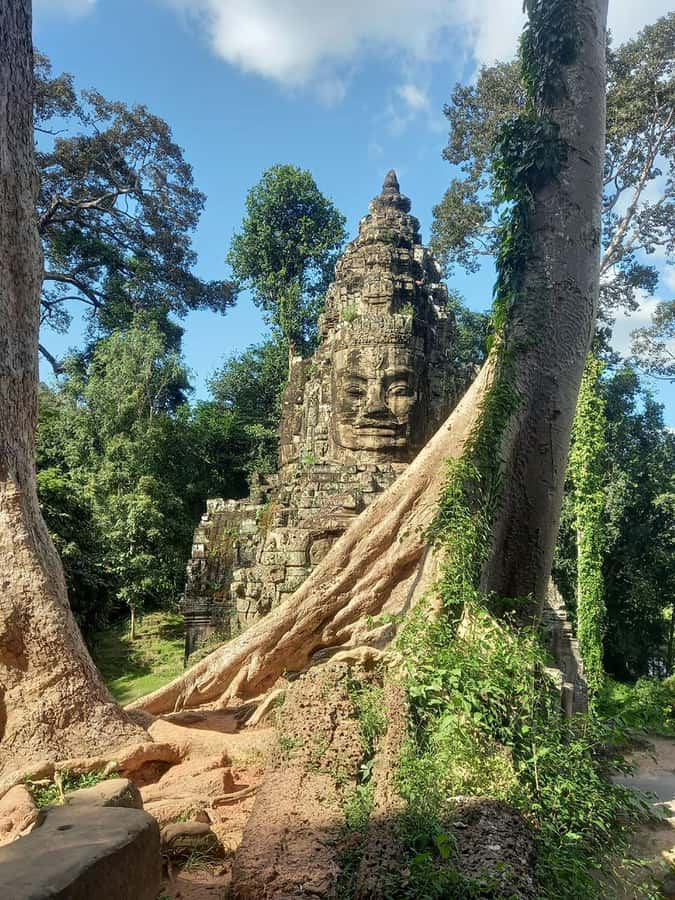
Next comes Bayon, one of Angkor’s most recognizable temples. Its towers carry enormous carved faces, giving the structure an unusual personality. You will be close to the stonework here, moving through a more enclosed and visually busy temple than Angkor Wat.
The faces are the main attraction, but do not look only upward. The temple is filled with layers of towers, passages, and carved surfaces. A guide can point out how the faces fit into the structure and help you notice details that may be easy to miss when the temple first appears as a jumble of stone.
This is a good point in the day for questions. The tour is shared, but the group size is capped at nine, so the setting should be more manageable than a large coach outing. The small group does not guarantee a private visit, yet it gives the guide a better chance to explain the temple without shouting to a crowd.
Bayon can also be tiring. There is a lot to see in a compact area, and the stone surfaces may require careful walking. You should expect an active visit rather than a simple stop at a viewpoint.
The strongest reason to have a guide here is interpretation. The carved faces are instantly impressive, but a detailed explanation helps turn a striking image into a more meaningful part of the Angkor experience. Sem, one of the guides associated with this tour, has been singled out for explaining the temples in detail.
The Terraces of the Elephants and Leper King
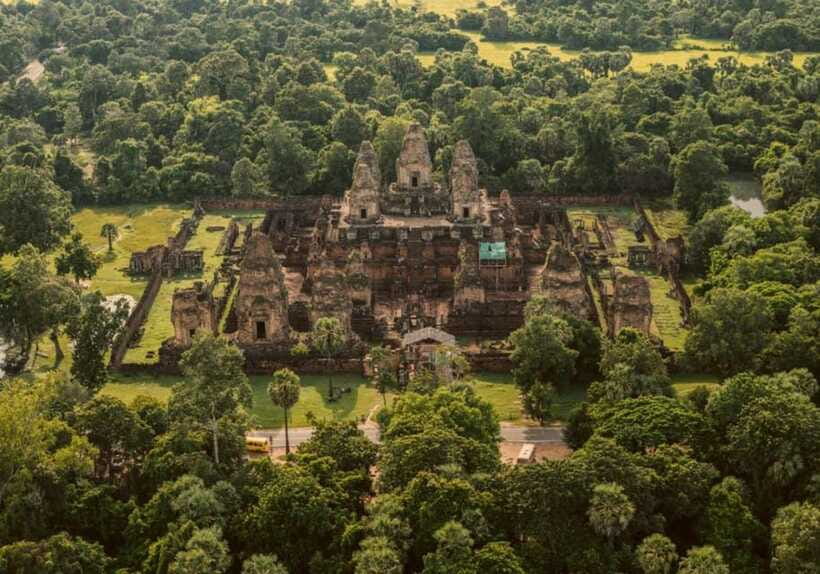
After Bayon, the route continues to the Terrace of the Elephants and the Terrace of the Leper King. These stops add a different view of Angkor Thom. Instead of focusing on a tall temple with towers, you examine long sculpted platforms connected to the royal center of the city.
The Terrace of the Elephants is known for its elephant carvings, while the Terrace of the Leper King offers more carved stonework to study. These are valuable stops because they show how Angkor’s ceremonial spaces extended beyond its best-known temples.
Do not expect the same single-image impact as Bayon or Angkor Wat. The terraces reward attention to reliefs, layout, and explanation. If you are already feeling hot or tired, they may seem less immediately exciting. That is part of the day’s balance: some stops are famous for one powerful view, while others make more sense when you understand their role in the ancient city.
The inclusion of both terraces helps prevent Angkor Thom from becoming just a route to Bayon. You see a broader slice of the old capital and gain a better sense of its public spaces.
Other temple visits near Siem Reap we have written up
- Siem Reap: Full-Day Angkor Wat Guided Tour with Sunset
★ 4.9 · 3,803 reviews - Angkor Wat Sunrise tour with Small – Group and Guide tours
★ 5.0 · 3,655 reviews - Angkor Wat Highlights and Sunrise Guided Tour from Siem Reap
★ 5.0 · 3,213 reviews - Angkor Wat Sunset Small Group Tour with Lunch Included
★ 5.0 · 3,059 reviews
Ta Prohm, where stone and jungle meet
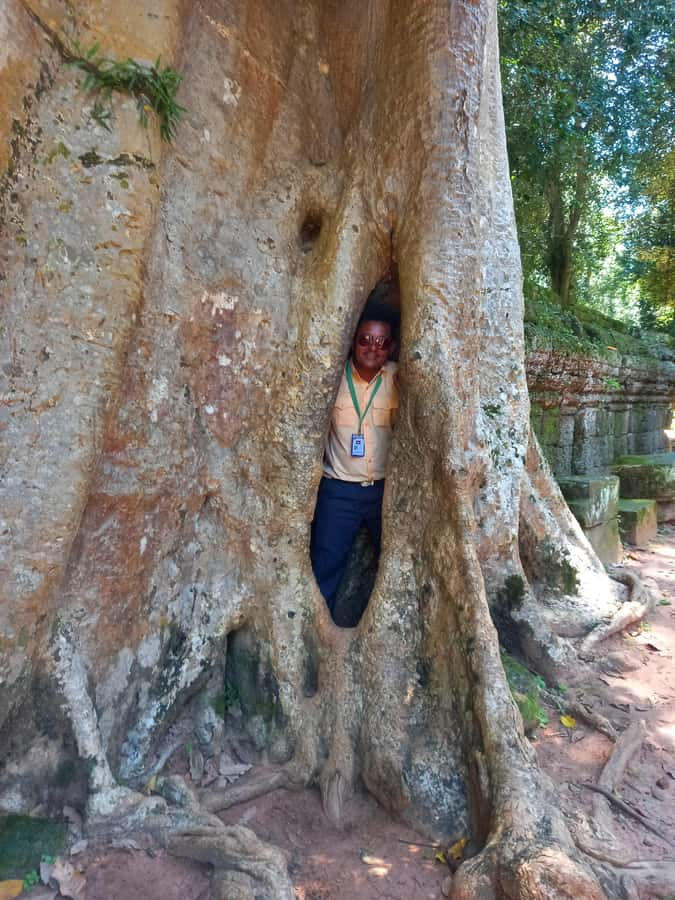
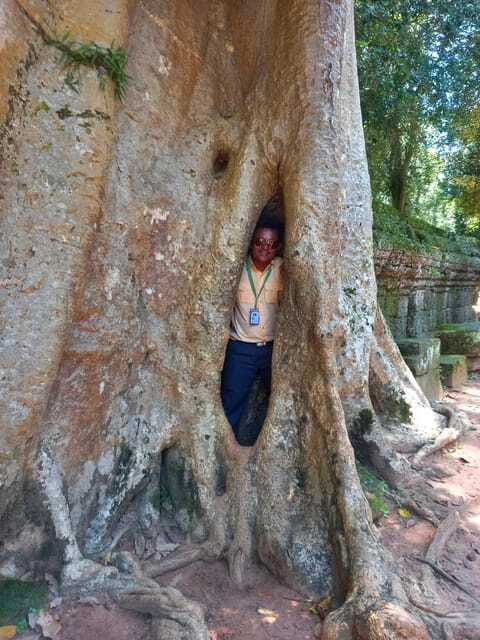
Ta Prohm is the morning’s most atmospheric stop. It is a temple in the jungle that has remained relatively untouched since its discovery, and its setting gives the visit a different feel from the open approaches at Angkor Thom.
The appeal is the contrast between carved stone and plant growth. Ta Prohm appears less orderly than the carefully framed spaces around Angkor Wat. That makes it memorable, but it can also make the site harder to understand without a guide. You may find yourself asking which parts are original design and which parts reflect centuries of exposure and neglect.
A guide can help you look beyond the familiar jungle-temple image. The roots and trees attract attention, yet the temple itself still deserves time. Notice the doorways, walls, and carved details before moving on to the best-known tree-framed views.
Ta Prohm is also one of the places where the shared format may help. A guide can keep the visit moving and help the group avoid spending the entire morning on one dramatic corner. The downside is that you may want more time here than the schedule allows, especially if you enjoy photography.
By the end of the morning, you will have seen three very different sides of Angkor Thom and its nearby temples: civic scale, sculpted faces, and jungle-covered ruins. That variety is one of the strongest reasons to choose this route.
Angkor Wat deserves the afternoon
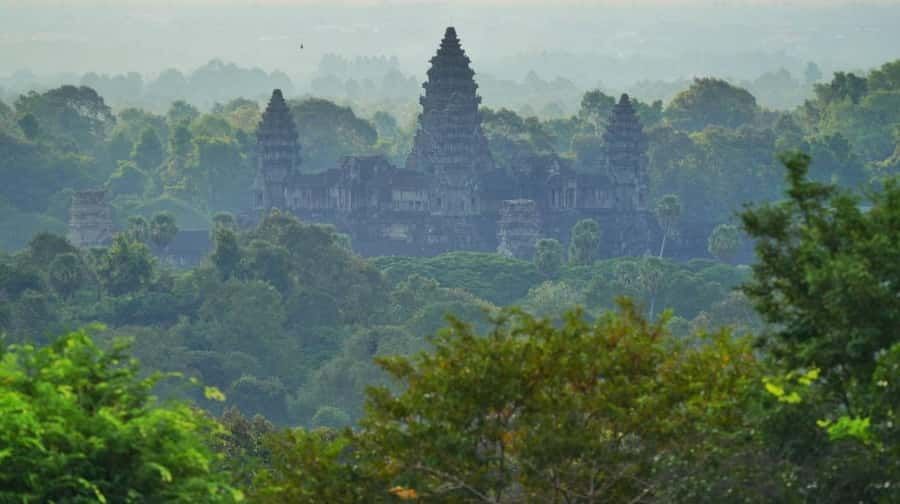
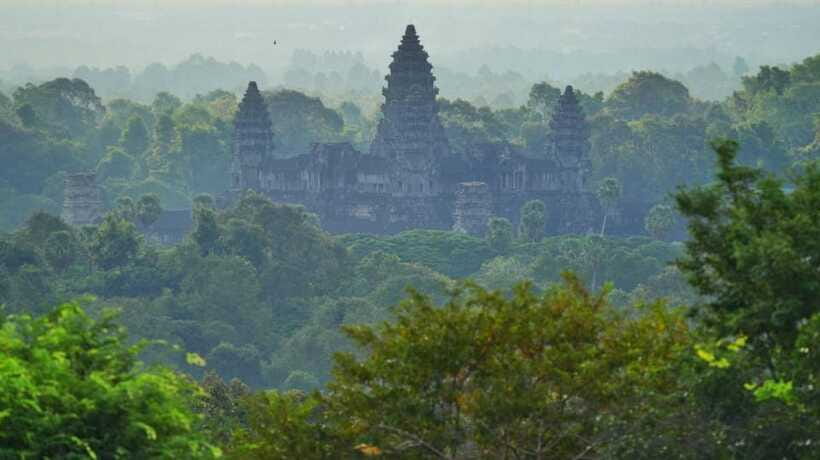
In the afternoon, you reach Angkor Wat, the most famous temple on the Angkor plain. The complex covers about 81 hectares, roughly comparable in size to the Imperial Palace in Beijing. That comparison gives you a practical sense of the place: do not expect to see it all in a quick walk from the entrance to the central temple.
Angkor Wat is admired for its composition, balance, proportions, and sculptural detail. Those qualities become clearer as you move through the complex. The building is not impressive only because it is large. Its design is carefully arranged, with repeated forms and long visual lines that make the whole place feel controlled despite its scale.
Give yourself time to look back as you move through the grounds. The approach, the outer areas, and the temple itself offer different views. Your guide can help you understand how the parts relate to one another instead of reducing Angkor Wat to a single famous photograph.
The afternoon timing has both strengths and limits. It saves the largest site for after you have gained context from the smaller and more varied stops. At the same time, eight hours is a long day, and you may arrive at Angkor Wat already carrying some fatigue from the morning.
That is why practical preparation matters. Bring drinks, wear suitable walking clothing, and take a jacket if the day’s conditions call for one. The supplied information also advises bringing internet access, a GPS or map, and a pen. Those items may be useful for keeping track of the large site and making notes, though your guide remains the main source of direction during the tour.
Is the $50 price good value?
At $50 per person, this tour sits in a useful middle range for someone who wants structure without paying for a private day. The value comes from the combination of hotel pickup, an eight-hour route, a live guide, and a group limited to nine people.
The guide is especially important. Angkor can be visually powerful even without help, but the difference between seeing carved stone and understanding what you are looking at is significant. The strong praise for Sem’s detailed explanations points to the main reason to choose a guided visit rather than arranging a bare transport service.
A shared tour also keeps the cost down. You give up some control over how long you spend at each temple, but you gain a more accessible price. For a first day in Siem Reap, that is often a sensible trade.
You should check exactly what is covered at booking, since the supplied details do not spell out every inclusion. Do not assume that every possible admission, meal, or personal expense is part of the $50 unless it is clearly shown when you reserve.
The booking terms add useful flexibility. You can reserve now and pay later, and cancellation is allowed up to 24 hours in advance for a full refund. Starting times depend on availability, so check the actual departure option before committing to other plans.
Language, group size, and the pace of the day
Spanish is a major reason to consider this particular outing if you want to follow the explanations without relying on translation. Portuguese and English are also available. The information notes that some content may be shown in its original language, so you may want to confirm the guiding language and any language-specific details before booking.
A group limit of nine is small enough to feel more personal than a large sightseeing bus, but it is still a shared experience. You will not control every pause, and the guide will need to keep several people moving through a demanding itinerary.
The eight-hour duration is both a strength and a warning. It gives the tour enough time to cover Angkor Thom, Bayon, the terraces, Ta Prohm, and Angkor Wat. It also means you should treat the day as a serious walking outing.
The tour is not suitable for people over 331 pounds, or 150 kilograms. Pets are not allowed. Those restrictions are simple, but they are worth checking before you reserve.
Who should book this tour?
I would choose this tour for a first visit to Angkor when I wanted the essential temples in one day and preferred explanations in Spanish, Portuguese, or English. It is also a good fit if you want a small shared group rather than a large coach or the higher cost of a private guide.
You should book it if you value context, want hotel pickup in Siem Reap, and are comfortable spending eight hours moving between major temple sites. The route gives you both the famous images and enough supporting stops to understand that Angkor was a large urban and ceremonial center.
I would think twice if you dislike fixed schedules or want to linger at one temple. Ta Prohm and Angkor Wat can each reward a slower visit, and a single day cannot cover every part of either complex.
For the best experience, arrive ready for a full day. Bring drinks, a jacket, internet access, a map or GPS, and a pen if you like taking notes. Wear practical clothing for walking and expect the day to finish with plenty of memories, but also tired feet.
FAQ
How long does the Angkor temple tour last?
The tour lasts eight hours.
Where does the tour take place?
The tour takes place in Siem Reap Province, Cambodia, with pickup at your hotel in Siem Reap.
Which temples and sites are included?
The route includes Angkor Thom, the South Gate, Bayon, the Terrace of the Elephants, the Terrace of the Leper King, Ta Prohm, and Angkor Wat.
What languages are available?
The live guide is available in Spanish, Portuguese, and English.
How large is the tour group?
The tour is a small shared group limited to nine participants.
How much does the tour cost?
The listed price is $50 per person.
Can I cancel the booking?
Yes. You can cancel up to 24 hours in advance for a full refund.
Can I reserve without paying immediately?
Yes. The reserve-now, pay-later option lets you book your place without paying at the time of reservation.
Should you book it?
Book this tour if you want a well-organized first day at Angkor, especially with a Spanish-speaking guide and a small group. Its best feature is the mix of interpretation and coverage: you see the great carved faces of Bayon, the jungle ruins of Ta Prohm, the royal terraces, and the vast scale of Angkor Wat without having to plan the route yourself.
Skip it in favor of a longer or private program if your priority is slow photography, flexible timing, or detailed exploration of fewer sites. For most first-time visitors who want the major Angkor experience at a reasonable shared-tour price, this is a practical and well-balanced choice.
Newly written up around Siem Reap
- Sunrise at Angkor Wat Temple: 3-Hour Private Tour★ 4.7 · 30 reviews
- Small-Group Explore Angkor Wat Sunrise Tour with Guide★ 5.0 · 3 reviews
- Siem Reap : Private Tuk-Tuk Tour of the Magnificent Temples.★ 4.9 · 14 reviews
- Siem Reap: Ultimate Angkor Wat Offbeat Experience by Jeep★ 4.9 · 8 reviews
- SiemReap: Private Angkor Wat Tour in English or German guide★ 5.0 · 5 reviews
- Siem Reap: 1-Day Angkor Wat Tour in Portuguese★ 5.0 · 4 reviews
- Angkor Wat: Sunrise 2.5 Days Temples & Tonle Sap-Small Group★ 5.0 · 10 reviews
- Siem Reap: Grand Circle Temples Tour With Private Tuk-Tuk★ 5.0 · 4 reviews
Angkor Wat Tours, compared.
Angkor Wat Sunrise or Sunset Tour with Guide from Siem Reap
Read our review →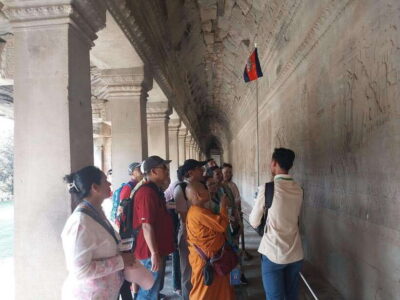
Angkor Wat: Small-Group Sunrise or Sunset Tour
Read our review →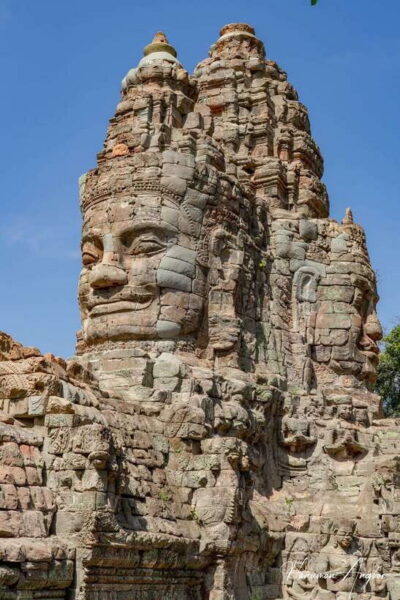
Angkor Wat 2-Day Tour with Sunrise and Sunset
Read our review →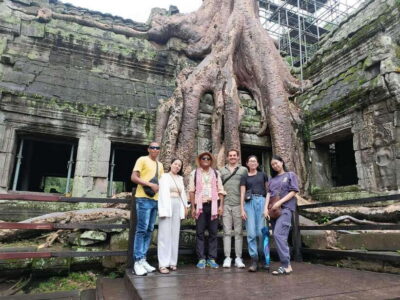
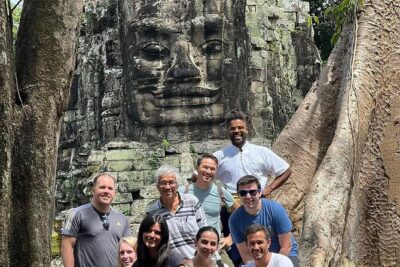
Angkor Wat Sunrise tour with Small – Group and Guide tours
Read our review →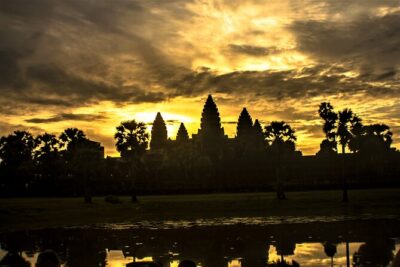
Angkor Wat Highlights and Sunrise Guided Tour from Siem Reap
Read our review →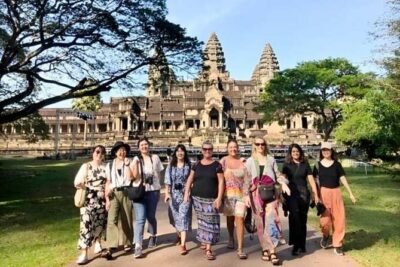
Angkor Wat Sunset Small Group Tour with Lunch Included
Read our review →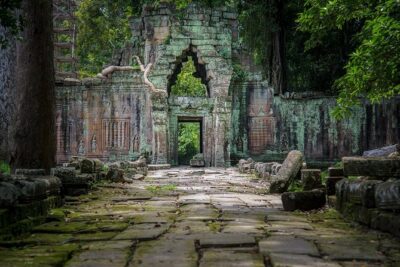
Full-Day Angkor Wat Sunrise Private Tour with Guide from Siem Reap
Read our review →Browse the lists this tour appears in