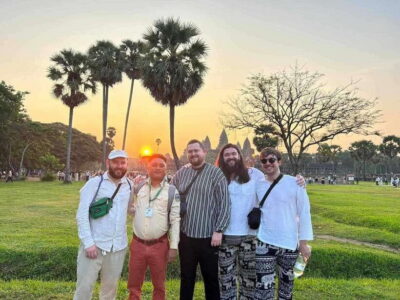
Reviewed · TEMPLE SUNRISE TOURS
Siem Reap: 2-Day Temple Highlights Sunrise and Sunset Option
Angkor is too large and too important to rush in a single morning. This two-day temple tour gives you the grand sights, smaller ruins, sunrise at Angkor Wat, and a sunset finish without asking you to arrange every road, ticket stop, and temple visit yourself. I especially like the contrast between delicate Banteay Srei and the huge stone faces of Bayon. I also like the care built into the day: air-conditioning, cold water, and chilled towels matter greatly in Cambodia’s heat.
The main drawback is the early start and the steady amount of walking. You will also pay $62 for the two- or three-day temple pass, on top of the $46 tour price, and meals are not included. If you need step-free access or tire quickly on uneven ground, this is not the right outing.
The best parts of the two-day plan
- Banteay Srei’s fine carvings: This smaller temple has some of the most precise sandstone work in the Angkor area.
- Sunrise from Angkor Wat’s eastern side: You enter before full daylight and approach the temple through quiet cloisters.
- A cooler ride between ruins: Air-conditioning, bottled water, and cold towels give you real relief after each walk.
- Strong local storytelling: Guides such as Pi, Sak, Chhay, Pal, and Bun explain Hinduism, Buddhism, Khmer kings, and temple symbolism.
- A good mix of famous and quieter sites: Ta Prohm and Bayon bring the crowds, while Ta Nei, Neak Pean, and Preah Khan offer a calmer look at Angkor.
- Flexible sunset choices: Private departures include a rice-field sunset drink, while small-group departures include sunset at Bakheng Temple.
Why two days works better than one
The Angkor Archaeological Park covers far more than Angkor Wat. A one-day visit can show you the famous central monuments, but it usually leaves little room for Banteay Srei, Preah Khan, Neak Pean, and the smaller temples that give the complex its scale.
This plan spreads the experience across two days. Day one reaches farther from the central Angkor Thom area. Day two begins before dawn and then focuses on the monuments most people picture when they think of Angkor.
I like that order. The first day lets you learn the basic religious and royal story at a measured pace. By the time you reach Angkor Wat at sunrise, you have some context for why the temples were built, how Hindu and Buddhist ideas shaped them, and how the Khmer kings used architecture to express power.
The pace is still active. Expect temple steps, rough stone paths, long courtyards, and stretches in the open sun. The plan includes breaks and drives between sites, but this is not a gentle sightseeing ride where you remain in the vehicle.
More Temple Sunrise Tours in Cambodia
- Angkor Wat Sunrise or Sunset Tour with Guide from Siem Reap
★ 5.0 · 12,109 reviews - Siem Reap: Angkor Wat: Small-Group Sunrise or Sunset Tour
★ 5.0 · 9,444 reviews - Siem Reap: Angkor Wat 2-Day Tour with Sunrise and Sunset
★ 4.9 · 4,429 reviews
Day one: Pre Rup and the road to Banteay Srei
The first major stop is Pre Rup, a Hindu temple mountain built as the state temple of King Rajendravarman in 961 or early 962. Its brick, laterite, and sandstone construction gives it a different look from the later monuments.
Pre Rup is useful as an introduction to the temple mountain idea. The structure rises in levels, drawing your eye upward toward the sanctuary towers. You can see how the Khmer combined practical building materials with a symbolic design that represented the sacred center of the universe.
The upper levels require care, especially in hot weather. Parts of the stone can be uneven, and the exposed setting offers little shade. Still, it is a strong first stop because the scale is manageable and the guide can explain the link between architecture, kingship, and Hindu belief before the day becomes busier.
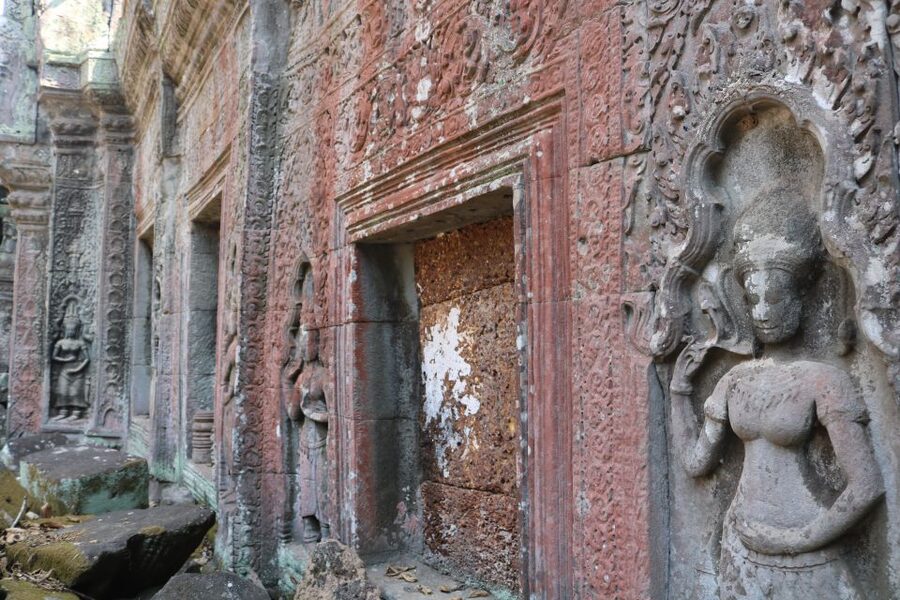
Banteay Srei is the day’s long-distance reward. It is smaller than Angkor Wat, but its carved sandstone is remarkably detailed. Figures, floral patterns, and scenes from Hindu mythology cover the structure with a delicacy that is easy to miss at larger temples.
The name is often associated with women, though the temple was not simply a women’s monument. Your guide can help separate popular ideas from the site’s actual religious and royal setting. The small scale also means you can study the carvings at close range rather than trying to take in enormous galleries all at once.
Banteay Srei became accessible to ordinary visitors only in the late 1990s, after the Khmer Rouge had left the surrounding area. That recent history adds weight to the visit. You are not only looking at old stone. You are also seeing a place that has had a difficult modern journey toward safe access and preservation.
Neak Pean and Preah Khan after lunch
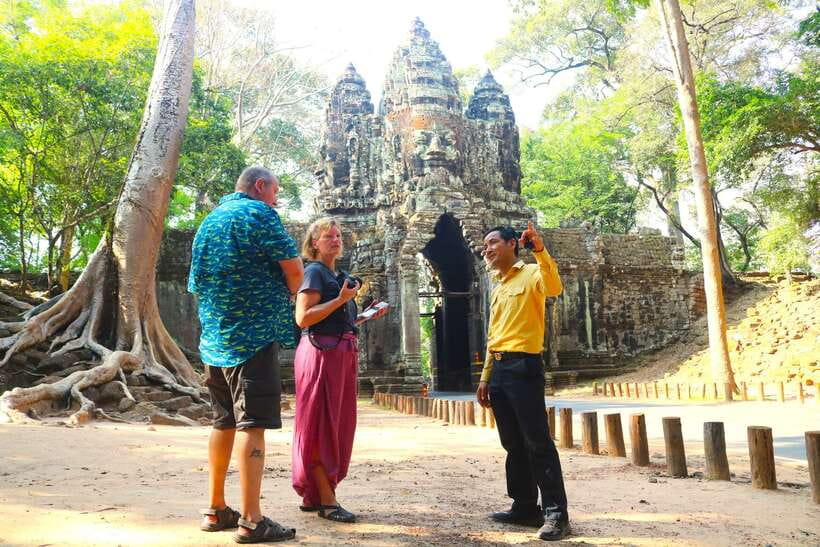
Neak Pean gives you a break from the classic temple mountain form. It sits on an artificial island in the Jayatataka Baray, reached by a raised walkway across the water and wet ground.
The temple is Buddhist and arranged around a circular island. Water and balance are central to its design, so the approach matters as much as the shrine itself. Depending on the season, the surrounding area can look more or less watery, but the raised path still creates a clear sense of separation from the road and the larger temple grounds.
Neak Pean is not a large monument. Do not expect the same number of galleries or carvings as Angkor Wat. Its appeal comes from its unusual plan and its relationship with water. It makes a welcome change after the vertical climb at Pre Rup and the dense decoration at Banteay Srei.
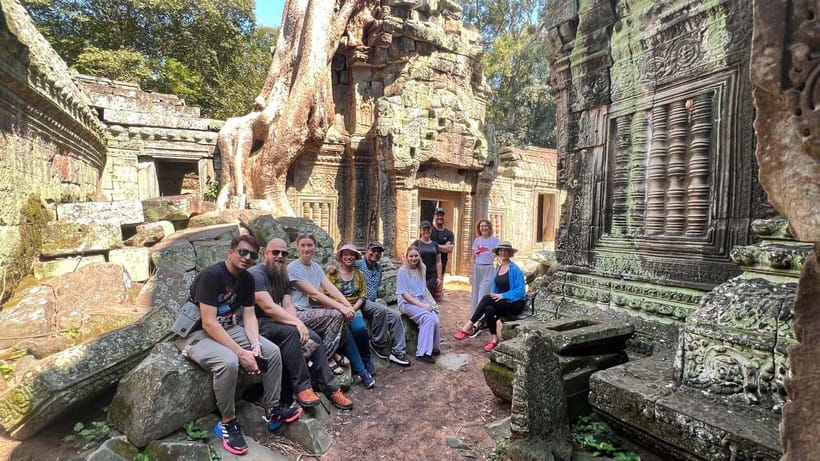
Preah Khan is one of the most atmospheric stops on the tour. Built by Jayavarman VII in honor of his father, it is a broad, partly ruined complex where tree roots, fallen stone, corridors, and open courtyards come together.
The site has an appealing sense of discovery, though you should watch your footing. Some passages are narrow or uneven, and restoration work continues in parts of the complex. The World Monuments Fund has worked on Preah Khan, and several sections are in remarkably good condition.
I like Preah Khan because it helps you understand that Angkor was not just a collection of isolated monuments. It was a working religious and administrative center with spaces for worship, movement, learning, and royal activity. Your guide can point out how the plan differs from Angkor Wat and how Jayavarman VII’s building program reflected Buddhist ideas.
Day one ends with a choice of sunset
The sunset arrangement depends on the booking type. With the private option, the day ends with a drink in the rice fields. That is the more relaxed choice, giving you open countryside, a quiet setting, and a chance to cool down after the temples.
The small-group option includes sunset at Bakheng Temple. Phnom Bakheng is a hilltop temple with broad views, but access and viewing conditions can depend on crowd levels and site controls. It also involves an uphill walk, so this is worth keeping in mind if you have knee trouble.
The experience description also includes Bakheng Temple in the first-day route, while the private option specifies the rice-field drink. Check the exact sunset arrangement when you book. That small detail can affect the mood of your evening: rice fields suit a slower finish, while Bakheng offers a more classic temple viewpoint.
More Temple Sunrise Tours in Siem Reap
- Angkor Wat Sunrise tour with Small – Group and Guide tours
★ 5.0 · 3,655 reviews - Angkor Wat Highlights and Sunrise Guided Tour from Siem Reap
★ 5.0 · 3,213 reviews - Full-Day Angkor Wat Sunrise Private Tour with Guide from Siem Reap
★ 5.0 · 2,920 reviews - Angkor Wat Sunrise & 3 Main Temples with Breakfast – Small Group
★ 5.0 · 2,857 reviews
Before dawn at Angkor Wat
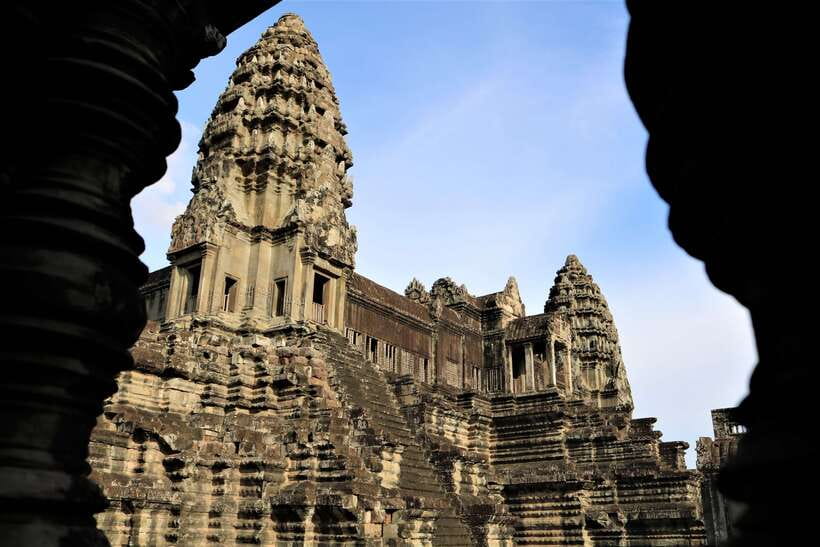
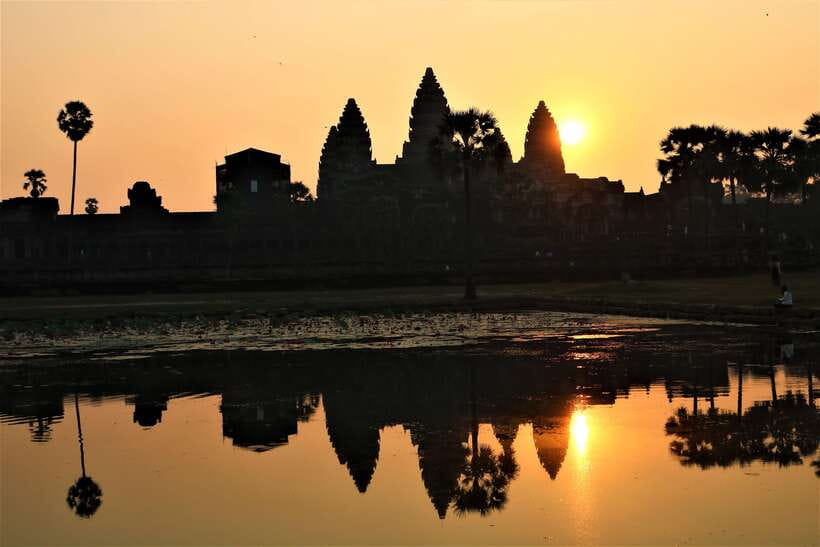
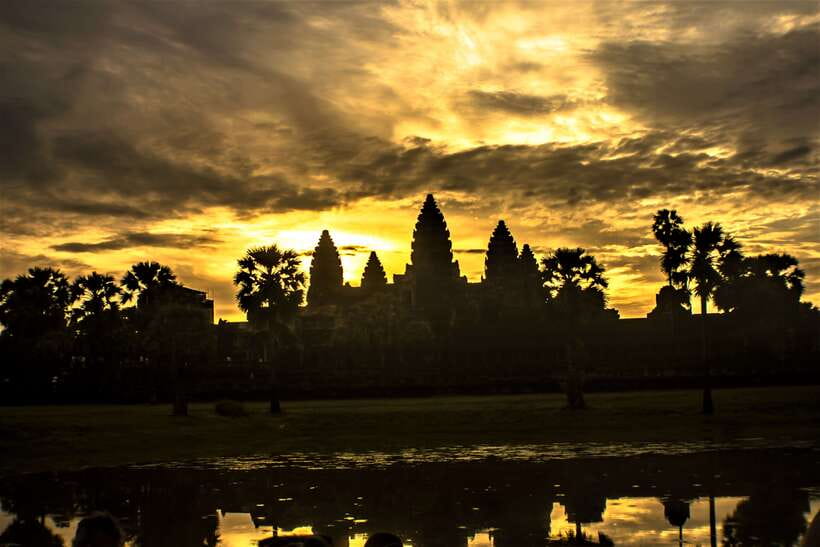
Day two starts before sunrise. You should bring a torch, since the approach begins in darkness from Angkor Wat’s eastern side. This route takes you through cloistered corridors before the full outline of the temple becomes visible.
The sunrise is the visual centerpiece of the tour, but the timing and position matter. Guides such as Sak, Pi, Chhay, and others are praised for getting groups into a good viewing place early. No guide can control clouds, crowds, or the exact colors in the sky, but arriving with a plan makes the morning much less stressful.
Angkor Wat itself deserves more than a quick photograph. Once daylight improves, you can study the long galleries and bas-reliefs. The temple’s carvings stretch for a remarkable distance, with scenes tied to Hindu epics, royal power, warfare, and religious belief.
Entering from the eastern side before sunrise also gives the visit a different feel from the usual daytime approach. You first encounter shadowed corridors and stone details, then gradually see the monument take shape. Bring a small torch, wear shoes with a firm grip, and avoid carrying more than you need.
Breakfast is taken outside the temple after the morning visit. Meals are not included in the tour price, so budget separately for breakfast and lunch. The stop is useful because it gives you time to eat before the next round of walking.
Ta Prohm and Ta Nei in the jungle
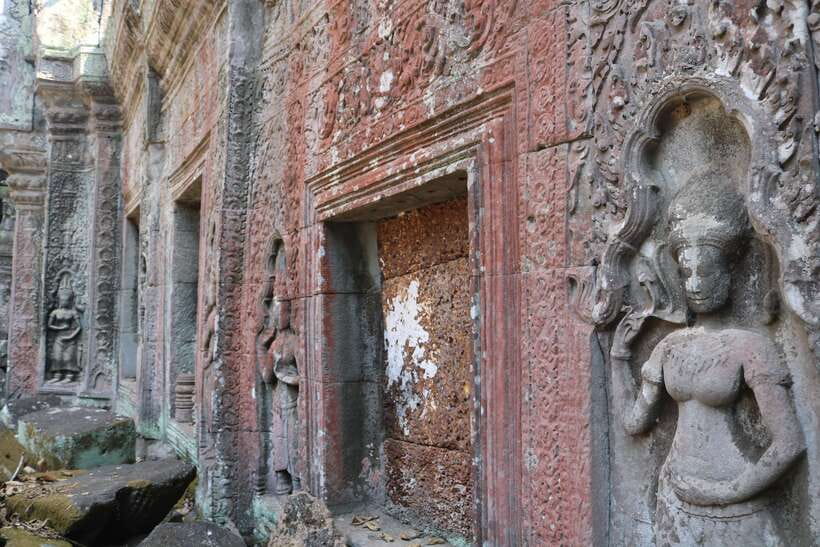
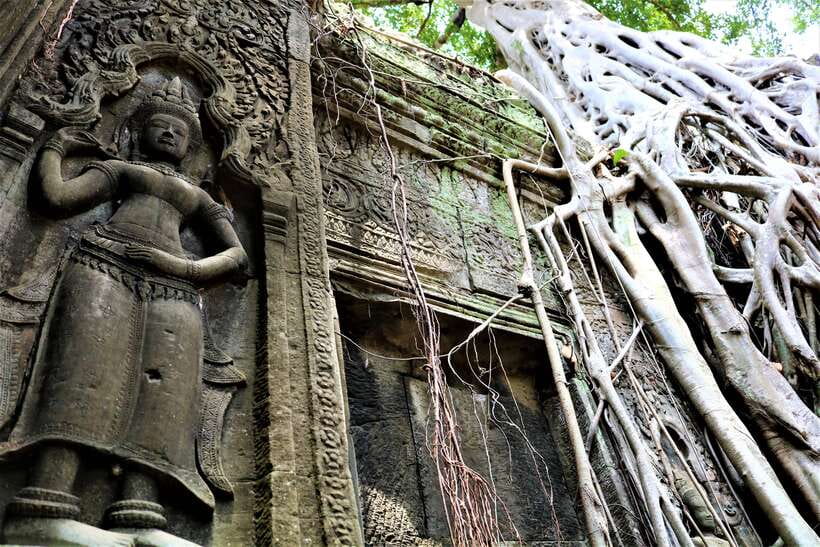
Ta Prohm is the temple most associated with trees and jungle growth. It was once home to 2,740 monks and now appears much as it did when French explorer Henri Mouhot recorded it in the early 1850s.
The roots are striking, but they are only part of the site’s interest. Ta Prohm shows how a major religious complex can look after centuries of damage, vegetation, and partial conservation. You will see carved doorways, collapsed galleries, and trees growing over stone. The setting can be crowded, especially around the most photographed sections, so your guide’s route and timing matter.
The site is uneven and sometimes cramped. Allow yourself time to stop, but do not expect complete quiet. This is one of Angkor’s most popular temples, and the narrow paths can slow the group.
Ta Nei provides a useful contrast. It is a late 12th-century stone temple located within Angkor, but it is smaller and less imposing than Ta Prohm. Its value is in the quieter scale and the chance to see another side of the same period of Khmer construction.
You may find fewer people at Ta Nei, although conditions can change. The stop is especially worthwhile if you enjoy atmosphere, worn stone, and smaller ruins more than grand monuments. It also gives the guide room to explain how temple design changed across different royal reigns.
Angkor Thom, Bayon, and the final monuments
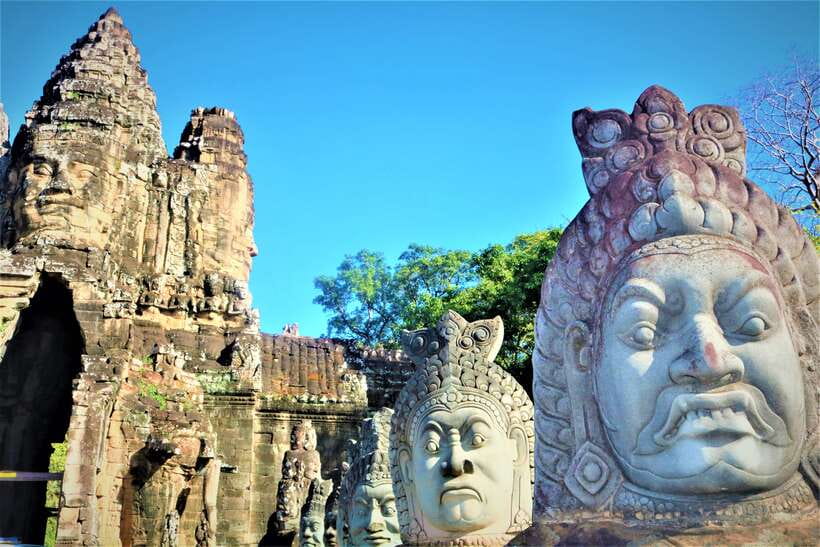
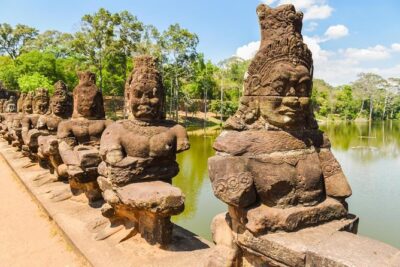
The southern gate of Angkor Thom is one of the memorable approaches of the tour. A row of 54 stone figures lines each side of the entrance, with gods on one side and demons on the other.
This is not just decorative staging. The figures refer to the Hindu story of the Churning of the Ocean of Milk, a struggle between gods and demons that helped produce the elixir of immortality. Your guide can explain how that story connects to the wider religious ideas found across Angkor.
Beyond the gate lies Angkor Thom, the fortified city. It was a major center under Jayavarman VII, and its scale helps you understand the size of the Khmer capital. The city walls and gates are only part of the story. Inside, the Bayon, terraces, and other structures create a complex web of royal and religious spaces.
At the Bayon, enormous carved faces look out from the central towers. More than 200 faces are associated with the monument, though their exact identity and meaning have long encouraged discussion. Some interpretations connect them with the bodhisattva of compassion, while others see royal imagery in the features.
The Bayon can feel confusing at first because galleries and towers overlap in a tight arrangement. This is where a guide earns the fee. A good explanation helps you see the faces, bas-reliefs, and changing levels as parts of a plan rather than random stonework.
The Terrace of the Leper King and the Terrace of Elephants complete the central Angkor Thom visit. The Terrace of the Elephants served as a ceremonial platform and carries long lines of carved elephants and other figures. The Terrace of the Leper King is smaller but has detailed reliefs and a more enclosed feel.
You will not have unlimited time at each monument. The reward is breadth: over two days, you see major temples, smaller ruins, Hindu and Buddhist sites, royal architecture, and different kinds of restoration. If you want a slow archaeological study of every gallery, book a private arrangement or plan extra days in Siem Reap.
Guides, vehicles, and the practical comfort factor
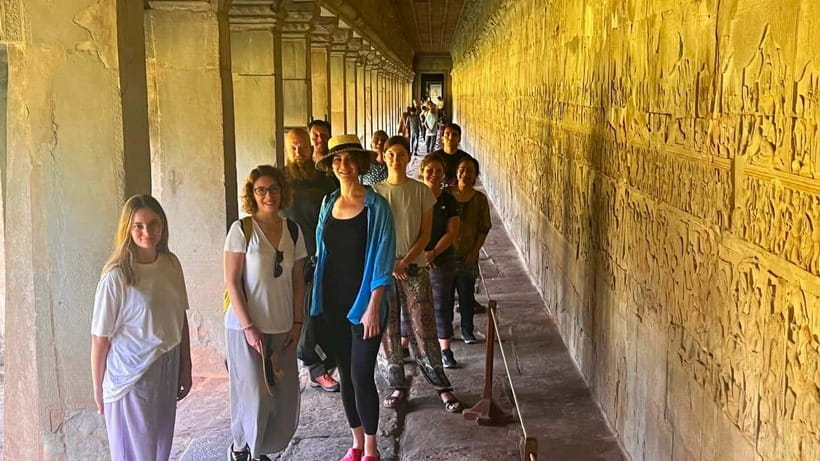
The English-speaking guides are central to the experience. Names attached to this tour include Pi, Sak, Chhay, Pal, Bun, So, Yuth, Sam, and others. The exact guide depends on the departure, but the strongest guide style is clear: explain the story, point out details you would miss, answer questions, and allow time for photographs.
Several guides also help with pictures. That may sound minor, but it is useful when you are traveling alone or want a photograph that includes the whole group. Guides have also adjusted the pace for people with knee trouble or older relatives, though you should not assume that every physical need can be accommodated.
The driver matters just as much. Hotel pickup and drop-off cover hotels in Siem Reap City, and the air-conditioned vehicle gives you a proper break between temples. Cold bottled water and cool towels are supplied, and that simple service becomes increasingly valuable once the sun is high.
Groups can be small, with examples ranging from a handful of people to around 15. The size may change between days. A smaller group usually makes it easier to hear the guide, keep a reasonable pace, and leave the vehicle without delay.
Wear comfortable walking shoes, bring insect repellent, and dress with shoulders and knees covered. Shorts are not allowed under the stated dress guidance, and feeding animals is prohibited. The tour is not wheelchair accessible and is not suitable for children under eight, people with mobility impairments, or wheelchair users.
Is $46 a good value?
The $46 price covers two days of transport, an English-speaking licensed guide, hotel transfers, and the sunset feature linked to your booking type. That is a fair price for the amount of ground covered, especially when you consider the driving distance to Banteay Srei and the early departure for sunrise.
The important extra cost is the Angkor pass. A two- or three-day pass costs $62 per person. Meals are also separate, including the breakfast after sunrise and the lunch stop on day one. Your total budget should therefore include the pass, food, and any personal drinks beyond the supplied water.
The real value is organization. You could arrange a driver and visit these sites independently, but you would need to plan the route, manage the early start, choose sunset timing, and provide your own temple background. If you value context and want someone else to handle the roads, this package earns its price.
Who should book it?
Book this tour if you want the main Angkor sights plus several less famous temples, and if you prefer an English-speaking guide to explain what you are seeing. It suits first-time visitors who want a structured introduction without spending every day at the largest monuments.
It also works well for people who care about photography. The sunrise timing, temple viewpoints, and guides who help with pictures can make a real difference. The air-conditioned van and cold towels are especially helpful during the hotter months.
Think twice if you dislike pre-dawn departures, need a slow pace, or want full control over every stop. The itinerary is full, and the ruins involve uneven ground, stairs, and heat. If those limits suit you, this is a strong two-day introduction to Angkor, with enough variety to make the extra temple pass worthwhile.
FAQ
How long does the tour last?
The experience lasts two days.
What temples are included?
The route includes Pre Rup, Banteay Srei, Neak Pean, Preah Khan, Angkor Wat, Ta Prohm, Ta Nei, Angkor Thom, Bayon, the Terrace of the Leper King, and the Terrace of Elephants.
Is sunrise at Angkor Wat included?
Yes. Day two begins with a pre-dawn departure for sunrise at Angkor Wat.
Is a sunset included?
Yes, but the arrangement depends on the booking type. Private departures include a rice-field sunset drink, while small-group departures include sunset at Bakheng Temple.
Does the price include the Angkor temple pass?
No. The two- or three-day temple pass costs $62 per person and is paid separately.
Are meals included?
No. Meals are not included, although the itinerary includes a breakfast stop after Angkor Wat and a lunch stop during the first day.
Is hotel pickup available?
Yes. Pickup and drop-off are available from hotels in Siem Reap City.
What should I wear and bring?
Wear clothing that covers your shoulders and knees, plus comfortable walking shoes. Bring insect repellent and a torch for the pre-dawn approach to Angkor Wat.
Is the tour suitable for wheelchair users or people with mobility impairments?
No. The activity is not wheelchair accessible and is not suitable for wheelchair users or people with mobility impairments. It is also not suitable for children under eight.
More Temple Sunset Tours in Siem Reap
- Siem Reap: Full Day Angkor Wat Temple Experience with Sunset
★ 4.9 · 1,490 reviews - Angkor Wat full Day ‘Small Group with sunset & Tour Guide
★ 5.0 · 1,369 reviews - 2 Days Exclusive Temple Highlights with Sunset and Sunrise Tour
★ 5.0 · 1,157 reviews - Angkor Wat Small Group Tour and Sunset with Lunch Included
★ 5.0 · 398 reviews
More Temple Sunset Tours in Cambodia
- Siem Reap: Full-Day Angkor Wat Guided Tour with Sunset
★ 4.9 · 3,803 reviews - Angkor Wat Sunset Small Group Tour with Lunch Included
★ 5.0 · 3,059 reviews - Siem Reap: Angkor Wat Sunrise or Sunset Guided Tour
★ 4.9 · 2,123 reviews - Full-Day Guided Sunset Tour of Angkor Wat
★ 5.0 · 1,507 reviews
Newly written up around Siem Reap
- Siem Reap: Angkor Wat Private Tour by Tuk-Tuk★ 4.5 · 117 reviews
- Phnom Kulen Waterfall and Banteay Srei Temple Tour from Siem Reap★ 5.0 · 30 reviews
- 5-Day All Major Temples & Kulen Mount Waterfall & Koh Ker & Beng Mealea★ 5.0 · 13 reviews
- 3-Day Angkor Wat & All Interesting Major Temples & Kulen Mount Waterfall★ 5.0 · 63 reviews
- Angkor Wat Tour Deutsch | Private Führung★ 5.0 · 134 reviews
- Full day exclusive tour for the main temples in Siem Reap★ 5.0 · 135 reviews
- Small-Group Full Day Angkor wat Guide tour with Sun set★ 5.0 · 136 reviews
- Angkor Wat Private Tour by Tuk-Tuk with English Speaking Driver★ 5.0 · 142 reviews
Temple Sunrise Tours, compared.
Angkor Wat Sunrise or Sunset Tour with Guide from Siem Reap
Read our review →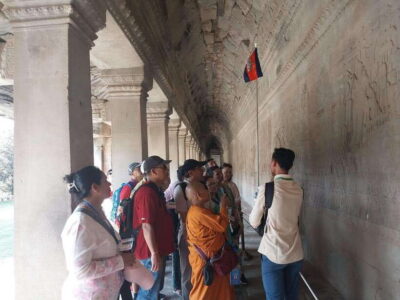
Angkor Wat: Small-Group Sunrise or Sunset Tour
Read our review →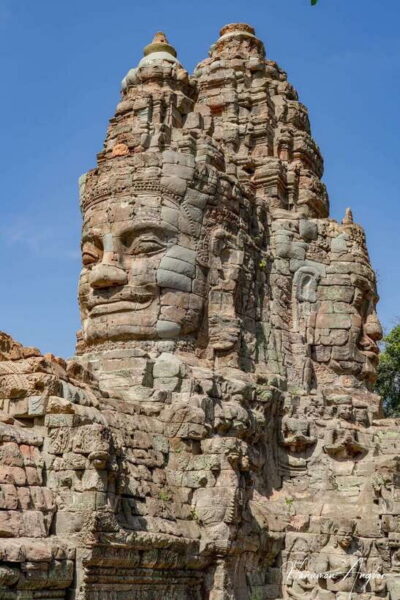
Angkor Wat 2-Day Tour with Sunrise and Sunset
Read our review →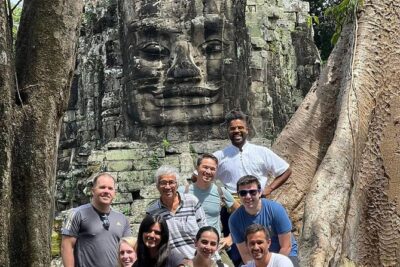
Angkor Wat Sunrise tour with Small – Group and Guide tours
Read our review →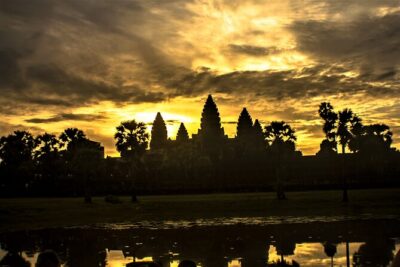
Angkor Wat Highlights and Sunrise Guided Tour from Siem Reap
Read our review →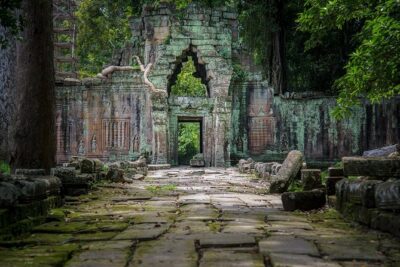
Full-Day Angkor Wat Sunrise Private Tour with Guide from Siem Reap
Read our review →
Angkor Wat Sunrise & 3 Main Temples with Breakfast – Small Group
Read our review →