
Reviewed · GRAND PALACE & WAT PHO TOURS
Thai Dance Class at Wat Arun
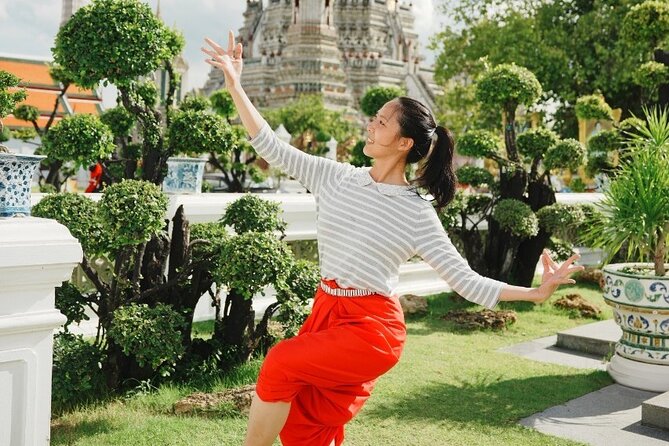
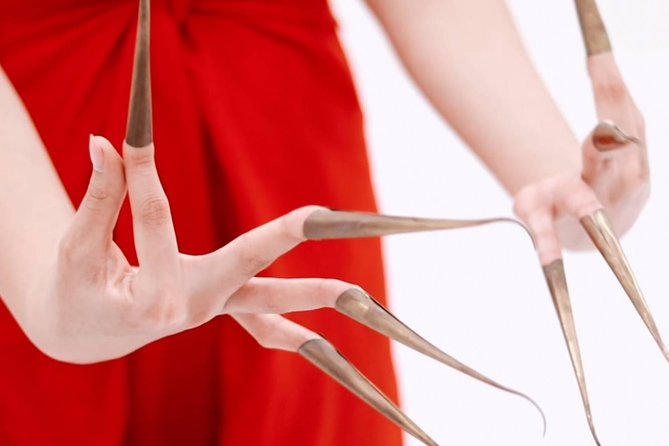
Thai dance is less about learning a routine quickly than learning how Thailand uses posture, fingers, and controlled movement to tell a story. This two-hour class lets you dress in traditional clothing, fit the long curved dance nails, and work through three styles with an instructor in a small setting.
I like the personal teaching and the chance to record your final performance on your phone. I also like the snack and herbal drink at the end, which turn the lesson into a friendly cultural visit rather than a bare dance workshop.
The main drawback is price. At $71.39 per person, this is not a cheap way to spend two hours, and elaborate hair and makeup are not clearly included. You are paying for personal attention, costume, cultural context, and a memorable photo opportunity, not a full professional dance course.
Key points to know before booking
- Traditional costume and dance nails: You dress in Thai clothing and use traditional nail extensions while learning the basic arm and hand positions.
- Three dances in one lesson: The class introduces three styles set to three different songs, giving you a quick look at regional Thai dance.
- Small-class format: The experience is described as accommodating up to seven people, though the general activity information also lists a maximum of 15. Confirm the group size when booking.
- Friendly cultural lesson: Instructors may explain Thai customs, folklore, dance rituals, and useful Thai phrases as part of the session.
- Photos and phone video allowed: You can record the final performance with your phone, but professional cameras are not allowed.
- Two-hour schedule: Changing, costume preparation, instruction, dancing, photos, and refreshments all fit into the visit.
Getting dressed in Thai costume near Wat Arun
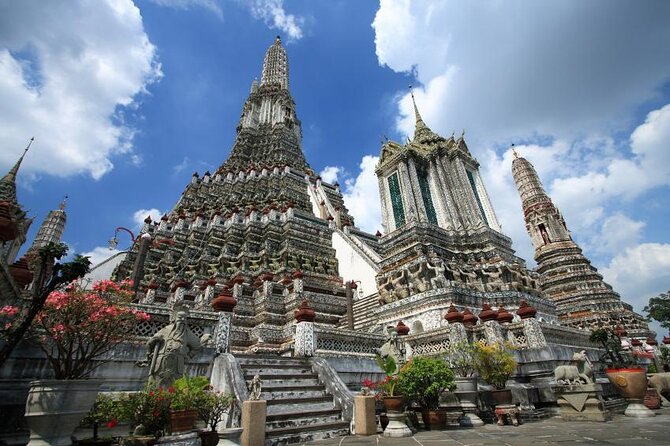
The class begins at 243 Thanon Wang Doem in the Wat Arun area of Bangkok. The meeting point is near public transportation, and the activity ends where it begins. Information also refers to transfers from ICONSIAM pier, so read your confirmation carefully and check the exact meeting instructions before setting out.
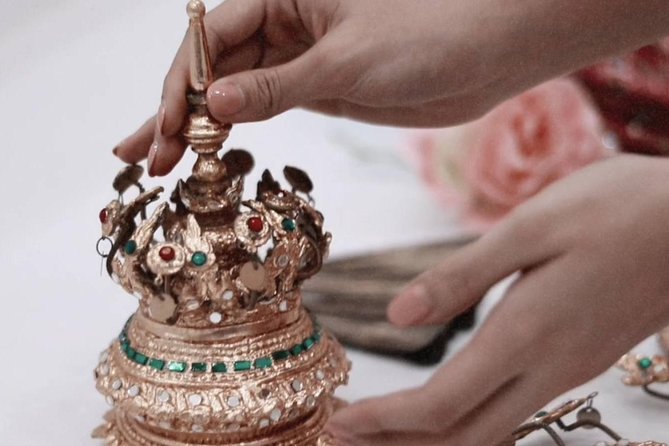
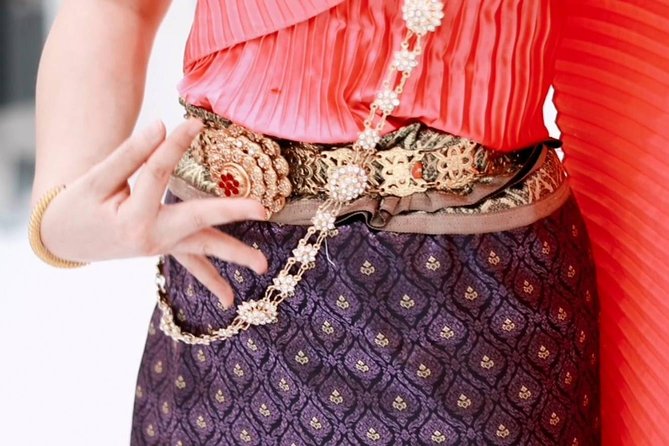
The first part is preparation. You change into a traditional outfit described in the experience as Ayutthayan dress. You can expect jewelry and a headdress, along with the long curved nail extensions associated with classical Thai dance. The costume is not just a photo prop. It helps you understand why the movements are so measured. A large arm sweep, for example, looks different when you are keeping a headdress steady and extending your fingers through the nails.
Some sessions have included hair styling and decorative touches, but do not assume that elaborate hair and makeup are part of the standard booking. The supplied details specifically promise traditional costume and nails, while the extra styling appears to vary. If dressing up is your main reason for booking, confirm what is included.
The dressing stage is also where the experience becomes more personal. Instructors or hosts help you prepare the clothing and equipment, and the setting is described as small and intimate. That suits beginners who may feel awkward trying traditional movements in front of a large group.
More Grand Palace and Wat Pho Tours in Bangkok:
- Bangkok: Grand Palace, Wat Pho, and Wat Arun Guided Tour
★ 4.8 · 3,632 reviews - Bangkok: Grand Palace and Wat Phra Kaew Guided Walking Tour
★ 4.4 · 2,417 reviews - Bangkok: Grand Palace, Wat Pho, Wat Arun Sacred & Local Tour
★ 4.3 · 2,256 reviews
Learning the hand positions before the music starts
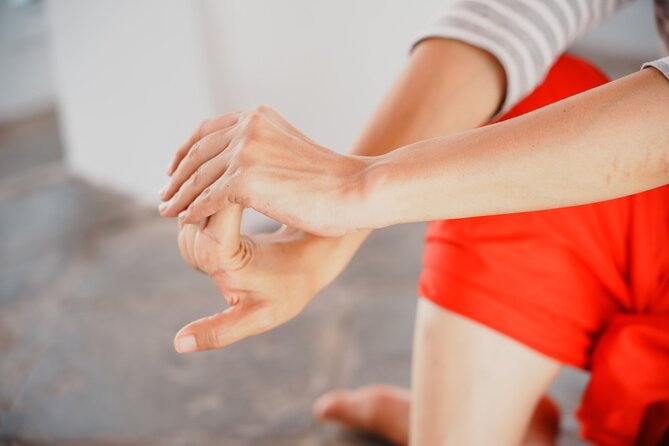
After you are dressed, the teacher introduces the body positions and basic arm and hand work. Thai dance can look effortless from the audience, but the controlled fingers, bent wrists, held poses, and slow transitions take concentration.
You begin with simple positions rather than a demanding routine. This matters if you are not flexible or have never studied dance. One session was adjusted to a student’s pace, with difficult steps repeated as needed. That kind of patience is a major part of the class’s value, since the goal is to give you a first feel for Thai dance rather than test your fitness.
The lesson also puts movement into cultural context. Depending on the instructor, you may hear about Thai folklore dance, dance traditions from different parts of the country, rituals, or the meaning behind certain gestures. Instructors named in past sessions include Jenny, Jan, Ploy, and Thapisa. The teaching team may change, but the repeated theme is clear: the cultural explanation is treated as part of the lesson, not as filler between costume changes.
You may also learn a few Thai phrases. This is a small detail, but it helps the session feel connected to everyday Thai culture rather than limited to choreography.
Three songs and three styles of Thai dance
Once your body is ready, the class moves into a routine using three songs and three different styles. This is the heart of the experience. You are not expected to master an entire classical performance in two hours. Instead, you get a compact introduction to the graceful arm work, poses, and musical changes that separate one style from another.
The three-part structure keeps the lesson moving. You first repeat the basic positions, then add a sequence, and then adjust your movement to a new song or style. If you are dancing with friends or family, the mistakes can be part of the fun. If you are alone, the small setting gives you more room to ask questions and repeat a step.
The class is suitable for most people, and the supplied information does not require prior dance experience. Still, you should expect some physical effort. Holding your arms in position and keeping your fingers extended can be tiring, especially in costume. The lesson is not described as a fitness class, but it is more active than simply posing for photographs.
The music is important too. Thai dance is tied to rhythm, gesture, and ceremony, so learning the movements with Thai songs gives you a better sense of how the art works. You leave with more than a set of poses. You have tried to coordinate costume, music, posture, and hand position at the same time.
The final performance and your phone photos
During the last part of the class, you can record the performance on your phone and take pictures. This is a practical benefit, especially if you want a visual memory of the costume and the completed routine.
Professional cameras are not allowed for this part, so plan to use a phone. If you are attending alone, the instructor or host may help with photos and video, but the exact photography arrangement can vary. The activity information specifically allows personal phone recording, not a professional photo session.
The photo time also gives you a chance to see the costume properly. The headdress, jewelry, nails, and fabric create a very different look from ordinary sightseeing clothes. If you are visiting Wat Arun or the riverside temples on the same day, schedule the class with enough time to change before continuing. The experience ends back at the meeting point, not at another attraction.
More temple visits with a hands-on workshop in Bangkok:
- Private Tour: Grand Palace,Wat Phra Kaew, Museum&Cooking Class
★ 5.0 · 7 reviews - Kyoto: Calligraphy class at Buddhist temple in city center
★ 5.0 · 167 reviews - Chinese Kungfu class in old temple beside Forbidden Ci
★ 4.8 · 53 reviews - Seoul: Vegan Temple Food Class, Jogyesa & Changdeokgung Tour
★ 4.6 · 34 reviews
Thai snacks and a herbal drink after class
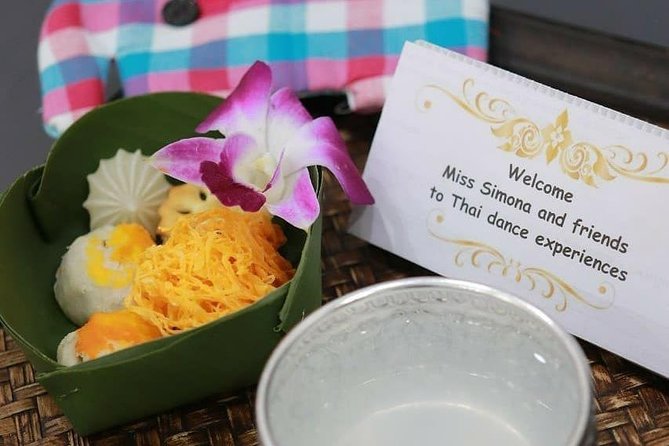
The final part is relaxed. You sit down for a Thai snack and herbal drink, with time to talk about the lesson and ask questions about local customs. This simple ending is one of the better features of the experience because it gives the class a social finish.
The food is described as a light snack, not a meal. Do not book this as a substitute for lunch or dinner. Instead, think of it as a small taste of Thai hospitality after the physical part of the lesson.
The informal conversation may be especially useful if you want more than a costume photo. Instructors can discuss dance traditions, explain what you have just practiced, and share local experience. The mood is intended to be friendly rather than formal, which helps beginners who might otherwise worry about making mistakes.
Is $71.39 fair for two hours?
The price is $71.39 per person. That is high for a two-hour activity in Bangkok, especially if you compare it with a basic group class or a temple visit that costs much less.
The value comes from the package. You receive instruction, a costume, jewelry, nail extensions, cultural explanation, a three-song routine, phone photography time, a snack, and a herbal drink. A small class also means more help with posture and hand positions. For a solo visitor or a couple looking for a special cultural activity, that personal attention can justify the cost.
The value is weaker if you only want a quick dress-up photo. Hair and makeup are not clearly promised, and you will not become an accomplished Thai dancer in a single session. One participant considered the price too high for the level of venue and styling provided. That is a fair caution.
I would compare this experience with what you value most. If you want an unusual, guided cultural activity that combines teaching and dress-up, the price is easier to defend. If you want a polished studio photo shoot or a long dance course, this may not meet your expectations.
Timing, group size, and meeting-point details
The class lasts about two hours, including changing, equipment preparation, the introduction, dance instruction, photos, and refreshments. A choice of lesson times makes it easier to fit around temples, river transport, or an evening meal.
The class is presented as having a maximum of seven people, which is a strong advantage for beginners. However, the general activity information also gives a maximum of 15 participants. Because those figures do not match, confirm the expected group size for your chosen date if personal instruction matters to you.
The listed start point is 243 Thanon Wang Doem, Khwaeng Wat Arun, Bangkok Yai. The experience is near public transportation, and transfers from ICONSIAM pier are included in the description. Some booking information and past directions have referred to ICONSIAM, so do not rely on a map pin alone. Use the confirmation message and contact the provider if the meeting instructions are unclear.
The experience ends back at the meeting point. That makes it simple to continue exploring the Wat Arun area, but it does mean you should plan your onward transport rather than expecting a hotel drop-off.
A mobile ticket is provided, and confirmation is received at booking. Free cancellation is available if you cancel at least 24 hours before the start time. Changes or cancellations inside that window are not refunded, and the activity can be canceled if its minimum number is not met.
Who will enjoy this class most?
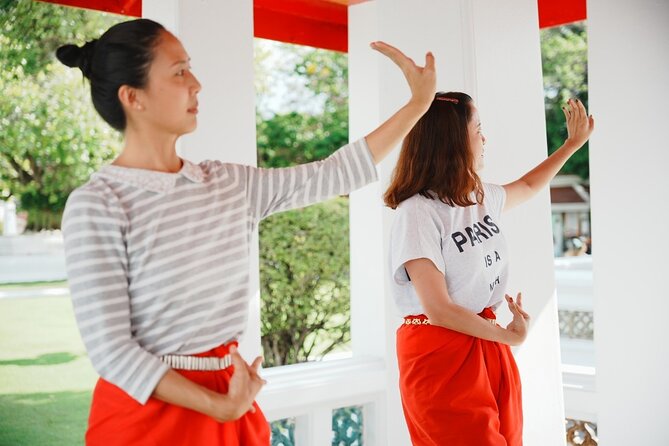
I would recommend it to you if you enjoy learning by doing. You get to use your hands, move to Thai music, ask questions, and wear clothing that connects directly to the dance.
It works particularly well for:
- Couples wanting a shared cultural activity
- Families with children or adults who can participate in the movements
- Solo visitors who appreciate patient instruction and help with photos
- First-time visitors looking for more than temples and markets
- Returning Bangkok visitors who want a new side of Thai culture
- Anyone interested in costume, folklore, or performance
You may want to skip it if you dislike dressing up, prefer a polished theater performance, or expect a full meal and professional photography. It is also not the right choice if you want advanced dance training. The class is an introduction, with the emphasis on cultural contact and a fun first routine.
Should you book the Wat Arun Thai dance class?
Book it if you want a personal Bangkok experience that combines costume, movement, and conversation. The strongest reasons are the small-class teaching, the three different dance styles, and the chance to understand the gestures instead of simply watching them on a stage.
Before paying, confirm the exact meeting point, expected group size, and what styling is included. Keep your expectations realistic about the venue and photography. At $71.39, this is a treat rather than a budget activity, but it can be good value if you want a memorable cultural session and are happy to pay for personal attention.
FAQ
How long does the Thai dance class last?
The experience takes about two hours, including changing clothes, preparing equipment, the introduction, dance instruction, photos, and Thai refreshments.
Where does the class start?
The listed meeting point is 243 Thanon Wang Doem, Khwaeng Wat Arun, Khet Bangkok Yai, Bangkok 10600, Thailand.
Where does the experience end?
The activity ends back at the meeting point.
Is the class near public transportation?
Yes. The meeting point is described as being near public transportation.
What do I wear for the dance lesson?
You change into traditional Thai clothing, described as Ayuttayan dress. Traditional jewelry, a headdress, and nail extensions are also part of the costume experience.
Do I need dance experience?
No prior dance experience is stated as a requirement. Most people can participate, and the teacher covers basic body positions and hand and arm movements.
How many dance styles will I learn?
The lesson includes a routine using three songs and three different Thai dance styles.
Can I take pictures or record the performance?
Yes. You can use your phone to take pictures or record the final performance. Professional cameras are not allowed for this part.
Are food and drinks included?
Yes. The experience includes a Thai snack and a herbal drink after the class.
What is the cancellation policy?
You can cancel at least 24 hours before the start time for a full refund. Cancellations or changes made less than 24 hours before the start time are not refunded or accepted.
Newly written up around Bangkok
- 3-Hour Bangkok Walking Tour: Wat Pho and Wat Arun★ 5.0 · 102 reviews
- Bangkok Half Day Guided Tour: Grand Palace, Wat Arun & Wat Pho★ 5.0 · 4 reviews
- Visit Wat Pho and Wat Arun with Local Expert★ 4.0 · 14 reviews
- Bangkok 3 Temple Walking Tour: Wat Arun, Wat Pho, Wat Traimit★ 5.0 · 4 reviews
- Top 3 Bangkok Temples: Multilingual Private Tour [EN,ES,DE,IT,FR]★ 5.0 · 9 reviews
- Visit temples in and around Bangkok with a former monk of 10 years★ 5.0 · 30 reviews
- Bangkok Heritage Highlights: Grand Palace & Three Temples Tour★ 4.5 · 52 reviews
- Grand Palace & Emerald Buddha Private Tour [Optional Luxury]★ 5.0 · 27 reviews
Grand Palace & Wat Pho Tours, compared.

Grand Palace, Wat Pho, and Wat Arun Guided Tour
Read our review →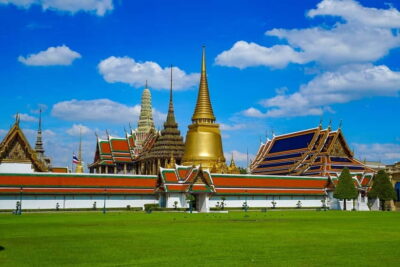
Grand Palace, Wat Pho, Wat Arun Sacred & Local Tour
Read our review →
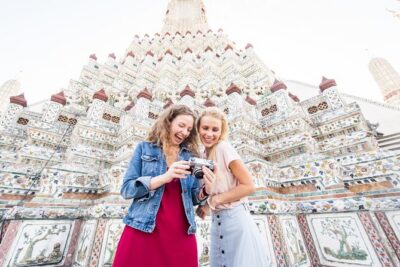
Grand Palace & Temples of Bangkok with experienced guide
Read our review →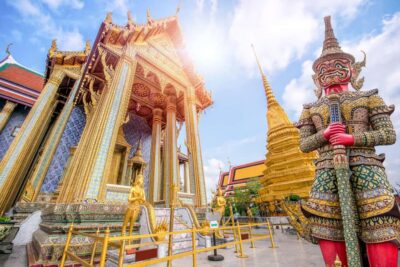
Grand Palace, Wat Pho, and Wat Arun Private Tour
Read our review →
Evening Tour with Wat Arun, Wat Pho & Tuk Tuk Ride
Read our review →
Bangkok City Highlights Tour: Grand Palace & Three Iconic Temples
Read our review →
Browse the lists this tour appears in