
Reviewed · KYOTO TEMPLE TOURS
Kyoto: Calligraphy class at Buddhist temple in city center
Kyoto’s shopping streets can feel busy, but inside Seigan-ji Temple you settle onto tatami and learn to control ink, brush, and breath. This 70-minute calligraphy class gives you more than a quick demonstration: you practice basic strokes, choose a kanji, and produce a finished piece to take home.
I like the small groups of up to six and the patient step-by-step teaching. I also like the personal touch, including a keychain made with your chosen character and photos taken during the session. The main drawback is the seating. Most people sit on the floor with a zabuton, and that can be hard on your knees or legs.
Key points at a glance
- Write inside a central Kyoto temple: Seigan-ji sits in the Shinkyogoku shopping street, with a Great Buddha at the heart of the setting.
- Build skills before the final piece: You learn brush handling and basic lines before working on your chosen kanji.
- Take home two souvenirs: Your finished shikishi artwork is yours to keep, along with a character keychain made by the teacher.
- Small class, useful guidance: Groups are limited to six, allowing individual tips during practice.
- Several languages are supported: Instruction and translation are available in English, Spanish, Japanese, and Dutch.
- Plan your word ahead: Bring a few kanji or word ideas, since choosing one is part of making the final piece personal.
Why this temple setting changes the experience
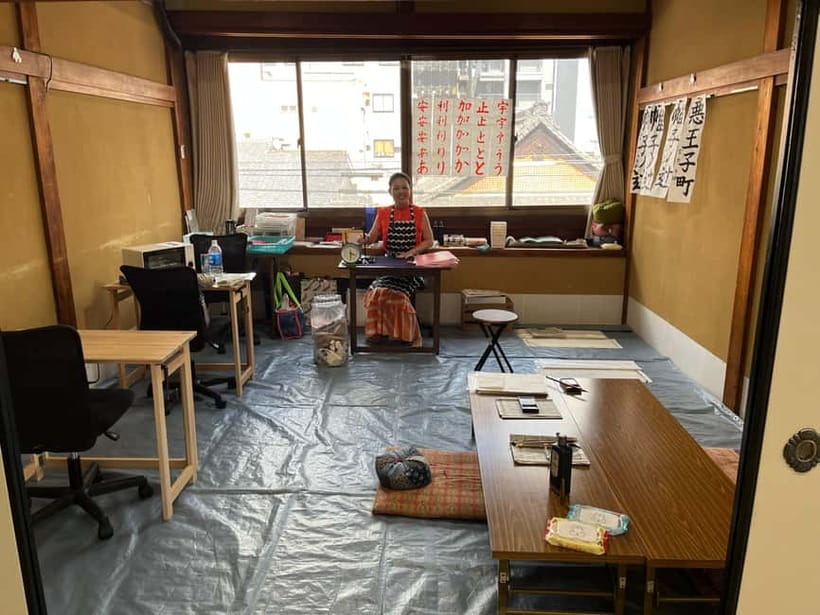
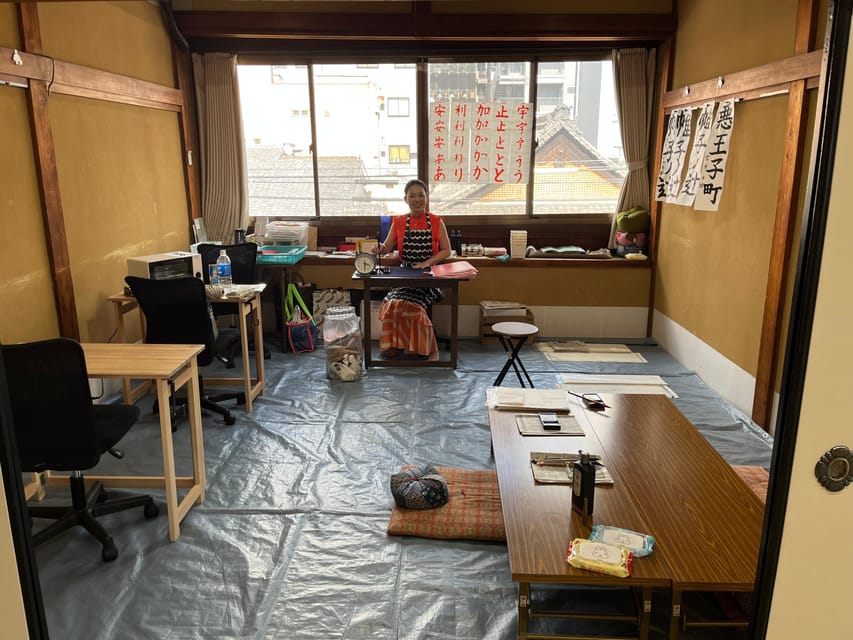
The class takes place in a traditional Japanese-style room inside Seigan-ji Temple, not in a generic craft studio. You remove your shoes, follow the rules for the room, and work on tatami flooring in a setting linked to Buddhist practice. That physical change of pace matters after a morning around Kyoto’s shopping arcades and shrines.
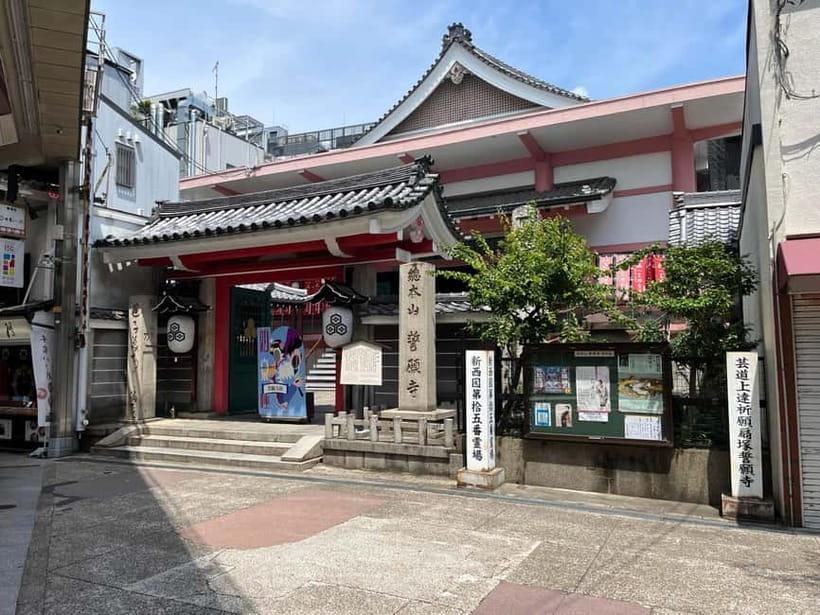
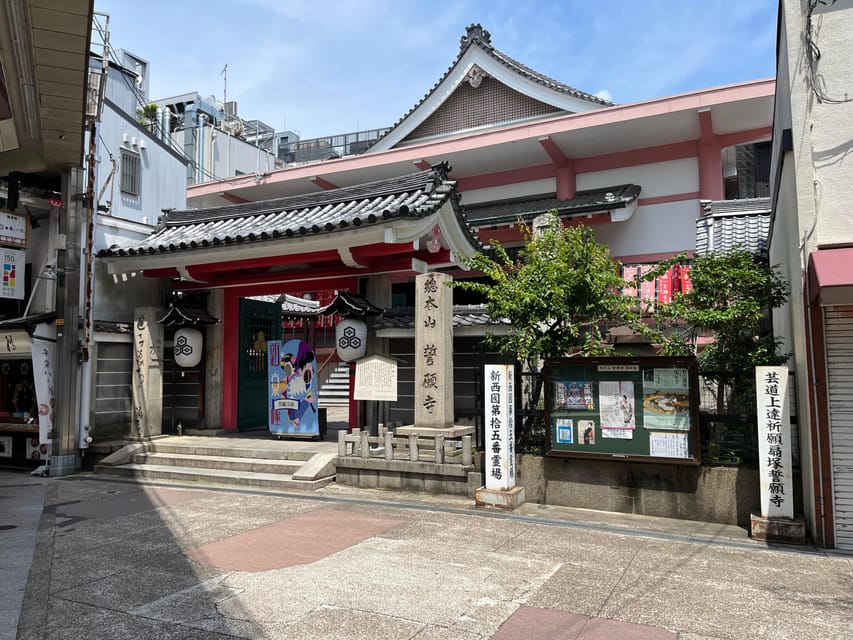
The temple is in the center of Kyoto, in the Shinkyogoku shopping street. You meet outside, in front of Seigan-ji, by looking for the person holding a red lantern on a stick under the covered street. Do not climb the stairs into the temple or interrupt the monks and staff to ask for the workshop. Wait at the entrance for the person with the lantern.
Inside, the tone is quiet but not silent. You hear explanations and conversation, yet most of the room settles down as people concentrate on the brush. I like this balance. You get the calm of a traditional room without the pressure of a formal meditation session.
The temple setting is also useful for understanding why calligraphy feels different from ordinary handwriting. The brush does not simply reproduce letters. Stroke order, pressure, speed, spacing, and the shape of the ink all affect the result. Even a simple character asks you to slow down and pay attention.
More temple visits with a hands-on workshop in Kyoto:
- My Son Hindu Temples & Terracotta Workshop PRIVATE TOUR
★ 5.0 · 25 reviews
What happens during the 70-minute class
The session begins with introductions to the teacher and the translator or guide. The Japanese instructor leads the calligraphy teaching, while language support helps you follow the explanations and ask questions. Guides named Jose and Saskia have helped with translation, practical advice, and photos during previous sessions, though the exact staff member can vary.
Next comes the choice of your word or kanji. You can use one of the examples provided, but I strongly suggest arriving with several ideas. You might choose a word linked to a personal value, a favorite place, a family name, or a simple concept such as peace, love, strength, or happiness. If you have a specific English word in mind, check its Japanese meaning before class rather than choosing a character at random.
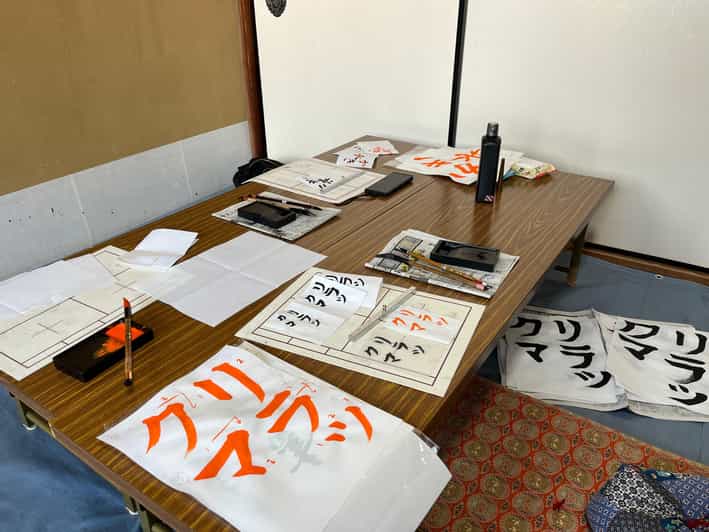
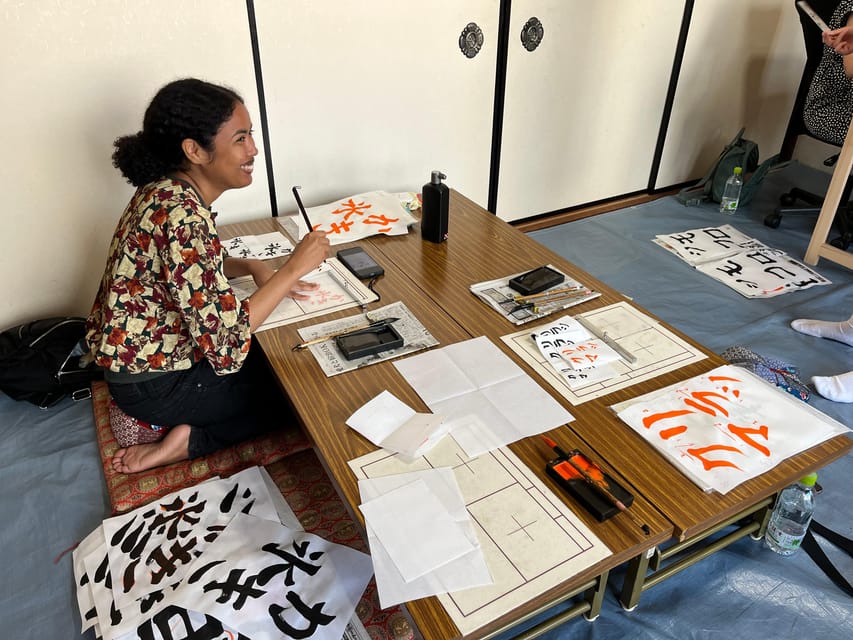
The teacher then introduces the tools. Your materials include washi paper, a brush, ink, bunchi, and shitakami. The terminology may be new, but you do not need prior experience. The point is to learn what each item does and how to handle it properly.
You start with basic lines. This is the useful part that a quick tourist demonstration often skips. You practice pressure and movement before attempting the character itself. The teacher demonstrates, then you copy the forms, receive pointers, and try again.
After that, you practice the selected kanji. The character may look simple when the teacher writes it, but brush calligraphy is harder than it appears. Left-handed writers can find some strokes more awkward, and the instructor may encourage you to try the right hand as well. The setting is relaxed, so mistakes are treated as part of learning rather than a problem.
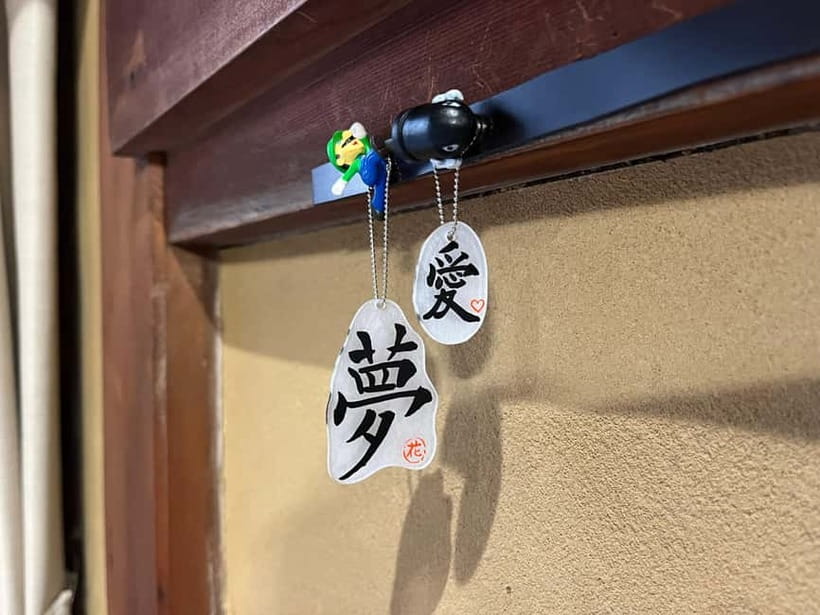
The final stage is your finished artwork. Once you have practiced enough, you write the character on a shikishi, a special square board often used for display. This is the piece you take home. You also receive a keychain featuring your chosen character, made by the teacher as an extra souvenir.
Why the practice matters more than the perfect character
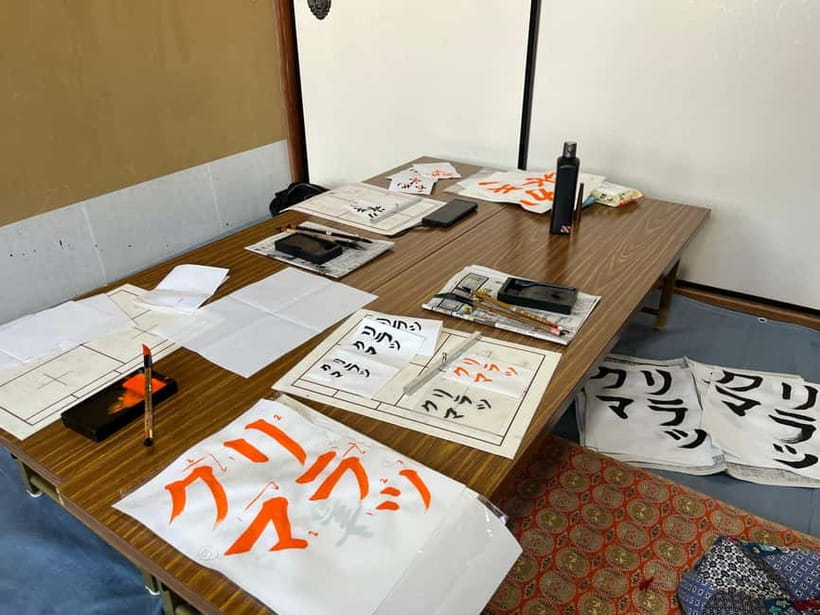
You may arrive hoping to create a flawless piece on the first attempt. That is unlikely, and it is not really the point. The instructor has spent more than a decade, and in some descriptions about 15 years, working with calligraphy. The polished demonstration gives you a clear target, but your own work records the process of learning.
The teacher builds the lesson gradually, which helps beginners avoid feeling lost. You watch the strokes, copy the lines, practice the character, and then decide when you are ready for the final board. The translation makes the method easier to follow, especially when the Japanese instructor is not speaking your language.
One practical tip is to stop practicing before your arm gets tired. The class specifically warns that too much repetition can make your final writing less controlled. I like this advice because it recognizes the difference between useful practice and simply filling paper. Your best final piece may come after fewer attempts than you expect.
Calligraphy also gives you a small lesson in Japanese education and culture. It is part of school life in Japan, not only an art reserved for specialists. You learn about the structure and origin of kanji, the tools used to write them, and the way a character can express an idea. That context makes the souvenir more meaningful than a mass-produced item from a shop.
The souvenirs are personal, not just decorative
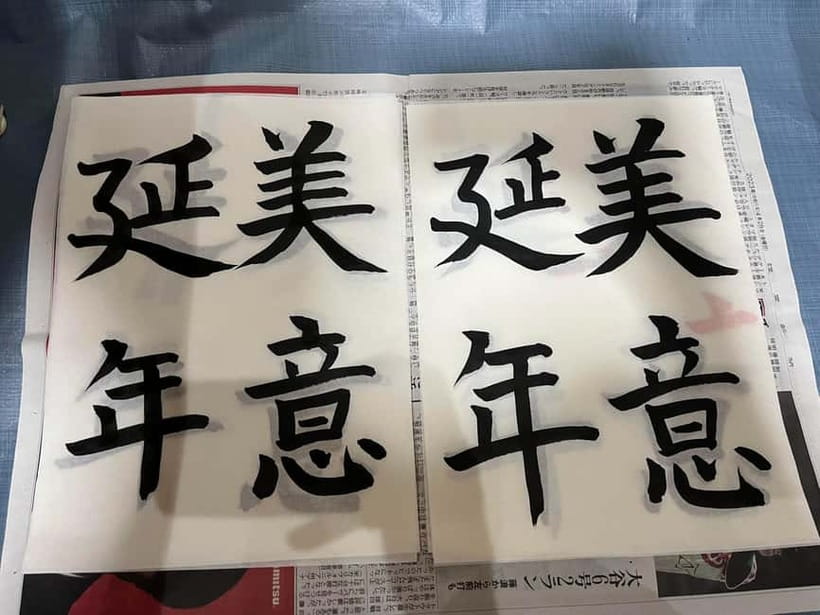
The shikishi board is the main keepsake. It is sturdy enough to display at home and more distinctive than a standard postcard or printed souvenir. You choose the word, practice the form, and make the final version yourself, so the result belongs to your trip in a direct way.
The teacher-made keychain adds another layer. It uses your chosen character and gives you something small to carry every day. It is a thoughtful extra, especially if you have limited luggage space or do not want to transport a larger craft item.
Photography is also part of the personal touch. Guides such as Jose have taken pictures during the practice and final writing stages, giving you a record of the activity as well as the finished board. Since the class lasts only 70 minutes, those photos help preserve the process, not just the result.
Do not expect museum-quality calligraphy from your first attempt. The value is in making a real piece with traditional tools and understanding how much control the art requires. If you want a perfect piece to hang at home, buy one from a professional. If you want a souvenir that shows your own effort, this class is a better choice.
Other temple visits near Kyoto we have written up
- Kyoto: Tea Ceremony Ju-An at Jotokuji Temple
★ 4.9 · 3,207 reviews - Osaka/Kyoto:Kinkakuji,Arashiyama,FushimiInariShrine,NaraPark
★ 4.1 · 1,596 reviews - Arashiyama Bamboo, Temple, Monkeys, or Secret Sake Brewery
★ 4.8 · 886 reviews - Kyoto: Arashiyama Bamboo Forest, Monkeys, Matcha & Temple Tour
★ 5.0 · 759 reviews
Group size, languages, and the pace of instruction
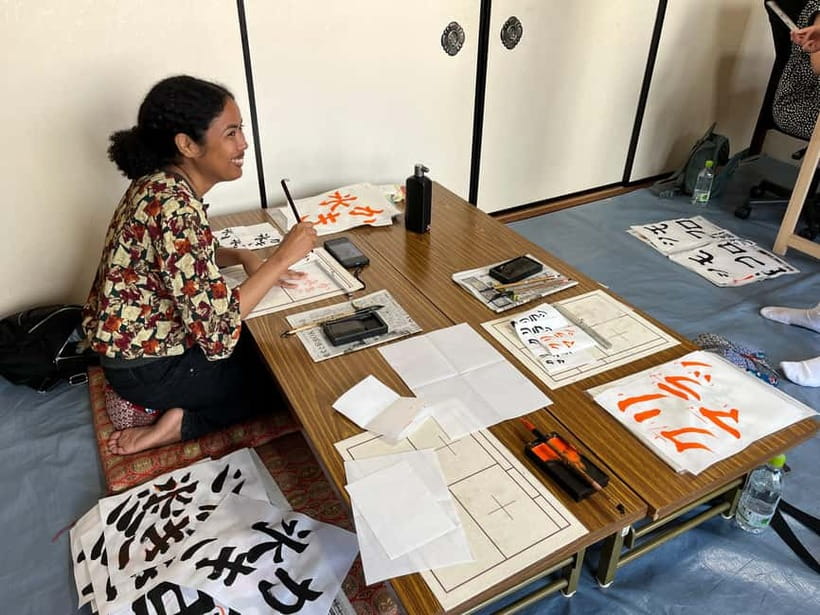
The class is limited to six people. That small number matters because the teacher can look at each person’s strokes and offer individual corrections. Several sessions have had only two or three participants, which creates even more room for help.
Available languages are English, Spanish, Japanese, and Dutch. Translation is not a separate audio track or a printed instruction sheet. A guide works with the Japanese instructor, explains the process, and helps the class move through each stage. The combination has been praised for being warm, clear, and encouraging.
The atmosphere is calm, but this is not a silent retreat. You may talk with the guide and other participants while you work. That suits me because it leaves room for questions and conversation about life in Japan, while still allowing enough quiet to focus on the brush.
The lesson suits complete beginners. You do not need to know Japanese, own calligraphy tools, or have artistic ability. Some basic patience helps more than natural talent. You are learning a physical technique, and the first strokes may look uneven even after careful instruction.
Seating and accessibility: the detail to consider first
The room uses tatami flooring, and most seating is on the floor with a zabuton cushion. A limited number of desks are available, but they cannot be guaranteed for everyone. If sitting on the floor causes pain or strain, contact the provider before booking and explain what you need.
The activity is listed as wheelchair accessible, but the floor-based format deserves careful attention. Accessibility in the building does not necessarily mean that every participant can comfortably sit in the usual position for 70 minutes. Ask about seating arrangements in advance if this affects your decision.
Bare feet are not allowed. Smoking, vaping, alcohol, and drugs are also prohibited. Food and drinks are not provided, although vending machines are available outside the temple. Plan to eat before or after class rather than expecting refreshments during it.
The activity is not suitable for very young children, with restrictions listed for children under two, three, four, and five years in the booking information. It is also listed as unsuitable for visually impaired people. Families with older, well-behaved children may find the hands-on format appealing, but the quiet setting and floor seating require some patience.
Is $55 a fair price?
At $55 per person, this is not the cheapest hands-on activity in Kyoto. The price makes more sense when you count what is included: instruction, translation support, all calligraphy materials, the temple setting, your completed shikishi artwork, and the personalized keychain.
You are also paying for a small class rather than a crowded demonstration. The individual guidance is important because brush technique is difficult to understand from watching alone. A larger class might cost less, but you would probably get fewer corrections and less time with the teacher.
For comparison, a souvenir purchased in a shopping street may be cheaper and more polished. It will not carry your chosen character in your own handwriting, and it will not come with the memory of learning the strokes in a tatami room. I consider the class good value if you want an activity that leaves you with something personal.
The 70-minute length fits well into a central Kyoto day. It is long enough to learn the basics without turning into a full-day commitment. You can place it between shopping, market visits, or nearby sightseeing, though you should allow extra time to find the red lantern meeting point.
Who will enjoy this most
I would choose this class for first-time visitors who want contact with everyday Japanese culture rather than another viewing stop. It is especially good for couples, solo visitors, families with older children, and anyone who likes making things with their hands.
It also works well for people who are not artistic. The structured practice gives you something to follow, and the teacher’s encouragement keeps the class from becoming a test. You might struggle with the brush, but that struggle is part of the experience.
The class is less suitable if you want a fast, polished entertainment activity. It requires concentration and a willingness to practice. It is also a poor fit if you cannot sit on the floor or if you need a fully visual-free activity.
Booking advice for a smoother visit
Choose a few possible kanji before you arrive. You can select from the examples at the temple, but having ideas ready gives you more time to think about the meaning and less time staring at a list of characters.
Read the voucher carefully after booking. The meeting instructions are unusually specific, and arriving at the wrong part of the temple could cause confusion. Look for the red lantern outside Seigan-ji in the covered Shinkyogoku street, and wait there rather than going upstairs.
Free cancellation is available up to 24 hours before the activity for a full refund. You can also reserve now and pay later, which helps if your Kyoto schedule is still changing. Language options should be checked at booking, especially if you prefer Dutch or Spanish support.
Should you book this Kyoto calligraphy class?
Book it if you want a calm, personal activity with a real handmade result. The strongest reasons are the temple room, the small group, patient instruction, and the chance to choose a character with meaning to you.
Skip it if floor seating will be uncomfortable, if you need a fast-paced attraction, or if your main goal is to buy professional calligraphy rather than create your own. For most beginners who can sit comfortably and spare 70 minutes, the combination of cultural context, friendly guidance, and a displayable souvenir makes $55 a sensible Kyoto splurge.
FAQ
Where does the calligraphy class take place?
The class takes place at Seigan-ji Temple in the Shinkyogoku shopping street in central Kyoto.
How do I find the meeting point?
Wait in front of Seigan-ji Temple under the roofed shopping street for the person holding a red lantern on a stick.
Should I enter the temple to find the workshop?
No. Do not climb the stairs or ask the monks and other temple staff about the workshop. Wait outside for the person with the red lantern.
How long does the experience last?
The calligraphy class lasts about 70 minutes.
What languages are available?
Support is available in English, Spanish, Japanese, and Dutch.
How many people can join the class?
The activity is a small-group experience limited to six participants.
Do I need previous calligraphy experience?
No. The class teaches tool use, basic lines, and the selected kanji from the beginning.
What do I take home?
You take home your finished calligraphy on a shikishi board and a keychain made by the teacher with your chosen character.
Is food or drink included?
No. Food and drinks are not served. Vending machines are available outside the temple.
Is the class suitable for wheelchair users?
The activity is listed as wheelchair accessible, but most seating is on the floor with a zabuton and only a limited number of desks are available. Contact the provider in advance if you need a particular seating arrangement.
Newly written up around Kyoto
- Kyoto: Fushimi Inari Taisha Shrine Walking Tour with Guide★ 4.8 · 18 reviews
- Kyoto: Fushimi Inari Shrine Walking Tour★ 5.0 · 72 reviews
- Kyoto Tea Ceremony & Kiyomizu-dera Temple Walking Tour★ 5.0 · 115 reviews
- Kyoto: Zen Meditation at a Private Temple with a Monk★ 5.0 · 202 reviews
- Kyoto: Arashiyama Bamboo, Temple, Matcha, Monkeys & secret spots★ 5.0 · 219 reviews
- Kyoto: 3-Hour Fushimi Inari Shrine Hidden Hiking Tour★ 4.9 · 270 reviews
- KYOTO Tea Ceremony with kimono near by Imamiya Jinjya Shrine★ 5.0 · 343 reviews
- Kyoto Zen Meditation & Garden Tour at a Zen Temple with Lunch★ 5.0 · 441 reviews
Kyoto Temple Tours, compared.
Osaka/Kyoto:Kinkakuji,Arashiyama,FushimiInariShrine,NaraPark
Read our review →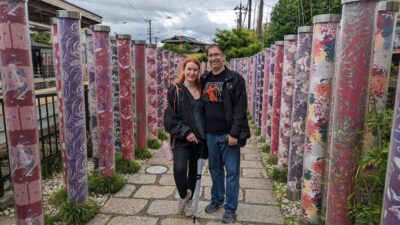
Arashiyama Bamboo, Temple, Monkeys, or Secret Sake Brewery
Read our review →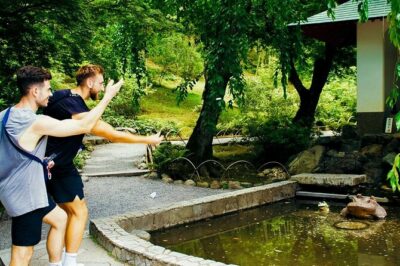
Arashiyama Bamboo Forest, Monkeys, Matcha & Temple Tour
Read our review →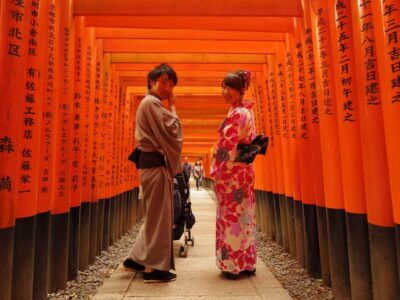
Osaka/Kyoto: Arashiyama, Nara & Fushimi Inari Shrine w/Lunch
Read our review →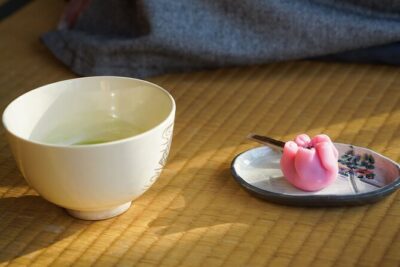
Kyoto Zen Meditation & Garden Tour at a Zen Temple with Lunch
Read our review →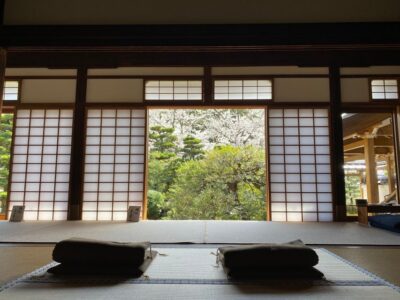
KYOTO Tea Ceremony with kimono near by Imamiya Jinjya Shrine
Read our review →Browse the lists this tour appears in