
Reviewed · WORKSHOPS
Osaka: Temple Tour and Traditional Calligraphy Lesson
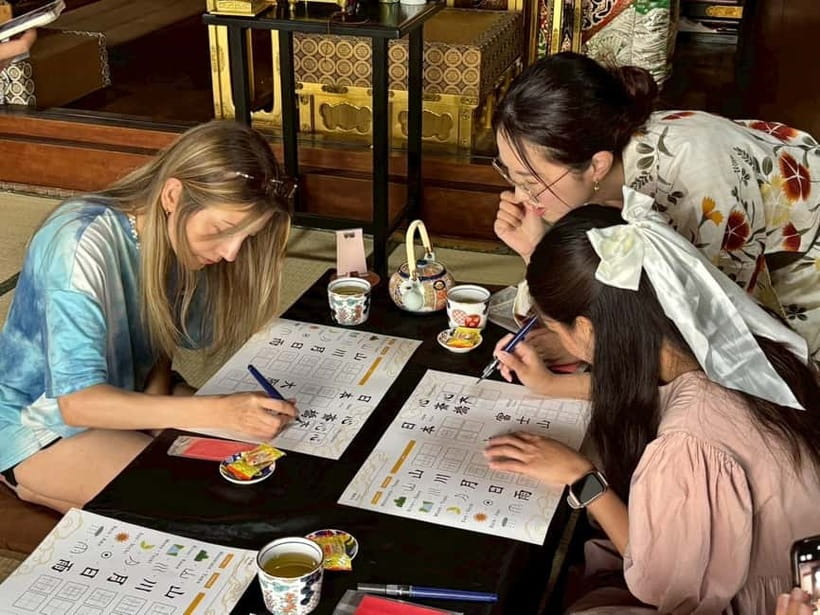
Writing kanji inside Saishoji Temple gives this short Osaka activity more weight than an ordinary brush lesson. You begin with a brief introduction to local history and the difference between Japanese temples and shrines, then settle your breathing before putting ink to paper. I like the quiet setting and the fact that an English-speaking instructor and resident monks guide the session.
I also like the useful keepsakes: a kanji name card with its meaning, a mini shikishi bearing your chosen character, and a small ceramic plate. The main drawback is the one-hour limit. You get a focused taste of several traditions, not a long temple visit or a full calligraphy course, and the exact balance between meditation, language, tea, and writing may feel brisk.
Key points to know before you book
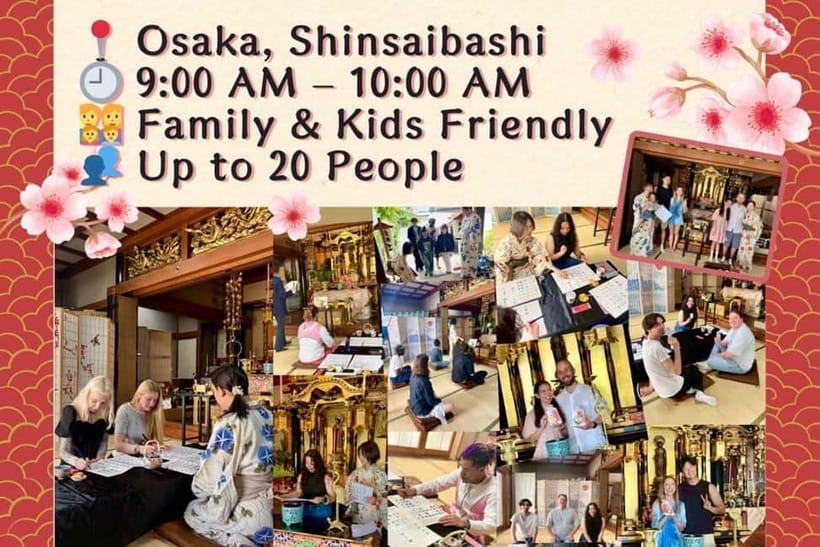
- Three minutes from Yotsubashi Station: Saishoji Temple is easy to reach in central Osaka, with Shinsaibashi and Namba also within walking distance.
- A calm start with breathing meditation: The session uses zazen-style meditation to help you settle before handling the brush.
- Calligraphy for complete beginners: You practice basic strokes, copy characters, and write one favorite kanji on a mini shikishi.
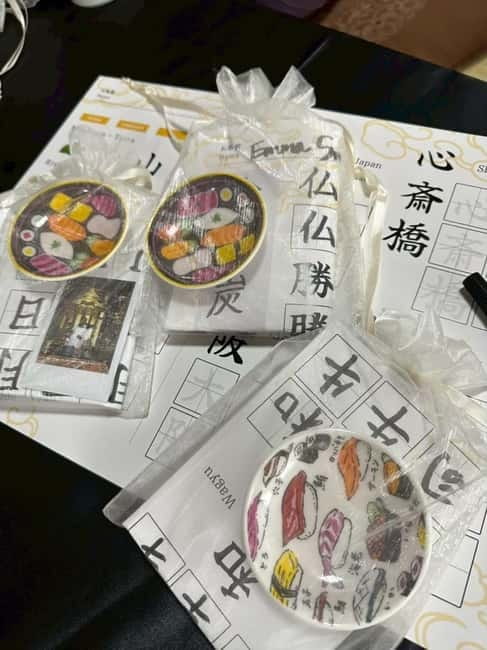
- Personal mementos are included: You receive a Japanese kanji name card and an 8-centimeter ceramic plate.
- English guidance and small groups: The instructor leads in English, while resident monks add a temple setting and cultural context.
- Good for solo participants: The warm, attentive format makes it easy to join alone without feeling awkward.
A quiet temple stop in the middle of Osaka
Osaka is famous for food, shopping, neon, and quick movement. Saishoji Temple offers the opposite pace for one hour. It sits at 1-6-18 Kitahorie, close to Yotsubashi Station, so you do not need to spend half a day reaching it.
That location matters. You can pair the activity with Shinsaibashi shopping, a walk toward Namba, or a visit to another central Osaka sight. The temple is not presented as a remote religious retreat. It is a practical city stop where you can pause without leaving the heart of Osaka.
Inside, the focus shifts from getting somewhere to paying attention. The experience begins with an English-language lesson covering Shinsaibashi, Yotsubashi, Osaka Castle, and the basic difference between temples and shrines. That introduction gives the calligraphy a bit of context. You are not simply copying attractive symbols without knowing where they belong in Japanese culture.
The session also includes conversational phrases and cultural expressions. The language section is brief, so you should not expect a full Japanese class. Think of it as a useful introduction that helps you understand the manners and words connected with the activities that follow.
More temple visits with a hands-on workshop in Osaka:
- Kyoto: Calligraphy class at Buddhist temple in city center
★ 5.0 · 167 reviews - Chinese Kungfu class in old temple beside Forbidden Ci
★ 4.8 · 53 reviews - Seoul: Vegan Temple Food Class, Jogyesa & Changdeokgung Tour
★ 4.6 · 34 reviews
Meditation before the brush touches paper
The meditation is one of the most valuable parts of this experience. You are guided to clear your mind and pay attention to your breathing before beginning the calligraphy. That order makes sense. A brush is not a ballpoint pen, and the slow movement feels different when you stop rushing.
The activity refers to zazen meditation, a Zen practice centered on seated attention. You do not need prior experience. The purpose here is not to test your spiritual discipline or teach a formal course in Zen. It is a short reset that helps you focus on the room, your breathing, and the movement of your hand.
I would especially recommend this portion if your Osaka schedule has been packed with trains, department stores, restaurant queues, and crowded streets. The meditation gives the hour a clear shape. You are not just making a souvenir. You are being asked to slow down before you create it.
The setting also does some of the work. Saishoji is a historic temple, and the quiet interior gives the activity a sense of purpose that a hotel meeting room would lack. The drawback is that one hour leaves little room for a long meditation. If sitting quietly is the main reason you are booking, keep your expectations modest.
Learning the basic strokes of Japanese calligraphy
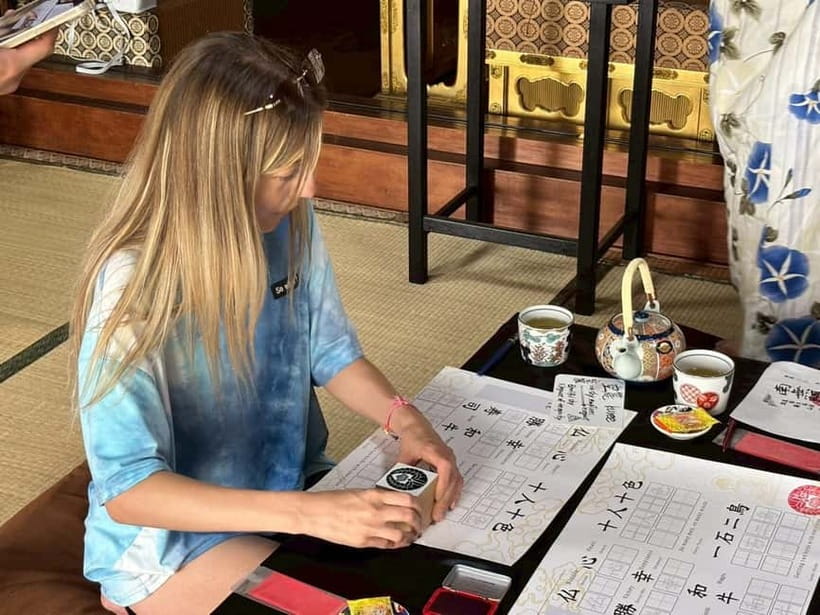
The calligraphy lesson is designed for beginners. You practice basic brush movements before choosing one favorite kanji to write on a mini shikishi. A shikishi is a small square art board often used for calligraphy or signed artwork, making it a more finished keepsake than a practice sheet.
You do not need to arrive knowing which kanji you want. The activity includes a name card with Japanese kanji and its meaning, which can help you connect the writing with a personal idea or name. The supplied information does not specify how many characters you can choose, so plan around one favorite kanji, as that is the clear finished task.
The brush, ink, paper, and other materials are provided. That makes this an easy activity to add to a trip. You do not need to buy supplies in advance or worry about carrying ink through Osaka.
The lesson has a practical advantage: calligraphy exposes the difference between recognizing a character and creating one. You may know what a kanji means, but the order, pressure, and pace of the strokes give it a physical structure. The activity lets you feel that structure rather than simply seeing it on a sign.
The staff are described as patient and polite, and the instructions are made for first-timers. That is important because calligraphy can look intimidating when you see an expert work. Here, uneven lines are part of the learning process. You are not being judged against a professional monk.
The finished piece is personal, but it will not necessarily look perfect. That is part of its charm. If you want a polished art lesson with extensive correction and several finished works, this session will be too short. If you want one meaningful character to take home, the format works well.
Small gifts that make the hour memorable
The activity includes more than the calligraphy itself. You receive a name card showing Japanese kanji and its meaning, plus a small ceramic plate measuring about 8 centimeters in diameter.
The plate is a particularly useful gift because it is compact. It should fit easily into your luggage, though you should pack it with care. The information does not specify its design or whether it is intended for food use, so treat it primarily as a decorative souvenir unless the staff explain otherwise.
You also receive the mini shikishi with your chosen kanji. Together, these items create three different reminders of the session: the character you selected, the meaning attached to your Japanese name, and the ceramic object connected with the temple visit.
The experience also includes all materials needed for the activities. Some sessions charge a low headline price and then add fees for paper, ink, tea, or finished work. Here, the stated inclusions make the $20 price easier to judge. You are paying for instruction, a temple setting, cultural explanation, materials, and several keepsakes.
At $20 per person, the value is strong if you want a short cultural activity near central Osaka. It is less attractive if your only goal is to buy a ceramic souvenir or practice calligraphy for a long time. You can find inexpensive craft activities elsewhere, but the temple setting and meditation give this one a different purpose.
Other temple visits near Osaka we have written up
- Osaka: Minoh, Katsuoji Temple, & Minoh Falls Full-day Tour
★ 4.9 · 172 reviews - Full Day Kyoto Tour : Bamboo Forest, Golden Temple, Fushimi Inari
★ 5.0 · 84 reviews - Osaka Temple Cool Foot Bath & Matcha Experience〈45min〉
★ 4.9 · 82 reviews - Osaka: Mind & Spirit Balance Temple Reiki Healing
★ 5.0 · 41 reviews
How the language and temple lesson fit together
The historical introduction covers Shinsaibashi, Yotsubashi, and Osaka Castle. These are not random topics. They place Saishoji within the wider story of Osaka, connecting the immediate neighborhood with one of the city’s most famous landmarks.
You also learn the difference between temples and shrines. This is basic information, but it helps you read Japan more clearly during the rest of your trip. A torii gate, a Buddhist temple building, an offering custom, and a monk do not all belong to the same tradition.
The English instructor also introduces conversational phrases and idiomatic cultural expressions. The supplied information does not name the instructor, so you should expect English guidance without planning around a particular guide. Resident monks take part in the cultural activities, giving the lesson a connection to the temple itself.
That combination is a good fit for you if you want more than a photo opportunity. You receive enough context to understand why the setting matters, while still spending most of the hour doing something with your hands.
The language section may feel too light for advanced Japanese learners who want grammar practice or extended conversation. It is better suited to beginners and intermediate visitors who want useful phrases tied to a real cultural activity.
Matcha, meditation, and the one-hour question
The activity description includes a traditional matcha tea ceremony along with meditation and calligraphy copying. Because the total duration is only one hour, you should expect a compact introduction rather than a long, formal tea presentation.
The same applies to the cultural history and language lesson. The experience promises several elements, so each one must be tightly paced. This variety is a strength if you want to sample Japanese traditions in one booking. It is a weakness if you prefer to spend an hour on a single skill.
The most clearly defined finished activity is the calligraphy: practice the basics, then write one kanji on a mini shikishi. Meditation is also clearly part of the appeal. Matcha and the broader language lesson add range, but the exact time devoted to each is not specified.
I would book this with the mindset of a cultural sampler. You will touch several traditions, meet resident monks, and leave with small souvenirs. You will not master calligraphy, complete a full Japanese history lesson, or spend a long time in formal meditation.
Getting to Saishoji Temple without fuss
The meeting point is Saishoji Temple, 1-6-18 Kitahorie, Nishi-ku, Osaka, 550-0014. From Yotsubashi Station on the Osaka Metro Yotsubashi Line, use Exit 4 and walk about three minutes.
Shinsaibashi Station on the Midosuji Line is about a ten-minute walk. Namba Station is about fifteen minutes away on foot. These short distances make the activity easy to fit between other plans, though you should still allow enough time to find the entrance and arrive ready for a quiet session.
The provided map coordinates are 34.67444762297721, 135.49603860267982, and a Google Maps link is available for navigation. Since this is an active temple rather than a tour bus stop, check the meeting point carefully before setting out.
The activity lasts one hour, with starting times based on availability. English is the stated instruction language. Small group sizes are intended to allow personal attention, which matters when an instructor is correcting brush technique or helping you choose a character.
Cancellation is free up to 24 hours in advance, and you can reserve now and pay later. Those terms are useful if your Osaka plans are still shifting, especially during a trip built around weather, shopping, and restaurant reservations.
Who will enjoy this most
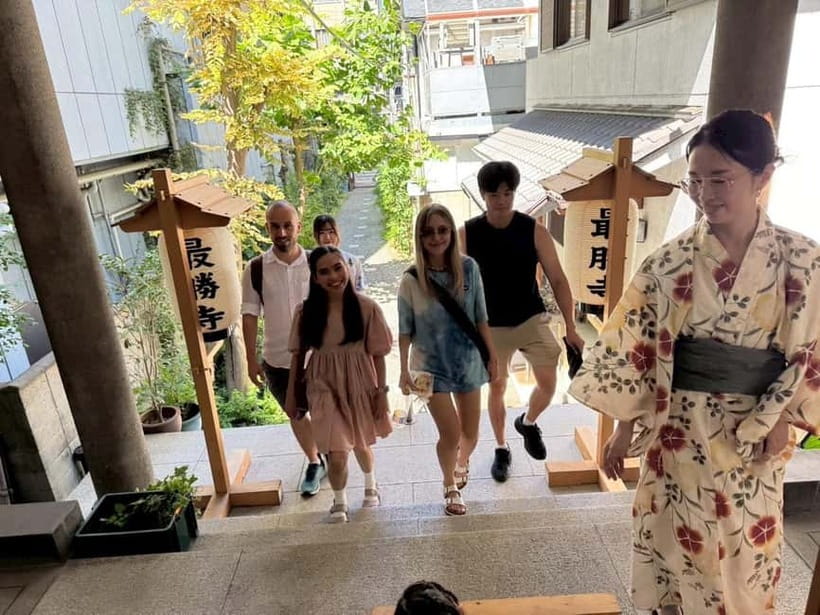
I would recommend this for first-time calligraphy students, solo visitors, couples, families, and anyone who wants a calmer hour in central Osaka. The activity is approachable because the staff provide the materials and explain the process in English.
It also suits people who want a souvenir with a story. A shop-bought plate is easy to find, but a small ceramic plate received after meditation and calligraphy carries a clearer memory of place. The kanji name card adds another personal touch.
Solo participation seems especially comfortable here. The format is quiet and structured, so you do not need a large group to create energy. You can concentrate on the brush without worrying about entertaining anyone else.
Families should consider the one-hour structure and the child’s ability to sit quietly and follow instructions. The supplied information does not give a minimum age or specific child policy, so confirm those points before booking for young children.
This is not the best pick if you want a long temple tour, a detailed Osaka history lecture, or a serious calligraphy workshop. It is also not a substitute for visiting Osaka Castle or exploring Shinsaibashi on foot. Instead, it gives you a small, hands-on connection to Japanese culture between larger sightseeing stops.
Should you book the Saishoji Temple calligraphy experience?
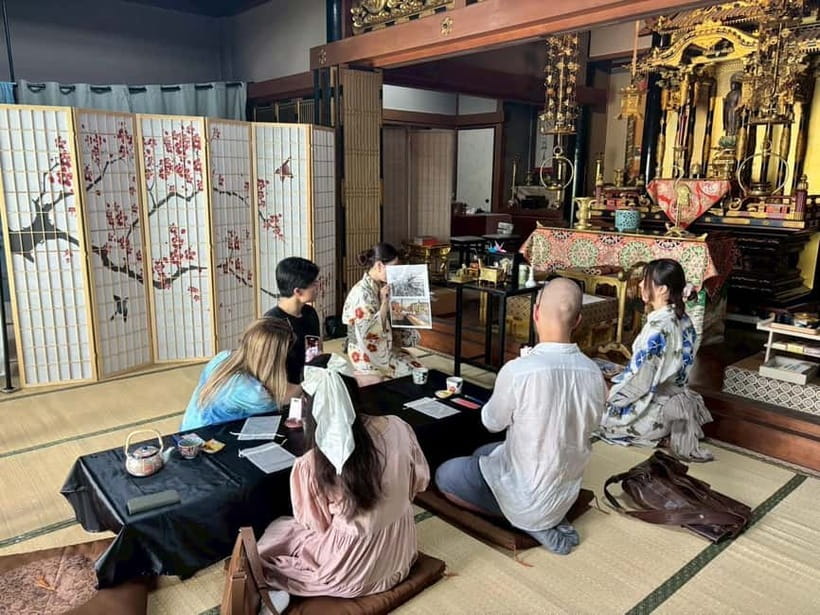
Book it if you want an affordable, central, English-guided activity with a peaceful setting and tangible souvenirs. The meditation, careful brushwork, and temple atmosphere give the hour more meaning than a quick craft class, while the $20 price keeps the risk low.
Skip it if you need a deep study of calligraphy or want a long tea ceremony. The schedule is compact, and several activities share the same hour.
For most visitors, I would treat this as a smart Osaka pause: easy to reach, friendly for beginners, comfortable alone, and personal enough to remember after the neon and noise return.
FAQ
Where does the temple and calligraphy activity take place?
It takes place at Saishoji Temple, 1-6-18 Kitahorie, Nishi-ku, Osaka, 550-0014, Japan.
How do I reach Saishoji Temple?
The temple is about a three-minute walk from Yotsubashi Station, Exit 4, on the Osaka Metro Yotsubashi Line. It is about ten minutes from Shinsaibashi Station and fifteen minutes from Namba Station.
How long does the activity last?
The activity lasts one hour. Starting times depend on availability.
Is the activity taught in English?
Yes. English is the stated instruction language.
What will I do during the session?
You receive a Japanese history and language lesson, take part in breathing meditation and cultural activities, practice basic calligraphy, and write one favorite kanji on a mini shikishi. The activity description also includes a traditional matcha tea ceremony.
What is included in the price?
The $20 price includes the guided history and language lesson, cultural activities, interaction with resident monks, and all materials needed for the activities. You also receive a kanji name card and a small ceramic plate measuring about 8 centimeters in diameter.
Can I cancel or pay later?
You can cancel up to 24 hours in advance for a full refund. You can also reserve now and pay later.
Newly written up around Osaka
- Osaka: Mind & Spirit Balance Temple Reiki Healing★ 5.0 · 41 reviews
- Osaka Temple :Warm Bamboo Oil Massage – Deep Restore〈90min〉★ 5.0 · 14 reviews
- Osaka Temple :Warm Bamboo Oil Massage – Deep Restore〈60min〉★ 4.9 · 19 reviews
- Osaka Temple Head Spa &Matcha Facial – Refresh & Glow〈90min〉★ 5.0 · 24 reviews
- Osaka Morning Tour: Shitennoji Temple, Shinsekai &Doutonbori★ 5.0 · 23 reviews
- Osaka: Minoh Waterfall & Katsuo-ji Temple Half-Day Tour★ 4.7 · 27 reviews
- Osaka: Private Tour of Shitennoji, Osaka’s Oldest Temple★ 4.5 · 6 reviews
- Osaka: Japanese Zen Massage and Facial at the Temple/180-min★ 4.8 · 10 reviews
Workshops, compared.
Calligraphy class at Buddhist temple in city center
Read our review →
Chinese Kungfu class in old temple beside Forbidden Ci
Read our review →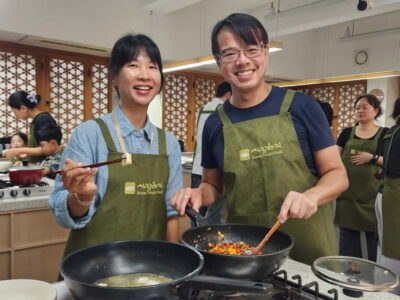
Vegan Temple Food Class, Jogyesa & Changdeokgung Tour
Read our review →
Full-Day Private Water Temple Ritual & Yoga Class
Read our review →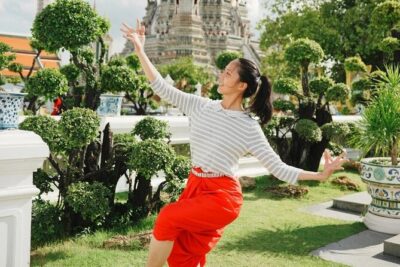

My Son Hindu Temples & Terracotta Workshop PRIVATE TOUR
Read our review →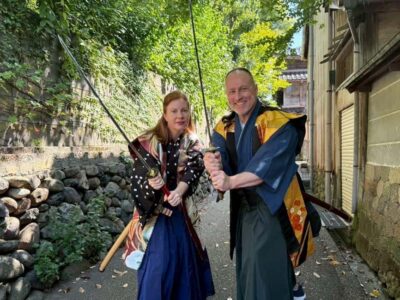
Kanazawa: Samurai Swordsmanship Lesson at a rented temple
Read our review →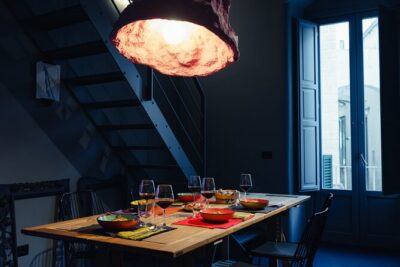
Cooking Class in a former Artist Monastery in the Heart of Monopoli
Read our review →Browse the lists this tour appears in