
Reviewed · FUSHIMI INARI SHRINE TOURS
Kyoto: Kiyomizudera, Sanjusangendo, Ginkakuji and Higashiyama.
Kyoto’s best sights are not all in one temple compound. This Spanish-language small-group tour links Sanjusangendo, Kiyomizudera, the old Higashiyama lanes, Yasaka Shrine, Philosopher’s Walk and Ginkakuji in one full day. You get major landmarks, quiet gardens and plenty of walking without having to plan the route yourself.
I like the included temple admissions, which remove three extra queues and make the $95 price easier to judge. I also like the human scale: with no more than 10 people, a guide such as Manuel can keep the day personal and explain what you are seeing instead of simply leading you from gate to gate.
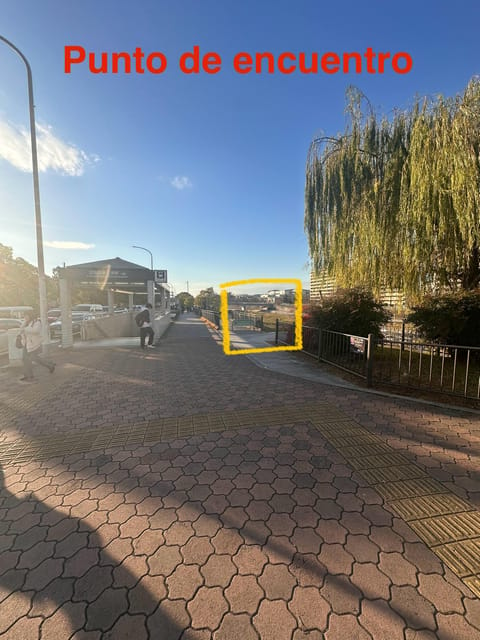
The trade-off is the pace and the transport. Seven hours on Kyoto streets, hills and buses is a proper walking day, and your local train or bus fares are not included. Bring comfortable shoes, a transport card or about 230 yen for bus rides, and arrive at Shichijo Station Exit 1 by 9:00 a.m.
Key points at a glance
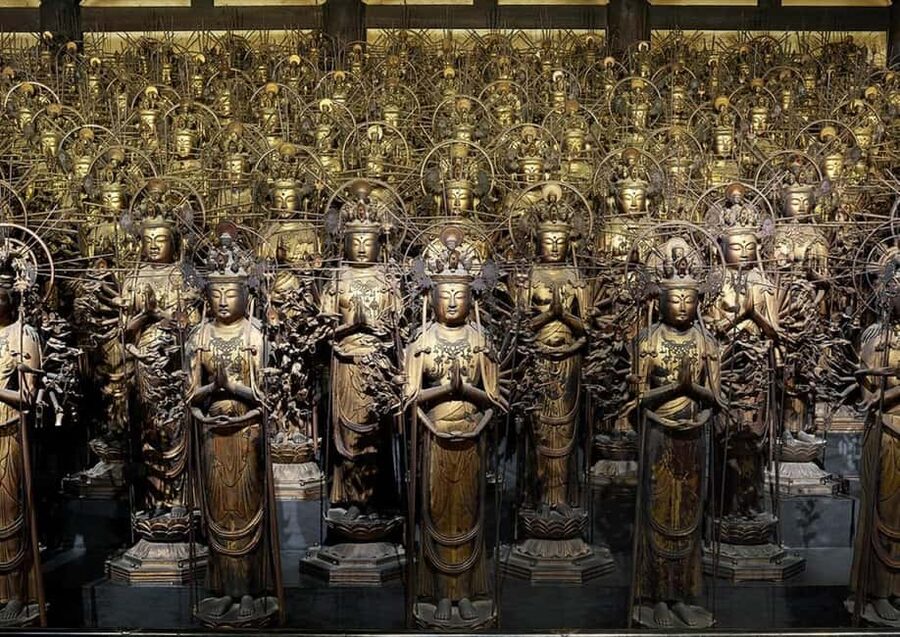
- 1,001 Kannon statues at Sanjusangendo: Begin with one of Kyoto’s most striking indoor temple displays.
- Kiyomizudera and old Higashiyama: Move from a major temple into historic lanes, with Hokanji’s Yasaka Pagoda and Yasaka Shrine along the way.
- Philosopher’s Walk to Ginkakuji: Finish with a calmer stretch beside the canal and the Silver Pavilion’s Zen gardens.
- Spanish guidance in a group of up to 10: The small size should make questions and conversation easier.
- Seven hours with walking and public transport: The route is rich in sights, but it demands steady energy and sensible footwear.
- $95 with three admissions included: You still pay separately for buses, trains, food and souvenirs.
Why this route makes sense for a first Kyoto day
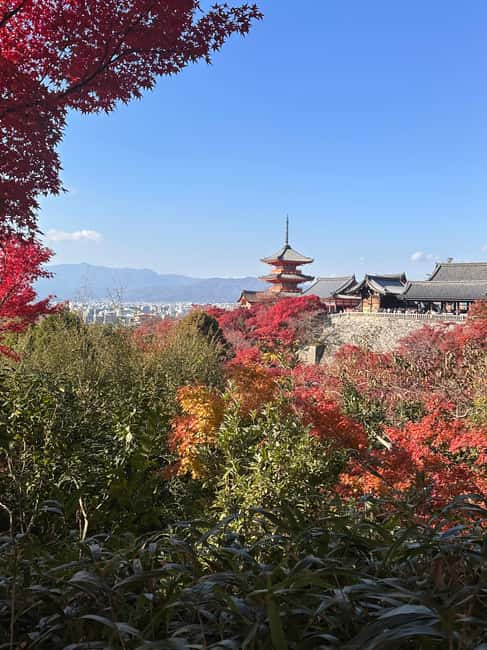
This is a temple-focused tour, but it is not just a list of religious buildings. The route gives you several different views of Kyoto: a monumental hall at Sanjusangendo, a famous hillside temple at Kiyomizudera, traditional streets in Higashiyama, a lively shrine, a canal-side walk and a restrained Zen garden at Ginkakuji.
I like that contrast. Kyoto can feel confusing when every temple begins to blend into the next. Here, each stop has a distinct mood and shape, and the guide can help you notice the differences.
The tour is conducted in Spanish, which matters more than many people expect. Religious architecture, Buddhist figures and Japanese customs can be hard to understand from signs alone. A guide who can explain them naturally in your language makes the visit less passive and more meaningful.
The small group limit of 10 is another real benefit. It is not a private tour, so you will not set every departure time or linger indefinitely at one detail. Still, it is small enough for a guide to answer questions and keep the group together in narrow lanes.
More Fushimi Inari Shrine Tours in Kyoto:
- Osaka/Kyoto:Kinkakuji,Arashiyama,FushimiInariShrine,NaraPark
★ 4.1 · 1,596 reviews - Osaka/Kyoto: Arashiyama, Nara & Fushimi Inari Shrine w/Lunch
★ 4.4 · 754 reviews - Kyoto: 3-Hour Fushimi Inari Shrine Hidden Hiking Tour
★ 4.9 · 270 reviews
Sanjusangendo and its long hall of Kannon figures
The day begins at Shichijo Station, with the first major stop at Sanjusangendo. Allow about an hour here.
The temple is famous for its hall containing 1,001 statues of Kannon, the Buddhist figure associated with compassion. The scale is the point. Instead of one central image viewed from a distance, you see row after row of figures arranged inside a long wooden hall. The effect is orderly, solemn and highly memorable.
This is a good opening stop because it is visually powerful without requiring a long climb. After arriving at a busy station, you move quickly into a quieter, more focused setting. Your Spanish guide can give context to the figures and the temple before you continue.
Sanjusangendo is also a useful reminder that Kyoto’s religious buildings are not all about bright colors or sweeping views. The interest here comes from repetition, proportion and the careful arrangement of the statues.
The scheduled visit lasts about an hour. That is enough for a guided introduction and a considered look, but not for a slow, independent study of every detail. If you like spending long stretches in one museum-like space, you may wish you had more free time.
Walking from Sanjusangendo to Kiyomizudera
The route includes about 20 minutes on foot before Kiyomizudera. This is not a major hike, but it sets the pattern for the day. You are not being carried from one entrance to the next by a private vehicle. You are moving through Kyoto at street level.
That is one of the better parts of the experience. You see the city between the famous sights, and the guide can help you understand how the temples connect to the older eastern side of Kyoto. It also means you should not treat the walking time as an afterthought.
Wear shoes that remain comfortable after several hours. The practical advice to bring comfortable clothes is sound. Baby carriages are not allowed, so families with very young children should consider that restriction before booking.
Kiyomizudera, Kyoto’s great hillside viewpoint
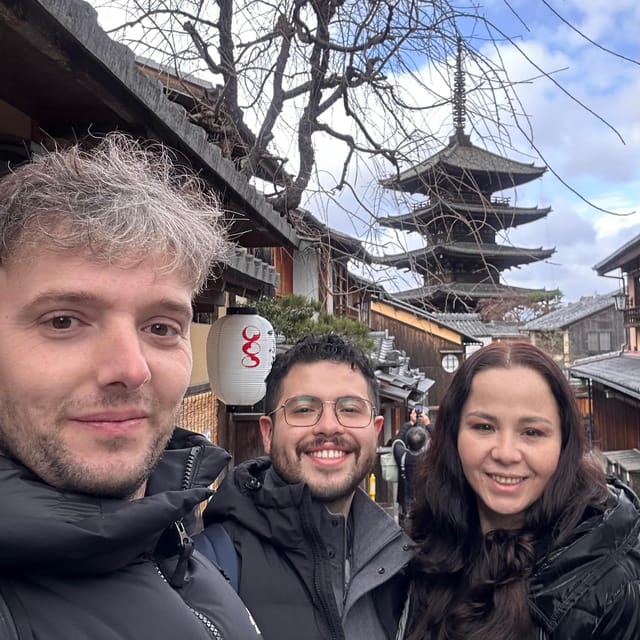
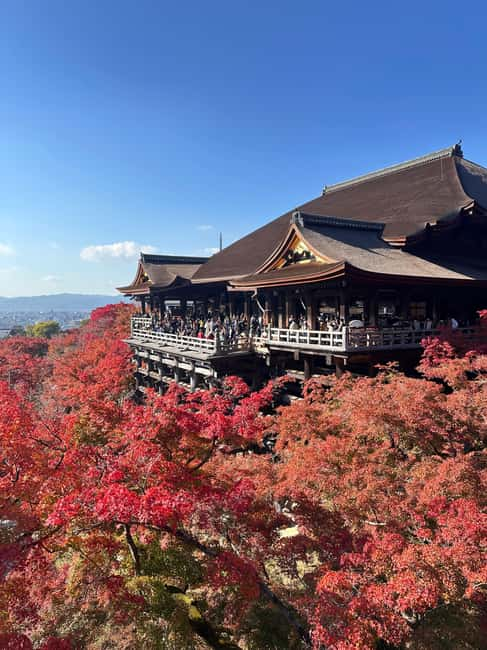
Kiyomizudera receives about an hour of guided time. This is one of Kyoto’s essential stops, known for its large wooden stage and its position above the eastern part of the city.
The temple is especially rewarding because it combines architecture, religious tradition and views. You are not simply entering a dark interior to look at an altar. The hillside setting gives the visit a sense of space, while the wooden structures show how traditional design can create drama without modern materials.
The approach to Kiyomizudera is part of the experience. You will be in the Higashiyama area, where the streets and lanes are among the most recognizable in Kyoto. They can also be crowded, and moving with a group takes patience. The guide’s job is useful here, since the route can otherwise become a stop-start shuffle through a busy area.
An hour gives you a clear introduction and time to take in the main views. It is not enough for every corner of the temple grounds, so treat this as a guided overview rather than a deep independent visit.
Other temple visits near Kyoto we have written up
- Kyoto: Tea Ceremony Ju-An at Jotokuji Temple
★ 4.9 · 3,207 reviews - Arashiyama Bamboo, Temple, Monkeys, or Secret Sake Brewery
★ 4.8 · 886 reviews - Kyoto: Arashiyama Bamboo Forest, Monkeys, Matcha & Temple Tour
★ 5.0 · 759 reviews - Kyoto Zen Meditation & Garden Tour at a Zen Temple with Lunch
★ 5.0 · 441 reviews
Higashiyama, Hokanji and Yasaka Shrine
After Kiyomizudera, the tour spends about an hour sightseeing in Higashiyama. This is where the day feels most like a walk through old Kyoto rather than a sequence of formal temple visits.
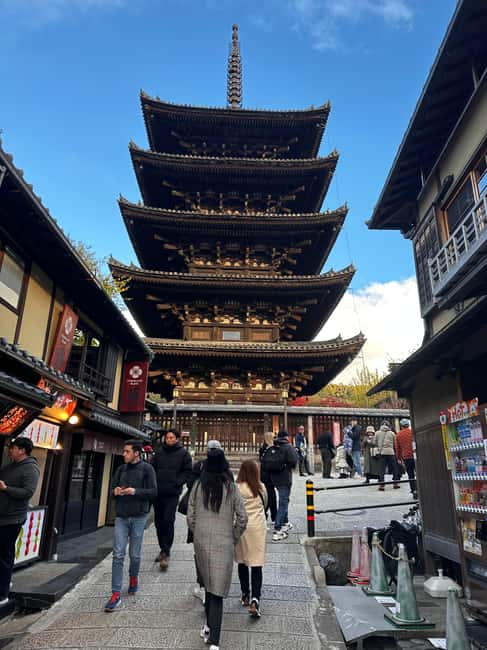
The district is known for traditional streets, tiled roofs, small shops and views toward the Yasaka Pagoda, the familiar five-story tower of Hokanji Temple. Hokanji receives a separate 30-minute guided visit. That stop gives the pagoda more attention than it would get as a quick photo background.
You should expect a mix of guided walking and short pauses. Higashiyama is not a museum sealed off from modern life. It is a working urban district, and the lanes can be tight. Stay close to the guide, especially if the group is moving between crowded streets.
The next 30-minute stop is Yasaka Shrine. Its large gates and open grounds offer a different setting from the enclosed temple halls. The shrine is associated with Shinto practice, so this part of the day helps you compare two major Japanese religious traditions without needing a separate excursion.
I like the way this section gives the tour a rhythm: temple, street, pagoda, shrine. The possible drawback is that a group schedule can limit spontaneous stops at shops or cafés. If browsing is your main aim, you may prefer to return to Higashiyama on your own later.
Getting around Kyoto by local transport
The itinerary includes about 30 minutes on public transport before the final temple section. Local trains or buses are used, and transportation is not included in the $95 price.
You should carry cash for a bus fare of about 230 yen, or use an ICOCA, SUICA or PASMO card. A transport card is the simpler choice if you already have one, since it avoids stopping to count coins. The fare is a small extra cost, but it is worth planning for because arriving without payment can slow the whole group.
Public transport also means the day follows Kyoto’s real travel conditions. Buses can take time, and the group must board together. This is less comfortable than a private coach, but it keeps the tour price from rising and gives you a more ordinary view of getting around the city.
The guide will set the route and timing, but you should arrive at the starting point early. The meeting point is Shichijo Station Exit 1 at 9:00 a.m. If you are late, contact the guide rather than assuming the group will wait.
Philosopher’s Walk and the Silver Pavilion
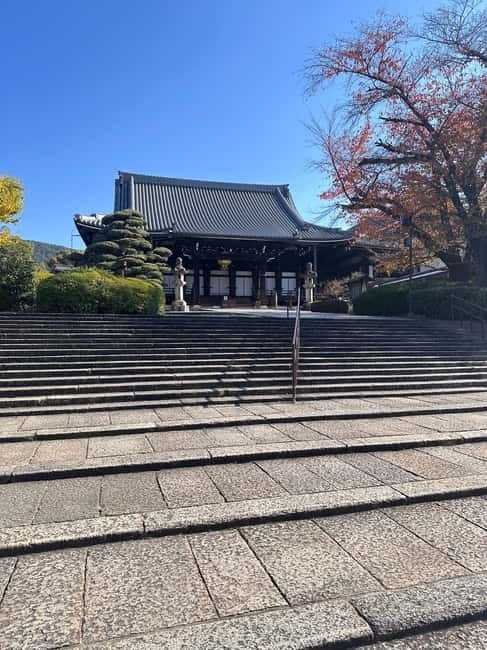
The final major section takes you to Ginkakuji, the Silver Pavilion, with about an hour for a guided visit. The approach includes the famous Philosopher’s Walk, a calmer path beside a canal that links the northern Higashiyama area with Ginkakuji.
This stretch is a welcome change after the busier lanes around Kiyomizudera. It gives your feet a steady walking rhythm and lets you see a quieter side of eastern Kyoto. The name may sound grand, but the appeal is simple: water, trees, a narrow path and time to slow down.
Ginkakuji itself is often misunderstood. Despite its English nickname, the pavilion is not covered in silver. Its beauty comes from restrained design, weathered wood and carefully shaped gardens. The grounds show the Zen preference for controlled space, texture and suggestion rather than bright display.
The gardens are a strong finish because they ask you to look more closely. After the grand hall at Sanjusangendo and the large stage at Kiyomizudera, Ginkakuji offers a quieter lesson in Japanese aesthetics.
The timing is sensible, though the final hour comes after a long day. If your energy drops late in the afternoon, take the Philosopher’s Walk at an easy pace and save some attention for the garden.
What the $95 price really includes
At $95 per person, this is not the cheapest way to see Kyoto’s temples. The price becomes more reasonable when you count the admissions to Sanjusangendo, Kiyomizudera and Ginkakuji, along with seven hours of Spanish guidance and route planning.
You are paying for structure as much as entry tickets. The guide handles the order of sights, explains the religious and cultural details, and manages the transfers between areas. That can be valuable on a first visit, especially if you do not want to spend an evening working out Kyoto’s bus routes.
Still, you need to budget for local transport, food and souvenirs. No meals are included. You may find food along the route, but the schedule is built around the temples rather than a planned restaurant stop, so bring money and do not assume lunch is covered.
The tour earns its price best for someone who values explanation and efficiency. If you are comfortable navigating Kyoto independently and mainly want entrance tickets, you could spend less on your own. If you want a Spanish-speaking guide and a carefully connected day, the package is easier to justify.
Who should book this Kyoto temple tour?
I would recommend it to a first-time Kyoto visitor who wants the main eastern temple sights in one day. It also fits Spanish-speaking families and couples who prefer a guide to explain what they are seeing instead of reading brief signs.
The group size suits people who like some personal contact without paying for a private tour. Manuel is one guide associated with the experience, and the guide style is described as attentive, clear and enjoyable. That is particularly useful when a family member cannot attend but wants relatives to have a well-organized day.
You should think twice if you dislike fixed schedules, walking or public buses. This is not a slow luxury outing. It is a full sightseeing day with several formal stops, a district walk and local transport.
The activity has a top rating from three submitted reviews, with praise focused on the personal feel, the guide’s attention and how much participants learned. That is encouraging, but the sample is small, so I would judge the tour mainly by its clear strengths: Spanish guidance, a 10-person limit and three included admissions.
The published meeting details contain a point worth checking before you go. The route information names Higashiyama Ward as the final area, while the meeting information says the activity ends back at the meeting point. Confirm the exact end location with Benzaitentours before departure so you can plan your next train or reservation.
Should you book it?
Book this tour if you want a Spanish-language introduction to Kyoto’s eastern temples, prefer a small group and value a guide who can connect architecture, Buddhist images, Shinto shrines and Zen gardens. The included admissions and carefully linked route make the $95 easier to defend.
Skip it if you want long, unstructured time at each temple, dislike walking or want meals and transport bundled into one price. For the right visitor, though, this is a practical way to cover several of Kyoto’s strongest sights without spending your first day wrestling with maps and bus schedules.
FAQ
Where does the tour start?
It starts at Shichijo Station, at Exit 1, at 9:00 a.m.
What language is the tour conducted in?
The live tour guide speaks Spanish.
How long does the activity last?
The tour lasts about seven hours.
How many people can join the group?
The group is limited to 10 participants.
Which temple entrance fees are included?
Admission to Sanjusangendo, Kiyomizudera and Ginkakuji, also called the Silver Pavilion, is included.
Is transportation included in the price?
No. Local train lines or buses are used, and participants pay their own transportation costs.
How much should I bring for the bus?
The practical guidance is to bring about 230 yen for bus travel, or use an ICOCA, SUICA or PASMO transport card.
What should I bring to the tour?
Bring comfortable shoes and comfortable clothing. Baby carriages are not allowed.
Newly written up around Kyoto
- Kyoto:Kiyomizu-dera Temple Rent a kimono and ride a rickshaw★ 4.8 · 7 reviews
- Kyoto: Shakyo & Matcha in Historic Temple Garden★ 5.0 · 4 reviews
- KYOTO: Tempio Kiyomizu Pagode Gion “Geisya” (Guida Italiana)★ 4.7 · 17 reviews
- KYOTO: Golden Pagoda, Bamboo Forest, Arashiyama (Italian)★ 4.9 · 5 reviews
- Kyoto:Quiet Arashiyama and Sagano Temples★ 4.8 · 5 reviews
- Kyoto kiyomizu Temple : Maiko and Samurai Couple Photoshoot★ 4.8 · 25 reviews
- Kyoto: Nara, Todaiji, Kasuga Taisha Shrine Private Full Day★ 4.9 · 18 reviews
- Kyoto : Kiyomizu-dera Temple : kimono and Indoor photo shoot★ 4.6 · 5 reviews
Fushimi Inari Shrine Tours, compared.
Osaka/Kyoto:Kinkakuji,Arashiyama,FushimiInariShrine,NaraPark
Read our review →
Osaka/Kyoto: Arashiyama, Nara & Fushimi Inari Shrine w/Lunch
Read our review →
Kyoto Tea Ceremony & Kiyomizu-dera Temple Walking Tour
Read our review →Full Day Kyoto Tour : Bamboo Forest, Golden Temple, Fushimi Inari
Read our review →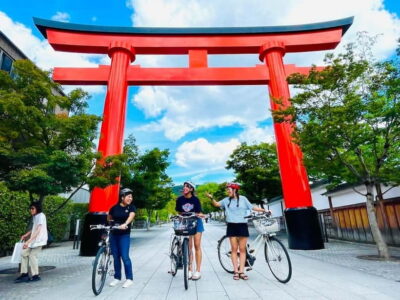
Fushimi Inari Shrine and Tofukuji Temple E-Bike Tour
Read our review →
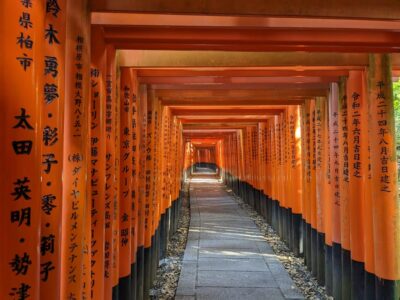
Early Morning Fushimi Inari Shrine – Beat the Crowds
Read our review →Browse the lists this tour appears in