
Reviewed · ANGKOR WAT TOURS
Angkor Wat 2-Day complex Sun rise & Sun set with Guided Tour
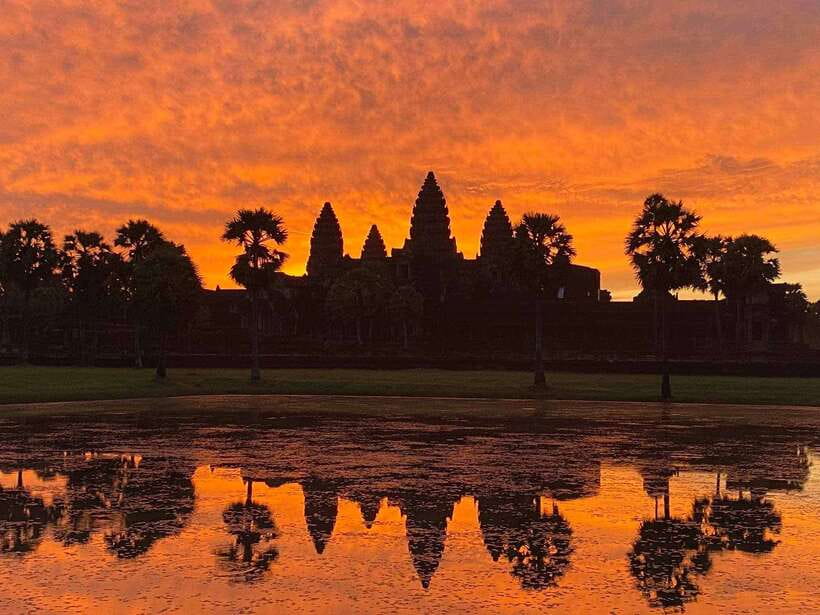
Angkor Wat at sunrise is the headline, but the real reward is getting two full days among the Khmer Empire’s temples. You’ll see the famous monuments, quieter corners, carved stone faces, jungle growth, and broad temple compounds without trying to cram the whole park into one exhausting day.
I like the air-conditioned minibus and the steady supply of cold water, especially after walking across hot stone courtyards. I also like the guides’ practical touch. Sam, Sayon, John, Nick, Vone, and others are praised for clear history lessons, good humor, and taking photos at the best spots. The main drawback is the early start: pickup can be around 4:00 to 4:20 a.m., and some people wait in darkness before sunrise.
Key points
- Sunrise at Angkor Wat: Reach Cambodia’s best-known temple before dawn and watch the sky brighten behind its towers.
- Two different temple circuits: Day 1 covers the smaller circuit, while Day 2 visits the larger outer loop.
- Eleven temples in all: Angkor Wat, Bayon, Ta Prohm style jungle ruins, Preah Khan, Ta Som, and other major sites are included.
- Helpful English-speaking guides: Guides such as Sam, Sayon, John, and Nick explain carvings, religion, Cambodian culture, and temple design.
- Sunset at Phnom Bakheng: Finish on a hilltop temple with 33 towers representing the heavens.
- Good transport value: Hotel pickup, drop-off, air conditioning, water, towels, and a group capped at 13 people are included.
Two mornings that show Angkor at its best
This is a useful choice if you want a broad introduction to Angkor without arranging separate tuk-tuks, drivers, and guides. The tour costs $30 per person, but you must also buy your Angkor Archaeological Park pass. A one-day pass costs $37, while a two or three-day pass costs $62, so the full two-day outing requires that extra expense.
That still makes the guided transport good value. You receive two days of hotel transfers, an English-speaking guide each day, a chilled vehicle between sites, water, refreshing towels, and visits to 11 temples. Food is not included, but there are restaurant stops near the temples for breakfast or lunch.
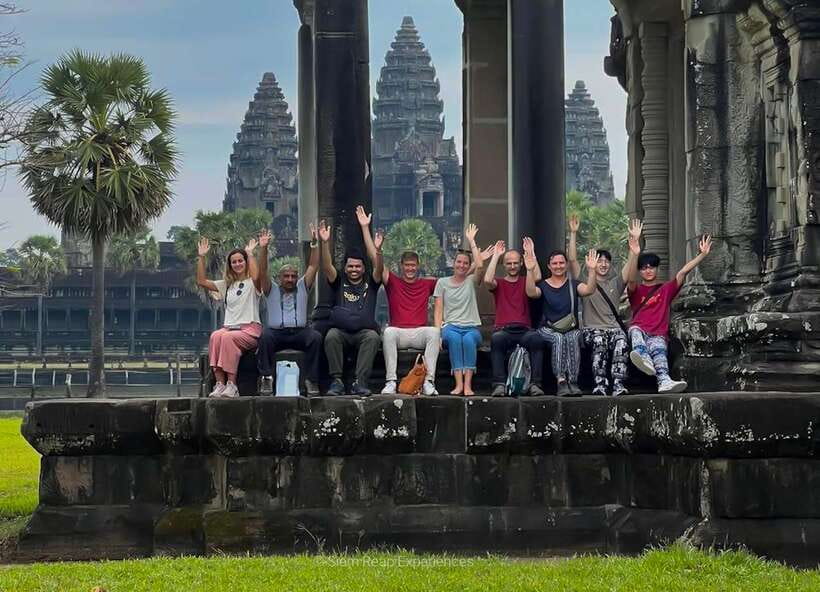
The group is limited to 13 people. That is large enough to keep the price down, but small enough for a guide to gather everyone at carvings, gates, and photo stops. The guides also appear to vary by day. You might have Sam on one day and Sayon, John, Nick, Vone, Sary, Rith, or another guide on the other.
More Angkor Wat Tours in Siem Reap:
- Angkor Wat Sunrise or Sunset Tour with Guide from Siem Reap
★ 5.0 · 12,109 reviews - Siem Reap: Angkor Wat: Small-Group Sunrise or Sunset Tour
★ 5.0 · 9,444 reviews - Siem Reap: Angkor Wat 2-Day Tour with Sunrise and Sunset
★ 4.9 · 4,429 reviews
Day 1: Angkor Wat sunrise and the smaller circuit
Day 1 begins before dawn. Pickup is scheduled between 4:00 and 4:20 a.m., and you should wait in your hotel lobby 30 minutes early. The driver carries a sign with your last name and waits no more than five minutes after the planned pickup time, so this is not the morning to sleep through an alarm.
The road to Angkor Wat is dark and the temple grounds may be uneven underfoot. Bring a phone light or small flashlight, wear practical shoes, and watch your step. You may arrive well before the sun rises, which can mean a long wait in the dark. One useful point raised by the timing is that the pickup can feel earlier than necessary in some seasons, especially when sunrise is closer to 6:30 a.m.
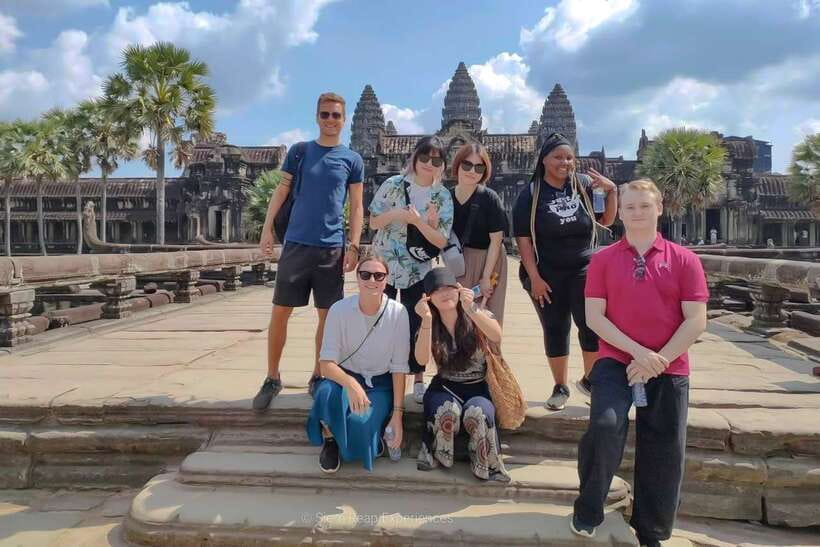
Once the sky starts to brighten, the waiting makes sense. Angkor Wat’s towers and reflecting pools become visible by degrees, and the changing light gives the temple a calm opening before the heat builds. Sunrise is not guaranteed to produce a dramatic red sky, but the setting itself is worth the early alarm.
After sunrise, you enter Angkor Wat properly. Your guide can explain the temple’s religious purpose, layout, carvings, and place in the Khmer Empire. This is where having a guide pays off. Without help, it is easy to admire the stonework while missing the meaning behind the galleries and towers.
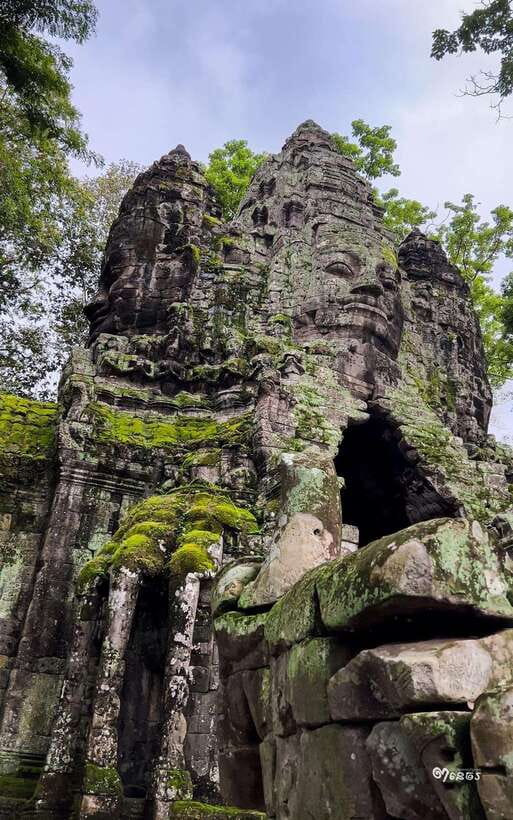
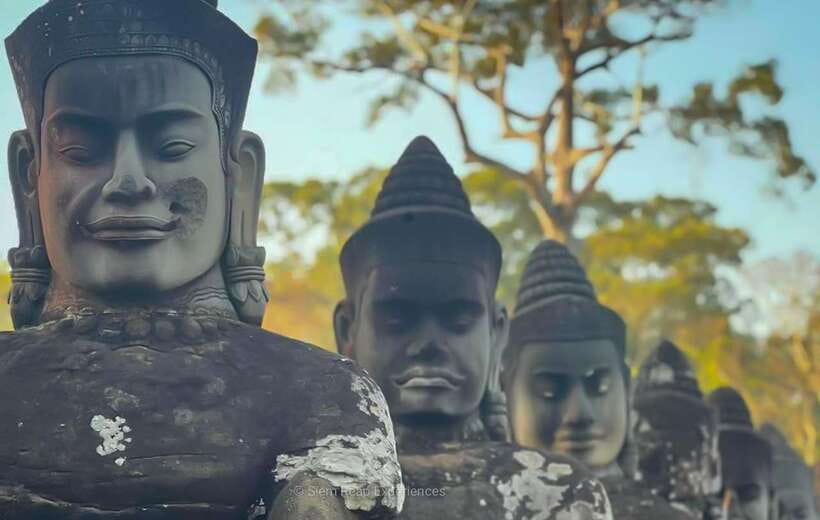
The day then moves to Angkor Thom, a huge walled city with several important monuments. It was built as a major royal center, and the scale gives you a better sense of how ambitious the Khmer builders were. The route includes the famous Bayon Temple, where large carved faces look down from the towers.
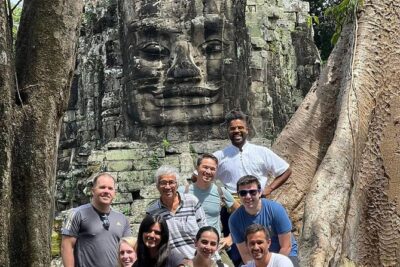
Bayon is one of the most memorable stops because the faces appear from different angles as you walk around the stone towers. Your guide can point out details that are easy to miss, including carvings of daily life, ceremonies, battles, and religious scenes. Guides such as Pheap have even used traditional musical sounds while explaining carvings, adding a personal touch to the history lesson.
You also visit Banteay Kdei, a Buddhist temple with a quieter feel than Angkor Wat and Bayon. It is a useful contrast: less famous, less overwhelming, and still full of weathered galleries and carved stone. The site was used by monks, which helps show that Angkor was not simply a collection of abandoned monuments.
Ta Keo comes next. This 10th-century mountain temple rises in stepped levels and has a more severe, geometric character. You should expect stairs and exposed stone, so bring water and take your time. The high structure gives the stop a different feel from the long corridors and enclosed galleries elsewhere.
The first day runs from about 4:30 a.m. to 1:00 p.m., with hotel arrival around 1:00 to 1:30 p.m. That is a long morning, but you still get the afternoon to rest, eat, or explore Siem Reap. I consider this split one of the tour’s strongest features. Angkor is tiring, and a full day followed by another full day would be a poor way to appreciate it.
Day 2: Preah Khan, island temples, and sunset at Phnom Bakheng
Day 2 starts later, with pickup between 10:00 and 10:20 a.m. The schedule runs to around 7:00 p.m., so you trade the dark predawn start for a longer afternoon and sunset finish.
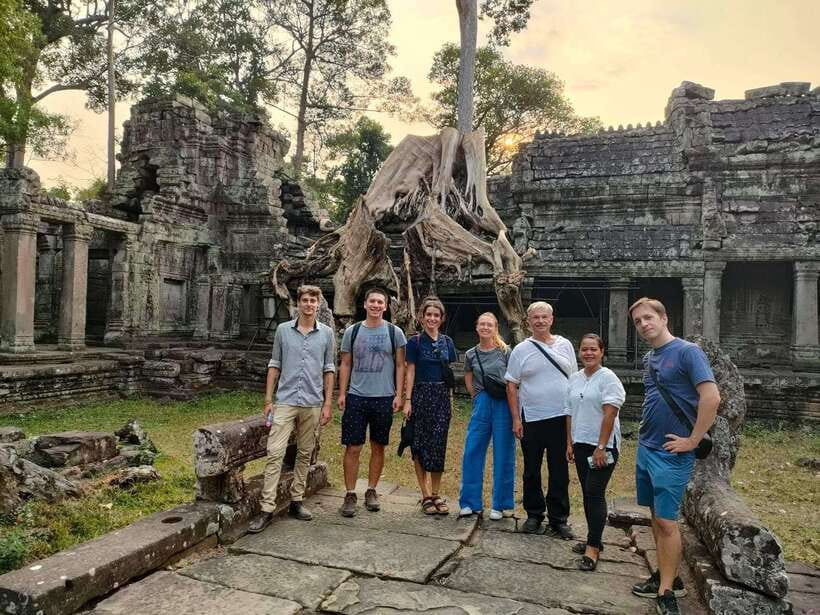
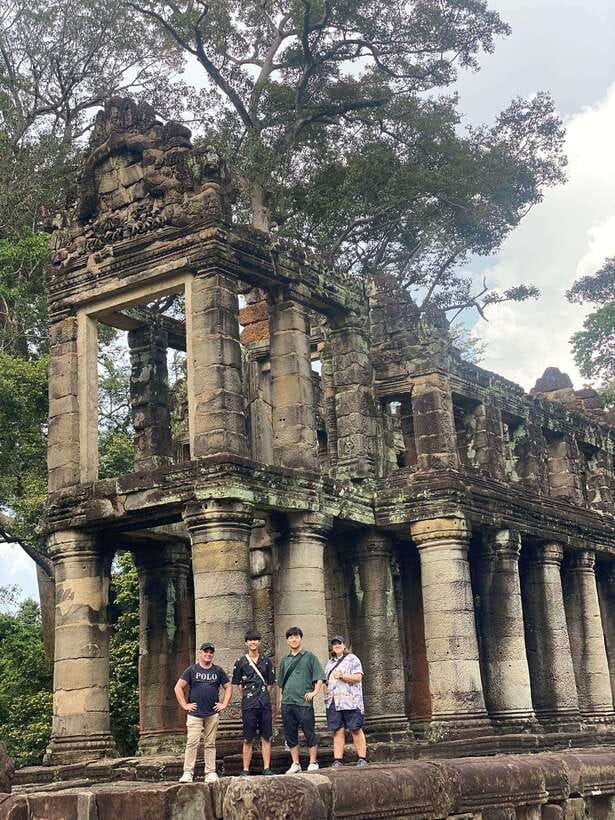
The first major stop is Preah Khan, described as the largest temple on this circuit. Its long passages and layered courtyards make it a good place to think about how Angkor’s temples worked as religious and royal spaces. The structure also carries a strong sense of age, with stone corridors and vegetation sharing the same space.
Next comes Neak Pean, an island temple reached across a causeway. The water around it was used for bathing during the Angkor period. The stop is different from the large temple compounds because the water and island setting shape the whole view.
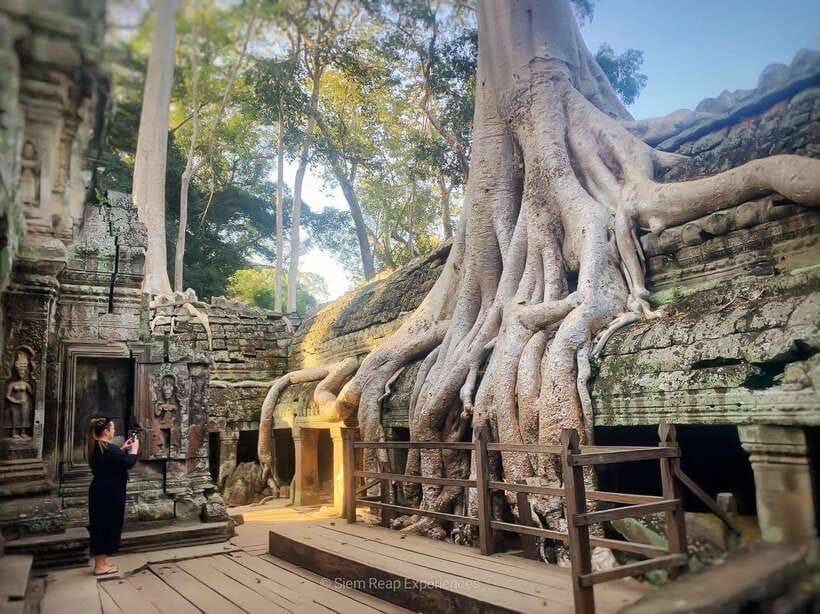
Ta Som offers one of the tour’s most photogenic details: a tree growing over the East Gate. This is the sort of scene that rewards a slower look. The stonework and roots are not just a dramatic picture; they also show how the temples have changed over time as nature has taken hold.
East Mebon once sat on an artificial island in a reservoir. The reservoir is now dry, so the temple’s original setting is harder to imagine unless your guide explains it. This is another moment when the guide adds real value. You are not only looking at a stone monument, but also learning how water management shaped life and power at Angkor.
The route continues to Pre Rup, a stone temple used by Hindus to meditate on the full moon. Its tiered form gives you another example of the mountain-temple design seen at Ta Keo, but the atmosphere and setting are different. The day has enough variety to keep the repeated stone architecture from becoming a blur.
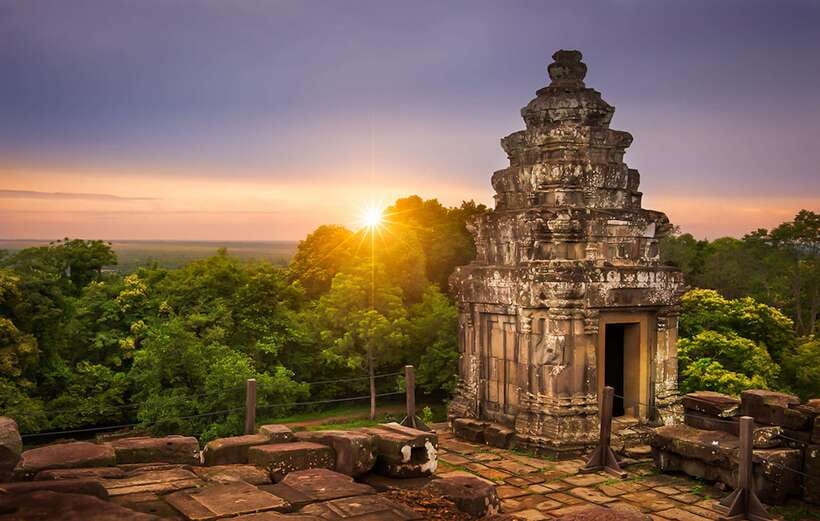
The final stop is Phnom Bakheng, a hilltop temple with 33 towers representing the heavens. The sunset visit is a fitting end to the second day. You climb to a temple associated with the sky, then watch the light fade over the area around Angkor.
Sunset conditions depend on weather, and the hilltop setting means you should expect walking and uneven surfaces. Still, finishing here gives the two-day route a clear shape: sunrise at Angkor Wat on Day 1, sunset from Phnom Bakheng on Day 2.
What the guides add to the stonework
The biggest difference between this tour and simply hiring transport is the explanation. Angkor can overwhelm you with towers, bas-reliefs, courtyards, and names. A good guide gives you a thread to follow.
The strongest guide feedback centers on clear explanations, friendliness, humor, and help with photographs. Sam is frequently singled out for calm organization and strong explanations. Sayon is praised for finding good photo locations and keeping the group together. John is known for lively energy and stories about Cambodia. Nick is described as good at setting the pace, explaining the plan, and pointing out local wildlife.
Guides also help you understand Cambodian culture, religion, and everyday life, not just temple dates. One guide, Sam, was formerly a monk, which can bring useful context to Buddhist sites and religious practice. You should not assume you can request a particular guide, but the names associated with this experience include Sam, Sayon, John, Nick, Vone, Sary, Rith, Pheap, Pip, Chon, Heang, Savon, and Sari.
Several guides take photos for you. That matters at Angkor, where many of the best pictures require someone else to frame the shot. You should still bring your own camera, but do not be surprised if the guide helps with poses and locations.
More two-day temple trips in Siem Reap:
- 2 Days Exclusive Temple Highlights with Sunset and Sunrise Tour
★ 5.0 · 1,157 reviews - Siem Reap: Angkor Sunrise 1- or 2-Day Guided Temples Tour
★ 4.9 · 1,132 reviews - 2-Day Angkor Wat With Small, Big Circuit and Banteay Srei Tour
★ 5.0 · 545 reviews - Siem Reap: 2-Day Temple Highlights Sunrise and Sunset Option
★ 4.9 · 445 reviews
Transport, breaks, and the practical side
The air-conditioned minibus is more than a minor comfort. Angkor involves walking in heat and humidity, and the cool ride between temples gives you a chance to recover. Cold bottled water is provided throughout the day, along with refreshing towels.
Breaks include time for food, toilets, and cooling down. Breakfast or lunch can be purchased at local restaurants near the temples. Food is not included, and the quality of the restaurant stop may vary, so bring cash and allow enough time for a meal. One reported issue involved slow service and incorrect orders at a breakfast restaurant, so do not expect every meal stop to be perfectly timed.
Clean toilets are available within the Angkor complex, and the route includes regular bathroom breaks. The schedule is active, but it is not simply a rush from one temple to the next. You get time for photos and some independent wandering at selected spots.
Wear long trousers or another covering that reaches below the knees. Your shoulders and knees must be covered when visiting the temples, so a sarong can be useful. Bring a hat, sunscreen, cash, and water-resistant protection for your phone or camera if the weather looks uncertain. Shorts, short skirts, and sleeveless shirts are not allowed.
The Angkor pass changes the real price
At first glance, $30 for two days looks unusually low for a guided temple tour. It is important to add the park entry fee. The one-day ticket is $37, while the two or three-day ticket is $62.
For this itinerary, the two or three-day pass is the sensible choice. You can purchase it online through the official Angkor Enterprise website before the activity. The tour itself does not include food or soft drinks, so budget separately for meals.
Even after adding the pass, the arrangement is attractive if you want guided context and reliable transport. Paying $30 for two days of driving, guiding, hotel transfers, water, and an 11-temple route is less complicated than arranging each part yourself. If you already have a driver and prefer to explore at your own speed, the group schedule may feel restrictive.
Who will enjoy this two-day route
I would choose this tour if you are visiting Siem Reap for the first time and want to see the main temple circuits without spending hours planning routes. It suits couples, solo visitors, and small groups who want a guide but do not want a private-tour price.
It is also a good match for photographers who want both sunrise and sunset, especially because several guides help with pictures. The schedule leaves Day 1 afternoon free, which is useful if you need rest after the predawn start.
You should think twice if you dislike early mornings, have difficulty walking on uneven temple surfaces, or want to stop for long periods at only one or two monuments. The activity is not suitable for wheelchair users, babies under one year, or people over 95. It also does not require a passport.
Free cancellation is available up to 24 hours before the activity, and you can reserve now and pay later. Provide the correct hotel address, confirm your pickup details if your arrival plans change, and be in the lobby early.
Should you book the Angkor sunrise and sunset tour?
I would book it if you want a well-priced introduction to Angkor with both classic views and lesser-known temples. The two-day format is far more comfortable than forcing sunrise, the inner circuit, the outer circuit, and sunset into one marathon day.
The early pickup is the one real nuisance. You may wait in darkness before sunrise, and rainy-season clouds can reduce the payoff. But Angkor Wat, Bayon, Preah Khan, Ta Som, and Phnom Bakheng give you a strong mix of scale, carvings, religious meaning, and memorable views.
Book this tour if you value a guide’s stories, steady transport, cold water, and help with photos. Choose a private arrangement instead if you need a flexible pace or want complete control over every stop.
FAQ
How much does the two-day guided tour cost?
The tour costs $30 per person. The Angkor Archaeological Park ticket is separate.
How much is the Angkor temple pass?
A one-day pass costs $37. A two or three-day pass costs $62.
Is the temple pass included?
No. You should purchase the temple pass online through the official Angkor Enterprise website before the activity.
What time does Day 1 begin?
Pickup is scheduled between 4:00 and 4:20 a.m. You should wait in your hotel lobby 30 minutes before pickup.
What time does Day 1 finish?
You should arrive back at your hotel between about 1:00 and 1:30 p.m.
What time does Day 2 begin and end?
Pickup is scheduled between 10:00 and 10:20 a.m. The tour ends at around 7:00 p.m.
Which temples are included?
The route includes Angkor Wat, Angkor Thom, Bayon, Banteay Kdei, Ta Keo, Preah Khan, Neak Pean, Ta Som, East Mebon, Pre Rup, and Phnom Bakheng.
Is hotel pickup included?
Yes. Pickup and drop-off at your accommodation in Siem Reap are included. Give the correct hotel name and address when booking.
Is food included?
No. Breakfast and lunch can be purchased at local restaurants near the temples.
What should I wear?
Wear clothing that covers your knees and shoulders. Long trousers and a sarong are suitable. Shorts, short skirts, and sleeveless shirts are not allowed.
Newly written up around Siem Reap
- Siem Reap: Angkor Wat Private Tour by Tuk-Tuk★ 4.5 · 117 reviews
- Phnom Kulen Waterfall and Banteay Srei Temple Tour from Siem Reap★ 5.0 · 30 reviews
- 5-Day All Major Temples & Kulen Mount Waterfall & Koh Ker & Beng Mealea★ 5.0 · 13 reviews
- 3-Day Angkor Wat & All Interesting Major Temples & Kulen Mount Waterfall★ 5.0 · 63 reviews
- Angkor Wat Tour Deutsch | Private Führung★ 5.0 · 134 reviews
- Full day exclusive tour for the main temples in Siem Reap★ 5.0 · 135 reviews
- Small-Group Full Day Angkor wat Guide tour with Sun set★ 5.0 · 136 reviews
- Angkor Wat Private Tour by Tuk-Tuk with English Speaking Driver★ 5.0 · 142 reviews
Angkor Wat Tours, compared.
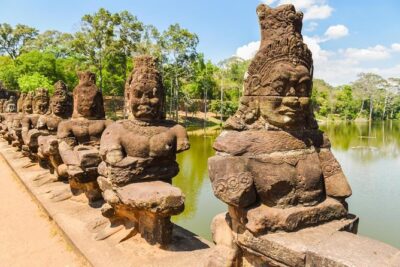
Angkor Wat Sunrise or Sunset Tour with Guide from Siem Reap
Read our review →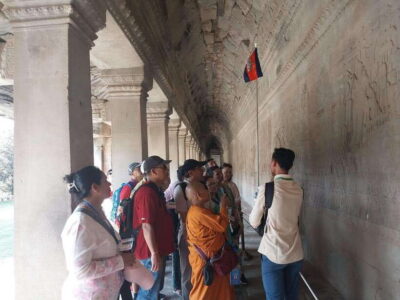
Angkor Wat: Small-Group Sunrise or Sunset Tour
Read our review →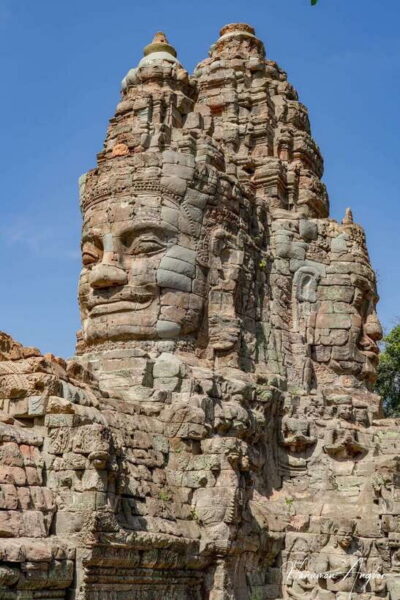
Angkor Wat 2-Day Tour with Sunrise and Sunset
Read our review →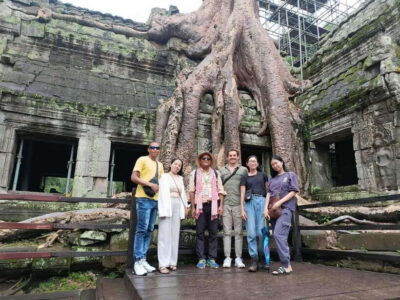
Angkor Wat Sunrise tour with Small – Group and Guide tours
Read our review →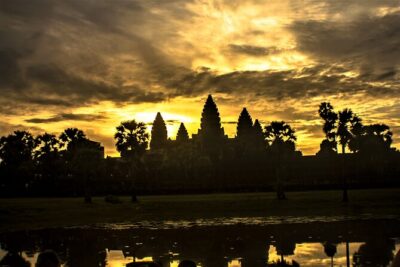
Angkor Wat Highlights and Sunrise Guided Tour from Siem Reap
Read our review →
Angkor Wat Sunset Small Group Tour with Lunch Included
Read our review →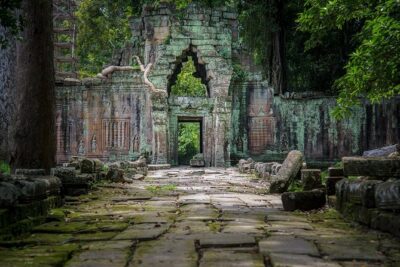
Full-Day Angkor Wat Sunrise Private Tour with Guide from Siem Reap
Read our review →Browse the lists this tour appears in