
Reviewed · HISTORICAL TOURS
Historical Tour, Kangra fort &Rock cut temple from Dharmasla
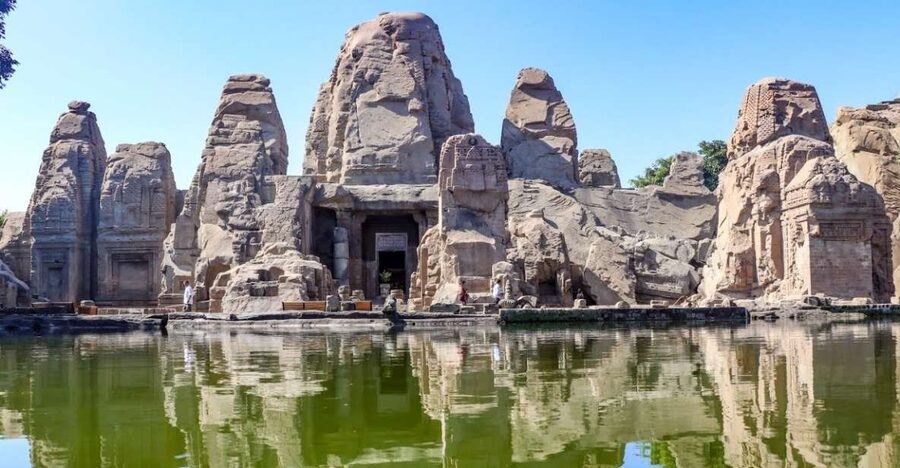
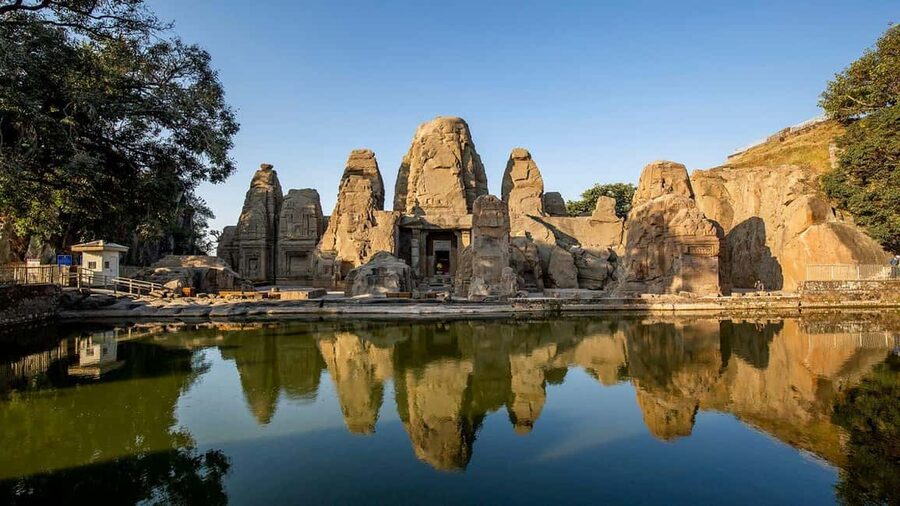
Masroor’s stone temples are the star of this day trip. Cut from rock beside a pond, the complex gives you sacred architecture, wide views toward the Dhauladhar Range, and a quiet look at Himachal Pradesh beyond Dharamshala. Kangra Fort then adds battles, royal power, and a fine uphill view.
I like the private format, since you can set your pace and ask questions without a large group slowing you down. I also like the mix of major sights and ordinary life: village roads, local food, Kangra’s market, and the temple area give the day more texture than a simple fort visit.
The main drawback is the long road portion within a six-hour schedule. The fort involves climbing, entrance fees are extra, and the quality of the experience depends partly on which guide you receive. Most guide feedback is strong, but one booking found the English and historical detail too repetitive.
Key points at a glance
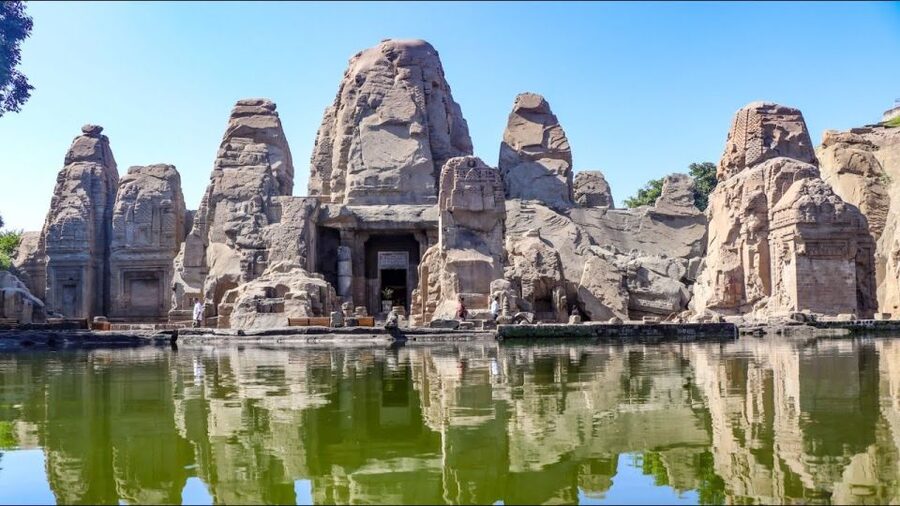
- Masroor Rock Cut Temple: See a rare group of temples carved directly from stone beside a water pond.
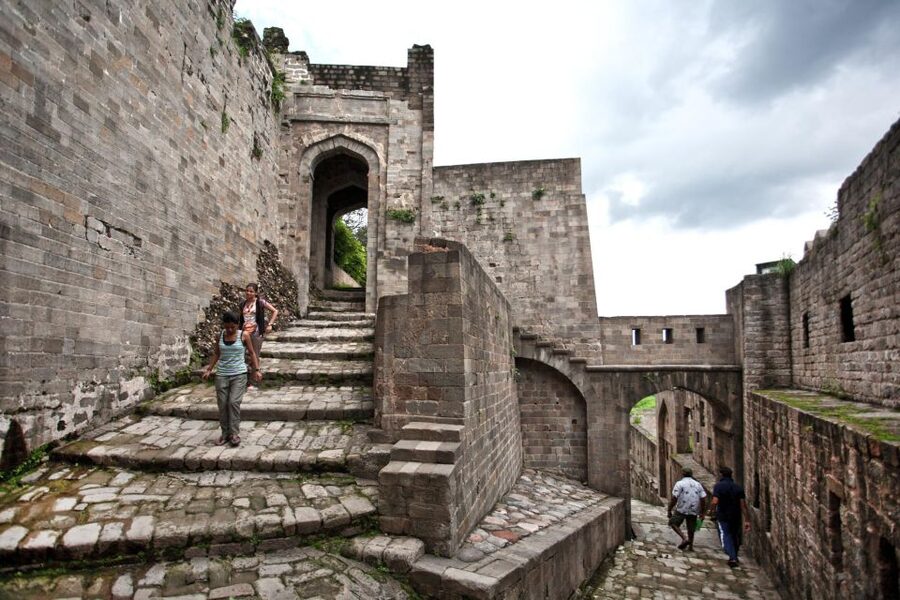
- Kangra Fort: Walk through one of the Himalayas’ largest historic forts and enjoy views from its upper sections.
- Three cultural stops: The route includes Masroor, Kangra Fort, and Brajreshwari Devi Temple.
- Private transport: Hotel pickup and drop-off are included from city hotels in McLeod Ganj or Dharamshala.
- Local flavor: Leave time for Kangra market, roadside snacks, handmade lemon soda, and a look at village life.
Why this six-hour Kangra trip is worth your time
Dharamshala is best known for Tibetan culture, mountain air, and the Dalai Lama’s residence at McLeod Ganj. This tour takes you into a different part of Himachal Pradesh. The focus shifts to Hindu pilgrimage, Rajput power, old stonework, and the broad Kangra Valley.
That change of subject is the point. In one day, you move from a sacred site carved into a hill to a medieval fort and then into a working market. You are not just looking at buildings. You are seeing how religion, royal history, and daily commerce fit together in the same region.
The tour costs $104 for a private group of up to one person as listed, with larger vehicle options available for bigger parties. That price is easier to justify if you are traveling with companions, since transport and the guide are arranged privately. You still pay monument entry fees and meals separately, so allow extra money for those.
A private car is especially useful here. The tour covers several places outside Dharamshala, and the road journey is part of the day. You can look out at the Kangra Valley, stop for a photo when appropriate, and ask your guide to explain what you are seeing.
More History Tours in India:
- World heritage Somnathpur sculptures and Talakadu temple mystery
★ 5.0 · 79 reviews - Old Bangalore Historical Walk thro Palace, Temples, Fort & Market
★ 5.0 · 60 reviews - World heritage site of Belur & Halebid with temple sculptures
★ 5.0 · 24 reviews
The drive through Kangra Valley and village country
Your guide collects you from a city hotel in McLeod Ganj or Dharamshala. The first part of the route heads toward Masroor, passing through the Kangra Valley and local villages.
The drive gives you a useful introduction to the area. You may see small settlements, cultivated land, roadside commerce, and the everyday work of local residents. This is not a staged village visit. You are simply passing through places where people live, which makes the view feel more natural.
The road is also one reason to keep expectations realistic. You have six hours for several stops, and Dharamshala’s roads can be winding. The driver matters. Manoj, one driver praised for this route, was described as careful and respectful on the long mountain roads. Still, you should expect some time in the car rather than six uninterrupted hours at monuments.
Your guide is the other key part of the experience. Guides connected with this tour have included Hemant, Onkar, and Ashok. Onkar has been especially valued for detailed explanations at the monuments, while Ashok has been praised for discussing food, local customs, the surrounding area, and village life as well as the main sights. Guide assignments can vary, so the depth of commentary may not be identical every time.
Masroor Rock Cut Temple and its mountain setting
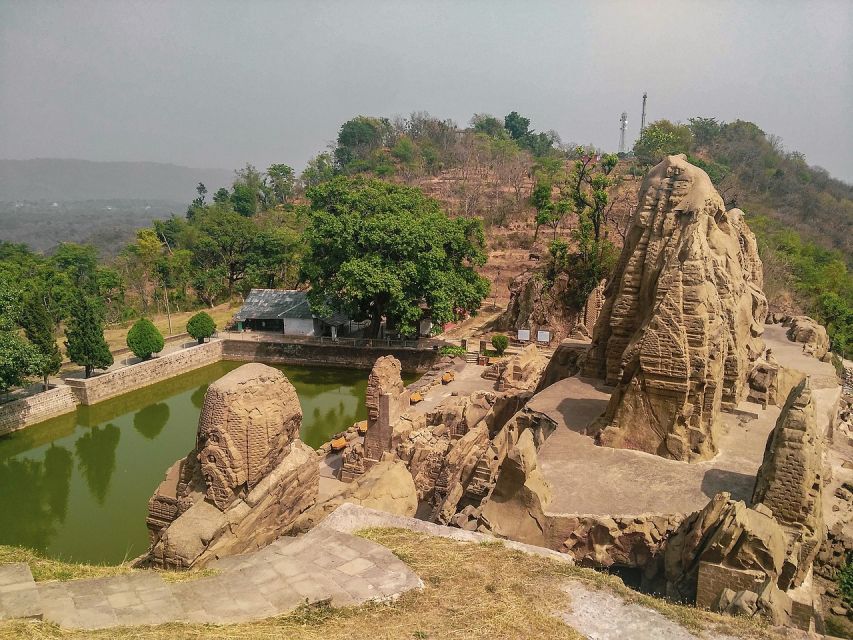
Masroor Rock Cut Temple is the most unusual stop. The complex was carved from stone and is set beside a water pond on a hill. Its position gives you views across the surrounding terrain toward the snowy Dhauladhar Range.
The temples are associated with Rama, Laxmana, and Sita, and their stone images remain objects of worship. This matters when you visit. The site is not only an archaeological curiosity. It is still part of religious life, so respectful clothing and behavior are sensible.
The setting gives Masroor much of its appeal. The stone structures, pond, hilltop position, and distant peaks combine into a place that photographs well from several angles. A good guide can point out useful viewpoints and explain what you are seeing rather than leaving you to wander around without context.
The site also rewards patience. Look closely at how the temple forms were shaped from the rock rather than assembled piece by piece. The physical work involved is easier to appreciate when you pause and study the surfaces, doorways, and carved figures.
There is a historical layer tied to the Mahabharata tradition, with the temple complex connected to the worship of these Hindu deities. Your guide can help separate local religious tradition from the physical evidence in front of you. That conversation is one of the tour’s advantages over visiting independently.
Kangra Fort, Rajput power, and the climb
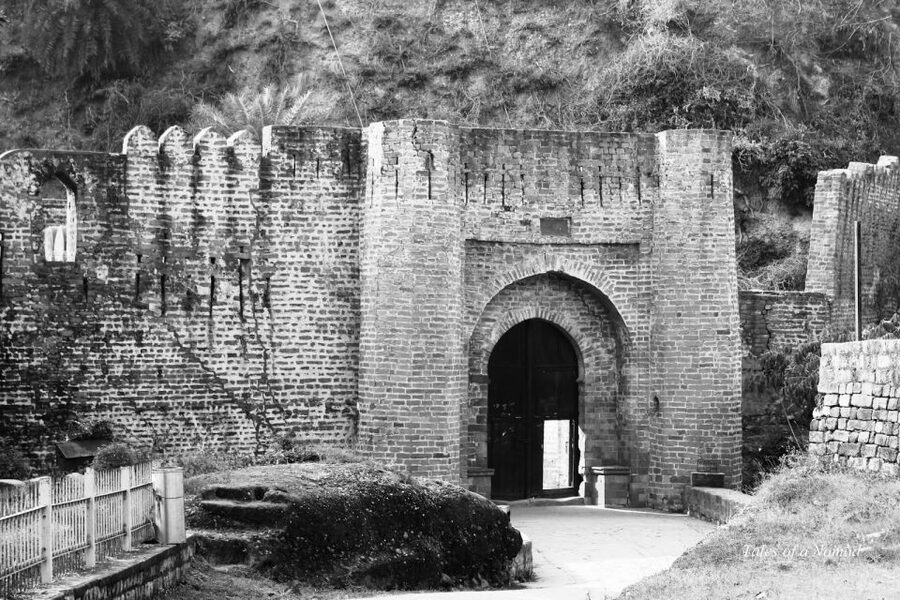
Kangra Fort was built by the Katoch dynasty, the royal family of the former Kangra State. The dynasty links its origins to the ancient Trigarta Kingdom mentioned in the Mahabharata.
The fort’s story is full of power struggles. Akbar tried to take it in 1615 but did not succeed. His son Jahangir subdued it in 1620, forcing the submission of the Raja of Chamba, described in the historical account as the greatest of the regional rulers.
You do not need to be a military history fan to enjoy the fort. Its location and views are a large part of the visit. Reaching the higher sections involves climbing, and one of the useful practical details about this stop is that the climb can be worth the effort for the view over the area.
Take care with your footwear. The fort is an outdoor historic site, not a polished museum, and the route upward requires more effort than the temple and market stops. If you have limited mobility, ask your guide about the exact walking demands before setting out.
The fort is also where a good guide adds real value. Bare walls and old gateways can be difficult to read without a sense of who controlled the site, why it mattered, and how the Katoch rulers fit into the wider story of northern India. Onkar, Hemant, and Ashok have all been associated with strong historical explanations, though the quality of spoken English and detail can vary.
One important limitation is that the fort visit may feel less satisfying if your guide gives only a short, repeated explanation. That has happened on at least one booking. If you want a history-heavy day, ask questions early and tell your guide that you would like more detail about the fort’s rulers, sieges, and religious buildings.
Other temple visits near India we have written up
- New Delhi: Akshardham Temple Tour with Water and Light Show
★ 4.8 · 313 reviews - Old Delhi Food-Spice Market-Temples Tour Soon Featured on NETFLIX
★ 5.0 · 304 reviews - Private Guided Spiritual Walk in Banganga Hindu Temples
★ 5.0 · 271 reviews - Taj Mahal Sunrise with Lord Shiva Temple:- All Inclusive
★ 5.0 · 207 reviews
Brajreshwari Devi Temple and living devotion
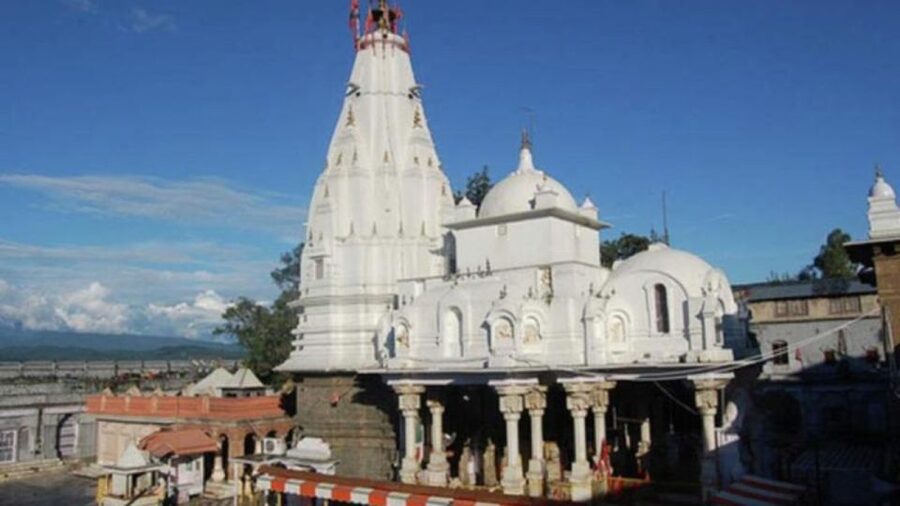
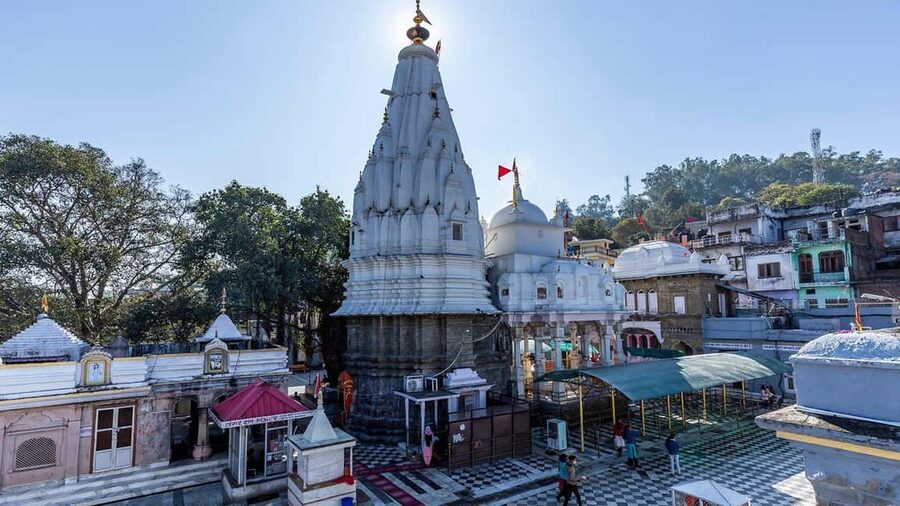
Brajreshwari Devi Temple brings the day back to active Hindu worship. Local belief identifies the site as one of the Shakti Peethas. According to the legend, after Sati’s death, Lord Vishnu divided her body with his chakra to stop Shiva’s destructive dance. Her left breast is said to have fallen here.
The temple is also linked by tradition to the Pandavas during the Mahabharata period. These stories are central to the meaning of the place, even though they belong to religious tradition rather than the same kind of documentary history as the fort’s recorded sieges.
You should approach this stop as a working place of worship, not simply another monument. Your guide can explain the significance of the shrine and help you understand what you are seeing. The temple visit also gives the day a different mood from Masroor’s open stone complex and Kangra Fort’s military remains.
Temple etiquette matters. Follow your guide’s instructions about where to walk and how to behave. The supplied details do not specify a dress code or photography policy, so ask locally rather than assuming.
Kangra market, lemon soda, and local shopping
The final portion of the tour allows time in Kangra’s local market. This is a useful finish because it brings you back from grand historical subjects to ordinary commerce.
You can browse local goods that work as gifts or souvenirs. The exact stalls and products can change, so treat this as browsing time rather than a guaranteed shopping list. The market is also a chance to watch daily business at close range and practice taking the slower, more observant approach that makes a private tour worthwhile.
Small food moments can become the most memorable. One booking included handmade lemon soda near the temple market, and another included a roadside pakoda snack with the guide. These are not promised inclusions, and you should pay for your own food unless your guide offers otherwise, but they show how the day can move beyond fixed sightseeing.
Lunch is not included. A restaurant used during one outing was praised for its food but considered expensive, so ask the guide about the price before ordering. This is a simple way to keep the day within your budget.
Transport, timing, and what the price covers
The six-hour duration includes hotel pickup and drop-off, driving between sites, guided sightseeing, and parking fees. Transport is arranged by private car, with a medium car for up to two people, an Innova for up to six, and a Tempo Traveler for up to ten.
The listing price is $104 per group up to one person. Because the price structure and vehicle choices are aimed at private parties, the value improves when several people share the cost. For a solo visitor, compare the total against a shared excursion, but remember that a shared option may offer less control over timing.
Monument fees are not included. Breakfast, lunch, and dinner are also excluded. You should confirm the day’s entry costs and keep cash available for food, drinks, and market purchases.
The tour offers free cancellation up to 24 hours before the start and allows you to reserve now and pay later. Pickup is from city hotels only, so confirm that your accommodation qualifies if you are staying outside the main McLeod Ganj or Dharamshala hotel area.
Who will enjoy this tour most
I would choose this tour if you want history with a local setting rather than a single grand monument. It suits couples, families, and small private groups who appreciate having a guide explain religious traditions, royal politics, and local life in plain language.
It is also a good choice for photographers. Masroor’s stone forms, the pond, the hilltop position, and the Dhauladhar views provide several strong subjects. The fort adds wider views, especially if you are comfortable with the climb.
I would be more cautious if you dislike road time, walking uphill, or religious sites that remain active places of worship. The day moves quickly, and a six-hour schedule cannot provide a long, leisurely visit at every stop.
English is the available guiding language. Most guide feedback points to friendly, capable explanations, but one experience found the English less clear and the information repetitive. If detailed history is important to you, contact the provider in advance and request a guide with strong historical English.
Should you book the Kangra heritage day?
Book it if you want to see more than McLeod Ganj and Dharamshala. Masroor Rock Cut Temple is the unusual highlight, Kangra Fort supplies the political drama, and Brajreshwari Devi Temple shows that the region’s sacred traditions are still active.
The strongest reasons to go are the private vehicle, the range of stops, the valley drive, and the chance to learn from guides such as Hemant, Onkar, or Ashok when available. The main cautions are extra entrance fees, excluded meals, the uphill fort walk, and uneven guide quality.
Ask for a historically strong English-speaking guide, wear comfortable shoes, and keep room in the schedule for a market stop or local snack. With those expectations, this is a worthwhile day outside Dharamshala that connects ancient tradition with present-day Himachal Pradesh.
FAQ
How long does the tour last?
The tour lasts six hours, including pickup, sightseeing, transport between stops, and return to your hotel.
Where does pickup take place?
Pickup is available from city hotels in McLeod Ganj or Dharamshala.
Which places are visited?
The route includes Masroor Rock Cut Temple, Kangra Fort, Brajreshwari Devi Temple, Kangra Valley villages, and the local market in Kangra.
Is the tour private?
Yes. It is offered as a private group experience.
Is an English-speaking guide included?
Yes. An English-speaking live guide is included.
What type of transport is provided?
Transport is provided by private vehicle. Options include a medium car for up to two people, an Innova for up to six people, and a Tempo Traveler for up to ten people.
Are monument entrance fees included?
No. Monument fees are not included in the tour price.
Are meals included?
No. Breakfast, lunch, and dinner are not included.
Can I cancel for a full refund?
You can cancel up to 24 hours in advance for a full refund. The tour also allows you to reserve now and pay later.
Newly written up around India
- Bandipur Tiger Reserve with Somnathpur Temple Tour★ 5.0 · 21 reviews
- Day trip from Bangalore to Lepakshi for Temple architecture & paintings★ 5.0 · 15 reviews
- Full Day Private Tour of Temples of Bengaluru★ 5.0 · 5 reviews
- Lepakshi Temple and Nandi Hills Day Trip from Bangalore★ 4.5 · 3 reviews
- Bull temple layout Heritage walk★ 5.0 · 13 reviews
- Lepakshi Temple Day Tour from Bangalore★ 5.0 · 3 reviews
- Lalbagh+Bull Temple+Tipu Palace+Market+Lunch=Bangalore City Tour★ 5.0 · 9 reviews
- Private Full-Day Amritsar Tour: The Golden Temple & Wagah Border★ 5.0 · 14 reviews
Historical Tours, compared.

Mt. Fuji Heritage Tour: Traditional Villages, Lakes & Shrine
Read our review →
Malta: Prehistoric Temples, Limestone Heritage & Blue Grotto
Read our review →
Day Trip From Addis Ababa See Historical Monastery,Stunning Nature,Animals,Birds
Read our review →
Beijing Historical Tour II including Summer Palace, Lama Temple & Panda Garden
Read our review →
“Porto: Fado Show with Guided Tour in a Historic Monastery”
Read our review →
Private Half-Day Temples and Cultural Tour in Kuala Lumpur
Read our review →
Beijing Historical Tour I – Forbidden City, Tiananmen Square & Temple of Heaven
Read our review →Browse the lists this tour appears in