
Reviewed · CAVE TEMPLE TOURS
Mumbai: Buddhist Kanheri Caves with Golden Pagoda Temple
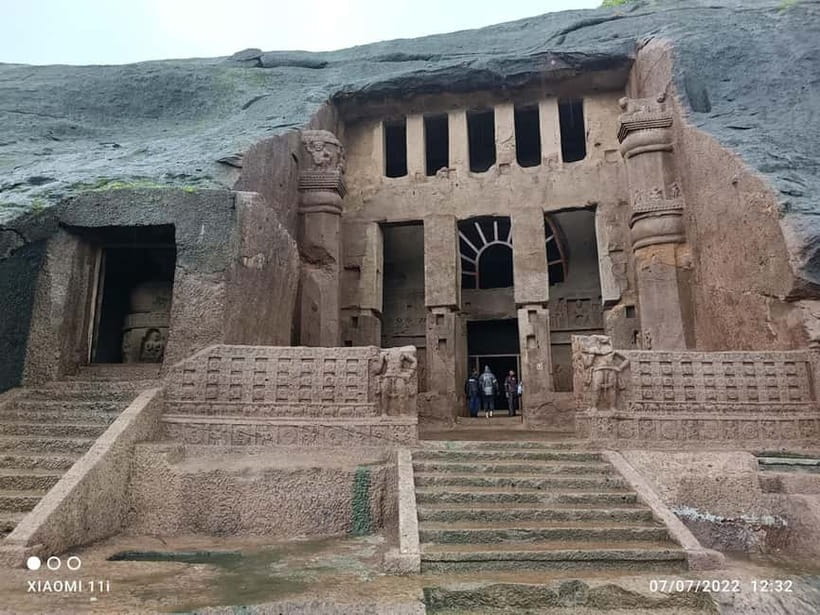
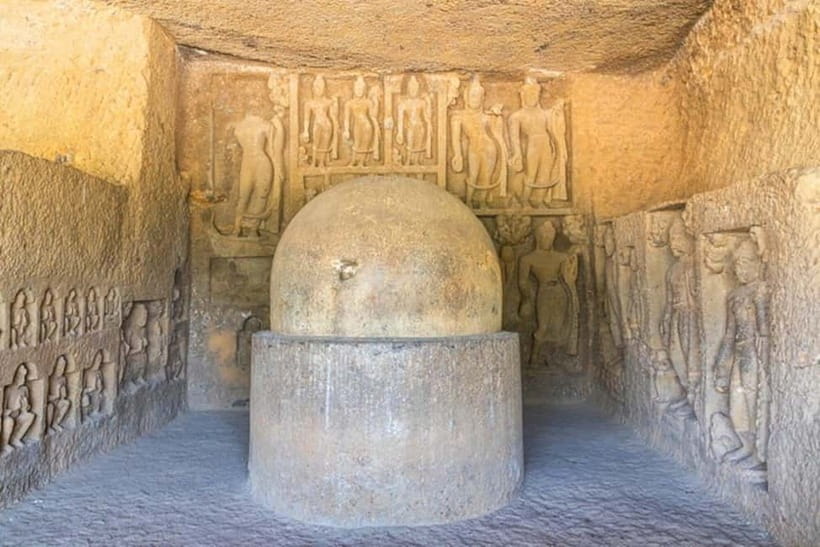
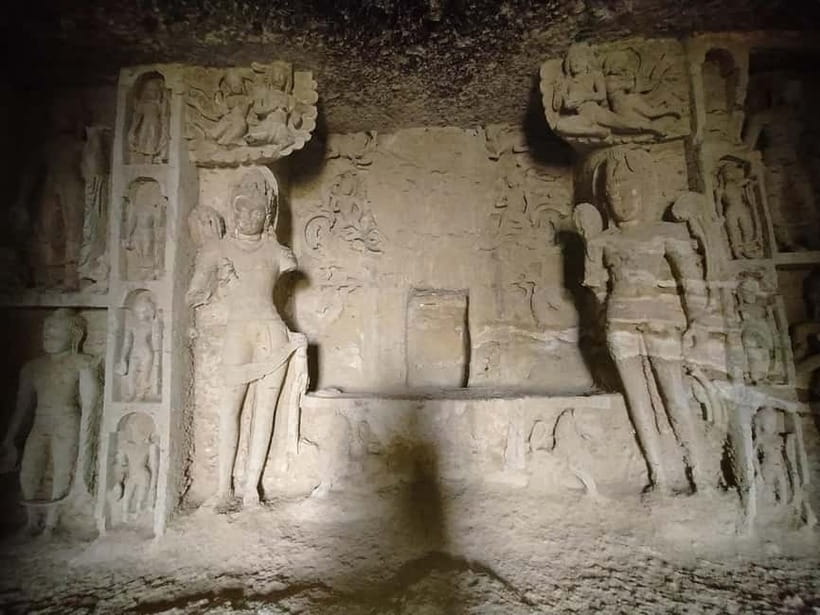
The Kanheri Caves turn a busy Mumbai outing into a close look at ancient Buddhist life. More than 100 chambers were cut into volcanic basalt, creating prayer halls, meditation cells, monasteries, stupas, and living quarters. You can still see carvings and old Brahmi inscriptions in the rock.
I like two things here: a guide gives the caves meaning that is easy to miss on your own, and the day joins two very different Buddhist sites. The cool cave interiors offer some relief on a hot day, while the Golden Vipassana Pagoda provides a calm change of pace.
The main drawback is the distance and heat. The cave visit includes walking and some uphill sections, and the complete outing can take most of a day. You should also check the option carefully, since the pagoda is outside the national park and is not included in every booking choice.
Key points to know before booking
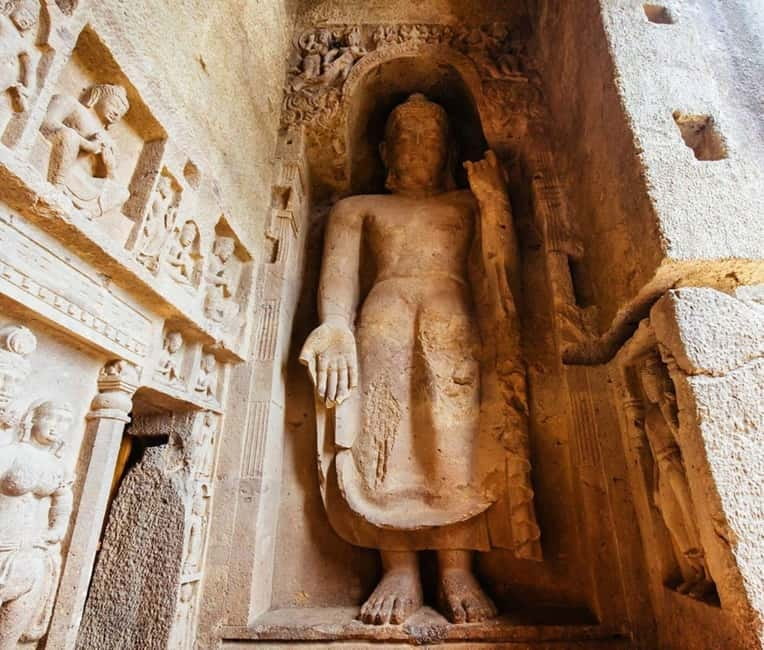
- Over 100 rock-cut caves: See chaityas, viharas, stupas, cells, inscriptions, and carvings made in volcanic basalt.
- Two separate Buddhist sites: Kanheri offers ancient monastic remains, while the Golden Pagoda presents modern Vipassana teaching.
- Private English-speaking guide: Guides including Fahad, Hamid, Abdul, Nadeem, and others explain details that are easy to miss.
- Hotel pickup can simplify the day: Air-conditioned transport, parking, bottled water, entry tickets, and selected pickup and drop-off are included.
- Plan for walking and sun: Comfortable shoes matter, and the upper cave areas can feel hot.
- Monday is not an option: Kanheri Caves are closed every Monday.
Why the Kanheri Caves are the heart of the day
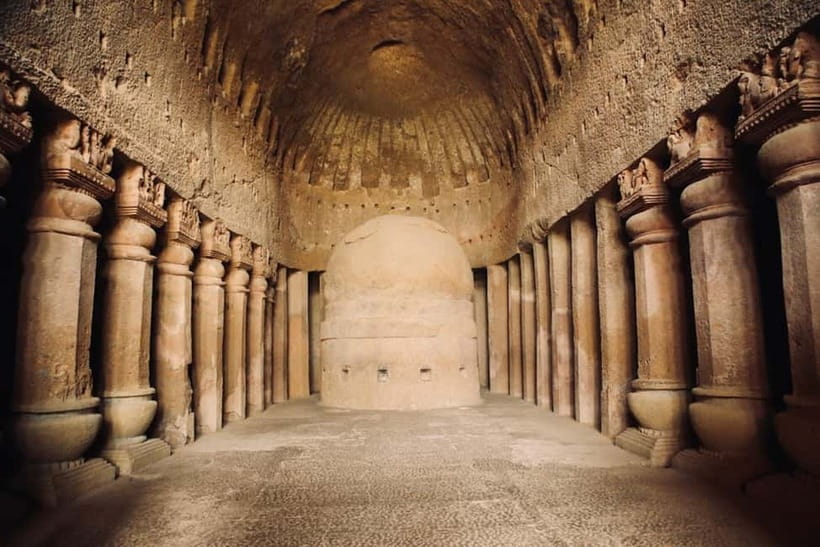
Kanheri began in the 1st century BCE and developed into an important Buddhist center in western India. The site is not one grand cave but a large complex of chambers cut into a rocky hillside. That layout helps you picture a working monastic community rather than a single shrine built for quick viewing.
Your guide can point out how the caves served different purposes. Prayer halls, known as chaityas, were built for worship. Viharas functioned as monasteries and living spaces. Other chambers held meditation cells, stupas, residential areas, and gathering places.
The rock itself is part of the story. The caves were carved from volcanic basalt, leaving dark, sturdy surfaces for inscriptions and sculpture. Look closely at the walls and pillars, where you might find carved figures, decorative work, and writing in ancient Brahmi script.
Without explanation, some of these details can look like plain markings in stone. Guides such as Fahad have translated parts of the writing for visitors, while Hamid has explained the monk community and the way the caves were used. That context gives the site a human scale.
The complex also helps explain how Buddhism spread through western India. Artistic details, inscriptions, prayer spaces, and monastic rooms all show that Kanheri was a place for teaching, religious practice, and daily life. You are not simply looking at old stone. You are seeing the remains of a center where monks lived, studied, and welcomed people connected to the wider Buddhist world.
More Cave Temple Tours in India
- Mumbai: Kanheri Caves and The Golden Pagoda Temple
★ 4.7 · 108 reviews - Sanjay Gandhi National Park+ Kanheri Caves + Temple +Tigar Safari
★ 5.0 · 54 reviews - Kanheri Cave with Global Vipassana Pagoda Tour in Private Vehicle
★ 5.0 · 46 reviews
What the cave walk is like
The tour begins early, which is a sensible choice in Mumbai. You have a better chance of avoiding the worst heat, and an early start leaves room for the long drive to the pagoda later in the day.
Expect a walking visit rather than a quick photo stop. The route takes you through cave interiors and around the rock-cut complex, with some uphill walking. One visitor described the walk as long in the heat, although the useful cave areas and views made the effort worthwhile.
The interior sections can feel cooler than the exposed rock outside. That contrast is welcome during warm weather, but do not mistake the cooler chambers for an air-conditioned attraction. You will still spend time outdoors, and the higher areas can be hot.
Wear shoes that are comfortable for walking. Bring water, although bottled water is included. The tour is not considered suitable for pregnant women, and the amount of walking makes that restriction worth taking seriously.
Your pace is usually easier to manage in a private group. Abdul has adjusted the visit for parents, allowing them to move at a comfortable speed, and other guides have done the same for visitors with different interests. If you want more time for carvings or photographs, say so early.
Why a guide adds real value at Kanheri
Kanheri has plenty to see, but limited information on site can leave you guessing. You might recognize a large prayer hall or a stupa, yet miss the reason it was made, the meaning of a carving, or the importance of an inscription.
The guide is the strongest part of this experience for many reasons. Fahad has been praised for explaining both Buddhism and the caves, answering questions, translating inscriptions, and adjusting the visit to suit the group. Hamid has focused on the cave history and the monk community. Abdul is known for clear explanations and practical help, while Nadeem has added personal touches such as stopping for coffee after a very early morning.
Those details matter because Kanheri rewards close attention. A guide can point to artistic depictions connected with Buddhism in western India, explain the difference between a prayer hall and a residence, and show you carvings you might otherwise walk past.
The arrangement is also more personal than a large coach tour. The advertised format is a private group, and one person on a tour received individual attention because no one else had booked that departure. That does not guarantee you will be alone, but it does mean the format is better suited to questions and a flexible pace than a crowded group excursion.
Sanjay Gandhi National Park adds a green setting
Kanheri Caves are within Sanjay Gandhi National Park, so the ancient site is reached through a large protected park area rather than an isolated city street. The park is part of the practical route and gives the cave visit a change of setting from central Mumbai.
The park stop is mainly tied to the cave visit, not a separate wildlife program. You should think of it as the setting and access point for Kanheri, with a photo stop and sightseeing included. The tour can also end at the Sanjay Gandhi National Park ticket counter if you do not select hotel drop-off.
That alternate ending may suit you if you want to continue exploring independently or if your accommodation is not the best place to return to. If you choose hotel pickup and drop-off, confirm the exact option before paying, since pickup is optional and the listed drop-off choices can differ.
A different set of gates, same trip:
- New Delhi: Akshardham Temple Tour with Water and Light Show
★ 4.8 · 313 reviews - Old Delhi Food-Spice Market-Temples Tour Soon Featured on NETFLIX
★ 5.0 · 304 reviews - Private Guided Spiritual Walk in Banganga Hindu Temples
★ 5.0 · 271 reviews - Taj Mahal Sunrise with Lord Shiva Temple:- All Inclusive
★ 5.0 · 207 reviews
The Golden Vipassana Pagoda near Gorai Beach
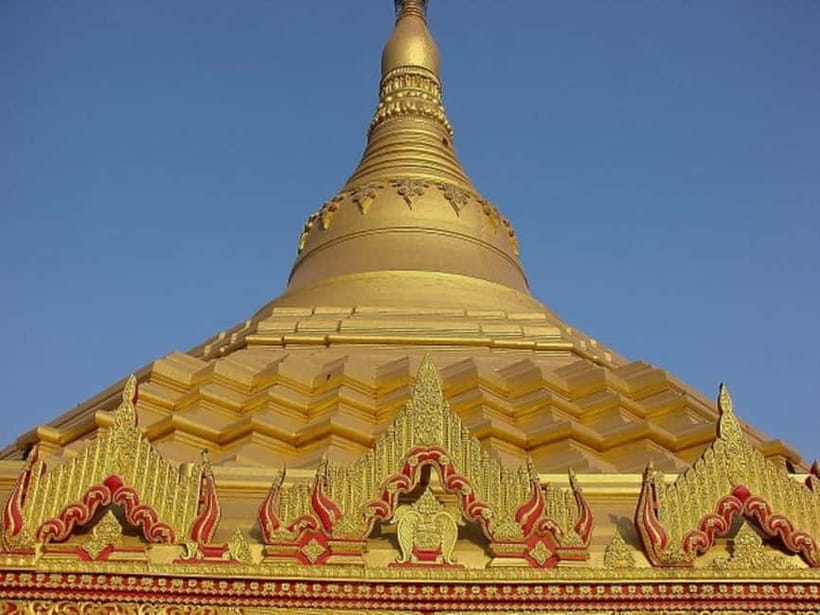
After Kanheri, the vehicle heads toward Gorai Beach and the Global Vipassana Pagoda, also called the Golden Pagoda Temple. It is a modern Buddhist site with striking architecture and a purpose centered on peace, harmony, and Vipassana meditation.
The contrast with Kanheri is the point. At the caves, you are studying ancient rock-cut spaces and traces of monastic life. At the pagoda, you are learning how Vipassana is practiced and understood today, along with its wider significance.
The pagoda is described as Mumbai’s largest Golden Vipassana Pagoda. Its scale and bright finish make it a very different visual experience from the dark basalt caves. You will have time for photographs, sightseeing, and an explanation of the meditation tradition.
This stop is not just a second temple photo. The guide explains Vipassana philosophy and its teachings, giving you a way to connect the ancient Buddhist site with a present-day meditation movement. If you are interested in religion, architecture, or quiet places away from central Mumbai, the addition gives the trip more range.
Dress with the temple visit in mind. One person found that shorts required extra coverage before entering, with the guides helping arrange it. Clothing that covers the legs is the safer choice.
The biggest practical issue: selecting the right option
Read the booking choices carefully. The pagoda is outside Sanjay Gandhi National Park, and the first option may not include it. One visitor expected the caves and pagoda together but discovered that a different, third option was required.
That is an easy mistake to make because the experience title combines both attractions. Confirm that your selected option includes:
- Kanheri Caves
- Sanjay Gandhi National Park access
- Global Vipassana Pagoda
- Hotel pickup and drop-off, if needed
The tour can last from 4 to 8 hours, depending on the selected arrangement, timing, traffic, and time spent at each stop. A morning start is best if you want a less rushed day and a better chance of handling the heat.
Transport, tickets, and what the $28 price buys
At $28 per person, this is a strong value if you want transport, a guide, and both sites in one outing. The price includes air-conditioned transport during the tour, entry tickets, parking and related charges, bottled water, and a live English-speaking guide.
That bundle matters in Mumbai. You are not left arranging separate transport between a national park and a site near Gorai Beach, and you do not need to work out parking or entrance procedures at each stop. Hotel pickup and drop-off are included only with the appropriate selection, so check that detail.
The value is less clear if you only want to see Kanheri quickly. You can find people exploring parts of the caves independently, and an independent visit may suit someone who already knows the Buddhist background. But if you want the inscriptions, paintings, carvings, and cave functions explained, the guide earns the extra cost.
The transport is also highly rated, with 87 percent of ratings giving it a perfect score. That fits the practical strength of this outing: the road connections and timing are handled for you, leaving you to focus on the sites.
The guides make the day easier
The guide team is not limited to one named person. Fahad, Hamid, Abdul, Nadeem, Hamir, Mehtab, Sharon, Deepa, Faiza, and Salma have all been associated with especially personal service on different departures.
Their strengths vary, but the pattern is clear. Fahad has been especially good at explaining the caves, answering questions, taking photographs, and making visitors feel comfortable. Abdul has offered further recommendations and adapted the pace for older parents. Hamid has been praised for history and careful planning.
Transport and guiding may be handled by different people. Mehtab, for example, has been singled out for safe, reliable driving, while guides handled the site explanations. That division is useful on a long day because you get both a driver focused on the road and a guide focused on the visit.
You can also expect the guide to help with practical matters, such as tickets, temple clothing, directions, and local arrangements. This is a small-group experience, not a silent transfer between attractions.
Who should book this experience
I would recommend this tour if you want to see Buddhist Mumbai beyond the usual city sights. It suits first-time visitors, people with limited time, and anyone who prefers a guide to explain what the stonework means.
It is also a good fit for visitors staying in Mumbai for a wedding or short trip. One person used the outing as a break in a busy wedding schedule and found it a worthwhile way to spend the day.
Families and multigenerational groups may appreciate the private format and flexible pace. The guide can slow down when needed, although the walk and heat still require reasonable fitness.
You may want a different plan if you dislike long drives, outdoor walking, or structured sightseeing. Pregnant women should not book this experience, pets are not allowed, and Kanheri is closed on Mondays.
Free cancellation is available up to 24 hours before the activity, and you can reserve now and pay later. Those terms help if your Mumbai plans are still shifting, but they do not change the need to check the exact option and day of operation.
Should you book the Kanheri Caves and Golden Pagoda tour?
Book it if you want the full contrast between ancient Buddhist monastic life and modern Vipassana practice. The caves are the main attraction, and the guide turns a large, sometimes confusing complex into a readable story of prayer, study, residence, and sculpture.
The Golden Pagoda makes the day longer, but it also broadens the experience. You get architecture, meditation teaching, and a peaceful modern site after the rough basalt chambers. At $28, the combination is especially appealing because transport, tickets, parking, water, and guiding are included.
Skip it if you only have a few free hours, cannot manage a long walk, or want to explore at your own pace without a guide. For everyone else, choose the option that clearly includes the pagoda, wear practical shoes, cover your legs for the temple, and start early.
FAQ
How much does the tour cost?
The listed price is $28 per person.
How long does the experience take?
The duration is between 4 and 8 hours, depending on availability and the selected option.
What sites are included?
The experience visits Kanheri Caves, Sanjay Gandhi National Park, and the Global Vipassana Pagoda when the correct option is selected.
Is hotel pickup available?
Yes. Hotel pickup and drop-off are available when included in the selected option. Pickup is optional.
What language does the guide speak?
The live tour guide speaks English.
Is this a private tour?
Yes. The group type is listed as a private group.
Are entry tickets included?
Yes. Entry tickets, parking, and related charges are included.
What should I bring?
Bring comfortable shoes. Bottled water is included, but you should still prepare for outdoor walking and heat.
Is the Kanheri Cave visit available every day?
No. Kanheri Caves are closed every Monday.
Is the Golden Vipassana Pagoda included in every option?
No. The pagoda is outside the national park, so you must select the option that specifically includes it.
Newly written up around India
- Varanasi in a Day Ancient Temples Sarnath and Ghats★ 5.0 · 17 reviews
- Hidden Corners of Varanasi Secret Alleys Temples and Traditions★ 5.0 · 9 reviews
- Transfer from Jodhpur to Udaipur via Jain Temple in Ranakpur★ 4.6 · 28 reviews
- Private Transfer From Jodhpur To Udaipur Via Ranakpur Jain Temple★ 4.5 · 35 reviews
- Akshardham Temple Tour Exhibition, Light & Water Show with Transfers★ 4.5 · 29 reviews
- Private Transfer From Udaipur To Jodhpur Via Jain Temple & Kumbhalgarh Fort★ 4.5 · 63 reviews
- Kunjapuri Temple Sunrise Trek With Professional Guide★ 5.0 · 13 reviews
- Private Guided Trek to Kunjapuri Temple & Waterfall at Sunrise★ 5.0 · 14 reviews
Cave Temple Tours, compared.
Tiger Cave Temple, Emerald Pool and Hot Springs Tour
Read our review →

Ao Nang: Hot Spring, Emerald Pool & Tiger Cave Temple Tour
Read our review →
All day Krabi Jungle Tour (Hot Spring Water, Emerald Pool, Tiger Cave Temple)
Read our review →
Discover Krabi – Emerald Pool, Hot Springs & Tiger Cave Temple
Read our review →
Kandy to Sigiriya Day Tour and Dambulla cave temple with private vehicle
Read our review →
Jungle Tour to Emerald Pool, Krabi Hot Spring and Tiger Cave Temple
Read our review →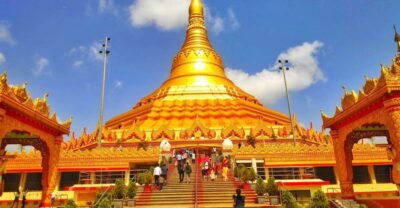
Browse the lists this tour appears in