
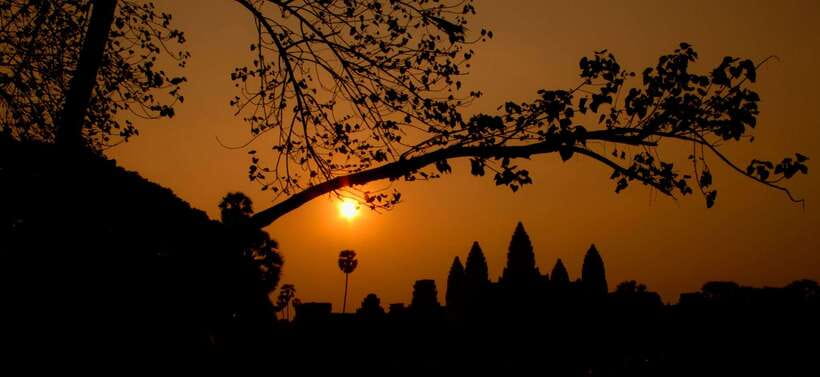
Reviewed · ANGKOR WAT TOURS
2-Day Angkor Wat With Small, Big Circuit & Banteay Srei Tour
Angkor is far more than one famous temple. This private two-day tour takes you from the grand towers of Angkor Wat to jungle-wrapped Ta Prohm, smiling Bayon, remote-looking Ta Saom, and the finely carved pink sandstone of Banteay Srei. You also get both sunrise and sunset, a useful pairing for seeing the site in different light.
I like the private format, since your guide can adjust the pace and explain the temples in a way that suits your interests. I also like the small comforts: air-conditioning, cold water, and cool face towels waiting at the vehicle. The main drawback is the full schedule. Two days cover a remarkable amount, but the early sunrise, long walks, heat, and many temple stops can leave you tired.
Key points before you book
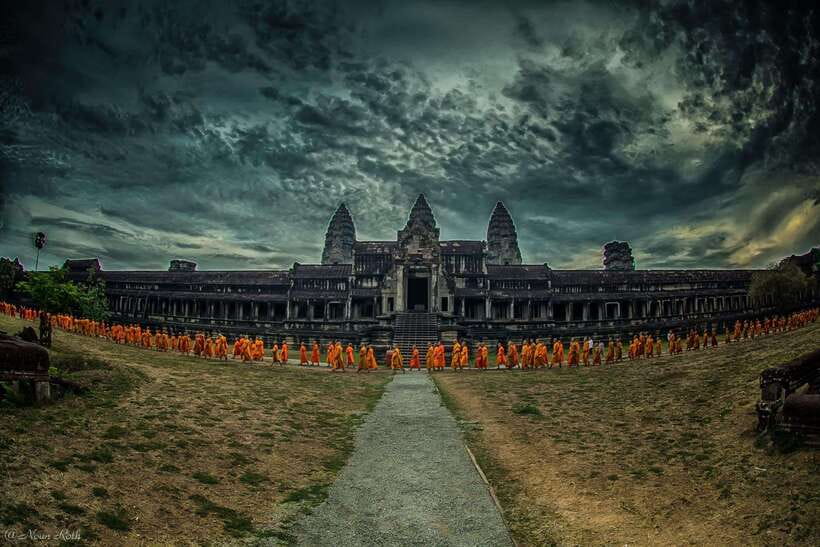
- Angkor Wat at sunrise and sunset: You see Cambodia’s best-known temple twice, at two very different times of day.
- Ta Prohm and its giant tree roots: The temple made famous by Tomb Raider is one of the tour’s most atmospheric stops.
- A genuinely private itinerary: Your guide can adjust the route and tempo around your interests.
- Banteay Srei’s pink sandstone: This smaller temple is known for delicate carvings and its connection to Hindu goddesses.
- Long days made easier: Air-conditioned transport, cold drinking water, and cool towels are included.
- Extra costs matter: The $136 tour price does not include food or the $62 temple pass.
Why two days is the right length for Angkor
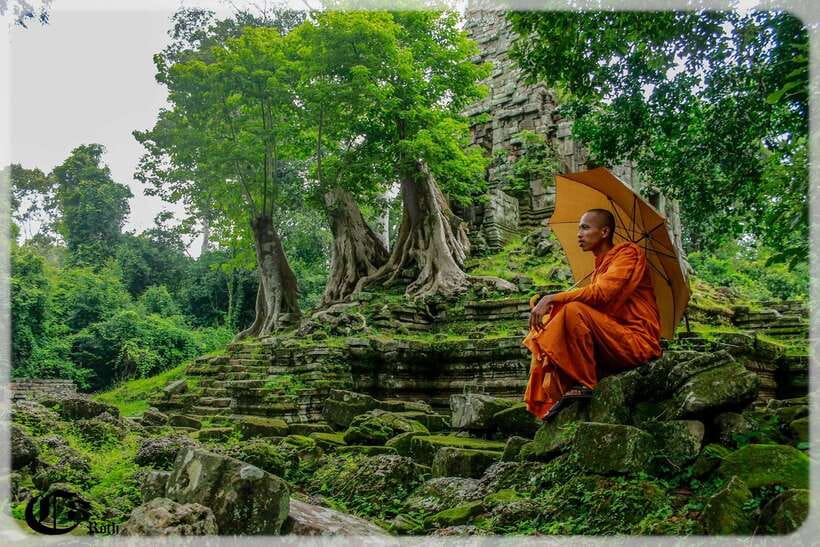
Angkor is too large for a quick visit. The main temples sit across a broad archaeological area, and each one asks something different from you. Angkor Wat demands time for its scale, Bayon rewards close looking, and Ta Prohm works best when you slow down beneath its tree roots.
This tour uses the first day for Angkor Wat, the Small Circuit, Angkor Thom, and sunset at Phnom Bakheng. The second day begins before sunrise and then moves through the Big Circle before heading farther out to Banteay Srei, Banteay Samre, and Banteay Kdei.
That layout makes good sense. You see the major landmarks first, then use the second day for a wider range of temples and rural scenery. You will still have a busy program, but the two-day plan avoids forcing every important stop into one exhausting day.
The guide speaks English and covers Cambodian culture, art, religious ideas, and history. The private setting is especially useful at temples with complex carvings, since you can stop and ask about details instead of keeping up with a large group.
More Angkor Wat Tours in Siem Reap:
- Angkor Wat Sunrise or Sunset Tour with Guide from Siem Reap
★ 5.0 · 12,109 reviews - Siem Reap: Angkor Wat: Small-Group Sunrise or Sunset Tour
★ 5.0 · 9,444 reviews - Siem Reap: Angkor Wat 2-Day Tour with Sunrise and Sunset
★ 4.9 · 4,429 reviews
Angkor Wat: start with scale and symbolism
Your first morning begins with hotel pickup and a drive to Angkor Wat, the enormous 12th-century religious complex. Allow several hours here. The site is not a quick photo stop. You walk through galleries, courtyards, and long passages before reaching the central towers and upper levels.
Angkor Wat was built as a Hindu temple dedicated to Vishnu and later became an important Buddhist site. That change in religious use is part of what makes the place so interesting. A guide can help you read the carvings and understand how the temple’s layout reflects religious ideas, rather than leaving you with only its famous silhouette.
The size can be hard to grasp from photographs. From a distance, the towers look neat and balanced. Inside, the long galleries and massive stone blocks give you a better sense of the work involved. Plan for plenty of walking and some stairs. Comfortable shoes are more useful here than stylish ones.
The tour also returns to Angkor Wat on the second morning for sunrise. This gives you another chance to see the temple without trying to combine sunrise with the first day’s full route. Sunrise conditions can vary, but the early start puts you at the site for one of the most sought-after views in the Angkor area.
After sunrise, you return to your hotel for breakfast or eat at a restaurant at your own cost. The tour does not include meals, so plan for this pause. That flexibility is useful, though you should not assume breakfast or lunch is covered by the $136 price.
Ta Prohm brings the jungle into the story
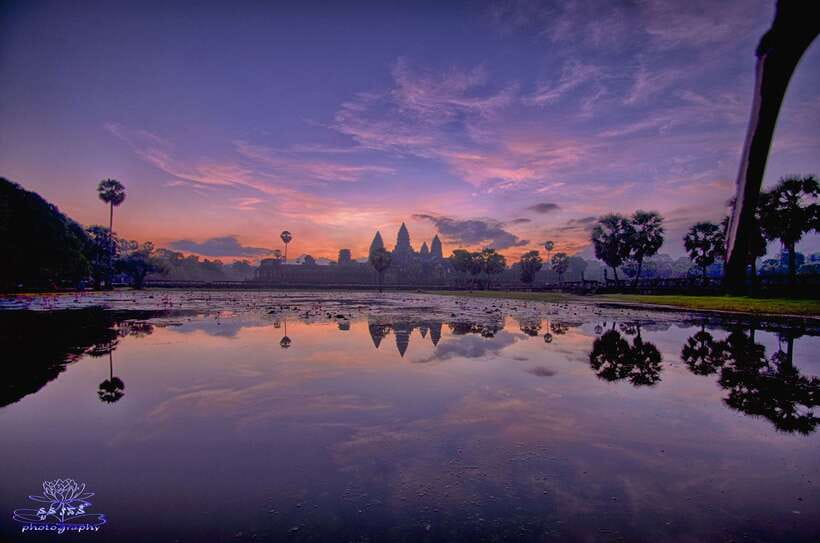
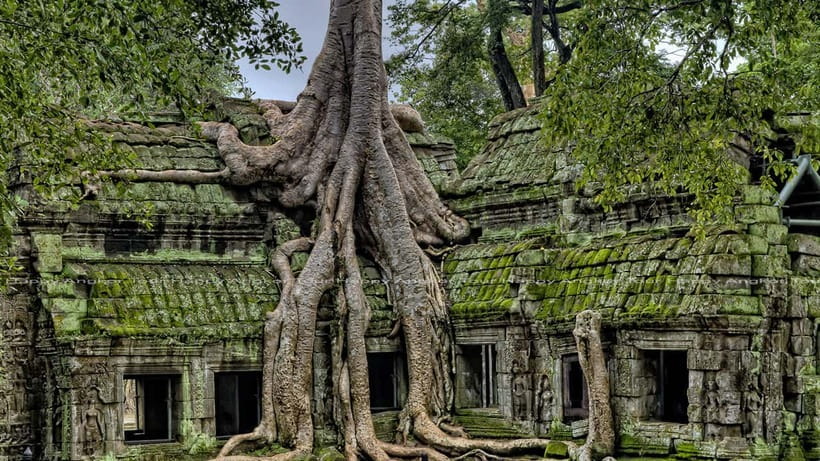
The Small Circuit continues with Ta Prohm, one of Angkor’s most memorable temples. Huge tree roots push over walls and doorways, giving the place its familiar jungle-city appearance. This is the temple associated with Tomb Raider, but it is more than a film location.
Ta Prohm shows the tension between nature and architecture. The roots are dramatic, but they also make some passages uneven and narrow. You will want time for photographs, yet the temple is best appreciated by looking at how the trees, collapsed stones, and carved doorways fit together.
The route then includes Ta Nei, a smaller and quieter temple. Its more modest scale gives you a change of pace after Angkor Wat and Ta Prohm. Do not expect the same grand views or polished presentation as the major sites. The appeal is the sense of a less staged ruin and the chance to examine a temple without needing to rush through a huge complex.
Lunch comes at a local restaurant, with food paid separately. The exact restaurant and menu are not specified, so keep your expectations practical. You are stopping to refuel during a long day, not buying an all-inclusive dining experience.
Angkor Thom and Bayon reward close looking
After lunch, you enter Angkor Thom through either the Victory Gate or the Death Gate, according to the day’s route. Angkor Thom was a major city area, not simply one temple. Its walls, gates, terraces, and central monuments give you a sense of how large the former Khmer capital was.
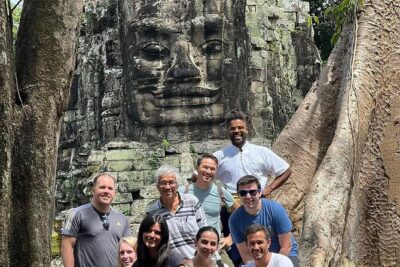
Bayon is the centerpiece. Its towers carry the famous serene faces, and the tour description counts 49 smiling towers. From a distance, the temple can look like a jumble of stone. Up close, the faces appear from different angles, creating one of Angkor’s most distinctive experiences.
I recommend taking your time here. Bayon is not best understood from one viewpoint. Walk around the towers, look up, and notice how the carved faces change as you move through the passageways. Your private guide can also point out the difference between religious imagery and everyday scenes in the bas-reliefs.
Nearby Baphuon gives you another kind of architectural experience. This large Hindu temple has a raised approach and strong geometric lines. Behind it, you see the immense Reclining Buddha. The sculpture is not always the first thing people expect in this part of Angkor, so it makes a worthwhile stop.
The walking route continues through the Royal Enclosure Wall, Phimeanakas, Elephant Terrace, Leper King Terrace, and Palilay. These names can blur together after a long day, which is one reason the guide matters. You can use the walk to connect the individual monuments to the larger city rather than treating each stop as an isolated ruin.
More two-day temple trips in Siem Reap:
- 2 Days Exclusive Temple Highlights with Sunset and Sunrise Tour
★ 5.0 · 1,157 reviews - Siem Reap: Angkor Sunrise 1- or 2-Day Guided Temples Tour
★ 4.9 · 1,132 reviews - 2-Day Angkor Wat With Small, Big Circuit and Banteay Srei Tour
★ 5.0 · 545 reviews - Siem Reap: 2-Day Temple Highlights Sunrise and Sunset Option
★ 4.9 · 445 reviews
Phnom Bakheng closes day one with a high view
The first day ends at Phnom Bakheng for sunset. The hilltop setting offers a broad view across the surrounding area and a different perspective from the low, enclosed temple courtyards.
Sunset access and conditions can change, and the tour does not promise a particular sky or crowd level. Still, the timing gives the day a natural finish. After hours among stone galleries and narrow temple paths, the open view helps you step back and see the scale of Angkor.
This is also a point to consider your energy. Day one includes Angkor Wat, Ta Prohm, Ta Nei, Angkor Thom, Bayon, Baphuon, several terraces, and Phnom Bakheng. If you like to study carvings and take many photographs, the day may feel full rather than relaxed.
The Big Circle adds quieter temple variety
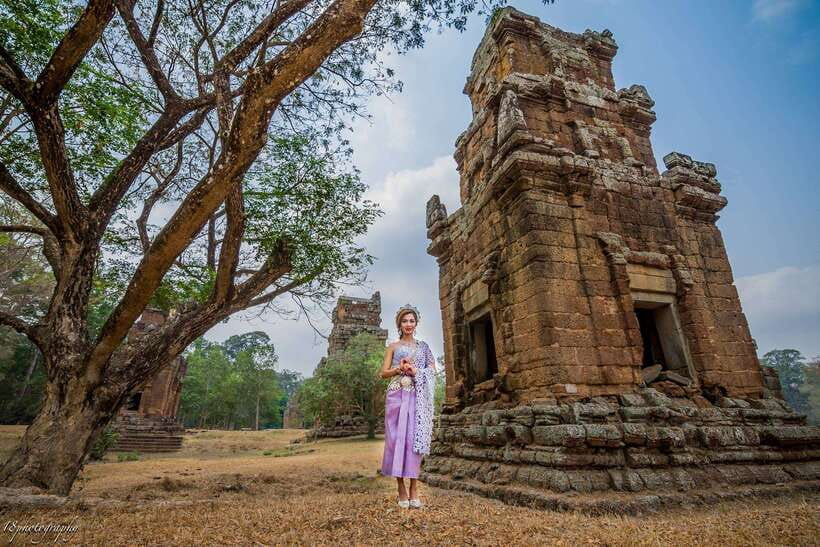
After the second sunrise, the tour moves to the Big Circle. The route includes Preah Khan, Neak Pean, Ta Saom, East Mebon, and Pre Rup. These temples differ in layout and mood, so this part of the tour is not just a repeat of day one.
Preah Khan is a large complex with long corridors, carved details, and a strong sense of depth. It rewards a slow walk, though its size can make it easy to lose track of where you are. Your guide can help you focus on the parts that best match your interests.
Neak Pean has a distinctive design connected with water. It is different from the conventional temple mountain and gives you a break from the repeated pattern of towers and galleries. The approach itself is part of the stop, so expect more walking before reaching the central feature.
Ta Saom is one of the places where the relationship between trees and stone becomes especially noticeable. The stop connects well with Ta Prohm, but its smaller scale creates a calmer contrast. It is also named in the tour’s highlights as a place connected with ancient religious traditions.
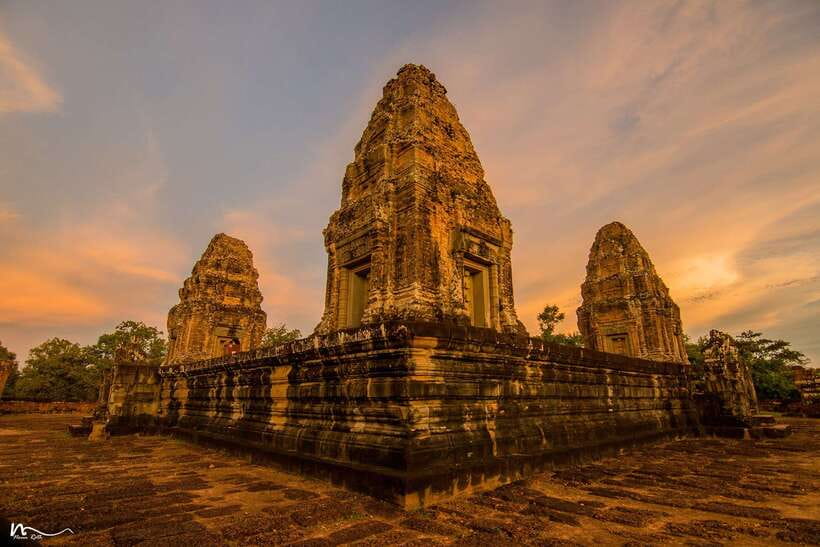
East Mebon and Pre Rup bring you back to strong temple-mountain forms. Their upper levels and brick or sandstone details make them useful stops for comparing Khmer building styles. You may find the stairs and exposed stone tiring by this stage of the day, especially after the sunrise start.
Lunch follows at your own expense. Keep water with you, even though the driver provides cool drinking water. The included water and face towels are small details, but they matter in Cambodia’s heat. Past bookings also praise the drivers for waiting with towels and water at the vehicle, and for arranging temple entrances and exits that reduce unnecessary walking back to the parking area.
Banteay Srei is the artistic highlight
The route then heads beyond the central temple zone through villages and rice-paddy fields. This drive changes the character of the day. You see more of Siem Reap Province beyond the main archaeological cluster, with rural scenery between the temple stops.
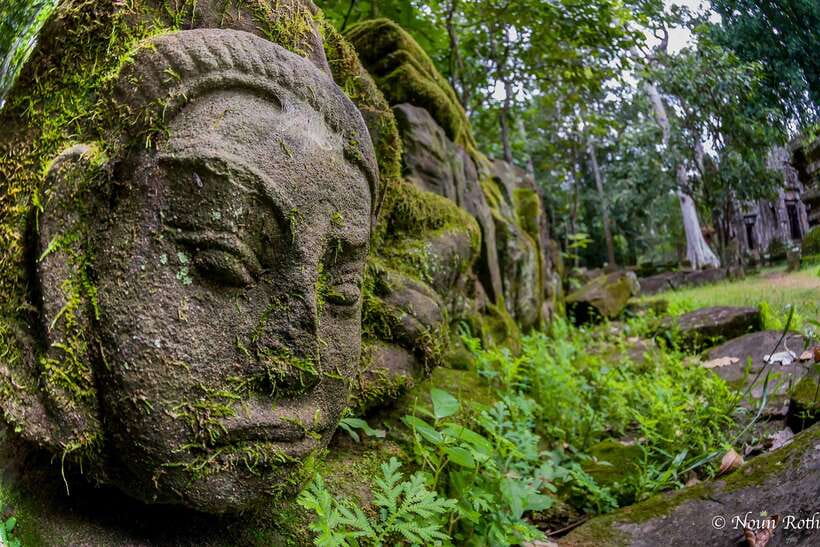
Banteay Srei is often called the Ladies Temple. It is dedicated to Hindu goddesses and is known for pink sandstone and finely detailed carving. Compared with Angkor Wat, it is smaller, but its decoration is unusually delicate. This is a place to look closely rather than simply step back for a wide photograph.
The extra drive is part of the value. Banteay Srei is not as close to the central group, so including it in a private vehicle saves you from arranging a separate trip. The tradeoff is time on the road and a longer day. If Banteay Srei is high on your list, the added distance is worth it. If you mainly want the largest temples, you may find the schedule demanding.
Banteay Samre follows. Its design has a more enclosed, fortress-like feel, and the stop gives you another chance to compare temple layouts. The final visit is Banteay Kdei, extending the day with another temple associated with the main Angkor area.
By this point, you may have had enough carved stone for one trip. Still, the sequence makes sense for people who want breadth. You see major monuments, smaller ruins, jungle-covered structures, and a temple celebrated for its detailed pink sandstone.
A private guide can change the quality of the visit
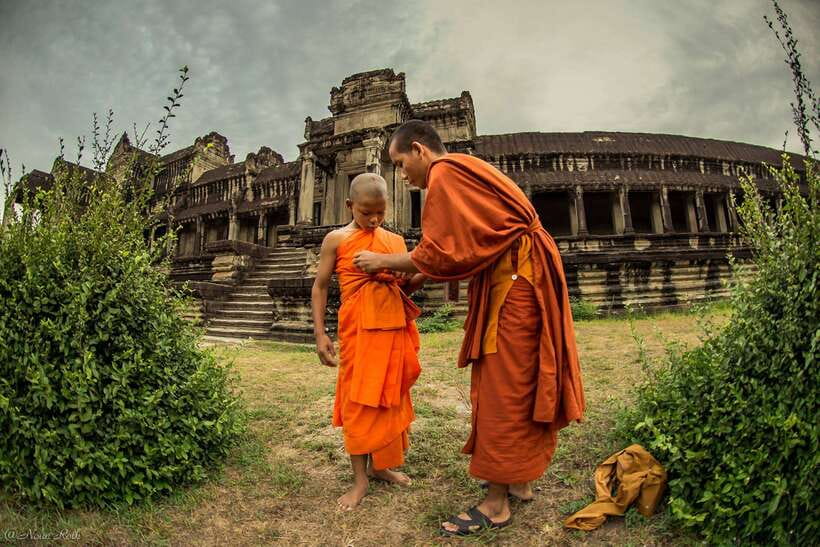
The private group format is one of the strongest reasons to choose this tour. You can ask for more explanation at Bayon, move more quickly through a temple that interests you less, or spend extra time taking photographs. The itinerary can be customized around your interests, though the listed route is already substantial.
Several guide and driver names appear in the booking record, including Bunhak with Sreang, and Chhay with That. Bunhak is particularly noted for finding good photo positions and balancing historical, mythological, religious, and cultural explanations. Chhay is also described as giving clear explanations across the two days.
Those specific pairings may not be guaranteed for every departure, so treat the names as examples rather than promises. What you can count on from the tour details is an English-speaking guide, private transport, and hotel pickup and drop-off.
The transportation is air-conditioned. That matters after walking on exposed stone in the sun. Cold water and face towels are included, and the cool towels are a welcome practical touch rather than a decorative extra.
What the $136 price really covers
At $136 per person, the tour covers two days of private guiding, air-conditioned transport, hotel pickup and drop-off, drinking water, and face towels. For a private experience with this many temples, that is a reasonable starting price.
But the real cost is higher. A two to three-day temple pass costs $62 per person, and children under 12 enter free. Food is also excluded, including breakfast and the two lunch stops. Add those expenses before comparing this tour with a cheaper transport-only option.
The value depends on what you want. If you only need a driver to move between temples, a simpler arrangement may cost less. If you want explanations, route planning, photo help, and the ability to adjust the pace, the private guide adds real value.
The price also includes the convenience of not arranging a separate Banteay Srei trip. That longer outing, along with both sunrise and sunset, would be harder to coordinate on your own.
Who will enjoy this tour most
I would choose this tour if you have two full days in Siem Reap and want a broad first look at Angkor. It suits couples, families, and small private groups who prefer their own vehicle and do not want to follow a large group’s fixed rhythm.
It is also a good fit if you care about photography. Sunrise at Angkor Wat, sunset from Phnom Bakheng, Ta Prohm’s roots, Bayon’s faces, and Banteay Srei’s pink carvings give you a strong mix of subjects.
You should think twice if you dislike early starts, long walks, stairs, or tightly packed sightseeing days. The tour covers a lot. You can customize the pace, but you cannot make sunrise, Angkor Thom, the Big Circle, Banteay Srei, and the other stops feel like a short outing.
Bring a temple pass budget, meal money, comfortable shoes, and realistic expectations about heat. Tell the guide early if you care most about architecture, religion, photography, rural scenery, or avoiding the busiest paths. That is where the private format can work best for you.
Should you book this Angkor tour?
Book it if you want the major Angkor temples plus Banteay Srei without arranging several separate trips. The private guide, air-conditioned vehicle, cold water, cool towels, and flexible pace make the $136 base price easier to justify, especially for a small group sharing the experience.
Skip it if you want a slow, minimalist visit with only a few temples each day. The schedule is ambitious, and the temple pass and meals add to the cost. For most first-time visitors with two days available, though, this is a well-rounded way to see Angkor, with enough variety to make the long days worthwhile.
FAQ
How long does the Angkor tour last?
The tour lasts two days.
Is the tour private?
Yes. It is offered for a private group, with a private guide and private air-conditioned transportation.
What language does the guide speak?
The live tour guide speaks English.
Is hotel pickup included?
Yes. Pickup and drop-off are included from hotels and other accommodation locations in Siem Reap. You should provide your accommodation address, hotel name, phone number, and website, and wait in the lobby 10 minutes before pickup.
Is the temple pass included in the price?
No. A two to three-day temple pass costs $62 per person. Children under 12 have free entrance.
Are meals included?
No. Food is not included, but you can buy meals at local restaurants during the scheduled breaks.
What temples are visited on the first day?
The first day includes Angkor Wat, Ta Prohm, Ta Nei, Angkor Thom, Bayon, Baphuon, the Reclining Buddha, the Royal Enclosure Wall, Phimeanakas, Elephant Terrace, Leper King Terrace, Palilay, and sunset at Phnom Bakheng.
What temples are visited on the second day?
The second day includes sunrise at Angkor Wat, Preah Khan, Neak Pean, Ta Saom, East Mebon, Pre Rup, Banteay Srei, Banteay Samre, and Banteay Kdei.
Are water and towels provided?
Yes. Cool drinking water and face towels are included. The transportation is also air-conditioned.
Newly written up around Siem Reap
- Sunrise at Angkor Wat Temple: 3-Hour Private Tour★ 4.7 · 30 reviews
- Small-Group Explore Angkor Wat Sunrise Tour with Guide★ 5.0 · 3 reviews
- Siem Reap : Private Tuk-Tuk Tour of the Magnificent Temples.★ 4.9 · 14 reviews
- Siem Reap: Ultimate Angkor Wat Offbeat Experience by Jeep★ 4.9 · 8 reviews
- SiemReap: Private Angkor Wat Tour in English or German guide★ 5.0 · 5 reviews
- Siem Reap: 1-Day Angkor Wat Tour in Portuguese★ 5.0 · 4 reviews
- Angkor Wat: Sunrise 2.5 Days Temples & Tonle Sap-Small Group★ 5.0 · 10 reviews
- Siem Reap: Grand Circle Temples Tour With Private Tuk-Tuk★ 5.0 · 4 reviews
Angkor Wat Tours, compared.
Angkor Wat Sunrise or Sunset Tour with Guide from Siem Reap
Read our review →
Angkor Wat: Small-Group Sunrise or Sunset Tour
Read our review →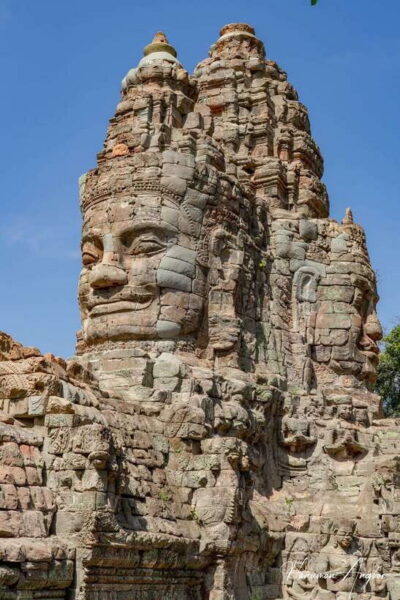
Angkor Wat 2-Day Tour with Sunrise and Sunset
Read our review →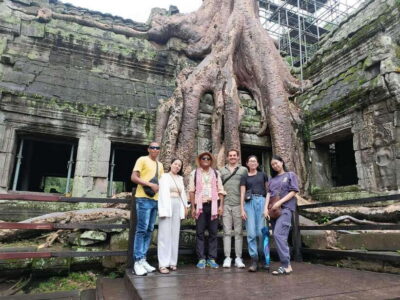
Angkor Wat Sunrise tour with Small – Group and Guide tours
Read our review →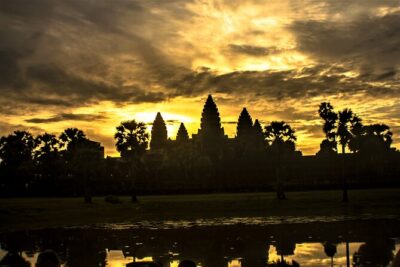
Angkor Wat Highlights and Sunrise Guided Tour from Siem Reap
Read our review →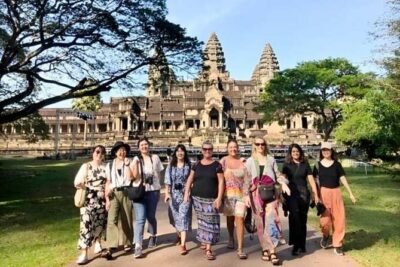
Angkor Wat Sunset Small Group Tour with Lunch Included
Read our review →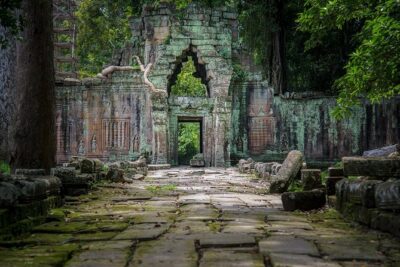
Full-Day Angkor Wat Sunrise Private Tour with Guide from Siem Reap
Read our review →Browse the lists this tour appears in