
Reviewed · ANGKOR WAT TOURS
Siem Reap: Angkor Wat 2day Big and Small Circuit Guided Tour
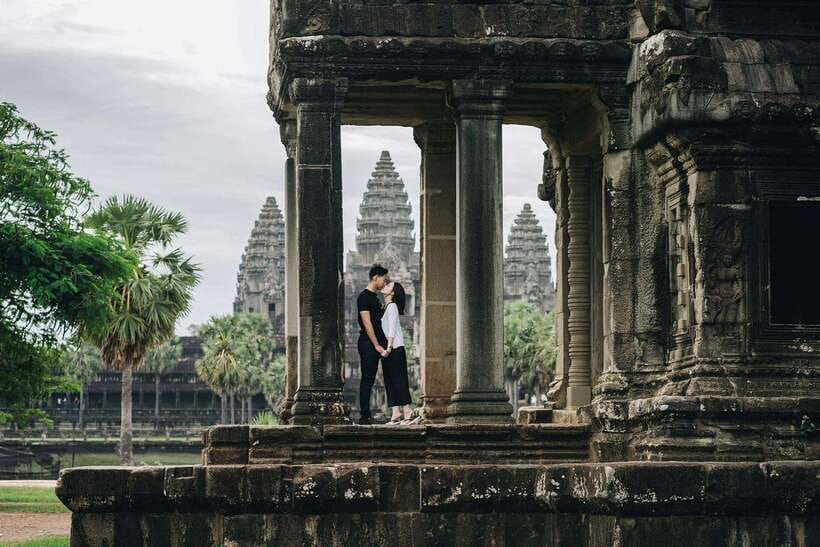
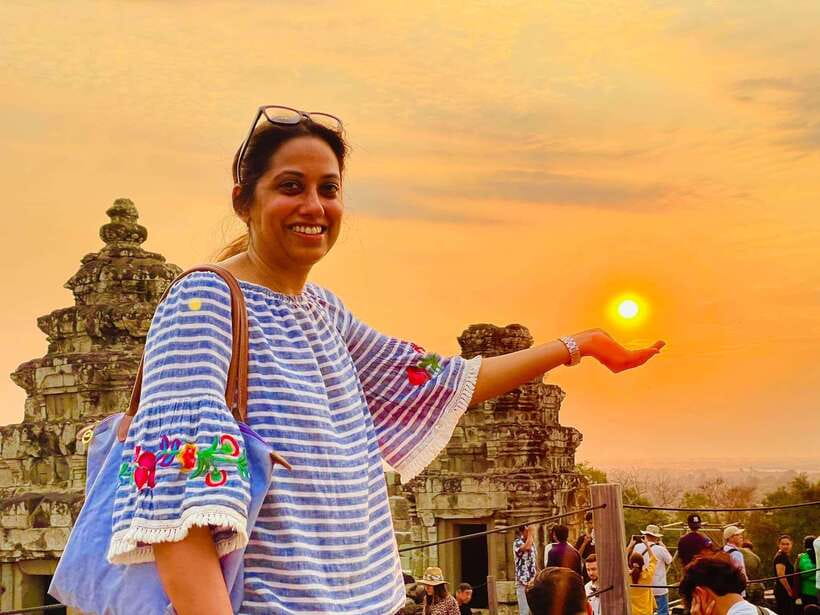
Angkor is best seen at a slower pace, and this tour gives you two days to do it. You begin with sunset in the temple complex, then return before dawn for Angkor Wat glowing behind the sunrise. I like the mix of famous places and quieter stops, especially Ta Prohm, Bayon, and the less-restored temples that show how large the Khmer capital once was.
I also like the practical setup: an air-conditioned van, hotel pickup, cool water, and rest breaks matter in Cambodia’s heat. Guides such as Sayon and Sam bring the history to life in English. The main drawback is that the temple entrance pass costs extra, and the early start, long walks, steep steps, and two full days will not suit everyone.
Key points to know before booking
- Sunset and sunrise are both included, with the sunrise visit focused on Angkor Wat.
- The $39 price covers transport, guiding, hotel pickup, water, and towels, but not food or temple admission.
- Day one includes Preah Khan, Neak Pean, Ta Som, East Mebon, Pre Rup, and Phnom Bakheng, depending on the tour route and timing.
- Day two brings the headline temples, including Angkor Wat, Ta Prohm, Bayon, Banteay Kdei, and Ta Keo.
- English-speaking guides Sayon and Sam have received especially strong praise for clear explanations and an upbeat approach.
- Comfortable shoes, sun protection, and stamina are essential, while children under 12 and wheelchair users cannot join.
Two days gives Angkor room to breathe
Many Angkor visits rush from one famous temple to another. This two-day plan makes more sense. You still see the major sights, but you also reach temples that receive less attention and help you understand how the whole complex fits together.
The schedule begins at sunset on day one. Day two starts very early for sunrise at Angkor Wat, then continues through the cooler morning hours before the heat builds. Rest and food breaks are included in the rhythm of the day, though you must pay for your own meals.
You ride in a van with air conditioning, which is a real advantage. Walking between stone galleries and climbing temple steps can be tiring, so having a cool vehicle between stops makes the long program easier. Hotel pickup and drop-off also remove the need to arrange separate transport around Siem Reap.
This is offered as a private tour or a small group. A private departure gives you more control over pace, while a small group can keep the price low and add company. The supplied information does not state the exact group size, so ask before booking if that detail matters to you.
More Angkor Wat Tours in Siem Reap:
- Angkor Wat Sunrise or Sunset Tour with Guide from Siem Reap
★ 5.0 · 12,109 reviews - Siem Reap: Angkor Wat: Small-Group Sunrise or Sunset Tour
★ 5.0 · 9,444 reviews - Siem Reap: Angkor Wat 2-Day Tour with Sunrise and Sunset
★ 4.9 · 4,429 reviews
Day one: sunset and the outer temple circuit
The opening sunset visit gives you a gentle start, but do not mistake gentle for short. Angkor covers a wide area, and the first day brings a series of temples with very different moods and designs.
Phnom Bakheng and the hilltop view
Phnom Bakheng sits on a hill and is known for its 33 towers, which represent the heavens. The climb is part of the appeal, but it also points to one of the tour’s physical demands. You need comfortable shoes and enough balance for uneven ground and steps.
The temple is linked with sunset viewing, making it a fitting first stop. The hill gives you a wider view over the surrounding area, while the stone towers bring the focus back to the religious ideas behind the site. The exact light and visibility depend on the day, but the setting gives you a strong introduction to Angkor’s scale.
If steep climbs are difficult for you, this stop may be uncomfortable. The tour is specifically not suitable for people with mobility impairments or wheelchair users.
Preah Khan, a large and layered temple
Preah Khan is described as the biggest temple on this circuit. It was built by King Bayon for his father, giving the place a personal connection within the royal world of Angkor.
You can expect a substantial complex rather than a single compact shrine. This is the kind of stop where a guide adds real value. Without explanation, it is easy to see walls, carvings, and corridors as one long sequence of stone. With an English-speaking guide, you can follow the purpose of the temple and the role of the king who commissioned it.
The size also means you will be walking for a while. Take the offered rest breaks seriously, especially if you are visiting in warm weather.
More two-day temple trips in Siem Reap:
- 2 Days Exclusive Temple Highlights with Sunset and Sunrise Tour
★ 5.0 · 1,157 reviews - Siem Reap: Angkor Sunrise 1- or 2-Day Guided Temples Tour
★ 4.9 · 1,132 reviews - 2-Day Angkor Wat With Small, Big Circuit and Banteay Srei Tour
★ 5.0 · 545 reviews - Siem Reap: 2-Day Temple Highlights Sunrise and Sunset Option
★ 4.9 · 445 reviews
Neak Pean and water used for health
Neak Pean is built on an island, with water around it. During the Angkor period, this water was used for bathing and health.
That detail changes how you read the site. It was not simply a decorative temple surrounded by water. Its setting was tied to ideas about cleansing and well-being. The water makes Neak Pean feel different from the towering stone temples elsewhere on the route, and it gives the first day some variety.
You will want to keep your camera ready, but remember that flash photography is not allowed. The tour also asks you not to litter and to respect the religious and historic importance of the temples.
Ta Som and the tree at the gate
Ta Som has a memorable eastern gate wrapped by a large tree. It is one of those Angkor scenes that makes the power of nature over old stone easy to understand without a long lecture.
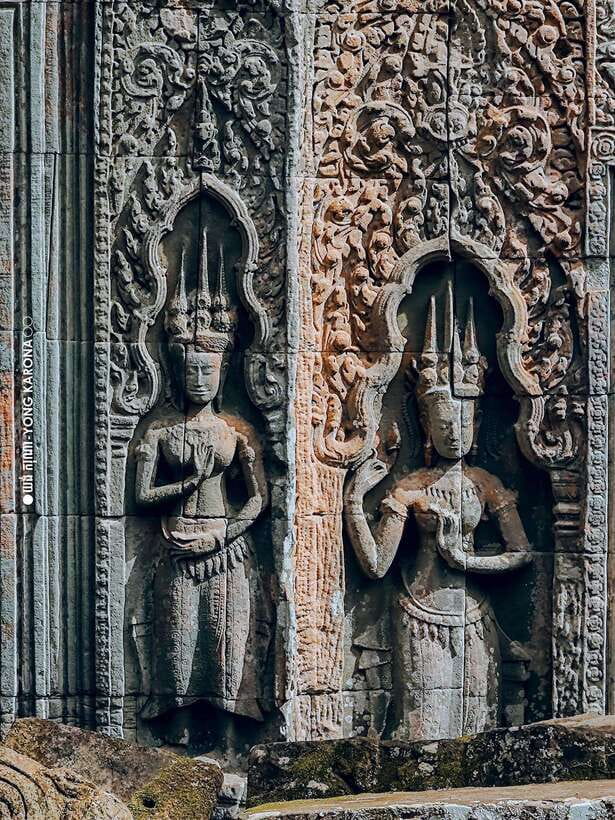
The temple is also covered with sculptures of dancers with long hair. It was built for the king’s sister, another reminder that these monuments were connected to royal family life as well as religion and ceremony.
Ta Som is a good stop for close observation. Look beyond the tree and notice the carvings. A guide can point out details you might otherwise walk past.
East Mebon and a vanished reservoir
East Mebon was built for the ancestors and once sat in the middle of a reservoir. It was constructed as early as the 10th century.
The missing water is part of the story. You are seeing a temple whose original setting has changed, so the site also teaches you to picture Angkor as an engineered water city. The temple’s purpose and location make it different from a monument built mainly for a king’s personal glory.
Pre Rup and a misunderstood stone feature
Pre Rup was built by a king for himself. It is sometimes mistaken for a crematorium because of a stone structure that looks like a coffin.
The supplied explanation gives that feature a different meaning. Hindus used it to meditate during the full moon. This is precisely the sort of correction that makes a guide useful. A quick glance can lead to the wrong conclusion, while context gives the object a religious purpose.
By the end of day one, you will have seen temples tied to kings, ancestors, health, family, meditation, and the heavens. That range is more valuable than simply collecting photographs.
Day two: sunrise at Angkor Wat
The second day begins before sunrise. You need to be ready for an early morning pickup, and the booking information notes that the pickup time will match the time booked for the tour. Confirm the exact time when arranging your departure.
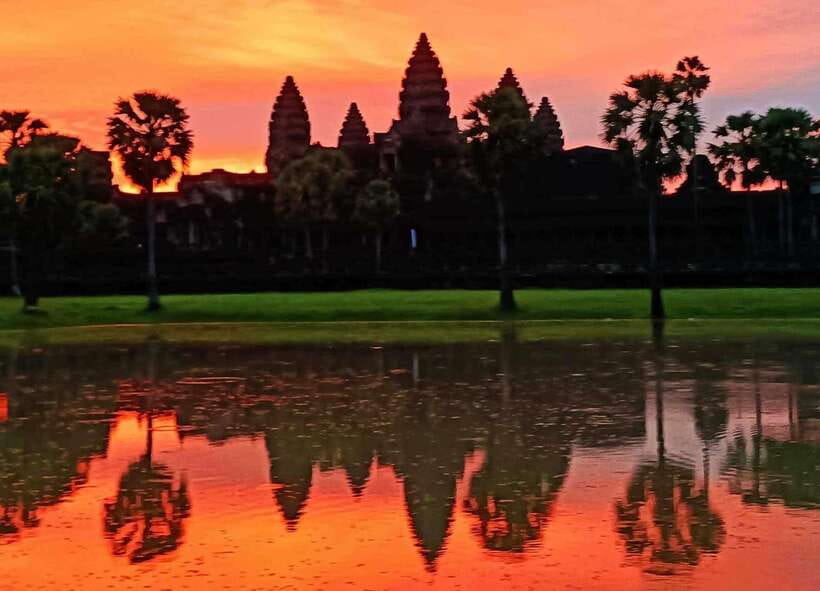
Angkor Wat is the main event. It is Cambodia’s most visited attraction and a UNESCO-listed archaeological site, but its fame does not make the first view less powerful. Watching the sky brighten behind the temple gives you a clear sense of why the site has become the symbol of Cambodia.
You will also appreciate the timing. The morning is cooler than the middle of the day, and the early hours generally offer a better chance to explore before the strongest heat. Sunrise crowds can still be present, so do not expect complete solitude.
After the sunrise viewing, the tour explores the temple and surrounding areas. Angkor Wat is large, and you should expect plenty of walking. Wear shoes that can handle uneven surfaces, bring water, and use sunscreen even if the morning begins cool.
The temple’s scale can be hard to grasp from a single photograph. Let yourself look at the broad layout, then focus on carvings and details. Your guide can connect the design to Khmer beliefs and royal power, giving the stonework a clearer place in the story of the empire.
Ta Prohm, where trees share the ruins
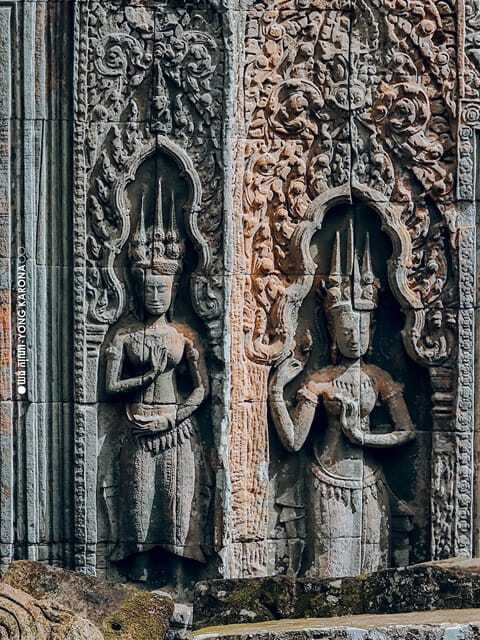
Ta Prohm is one of the most recognizable temples in Angkor. It is famous for its jungle setting and for appearing in the Tomb Raider movie.
The roots and trees are the obvious draw, but Ta Prohm is not only a film location. It shows what happens when a major religious site is left in close contact with the forest. The result is visually dramatic, yet the stonework and carvings still deserve attention.
This stop will appeal to anyone who wants the classic Angkor atmosphere. It can also be one of the busier sites, and the narrow passages may feel crowded at popular times. Your guide can help you look beyond the most photographed tree and notice the wider structure.
Bayon and the famous smiling faces
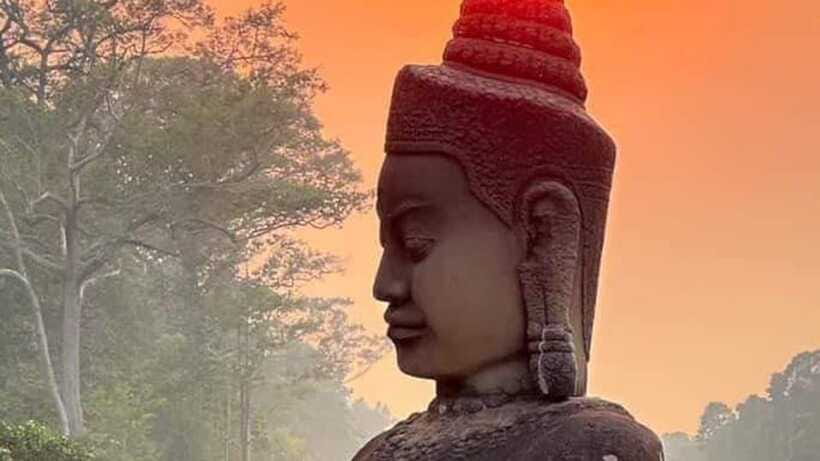
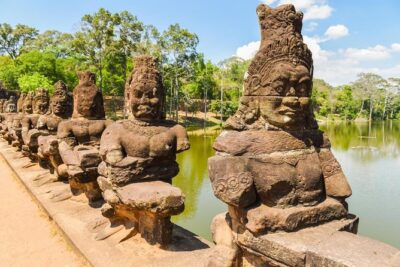
Angkor Thom’s South Gate is one of the first major gateways on the route. Its bridge is lined with statues of gods, creating a strong entrance to the old city.
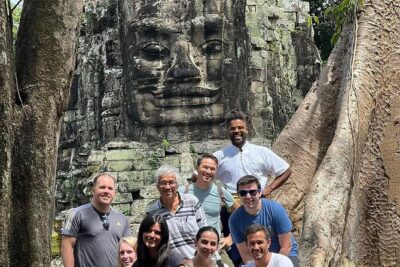
Inside, Bayon is known for its large smiling faces. The faces appear on the temple’s towers and give Bayon a character unlike the more orderly grandeur of Angkor Wat.
The South Gate is worth more than a quick vehicle stop. The bridge statues introduce the religious imagery of the city, while Bayon shows how that imagery continues inside the walls. This is another place where the guide’s explanation helps you connect separate carvings and buildings.
Bayon can be confusing at first because of its close corridors and towers. Stay near your guide if you want the historical explanation to follow the physical route.
Banteay Kdei and a quieter Buddhist setting
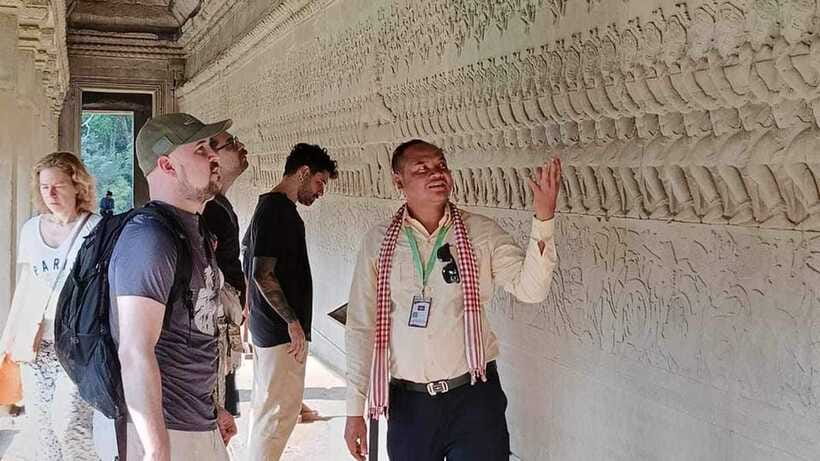
Banteay Kdei is a Buddhist temple described as largely unrestored and still used by monks. It offers a different feel from the polished, heavily photographed highlights.
The incomplete and weathered appearance is part of its value. You can see the site as an old place of worship rather than only as a carefully framed monument. Its Buddhist connection also adds balance to a tour that covers several types of Khmer religious architecture.
I would give this stop proper attention instead of treating it as filler between Angkor Wat and Ta Prohm. The less famous temples often help you understand the complex as a living historical area, not just a set of postcard views.
Ta Keo and the effort of climbing a mountain temple
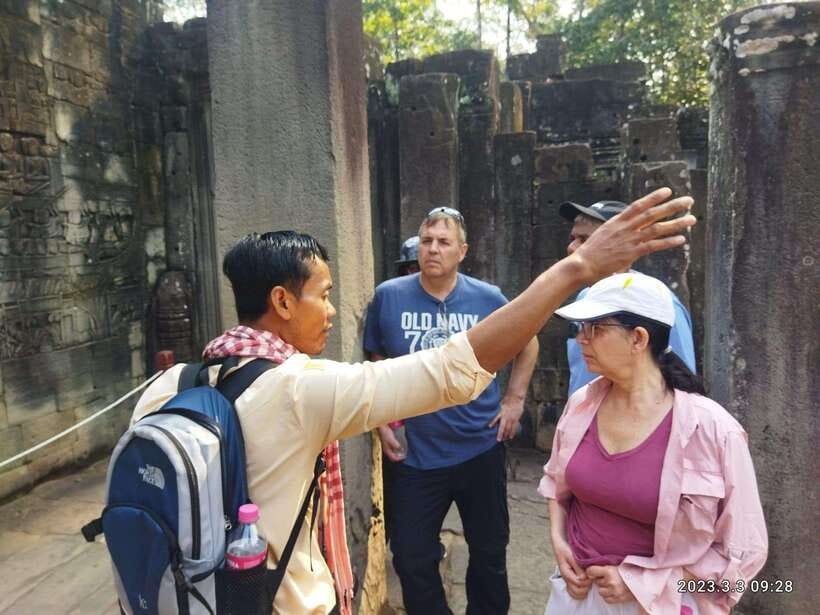
Ta Keo is a 10th-century mountain temple. You walk up between the ancient stone structure and the modern world around it.
The climb gives Ta Keo its character, but it is also a clear physical test. Shoes with a good grip are important, and anyone who dislikes steep steps should take the warning about mobility seriously.
The temple is useful as a contrast to flatter, more enclosed sites. Its height and pyramid form make you work for the view and the structure. You will probably remember the climb as much as the carvings.
What the guide adds to the experience
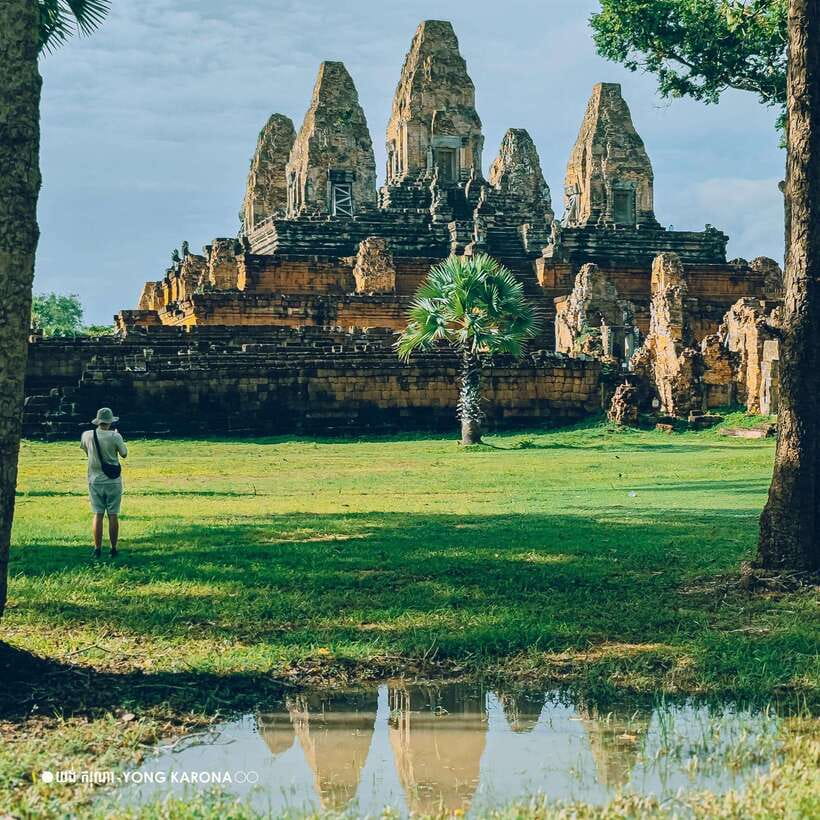
The temples are impressive on their own, but their meaning is not always obvious. This is where an English-speaking guide earns the fee.
Guides Sayon and Sam have been singled out for clear explanations of temple history, the city, Cambodia, and the setting of each monument. Sayon is described as bringing strong knowledge, positive spirit, and passion for the area. Sam is noted for explaining the history and context in detail.
That emphasis matters. You are not just moving through ruins. You are learning why a temple was built, who it honored, how water shaped the city, and why a particular carving or structure has meaning.
Guide quality can vary on any group tour, so these names are useful when confirming your booking. If you are assigned Sayon or Sam, expect an especially history-focused visit based on the information available for this departure.
Is $39 good value?
At $39 per person, the tour offers solid value if you want transport and guiding across two days. The fee includes the guided tour, air-conditioned van, hotel pickup and drop-off, sunset and sunrise viewing, cool water, wipe towels, rest breaks, and local tax.
The price does not include food or the temple entrance pass. That admission cost is important because it is separate from the advertised tour price. You can buy the temple pass online through the official Angkor Enterprise website or at the ticket office.
The low tour price makes more sense if you compare it with the effort of arranging transport to several distant temples yourself. You get a planned route, a driver, a guide, and relief from the heat between stops. You still need to budget for admission and meals.
The tour is especially good value for a first visit, when you want the main temples explained without arranging every detail yourself. If you prefer slow photography, long quiet pauses, or choosing each stop as you go, a private option may suit you better than a small group.
What to bring and how to prepare
Wear comfortable clothing suitable for walking and shoes that can handle rough paths and steps. Bring a hat, sunscreen, water, and a camera.
You must carry a passport or identification card. A copy is accepted. Flash photography is not allowed, and littering is prohibited.
The most important preparation is mental: the sunrise requires an early start, and the two days include a great deal of walking. The van and rest breaks help, but they do not turn this into an easy sightseeing trip.
Children under 12 are not accepted. The tour is also not suitable for wheelchair users or people with mobility impairments. If you need a slower pace or cannot manage steps, this is not the right choice.
Free cancellation is available up to 24 hours before the tour for a full refund, and you can reserve now and pay later. Check the available start time carefully, since the pickup time matches the time booked.
Should you book this Angkor tour?
Book it if you want the major Angkor sights, a strong selection of smaller temples, sunset and sunrise, and an English-speaking guide at a modest price. The two-day format is the key advantage. You get more than a rushed Angkor Wat visit, while the air-conditioned van keeps the long circuit manageable.
I would be cautious if you dislike early mornings, steep steps, heat, or organized schedules. Remember to add the temple pass and meals to the $39 price.
For most first-time visitors who want history, variety, and practical transport, this is a sensible choice. The strongest reason to book is the combination of Angkor Wat at sunrise, Ta Prohm, Bayon, and the quieter temples, with guides such as Sayon or Sam adding useful context along the way.
FAQ
How long is the Angkor Wat tour?
The tour lasts two days. It includes sunset viewing on day one and sunrise viewing on day two.
Is the temple entrance fee included?
No. The temple entrance pass must be purchased separately, either online through the Angkor Enterprise website or at the ticket office.
Are food and meals included?
No. Food is not included. Rest breaks are provided, but you pay for your own meals.
Is hotel pickup included?
Yes. Pickup and drop-off at your hotel are included. The pickup time will match the tour time you book.
What language does the guide speak?
The tour has a live English-speaking guide. Private and small-group options are available.
What should I bring?
Bring comfortable shoes, a hat, sunscreen, water, a camera, and a passport or identification card. A copy of the identification document is accepted.
Can children or wheelchair users join?
Children under 12 cannot join. The tour is also not suitable for people with mobility impairments or wheelchair users.
Newly written up around Siem Reap
- Sunrise at Angkor Wat Temple: 3-Hour Private Tour★ 4.7 · 30 reviews
- Small-Group Explore Angkor Wat Sunrise Tour with Guide★ 5.0 · 3 reviews
- Siem Reap : Private Tuk-Tuk Tour of the Magnificent Temples.★ 4.9 · 14 reviews
- Siem Reap: Ultimate Angkor Wat Offbeat Experience by Jeep★ 4.9 · 8 reviews
- SiemReap: Private Angkor Wat Tour in English or German guide★ 5.0 · 5 reviews
- Siem Reap: 1-Day Angkor Wat Tour in Portuguese★ 5.0 · 4 reviews
- Angkor Wat: Sunrise 2.5 Days Temples & Tonle Sap-Small Group★ 5.0 · 10 reviews
- Siem Reap: Grand Circle Temples Tour With Private Tuk-Tuk★ 5.0 · 4 reviews
Angkor Wat Tours, compared.
Angkor Wat Sunrise or Sunset Tour with Guide from Siem Reap
Read our review →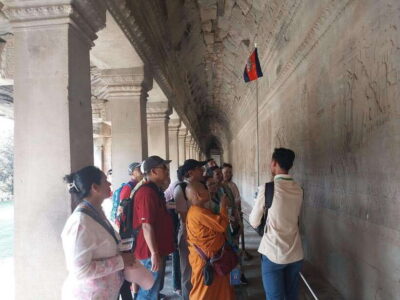
Angkor Wat: Small-Group Sunrise or Sunset Tour
Read our review →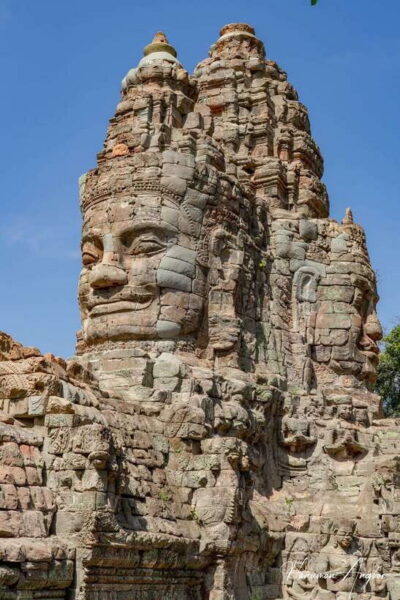
Angkor Wat 2-Day Tour with Sunrise and Sunset
Read our review →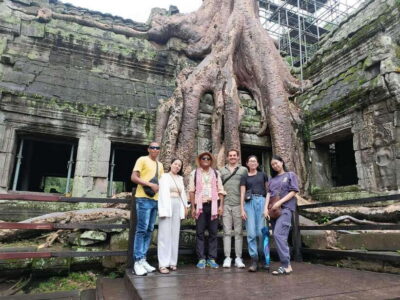
Angkor Wat Sunrise tour with Small – Group and Guide tours
Read our review →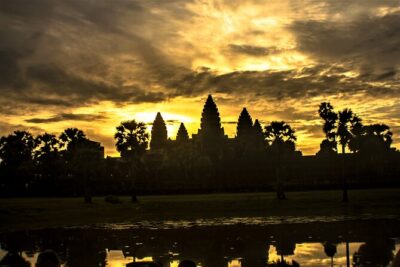
Angkor Wat Highlights and Sunrise Guided Tour from Siem Reap
Read our review →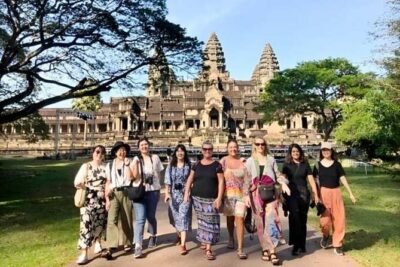
Angkor Wat Sunset Small Group Tour with Lunch Included
Read our review →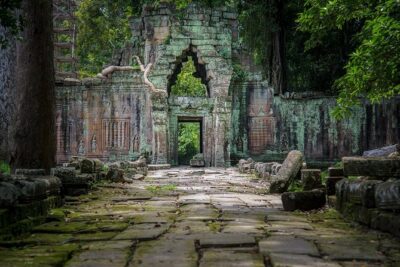
Full-Day Angkor Wat Sunrise Private Tour with Guide from Siem Reap
Read our review →Browse the lists this tour appears in