
Reviewed · WINE TOURS
Morning Tour,Ak Phnom temple,Rice wine,Rice Paper, killing Field
Ek Phnom is the main draw here: an 11th-century temple ruin set about 15 kilometers northwest of Battambang, reached by tuk-tuk through rice-growing country. The route also brings you into small local businesses, where you can see rice wine, rice paper, sticky rice, and dried bananas made in practical, everyday ways.
I like the mix of ancient stonework and working villages, and I like having guides such as Pao, Mr Pov, and Mr Yi Yong explain the places in clear English. The main caution is that extra entrance fees are not included, and the tour description is not fully clear about their amount.
Key points to know before booking
- Ek Phnom gives the morning a strong historical focus: See an 11th-century Buddhist temple ruin and a giant Buddha statue.
- The village stops are hands-on and local: Learn about rice wine, rice paper, bamboo sticky rice, dried bananas, and banana chips.
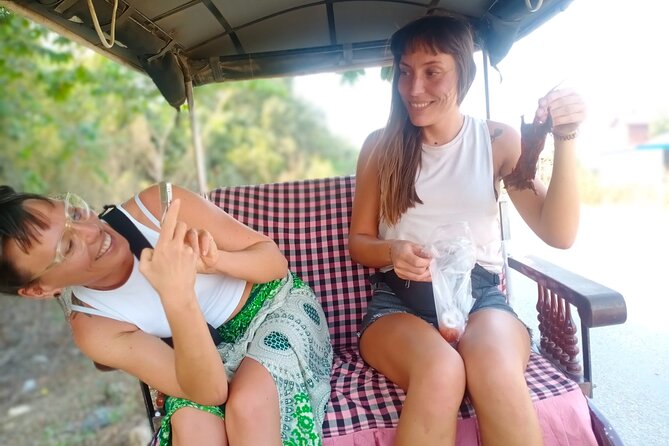
- The tuk-tuk ride is part of the appeal: You travel through rice fields and rural roads rather than moving between sights in a closed vehicle.
- Wat Samrong Khong is a serious stop: The former prison and killing field adds difficult but important context about Cambodia’s recent past.
- Guides make a major difference: Pao, Mr Pov, and Mr Yi Yong are named as English-speaking guides who explain history and local life with humor and care.
- The $20 price is attractive, but not all-inclusive: Water, a shared tuk-tuk, a guide, and pickup are included, while tickets and fees and breakfast are extra.
Why this Battambang morning tour works
Battambang is at its best when you move beyond the town center. The countryside north of the city is a patchwork of rice fields, village homes, workshops, temples, and food production. This tour links those pieces in one outing, so you get a wider sense of the area than you would from visiting a single monument.
The route is described as a morning or half-day tour, although the booking information also refers to an approximate two-day duration. That wording is confusing. You should confirm the exact pickup and finish time before booking, especially if you have a bus, train, or another activity planned later.
The small group limit of 10 people is useful. You are not joining a large coach party, and a tuk-tuk suits the narrow rural roads. Pickup is offered, and the price includes shared transport, a guide, and water. At $20, that is good value if you want several stops and local explanation rather than simply hiring a tuk-tuk for transport.
The price does not include tickets and fees or breakfast. The amount of those additional costs is not specified, so ask before departure. That small bit of planning will make the low headline price easier to judge.
More temple trips with a tasting in Cambodia:
- Tatev & Shaki Waterfall Guided Group Tour with Wine Tasting
★ 5.0 · 266 reviews - Monastery Winery Tour and Wine Tasting
★ 5.0 · 195 reviews - Group Tour: Shaki waterfall, Tatev monastery & ropeway, Hin Areni winery
★ 5.0 · 185 reviews
Riding north through Battambang’s rice country
The day begins with pickup in Battambang and a tuk-tuk ride toward the northern villages. The trip itself matters. You are not just being delivered to a temple, you are watching the town thin into open rice fields and small-scale production.
A tuk-tuk also keeps you close to the surroundings. You can see the road, hear village life, and feel the heat more than you would in an air-conditioned car. That is part of the charm, though it also means the morning can become hot. The tour is best taken early, as one guide specifically recommends starting in the morning to avoid the strongest heat.
The transport is shared, so you should expect to spend the ride with other people, up to a maximum group size of 10. That keeps the cost down but gives you less control over the pace than a private trip. If you want long photo stops or a completely personal schedule, ask whether a private arrangement is possible. The supplied details do not confirm that option, so do not assume it is included.
Exploring the 11th-century Ek Phnom temple
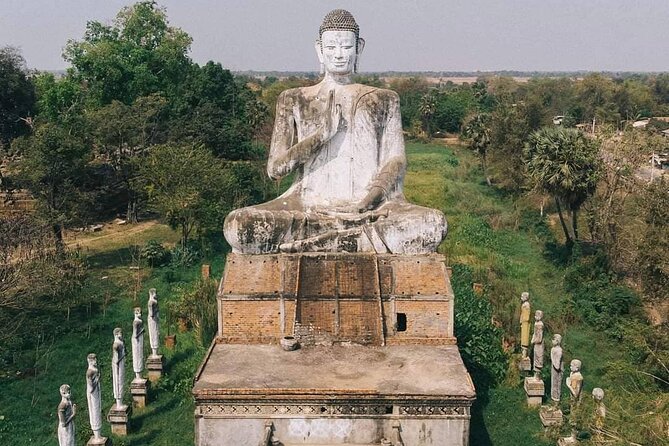
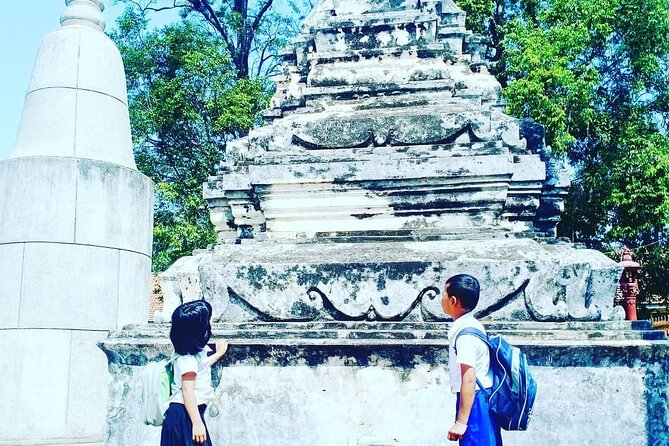
Ek Phnom, also written as Ak Phnom in some tour descriptions, is the historical centerpiece. The temple is an 11th-century Buddhist ruin built in the Angkor tradition, about 15 kilometers northwest of Battambang.
You can expect broken stone structures, carved details, and a setting that feels far removed from the major Angkor sites near Siem Reap. It is not presented as a huge temple complex, and that is part of its appeal. You can take in the main remains without spending an entire day walking between monuments.
The temple also gives the guide room to explain how Buddhism and Hinduism have influenced Cambodian religious architecture. Mr Yi Yong is specifically praised for explaining the connection between the two traditions, while Pao and Mr Pov are noted for their strong English and engaging way of discussing local history.
I would give this stop your full attention. Look closely at the stonework, ask about the religious symbols, and let the guide explain what you are seeing. Without that context, a small ruin can seem like a quick photo stop. With a good explanation, it becomes a window into the long religious and artistic story of Cambodia.
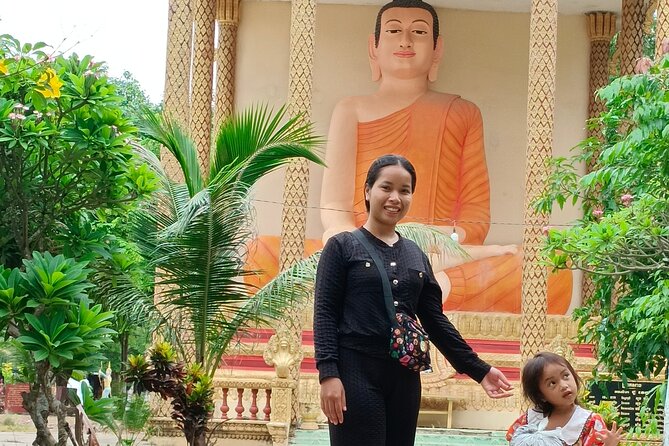
A giant Buddha statue is also part of this portion of the route. The combination of old temple remains and a much larger modern religious image helps show how sacred places continue to change over time.
Entrance fees are not included in the $20 price. The exact ticket cost is not provided, so carry some Cambodian currency and confirm the fee before you set out.
Seeing how rice becomes local products

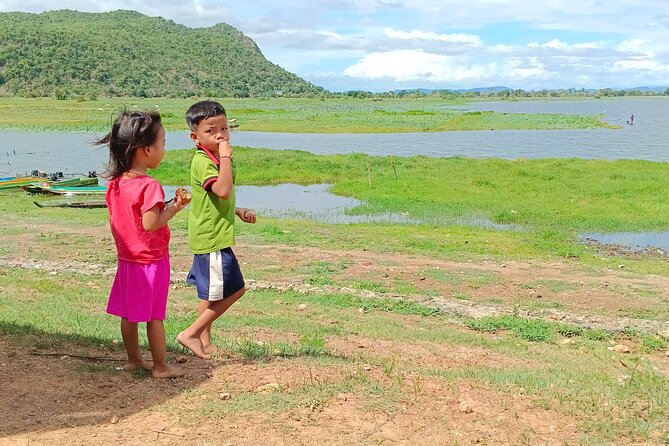
The tour then shifts from monuments to village production. This is where the outing feels especially useful for anyone who wants to understand how rural Cambodia works beyond the fields themselves.
One stop covers bamboo sticky rice. The tour description says you can learn how it is made, linking the crop in the rice fields to a familiar local food. The presentation may be simple rather than polished, but that is the point. You are seeing food production at a small local level, not visiting a staged museum display.
Rice wine is another stop, with the chance to try a shot. If you do not drink alcohol, you can simply watch and ask questions. The details do not promise a full tasting session, so think of this as a brief introduction rather than a winery tour.
Rice paper is also included. This is a good reminder that rice supports far more than a meal. It becomes a useful product through a process you can see and discuss at close range. The tour joins these small stops together so the countryside feels active and productive, not just scenic.
The exact order of the stops can vary. The route includes rice wine, rice paper, dried bananas, banana chips, a fish market, and bamboo sticky rice, but the supplied schedule does not give firm times for each one. That flexibility is normal for a rural tuk-tuk outing, though you should not expect a tightly timed museum-style program.
Other temple visits near Cambodia we have written up
- Angkor Wat Sunrise or Sunset Tour with Guide from Siem Reap
★ 5.0 · 12,109 reviews - Siem Reap: Angkor Wat: Small-Group Sunrise or Sunset Tour
★ 5.0 · 9,444 reviews - Siem Reap: Angkor Wat 2-Day Tour with Sunrise and Sunset
★ 4.9 · 4,429 reviews - Siem Reap: Full-Day Angkor Wat Guided Tour with Sunset
★ 4.9 · 3,803 reviews
Dried bananas, banana chips, and the fish market
The dried banana and banana chip stop adds another food-production angle. You may see how bananas are prepared for storage or sale, and you can ask the guide about the difference between the dried product and the chips.
This is the sort of stop that can be easy to dismiss as a shopping detour. I would treat it as a chance to see how a local business uses a common crop. If purchases are available, buy only what you actually want. The tour information does not state that buying is required, and there is no need to turn every stop into a shopping visit.
The fish market brings a different smell, pace, and set of products. It gives you another look at local food supply, though it may not suit everyone. Markets can be wet, strong-smelling, and visually confronting. If you are sensitive to that, ask the guide how long the stop will last.
These village visits are not grand attractions. Their value comes from the details: the work being done, the crops being used, and the chance to ask questions through an English-speaking guide. Pao is described as funny, engaging, and keen to explain the area, while Mr Pov is praised for his enthusiasm and helpful suggestions about places to eat.
The solemn visit to Wat Samrong Khong
Wat Samrong Khong killing field is the most serious part of the outing. It introduces Cambodia’s recent history and the violence of the Khmer Rouge period. The mood changes sharply from food workshops and temple exploration.
You should not expect this to be a light sightseeing stop. Give yourself time to listen and reflect. The guide’s role matters here, since a clear explanation can help you understand the site without reducing it to a quick photograph.
The tour’s blend of enjoyable and difficult subjects is one of its strengths, but it is also something to consider before booking. You may begin the morning tasting rice wine and seeing banana production, then arrive at a place connected with mass suffering. That contrast is not a flaw. It is an honest part of visiting Cambodia, where ancient culture and painful modern history often sit close together.
Pao is praised for handling a full day with both humor and care, and for making the different types of stops feel connected. Mr Pov and Mr Yi Yong are also named as guides who explain with enthusiasm and strong English. Still, guide quality can vary by departure, so ask who will lead your group if a particular guide is important to you.
What the $20 price really includes
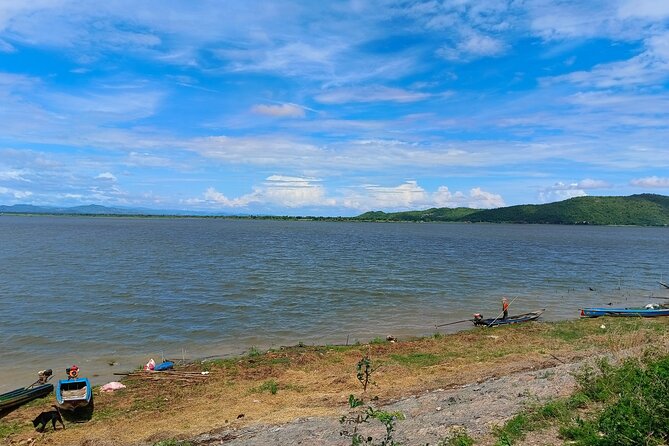
At $20, this is a strong-value outing for someone who wants transport, interpretation, and several stops in one package. You are paying for a shared tuk-tuk, guide, water, and hotel pickup, rather than only for a ride to Ek Phnom.
The value improves if you would otherwise arrange separate transport to the temple and villages. A guide can also save you from guessing what a small workshop produces or why a religious detail matters.
The limitations are clear. Breakfast is not included, and tickets and fees are extra. The listing does not state the amount of those costs, so ask for a full estimate before paying. The experience also requires good weather. If rain or other poor conditions cause cancellation, you are offered another date or a full refund.
Free cancellation is available if you cancel at least 24 hours before the start time. Cancellations made later, or changes made less than 24 hours before departure, are not accepted for a refund. The cut-off uses local time.
Who will enjoy this tour most
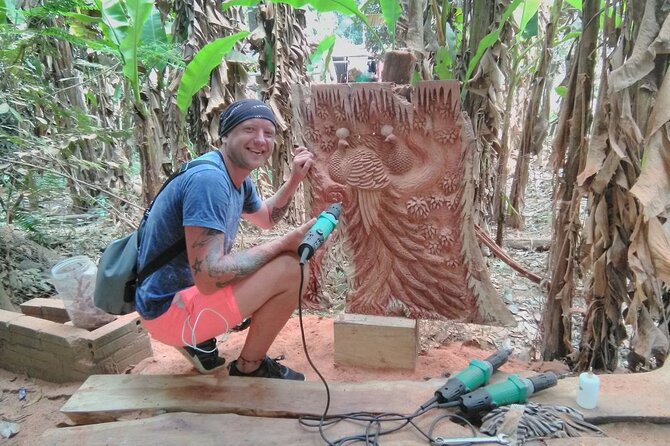
I would recommend this for you if you want more than temple photographs. It suits anyone interested in rural food production, Cambodian religion, recent history, and seeing the area from a tuk-tuk.
It is also a good choice if you have limited time in Battambang and want several different experiences in one morning. The combination of Ek Phnom, local workshops, the market, and Wat Samrong Khong gives you a broad introduction to the region.
Families may appreciate the variety, though the killing field requires an age-appropriate conversation. People who dislike heat, shared transport, market smells, or unscheduled stops should think carefully before booking.
The tour is accessible to most participants, and service animals are allowed according to the supplied details. The information does not give specific details about wheelchair access, so ask the provider directly if you need that support.
Should you book it?
Book this tour if you want a local, varied introduction to Battambang and value a guide who can connect temple architecture, village work, food, and difficult history. Pao, Mr Pov, and Mr Yi Yong are all associated with the experience, and their clear English and friendly approach are important advantages.
Before you confirm, ask two practical questions: What is the exact duration, since the description mixes half-day and two-day wording, and how much will the extra ticket and site fees cost? If those details are clear, the $20 price makes good sense.
Skip it if you want a private, tightly timed itinerary or a tour focused only on major temple ruins. Choose it if you want to see how Battambang works beyond its center, with a few memorable tastes and one necessary, sobering history lesson along the way.
FAQ
How much does the Battambang tour cost?
The listed price is $20. Tickets and other fees are not included, so ask for their exact cost before departure.
How long does the experience last?
It is described as a morning or half-day tour, but the booking information also says approximately two days. Confirm the exact duration and schedule with the provider before booking.
What transport is used?
The tour uses a shared tuk-tuk, and pickup is offered in Battambang.
What is included in the price?
The price includes water, shared transport by tuk-tuk, a guide, and pickup.
Is breakfast included?
No. Breakfast is not included.
How many people can join?
The maximum group size is 10 people.
Which places are visited?
The route includes Ek Phnom temple, a giant Buddha statue, rice fields, rice wine and rice paper production, bamboo sticky rice, dried bananas and banana chips, a fish market, and Wat Samrong Khong killing field.
Can I cancel for a full refund?
Yes, if you cancel at least 24 hours before the experience start time. Cancellations made less than 24 hours before the start time are not refunded.
What happens if bad weather cancels the tour?
If poor weather causes cancellation, you are offered a different date or a full refund.
Newly written up around Cambodia
- Full-day: Wat Banan. Old bamboo train. Bat Cave. Killing cave★ 5.0 · 13 reviews
- Grand Tour-Ek Phnom. Baset. Bamboo Train. Wat Banan. Phnom Sampov★ 5.0 · 20 reviews
- Two Days Angkor Wat Park-Beng Mealea and Kampong Phluk Village★ 5.0 · 14 reviews
- 2-Days in temples and other areas★ 5.0 · 101 reviews
- Sunrise at Angkor Wat Temple: 3-Hour Private Tour★ 4.7 · 30 reviews
- Small-Group Explore Angkor Wat Sunrise Tour with Guide★ 5.0 · 3 reviews
- Siem Reap : Private Tuk-Tuk Tour of the Magnificent Temples.★ 4.9 · 14 reviews
- Siem Reap: Ultimate Angkor Wat Offbeat Experience by Jeep★ 4.9 · 8 reviews
Wine Tours, compared.
Tatev & Shaki Waterfall Guided Group Tour with Wine Tasting
Read our review →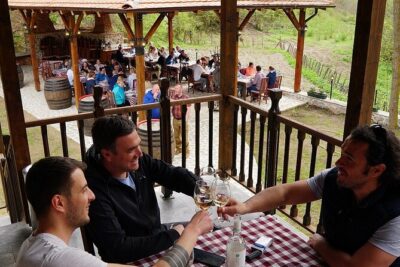
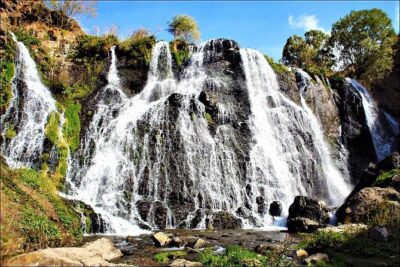
Group Tour: Shaki waterfall, Tatev monastery & ropeway, Hin Areni winery
Read our review →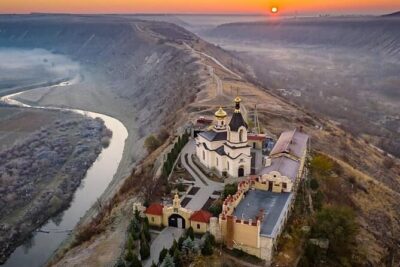
Best of Moldova: Cricova Winery & Old Orhei Tour including Curchi Monastery
Read our review →
Full-Day Trip Barcelona to Montserrat Monastery & Cava Winery
Read our review →
Curchi Monastery, Old Orhei and Cricova Winery (Optional)
Read our review →
Private tour to Hin Areni winery, Tatev monastery & ropeway, Khndzoresk caves
Read our review →
Chisinau: Cricova Winery, Curchi Monastery, & Old Orhei Tour
Read our review →Browse the lists this tour appears in