
Reviewed · TEMPLE OF HEAVEN TOURS
Beijing: Temple of Heaven Park Ticket with guide(optional)
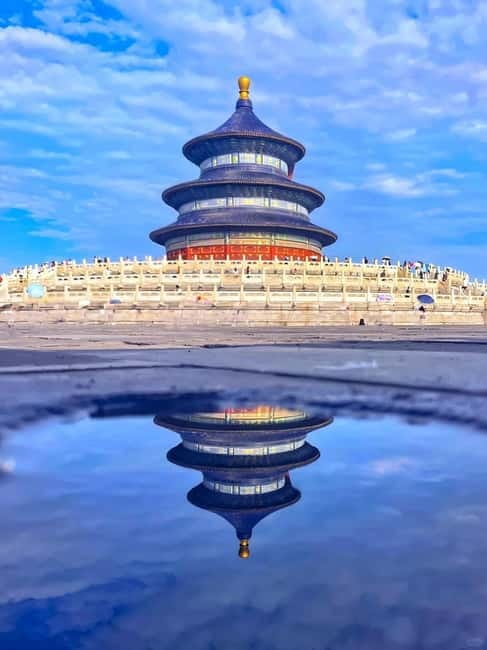
Beijing’s Temple of Heaven is not just one photogenic hall. It is a 273-hectare imperial ritual complex where the Ming and Qing emperors prayed for good harvests. I like the Hall of Prayer for Good Harvests for its striking blue roof and unusual round form, and I like the park’s quieter side, where old cypress trees give the grounds a calm, shaded feel.
The main concern is ticket clarity. The booking QR code is not the entrance ticket, and some visitors have arrived without usable tickets or found that an attraction entry fee was still due. Bring your passport, watch for the actual ticket instructions by email or WhatsApp, and confirm exactly what the $39 covers before you set out.
Key points at a glance
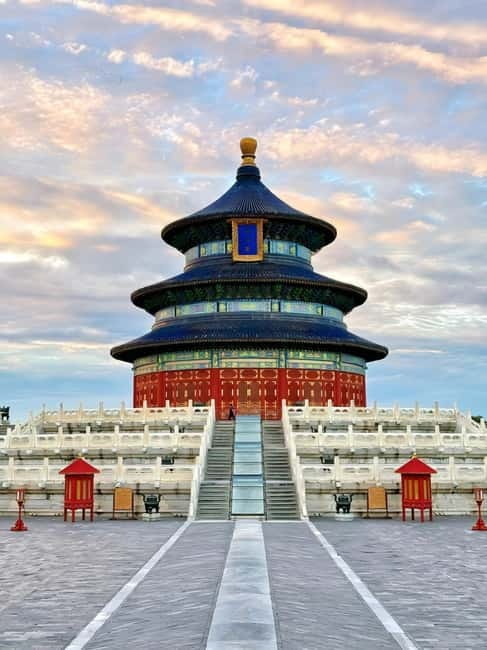
- See the Hall of Prayer for Good Harvests, Beijing’s best-known imperial ceremonial building and the visual centerpiece of the park.
- Walk the round-heaven, square-earth design, expressed in the park’s circular northern section and square southern section.
- Visit five important ritual sites, including the Circular Mound Altar, Palace of Abstinence, Divine Music Office, Altar of Prayer for Good Harvests, and Hall of Prayer.
- Use the metro to reach the park, with Temple of Heaven East Gate on Line 5 and Tianqiao on Line 8 listed as practical stations.
- Choose an English-speaking guide for context, with the guided visit planned for about three hours and groups limited to 10 people.
- Check ticket conditions carefully, since the included attractions depend on when you book and the actual admission details are sent separately.
Why the Temple of Heaven deserves half a day
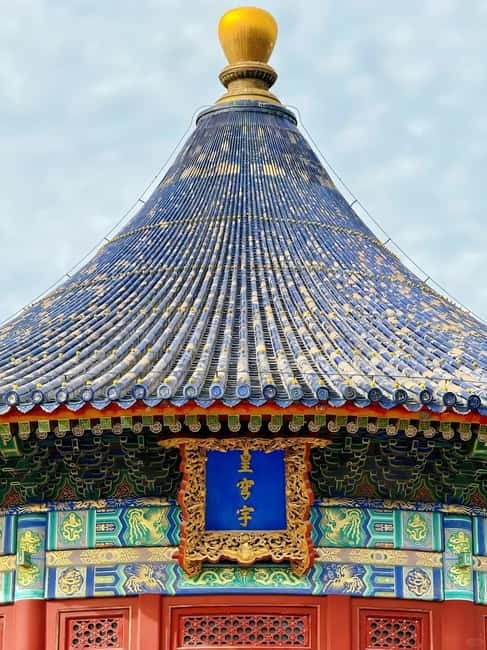
The Temple of Heaven is one of Beijing’s grandest surviving imperial complexes, but it does not feel like a single monument. The site combines ceremonial buildings, broad stone terraces, formal walls, wooded paths, and open parkland. I would allow at least three hours if you want to understand the main sites rather than rush from one photograph to the next.
The complex began in 1420, during the reign of the Ming emperor Yongle. It was first called the Altar of Heaven and Earth. In 1530, during the Ming emperor Jiajing’s reign, the complex was renamed the Temple of Heaven.
The emperors of the Ming and Qing dynasties came here for ceremonies connected with heaven, the seasons, and the success of the harvest. These were not casual prayers. The emperor’s role was tied to the natural order, so the ritual buildings were designed to express a carefully arranged relationship between ruler, earth, and sky.
The park covers about 273 hectares and is enclosed by two walls. Its shape carries a message: the northern part is circular, while the southern part is square. This reflects the old Chinese idea of a round heaven above a square earth. You do not need a guide to see the shapes, but a guide can help you notice how the idea appears in the buildings, terraces, and movement through the grounds.
More Temple of Heaven Tours in Beijing:
- Beijing: The Temple of Heaven or Summer Palace Entry Ticket
★ 4.6 · 1,286 reviews - Beijing Classic Full-Day Tour including the Forbidden City, Tiananmen Square, Summer Palace and Temple of Heaven
★ 4.0 · 610 reviews - Temple of Heaven Ticket
★ 5.0 · 482 reviews
Reaching the park by Beijing metro
The easiest transport advice provided for this activity points you toward two metro stations. You can get off at Temple of Heaven East Gate on Line 5 or Tianqiao on Line 8.
That information is useful, but it does not tell you which station is best for your particular meeting point. The meeting location is sent after booking, so check that message before choosing your route. The park is large, and entering at the wrong side can add a long walk before the actual sightseeing begins.
The entrance issue matters more here than it might at a smaller attraction. The Temple of Heaven has a broad park area and several major sites within it. If you are carrying luggage, managing limited mobility, or arriving close to the attraction closing time, use the confirmed gate and meeting instructions rather than simply heading for the first entrance you see.
The activity is listed as wheelchair accessible. Still, the park’s size and the need to move among several separate sites mean you should confirm the precise meeting point and route if step-free access is especially important to you.
The Hall of Prayer for Good Harvests
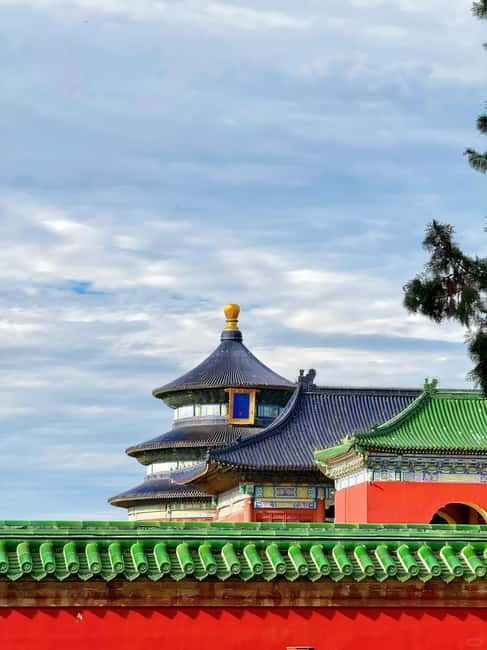
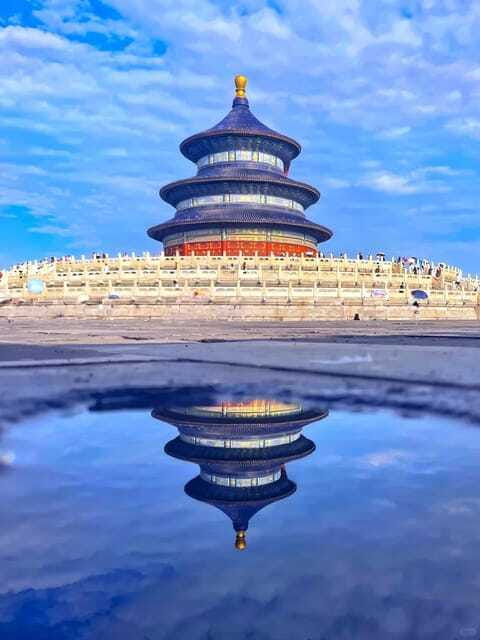
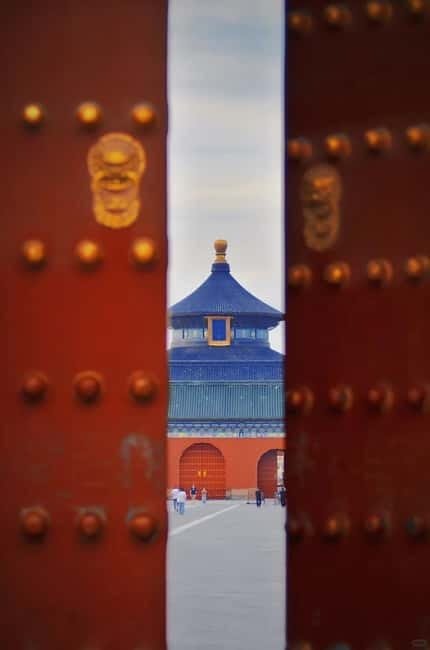
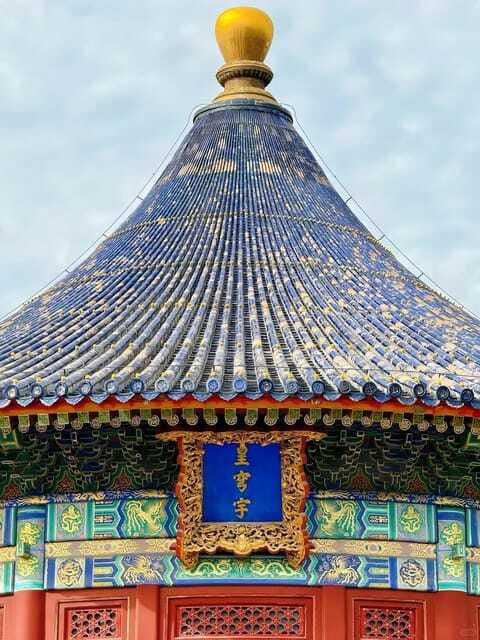
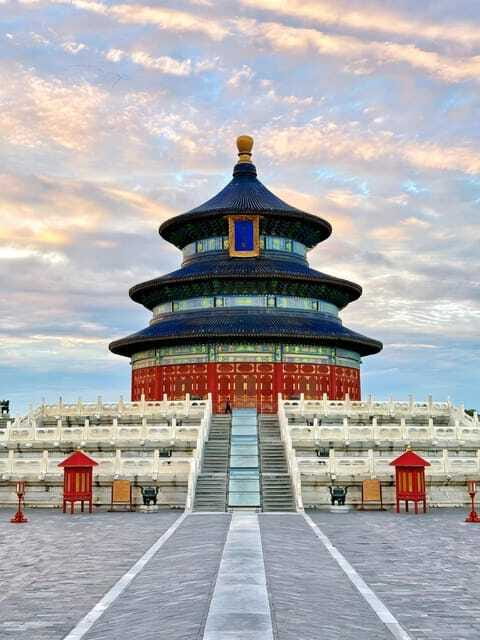
Most people come for the Hall of Prayer for Good Harvests, and it earns its fame. The building is a tall circular structure with a blue roof, a color linked with the sky. It is the image most closely tied to the Temple of Heaven and usually the first place you will want to see.
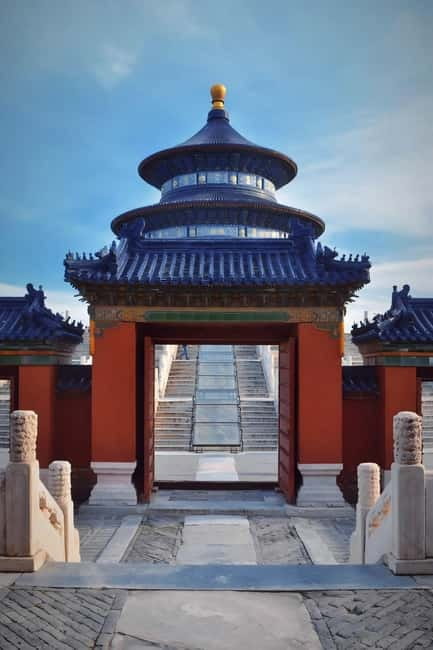
The hall was connected with spring prayers for a good harvest. Its round form fits the wider symbolism of heaven, while the surrounding terrace gives the building a formal, almost floating appearance.
Take a moment to look beyond the roof and colors. The building works because of its setting. The open stone terrace, the measured approach, and the space around it make the hall feel different from an ordinary palace room. I find that a guide is most useful here, since the meaning lies in the relationship between architecture and ritual rather than in the building’s appearance alone.
The detailed visit plan also names the Altar of Prayer for Good Harvests. The names are close enough to cause confusion, so ask your guide or contact which parts are included in your ticket and route. The provided information lists both the altar and the Hall of Prayer among the main sites.
The Circular Mound Altar and imperial ceremony
The Circular Mound Altar was used for worship on the Winter Solstice. It is a more open and austere space than the Hall of Prayer for Good Harvests, with its meaning carried by geometry, stone, and position rather than a large enclosed building.
This is one of the best places to think about the round-heaven concept. The altar’s circular design and layered arrangement direct attention upward. The setting is less instantly decorative than the famous hall, but it helps explain how the Temple of Heaven functioned as a ceremonial complex.
If you are visiting without a guide, this is the point where the site can feel like a collection of attractive platforms and courtyards. With an English-speaking guide, you can connect the altar to the winter ceremony and to the emperor’s role in maintaining harmony between heaven and earth.
The activity lists a three-hour guided visit, but the overall booking duration is given as three to eight hours. That wider range probably reflects different start times, optional arrangements, and time spent exploring the park. Do not assume every booking includes a full-day guided visit. Check the available time and package before you pay.
More Entry Tickets in Beijing:
- Beijing: Lama Temple (Yonghe Temple) Admission Ticket
★ 4.8 · 297 reviews - Temple of Heaven Ticket
★ 4.9 · 271 reviews - Beijing: Yonghe Lama Temple Entry Ticket
★ 4.5 · 147 reviews - Beijing: Temple of Heaven Ticket with 5 UNESCO Site Options
★ 5.0 · 130 reviews
The Palace of Abstinence and Divine Music Office
The Palace of Abstinence was where the emperor stayed before taking part in ceremonies. The name tells you something important about imperial ritual: preparation was part of the ceremony itself. The emperor was expected to withdraw from ordinary life and follow a period of abstinence before worship.
This stop may appeal most to visitors who want the human side of the complex. The Hall of Prayer is the grand public image, while the Palace of Abstinence helps you picture the strict routine behind the ceremony.
The Divine Music Office served as a place where ceremonial music and rituals were rehearsed. That detail adds sound and movement to a site that can otherwise seem silent and static. The ceremonies depended not only on buildings and prayers, but also on musicians, rehearsals, and carefully timed actions.
These two locations are especially worth including if you have an interest in how the imperial system worked. They also help break up the visit. The Temple of Heaven is spacious, and moving between major monuments without any sense of purpose can become tiring. Knowing why a smaller building mattered gives the walk more shape.
Old cypress trees and the park atmosphere
The park is not all stone terraces and ceremonial halls. Ancient cypress trees fill parts of the grounds and give the complex a cooler, quieter mood. I like this contrast. The formal architecture explains imperial power, while the trees make the place feel like a park where you can slow down.
The calmer setting is one reason to avoid treating the Temple of Heaven as a quick photo stop. You will see the main structures more clearly if you leave room for the paths between them. The park has enough scale that the walk itself becomes part of the experience.
The park and its attractions have different opening times. From November 1 through March 31, the park is open from 6:30 a.m. to 9 p.m., while the attractions operate from 8 a.m. to 4:30 p.m. From April 1 through October 31, the park opens from 6 a.m. to 9 p.m., and the attractions close at 5:30 p.m.
Those hours give you useful flexibility for a walk, but they do not mean the main halls are open all day. Plan your visit around the attraction hours, especially in winter. A late arrival might let you enter the park but leave you unable to see the buildings included in the combined ticket.
What the $39 price really buys you
At $39 per person, this experience is priced above a simple local admission ticket. The value depends on what you want from the visit.
The package includes Temple of Heaven Park tickets and an information service fee. An English live guide is available, and the group is limited to 10 people. For a first visit to Beijing, that small-group format can be worthwhile because the site’s symbolism is not always self-explanatory.
The price is less attractive if you only want to stroll through the grounds and take pictures of the Hall of Prayer. The park can be enjoyed at your own pace, and the guided service may not add enough value for someone who has already studied the site.
The ticket arrangement needs close attention. Bookings made before 4:30 p.m. are described as combined tickets, except on Monday, and include entry to the attractions inside the park. At other times, the booking may be for a basic park ticket only. That distinction is crucial because the main halls are the reason most people come.
Do not rely on the GetYourGuide QR code as the actual admission ticket. The instructions say to check your email or WhatsApp for the proper ticket details. Your name and passport number are essential, so enter them accurately.
On-site tickets may also be available. If you ask for help buying them, a service fee applies. This gives you a fallback, but it also means the advertised $39 may not cover every situation. Clarify the total cost and the attractions included before arrival.
A practical warning about the advertised stops
The highlights also mention the Palace of Heavenly Purity. That building is associated with the Forbidden City, not the Temple of Heaven, while the detailed Temple of Heaven route names the Altar of Prayer for Good Harvests, Circular Mound Altar, Palace of Abstinence, Divine Music Office, and Hall of Prayer.
Because of that mismatch, I would ask for confirmation before booking if the Palace of Heavenly Purity is important to you. The specific Temple of Heaven visit described here is best understood as a tour of the ceremonial complex and its five listed sites, not as a wider Beijing palace tour.
This is a small wording issue with a practical effect. You should know exactly what you are paying to see, especially when the ticket conditions already vary by booking time.
Timing, group size, and guide choice
The guided visit is planned for about three hours. That is enough time for a focused walk through the main ritual sites, though your total outing can last from three to eight hours depending on availability and how long you remain in the park.
A small group of up to 10 is a useful middle ground. You get more room to ask questions than in a large coach group, but you should not expect a private tour. The guide speaks English, and the information service is part of the included offering.
I would choose the guided option if this is your first visit to Beijing, if you care about Chinese ritual architecture, or if you want help connecting the buildings to the old idea of heaven and earth. I would consider a basic ticket if you prefer quiet wandering, have already read about the site, or want to spend most of your time under the cypress trees.
The park can be busy at popular times, and transport may be affected by local holidays or special events. Build some flexibility into your day rather than scheduling the Temple of Heaven immediately before an important train or flight.
Should you book this Temple of Heaven experience?
I would book it if you want the major ceremonial sites explained in English and value a small group over arranging every detail yourself. The Hall of Prayer for Good Harvests, Circular Mound Altar, Palace of Abstinence, and Divine Music Office give you a fuller visit than a quick stop at the famous hall alone.
I would not book without first confirming the ticket contents, meeting gate, and whether your booking is a combined ticket or basic park admission. The $39 price can be fair when the attraction entries and guide are included, but it becomes poor value if you must buy extra admission after arriving.
This is a good fit for a first-time Beijing visitor who wants context, a manageable three-hour route, and some time in a peaceful historic park. It is less suitable for someone seeking a completely independent stroll or a guaranteed visit to the Palace of Heavenly Purity. Bring your passport, check the separate ticket message, and treat the gate details as essential rather than minor fine print.
FAQ
How long does the Temple of Heaven experience last?
The available duration is listed as three to eight hours. The guided tour itself is described as lasting about three hours.
Is an English-speaking guide available?
Yes. The activity includes a live English tour guide, with groups limited to 10 participants.
Which metro stations serve the Temple of Heaven?
You can get off at Temple of Heaven East Gate Station on Line 5 or Tianqiao Station on Line 8. Your exact meeting point is sent after booking.
What sites are included in the visit?
The listed sites are the Altar of Prayer for Good Harvests, Circular Mound Altar, Palace of Abstinence, Divine Music Office, and Hall of Prayer. Confirm your ticket type because attraction entry depends on the booking time.
What should I bring?
Bring your passport. Your name and passport number are essential for the booking.
Is the GetYourGuide QR code the entrance ticket?
No. The QR code is not the actual ticket. Check your email or WhatsApp for the proper ticket information before going to the park.
Newly written up around Beijing
- Private Tour to Lama Temple, Tian’anmen Square and Forbidden City★ 5.0 · 3 reviews
- Private Day to T-Square, Forbidden city, Temple of heaven, Summer palace Tour★ 5.0 · 54 reviews
- Private Day Trip of Forbidden City, Temple of Heaven and Summer Palace★ 4.5 · 3 reviews
- Private Half-Day Temple of Heaven and Lama Temple Tour★ 5.0 · 13 reviews
- Private Day Tour:Tiananmen Square,Forbidden City Temple of Heaven★ 5.0 · 16 reviews
- Private Tour to the Temple of Heaven and Tea tasting at the Maliandao Tea city★ 5.0 · 3 reviews
- Local’s Beijing: Forbidden City Insider Tour +Temple +Duck Feast★ 4.5 · 66 reviews
- Temple of Heaven Ticket with Optional Guide Service★ 5.0 · 120 reviews
Temple of Heaven Tours, compared.
The Temple of Heaven or Summer Palace Entry Ticket
Read our review →
Beijing Classic Full-Day Tour including the Forbidden City, Tiananmen Square, Summer Palace and Temple of Heaven
Read our review →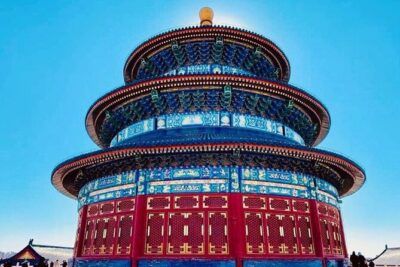
Temple Heaven, Lama Temple, Summer Palace & Peking Duck Bus Tour
Read our review →
Temple Heaven, Summer Palace, Lama Temple, Hutong Bus Tour
Read our review →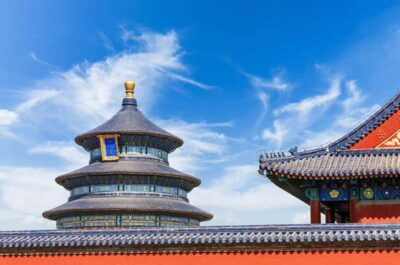
Temple of Heaven, Summer Palace, Lama Temple, Hutong Tours
Read our review →
Browse the lists this tour appears in