
Reviewed · ITALY TEMPLE TOURS
Benedictine Monastery of Catania – English Guided Tour
Catania’s Benedictine Monastery is not just a church with a few quiet rooms. It is a vast, layered complex where Roman houses sit below a university library, lava forms the cellar walls, and grand Baroque spaces reveal the power of the Benedictine order. The 75-minute English tour makes sense of a place that would be confusing on your own.
I like two things in particular: you get into areas that are not normally open to the public, and the guides connect the monastery to Catania’s wider story. Carmen, Giovanni, and Nicola are praised for clear English, humor, and lively storytelling. The only real caution is that the short tour moves through a lot of material, and access to a viewing platform may depend on the departure time.
Key points to know before you go
- Roman remains under a modern library: See an ancient Roman house beneath a mezzanine now used by University of Catania students.
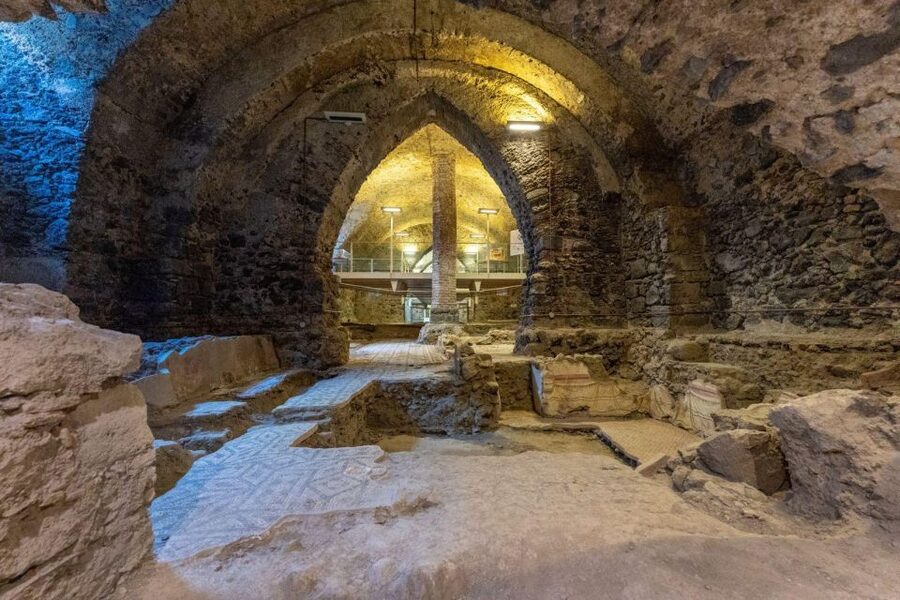
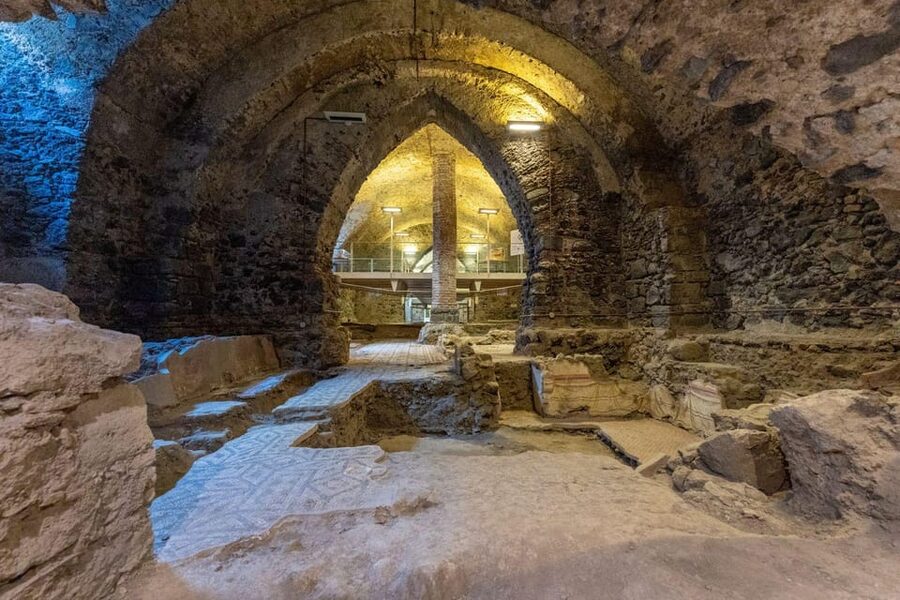
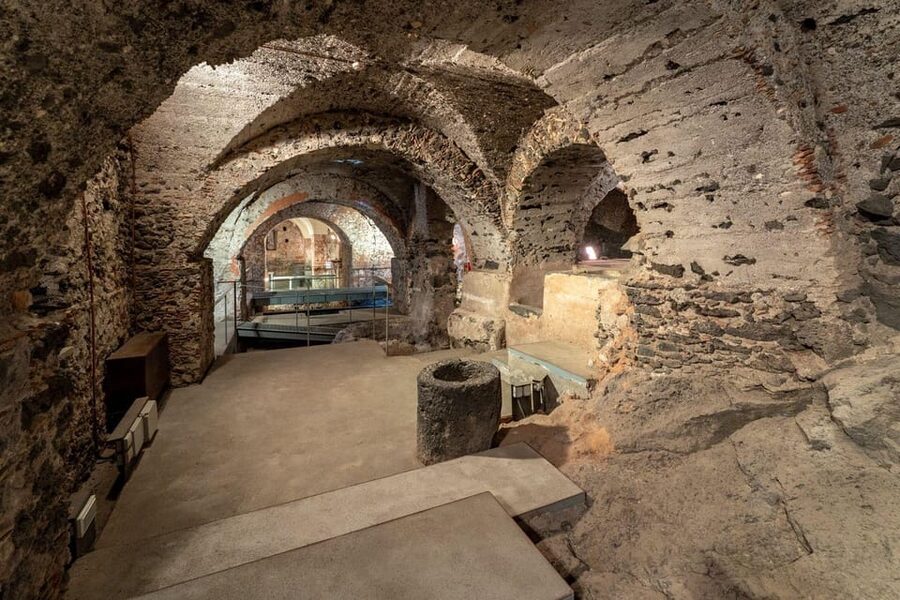
- A monastery built on lava: The cellar and lower levels show how Catania’s volcanic ground shaped the complex.
- Two cloisters and a novices’ garden: These quieter spaces reveal how the monks lived and organized their daily world.
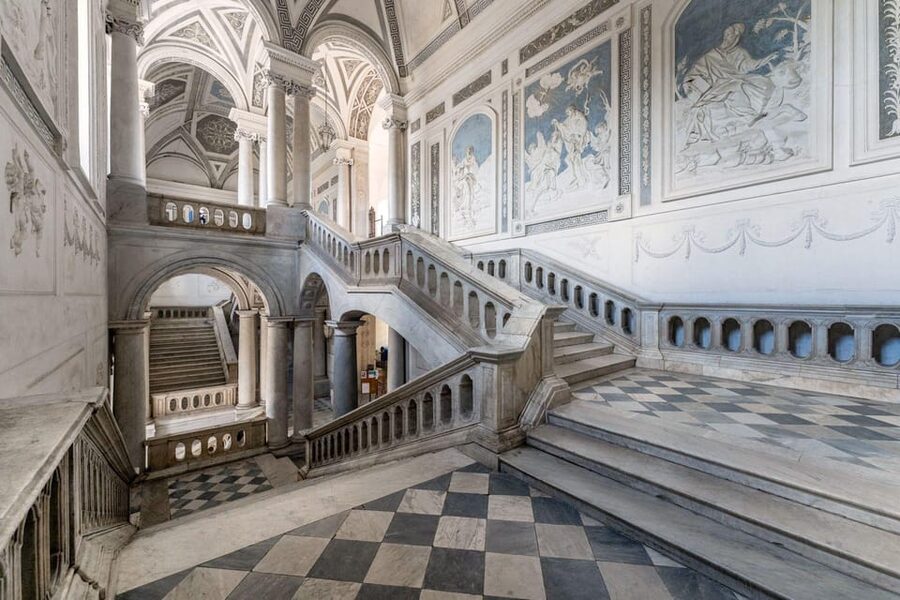
- Grand 18th-century rooms: The kitchens, dining rooms, monumental staircase, and Vaccarini’s work show the order’s wealth.
- A 30-year restoration story: The guide explains how architect Giancarlo De Carlo helped adapt the complex for modern use.
- Strong value at $11: For a 75-minute guided visit with access beyond the normal public areas, this is one of Catania’s better cultural buys.
Why this monastery is more than a Baroque facade
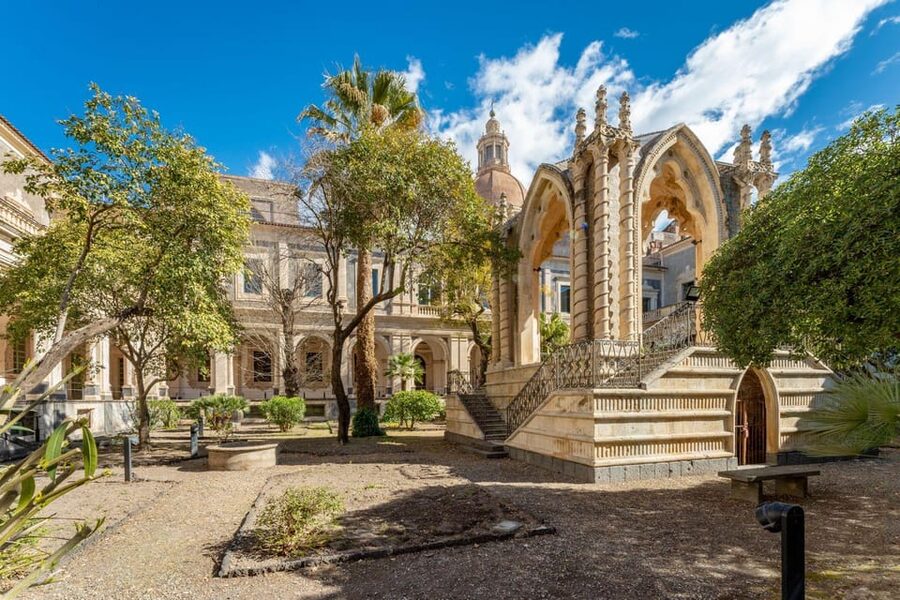
The Benedictine Monastery of San Nicolò l’Arena is one of Europe’s largest monastic complexes. Its scale is the first surprise. You are not simply looking at a decorated church interior. You are walking through a former religious city with cloisters, work areas, gardens, kitchens, cellars, libraries, corridors, and archaeological remains.
The tour covers roughly 2,000 years of history. That long timeline is what gives the visit its appeal. Ancient Roman traces, the era of the Benedictine monks, the grand rebuilding of the 18th century, and the building’s present life as part of the University of Catania all occupy the same structure.
I especially like that the monastery is still used. The former religious complex now houses university facilities, including the Library of the Department of Humanities. Students work beneath modern mezzanines while ancient masonry and monastic rooms remain around them. That contrast makes the building feel like part of Catania’s living city rather than a sealed museum.
The monastery also gives you a clear look at the wealth once controlled by the Benedictine order. Its spacious rooms, grand staircases, elaborate planning, and large service areas were not built for a small, poor community. The scale tells you something about religious power in Sicily without needing a long lecture.
Other temple visits near Italy we have written up
- Agrigento: Valley of the Temples Skip-the-Line Sunset Tour
★ 4.5 · 1,512 reviews - Pantheon Elite Guided Tour – Rome’s Iconic Ancient Temple
★ 5.0 · 1,447 reviews - Palermo: Agrigento and the Valley of the Temples Day Tour
★ 4.2 · 1,240 reviews
Starting at Piazza Dante and entering the complex
Your meeting point is easy to find once you reach Piazza Dante. Pass through the monastery’s main gate and look for the information point in the courtyard on the right. Baggage storage is available at the meeting point, which is useful if you have luggage with you before checking into a hotel.
The tour returns to the same place after 75 minutes. That fixed start and finish make it simple to pair with a walk through central Catania, though you should allow a little extra time to arrive at the courtyard and check in.
The activity includes access to parts of the monastery that are not normally open. That matters here because the building’s most interesting details are not all visible from the main entrance. A guide can take you through corridors and rooms that would be easy to miss, then explain how each area fitted into monastic life.
The tour is in English. Written translations in French or Spanish can be provided if English is not your main language. It is also listed as wheelchair accessible, though the monastery’s large historic layout means you may still want to confirm any particular access needs before booking.
The cloisters reveal the monastery’s calm side
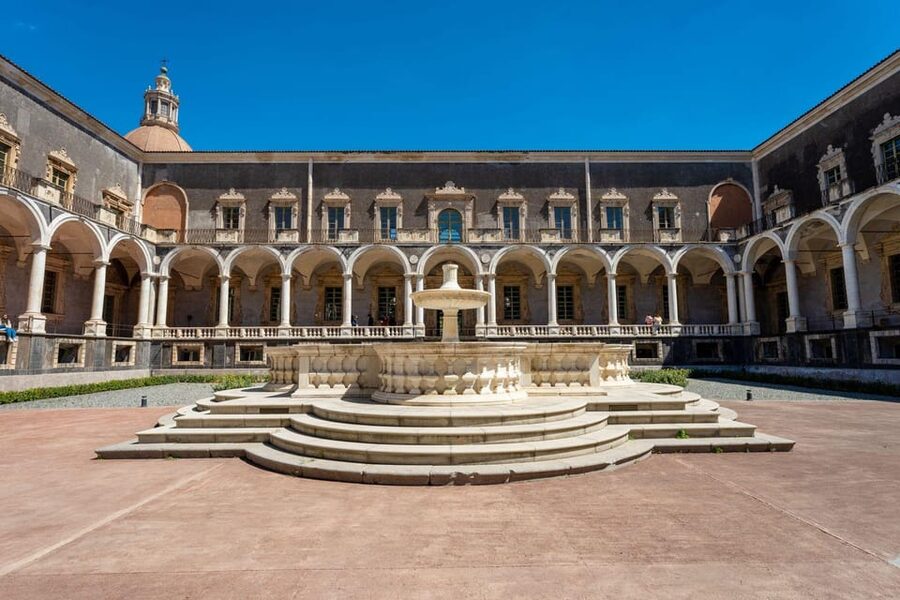
The two cloisters are among the most important stops. These open courtyards brought light and air into the monastic complex and helped organize movement between its different sections. They also offer a welcome pause from Catania’s busy streets.
A cloister can look simple at first glance, but the guide gives you the details that make it useful. You learn how the spaces related to prayer, study, work, and everyday movement. The calm design contrasts with the monastery’s huge scale and more theatrical Baroque rooms.
The Garden of the Novices adds another piece to that picture. Its name points to the younger members of the order and the period of training before full religious life. This is one of the places where the building becomes less about decoration and more about the routine of the people who lived there.
I would pay attention to how the guide moves between grand architecture and ordinary life. The tour is strongest when it explains not only what a room looks like, but also who used it and why it was placed there.
Roman houses beneath a modern university library
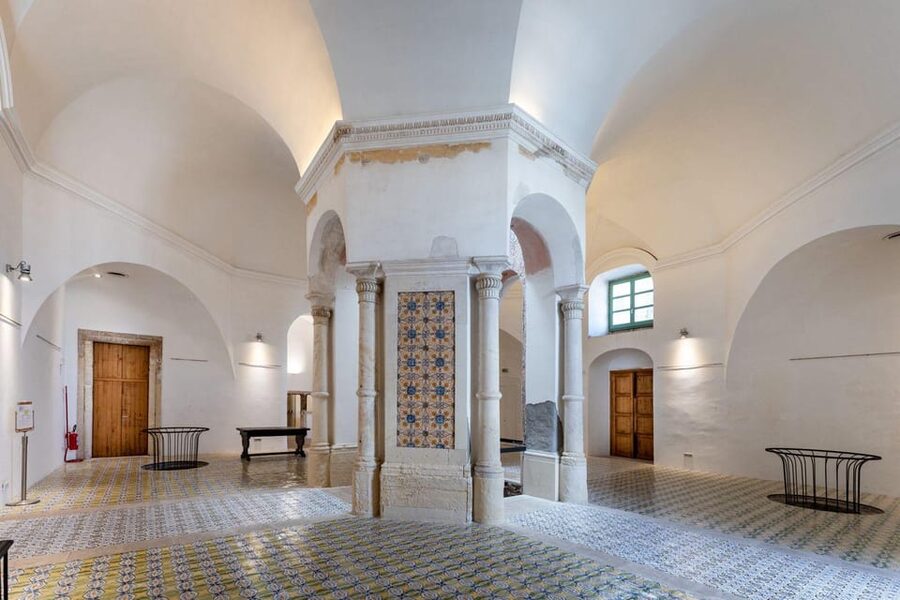
The Roman House is one of the tour’s most unusual sights. It is visible below a modern mezzanine used by students as part of the university library. In one glance, you see ancient remains, contemporary study space, and the layers of Catania’s long rebuilding story.
This is a good example of why the monastery is better with a guide. Without an explanation, the modern library might distract from the Roman structure below it. With context, the contrast becomes the point. The building has not been frozen at one moment in time. It has been reused, altered, and adapted across many centuries.
The 16th-century cellar now used as the Library of the Department of Humanities offers another striking change of purpose. A room once connected with monastic storage now supports academic work. The guide explains these changes as part of the monastery’s wider transformation from religious institution to university complex.
The underground areas can also be a relief on a hot Sicilian day. One visitor specifically appreciated the cooler lower level during summer. The cellar is not just a practical stop, then. It combines architecture, archaeology, climate, and modern use in one place.
A different set of gates, same trip:
- Rome’s Iconic Temple: Pantheon Audio Guided Tour with Fast Access
★ 4.0 · 1,188 reviews - Agrigento: Valley of the Temples Ticket & App Audioguide
★ 4.3 · 1,160 reviews - Colosseum Special Access Tour, with Ancient Temples & Tombs
★ 4.8 · 747 reviews - Agrigento: Valley of the Temples E-Scooter Tour
★ 4.6 · 557 reviews
Kitchens, dining rooms, and the evidence of monastic wealth
The famous 18th-century kitchens help you picture the monastery as a large working community. These were not small domestic rooms. They belonged to a complex with enough residents, students, servants, and guests to require substantial facilities.
The dining rooms add to that sense of scale. Together, the kitchens and refectory areas show how much planning was needed to feed a major religious institution. You begin to see the monastery as an organized estate, not simply a collection of prayer rooms.
The guide also points out the work of architect Giovanni Battista Vaccarini, one of the key figures in Catania’s late Baroque rebuilding. His work helps explain the formal design and monumental feel of the complex. The staircase, in particular, gives the tour a strong architectural moment.
You do not need to be an architecture specialist to enjoy this section. The most useful explanations are practical: how people moved through the building, how grand spaces expressed status, and how the monastery’s design balanced showpiece rooms with service areas.
Corridors, staircases, and the long restoration
The monastery’s corridors can feel labyrinthine. That is part of its character, but it can also make an unguided visit frustrating. A guide keeps the route moving and gives you a reason to care about each turn.
The restoration lasted more than 30 years, and that long effort is central to understanding the building you see today. The monastery had to be repaired and adapted without erasing the evidence of its earlier uses. Architect Giancarlo De Carlo led the contemporary refurbishment project that helped make the complex suitable for modern university life.
This is not a simple before-and-after restoration story. The aim was not to make every room look newly polished or to pretend that the building still functions as a monastery. Instead, old structures and modern additions work side by side. The university facilities are part of the present story.
That approach gives the visit a useful lesson in preservation. Historic buildings survive when they have a role, and this monastery has one. Students use its library and rooms today, while guided visits help the public understand what remains.
What the guides add to the experience
The guide is a major part of the tour’s value. Carmen is repeatedly praised for clear English, a good sense of humor, and answers that stay focused. Giovanni is described as lively and engaging, while Nicola is noted for amusing stories and strong storytelling.
The best guide style here seems to be conversational rather than formal. You get history, architecture, local context, and small anecdotes instead of a long stream of dates. One guide even connected Catania’s relationship with Mount Etna to the feeling locals have when they travel and cannot see the volcano. Details like that make the city easier to understand.
You can also ask questions. The guides are prepared to explain the monastery, its inhabitants, Catania, and the restoration work. If you enjoy history but dislike dry lectures, this tour should suit you well.
English delivery is generally clear and well paced. Several people appreciated that guides gave enough time to look around rather than rushing from room to room. Still, a 75-minute visit cannot cover every corner of a complex this large. If you want a slow architectural study, you may find the pace brisk.
Is $11 a good price for 75 minutes?
At $11 per person, the tour offers strong value. You receive entry, a live English-speaking guide, access to areas not normally open, and baggage storage at the meeting point. The guided explanation is especially important because much of the monastery’s meaning comes from how its Roman, monastic, Baroque, and university phases fit together.
An unguided visit might show you attractive rooms, but it would be harder to understand why a Roman house sits under a university library or why a cellar matters to the monastery’s story. The tour turns those separate sights into one connected experience.
The price also compares well with the amount of architecture covered. In 75 minutes, you see cloisters, a garden, kitchens, dining rooms, archaeological remains, a library, cellars, corridors, and the monumental staircase. You are getting breadth rather than a single-room visit.
The tradeoff is time. You will not have unlimited freedom to linger, and the exact route can vary. One departure did not include a viewing platform, with the suggestion that a later tour might offer it. If that viewpoint matters to you, check the available starting times before booking.
Free cancellation up to 24 hours before the tour and the reserve-now, pay-later option add useful flexibility. The activity also skips the ticket line, which can save time on a short stay in Catania.
Who should book this Catania tour?
I would choose this tour if you want to understand Catania beyond its main squares and churches. It is a good fit for first-time visitors, architecture fans, history enthusiasts, and anyone who enjoys seeing old buildings used in modern ways.
It also works well when you have only a few hours in the city. The tour takes 75 minutes, returns to its starting point, and gives you a focused cultural stop without consuming half a day. The lower levels can be pleasant during hot weather, too.
Families and mixed-age groups should find the changing rooms helpful. Roman remains, underground cellars, huge staircases, gardens, and student libraries offer more variety than a single formal museum gallery.
You may want to skip it if you strongly dislike guided visits or prefer to spend a long time photographing each room. The route is structured, and the monastery remains an active university setting rather than a fully open museum. For most people, though, that working atmosphere is one of the reasons to go.
My verdict: book it for the layers
I recommend booking the Benedictine Monastery tour if you want one compact experience that explains Catania’s ancient, religious, architectural, and modern sides. The Roman house, lava-built cellar, grand kitchens, and university library give the visit real variety.
The strongest reason to go is the guide. Carmen, Giovanni, Nicola, and the other English-speaking guides bring order to a maze of rooms and add the local stories that make the building memorable. At $11, the combination of special access and clear interpretation is hard to beat.
Book it with realistic expectations. You are getting a lively 75-minute introduction, not an exhaustive study of every corridor or a guaranteed viewing-platform visit. If you accept that limit, this is a smart and inexpensive way to see one of Catania’s most unusual buildings.
FAQ
Where does the Benedictine Monastery tour begin?
The tour begins at the Benedictine Monastery of San Nicolò l’Arena. After passing through the main gate on Piazza Dante, find the information point in the courtyard on the right.
How long does the guided visit last?
The guided tour lasts 75 minutes and finishes back at the Benedictine Monastery of San Nicolò l’Arena.
What language is the tour conducted in?
The live tour guide speaks English. Written translations in French or Spanish can be provided if English is not your main language.
What areas are included in the visit?
The tour includes the two cloisters, the 16th-century cellar now used as a university library, the Roman House, the Garden of the Novices, the 18th-century kitchens and cellars, dining rooms, corridors, Vaccarini’s work, and the monumental staircase.
Is the monastery tour wheelchair accessible?
Yes. The activity is listed as wheelchair accessible.
Can I store luggage during the visit?
Yes. Baggage storage is included at the meeting point.
Can I cancel the booking?
Yes. You can cancel up to 24 hours in advance for a full refund. You can also reserve now and pay later.
Newly written up around Italy
- Sunset visit Valley of the Temples Agrigento★ 4.5 · 93 reviews
- Agrigento; Valley of the Temples, Scala dei Turchi from Palermo, Private Tour★ 5.0 · 68 reviews
- Agrigento: Valley of the Temples Private Tour★ 4.6 · 66 reviews
- Paestum: Private Tour of Greek Temples and Archaeological Museum★ 5.0 · 60 reviews
- Agrigento Valley of the Temples and Villa Romana del Casale Tour from Palermo★ 4.5 · 134 reviews
- Catania: Valley of the Temples & Piazza Armerina with Snack★ 4.5 · 136 reviews
- Valley of the Temples and Villa Romana del Casale Day Trip from Taormina★ 4.0 · 137 reviews
- Agrigento and Valley of the Temples Day Trip from Palermo★ 4.0 · 140 reviews
Italy Temple Tours, compared.
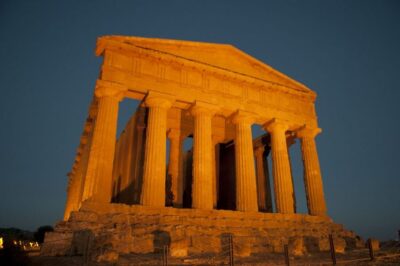
Valley of the Temples Skip-the-Line Sunset Tour
Read our review →
Pantheon Elite Guided Tour – Rome’s Iconic Ancient Temple
Read our review →
Agrigento and the Valley of the Temples Day Tour
Read our review →
Rome’s Iconic Temple: Pantheon Audio Guided Tour with Fast Access
Read our review →
Valley of the Temples Ticket & App Audioguide
Read our review →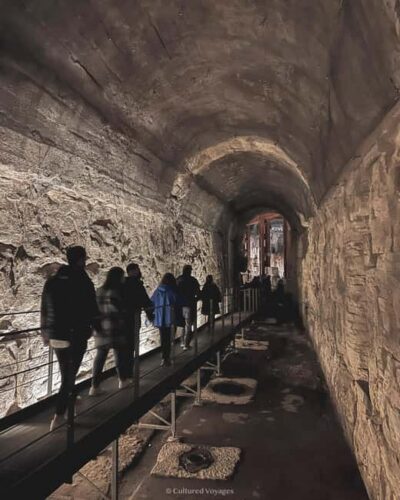
Colosseum Special Access Tour, with Ancient Temples & Tombs
Read our review →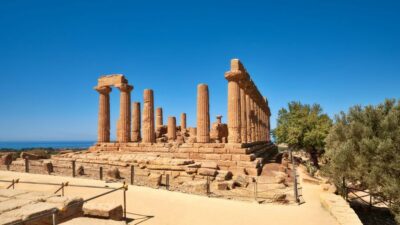
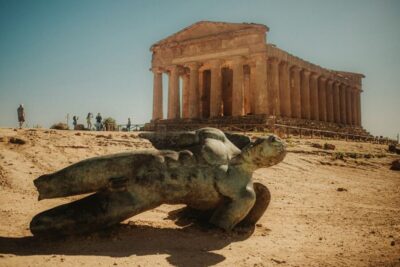
Valley of the Temples and Scala dei Turchi Day Trip
Read our review →Browse the lists this tour appears in