
Reviewed · TEMPLE WALKING TOURS
Rome: Temples, Squares & Markets Guided Walking Tour
Rome’s layers come at you fast on this private three-hour walk. You start beneath the painted heavens of Sant’Ignazio, pass the Pantheon and Piazza Navona, then move through markets, ancient ruins, the Jewish Ghetto, and the old river crossing at Tiber Island. It is a smart way to connect Rome’s famous sights with places you could easily miss on your own.
I like the one-on-one format, especially because guides such as Juan and Daniele have adjusted the route to fit a visitor’s interests. I also like the food stop: one Roman supplì gives the walk a tasty local break instead of making it only a history lesson.
The main drawback is its price of $79.30 per person, since entrance tickets are not included. Three hours also passes quickly, so you will see many places mostly from the outside rather than touring each one at length.
Key points to know before booking
- A private route with room to customize: You get the guide’s full attention, and the route can be adjusted to include places you have not yet seen.
- A Roman food taste is built in: The included street-food sample is supplì, a fried rice croquette that is closely tied to Roman snack culture.
- The route links several eras: You move from Baroque church art to the Pantheon, Caesar’s assassination site, ancient temples, imperial ruins, and the Jewish Ghetto.
- The guides make a difference: Juan and Daniele are specifically praised for warmth, planning, punctuality, and useful suggestions for the rest of a Rome visit.
- Tickets cost extra: The tour fee covers the guide and one food tasting, not admission to attractions.
- Expect plenty of walking: The route is listed as wheelchair accessible, but the three-hour schedule covers a long chain of central Rome sights.
Why this Rome walk works well

Rome is easier to understand when you see its layers in one continuous walk. A church hides ancient ideas under Baroque paint. A market square sits beside the place where Caesar met his fate. The Jewish Ghetto, temples, river island, and imperial palace ruins all sit within the same city fabric.
That is the real strength here. You are not spending three hours inside one museum or checking off one famous monument. You are learning how Rome fits together, with a local guide explaining the connections as you go.
The private format matters. In a large group, a question about an obelisk or a street name may get lost. Here, you can ask for more food advice, more ancient history, or a route that helps fill gaps in your own sightseeing plan. Juan, one of the named guides, is praised for changing the route to include places his visitors had not yet reached. Daniele is praised for planning a visually rewarding route and ending as close to a hotel as possible.
Those details suggest the experience is at its best when you tell the guide what you want. If you have already seen the Pantheon, ask for more time around the Jewish Ghetto or the ancient temples. If this is your first day in Rome, let the guide give you the broad city orientation.
More Temple Walking Tours in Italy:
- Walking Guided Tour and Rome’s Iconic Temple Pantheon Entrance
★ 4.5 · 422 reviews - Bangkok: City Highlights Temple and Market Walking Tour
★ 4.5 · 3,990 reviews - Bangkok: Grand Palace and Wat Phra Kaew Guided Walking Tour
★ 4.4 · 2,417 reviews
Starting under the painted ceiling of Sant’Ignazio
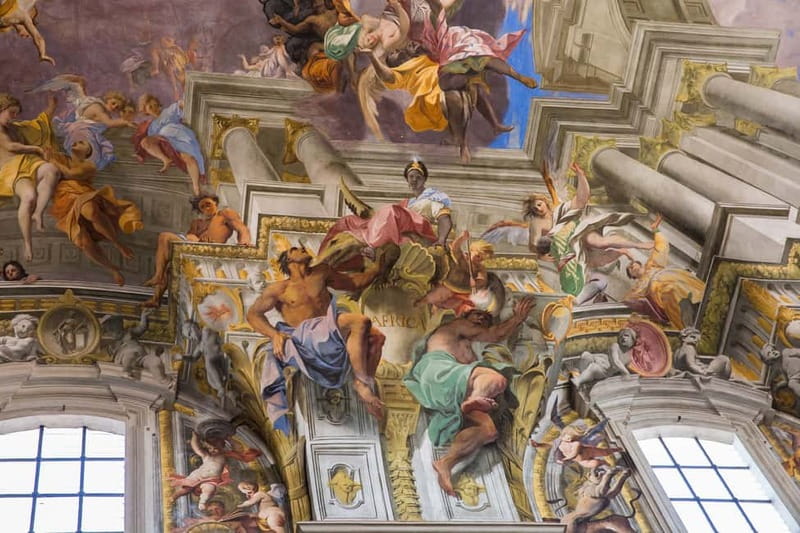
Meet at the entrance of the Church of Sant’Ignazio di Loyola. This is a better starting point than an anonymous street corner because the church gives you an immediate lesson in Roman Baroque style.
The guided visit lasts about 15 minutes. Look up. The ceiling fresco creates a strong illusion of architecture and open space, even though the effect comes from paint and careful perspective. The church is a useful reminder that Rome’s drama is not limited to ancient stone. Its later churches were designed to surprise you from the moment you walk in.
Starting here also puts you near several central sights without wasting time on transportation. You begin on foot and stay on foot for the rest of the route.
The Pantheon and Rome’s Egyptian obelisks

From Sant’Ignazio, the walk continues to the Pantheon, with about 15 minutes set aside for the guided visit. The Pantheon is one of Rome’s essential stops, but a guide can give the building more meaning than a quick photograph does.
You can expect discussion of its construction, purpose, and place in the city. The itinerary also brings in Rome’s obelisks, many of which came from Egypt thousands of years ago. These tall stones can seem like scattered decorations until someone explains why they appear in church squares, piazzas, and traffic-filled parts of the city.
The Pantheon stop is fairly short. If you want a long look inside, time for detailed architectural study, or a quiet visit on your own, plan to return separately. This tour gives you context and a guided look, not an extended museum session.
Piazza Navona and the city’s talking statues
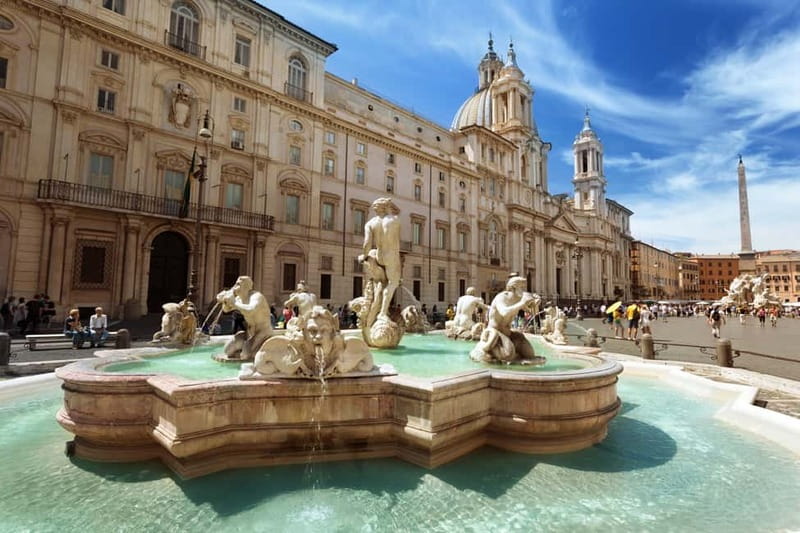
Piazza Navona gets another 15-minute guided stop. Its long shape reflects the ancient stadium beneath the modern square, which helps explain why the piazza feels so different from a simple open plaza.
The guide also introduces Rome’s talking statues, a quirky local tradition in which statues became places for anonymous public comments and political complaints. It is exactly the kind of small civic story that can make a familiar square feel less like a postcard and more like a living neighborhood.
You will have time to see the square and hear its story, but not much time for lingering at cafés or studying every fountain. Keep that in mind if Piazza Navona is high on your personal list.
Other temple visits near Italy we have written up
- Agrigento: Valley of the Temples Skip-the-Line Sunset Tour
★ 4.5 · 1,512 reviews - Pantheon Elite Guided Tour – Rome’s Iconic Ancient Temple
★ 5.0 · 1,447 reviews - Palermo: Agrigento and the Valley of the Temples Day Tour
★ 4.2 · 1,240 reviews - Rome’s Iconic Temple: Pantheon Audio Guided Tour with Fast Access
★ 4.0 · 1,188 reviews
Campo de’ Fiori and the included supplì tasting
Campo de’ Fiori brings the route into Rome’s food culture. The walk includes a stop at the local food market and one street-food tasting. The featured bite is supplì, a Roman fried rice croquette, often associated with a crisp outside and a soft, savory center.
This is a modest tasting, not a full meal. You should still plan to eat elsewhere if you are hungry. Its value is that it gives you a direct taste of a Roman staple while the guide explains Italian food products and how local eating fits into daily life.
The surrounding alleys add another useful layer. The guide points out unusual street names and explains the character of the area. I like this part because it turns food into a way of reading the city. You are not simply told what to order. You get a little help understanding what makes Roman food Roman.
Market conditions can change, and the food stop is only one included tasting, so do not book this as a food tour. Book it as a city walk with a well-placed snack.
Largo di Torre Argentina and the Ides of March
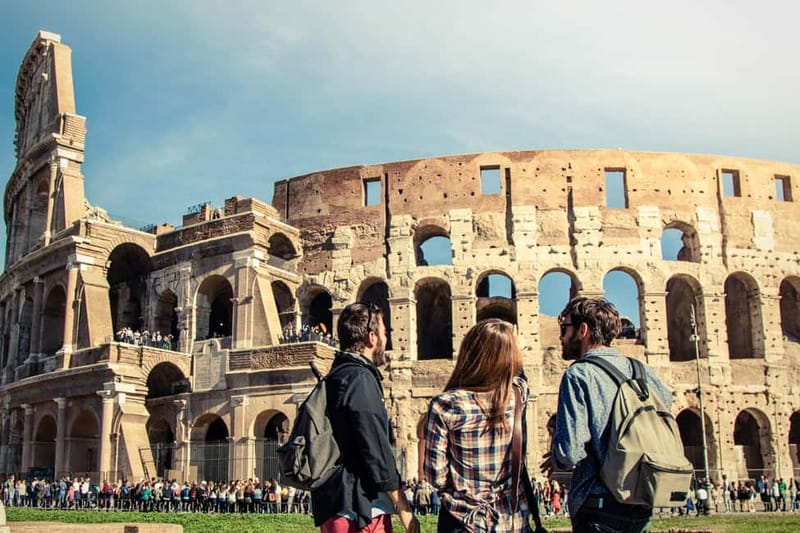
The next ancient stop is Largo di Torre Argentina, with about 15 minutes of guided explanation. This archaeological area is tied to the assassination of Julius Caesar and the famous Ides of March.
The site can be easy to underestimate if you do not know what you are seeing. From street level, it may look like a group of ruins in a sunken area. The guide supplies the story that makes the broken columns and old foundations matter.
This is one of the tour’s best examples of its overall approach. Instead of taking you only to polished monuments, it pauses at a place where fragments, politics, and Roman history meet. You do not need a full lecture to understand the importance, but a few clear details can change how you view the ruins.
The Jewish Ghetto and Portico of Octavia
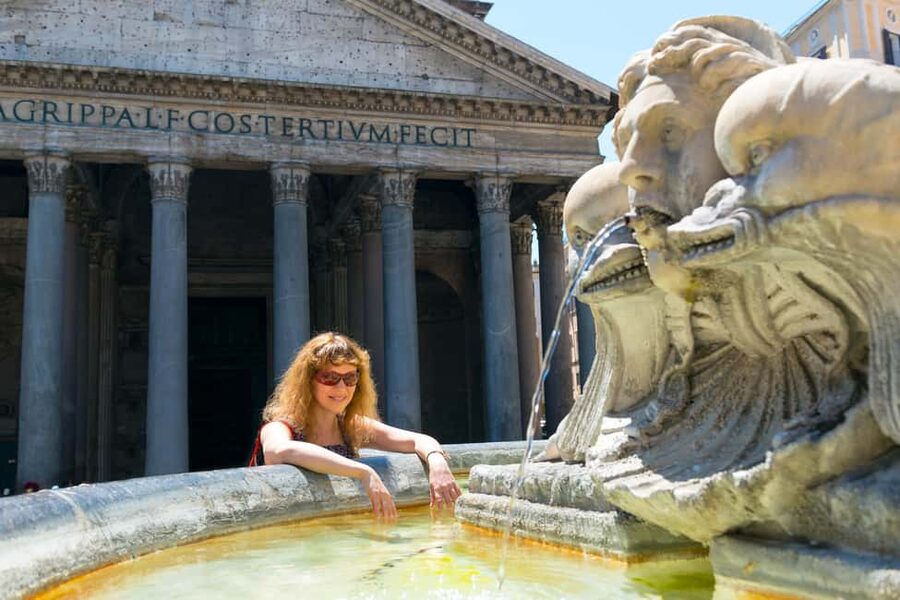
The route then reaches Portico of Octavia, with about 20 minutes set aside for the guided stop. It also explores the Jewish Ghetto, described as a neighborhood that has retained a strong sense of its past.
This part of Rome rewards slower attention. The streets, building fronts, and ancient remains sit close together, and the area feels different from the grand piazzas earlier in the walk. Your guide can explain how the district developed and point out details that would be easy to pass without context.
The Portico of Octavia is also a fine place to see Rome’s habit of building around older structures. Ancient remains are not always separated into neat museum zones. They can appear beside active streets, homes, restaurants, and later religious buildings.
The schedule allows about 20 minutes here, a little more than at many other stops. That makes sense. The area has both archaeological interest and a distinct neighborhood character.
The Temple of Portunus and Rome’s ancient layers
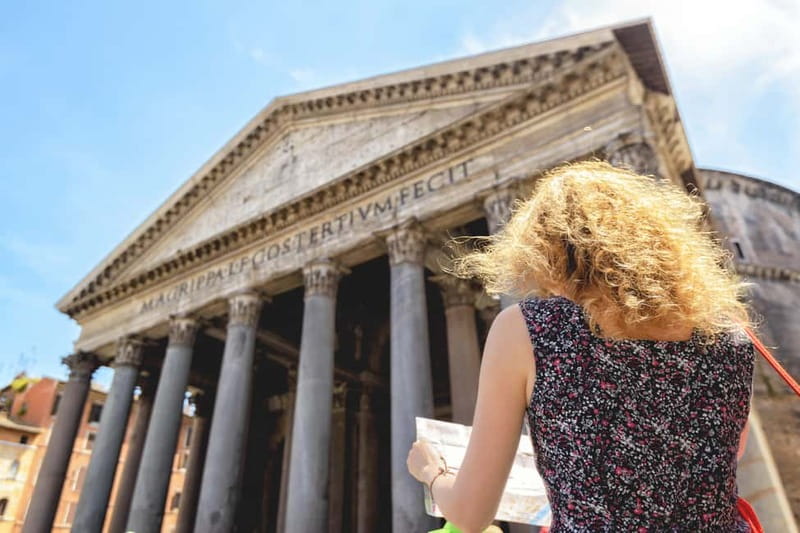
The Temple of Portunus receives its own 15-minute guided stop. This ancient temple is a good counterpoint to the Pantheon. It is smaller and less famous, but its shape and survival help you picture the variety of religious buildings that once filled Rome.
This is also where the tour’s theme of layered history becomes especially clear. You may have just walked through a medieval and Jewish neighborhood, then you are looking at a Roman temple, with later city life continuing around it.
The route includes additional ancient ruins and a view of the so-called fake Colosseum, an ancient structure whose form recalls Rome’s famous amphitheater. The nickname makes the sight memorable, but the important point is that Rome contains many large, impressive ruins beyond the Colosseum itself.
Do not expect admission to a major archaeological site here. Attraction tickets are not included, and the tour is designed around guided views and explanations along the route.
The Mouth of Truth and a film-famous moment
The Mouth of Truth is another 15-minute stop. This carved stone face became famous to many people through the film Roman Holiday and its playful hand-in-the-mouth scene involving Audrey Hepburn.
The guide can explain the legend and the place’s role in popular culture. It is a lighter moment after the more serious story at Largo di Torre Argentina. The stop also shows how modern film can give an old Roman object a second life.
If this is a must-see for you, the private format is useful because you can ask for enough time to take in the site. Still, the overall tour keeps moving. It is not built around long waits at individual attractions.
Circus Maximus and the Palatine Hill
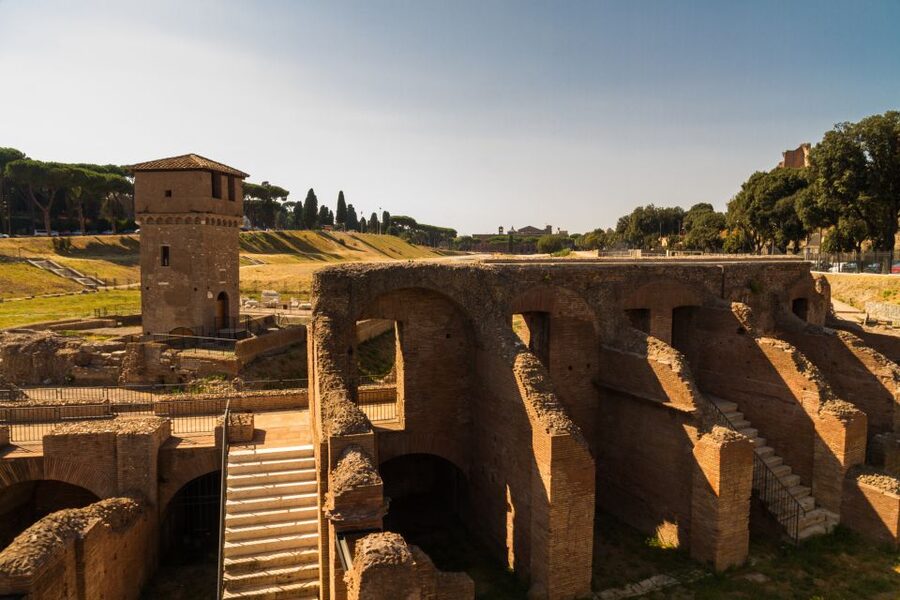
The walk continues toward Circus Maximus, where you get a view of the enormous ancient racing ground. About 15 minutes is scheduled here. Even in ruins, the scale helps you picture the crowds and spectacle once associated with the site.
From there, the route looks toward Palatine Hill, the area connected with Rome’s rulers and the remains of the Imperial Palace. The guide gives you the broad story of imperial power and the location’s importance.
This is a viewpoint and orientation stop rather than a full Palatine Hill visit. Entrance tickets are not included, so you should not expect to enter the archaeological complex as part of the tour. If you want the Palatine’s paths, palace ruins, and museum areas in detail, reserve a separate visit.
Still, seeing the Circus Maximus and Palatine Hill together is valuable. One shows the scale of public entertainment. The other points to the private and political world of the emperors. The guide helps connect those two sides of Roman life.
Crossing to Tiber Island
The final named stop is Tiber Island, reached by crossing a bridge over the river. The island is small, distinctive, and easy to add to a central Rome route, yet many independent walkers pass nearby without giving it much attention.
The tour ends here according to the route details. Another meeting-point note says the activity ends back at the meeting point, so confirm the final drop-off point when you book. That small inconsistency matters if you have a dinner reservation, hotel transfer, or another timed visit immediately afterward.
Before saying goodbye, your guide can recommend places to eat, shop, and continue exploring. This is where the private format can pay off again. Ask for suggestions that match your budget and interests, rather than accepting a generic list.
Is $79.30 a fair price?
At $79.30 per person, this is not the cheapest way to see central Rome. The price covers three hours with a private local guide and one street-food tasting, but it does not cover entrance tickets.
The value depends on how much you use the private format. For one person or a couple, the fee buys personal attention, route changes, and the chance to ask many questions. For a larger private group, the per-person price may feel easier to justify because the guide is shared only by your party.
I would compare it with the cost of booking separate entry tickets and a standard group walk. This tour does not replace a full Pantheon, Palatine Hill, or archaeological-site visit. Its purpose is broader: give you a strong introduction to Rome’s central core, connect the stops, and help you decide where to return.
The 4.8 rating from 26 reviews also gives the experience a solid track record, though the sample is not huge. The praise is especially consistent around the guides’ warmth, punctuality, route planning, and willingness to tailor the walk. Daniele confirmed the tour the day before, arrived on time, and planned a route with strong visual impact. Juan made a point of adding places that had been missed elsewhere in Rome.
Who should book this walk?
This tour suits a first visit, especially if you want to see the major central sights while learning how the city’s ancient and modern parts connect. It also works well on an early day in Rome, when a private guide can help you get your bearings for later independent exploring.
It is a good fit for families or small groups who want to ask questions without holding up strangers. Food-minded visitors will enjoy the supplì tasting, though anyone seeking several tastings should choose a dedicated food tour instead.
The walk may also suit repeat visitors who want to shape the route. Tell the guide which famous sights you have already covered, then ask for more time in the Jewish Ghetto, around the temples, or near the river.
You should think twice if you want long interior visits, extensive archaeological access, or a slow photography walk. The route covers many stops in three hours, and admission fees are extra. It is best understood as a guided city overview with local stories, not a substitute for every major Rome ticket.
Practical details that matter
The tour lasts three hours, with starting times available according to the date you choose. It is a private group experience, and live guiding is available in English, Italian, and Spanish.
The listed starting point is the entrance of Sant’Ignazio. The activity is wheelchair accessible. Because the tour covers a long sequence of central sights, wear comfortable shoes and consider the pace when planning your day.
Cancellation is free up to 24 hours before the start, and you can reserve now and pay later. Those policies help if your Rome schedule is still shifting, but the most important planning point is still the ticket policy: attractions are not included.
Should you book it?
Book this walk if you want a personal introduction to Rome that mixes major sights, ancient ruins, neighborhood character, and one Roman snack. The private guide, flexible route, and strong reports about Juan and Daniele are the main reasons to choose it over a standard group walk.
Skip it if your priority is entering and thoroughly touring the Pantheon, Palatine Hill, or other paid attractions. In that case, spend the $79.30 on a tour built around one major site or use this walk only as an orientation before booking separate entries.
For most first-time visitors who value context and personal attention, it is a useful three-hour investment. Just confirm the ending point, remember that tickets cost extra, and tell the guide what you most want to see before the walk begins.
FAQ
How long does the Rome walking tour last?
The tour lasts three hours.
What language can the guide speak?
Live guiding is available in English, Italian, and Spanish.
Is the tour private?
Yes. The experience is offered for a private group, so your party receives the guide’s attention.
Where does the tour start?
It starts at the entrance of the Church of Sant’Ignazio di Loyola.
Where does the tour end?
The route details identify Tiber Island as the finish. The meeting-point information also says the activity ends back at the meeting point, so confirm the final location when booking.
Is food included?
One street-food tasting is included. The featured Roman food is supplì.
Are attraction tickets included?
No. Entrance tickets to attractions are not included in the tour price.
Is the tour wheelchair accessible?
Yes, the activity is listed as wheelchair accessible.
Can I cancel for a full refund?
Yes. You can cancel up to 24 hours in advance for a full refund. You can also reserve now and pay later.
Newly written up around Italy
- Padre Pio’s Shrine in San Giovanni Rotondo from Bari (Apulia)★ 5.0 · 3 reviews
- Cooking Class in a former Artist Monastery in the Heart of Monopoli★ 5.0 · 18 reviews
- Agrigento Valley of the Temples Archaeological Area★ 4.0 · 33 reviews
- Agrigento to Siracusa with Valley of Temples and Roman Villa Trip★ 5.0 · 5 reviews
- Agrigento: Valley of the Temples Entry Ticket & Audio Guide★ 3.0 · 40 reviews
- Private transportation to the Valley of the Temples + Agrigento★ 5.0 · 8 reviews
- Rome underground hidden temples, ruins, and secret basilicas★ 3.7 · 21 reviews
- Palermo to Siracusa: stop al Valley of Temples & Roman Villa★ 5.0 · 5 reviews
Temple Walking Tours, compared.

City Highlights Temple and Market Walking Tour
Read our review →
Asakusa Walking Tour with Sensoji Temple Visit
Read our review →
3 Hour Old City and Temples Guided Walking Tour
Read our review →
Belém Walking Tour with Jerónimos Monastery Ticket
Read our review →
Asakusa Senso-ji Temple and Old Tokyo Walking Tour
Read our review →Belem Walking Tour with Jeronimos Monastery Ticket
Read our review →Browse the lists this tour appears in