
Reviewed · VALLEY OF THE TEMPLES TOURS
Paestum: Temples and Museum Tour with Archaeologist Guide
Paestum gives you something rare in Italy: three remarkably preserved Greek temples set along ancient streets, followed by a museum filled with the art that once belonged to them. The Temple of Neptune, Temple of Ceres, and Basilica make this a strong choice if you want classical architecture without the crush of a major city attraction.
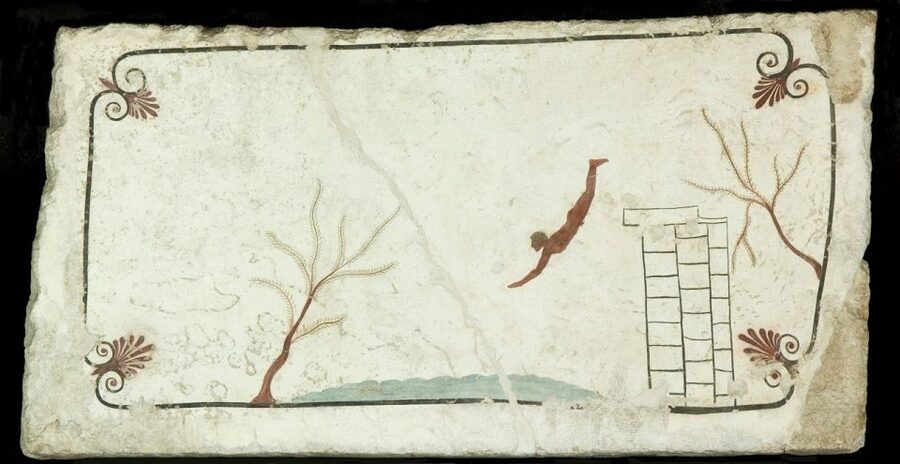
I like the private format and the archaeologist guide. You can ask questions, set a comfortable pace, and get help making sense of details that are easy to miss on your own. I also like the pairing of ruins and museum, especially the Tomb of the Diver and the painted tombs of Campania. The main drawback is simple: transportation, food, and drinks are not included, so you must reach the meeting point yourself.
Key points to know before booking
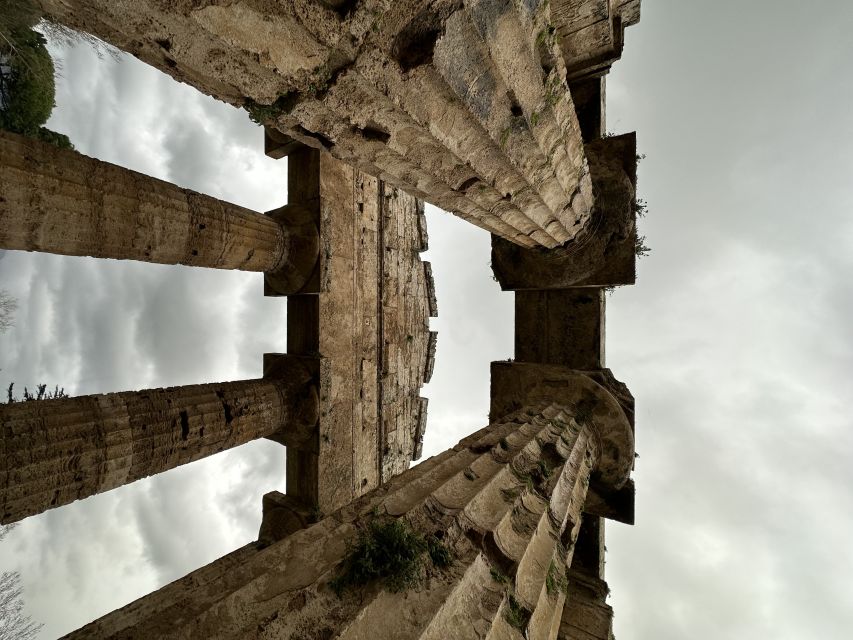
- Three Greek temples in one compact visit: See the Temple of Neptune, Temple of Ceres, and Basilica in the Archaeological Park of Paestum.
- A private archaeologist guide: The group format lets you ask questions and follow the subjects that interest you most.
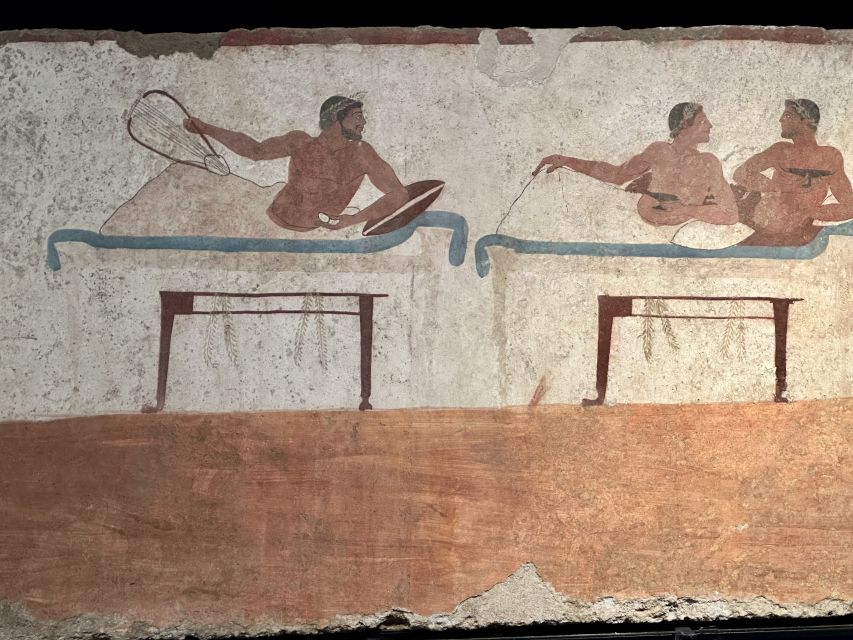
- The Tomb of the Diver: The National Archaeological Museum holds this famous painted tomb in excellent condition.
- Two connected parts: The tour combines outdoor ruins with indoor objects, temple decorations, and painted tombs.
- A 2-hour schedule: The visit is focused and efficient, though you will not have an entire day for the site.
- Meeting point at the museum: You meet at the entrance to the Archaeological Museum on Via Magna Graecia, 917.
Why Paestum feels different from other ancient sites
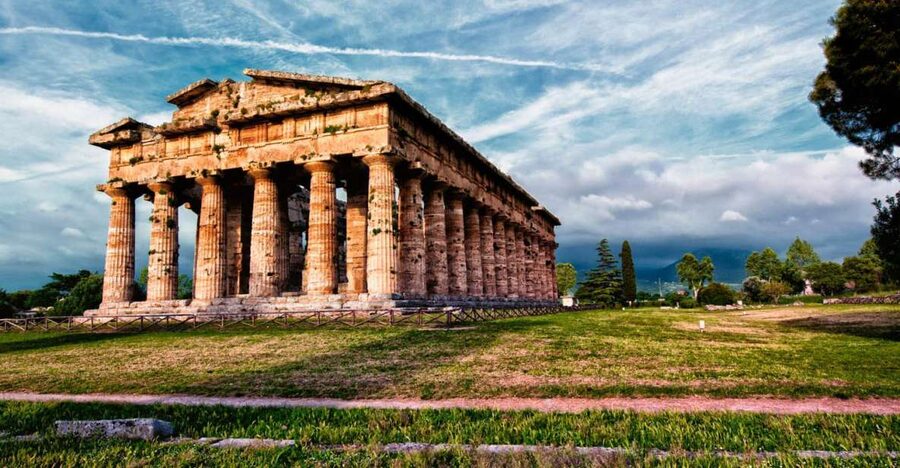
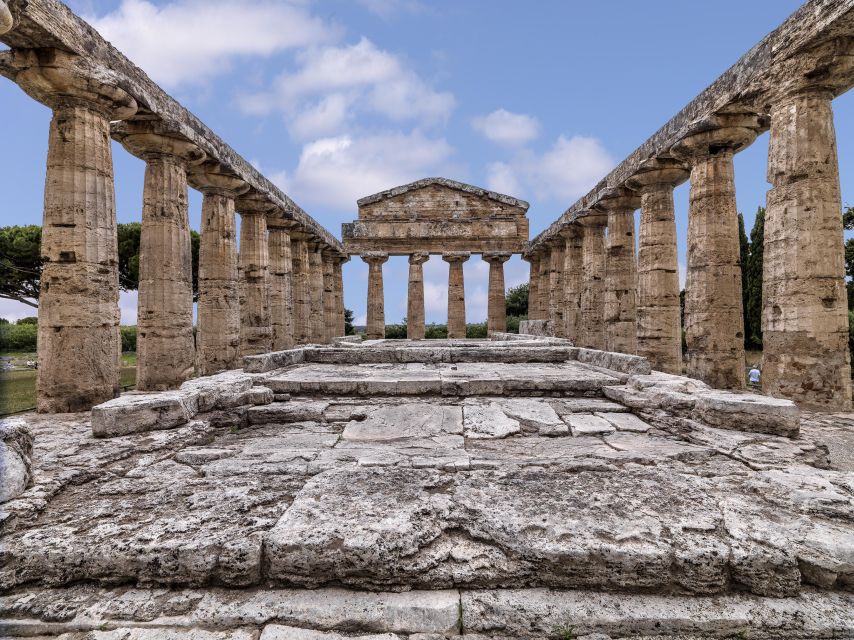
Paestum was a Greek city in southern Italy, and its religious buildings are the reason the place matters so much. The surviving Doric temples give you a clear look at Greek architecture on a scale that is hard to grasp from a textbook or a few scattered columns.
The site is also unusually useful for comparison. You do not see just one temple ruin and then move on. You see three major examples, each with its own shape and character, in the same archaeological park.
I find the combination especially rewarding because Paestum does not depend only on imagination. Many ancient sites require you to picture the building from a few broken stones. Here, the temples retain enough of their form to make the original design easier to understand.
That is where the guide matters. An archaeologist can explain what you are looking at, point out architectural details, and connect the buildings to the objects later displayed in the museum. Without that context, you may admire the columns but miss the larger story.
More Valley of the Temples Tours in Italy:
- Agrigento: Valley of the Temples Skip-the-Line Sunset Tour
★ 4.5 · 1,512 reviews - Palermo: Agrigento and the Valley of the Temples Day Tour
★ 4.2 · 1,240 reviews - Agrigento: Valley of the Temples Ticket & App Audioguide
★ 4.3 · 1,160 reviews
Starting at Via Magna Graecia, 917
The tour begins at the entrance to the Archaeological Museum of Paestum on Via Magna Graecia, 917. This is important to note when planning your day because transportation is not included.
You should arrive at the museum meeting point rather than expecting a hotel pickup or a transfer from another town. The activity also ends back at the same meeting point, which makes it easier to continue your day from Paestum after the tour.
The exact starting time depends on availability. Since the full experience lasts two hours, you can fit it into a wider Campania itinerary, but you should check the time before building in other plans.
The private group setup gives the experience a more personal feel than a large walking tour. The available guide languages are English, Italian, Spanish, and French. Named guides associated with this experience include Angelo, Angela, and Luciana, though the guide assigned to your booking can vary.
Walking through the Archaeological Park
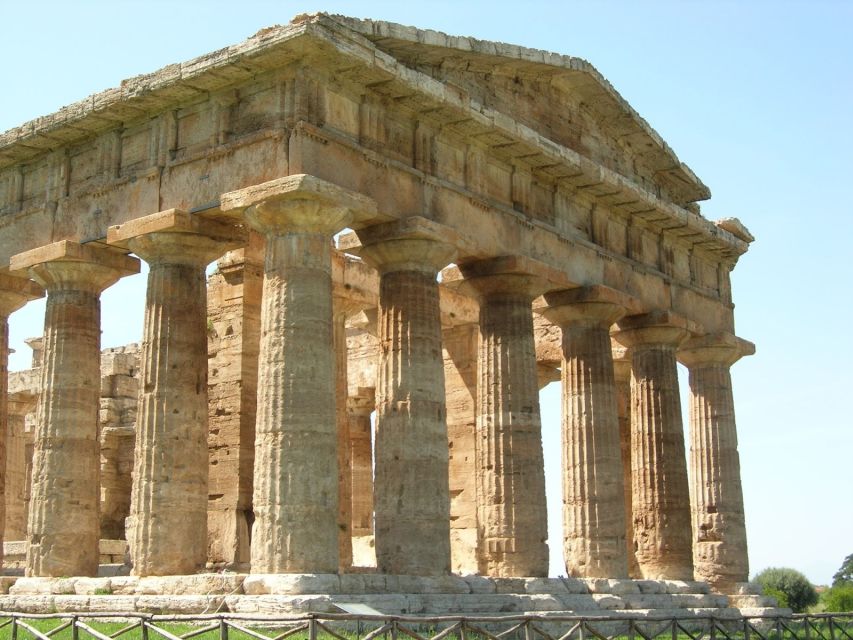
The first major part of the visit takes place outdoors in the Archaeological Park of Paestum. You walk along ancient streets and stop at the main temples with your guide.
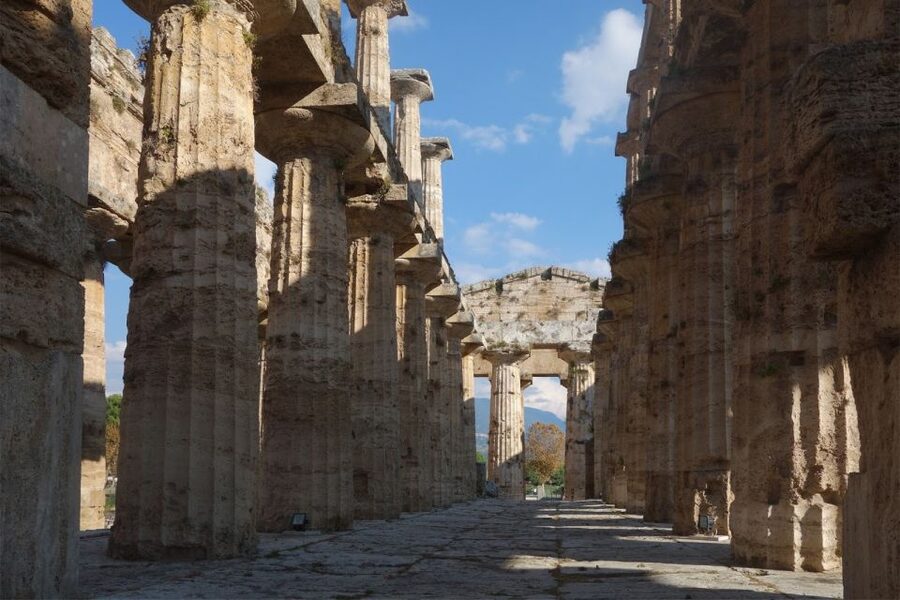
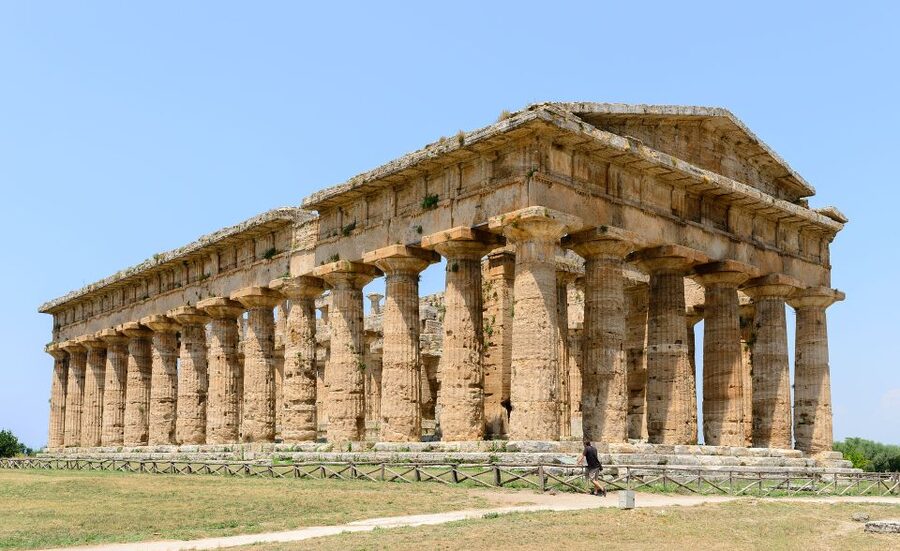
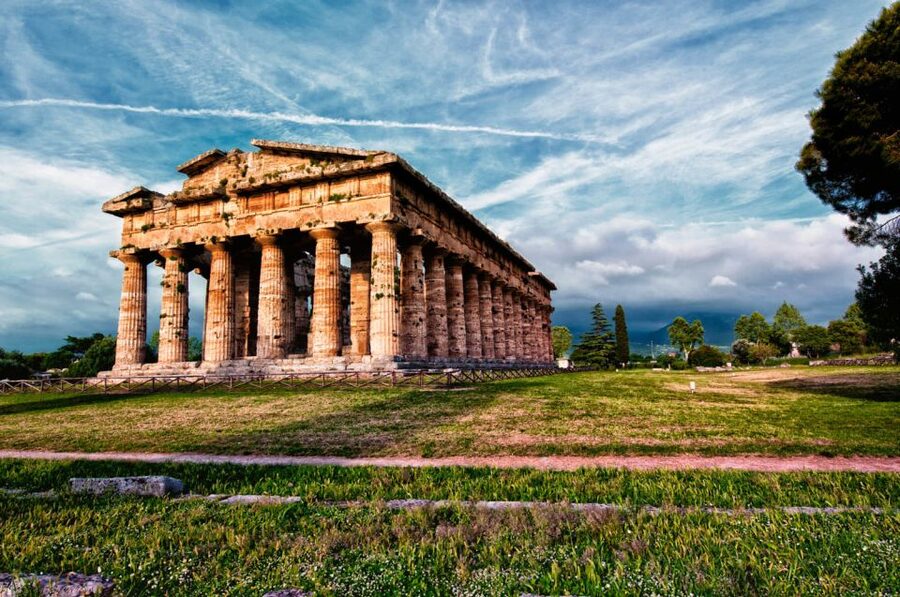
The park’s central attraction is the Temple of Neptune, one of the finest surviving Greek temples in southern Italy. Its Doric columns and strong proportions help you see how Greek builders created a sense of order using repeated shapes and careful spacing.
You then see the Temple of Ceres, another Doric building with its own place in Paestum’s religious history. The tour also includes the Basilica, an early name traditionally used for the building, which gives you a chance to compare its surviving form with the other temples.
I like this part of the experience because the buildings are not treated as isolated photo stops. Your guide leads you through the ancient setting and explains the religious architecture as a group. That makes the differences between the temples easier to notice.
The itinerary lists a photo stop as well as a guided visit. You will have time to appreciate the scale of the ruins and take pictures, but the two-hour schedule keeps the visit moving. If you want long periods for photography, sketching, or wandering alone, this tour may feel brisk.
The outdoor portion also means you should plan for the conditions of the day. The supplied information does not specify shade, seating, or weather arrangements, so practical preparation is wise. Wear comfortable shoes and bring whatever you normally need for an outdoor archaeological visit.
Reading the temples with an archaeologist
The best reason to book a guide here is not simply to identify the buildings. It is to understand why their design matters.
The temples are about 2,500 years old. That number is impressive, but a good explanation turns it from a label into a sense of time. Your guide can help connect the columns, layout, and surviving decorative pieces to the religious life of the ancient city.
Angelo is described as giving a strong introduction, answering questions, and keeping a pleasant pace. Angela is associated with a private visit marked by enthusiasm for history, while Luciana is praised for the information provided during the site visit. These details suggest the experience works best when you use the private format actively.
Ask questions. If you are interested in architecture, religion, archaeology, or the relationship between the temples and the museum, say so early. A private tour gives you a better chance of shaping the conversation than a large group visit.
The guide also helps with scale. Pictures often flatten ancient buildings into a row of columns. Standing near the temples, you can see how large the structures are and how much planning went into placing them within the city. The explanation gives those visual impressions a useful framework.
More Museum Visits in Italy:
- Paestum: Private Tour of Greek Temples and Archaeological Museum
★ 5.0 · 60 reviews - Paestum: 2-Hour Greek Temples & Archaeological Museum
★ 4.8 · 19 reviews - Montserrat Museum and Monastery Entry Ticket
★ 4.5 · 1,740 reviews - Lisbon: Belem, Jeronimos Monastery, and Coach Museum Tour
★ 4.8 · 478 reviews
Inside the National Archaeological Museum of Paestum
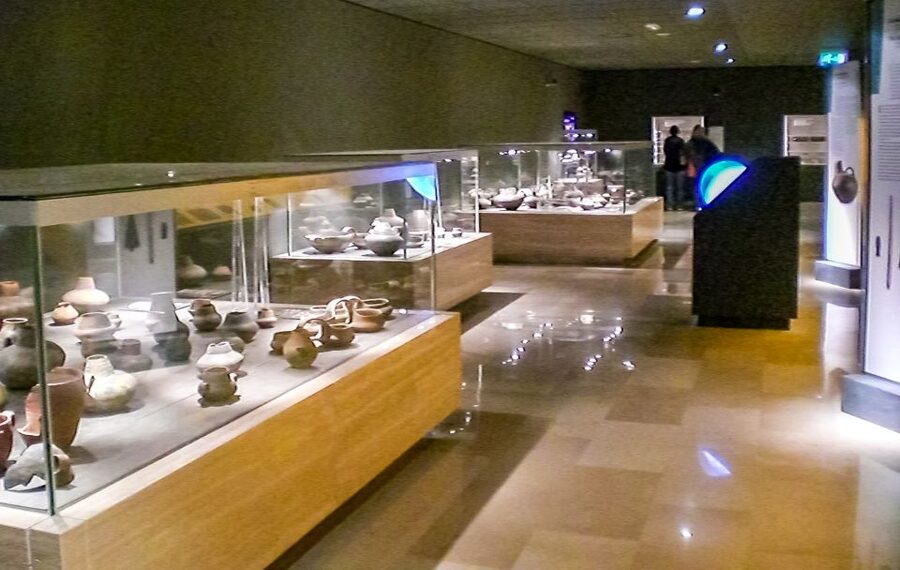
After the park, you visit the National Archaeological Museum of Paestum. This is not an optional extra or a quick stop at the end. It is the second half of the experience and fills in details that the outdoor ruins cannot provide.
The museum preserves important examples of Greek art, including objects that served as decoration for the temples. Seeing these pieces indoors helps you imagine how much more colorful and detailed the buildings may once have been.
You also see painted tombs from Campania. These works shift the focus from monumental architecture to burial customs and painted scenes. They add a more human scale to the visit, giving you evidence of the people and beliefs connected with the ancient city.
The museum’s main draw is the Tomb of the Diver, preserved in excellent condition. Its painted imagery is one of the most memorable parts of the collection. Even if you come primarily for the temples, I would not rush this section.
The museum visit also protects the experience from becoming a simple architecture tour. You begin with columns and ancient streets, then see the art and funerary material that help explain the culture behind them.
The value of the private format
The listed price is $260.56 for a private group of up to one person. Because the cost is attached to a private experience rather than a standard per-person group outing, the value depends heavily on how much you want personal guiding.
For a solo visitor, the price is a significant expense for two hours. You are paying for an archaeologist guide, skip-the-line entrance tickets, and a tailored visit rather than just access to Paestum.
For someone who wants expert interpretation, that can be worthwhile. The temples are visually clear but historically dense, and the museum contains objects that benefit from explanation. A private guide can make the same two hours more focused than an unstructured visit.
The price does not include transportation, food, or drinks. You need to arrange your own way to the museum entrance and plan any refreshments separately. That makes this a better fit for visitors already organizing their own route through Campania.
The included skip-the-line admission is also useful. It removes the need to handle the ticket queue yourself, though it does not remove the need to arrive at the correct meeting point at the right time.
How the two-hour schedule works
The experience is designed as a compact introduction rather than a full-day archaeological study.
You begin at the museum entrance, then move into the park for the temple visit and photo stop. After seeing the Temple of Neptune, Temple of Ceres, and Basilica, you return to the museum for the guided collection visit.
That structure is efficient. You get the famous outdoor sights first, then see the objects that add detail to what you have just encountered. The sequence also gives the museum more meaning than it might have if visited without the park.
The tradeoff is depth. Paestum contains enough material to reward a longer visit, but this experience gives you a concentrated route through its most important features. If you already know the site well or want time to study every display, you may want additional independent time before or after the tour.
I would choose this two-hour format if you want a clear introduction, have limited time, or prefer to see the highlights with a guide. I would be more cautious if you dislike fixed schedules or want to wander without a set route.
Who will enjoy this Paestum tour most
This experience suits you if ancient architecture interests you but you do not want to decode the site alone. It is also a good fit if you value questions and conversation more than a large group’s low price.
Families and mixed-interest groups may benefit from the guide’s ability to adjust the explanation and pace. A private format can help keep the visit engaging when not everyone in the group has the same background in archaeology.
It also works well for a first visit to Paestum. The guide gives you a starting point for understanding the park, while the museum introduces the objects and artwork connected with the temples.
You should think twice if you need transportation included, want food and drinks arranged, or prefer a long, unhurried day at the archaeological site. None of those services is part of the experience.
The tour is offered in English, Italian, Spanish, and French. Select the language that lets you ask detailed questions comfortably, since the guide’s explanation is a major part of the value.
Practical advice for making the most of it
Begin by checking the available start times and working backward from your transportation plans. Since the meeting point is the museum entrance and no transport is provided, allow enough time to reach Via Magna Graecia, 917.
Wear comfortable footwear for the outdoor park. The supplied details do not specify the walking surface or the amount of shade, so you should prepare for a normal archaeological-site visit rather than an indoor museum-only outing.
Keep a little attention in reserve for the museum. It is easy to spend all your energy on the temples, but the Tomb of the Diver and the painted tombs are central parts of the tour, not filler at the end.
Use the private setting to ask about the features you find most interesting. Angelo, Angela, and Luciana are each associated with clear explanations, good pacing, or enthusiasm for the subject, but your assigned guide may be different. Your questions can help make the visit more personal.
If you need to cancel, full refunds are available when you cancel at least 24 hours in advance. You can also reserve now and pay later, which is helpful when your Campania schedule is still taking shape.
Should you book this Paestum experience?
Book it if you want the main temples and museum in one well-organized visit, with an archaeologist to connect the architecture, art, and painted tombs. The private format, skip-the-line tickets, and choice of four languages make it especially appealing for solo visitors or small groups who value personal explanation.
Think carefully about the price if you are traveling alone and mainly want admission to the ruins. You will also need to arrange transportation and refreshments yourself.
My call: this is a strong choice for a focused first visit to Paestum. The Temple of Neptune, Temple of Ceres, Basilica, and Tomb of the Diver give you a full picture of why the site matters, while the guide keeps two hours from becoming a quick walk past old stones.
FAQ
Where does the Paestum tour begin?
You meet your guide at the entrance to the Archaeological Museum of Paestum, at Via Magna Graecia, 917.
Where does the activity end?
The tour ends back at the meeting point at the Archaeological Museum of Paestum.
How long does the experience last?
The tour lasts two hours.
What temples will I see?
You will visit the Temple of Neptune, the Temple of Ceres, and the Basilica in the Archaeological Park of Paestum.
Does the tour include the Archaeological Museum?
Yes. The experience includes a guided visit to the National Archaeological Museum of Paestum.
Will I see the Tomb of the Diver?
Yes. The museum visit includes the Tomb of the Diver, which is preserved in excellent condition.
Is transportation included?
No. Transportation is not included, so you must reach the museum meeting point yourself.
Are food and drinks included?
No. Food and drinks are not included.
What languages are available?
The live guide is available in English, Italian, Spanish, and French.
Can I cancel for a refund?
Yes. You can cancel up to 24 hours in advance for a full refund.
Newly written up around Italy
- Padre Pio’s Shrine in San Giovanni Rotondo from Bari (Apulia)★ 5.0 · 3 reviews
- Cooking Class in a former Artist Monastery in the Heart of Monopoli★ 5.0 · 18 reviews
- Agrigento Valley of the Temples Archaeological Area★ 4.0 · 33 reviews
- Agrigento to Siracusa with Valley of Temples and Roman Villa Trip★ 5.0 · 5 reviews
- Agrigento: Valley of the Temples Entry Ticket & Audio Guide★ 3.0 · 40 reviews
- Private transportation to the Valley of the Temples + Agrigento★ 5.0 · 8 reviews
- Rome: Temples, Squares & Markets Guided Walking Tour★ 4.8 · 26 reviews
- Rome underground hidden temples, ruins, and secret basilicas★ 3.7 · 21 reviews
Valley of the Temples Tours, compared.
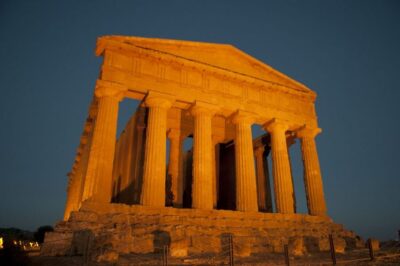
Valley of the Temples Skip-the-Line Sunset Tour
Read our review →
Agrigento and the Valley of the Temples Day Tour
Read our review →
Valley of the Temples Ticket & App Audioguide
Read our review →
Valley of the Temples and Scala dei Turchi Day Trip
Read our review →
Valley of the Temples and Turkish Steps with Snack
Read our review →
Valley of the Temples Entry Ticket & Audio Guide
Read our review →Browse the lists this tour appears in