
Reviewed · KATHMANDU TEMPLE TOURS
Pashupatinath: Evening tour of temple and Aarati ceremony
The most powerful part of this evening is the way life, death, and prayer share the same riverbank. At Pashupatinath, you see worshippers, priests, shrines, cremation ghats, and the Aarati ceremony in one setting. The sunset ritual brings oil lamps, chanting, and drums together beside the Bagmati River.
I like the private format, which gives you room to ask questions instead of being herded from shrine to shrine. I also like the timing: three hours is long enough for the temple complex and evening ceremony without turning the visit into an all-day commitment. The main consideration is that cremation rituals are solemn and may feel emotionally difficult, while the complex itself is not suitable for wheelchair users.
Key points to know before you go
- The evening Aarati is the centerpiece: Priests perform coordinated lamp rituals beside the Bagmati River as chanting and drums fill the air.
- Cremation ghats are part of the visit: You may witness funeral rites, so approach this part with quiet respect and care.
- Your group is private: You travel with an English-speaking guide and can ask questions throughout the three-hour visit.
- The price includes the basics: At $57 per person, transportation, entry fees, and the guide are covered.
- The setting is a living place of worship: This is not a quiet museum visit. Devotees and sacred rituals remain central to the experience.
- Plan around mobility limits: The activity is not suitable for wheelchair users.
Why Pashupatinath feels different at sunset
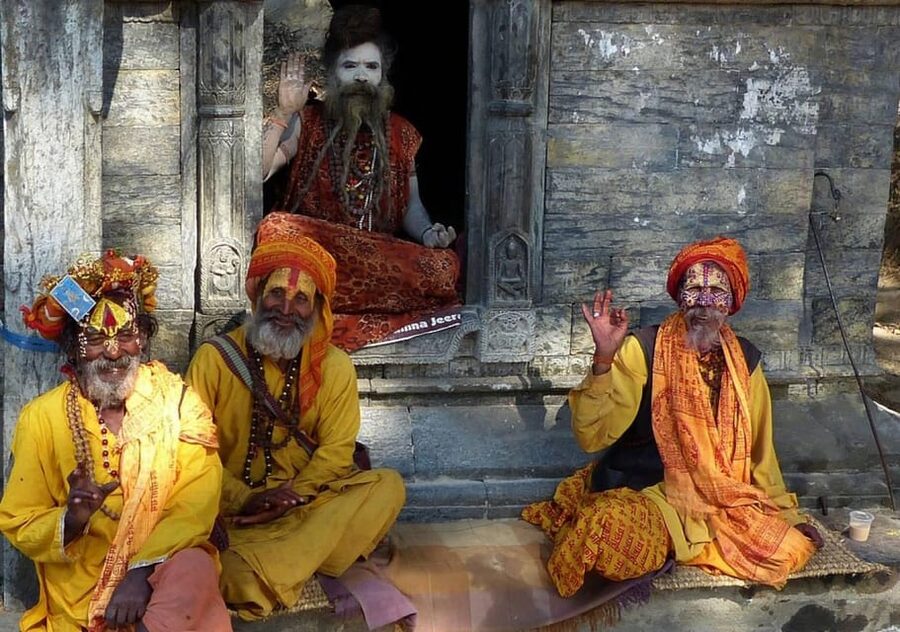
Pashupatinath is not simply an old monument that you inspect and leave behind. It is a working Hindu temple complex where prayer, ritual, family mourning, and daily religious life continue around you. That difference matters. You are not looking at a frozen piece of Nepalese history. You are watching a living practice.
The site is on the banks of the Bagmati River in Kathmandu. Its main temple has a pagoda-style design, a golden spire, and a sacred lingam associated with Lord Pashupatinath, a form of Lord Shiva. The surrounding grounds contain additional shrines and statues, each tied to religious stories and artistic traditions.
I find the late-day timing especially useful. The heat and glare of midday have passed, and the setting changes as the sun drops. Incense, bells, chanting, and the river create a strong sense of place before the main ceremony even begins.
Your English-speaking guide helps connect what you see with Nepalese customs and temple architecture. Since the group is private, you can pause to ask what a shrine represents or why a ritual is taking place. That flexibility is one of the best reasons to choose this format over a large shared outing.
Other temple visits near Kathmandu we have written up
- Kathmandu Spiritual Sites: Bodhnath & Pashupatinath Tour
★ 5.0 · 185 reviews - Kathmandu: Chandragiri Cable Car and Monkey Temple Tour
★ 4.8 · 139 reviews - From Kathmandu: 2 Stupas and Kopan Monastery Spiritual Tour
★ 4.8 · 115 reviews
Exploring the pagoda temple and surrounding shrines
The visit begins with the temple grounds and their distinctive architecture. The main Pashupatinath Temple draws attention with its pagoda form and golden upper section, but the wider complex is important too. Shrines, statues, and smaller sacred spaces give the site its character.
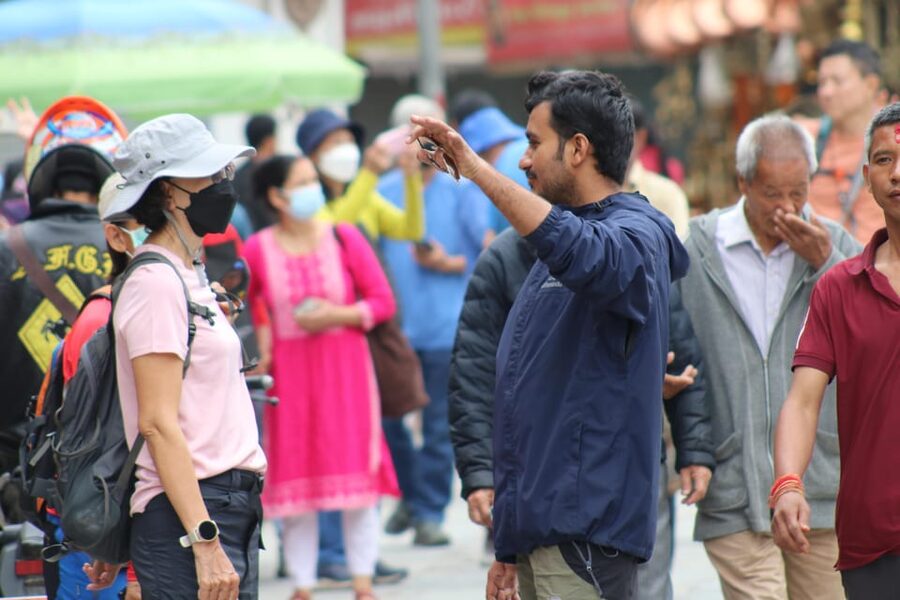
You will encounter devotees and pilgrims as well as other people observing the rituals. The sounds are part of the experience: bells ring, prayers are recited, and incense hangs in the air. This is not a place where you can expect museum-style silence or neatly separated exhibits.
I like having a guide here because religious architecture can be easy to admire without understanding. The guide can explain the role of the main temple, the meaning attached to Lord Pashupatinath, and the traditions connected with the objects around the complex. That context turns decorative details into something more meaningful.
The supplied experience description presents the main temple as the home of a sacred lingam. Access within a Hindu temple complex can vary by sacred area and local practice, so follow your guide’s instructions rather than assuming every interior space is open to everyone. The visit is about seeing the grounds, architecture, rituals, and cultural setting as a whole.
Allow yourself time to observe without rushing. You may notice how ordinary movement and formal worship happen side by side. Someone may be walking toward a shrine while another person pauses in prayer. Those small moments often explain the site better than a long historical speech.
The Bagmati River and the cremation ghats
The walk beside the Bagmati River is the most serious part of the tour. The ghats are cremation platforms, and families use them to say farewell to loved ones through solemn religious rites. Priests chant, relatives gather, and the ritual unfolds in a public setting shaped by long-held beliefs about death and rebirth.
You may find this confronting. That is not a flaw in the experience, but it is an important expectation to set before booking. This is not staged theater or a symbolic performance. It is a real funeral setting, and your role is to watch quietly and respectfully.
The riverbank also helps explain why Pashupatinath carries such importance. The temple, water, shrines, and cremation platforms are connected in one religious setting. The visit gives you a chance to think about how Nepalese traditions approach the end of life, rather than treating death as something kept out of public view.
I would choose this tour only if you are comfortable encountering a serious cultural practice. If you want a light evening of architecture and sightseeing, the ghats may feel too intense. If you want a direct look at religious life in Nepal, this is one of the most meaningful elements.
The guide is particularly useful here. You can ask questions about what you are seeing without interrupting the ceremony. Keep your attention on the setting and on the people involved, not only on getting a close view.
The Pashupati Aarati beside the river
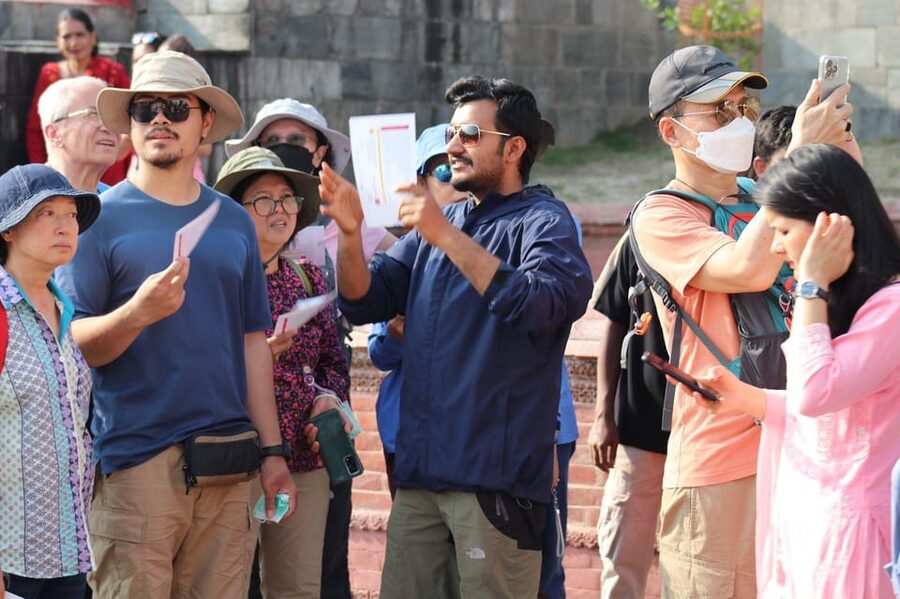
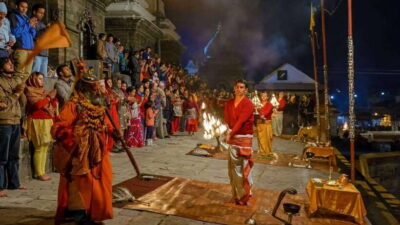
As sunset arrives, the focus shifts to the Pashupati Aarati. Priests in traditional clothing perform movements with oil lamps, known as diyas. Chants and drums accompany the ceremony, and the repeated gestures create a steady rhythm beside the river.
The Aarati is the emotional high point of the evening. Firelight takes over as daylight fades, and the sound of mantras gives the ceremony its shape. You are not just looking at architecture now. You are watching a shared act of worship.
I like the way this ceremony brings together several elements already present at Pashupatinath: the river, the temple, the priests, the music, and the community. The setting makes the ritual easy to remember because it is tied to a particular place and time.
A private tour can be helpful during the Aarati because your guide can explain what is happening before and after the ceremony. During the ritual itself, you should allow the ceremony to speak for itself. Quiet observation is usually more rewarding than constant questions or commentary.
The experience description also refers to a collective offering of prayers and reverence to Lord Pashupatinath. You can expect a shared religious atmosphere rather than a performance aimed only at sightseeing. That distinction is worth keeping in mind when deciding how to spend your evening.
A different set of gates, same trip:
- Lunch with Nuns – Monastery
★ 5.0 · 75 reviews - Kathmandu: Pashupatinath Temple Evening Aarati Tour
★ 5.0 · 36 reviews - Chandragiri Cable Car & Monkey Temple Tour- Private/Group
★ 5.0 · 32 reviews - Kathmandu: Pashupatinath Temple Aarti Night Tour
★ 4.8 · 29 reviews
What the three-hour timing gives you
Three hours is a practical length for this visit. It gives you enough time to approach the temple, examine the grounds, walk near the river, see the cremation ghats, and remain for the evening Aarati. You get a full visit without giving up an entire day in Kathmandu.
The exact starting time depends on availability, so check the schedule when you book. Since the ceremony takes place at sunset, timing matters more here than it would on a standard daytime temple walk. Arriving too early could mean extra waiting, while arriving too late could cut short the temple portion.
All transportation is included. That is useful in Kathmandu, where arranging a short evening ride can add hassle, especially when you need to reach the site at a particular time. Entry fees are included as well, so the $57 price is easier to judge as one combined cost rather than a tour fee followed by several small payments.
The private group is another part of the value. You are paying more than you might for a large shared walk, but you receive transportation, entry, and an English-speaking guide in a more personal setting. For a first visit to a complex with religious customs and sensitive rituals, that can be a fair trade.
The experience also offers reserve now and pay later booking, along with free cancellation up to 24 hours in advance for a full refund. Those terms are useful if your Kathmandu schedule may change. They do not change the character of the visit, but they reduce the risk of committing too early.
The emotional side of this cultural visit
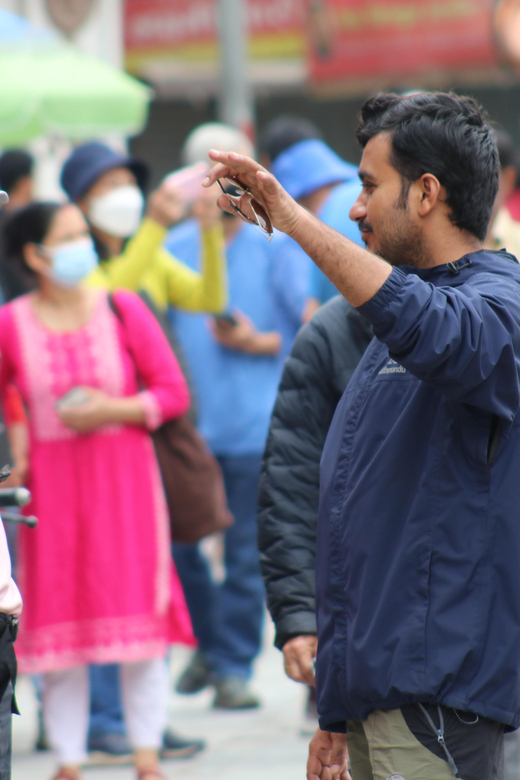
The strongest praise attached to this experience centers on its spiritual quality and the care of the guide. One account describes seeing a funeral and the ceremony by the holy river as an experience that changed the way the writer thought about death, life, and reincarnation. That is a strong reaction, but it fits the setting.
You should not expect the same personal response. Religious sites affect people differently, and the ceremony may feel moving, unfamiliar, or difficult to interpret. The value comes from being present with an open mind and recognizing that the rituals are meaningful to the people taking part.
A small comfort mentioned in connection with the visit is tasty cha. A cup of tea can be welcome during an evening spent watching a serious ceremony, though the formal inclusions list does not identify refreshments as a guaranteed part of the tour. Treat it as a possible detail, not a reason to book.
The overall experience has earned a 5 out of 5 rating from three verified bookings, with comments describing it as a very good visit, a spiritual experience, and a fantastic experience. The sample is small, so I would not treat the score as a guarantee. Still, the praise points to the same qualities that define the tour: the ceremony, the setting, and the guide’s attentive manner.
Who should book this Pashupatinath tour
I would recommend this experience to you if you want more than a quick photograph of a famous Kathmandu temple. It suits people interested in Hindu worship, Nepalese architecture, religious customs, and the way a community handles death and remembrance.
It is also a good match if you prefer a private group. You can ask questions at your own pace, and the English-speaking guide can help you understand the customs around the shrines and river. The included transport makes the evening easier to manage.
Families and couples should think honestly about the cremation ghats before booking. The sight of funeral rites may be too heavy for some children or for anyone who wants a purely scenic evening. The activity is also not suitable for wheelchair users, so mobility needs should be considered before reserving.
You do not need to be Hindu to find value here. The tour presents a chance to observe a major religious center with guidance and respect. You do need to accept that worship and mourning come before sightseeing.
Is $57 a fair price?
At $57 per person, the tour is not the cheapest way to see Pashupatinath, but the price covers transportation, entry fees, and an English-speaking guide. It also gives you a private group and a three-hour evening program centered on the Aarati.
That combination makes the price reasonable for someone who values convenience and explanation. You are not paying only for a ride to a temple. You are paying for a timed visit that includes the riverbank, the ghats, and the sunset ceremony, with someone available to put the setting into context.
The value is weaker if you only want to take a quick look from outside or if you already know the complex well. It is also a less suitable purchase if you are uncomfortable with public funeral rites. The cost is easiest to justify when you want a focused cultural experience and do not want to arrange transport, tickets, and timing yourself.
Should you book it?
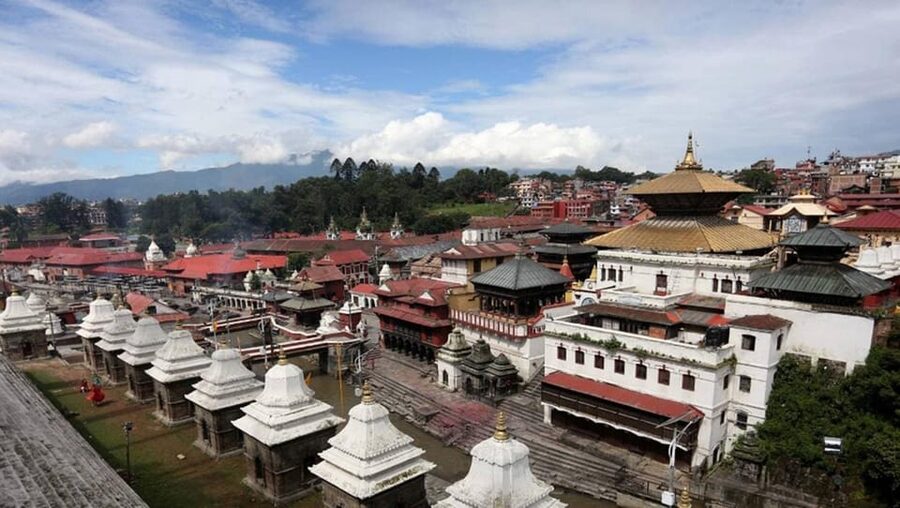
Book this tour if you want an honest look at Pashupatinath as a place of worship, mourning, and community life. The private format, included transport, and evening Aarati make it a practical choice for a first visit, while the guide can help you approach the shrines and cremation ghats with proper context.
Skip it if you want a casual sightseeing stop, need wheelchair access, or would rather avoid funeral rituals. For the right visitor, the strongest memory will probably be the lamps and chanting beside the Bagmati River, but the cremation ghats are an equally important part of what makes this visit serious and authentic.
FAQ
How long does the Pashupatinath evening tour last?
The tour lasts three hours.
What does the $57 price include?
The price includes transportation, entry fees, and an English-speaking guide.
Is the tour private?
Yes. The activity is arranged for a private group.
What language does the guide speak?
The live guide speaks English.
Will I see the Pashupati Aarati ceremony?
Yes. The evening visit includes the Pashupati Aarati, with priests, oil lamps, chanting, and drums beside the river.
Does the tour include cremation rituals?
Yes. The visit takes you near the Bagmati River ghats, where you may witness cremation ceremonies and related funeral rituals.
Is the tour suitable for wheelchair users?
No. The activity is not suitable for wheelchair users.
Newly written up around Kathmandu
- Sacred Pashupatinath: Aarati,Cremation Rites & Boudha Stupa★ 5.0 · 18 reviews
- Kathmandu: Pashupatinath Temple Evening Aarati Tour★ 4.7 · 11 reviews
- Kathmandu: Pashupatinath Temple Aarti Night Tour★ 4.8 · 29 reviews
- Kathmandu: Pashupatinath Temple Evening Aarati Tour★ 5.0 · 36 reviews
- Kathmandu: Chandragiri Cable Car and Monkey Temple Tour★ 5.0 · 9 reviews
- Kathmandu: Guided Walking Tour with Monkey Temple★ 5.0 · 18 reviews
- Pokhara: Pagoda, Waterfall & Cave – Private Short Trip★ 3.9 · 3 reviews
- Chandragiri Cable Car & Monkey Temple Tour- Private/Group★ 5.0 · 32 reviews
Kathmandu Temple Tours, compared.
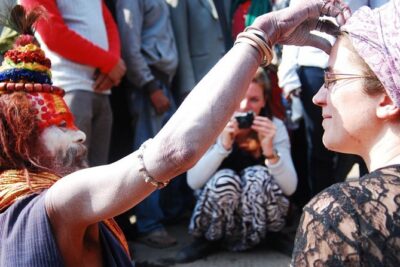
Kathmandu Spiritual Sites: Bodhnath & Pashupatinath Tour
Read our review →
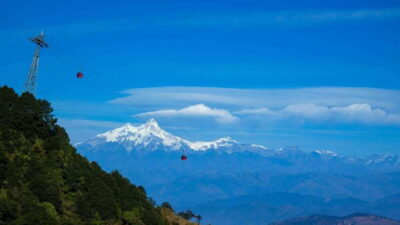
Chandragiri Cable Car & Monkey Temple Tour- Private/Group
Read our review →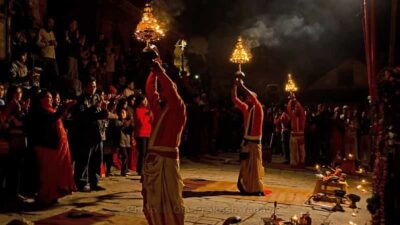
Browse the lists this tour appears in