
Reviewed · NEPAL TEMPLE TOURS
Pokhara in 5 Hours: Lake, Museum, Cave, Falls & Pagoda Hill
Pokhara packs a surprising amount into a small outing: a lake temple, a mountaineering museum, a waterfall, a cave, and a hilltop pagoda. This private five-hour tour gives you a quick but useful first look at the city without tying you to a large group.
I like the efficient route and the chance to have a driver-guide such as Pujan Thapa or Bidur adjust the pace. I also like that the sights offer variety: you move from Hindu worship and mountain culture to underground passages and broad Himalayan views.
The main catch is that entrance fees are not included, and five hours leaves little room for lingering. The Peace Pagoda also involves roughly 200 steps, so the schedule may feel brisk if you need extra time on hills or at the attractions.
Five useful things to know before booking
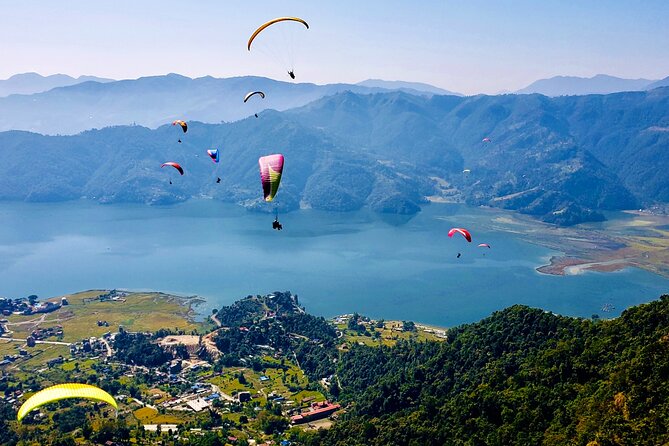
- Five major sights in roughly five hours: The schedule covers Barahi Temple, the International Mountain Museum, Devi’s Fall, Gupteshwor Cave, and the Peace Pagoda.
- A private vehicle and driver-guide: Only your group participates, giving you more control than a shared sightseeing bus.
- Barahi Temple requires a boat ride: The temple sits on a small island in Fewa Lake, so your visit begins with time on the water.
- Entry fees are extra: Bottled water, transport, and the driver-guide are included, but attraction tickets and personal expenses are not.
- The Peace Pagoda involves uphill effort: One guide patiently helped a visitor manage about 200 steps, a useful warning for anyone with limited stamina.
- Guides can add practical value: Pujan Thapa was praised for knowing the museum well, including locating George Mallory’s photograph, while Bidur was noted for making the day especially enjoyable.
A quick way to get your bearings in Pokhara
At $40 per person, this tour is best understood as a compact orientation rather than a full study of Pokhara. You get private transport, bottled water, and a driver who also serves as your guide. That matters in a city where the sights are spread across different parts of town.
The format suits you if your time is short, you have just arrived in Pokhara, or you want a simple overview before choosing where to return on your own. It also works well for a private group that prefers not to wait for strangers or follow a fixed large-coach schedule.
The advertised duration is four to five hours. That is enough to visit all five stops, but not enough for long museum reading, a leisurely lake outing, a relaxed meal, and extended photography at every point. One person did manage to add shopping, a visit to Helping Hands, and lunch on a hilltop, but that appears to have depended on the day’s timing and the guide’s flexibility rather than being part of the standard route.
More Museum Visits in the world:
- Montserrat Museum and Monastery Entry Ticket
★ 4.5 · 1,740 reviews - Lisbon: Belem, Jeronimos Monastery, and Coach Museum Tour
★ 4.8 · 478 reviews - From Sofia: Rila Monastery and Optional Museum, Cave or Spa
★ 4.6 · 270 reviews
Barahi Temple and the first look at Fewa Lake
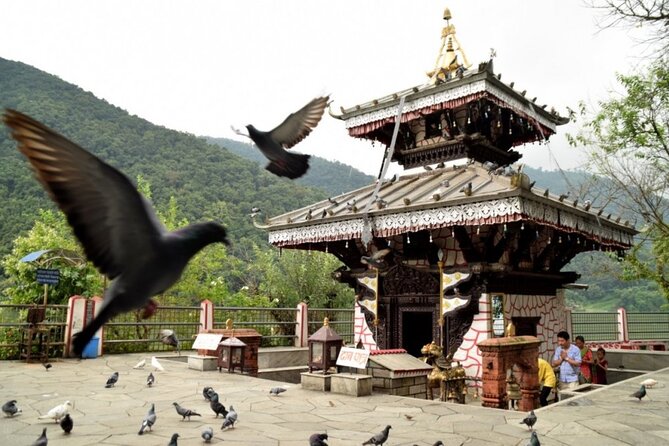
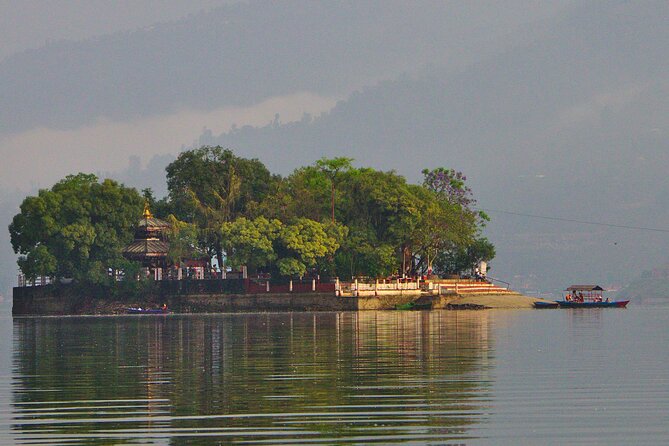
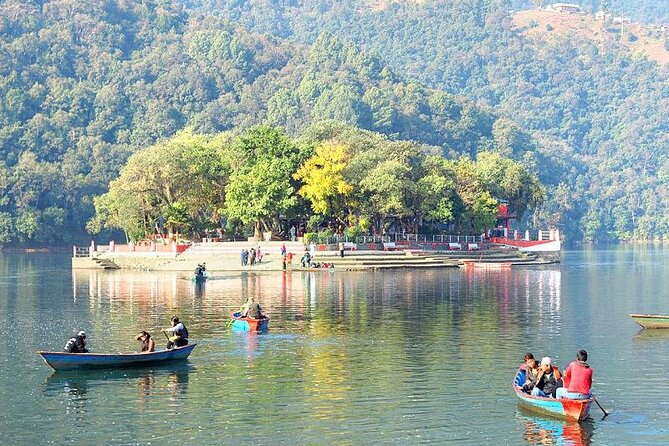
Your first stop is Tal Barahi Temple, also called the Lake Temple. It sits on a small island in Fewa Lake and is dedicated to Barahi, a form of the Hindu goddess Durga. The setting gives this stop more character than a standard roadside temple visit.
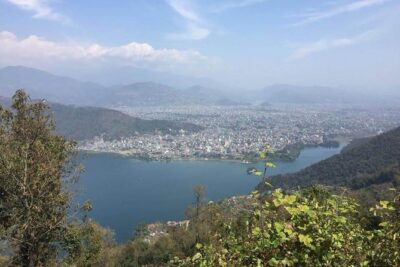
The boat ride is part of the appeal. You cross a short stretch of the lake to reach the temple, with the water and surrounding hills providing a gentle start to the outing. On a clear day, you may also get views toward the Annapurna range, one of the reasons Fewa Lake is such a central part of Pokhara’s identity.
The planned visit lasts about 45 minutes, and admission to the temple is listed as free. That time should allow for the boat transfer, a look around the island, and a few minutes to take in the lake. It is not a long cultural lecture or a detailed religious tour, so ask your guide questions if you want more context.
This is also a useful place to settle into the private-tour rhythm. You are not being rushed through a string of photo stops immediately. Instead, the day begins with water, worship, and a little breathing room before the more structured museum and cave visits.
International Mountain Museum and Nepal’s climbing story
The International Mountain Museum is the most substantial indoor stop. Plan on about one hour, and remember that the admission fee is extra. The museum focuses on mountain culture, mountaineering, and the history of climbing in Nepal and beyond.
This stop gives the whole outing some depth. Pokhara is more than a scenic base for mountain trips, and the museum helps explain the people, equipment, expeditions, and communities connected with the Himalayas. If you have an interest in climbing, trekking, or exploration, this will likely be the most informative part of the day.
A strong guide can make a real difference here. Pujan Thapa was praised for knowing the displays well and for taking a visitor directly to George Mallory’s photograph. That sort of detail is valuable because a museum can otherwise become a quick walk past glass cases. If your driver-guide has similar familiarity with the collection, ask about the people and objects that catch your eye.
The museum also offers mountain views from its terrace, adding an outdoor pause after the exhibits. Do not count on perfect visibility, since mountain views depend on conditions, but the terrace gives you a chance to connect the museum’s subject with the actual peaks beyond Pokhara.
One hour is a reasonable compromise. You can see the main displays without turning the tour into a museum-only morning. If you read every panel carefully, you may want more time, but the rest of the route depends on keeping this stop close to its planned length.
Devi’s Fall, where the water disappears underground
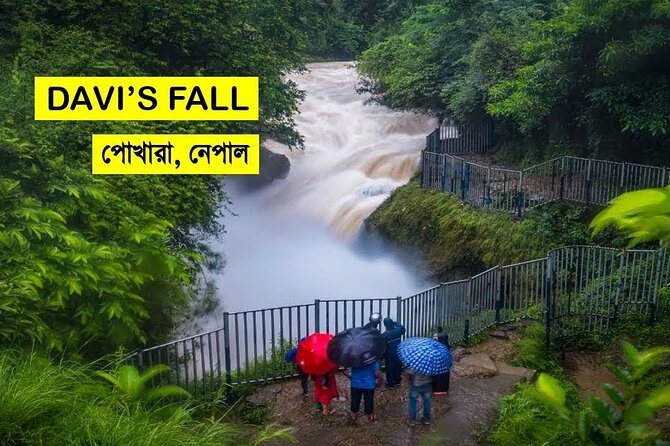
Devi’s Fall is a dramatic change of scene. Water drops into a channel and then passes through a tunnel below ground. The tunnel is described as roughly 500 feet long and about 100 feet below the surface, which explains why the waterfall feels more unusual than a simple cascade viewed from a path.
You have about 45 minutes here. That should give you time to see the falls, take photographs, and listen to your guide explain how the water continues underground. The exact appearance can vary with water levels, so the attraction may feel more forceful at some times than others.
Take care around wet or uneven areas and follow the marked viewing points. The tour information does not promise a long walk or extensive time at the site, so think of this as a focused stop rather than a nature hike.
I like the contrast with the lake and museum. At Fewa Lake, the water is broad and open. At Devi’s Fall, it gathers speed and vanishes into rock. That change keeps the five-hour route from feeling like a repetition of viewpoints.
Other temple visits near the world we have written up
- Lisbon: Jerónimos Monastery Entrance Ticket
★ 4.1 · 14,164 reviews - Angkor Wat Sunrise or Sunset Tour with Guide from Siem Reap
★ 5.0 · 12,109 reviews - Teotihuacan, Guadalupe Shrine & Tlatelolco Day Tour with Lunch
★ 5.0 · 11,603 reviews - From Bangkok: Ayutthaya Temples Guided Tour with Lunch
★ 4.7 · 10,535 reviews
Gupteshwor Cave and the route beneath the falls
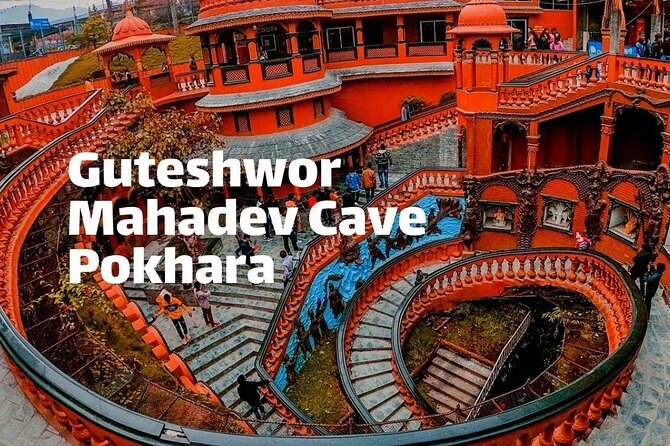
Gupteshwor Mahadev Cave sits opposite Devi’s Fall, making this one of the most practical pairings on the tour. The water from the falls passes through the cave, linking the two stops in a way that is easy to understand once you are underground.
The cave is also a Hindu religious site, with Gupteshwor Mahadev connected to the worship of Shiva. It has a darker, more enclosed feel than the open waterfall area. You can expect a short underground visit lasting about 45 minutes, with time to see the passages and religious features.
This stop may not suit everyone equally. Caves can be damp, dim, or physically awkward, and the available information does not specify the exact surface conditions or number of stairs. If enclosed spaces are difficult for you, tell the driver-guide before entering so you can make a sensible choice.
The pairing works well because you do not lose time crossing town between related sights. After watching water disappear at Devi’s Fall, you see the underground setting it passes through. That gives the route a simple thread rather than making each attraction feel random.
The Peace Pagoda and the final uphill push
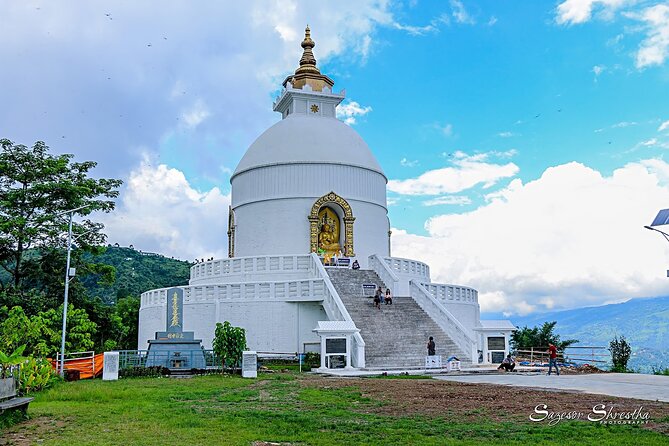
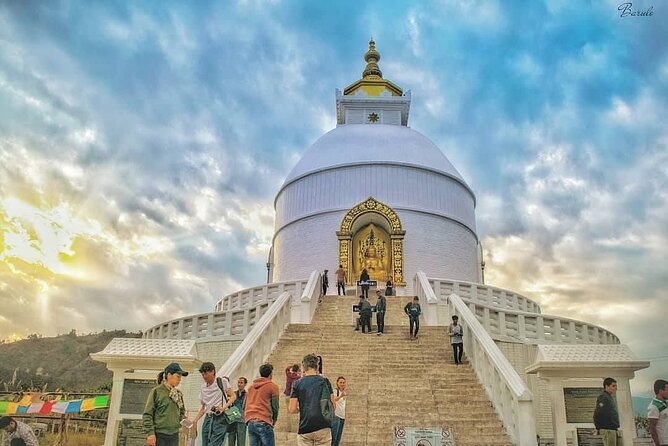
The Pokhara Shanti Stupa, or Peace Pagoda, is the day’s big viewpoint. It sits on Anadu Hill, above the city, and was built as a Buddhist monument promoting world peace. From the hilltop, you can look across Pokhara toward the Annapurna range when the weather allows.
The visit is planned for about 45 minutes, with no admission fee listed. That is enough for the monument, photographs, and a short pause to absorb the view. The hilltop setting makes this a strong final stop, since you end by looking back over the city rather than returning to street level for another enclosed attraction.
The effort is worth planning for. One guide was praised for patiently helping with the roughly 200 steps to the pagoda. That detail tells you more than a vague fitness warning: the climb can be manageable, but it is not a flat stroll.
Wear comfortable shoes and keep your pace steady. If you need frequent rests, the private format gives you a better chance of taking them than a large group would. Still, do not assume the driver can add a long break without affecting the other stops.
The Peace Pagoda is also where the tour’s short schedule can feel most noticeable. You may want to stay longer for the mountain views, especially if the sky is clear. If photography is your main goal, discuss the timing with your driver at the start.
How the private vehicle changes the day
The tour includes an air-conditioned vehicle, private transportation, bottled water, and a driver-guide. The vehicle is not just a way to get from one sight to the next. It gives you a place to cool off between stops and avoids the uncertainty of arranging separate taxis across Pokhara.
A private tour also lets you ask for small adjustments. Pujan Thapa was described as punctual, courteous, patient, and flexible. Bidur was also singled out for making the day enjoyable. Those qualities matter because a five-hour route can feel either smooth or hectic depending on how the driver handles transitions.
Do not expect a specialist museum lecturer or a full-time cultural guide based on the tour description. Your guide is also your driver, so the level of explanation may vary by person. The named guides received especially strong praise for their local knowledge and attitude, but you cannot guarantee a particular guide unless the company confirms one in advance.
There is room for a short shopping stop or lunch only if the day runs efficiently and your driver agrees. One outing included a detour to Helping Hands, a place selling quality goods made by people with disabilities, followed by lunch on a hilltop. Treat this as a possible extra, not a promised part of the route.
What the $40 price really covers
The $40 price is reasonable if you value a private vehicle and a compact route through several major Pokhara sights. Paying for five separate transfers would take more planning, and a private driver gives you an easier day than piecing the route together yourself.
The price does not cover entry tickets or personal expenses. That distinction matters because you should budget beyond the advertised rate for the museum, Devi’s Fall, Gupteshwor Cave, and any other paid attraction on the day. The temple and Peace Pagoda are listed with free admission.
You also need to account for a guide tip if you choose to give one. That is not included, and it is worth keeping some cash available if your driver provides extra help with timing, the museum, the climb, or a flexible detour.
For a solo visitor, $40 can feel less like a bargain than it would for two or more people sharing a private vehicle. For a couple, family, or small group, the value improves because the price is per person while the transport is private. Group discounts are offered, though the exact discount is not specified.
The 4.4 rating from 16 ratings suggests a generally positive experience, but the sample is small. I would put more weight on the repeated praise for punctuality, courtesy, flexibility, and the ability to cover five sights without feeling rushed.
Who will get the most from this Pokhara tour
This outing is a good match for you if:
- You have only half a day in Pokhara.
- You want to see several headline sights without arranging transport yourself.
- You prefer a private vehicle to a shared group.
- You enjoy a mix of religion, mountain culture, water, caves, and viewpoints.
- You want a driver who can offer local explanation and practical help.
- You are comfortable with a brisk schedule and some walking.
It is less suited to you if you want a slow lake morning, a long museum visit, or a full day at the Peace Pagoda. It may also be a poor fit if stairs, caves, or uneven walking are serious concerns.
Most people can participate, and service animals are allowed. The tour is near public transportation, but the main benefit is that you do not need to rely on it during the outing.
Booking, cancellation, and practical details
Confirmation is provided at the time of booking, and mobile tickets make it easy to keep the reservation available on your phone. Pickup is offered, though the supplied details do not specify the exact pickup area or time, so confirm those points before the day begins.
Free cancellation is available if you cancel at least 24 hours before the experience starts. Cancellations within 24 hours are not refunded, and changes inside that period are not accepted. Cutoff times follow local time in Pokhara.
The tour is operated by Linkage Tours & Travels. It is a private activity, so only your group participates. That gives you more privacy and makes the schedule easier to manage, but it also means the quality of the day depends heavily on the driver-guide assigned to you.
Should you book it?
Book this tour if you want a practical first look at Pokhara and have about five hours to spare. The route is well chosen: Fewa Lake and Barahi Temple provide a calm beginning, the museum adds context, Devi’s Fall and Gupteshwor Cave bring variety, and the Peace Pagoda finishes with a view.
I would book it especially for a couple, family, or small group that wants private transport and does not mind paying attraction fees separately. Ask in advance about the pickup point, expected entry costs, and whether a guide such as Pujan Thapa or Bidur is available.
Skip it if your priority is slow travel. In that case, visit the museum and Peace Pagoda on separate outings, or spend a longer stretch by Fewa Lake. For a compact introduction, though, this is a sensible way to get your bearings and see much of Pokhara in one half-day.
FAQ
How long does the Pokhara tour last?
The tour lasts approximately four to five hours.
What sights are included?
The route includes Barahi Temple at Fewa Lake, the International Mountain Museum, Devi’s Fall, Gupteshwor Mahadev Cave, and the Peace Pagoda.
Is transportation included?
Yes. The tour includes private transportation in an air-conditioned vehicle, along with pickup service.
Is the tour private?
Yes. Only your group participates in the activity.
Are entrance tickets included in the price?
No. Entry tickets are not included. Personal expenses are also separate.
Is the boat visit to Barahi Temple included?
The itinerary includes a visit to Barahi Temple, which is located on a small island in Fewa Lake and is reached by boat. The tour information does not state a separate boat fee.
Is the Peace Pagoda free to enter?
The Peace Pagoda is listed with free admission. Reaching it involves a hill climb and roughly 200 steps.
What is the cancellation policy?
You can receive a full refund if you cancel at least 24 hours before the start time. Cancellations or changes made within 24 hours are not accepted for a refund.
Newly written up around the world
- Kyoto: Fushimi Inari Taisha Shrine Walking Tour with Guide★ 4.8 · 18 reviews
- Xi’an: Terracotta Army, Lunch, City Wall, Pagoda, Bazaar★ 5.0 · 72 reviews
- Varanasi in a Day Ancient Temples Sarnath and Ghats★ 5.0 · 17 reviews
- Hidden Corners of Varanasi Secret Alleys Temples and Traditions★ 5.0 · 9 reviews
- Terracotta Army, Big Wild Goose Pagoda&City Wall Full Day Tour★ 4.5 · 47 reviews
- Xi’an: Daci’en Temple(Great Wild Goose Pagoda) E-ticket★ 3.3 · 57 reviews
- Bangkok: Grand Palace and Wat Arun Guided Walking Tour★ 4.5 · 118 reviews
- Ex-monk city & temples walking tour: (3.5 hours / 1.7 km.)★ 4.8 · 35 reviews
Nepal Temple Tours, compared.
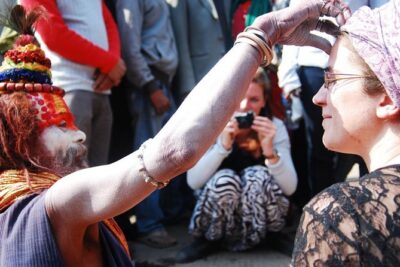
Kathmandu Spiritual Sites: Bodhnath & Pashupatinath Tour
Read our review →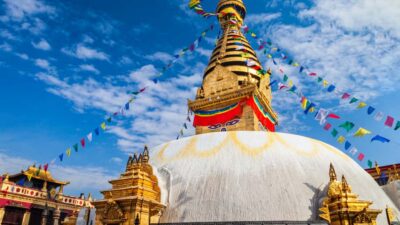
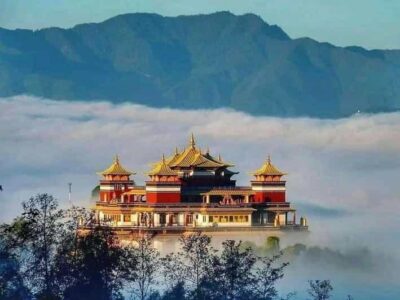
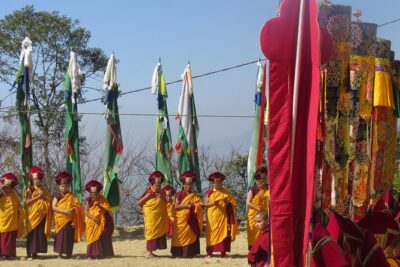
Day Hiking from Sarangkot to World Peace Stupa from Lakeside
Read our review →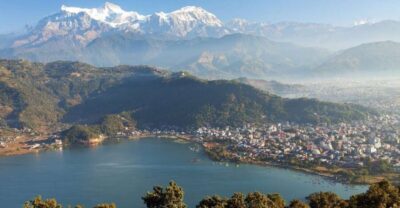
From Lakeside: Pokhara Private Day Tour with Pagoda Hills
Read our review →
Golden Hour at Peace Pagoda – Himalayan Sunset Tour
Read our review →Browse the lists this tour appears in