
Reviewed · ROME TEMPLE TOURS
Rome: Tour of St. Clement’s Basilica Underground Temples
The most startling thing about San Clemente is not the church above ground. It is the Roman world buried below it. You descend 14 meters through layers of worship, homes, blocked streets, and flowing water, ending at one of Rome’s best-preserved Mithraic temples.
I like the way the guide connects the golden apse mosaic to the buildings below, then explains how Christianity took root over older Roman beliefs. I also like the rare quiet feeling here. San Clemente is close to the Colosseum, yet its underground rooms feel far removed from Rome’s usual crowds.
The main consideration is physical. The stairs and low underground spaces make this unsuitable for wheelchair users and potentially uncomfortable if you dislike enclosed rooms. The optional Santo Stefano Rotondo visit adds excellent art, but its martyrdom scenes are graphic and may not suit young children.
Key points at a glance
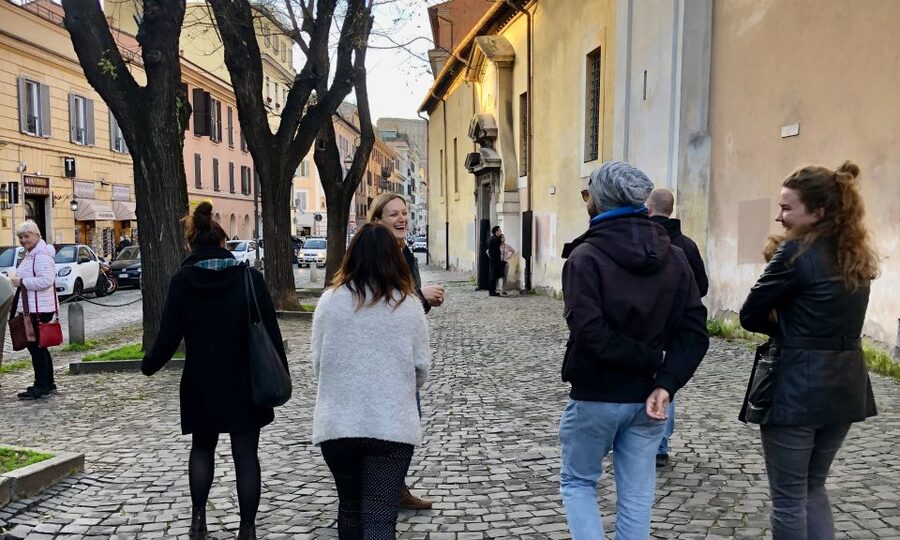
- Four layers of Rome: Move from the 12th-century basilica to a fourth-century church, an earlier Roman house, and a Mithraic temple.
- A real underground river: Water runs through the lowest level, adding an eerie, tangible sense of the ancient site.
- Early Christian art: See frescoes linked to martyrdom, persecution, and the first centuries of Christian worship.
- A guide makes the difference: Guides such as Francesca, Lorenzo, Paul, Anestis, and Tom have been especially praised for clear explanations and lively storytelling.
- Optional Santo Stefano Rotondo: Add 45 minutes for a circular church and stark scenes of Christian martyrdom.
- Practical limits: Comfortable shoes are essential. Photography and video are not allowed inside, and the underground route is not wheelchair accessible.
Why San Clemente feels like Rome’s archaeological lasagna
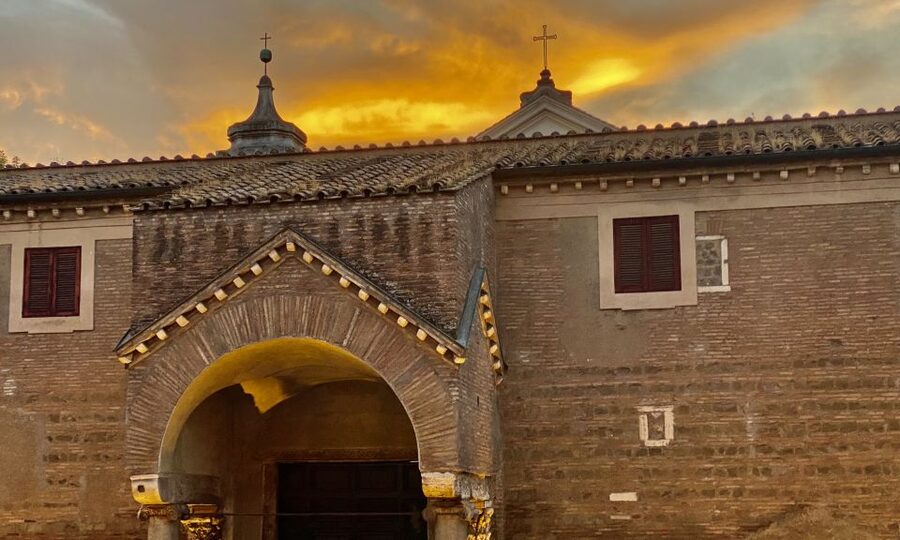
Rome is often described as a city built in layers, but San Clemente lets you walk through those layers one by one. The present church dates from the 12th century. Beneath it sits a fourth-century Christian basilica, and below that are Roman structures from an earlier age, including a Mithraic shrine.
That arrangement gives the visit a strong sense of time passing. You are not simply looking at ruins behind glass. You are standing in spaces that were altered, abandoned, filled in, and built over as Rome changed its religious life.
I find this more rewarding than a quick look at another grand church. The scale is modest, but the story is unusually concentrated. In less than two hours, you move from medieval Christian symbolism to the first centuries of Christianity, then to a pagan cult that once operated in secretive rooms beneath the Roman city.
A guide is important here. Many of the rooms are dim, the archaeological remains are not always obvious, and the meaning of a fresco or altar can be easy to miss. Guides who have led this visit include Francesca, Lorenzo, Paul, Anestis, Tom, Tara, Sam, and Daniel. Paul has been described as an archaeologist and Rome professor, while several other guides have been praised for clear English, humor, and a willingness to answer questions.
Your guide may vary, of course. Still, the consistently strong feedback about the guiding is useful when judging the $70 price. You are paying for interpretation, not just access to a church.
Other temple visits near Italy we have written up
- Agrigento: Valley of the Temples Skip-the-Line Sunset Tour
★ 4.5 · 1,512 reviews - Pantheon Elite Guided Tour – Rome’s Iconic Ancient Temple
★ 5.0 · 1,447 reviews - Palermo: Agrigento and the Valley of the Temples Day Tour
★ 4.2 · 1,240 reviews
Start with San Clemente’s golden apse
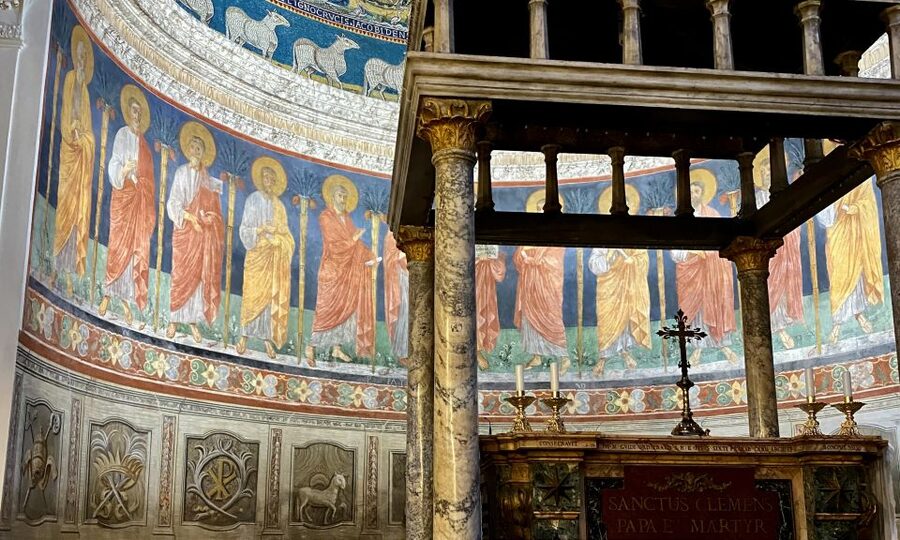
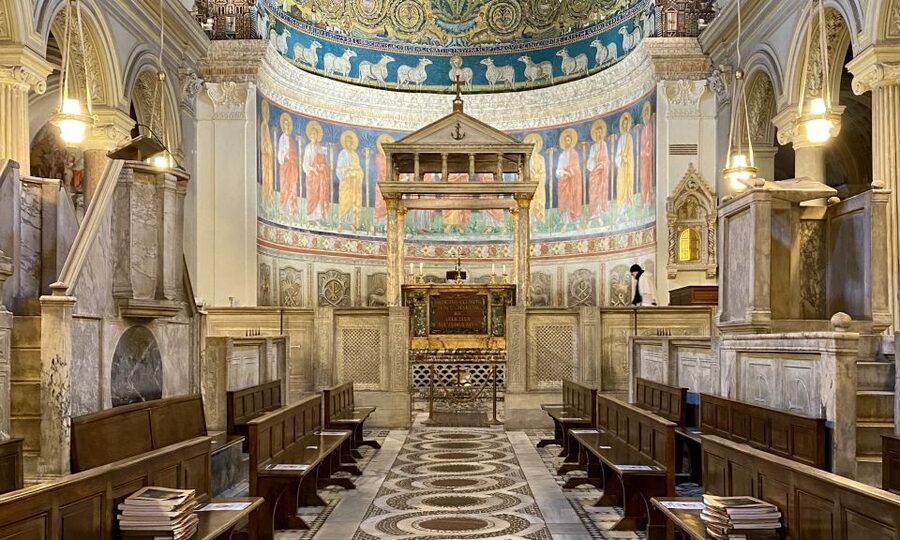
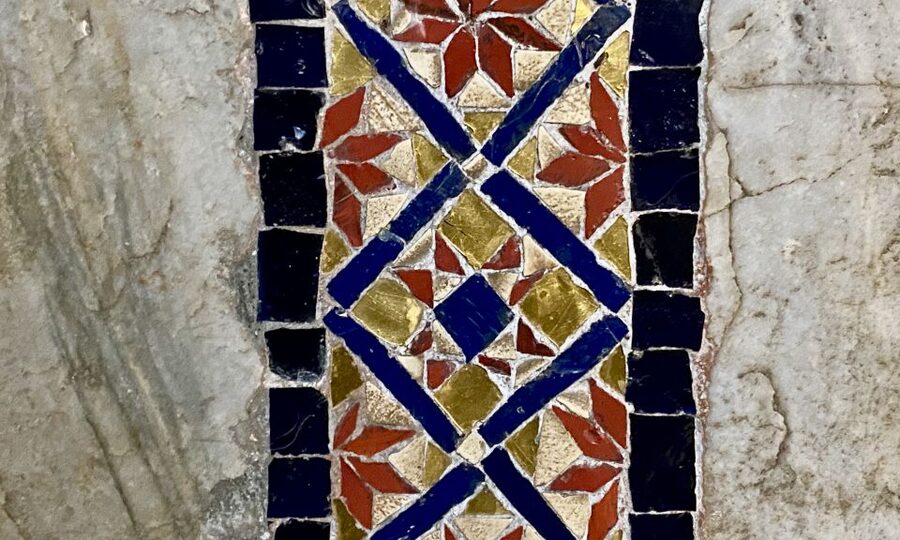
Before going underground, you begin in the 12th-century Basilica of San Clemente al Laterano. Give yourself a moment to look up. The apse contains a striking golden mosaic, filled with Christian symbols and layered meaning.
The image is not just decoration behind the altar. Your guide explains how the vines, cross, figures, and other details express Christian ideas about life, sacrifice, and salvation. This introduction matters because it gives you a visual key for the rest of the visit.
The basilica itself is a useful reminder that Rome’s quieter churches can be more rewarding than its famous giants. You do not get the vast scale of St. Peter’s or the polished grandeur of some major Roman churches. Instead, you get a more intimate setting and a direct connection between the church above and the remains below.
The visit takes place in an active religious building, so schedules can change around liturgical events. If part of the church is closed, the guide may adjust the route and explain another section instead. The overall duration remains unchanged, but the exact order can vary.
Descend to the fourth-century Christian basilica
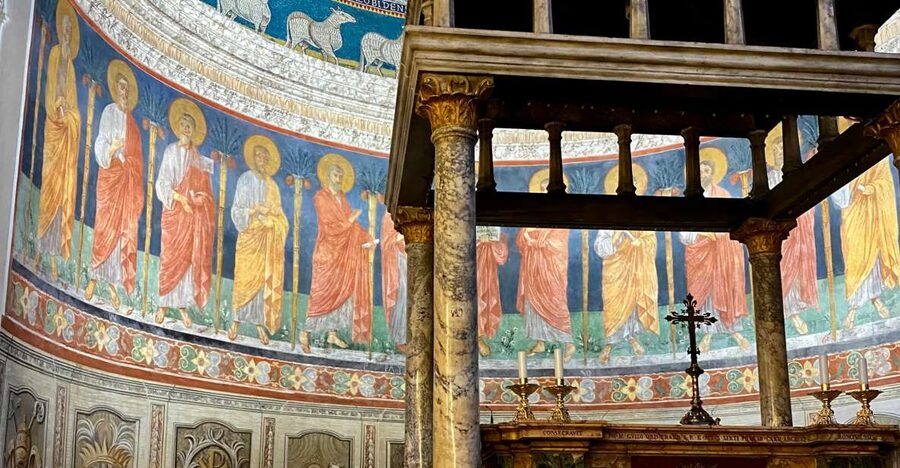
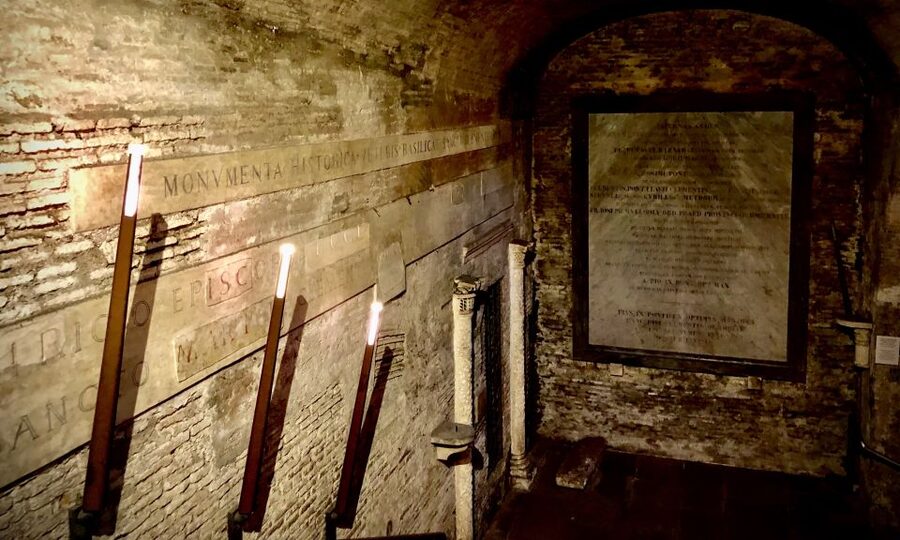
The first underground level takes you into a fourth-century Christian basilica. It was built above the home associated with St. Clement, traditionally regarded as the third pope of Rome.
Here, the story shifts from medieval church decoration to early Christian worship. The frescoes show episodes connected with Christian life and martyrdom, giving you a sense of the pressure faced by believers during periods of persecution.
I find this section especially useful for understanding that Christianity did not arrive in Rome as a fully formed public institution. These early rooms belong to a time when Christian worship was still developing and when religious identity could carry serious danger.
The frescoes are old and can be fragile. Do not expect bright, freshly painted scenes. Their value lies in their survival and in what they tell you about early Christian imagery. Your guide can point out details that would otherwise disappear into the dark stone and faded plaster.
The lower basilica also helps explain why San Clemente is more than a standard church visit. The church above was not built in an empty space. It rests on earlier buildings, and every level reflects a different chapter of Roman life.
Meet the Mithraic temple 14 meters below street level
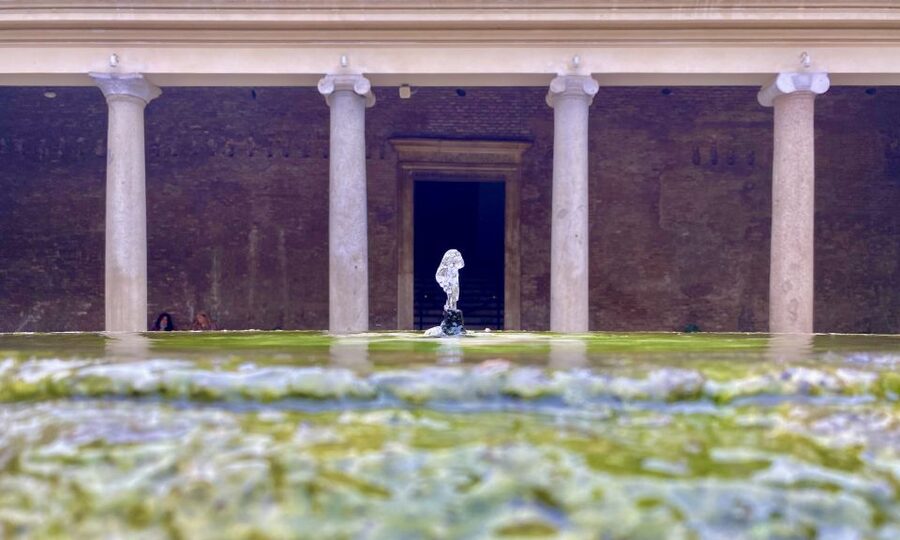
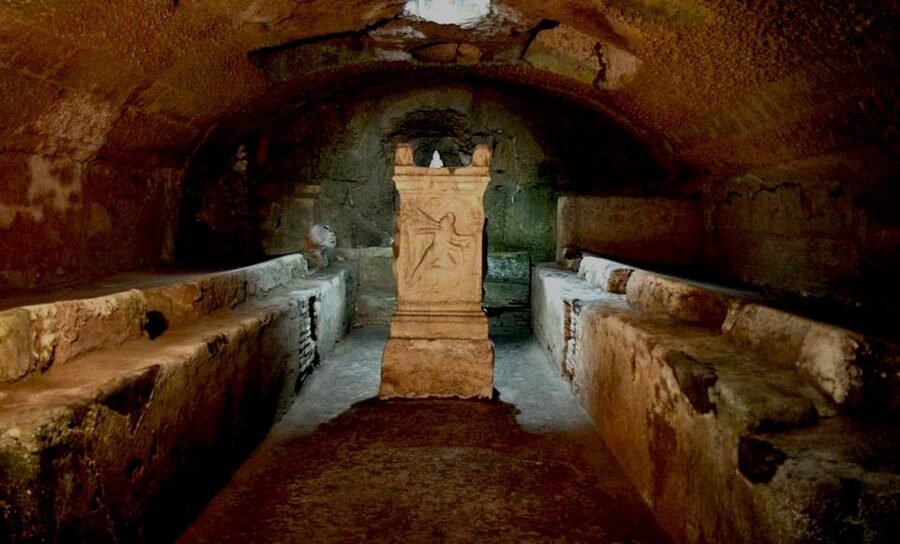
The lowest part of the visit is the Mithraic temple, one of the best-preserved examples of its kind in Rome. Mithraism was a pagan cult practiced in the Roman world before Christianity became dominant. Its worship was associated with male members, secret rites, and a strong sense of initiation.
This is not a vast temple with a grand outdoor facade. Its enclosed character is part of the point. The room gives you a physical sense of a small religious group meeting away from the public temples and civic ceremonies of Rome.
Your guide explains the cult’s beliefs and rituals, helping you place Mithraism within the wider religious world of ancient Rome. That context is valuable because it prevents the temple from becoming just another mysterious underground chamber. You begin to see that Rome held many competing beliefs, practices, and communities before Christianity gained control of public religious life.
The atmosphere is striking. The rooms are below the modern church, the light is limited, and the route can feel tight in places. Anyone with claustrophobia should think carefully before booking. The underground level is one of the tour’s biggest attractions, but it is also the part most likely to cause discomfort.
An underground river runs through the site. You may hear or see the water as you move through the lowest level, depending on the section open during your visit. It adds a physical detail that ruins often lack. You are not only looking at old stone. You are hearing the same persistent force that helped shape the space.
A different set of gates, same trip:
- Rome’s Iconic Temple: Pantheon Audio Guided Tour with Fast Access
★ 4.0 · 1,188 reviews - Agrigento: Valley of the Temples Ticket & App Audioguide
★ 4.3 · 1,160 reviews - Colosseum Special Access Tour, with Ancient Temples & Tombs
★ 4.8 · 747 reviews - Agrigento: Valley of the Temples E-Scooter Tour
★ 4.6 · 557 reviews
Add Santo Stefano Rotondo for 45 more minutes
If you select the extended option, you walk about 15 minutes to Santo Stefano Rotondo. This is a separate church with a very different mood and design.
Its circular architecture immediately changes the experience. San Clemente is a layered descent through time, while Santo Stefano Rotondo presents a broad, central space organized around a round plan. The two churches work well together because the first focuses on buried structures and religious change, while the second makes early Christian suffering visible through art.
The major feature is the cycle of martyrdom frescoes. These scenes are powerful but graphic. They show violence inflicted on early Christians, and the images may be distressing for children or anyone sensitive to scenes of torture and death.
I would add this extension if you have a serious interest in early Christian art or want more than the underground visit. It is less essential if your main goal is the Mithraic temple and archaeological layers. The extra 45 minutes also means more walking and more time on your feet, so consider your energy late in the day.
The order can change. You may visit Santo Stefano first and San Clemente afterward, depending on the schedule. Special events and liturgical celebrations can also make the extension unavailable on some dates. Check the option carefully when booking rather than assuming the second church is always included.
What the $70 price gets you
At $70 per person, this is not Rome’s cheapest church visit. The value depends on how much help you want interpreting the site.
You receive entrance to San Clemente, a live guide, and headsets so you can hear clearly. If you choose the extended option, the Santo Stefano Rotondo visit is included in that version. Food, drinks, transportation, and hotel pickup are not included.
For me, the guide is the main reason the price can make sense. Without explanation, the underground rooms may look like disconnected fragments: a wall here, a faded fresco there, a channel of water below. With a strong guide, the sequence becomes understandable. The reports of guides answering questions, explaining Roman history, and speaking clear English are encouraging, particularly the repeated praise for Francesca, Lorenzo, and Paul.
Small groups are possible, and a private group option is available. One couple found themselves as the only participants, which shows that the group size can sometimes be pleasantly small, though you should not assume a private visit unless you book that option.
You can reserve now and pay later, and cancellation is allowed up to 24 hours before the activity for a full refund. Those policies help if your Rome schedule is still changing, but the more important booking detail is selecting the correct version. The Santo Stefano visit is not automatically part of every booking.
Timing, walking, and what to wear
The San Clemente portion lasts about one hour. With Santo Stefano Rotondo, plan on roughly one hour and 45 minutes, plus the walk between the churches and any time needed to gather the group.
Wear comfortable shoes. You will walk through the basilica, use stairs, and continue on foot if you add Santo Stefano. The underground spaces may also feel cooler or more confined than the streets above, though no specific temperature is provided, so practical clothing is best.
The dress rules reflect the religious setting. Avoid shorts, short skirts, sleeveless shirts, and other clothing that may not meet church standards. Pets, food, drinks, alcohol, weapons, and sharp objects are not allowed.
Photography and video recording are not permitted inside. This can feel restrictive if you enjoy documenting every stop, but it also keeps the focus on listening and looking closely. Bring your attention rather than expecting a photo session.
The meeting point can vary according to the option you book. Confirm the instructions before setting out, particularly if your route includes Santo Stefano Rotondo.
Who will get the most from this visit
I recommend San Clemente most strongly to people who enjoy archaeology, ancient religion, early Christianity, and unusual places that require explanation. It is also a good choice if you have already seen Rome’s biggest monuments and want a smaller site with a more focused story.
History-minded families may enjoy the layered buildings, but the Santo Stefano extension is not ideal for younger children because of the graphic martyrdom scenes. The underground section may also be tiring or unsettling for children who dislike dark, enclosed spaces.
This is not the best choice for wheelchair users because of the architectural barriers and underground route. It is also not a good fit for anyone with claustrophobia. Those are firm practical limits, not minor inconveniences.
The tour is offered in English, Spanish, French, German, Italian, and Portuguese. A private group can be selected if you want a more personal pace or have specific questions. The guide’s language and group format should be checked when booking.
Should you book San Clemente and Santo Stefano?
Book this experience if you want Rome to explain itself rather than simply display itself. The strongest part is the descent through the layers beneath San Clemente, especially the early Christian basilica, the Mithraic temple, and the underground water.
The $70 cost is reasonable for visitors who value expert interpretation and a small, unusual site. It is less compelling if you only want to enter a church quickly or prefer to explore entirely on your own.
I would choose the extended Santo Stefano option if you care about early Christian art and can handle stark martyrdom scenes. If your priority is ancient pagan religion and underground archaeology, the one-hour San Clemente visit gives you the essential experience.
FAQ
How long does the San Clemente tour last?
The San Clemente visit lasts about one hour. The optional Santo Stefano Rotondo visit adds 45 minutes, making the full experience about one hour and 45 minutes, not including the walk between the churches.
Is Santo Stefano Rotondo included?
Only the extended option includes the guided visit to Santo Stefano Rotondo. Check the option selected during purchase because the shorter San Clemente tour does not include it.
How far underground does the tour go?
The route descends about 14 meters below the Basilica of San Clemente.
Is the tour wheelchair accessible?
No. The architectural structures inside and beneath San Clemente mean the tour is not accessible to wheelchair users.
Is the underground area suitable for people with claustrophobia?
It may not be suitable. The underground spaces can feel enclosed, so people with claustrophobia should consider this before booking.
Can I take photographs inside?
No. Photography and video recording are not allowed inside the churches.
What should I wear?
Wear comfortable shoes and clothing suitable for a church. Shorts, short skirts, and sleeveless shirts are not allowed.
Are children suitable for the Santo Stefano visit?
The frescoes at Santo Stefano Rotondo include graphic scenes of martyrdom and may not be appropriate for children.
What happens if part of the church is closed?
The guide may adapt the route and highlight alternative areas. The overall tour duration remains unchanged. Weather, special events, and liturgical celebrations can also affect the route or availability.
Newly written up around Italy
- Sunset visit Valley of the Temples Agrigento★ 4.5 · 93 reviews
- Agrigento; Valley of the Temples, Scala dei Turchi from Palermo, Private Tour★ 5.0 · 68 reviews
- Agrigento: Valley of the Temples Private Tour★ 4.6 · 66 reviews
- Paestum: Private Tour of Greek Temples and Archaeological Museum★ 5.0 · 60 reviews
- Agrigento Valley of the Temples and Villa Romana del Casale Tour from Palermo★ 4.5 · 134 reviews
- Valley of the Temples and Villa Romana del Casale Day Trip from Taormina★ 4.0 · 137 reviews
- Catania: Valley of the Temples & Piazza Armerina with Snack★ 4.5 · 136 reviews
- Agrigento and Valley of the Temples Day Trip from Palermo★ 4.0 · 140 reviews
Rome Temple Tours, compared.
Pantheon Elite Guided Tour – Rome’s Iconic Ancient Temple
Read our review →
Rome’s Iconic Temple: Pantheon Audio Guided Tour with Fast Access
Read our review →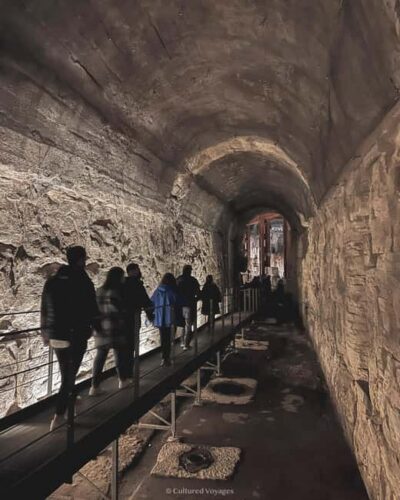
Colosseum Special Access Tour, with Ancient Temples & Tombs
Read our review →
Walking Guided Tour and Rome’s Iconic Temple Pantheon Entrance
Read our review →
Rome’s Iconic Ancient Temple: Pantheon Fast Track Entry Tickets
Read our review →
Pantheon: The Iconic Ancient Roman Temple – Semi-Private Tour
Read our review →Browse the lists this tour appears in