
Reviewed · TOKYO TEMPLE TOURS
Make a temple stamp book with artist
The best part of this two-hour workshop is that you make a real goshuin notebook from traditional kimono fabric, then use it at a local shrine. This is not just a craft class. You leave with a useful keepsake and your first Japanese temple or shrine stamp.
I like the huge fabric choice, with more than 100 patterns, and the small group size of eight. I also like the way the class connects the craft to shrine customs, rather than treating the notebook as a stand-alone souvenir. The main consideration is access: you climb about 10 steps to the classroom and shrine, and the activity is not suitable for people with mobility impairments.
Key points
- Choose from more than 100 kimono fabrics: Pick the colors and pattern for a notebook that is truly your own.
- Make the book by hand: You fold and glue the pages under instruction, with materials supplied.
- Learn shrine etiquette: The class explains how to visit a Shinto shrine formally.
- Collect your first goshuin: The local shrine visit gives your new book an immediate purpose.
- Enjoy a small English-language class: The group is limited to eight people, with Chikako Oshiro as the experience provider.
- Stay close to Shibuya: The workshop fits neatly into a Tokyo day built around one of the city’s most popular areas.
Choosing Your Fabric in a Small Tokyo Workshop
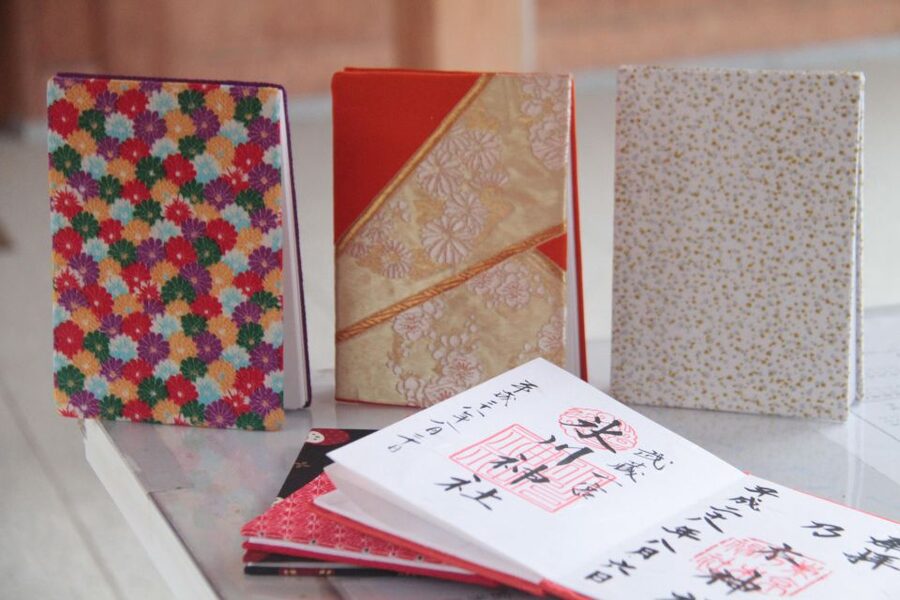
The class begins with the most enjoyable decision: choosing your fabric. You look through more than 100 kimono fabrics and select the one that will cover your goshuin notebook.
This matters because the book is meant to follow you beyond this single class. Each shrine or temple can provide its own goshuin, a calligraphic stamp and inscription recording your visit. Your chosen cover becomes the face of a growing personal collection.
The selection also gives you a small lesson in Japanese textile design. You are not simply handed a finished souvenir from a shelf. You decide which colors and pattern suit you, then watch that material become a practical object.
The large fabric selection is a real strength, but it may also make the opening choice slower than expected. If you like to compare patterns carefully, allow yourself time to look. If you prefer quick decisions, choosing a favorite before the folding begins will keep the class moving.
The workshop is taught in English, which makes the process easier to follow if you do not speak Japanese. You can ask questions while selecting fabric and during the construction steps, rather than trying to copy a demonstration without knowing why each part matters.
Other temple visits near Tokyo we have written up
- Tokyo: Asakusa Walking Tour with Sensoji Temple Visit
★ 4.8 · 1,583 reviews - Nikko: Kegon Falls, Lake Chuzenji & Toshogu Temple
★ 4.6 · 1,577 reviews - Tokyo: Nikko Toshogu Shrine and Kegon Waterfall Tour
★ 4.5 · 1,266 reviews
Folding and Gluing Your Goshuin Notebook
Once you choose the cover, you learn how the notebook is made. The basic process involves folding and gluing papers together, with the instructor guiding you through each stage.
That hands-on work is part of the appeal. You are not watching an artisan create something while you wait. You take part in the careful, simple construction of the book. The finished item has more meaning because you made it yourself.
Do not expect a long professional bookbinding course. This is a beginner-friendly cultural workshop within a two-hour visit. The value comes from learning the purpose of the goshuin notebook and making a usable version under guidance.
The supplied materials keep the experience straightforward. You do not need to bring paper, fabric, glue, or tools. One useful detail is that extra glue has been available for future stamps, so you can continue using the book after the workshop. That small touch makes the activity feel less like a one-off craft project.
Take care with the folding. Neat alignment will help the pages sit properly, and a little patience is better than rushing to the shrine. The class is limited to eight people, so the format should allow for questions and individual help rather than a crowded, fast-moving production line.
Why Goshuin Books Matter in Japan
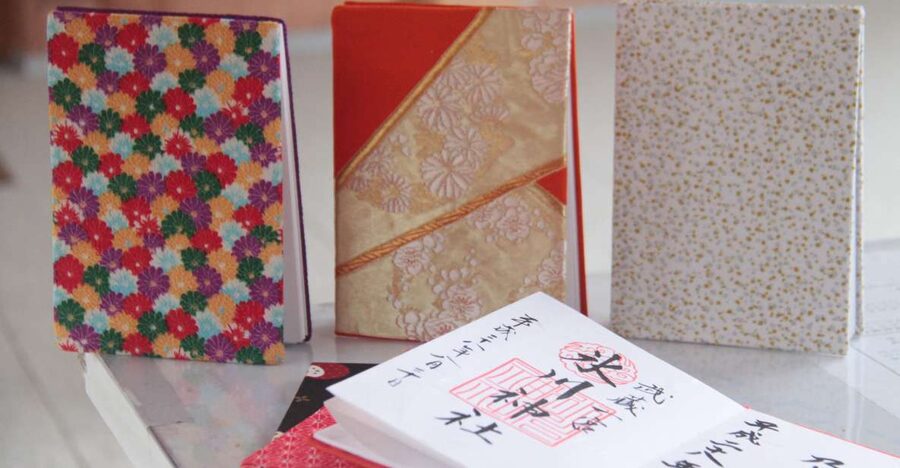
A goshuin is not simply a souvenir stamp. It records a visit to a temple or shrine, usually with a handwritten inscription and the site’s own seal. The design and calligraphy vary from place to place, which gives your notebook a visual record of the places you have visited.
The workshop gives you the basic context needed to use the book properly. You learn that collecting goshuin is a popular Japanese custom and that each religious site has its own stamp.
This explanation adds purpose to the craft. Without it, you might make a pretty notebook and then leave it in your luggage. Here, you learn how to begin a collection immediately at a local shrine.
You should treat the book with care. It is not the same as a general autograph book or a notebook for random stickers. The experience introduces you to a specific Japanese practice, so it is worth keeping the book for goshuin rather than mixing in unrelated notes or decorations.
The first stamp is not included in the $38 price. You pay the shrine’s stamp fee separately. The exact amount is not specified, so keep some yen available for that extra cost.
Learning the Formal Way to Visit a Shrine
After making your notebook, you visit a nearby local shrine. This is where the workshop shifts from craft activity to cultural lesson.
The instructor teaches you how to visit the shrine formally. That gives you a clearer idea of what to do when you encounter other shrines during your time in Japan. You are not left to guess which steps are respectful or how the visit fits into local custom.
The shrine stop also gives the notebook an immediate use. You collect your first goshuin instead of taking home an empty book and postponing the experience. For a first-time visitor, that is a useful bit of confidence.
The shrine is described as local rather than as one of Tokyo’s major sightseeing sites. That means you should not book this expecting a grand landmark or a long guided tour of a famous complex. The appeal is quieter and more focused: you learn the manners, visit a neighborhood religious site, and begin your collection.
The shrine visit takes place after the workshop, so wear shoes and clothing that make a short walk and about 10 steps comfortable. The activity runs rain or shine. A rainy morning will not automatically cancel the class, so bring suitable weather protection and be ready for the outdoor portion.
A different set of gates, same trip:
- Tokyo Panoramic 1 Day: Meiji Shrine, Asakusa, Odaiba and SKYTREE®
★ 4.5 · 1,222 reviews - Tokyo: Zen Meditation at a Private Temple with a Monk
★ 5.0 · 510 reviews - Mt. Fuji Heritage Tour: Traditional Villages, Lakes & Shrine
★ 4.5 · 509 reviews - Tokyo: Samurai Entertainment Night Show in Kanda Shrine
★ 4.6 · 417 reviews
A Practical Location Near Shibuya
The workshop is located near Shibuya, one of Tokyo’s most popular visitor areas. That makes it easy to pair with other plans in the same part of the city, although the exact travel time from your hotel depends on where you are staying.
The meeting point is in front of an entrance between a drug store and Cozy Corner, a cake shop. This is a useful landmark combination, but you should read the meeting instructions closely before setting out. Tokyo streets can be busy, and a small entrance is easy to miss if you are only looking for a large tour sign.
The location makes the workshop a good choice for a morning or afternoon cultural break. You can spend part of your day around Shibuya, then set aside two hours for a slower, hands-on activity. It also works well if you want something more personal than shopping and city views.
The nearby setting does not mean the class itself is crowded or noisy. The group is limited to eight participants, which keeps the focus on the instructor, the fabrics, and your own notebook.
Is Two Hours Enough?
Two hours is a sensible length for this activity. It gives you enough time to select fabric, build the book, learn the background, visit the shrine, and collect your first goshuin without taking over your entire day.
The timing does require a little focus. You are doing practical work, not simply sitting through a talk. Listen during the folding and gluing steps, and ask for help if a page or cover does not line up as you want.
The class should suit people who enjoy making things at a relaxed pace. It may be less satisfying if you want a long tour of several shrines, extensive Tokyo history, or a large number of stamps in one outing. You receive one first stamp at the local shrine, not a full day of sightseeing.
For families, note the age restriction. Children under three cannot take part. Older children may enjoy the fabric choice and craft work, but the supplied information does not specify a recommended age beyond that restriction, so consider your child’s patience with careful folding and gluing.
What the $38 Price Covers
At $38 per person, the price covers the workshop fee. Materials for the notebook are provided, including the fabric and other supplies needed for construction.
I see the value in the combination of three parts: a finished handmade object, a short cultural lesson, and a shrine visit with your first stamp. Buying a ready-made notebook would be cheaper in some shops, but it would not include the instruction or the connection to shrine etiquette.
The extra shrine stamp fee is not included. That is a small but important budget detail. You should also account for your own transport to the meeting point and any food or drinks before or after the class.
The price is strongest for people who want an activity with a clear result. You leave with something you made and can continue using in Japan. If you only want to see famous sights, the same money might be better spent on another attraction. If you value a personal souvenir and a cultural lesson, the cost is easier to justify.
Flexible booking also helps if your Tokyo plans are still shifting. You can reserve now and pay later, and cancellation is free up to 24 hours in advance. The activity still operates in rain, so cancellation flexibility matters if you are building a day around outdoor plans.
Who Will Enjoy This Experience Most?
I would recommend this workshop to first-time visitors who want a simple introduction to shrine customs. It gives you a clear starting point for a practice you can continue at other temples and shrines.
It also suits craft lovers, people who collect paper goods, and anyone who prefers making a souvenir over buying one. The choice of more than 100 kimono fabrics is the central creative feature, so you should enjoy visual choices and hands-on work.
Couples and friends can make different books and compare fabric choices. Solo participants may appreciate the small group and the chance to ask questions in English.
The activity is less suitable if you have difficulty with steps or mobility. There are about 10 steps to reach the classroom and shrine, and the experience is not suitable for people with mobility impairments. Children under three are not permitted.
You should also choose another activity if your main goal is a major Shibuya sightseeing tour. This workshop is near the district, but its focus is the notebook, shrine etiquette, and a local shrine visit.
Helpful Tips Before You Go
- Keep some Japanese yen available for the shrine stamp fee, which is separate from the workshop price.
- Arrive with the meeting point in mind: the entrance is between a drug store and Cozy Corner cake shop.
- Wear comfortable shoes because you will use about 10 steps and visit the shrine outdoors.
- Allow yourself time to choose a fabric. The selection is large, and the cover is the most personal part of the notebook.
- Plan for rain. The class runs in all weather, including the shrine portion.
- Keep your schedule reasonably open around the two-hour class so you do not rush the construction or shrine visit.
- If you plan to collect more goshuin, store the finished book carefully and use it for its intended purpose.
Should You Book the Goshuin Workshop?
Book it if you want a small, personal introduction to Japanese shrine culture near Shibuya. The strongest reasons are the broad kimono fabric choice, the English instruction, the small group, and the chance to leave with a handmade book that already contains its first stamp.
At $38, the experience offers more than a craft session because it explains how to visit the shrine formally and shows you how the notebook fits into Japanese custom. The separate stamp fee and the steps are minor drawbacks, but they matter if your budget or mobility is tight.
I would skip it if you are looking for famous Tokyo sights, a long temple tour, or a full day of sightseeing. For a calm two-hour activity with a useful keepsake and a clear cultural focus, it is an easy choice to add near Shibuya.
FAQ
How long does the goshuin notebook workshop last?
The activity lasts two hours, including the notebook-making session and the visit to a local shrine.
How much does the experience cost?
The price is $38 per person. The workshop fee is included, but the shrine stamp fee is not included.
What will I make during the class?
You will make your own goshuin notebook by choosing kimono fabric, then folding and gluing papers together with instruction.
Is the class taught in English?
Yes. The instructor language is English.
How many people can join the workshop?
It is a small-group experience limited to eight participants.
Is the activity suitable for people with mobility impairments?
No. There are about 10 steps to reach the classroom and shrine, and the activity is not suitable for people with mobility impairments. Children under three are also not permitted.
Newly written up around Tokyo
- Tokyo: Snow Monkey and Zenkoji Temple Day Trip In Low Price★ 5.0 · 5 reviews
- Tokyo: Gotokuji Culture Walk & Lucky Cat Temple Experience★ 4.9 · 5 reviews
- :Tokyo,Shibuya /Meiji Shrine tour in KIMONO/English-friendly★ 5.0 · 4 reviews
- Tokyo: Visit 5 Shrines & Collect Goshuin on Private Tour★ 5.0 · 3 reviews
- Tokyo War History Tour: Yasukuni Shrine & War Museum★ 4.5 · 6 reviews
- Tokyo: Sensoji Temple & Street Food: Private Tour with guide★ 4.6 · 8 reviews
- Tokyo: Shibuya Sky, Harajuku & Meiji Shrine Highlights Tour★ 4.5 · 9 reviews
- Tokyo: Private Meiji Shrine & Harajuku Highlights Tour★ 4.5 · 4 reviews
Tokyo Temple Tours, compared.
Asakusa Walking Tour with Sensoji Temple Visit
Read our review →

Nikko Toshogu Shrine and Kegon Waterfall Tour
Read our review →
Tokyo Panoramic 1 Day: Meiji Shrine, Asakusa, Odaiba and SKYTREE®
Read our review →
Mt. Fuji Heritage Tour: Traditional Villages, Lakes & Shrine
Read our review →
Samurai Entertainment Night Show in Kanda Shrine
Read our review →
Asakusa and Tokyo’s Oldest Temple Senso-ji Tour
Read our review →Browse the lists this tour appears in