
Reviewed · MASSAGE
Osaka Temple :Warm Bamboo Oil Massage – Deep Restore〈90min〉
A warm bamboo massage inside an Osaka temple is the unusual hook here. You change into a simple yukata, offer incense, sit for Zen meditation, then settle in for a 90-minute treatment using oil, hands, and heated bamboo. It is part spa visit, part introduction to Japanese customs, and part quiet reset from city sightseeing.
I like the thoughtful sequence: the temple welcome and kneaded incense prepare you for the massage, while the tea ceremony gives the visit a real cultural purpose. I also like the tiny group size, limited to three people, and the complimentary smartphone photos. The main consideration is that this is not a private temple retreat by default, since meditation may be shared with other participants.
Key points
- Warm bamboo and hand massage: The main treatment combines full-body oil massage with bamboo-assisted myofascial release.
- Temple customs made approachable: You receive an introduction to incense, prayer, worship culture, and the temple’s background.
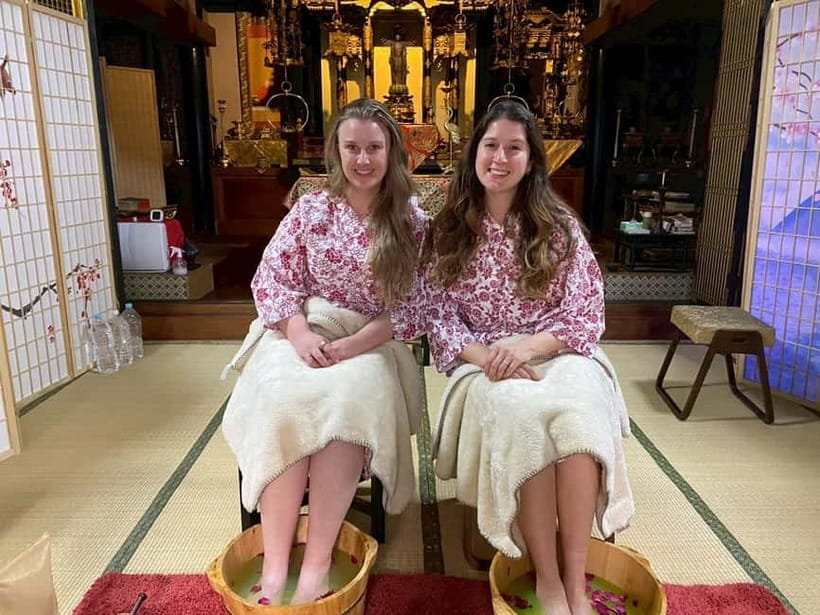
- A full cultural sequence: Yukata, foot bath, Zen meditation, matcha, and Japanese sweets frame the massage.
- Small-group setting: The experience is limited to three participants, with private meditation available by request.
- A named practitioner: Arisa guided one especially praised session and was singled out for her massage skill.
- Clear meeting-point warning: Use Japanese Massage -the one&only- in Google Maps, not the temple name.
A temple visit that begins with a change of clothes
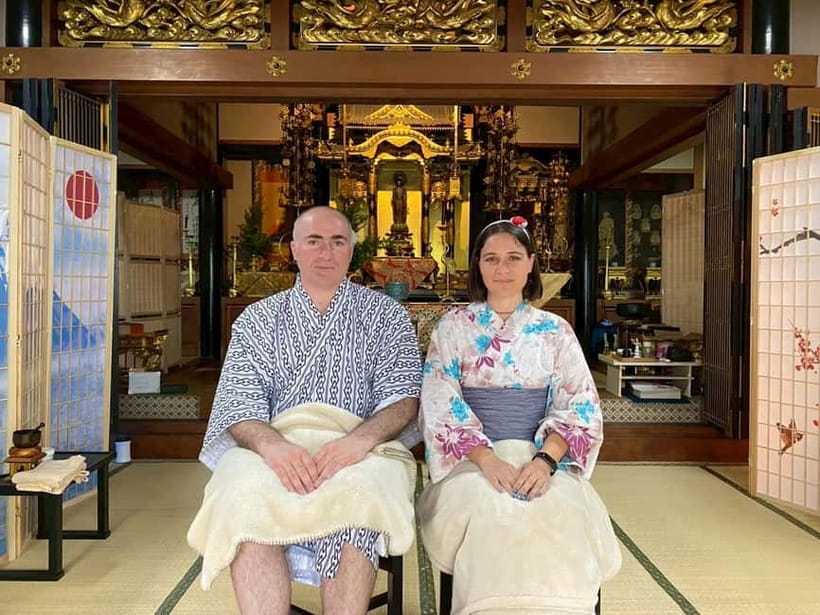
This experience works because it does not treat the massage as an isolated spa appointment. You begin with a welcome drink and change into a simple yukata, which immediately shifts the pace. You are still in Osaka, but you are no longer rushing between stations, shops, and restaurants.
The yukata is simple rather than formal. That matters. You are not being dressed for a staged photo shoot or expected to know how to behave in a ceremonial setting. Instead, you get a comfortable introduction to one small part of Japanese daily and cultural life.
A commemorative smartphone photo is included. The photos are complimentary, and you can take them home as a keepsake. This is a nice touch for couples or friends who want a record of the experience without arranging a separate photographer.
The setting gives the session its character. A massage in a standard city spa can be pleasant, but the temple surroundings provide a quieter frame and make the cultural elements feel connected rather than tacked on.
More temple days that end with a massage in Osaka:
- Osaka Temple Head Spa &Matcha Facial – Refresh & Glow〈90min〉
★ 5.0 · 24 reviews - Osaka Temple :Warm Bamboo Oil Massage – Deep Restore〈60min〉
★ 4.9 · 19 reviews - Osaka: Japanese Zen Massage and Facial at the Temple/180-min
★ 4.8 · 10 reviews
Incense, prayer, and a short lesson in Japanese worship
Before the bodywork begins, you visit the temple and make an incense offering. The instructor explains the temple’s history and aspects of Japanese worship culture, so you are not left guessing when to bow, pray, or handle incense.
That explanation is valuable for first-time visitors. Japanese temples can seem easy to observe but hard to understand. A short introduction helps you see the difference between simply looking around and taking part in a respectful custom.
The session also includes kneaded incense. The scent and ritual give you a gentle way to slow down before the massage. You do not need prior knowledge of Buddhism, Zen, or Japanese ceremony. The instruction is available in English and Japanese.
The temple element is not a long sightseeing tour. If you want a detailed architectural visit or a major historical lecture, this is not the right format. The temple visit is a calm opening to the treatment, not the main attraction.
Zen meditation with a bell
The meditation portion uses a bell and kneaded incense. This is a brief, guided pause rather than a demanding meditation course, though the exact length is not specified.
I like this placement in the schedule. You move from the outside world into a quieter mental state before the foot bath and massage. The bell gives the session a clear beginning and end, which can help if you are not used to sitting quietly.
Meditation may be shared with other participants unless you request a private experience. That is an important detail for couples and solo visitors who imagine a fully secluded appointment. The group is small, but small does not always mean private.
Reservations for three people are available by email. If your party has three, or if privacy is especially important to you, contact the provider before booking and ask what can be arranged.
Foot bath and scrub before the main treatment
The bodywork starts with a foot bath and scrub massage. This is a practical transition from temple customs to spa treatment, and it gives your feet attention before the longer full-body session.
After several days of walking around Osaka, that opening can be especially welcome. The activity is not only about lying down for 90 minutes. It begins by easing you into the treatment from the feet upward.
The wording describes a foot bath and scrub massage, but it does not provide details about the water temperature, scrub ingredients, or exact timing. If you have sensitive skin or prefer a particular pressure, tell the practitioner before treatment starts.
More temple trips with a massage in Osaka:
- Bangkok: Wat Pho Thai Massage in Your Hotel Room
★ 4.6 · 68 reviews - The Grand Palace, Wat Phra Kaew, Wat Pho Tour with Massage option
★ 4.5 · 14 reviews
Warm bamboo and oil massage for tired muscles
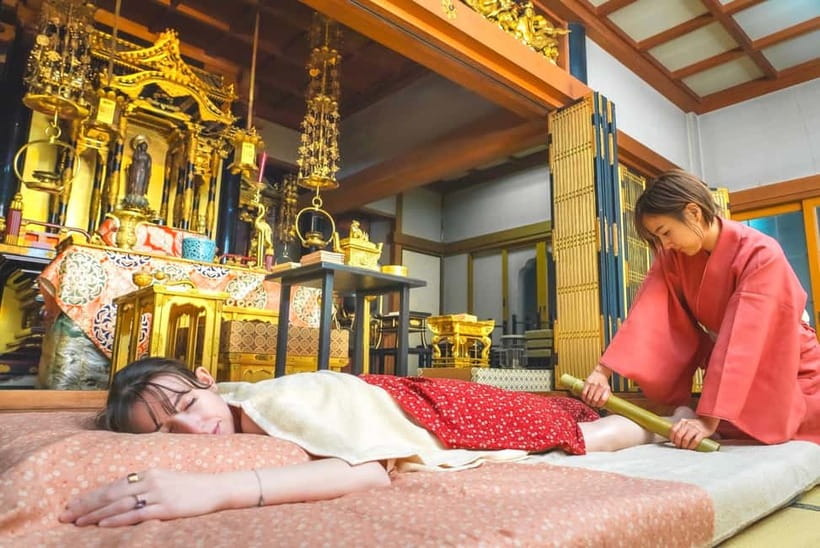
The central feature is a warm bamboo and hand oil massage. The treatment combines full-body oil massage with myofascial release using bamboo. In practical terms, you can expect the practitioner to use both hands and warmed bamboo tools to work across the body.
Bamboo adds a different feel from an ordinary oil massage. A smooth tool can apply broader pressure across muscles and connective tissue, while the hands allow more detailed work. The experience is presented as a deep-rest treatment, not as medical care, so you should communicate clearly about pressure, injuries, or areas you want avoided.
The massage lasts 90 minutes within a total activity time of about two hours. That is a generous treatment length, especially when paired with the temple, meditation, tea, and photo elements.
One useful detail comes from the named practitioner Arisa. A visitor specifically praised her as a talented masseuse, with the massage described as the primary draw. That gives you a helpful point of reference, though practitioner availability may vary by date.
The treatment also includes Reiki in the experience description. Reiki is explained as a non-contact Japanese energy-healing method intended to support relaxation and emotional balance. The supplied details do not say exactly when or how long Reiki is provided, so ask the provider if that element matters to your decision.
Matcha, sweets, and the quiet finish
The tea ceremony comes after the massage and includes matcha, authentic Japanese sweets, and an explanation of the ceremony’s cultural and historical meaning.
This is more than a drink at the end. Matcha preparation has its own rhythm, and the sweets balance the tea’s bitterness. The explanation helps you understand why the movements, utensils, and order of service matter.
The tea portion is one of the strongest reasons to book this instead of a standard massage. It gives you something to remember and discuss after the physical treatment is over. One visitor who came mainly for the massage found the tea ceremony both informative and relaxing, and that is a fair description of the balance here.
Do keep your expectations in the right place. This is an introduction to a tea ceremony within a two-hour wellness visit, not a long formal tea-school lesson. You receive cultural and historical context, but the massage remains the main time commitment.
What the $129 price really covers
At $129 per person, this costs more than a basic massage in Osaka. The value depends on whether you want only bodywork or a package that connects several Japanese experiences in one visit.
The price includes:
- A welcome drink
- A simple yukata
- Temple visit and incense offering
- Introduction to Japanese worship culture
- Zen meditation with bell and kneaded incense
- Foot bath and scrub massage
- Warm bamboo and hand oil massage
- Matcha experience
- Traditional Japanese sweets
- Cultural and historical explanation of the tea ceremony
- Smartphone photos
If you compare the price only with a 90-minute massage, it may seem high. If you would otherwise pay separately for a massage, a tea experience, a temple introduction, and a small cultural activity, the package becomes easier to justify.
I see the best value for someone with limited time in Osaka. You can combine relaxation and cultural learning without booking several unrelated appointments. Couples may also find the price reasonable for a shared memory, particularly with the yukata photo and tea ceremony included.
It is less suitable for a person who wants an inexpensive local massage and does not care about meditation, temple customs, or matcha. In that case, much of what you pay for is outside your main interest.
Timing, language, and finding the door
The activity lasts two hours, with availability depending on the starting time you select. English and Japanese are supported, which makes the explanations more useful for international visitors who want context rather than silent treatment.
The meeting point deserves careful attention. When using Google Maps, enter Japanese Massage -the one&only-. Do not search only for the temple name, since that can send you to the back entrance and leave you lost.
If the place does not appear clearly, search for the restaurant Tossa de coracao. The massage location is right next to it. This is the sort of small arrival detail that can save you from turning a calm appointment into a rushed one.
The activity offers skip-the-ticket-line access, though this is not a major sightseeing attraction with a normal ticket queue. The useful point is that you have a reserved appointment rather than waiting for a walk-in opening.
Free cancellation is available until 24 hours in advance for a full refund. You can also reserve now and pay later, which helps if your Osaka schedule is still shifting.
Who will enjoy this most
I would recommend this experience to you if you want a slower, more personal activity during a busy Japan trip. It suits people who enjoy learning a little about local customs while receiving a serious massage.
It is particularly well matched to:
- Couples seeking a calm shared activity
- Solo visitors who want guided cultural contact
- First-time visitors curious about incense, meditation, and matcha
- Anyone with tired muscles after walking and sightseeing
- People who prefer small groups to large organized tours
- Spa fans who want something beyond a standard oil treatment
The activity may not suit you if you dislike oil massage, do not want to change into a yukata, or prefer a fully private setting from beginning to end. It may also feel too slow if you want to pack every hour with sightseeing.
The setting is calm, but the information does not specify accessibility arrangements, changing-room details, or whether the temple has steps. If mobility, privacy, or treatment conditions are important to you, contact the provider before reserving.
My practical verdict on the experience
The most praised qualities are consistent: the massage, the peaceful setting, the warm welcome, and the way the tea ceremony adds meaning to the visit. One repeat visitor returned for a second massage, while another booked a facial treatment for the following day after enjoying the first session.
That pattern tells you something useful. This is not built around a single gimmick. The bamboo massage may bring you through the door, but the hospitality and calm setting are what can make the visit feel complete.
Arisa received specific praise for her massage, and the women running the experience were described as attentive and caring. Since staff assignments can change, I would not book solely on the hope of seeing one particular practitioner unless the provider confirms it.
Should you book the Osaka temple massage?
Book it if you want a 90-minute full-body treatment wrapped in a small cultural experience. The combination of warm bamboo, oil massage, Zen meditation, temple incense, yukata, matcha, sweets, and photos is unusual, and the two-hour format makes good use of your time.
Skip it if your only goal is the cheapest massage in Osaka, or if shared meditation would bother you. For the best fit, request private meditation if needed, use the exact map instructions, and allow enough time to arrive without rushing.
At $129, this is a special-occasion wellness experience rather than a bargain treatment. For the right visitor, the value lies in leaving with relaxed muscles, a little more understanding of Japanese customs, and a memorable temple setting rather than just another spa receipt.
FAQ
How long does the Osaka temple massage experience last?
The full experience lasts about two hours. The main bamboo and hand oil massage is described as a 90-minute treatment.
What is included in the experience?
It includes a welcome drink, simple yukata, temple visit, incense offering, Zen meditation, foot bath and scrub massage, warm bamboo and hand oil massage, matcha, Japanese sweets, cultural explanations, and complimentary smartphone photos.
Is the massage performed with bamboo?
Yes. The treatment combines warm bamboo with hand oil massage and myofascial release.
Is the meditation private?
Not automatically. Zen meditation may be shared with other participants unless you request a private experience.
How many people are in the group?
The experience is limited to three participants. Reservations for three people are available by email.
Is the experience offered in English?
Yes. The listed languages are English and Japanese.
Where should I go for the meeting point?
Enter Japanese Massage -the one&only- in Google Maps. Searching only for the temple name may take you to the back entrance. You can also search for the restaurant Tossa de coracao, which is right next to the location.
Can I cancel for a full refund?
Yes. You can cancel up to 24 hours in advance for a full refund. Reserve now and pay later is also available.
Newly written up around Osaka
- Osaka: Mind & Spirit Balance Temple Reiki Healing★ 5.0 · 41 reviews
- Osaka Temple :Warm Bamboo Oil Massage – Deep Restore〈60min〉★ 4.9 · 19 reviews
- Osaka Temple Head Spa &Matcha Facial – Refresh & Glow〈90min〉★ 5.0 · 24 reviews
- Osaka: Temple Tour and Traditional Calligraphy Lesson★ 4.9 · 24 reviews
- Osaka Morning Tour: Shitennoji Temple, Shinsekai &Doutonbori★ 5.0 · 23 reviews
- Osaka: Minoh Waterfall & Katsuo-ji Temple Half-Day Tour★ 4.7 · 27 reviews
- Osaka: Private Tour of Shitennoji, Osaka’s Oldest Temple★ 4.5 · 6 reviews
- Osaka: Japanese Zen Massage and Facial at the Temple/180-min★ 4.8 · 10 reviews
Massage, compared.
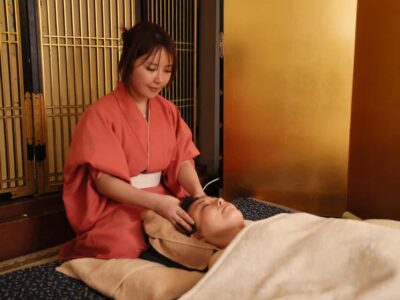
Osaka Temple :Warm Bamboo Oil Massage – Deep Restore〈60min〉
Read our review →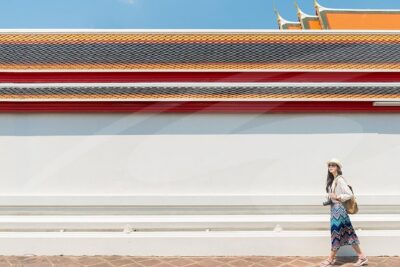
The Grand Palace, Wat Phra Kaew, Wat Pho Tour with Massage option
Read our review →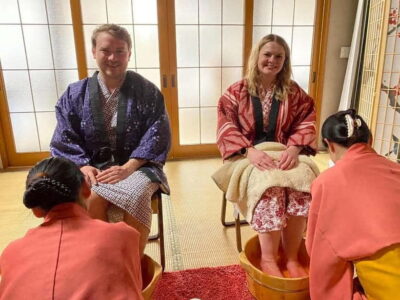
Japanese Zen Massage and Facial at the Temple/180-min
Read our review →Browse the lists this tour appears in