
Reviewed · VALLEY OF THE TEMPLES TOURS
Paestum: 2-Hour Greek Temples & Archaeological Museum
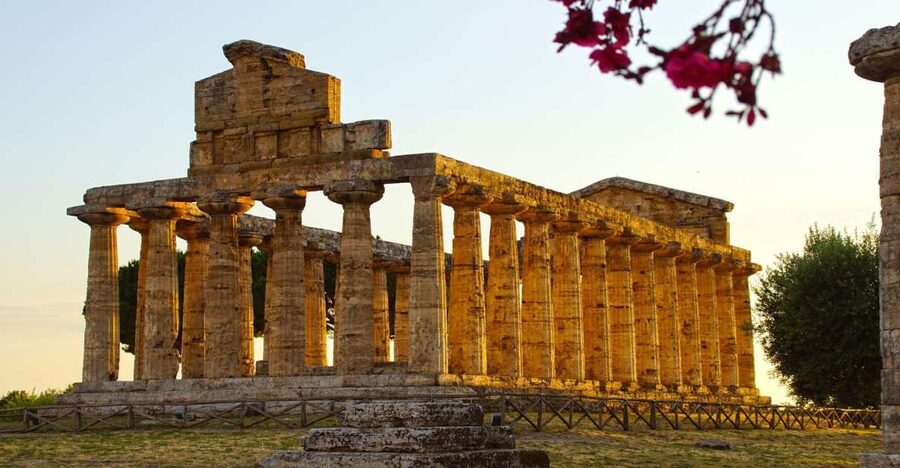
Paestum gives you something rare in Italy: three remarkably well-preserved Greek temples still standing in their original setting. This private tour adds the context that bare stones cannot provide, then finishes with the famous Tomb of the Diver in the National Archaeological Museum.
I like the small private-group format and the included fast-entry tickets. You can ask questions, set a comfortable pace, and avoid spending time at the ticket counter. The main consideration is pace: the archaeological park is broad, and the advertised two hours must cover both the ruins and the museum.
Key points to know before booking
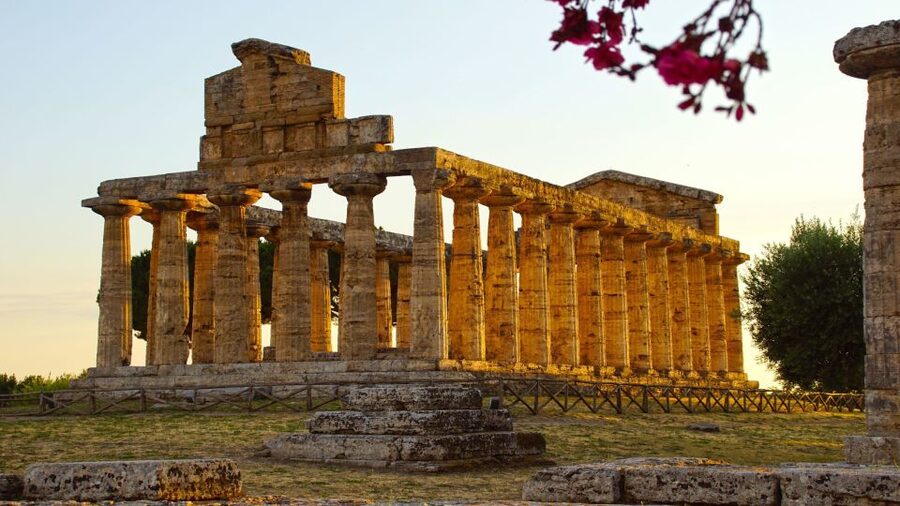
- Three Doric temples: See the Temple of Neptune, Temple of Ceres, and the basilica, with the columns and proportions that make Paestum so special.
- Greek and Roman layers: The tour includes the city walls, forum, markets, amphitheater, and comitium, not just the temples.
- The Tomb of the Diver: The museum’s best-known work is a painted Greek tomb with an unusual image of a figure plunging into water.
- Certified archaeologist guide: The guide leads the full visit and can explain how Greek Poseidonia became Roman Paestum.
- Private tour in five languages: Choose from English, Italian, Spanish, French, or German, subject to availability.
- Limited accessibility: This is a walking tour and is not suitable for wheelchair users or people with mobility impairments.
Why Paestum is worth the trip
Paestum was founded by Greek colonists under the name Poseidonia. It later became part of the Roman world, and the ruins preserve both stages of the city’s life. The result is more than a row of temples. You see a real urban center, with political buildings, public entertainment, markets, roads, and defensive walls.
The Greek setting matters. At many archaeological sites, temple columns survive as fragments scattered among later construction. At Paestum, the three major Doric temples remain unusually complete. Their heavy columns, broad steps, and calm symmetry make the site easy to read, even if you are not an archaeology specialist.
I especially like the way this tour combines the outdoor ruins with the museum. The park shows you the scale of the city and the power of its architecture. The museum provides the smaller objects and painted works that explain how people lived, worshiped, and buried their dead.
A private guide also makes sense here. Paestum can look simple at first glance: temples, walls, stones, and grass. The important details are easy to miss without help. A guide can point out the shift from Greek to Roman planning and explain why the temples are not all dedicated to the same deity.
More Valley of the Temples Tours in Italy:
- Agrigento: Valley of the Temples Skip-the-Line Sunset Tour
★ 4.5 · 1,512 reviews - Palermo: Agrigento and the Valley of the Temples Day Tour
★ 4.2 · 1,240 reviews - Agrigento: Valley of the Temples Ticket & App Audioguide
★ 4.3 · 1,160 reviews
Meeting at the Temple of Neptune
The meeting point is the entrance to the Neptune Temple. Your guide will hold a sign with your name, which should make the first meeting straightforward. The activity ends at the same place, so you do not need to arrange a second meeting point inside the site.
Arrive with enough time to find the entrance and get oriented. The experience does not include hotel pickup or drop-off, so you are responsible for reaching Paestum and getting to the temple entrance.
Starting beside the Neptune Temple is a smart choice. You begin with Paestum’s most imposing monument rather than spending the first part of the tour on general directions. The temple’s tall Doric columns give you an immediate sense of why Paestum is often compared with the great Greek temples of Athens.
Your guide will lead a walking route through the archaeological park. Since the group is private, you can ask about details that catch your eye rather than follow a fixed explanation meant for a large crowd.
The three Greek temples
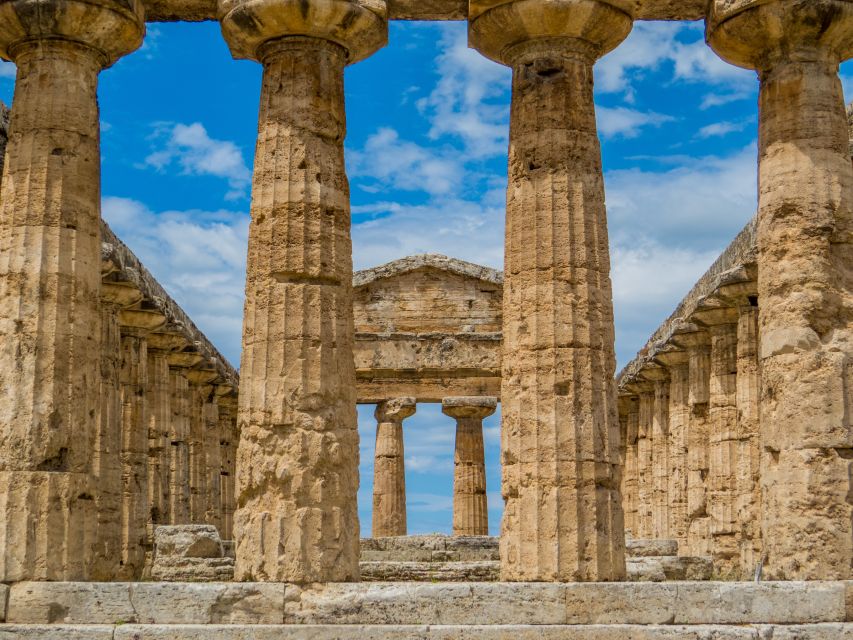
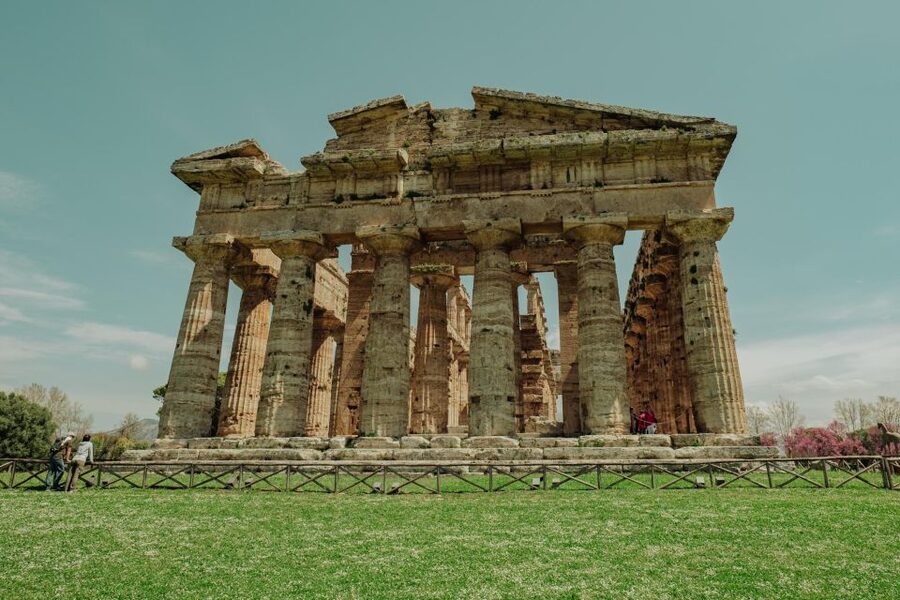
The Temple of Neptune is the star of the visit. Its strong, regular columns and substantial stonework show the Doric style at its most confident. You can walk around the structure and see how the temple was designed from several angles, not just from the front.
The name Temple of Neptune is traditional, but the exact dedication has been debated. A good archaeologist guide can explain what is certain and what remains open to interpretation. That kind of careful distinction is useful at ancient sites, where modern labels sometimes sound more definite than the evidence allows.
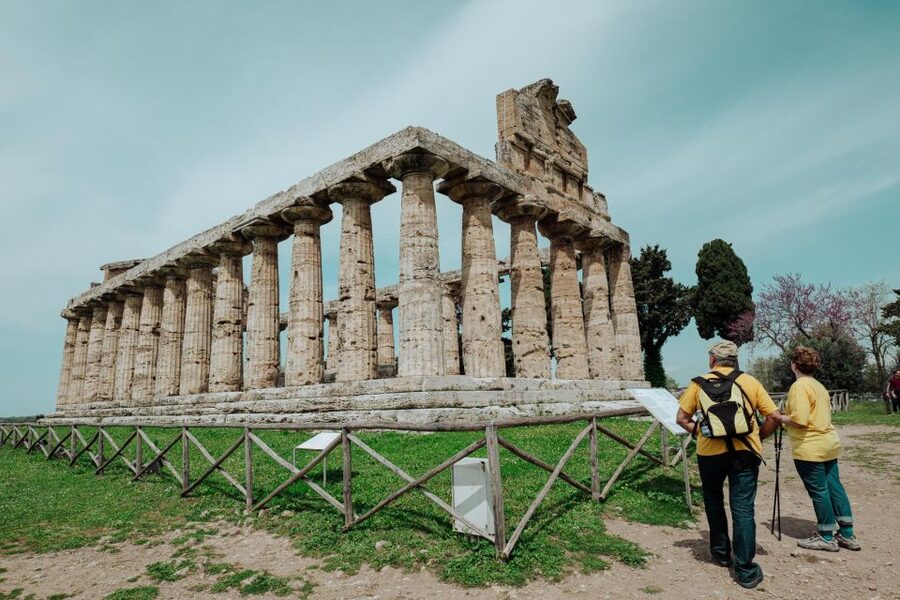
The Temple of Ceres offers a different look at Paestum’s sacred buildings. It is smaller and has a different character from the Neptune Temple, giving you a chance to compare proportions, columns, and construction. The tour also includes the basilica, another major Greek structure often identified as a temple despite its later name.
Together, the three buildings show why Paestum is such a strong stop for anyone interested in Greek architecture. You do not have to rely on reconstructed drawings to imagine the original form. Much of the basic structure remains visible in stone.
The temples are also a good reminder that ancient Greek culture was not confined to Athens. Poseidonia was one of the Greek cities of Magna Graecia, the Greek settlements of southern Italy. Its location near the Tyrrhenian coast and the Sele River helped make it an important city in the region.
Beyond the temples: Paestum as a living city
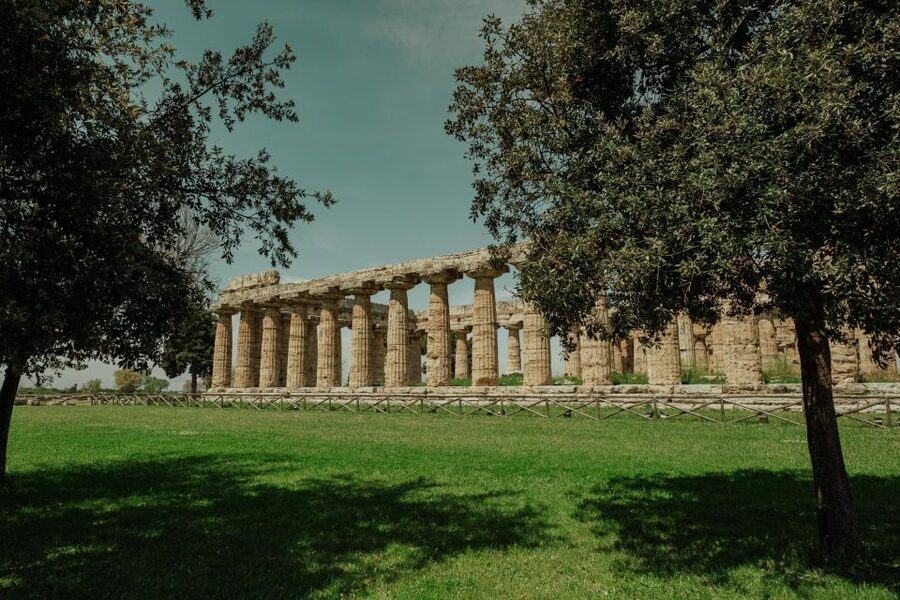
The ruins become more interesting once you move beyond the famous columns. The tour includes the city walls, Roman remains, the comitium, amphitheater, and markets.
The comitium was connected with political assembly during the Roman period. It helps you picture Paestum as a place where public decisions were made, not simply a religious center. The amphitheater adds another piece of the civic picture, showing how entertainment and public gatherings fit into the Roman city.
The market area is equally useful for understanding daily life. A marketplace brings the site down to human scale. You start thinking about buying food, meeting neighbors, and handling ordinary business, rather than viewing Paestum only through its grand monuments.
The city walls help define the size and shape of the settlement. They also show that Paestum was planned as a complete urban center. The tour’s value comes from linking these less famous remains to the temples, so you can understand how sacred, political, commercial, and social spaces worked together.
Because the visit is on foot, wear practical shoes. The tour is not suitable for wheelchair users or people with mobility impairments, and the broad archaeological grounds require steady walking. The listing does not promise a route adapted for limited mobility, so this is an important point to consider before paying.
More Museum Visits in Italy:
- Paestum: Private Tour of Greek Temples and Archaeological Museum
★ 5.0 · 60 reviews - Paestum: Temples and Museum Tour with Archaeologist Guide
★ 5.0 · 14 reviews - Montserrat Museum and Monastery Entry Ticket
★ 4.5 · 1,740 reviews - Lisbon: Belem, Jeronimos Monastery, and Coach Museum Tour
★ 4.8 · 478 reviews
The National Archaeological Museum and the Tomb of the Diver
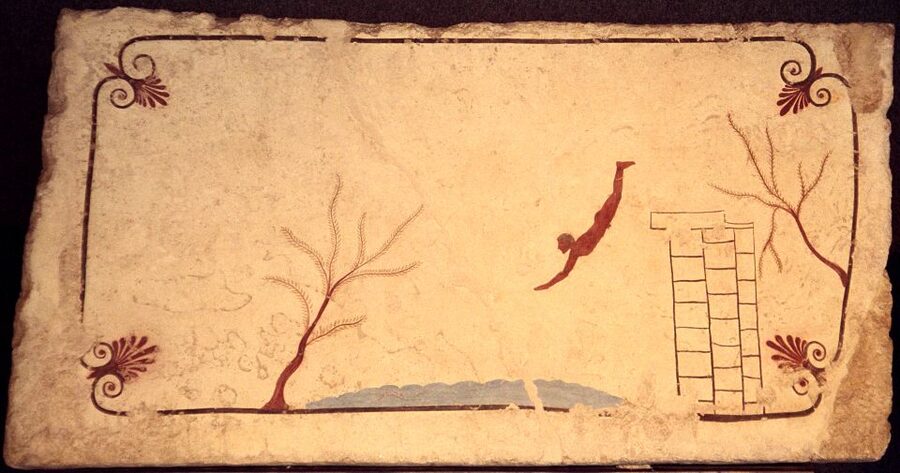
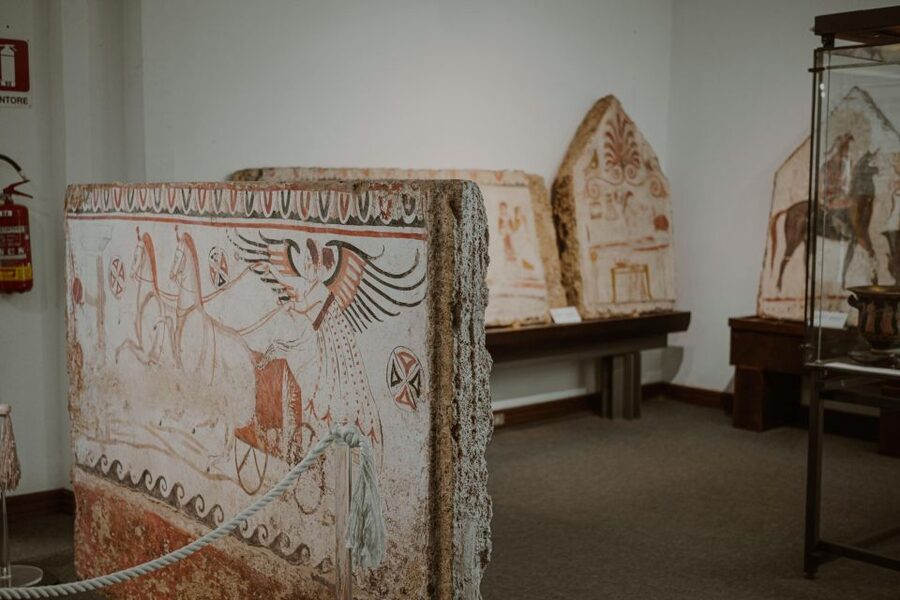
After the ruins, you visit the National Archaeological Museum of Paestum. The museum contains local Greek works dating as far back as the seventh century BC, along with objects that help fill in the story of the ancient city.
The most famous work is the Tomb of the Diver. This painted tomb is unusual because its lid shows a figure diving into water. The image has drawn attention for generations, partly because it is one of the rare surviving examples of Greek funerary painting from this period.
The Tomb of the Diver also gives the outdoor visit a more personal side. The temples show public religion and civic power. The tomb brings you closer to ancient ideas about death, transition, and the unknown. Its simple painted scene leaves room for questions, which is exactly where a museum guide can help.
The museum visit is listed as a guided stop of about 30 minutes. That is enough to see the main works with direction, but not enough for a slow examination of every display. If ancient art is your main interest, you may want to ask your guide how much time is available for the Tomb of the Diver and the other pieces that interest you most.
The combination of park and museum is one of the strongest reasons to book this experience. On your own, it is easy to spend all your time photographing the temples and then rush through the museum. This tour puts both parts into the plan.
How the two-hour schedule works
The experience is advertised as two hours, with starting times depending on availability. The listed route gives the archaeological park a guided visit of two hours and the museum a guided visit of 30 minutes, so you should confirm the exact timing when you book.
That timing matters. Paestum is not a tiny site, and the museum adds another substantial stop. If the full activity is limited to two hours, expect a focused introduction rather than a leisurely examination of every corner. A private guide can help by directing attention to the most important remains, but cannot create extra time.
I would choose a start time that fits your energy and the weather. The information provided does not promise shade, refreshments, or food, so bring what you need for a two-hour walk. Food and drinks are not included.
The tour has skip-the-line tickets, which saves a practical step at both the park and museum. That benefit is most useful when your schedule is tight or when you do not want to work out separate admission arrangements.
Languages, group size, and guide style
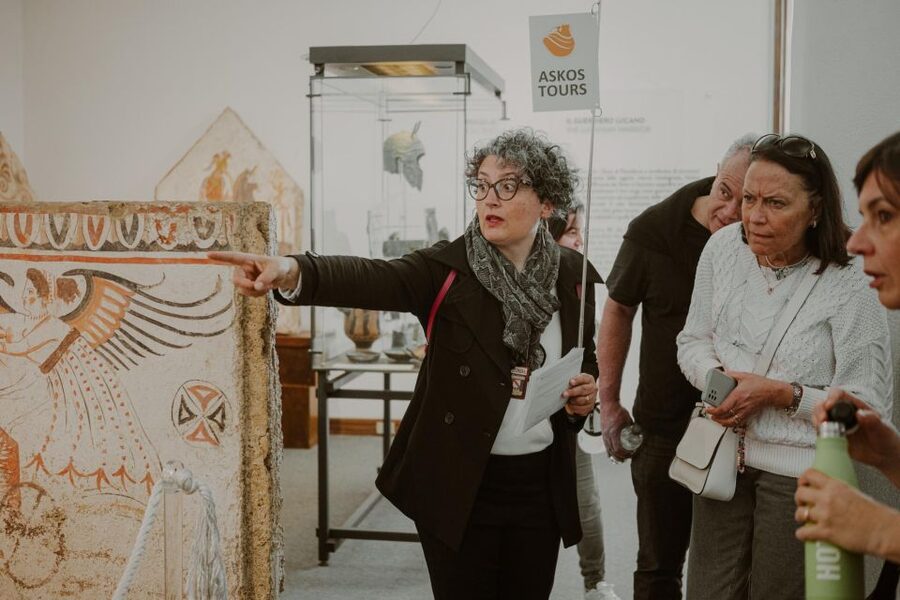
The tour is available in English, Italian, Spanish, French, and German. A certified archaeologist guide leads the experience and provides guidance for the full duration.
No individual guide names are provided, so you should not book expecting a particular person. The important point is the guide’s archaeological qualification and the private format. You receive one continuous explanation rather than piecing together information from signs and a general audio guide.
A private group suits couples, families, and friends who want to ask questions. You can focus on architecture, Roman politics, Greek religion, funerary art, or whatever interests your group most. It is also easier to hear the guide and stay together than in a large group.
The private format does not automatically mean a relaxed pace. With only two hours listed for the experience, tell the guide early if the museum or the temples matter most to you. That simple conversation can help shape the visit.
Is the $189.75 price good value?
At $189.75 per person, this is not a low-cost way to see Paestum. You are paying for a private experience, a certified archaeologist guide, included tickets, skip-the-line access, and assistance for the full visit.
The value depends heavily on your group size. For one or two people, the per-person price is a serious expense. For a private group, the cost may make more sense because you are buying a dedicated guide rather than joining a standard shared walk.
I see the strongest value in the interpretation. Paestum’s temples are impressive without help, but the political buildings, Roman additions, and museum objects are easier to understand with a specialist. If you already know Greek and Roman archaeology well, you may prefer independent entry and a slower visit. If you want a clear explanation without doing your own research, the price is easier to justify.
Included admission also keeps the purchase simple. There are no extra tour taxes, and the tickets are handled as part of the experience. Food, drinks, and transport are not included, so keep those costs separate.
The rating of 4.8 from 19 ratings suggests a consistently strong experience, though the sample is still small. I would give more weight to the clear structure, private format, and archaeologist-led interpretation than to the number alone.
Who should book this Paestum tour?
I would recommend it to anyone visiting Paestum for the first time who wants the ruins explained in a short, organized visit. It is especially useful if you want both the temples and the museum but do not want to plan the route yourself.
History and archaeology fans will get the most from the combination of Greek temples, Roman civic remains, and painted funerary art. Families may also appreciate having a guide connect the stones to recognizable subjects such as politics, markets, entertainment, and burial customs.
The tour is less suitable if you want to wander at your own speed. The short schedule may feel tight if you like to linger, sketch, take many photographs, or read every museum label. It is also not appropriate for people with mobility impairments or wheelchair users.
Free cancellation up to 24 hours before the activity gives you some flexibility, and you can reserve now and pay later. Still, check the starting time and the exact visit length before committing, especially if you are arranging trains, buses, or another activity afterward.
My verdict: a strong choice for a first visit
Book this tour if you want the main story of Paestum in one efficient visit. The three Greek temples provide the visual impact, the Roman ruins show how the city changed, and the museum gives you the Tomb of the Diver and other local works that you would miss by seeing only the park.
Skip it if your priority is a slow, independent archaeological study or if walking is difficult. At $189.75 per person, the tour needs to deliver more than admission, and its real benefit is the private archaeologist’s guidance. For a first visit, that added context makes the price easier to defend.
FAQ
Where does the Paestum tour begin?
The guide meets you at the entrance to the Temple of Neptune, holding a sign with your name.
Where does the activity end?
The tour ends back at the Temple of Neptune meeting point.
How long does the experience last?
The activity is advertised as two hours. The listed schedule also includes a guided museum visit of about 30 minutes, so confirm the exact timing and pace when booking.
What languages are available?
The live tour guide is available in English, Italian, Spanish, French, and German.
Are entrance tickets included?
Yes. The experience includes skip-the-line tickets and all taxes.
Does the tour include hotel pickup and drop-off?
No. Hotel pickup and drop-off are not included.
Is the tour suitable for wheelchair users?
No. The activity is not suitable for wheelchair users or people with mobility impairments.
More two-hour temple visits in Italy
- Private 2 Hour Guided Tour to Philae Temple from Aswan
★ 5.0 · 45 reviews - 2 Hours Tour in Philae Temple
★ 4.0 · 38 reviews - Ninh Binh Jeep tour:2 hours visit Bich Dong, Thai Vi temple
★ 3.8 · 38 reviews - Bangkok: 2 Hours Grand Palace & Wat Pho Private Tour
★ 4.9 · 15 reviews
Newly written up around Italy
- Padre Pio’s Shrine in San Giovanni Rotondo from Bari (Apulia)★ 5.0 · 3 reviews
- Cooking Class in a former Artist Monastery in the Heart of Monopoli★ 5.0 · 18 reviews
- Agrigento Valley of the Temples Archaeological Area★ 4.0 · 33 reviews
- Agrigento to Siracusa with Valley of Temples and Roman Villa Trip★ 5.0 · 5 reviews
- Agrigento: Valley of the Temples Entry Ticket & Audio Guide★ 3.0 · 40 reviews
- Private transportation to the Valley of the Temples + Agrigento★ 5.0 · 8 reviews
- Rome: Temples, Squares & Markets Guided Walking Tour★ 4.8 · 26 reviews
- Rome underground hidden temples, ruins, and secret basilicas★ 3.7 · 21 reviews
Valley of the Temples Tours, compared.
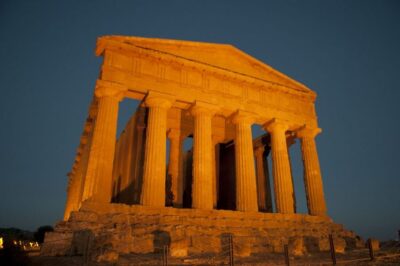
Valley of the Temples Skip-the-Line Sunset Tour
Read our review →
Agrigento and the Valley of the Temples Day Tour
Read our review →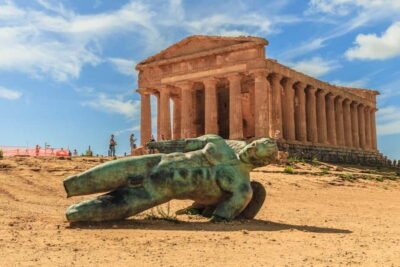
Valley of the Temples Ticket & App Audioguide
Read our review →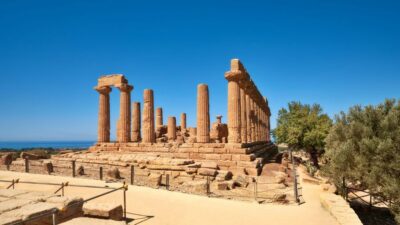
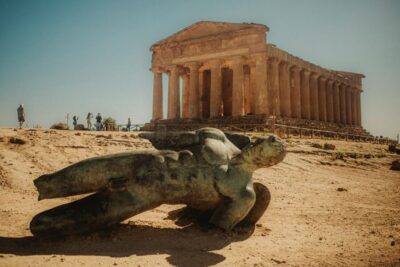
Valley of the Temples and Scala dei Turchi Day Trip
Read our review →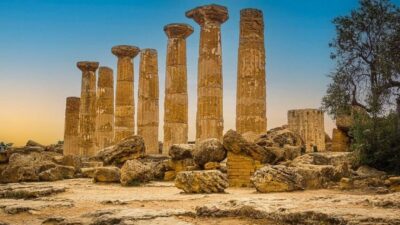
Valley of the Temples and Turkish Steps with Snack
Read our review →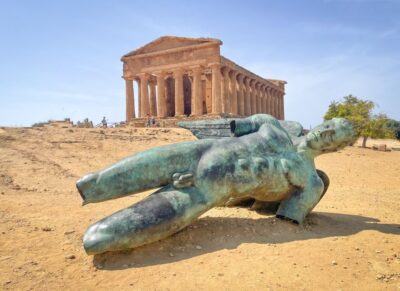
Valley of the Temples Entry Ticket & Audio Guide
Read our review →Browse the lists this tour appears in