
Reviewed · ROME TEMPLE TOURS
Rome underground hidden temples, ruins, and secret basilicas
Rome’s most surprising stories are often found below street level. This walking experience links Michelangelo’s Moses, an ancient gladiator school, and the Basilica of San Clemente, where three underground layers carry you from a medieval church back to a Roman house and a secret Mithraic temple.
I like the way the route mixes famous art with lesser-seen ruins, and I like that the stops are close enough to reach on foot from the Colosseum. The private format also gives you room for questions. The main drawback is physical: San Clemente involves stairs, uneven surfaces, and underground passages, so it is not suitable for wheelchair users or anyone who has trouble walking.
I also like the choice between a private guided tour and an audio visit. The guided option covers all three sites, while the audio option focuses on San Clemente and can be taken in English, Italian, Spanish, French, or German. At $31 per person, the price is reasonable if you want several historical stops, but check which version you are booking before you pay.
Key points at a glance
- Michelangelo’s Moses: See one of Rome’s great sculptures inside San Pietro in Vincoli, along with the chains associated with St. Peter.
- Gladiator training ground: Look down into the remains of the Ludus Magnus, once linked to the Colosseum by underground passages.
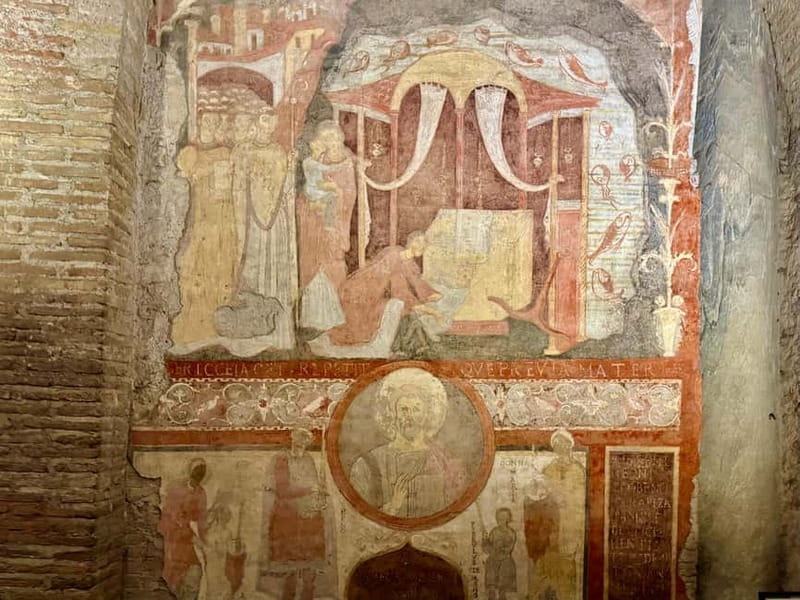
- Three levels at San Clemente: Move from a 12th-century basilica to a 4th-century church, then to a 1st-century Roman house and Mithraeum.
- Walking route near the Colosseum: No transport is provided, but the sites are connected by short walks.
- Two ways to visit: Pick a private guide for context and conversation, or use the audio app for a more independent visit.
- Practical limits: Churches require covered knees and shoulders, and the underground areas are not wheelchair accessible.
Why Rome’s underground layers matter
Rome has been built, rebuilt, and buried many times. A modern street may sit above a medieval church, which sits above an ancient home. This tour makes that idea clear in a physical way.
The most useful part of the route is San Clemente. You do not simply look at ruins behind a rope. You go down through the building and see how one place changed as Rome changed. The effect is easier to understand than a timeline in a museum.
The private tour takes about 2.5 hours, including the walks and visits. The self-guided audio option is shorter or more flexible, with the exact timing depending on how long you spend inside San Clemente. The advertised activity range is about 1 to 2.5 hours.
The route begins from either Via Labicana 96 or Piazza di San Pietro in Vincoli, depending on the option you reserve. Check the meeting point carefully. This is not a coach tour, and there is no hotel pickup or drop-off.
Other temple visits near Italy we have written up
- Agrigento: Valley of the Temples Skip-the-Line Sunset Tour
★ 4.5 · 1,512 reviews - Pantheon Elite Guided Tour – Rome’s Iconic Ancient Temple
★ 5.0 · 1,447 reviews - Palermo: Agrigento and the Valley of the Temples Day Tour
★ 4.2 · 1,240 reviews
San Pietro in Vincoli and Michelangelo’s Moses
The first major stop is the Church of San Pietro in Vincoli, in a small piazza near Via Cavour. The church is best known for two very different treasures: the chains said to have held St. Peter and Michelangelo’s statue of Moses.
The chains are displayed in a reliquary beneath the altar. They give the visit a direct connection to early Christian tradition, though the meaning here is as important as the object itself. You are seeing a relic that has drawn worshippers for centuries, inside a working church rather than a purpose-built museum.
Then comes Moses. The statue was designed for the tomb of Pope Julius II and is often remembered for its powerful pose, flowing beard, and intense expression. Your guide can help you notice the details that are easy to miss when you are standing in a busy church with other sights competing for attention.
The scheduled visit lasts about 20 minutes. That is enough for the key sights, but not enough for a slow art-history lesson or a long look around the entire church. If Moses is a major reason for booking, give yourself a few quiet moments to look before moving on.
Dress matters here. Knees and shoulders must be covered for everyone, and the rule is strictly enforced. Smart casual clothing is required, so pack a light layer if you are visiting in warm weather.
The Ludus Magnus, where gladiators trained
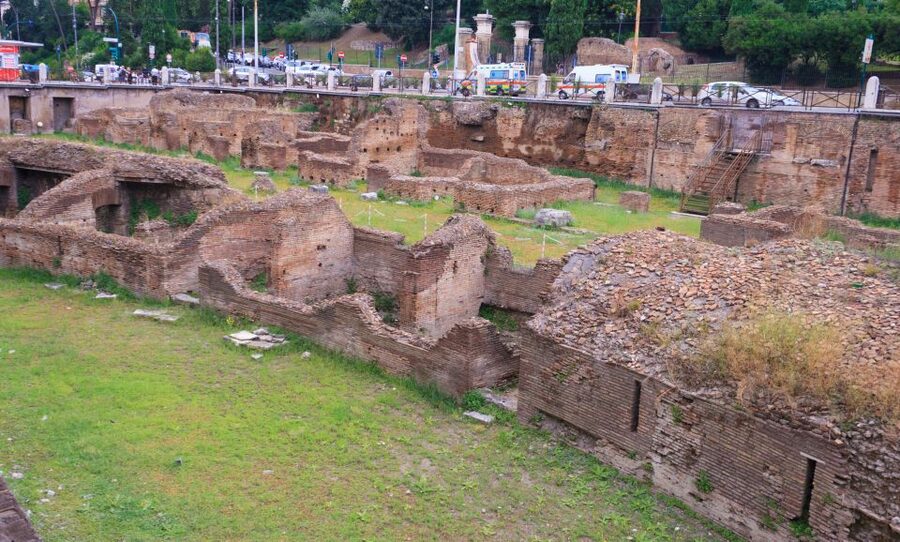
The route continues to the Ludus Magnus, the remains of an ancient gladiator training complex. It was connected to the Colosseum by underground passages, allowing fighters to reach the arena without crossing the busy city above.
The ruins are viewed from outside, so do not expect to walk through a fully restored training school. The value is in the setting and the connection. From the remains, you can picture the practical side of the arena: fighters trained, lived, and prepared nearby before appearing before the Colosseum crowd.
The guided stop lasts around 15 minutes. That short visit works best when you already have some interest in Roman spectacles or plan to visit the Colosseum separately. If you want a long archaeological explanation, this portion may feel brief.
Still, it gives the larger Colosseum area a useful human scale. The amphitheater is about emperors, architecture, and mass entertainment. The Ludus Magnus points you toward the people who had to train for those public contests.
San Clemente’s medieval church above the ruins
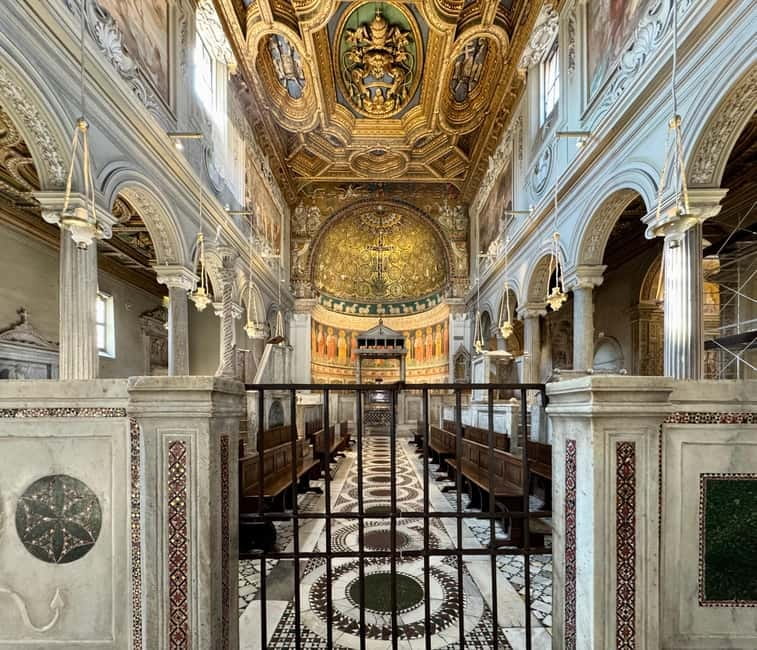
San Clemente is the heart of the experience. At street level, you enter a beautiful basilica from the 12th century, decorated with glittering mosaics. This is not only a passage to the ruins below. Take time to look up and around before descending.
The upper church has the feel of a functioning place of worship, with artwork and religious details that show how medieval Rome presented its faith. It also gives you a useful reference point. Once you begin going downstairs, the building above helps you understand how much the city has changed.
The guided visit to San Clemente lasts about 45 minutes. That is a good amount of time for the main rooms and layers, though your pace may vary. The underground spaces can feel close and dim, and the combination of stairs, hard surfaces, and changing temperatures is worth expecting.
The self-guided audio option includes entry to all three underground levels. It is available in English, Italian, Spanish, French, and German. You use your own phone, and a device from 2020 or later with an updated operating system is recommended. Bring headphones. They are not just a nice extra in an underground church, where clear sound makes the visit much easier.
A different set of gates, same trip:
- Rome’s Iconic Temple: Pantheon Audio Guided Tour with Fast Access
★ 4.0 · 1,188 reviews - Agrigento: Valley of the Temples Ticket & App Audioguide
★ 4.3 · 1,160 reviews - Colosseum Special Access Tour, with Ancient Temples & Tombs
★ 4.8 · 747 reviews - Agrigento: Valley of the Temples E-Scooter Tour
★ 4.6 · 557 reviews
Going down to the fourth-century church
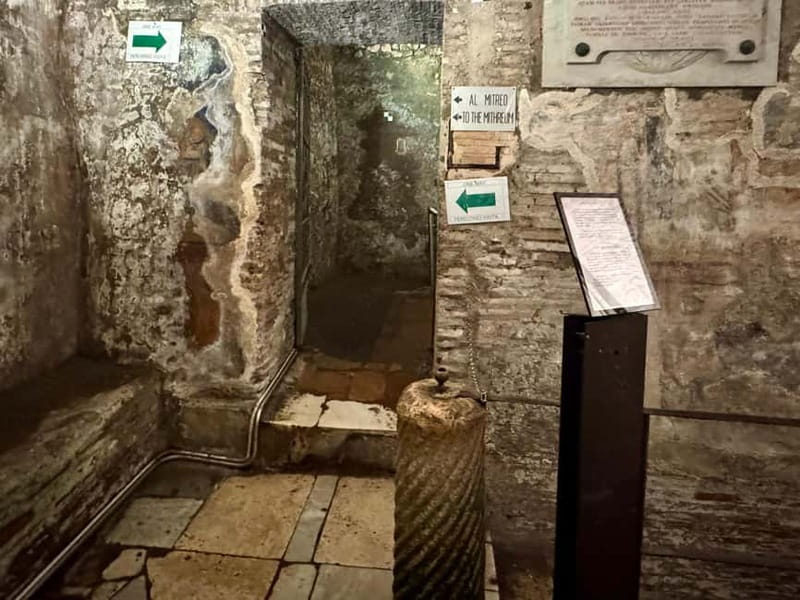
The first major underground layer is a 4th-century church, built below the medieval basilica. Here, the Christian story is still present, but the space is more austere and archaeological than the upper level.
This is where the tour’s central idea becomes visible. The later church did not erase the earlier one. It was built above it, leaving a physical record of how religious life continued in the same place across centuries.
The lower rooms are not polished in the way a major museum might be. That is part of their appeal, but it also means you should expect uneven ground, modest lighting, and a less comfortable walking surface. Comfortable shoes are essential.
A guide is especially useful here because the remains can be hard to read at first glance. With the audio option, you will need to stay attentive to the route and listen for descriptions of what you are seeing. The app gives you control, but it also places more responsibility on you.
The Roman house and Mithraeum below
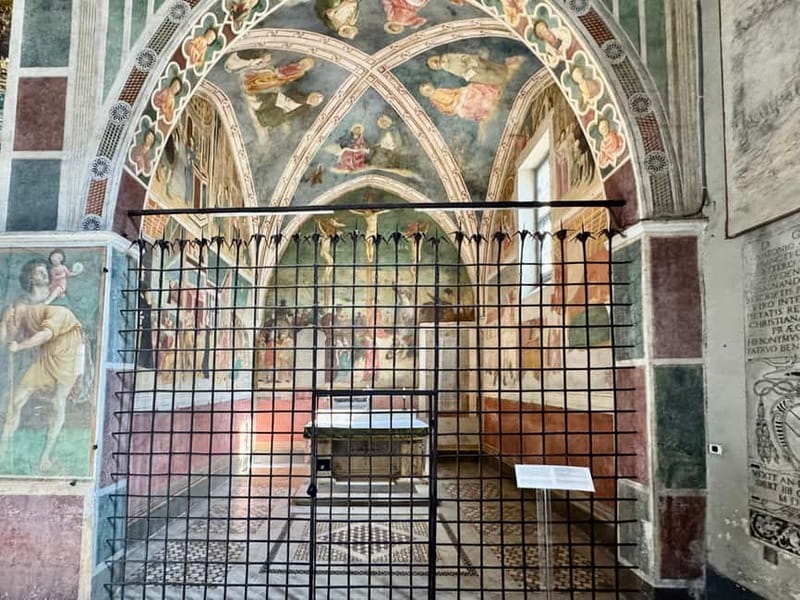
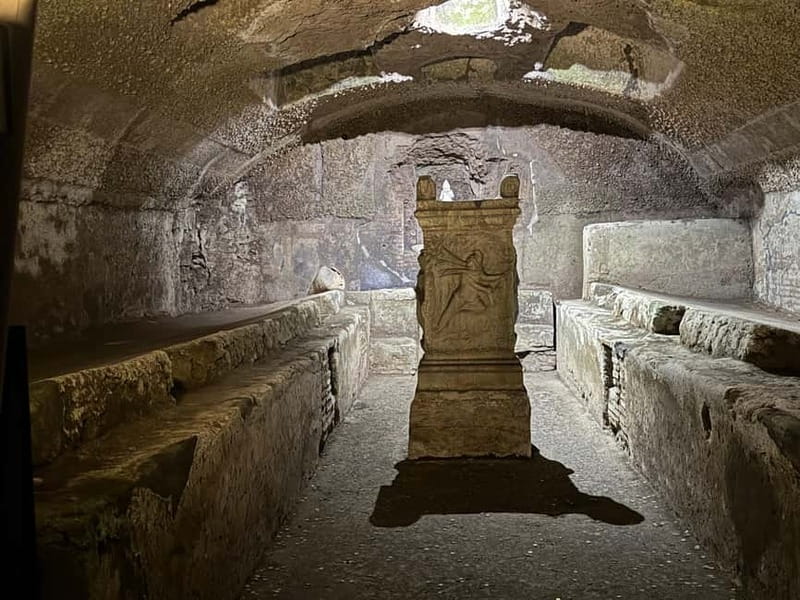
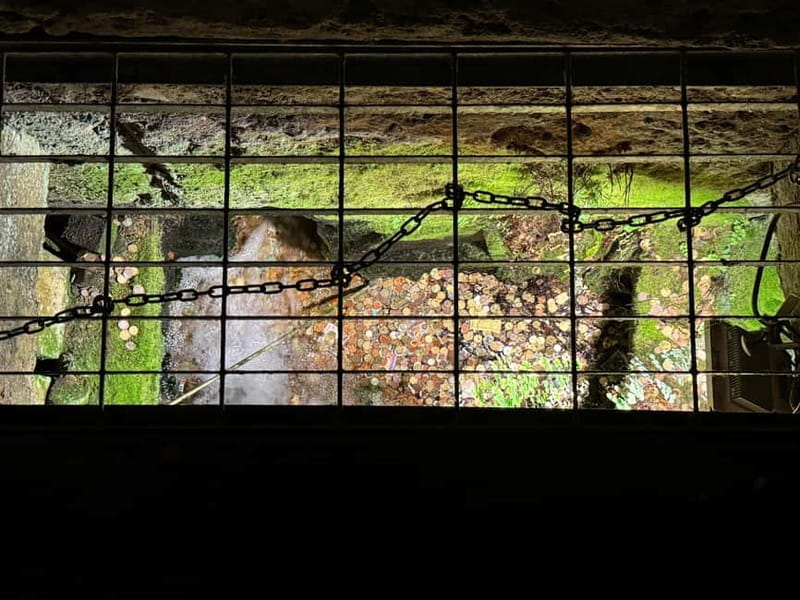
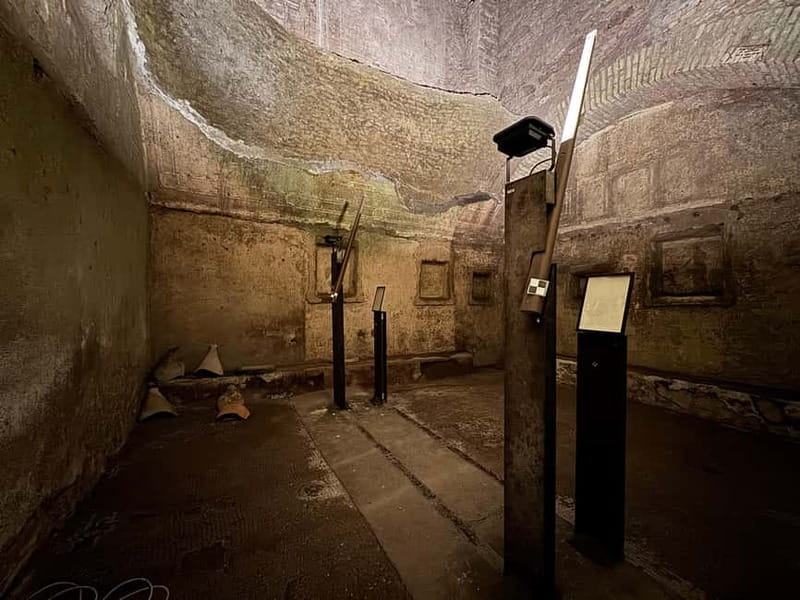
The lowest level takes you back to the 1st century. You see the remains of a Roman house and a Mithraeum, a temple connected with the ancient cult of Mithras.
The Mithraeum is one of the most memorable parts of the visit because it shows a form of worship that once existed alongside the religions and customs of imperial Rome. The rites were private, and the setting below the later churches gives the room a strong sense of secrecy without requiring much imagination.
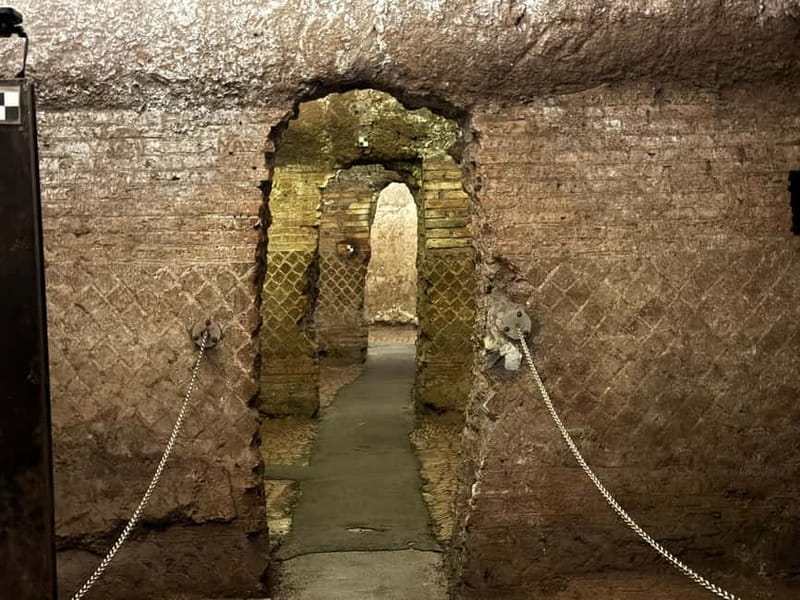
The Roman house also helps broaden the story. Rome underground was not only a place of temples and public monuments. People lived in these spaces, adapted them, and built new structures over them.
You may not be able to identify every feature without help, so this is where the private tour has its clearest advantage. A live guide can explain the layers as you move through them and answer questions about the Roman house, the later church, and Mithraic worship. The audio tour works well if you prefer silence and your own pace, but it cannot respond when a detail catches your attention.
Private guide or audio app?
Choose the private guided option if this is your first visit to Rome, you want the full route, or you enjoy asking questions. It includes San Pietro in Vincoli, the Ludus Magnus, and all three levels of San Clemente. The private group format also avoids the feel of being one person in a large crowd.
The listed private guide language is English, while the activity information also lists live guiding in Spanish, Italian, and French. Confirm the language available for your chosen booking before you reserve.
Choose the audio option if San Clemente is your main goal and you want to control the timing. You can listen in five languages and move through the basilica without following a group schedule. This is a good fit for independent visitors who already know their way around Rome.
The phone audio has received especially positive attention, with one recent booking describing it as excellent and noting that the underground site felt much larger than expected. That is useful advice, but remember that the audio option described here is for San Clemente rather than the full walking route. It does not include the guided visits to Moses or the Ludus Magnus.
Is $31 a fair price?
At $31 per person, the value depends on the option and what you would otherwise arrange yourself. The private version includes a guide, entry tickets, and three separate historical stops. For a small private group, that is a fair price if you want someone to connect the sites rather than visit them as isolated sights.
The audio version offers less personal help, but it includes entry to San Clemente and access to all three underground levels. It can make sense if you are already planning to walk around the Colosseum area and want a structured visit without paying for a full private tour.
The price does not include food, drinks, transportation, or hotel transfers. That is not a serious problem here because the sites are within walking distance, but allow time for the route between stops. You will be walking on Rome’s streets, then spending additional time on stairs and uneven surfaces.
Free cancellation is available up to 24 hours before the start time, and you can reserve now and pay later. Those terms help if your Rome plans are still shifting.
Who should book this Rome underground tour?
I would recommend it to anyone who has already seen Rome’s headline monuments and wants a quieter, more layered look at the city. It also suits first-time visitors who want to connect art, gladiatorial culture, Christianity, and ancient private worship in one compact route.
It is a good choice for:
- Couples and families with older children who can manage stairs
- Art lovers interested in Michelangelo
- Visitors who want a Colosseum-area activity without entering another enormous monument
- Independent visitors who prefer an audio guide
- Small groups who want a private guide and a flexible conversation
I would hesitate to recommend it if you want a fully accessible route, dislike enclosed spaces, or have limited time and cannot handle a delayed start. It is also not a good match for anyone carrying large luggage. Pets, smoking, large bags, non-folding wheelchairs, walking frames, and electric wheelchairs are not allowed.
The route operates in all weather, since the walk between sites is outdoors. Wear comfortable shoes and bring clothing that covers your shoulders and knees. A light layer is useful because underground rooms can feel different from Rome’s streets.
Should you book it?
Book this experience if you want Rome to feel less like a checklist of famous sights and more like a city built in layers. The private version offers the best overall value because it combines Moses, the gladiator school, and San Clemente with a live guide.
Choose the audio visit if you mainly want San Clemente and prefer to explore alone. Just confirm the meeting point, language, and option details before booking. The stairs and uneven underground surfaces are a real limitation, but for visitors who can manage them, this is a compact and memorable way to see a side of Rome that the Colosseum crowds usually miss.
FAQ
Where does the tour start?
The starting point depends on the option booked. The listed starting locations are Via Labicana 96 and Piazza di San Pietro in Vincoli.
How long does the experience last?
The activity lasts about 1 to 2.5 hours. The private guided version includes a 20-minute visit to San Pietro in Vincoli, a 15-minute stop at the Ludus Magnus, and about 45 minutes at San Clemente, plus walking time.
What does the private guided tour include?
It includes a private guide, visits to San Pietro in Vincoli and the Ludus Magnus, entry to the Basilica of San Clemente, and access to its three underground levels.
What does the audio tour include?
The audio option includes entry to the Basilica of San Clemente, access to its three underground levels, and an audio guide in English, Italian, Spanish, French, or German.
Is transportation provided between the sites?
No. The sites are connected by short walks, and transportation is not included.
What languages are available?
The audio guide is available in English, Italian, Spanish, French, and German. The activity information lists live guides in English, Spanish, Italian, and French. The private option specifically identifies an English-speaking guide, so confirm your preferred language when booking.
Is the tour wheelchair accessible?
No. The underground areas include stairs and uneven surfaces, and the experience is not suitable for wheelchair users.
What should I wear and bring?
Wear comfortable walking shoes and clothing that covers your knees and shoulders. Bring a passport or ID card. If you choose the audio option, bring a smartphone made in 2020 or later with an updated operating system, plus your own headphones.
Newly written up around Italy
- Padre Pio’s Shrine in San Giovanni Rotondo from Bari (Apulia)★ 5.0 · 3 reviews
- Cooking Class in a former Artist Monastery in the Heart of Monopoli★ 5.0 · 18 reviews
- Agrigento Valley of the Temples Archaeological Area★ 4.0 · 33 reviews
- Agrigento to Siracusa with Valley of Temples and Roman Villa Trip★ 5.0 · 5 reviews
- Agrigento: Valley of the Temples Entry Ticket & Audio Guide★ 3.0 · 40 reviews
- Private transportation to the Valley of the Temples + Agrigento★ 5.0 · 8 reviews
- Rome: Temples, Squares & Markets Guided Walking Tour★ 4.8 · 26 reviews
- Palermo to Siracusa: stop al Valley of Temples & Roman Villa★ 5.0 · 5 reviews
Rome Temple Tours, compared.
Pantheon Elite Guided Tour – Rome’s Iconic Ancient Temple
Read our review →
Rome’s Iconic Temple: Pantheon Audio Guided Tour with Fast Access
Read our review →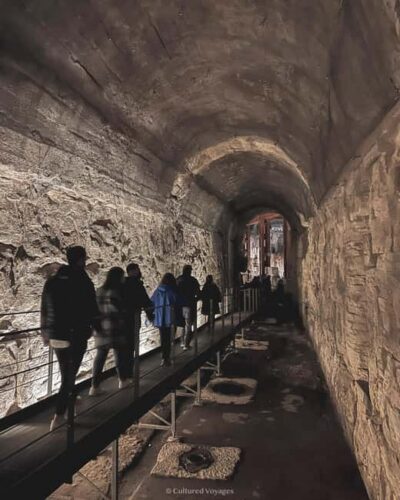
Colosseum Special Access Tour, with Ancient Temples & Tombs
Read our review →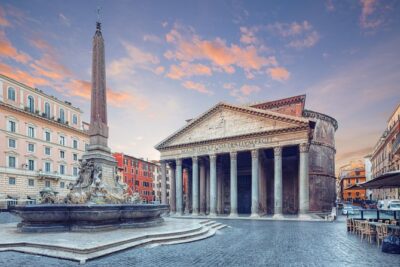
Walking Guided Tour and Rome’s Iconic Temple Pantheon Entrance
Read our review →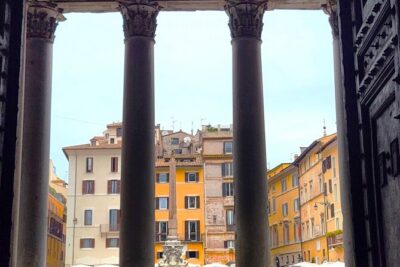
Rome’s Iconic Ancient Temple: Pantheon Fast Track Entry Tickets
Read our review →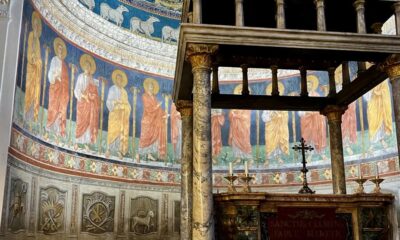
Tour of St. Clement’s Basilica Underground Temples
Read our review →
Pantheon: The Iconic Ancient Roman Temple – Semi-Private Tour
Read our review →
Browse the lists this tour appears in