
Reviewed · INDIA TEMPLE TOURS
Guided tour of Bateshwar Temples Morena
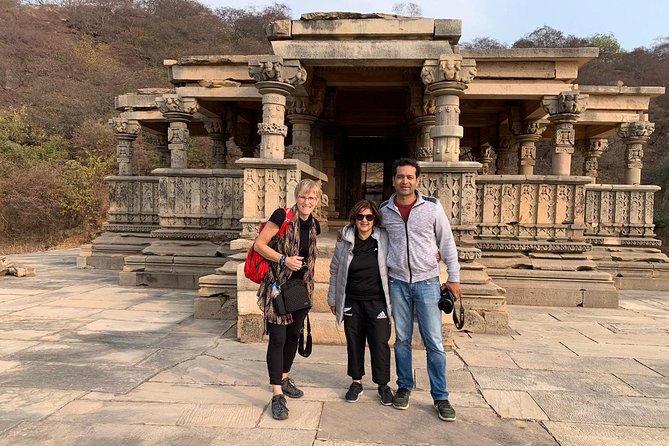
The biggest surprise here is the scale of Bateshwar. About two hours from Agra, you reach a spread of more than 200 temples dating from the 6th to 10th centuries, often with little company around you. I like the rare sense of discovery and the chance to see three very different sites in one day. I also like having a guide such as Kunal to explain the carvings, gods, and changing stages of restoration.
The main drawback is practical: this is not a polished sightseeing circuit. Private transport is not included, there are no reliable tourist facilities around the temples, and one stop requires a 300 to 400 meter uphill walk. Bring lunch, snacks, and plenty of drinking water.
Key points before you book
- Mitawali rises above the countryside: The circular hilltop temple offers wide views and an unusual design linked to Delhi’s Parliament House.
- Bateshwar covers more than 200 temples: The Shiva complex is being restored, so you will see both repaired structures and ruins.
- Padhavali combines temple and fort: Intricate carvings sit inside the remains of a 17th-century fort.
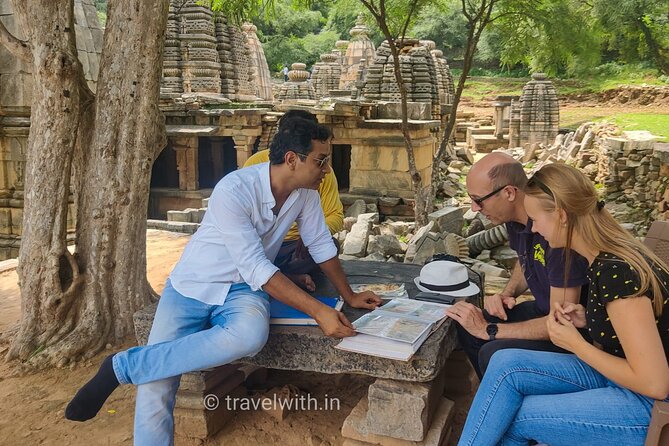
- Kunal provides the historical context: The guide-led format helps you read small carvings and understand the sites beyond their appearance.
- The outing lasts about seven hours: Allow extra energy for the drive from Agra and the walking at Mitawali.
- Pack like you are visiting a remote ruin: Lunch, snacks, and drinking water are essential because facilities are limited.
Why this Agra side trip feels so different
Agra is famous for the Taj Mahal and Agra Fort, both deservedly popular. This excursion gives you a very different day. Instead of polished monuments and busy paths, you get old temple sites, open countryside, scattered ruins, and the quiet pleasure of figuring out what you are seeing with help from a guide.
The three stops also work well together. Mitawali gives you an unusual single temple on a hill. Bateshwar provides scale, with hundreds of shrines spread across a large complex. Padhavali brings you close to fine stone carving within a later fort setting.
I would choose this trip after seeing Agra’s headline sights, especially if you have already visited the Taj Mahal and Agra Fort. It is not a substitute for those monuments. It is a strong second-day choice for anyone curious about central Indian temple architecture and lesser-known archaeological sites.
Other temple visits near India we have written up
- New Delhi: Akshardham Temple Tour with Water and Light Show
★ 4.8 · 313 reviews - Old Delhi Food-Spice Market-Temples Tour Soon Featured on NETFLIX
★ 5.0 · 304 reviews - Private Guided Spiritual Walk in Banganga Hindu Temples
★ 5.0 · 271 reviews
The long road from Agra to Morena
The trip begins and ends in Agra, and the drive to the temple area takes about two hours. That makes the day a serious outing rather than a quick add-on between major Agra attractions. You should expect roughly seven hours in total, with time divided between driving, guided visits, and walking.
The small group limit of eight matters here. A large coach would feel awkward at scattered ruins and narrow temple paths. With a private format, you can ask questions, spend longer on a carving, or adjust the pace within reason. The experience includes a guide and escort, entrance fees, and photographs taken during the tour.
Transport needs careful attention before booking. Private transportation is listed as an extra, so confirm exactly how the road journey will be arranged and what it will cost. The advertised price is shown as $0, and no extra entrance fees are listed, but that does not mean your vehicle, meals, or personal expenses are covered.
Mitawali Temple and its unusual circular plan
Your first major stop is Mitawali Temple, also known as a hilltop circular temple. Its shape is the immediate talking point. Rather than the more familiar straight approach and rectangular plan, the building forms a ring on a raised hill, giving the site an unusual presence from a distance.
The temple is linked with the design of Delhi’s Parliament House. That comparison makes more sense once you see the circular layout, though the two buildings belong to very different periods and purposes. Your guide can help explain the connection without reducing the temple to a simple architectural curiosity.
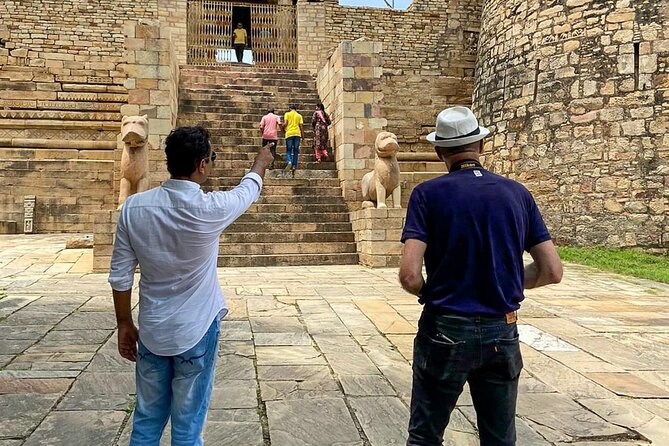
The climb is the main physical issue. One temple requires a 300 to 400 meter uphill walk, and this is the stop where you should expect the most effort. The distance may sound modest, but heat, uneven ground, and the slope can make it tiring. If you have mobility problems, ask about the walk before committing.
At the top, the reward is the broad view over the countryside. The setting helps you understand why this site feels separate from the usual Agra route. You are not looking at one isolated sculpture in a museum. You are seeing a temple placed above the surrounding area, with its form and location working together.
Plan about an hour here. That gives you time for the climb, a guided explanation, photographs, and a slow look at the structure rather than a rushed stop.
Bateshwar’s 200-plus shrines and ongoing restoration
Bateshwar is the heart of the outing. The complex is dedicated to Lord Shiva and includes more than 200 temples dating from the 6th to 10th centuries. Their number is what changes the experience. One shrine can be admired as a single monument. Hundreds create a sense of an entire sacred center, even when many buildings are damaged or incomplete.
The area was once avoided because of bandit activity in the wider region. That past helps explain why such an important group of temples remained outside the usual tourist circuit for so long. Conditions have changed, and the site can now be visited, but it still feels far removed from Agra’s busy attractions.
Government restoration is in progress. You should expect to see temples in different conditions, from repaired structures to ruined or partly reconstructed buildings. This is not a perfectly uniform archaeological park, and that is both its appeal and its limitation. Restoration lets you see the complex returning to use and visibility, but construction or incomplete sections may interrupt the clean visual experience some visitors expect.
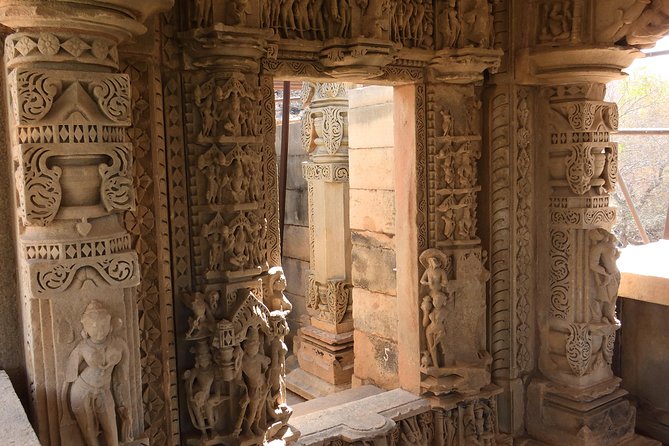
Give yourself at least the planned hour and a half. The small details deserve time. Carved figures, door surrounds, columns, and fragments can tell you more than a quick walk around the largest shrine. A guide is especially useful here because the complex can otherwise blur into a long sequence of similar-looking structures.
The site has sometimes been compared with Angkor Wat because of its scale and scattered temple remains. I would treat that as a loose comparison, not a promise of a Cambodian-style monument. Bateshwar has its own character: a large Shiva complex, a dry archaeological setting, and many small temples rather than one dominant structure.
The best approach is to slow down. Ask Kunal to point out the differences between restored and unrestored sections. Look at how the carvings survive in some places while whole parts of a temple have disappeared. If you enjoy architecture, photography, or archaeology, this stop can easily become the most rewarding part of the day.
A different set of gates, same trip:
- Taj Mahal Sunrise with Lord Shiva Temple:- All Inclusive
★ 5.0 · 207 reviews - Old Delhi Temples and Spiritual Sites Private 6-Hour Tour
★ 4.8 · 204 reviews - Private Delhi Temples and Spiritual Sites 6 Hours Tour
★ 5.0 · 171 reviews - Tipu Palace + Koté Vishnu + Fort + KR Market + Jain Temple = Bengaluru Pété Walk
★ 5.0 · 150 reviews
Padhavali, carvings inside a fort
Padhavali gives the day a different kind of drama. Here you visit an ancient Shiva temple with intricate carvings, surrounded by a 17th-century fort. The setting creates an unusual overlap of religious architecture and later defensive construction.
The carvings are the reason to pay close attention. Small figures and decorative panels reward a slower look, and a guide can help identify stories, deities, and design details that are easy to miss. The site is not just a photo stop. It is a place to examine how stone was used to express religious ideas and ornament a sacred building.
The fort adds another layer. Instead of seeing the temple in isolation, you can consider how the site changed over time and how later structures enclosed or protected it. Padhavali is planned as a one-hour visit, enough for a guided circuit and photographs without making the whole day feel too long.
Entrance to Padhavali is listed as free, while the other admissions are included in the experience. That is convenient, but the more important value is the combination of temple detail and fort setting. If you enjoy close inspection of carvings, you may prefer this stop to the broader Bateshwar complex.
What the guide adds to ancient stone
You can visit ruins independently, but these sites make more sense with explanation. The most useful part of the guiding is not simply hearing dates. It is learning what to look for: a figure tucked into a panel, a damaged section that shows how restoration works, or a design feature that connects one temple to another.
Kunal is named as the guide for this experience, and the strongest feedback about the outing centers on his patience, historical explanations, and ability to add cultural context. He also takes photographs during the tour, which is helpful if you want a few images of the day without asking strangers to use your camera.
The private format should suit people who ask many questions or prefer not to be hurried. It also works well for families and small groups, since the guide can adjust explanations for different interests. The maximum group size is eight, so this should feel more personal than a standard bus tour.
Still, a guide cannot change the basic character of the sites. You are visiting ancient ruins, not a fully developed attraction. Expect uneven ground, open areas, and a day shaped by weather and road conditions.
Food, water, walking, and weather
Bring your own drinking water, snacks, and picnic lunch. There are no tourist facilities in or around the temples, so do not count on finding a restaurant, café, or shop when hunger sets in. This is the most important preparation detail for the day.
Wear practical shoes and plan for walking at Mitawali. The 300 to 400 meter uphill stretch may be manageable for most people, but it can be difficult if you have mobility limits. The activity states that most people can participate, and service animals are allowed, but the hill remains a real consideration.
Weather can cancel the outing. If poor weather makes the trip unsafe or impractical, you are offered another date or a full refund. The same applies if the minimum number of participants is not reached. For your own planning, avoid placing an important evening commitment too close to the scheduled return.
Cancellation is free up to 24 hours before the start time. Inside that window, the amount paid is not refunded, and changes are not accepted. Booking confirmation is normally immediate, though reservations made within one day of departure are confirmed as soon as possible, subject to availability.
Is the price good value?
The displayed tour price is $0, with entrance fees included and no extra ticket charges listed. Read that carefully alongside the exclusions. Private transportation, lunch, personal costs, and medical expenses are not included.
The value depends mainly on your transport arrangement. If you already have a suitable vehicle and only need the guide, escort, site access, and photographs, the package offers a very inexpensive way to reach places that are hard to arrange on your own. If you need to add a private car and driver, ask for the full cost before booking so the day does not appear cheaper than it is.
I would still judge the experience by access and guidance rather than by the ticket price alone. Getting to Mitawali, Bateshwar, and Padhavali independently takes planning, and the sites are not self-explanatory. A guide can turn a collection of old stones into a readable story of worship, carving, damage, and repair.
Who should book this day out?
I would recommend it to you if you have already seen Agra’s main monuments and want a quieter, more unusual day. It is also a strong match for architecture students, photographers, history enthusiasts, and anyone who enjoys archaeological sites where restoration is still visible.
Families can enjoy it if children are comfortable with a long drive, heat, and ancient ruins rather than entertainment facilities. The small group and guide help, but the lack of food outlets and the uphill walk require preparation.
I would hesitate if you want a short, polished excursion with easy transport and frequent comfort stops. The road time is substantial, the facilities are limited, and the sites require patience. This is a day for looking closely, not ticking off attractions at speed.
Should you book the Bateshwar excursion?
Book it if you want to see a side of the Agra region that most visitors miss. Mitawali’s circular hilltop temple, Bateshwar’s huge field of Shiva shrines, and Padhavali’s carved temple inside a fort make a varied trio. The guide-led format adds real value, especially at Bateshwar, where restoration and scattered ruins can be hard to interpret alone.
Before you confirm, settle the transport cost, pack lunch and water, and be honest about the uphill walk. If those points work for you, this is an excellent choice for a curious day beyond the Taj Mahal.
FAQ
Where does the tour start and finish?
The tour starts in Agra, Uttar Pradesh, and ends back at the meeting point in Agra.
How long does the experience last?
The full experience lasts about seven hours.
How far are the temples from Agra?
The Bateshwar temple area is about a two-hour drive from Agra.
Which sites are included?
The tour visits Mitawali Temple, the Bateshwar group of temples in Morena, and Padhavali.
Are entrance fees included?
Yes. Entrance fees are included, and no additional ticket fees are listed for the included sites.
Is private transportation included?
No. Private transportation is not included, so confirm the transport arrangement and cost before booking.
Should I bring food and water?
Yes. You should bring drinking water, snacks, and a picnic lunch because there are no tourist facilities in or around the temples.
Is the tour suitable for people with mobility issues?
Most people can participate, but one temple requires a 300 to 400 meter uphill walk. This may be challenging if you have mobility problems.
What is the cancellation policy?
You can cancel at least 24 hours before the start time for a full refund. Cancellations or changes made within 24 hours are not refunded or accepted. Weather or minimum-participant cancellations offer a different date or a full refund.
Newly written up around India
- Bandipur Tiger Reserve with Somnathpur Temple Tour★ 5.0 · 21 reviews
- Day trip from Bangalore to Lepakshi for Temple architecture & paintings★ 5.0 · 15 reviews
- Full Day Private Tour of Temples of Bengaluru★ 5.0 · 5 reviews
- Lepakshi Temple and Nandi Hills Day Trip from Bangalore★ 4.5 · 3 reviews
- Lepakshi Temple Day Tour from Bangalore★ 5.0 · 3 reviews
- Bull temple layout Heritage walk★ 5.0 · 13 reviews
- Lalbagh+Bull Temple+Tipu Palace+Market+Lunch=Bangalore City Tour★ 5.0 · 9 reviews
- Private Full-Day Amritsar Tour: The Golden Temple & Wagah Border★ 5.0 · 14 reviews
India Temple Tours, compared.
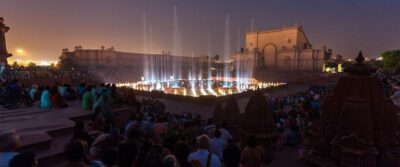
Akshardham Temple Tour with Water and Light Show
Read our review →
Old Delhi Food-Spice Market-Temples Tour Soon Featured on NETFLIX
Read our review →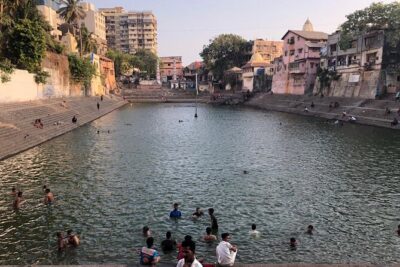
Private Guided Spiritual Walk in Banganga Hindu Temples
Read our review →
Taj Mahal Sunrise with Lord Shiva Temple:- All Inclusive
Read our review →
Old Delhi Temples and Spiritual Sites Private 6-Hour Tour
Read our review →
Private Delhi Temples and Spiritual Sites 6 Hours Tour
Read our review →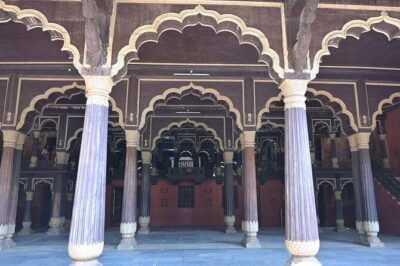
Tipu Palace + Koté Vishnu + Fort + KR Market + Jain Temple = Bengaluru Pété Walk
Read our review →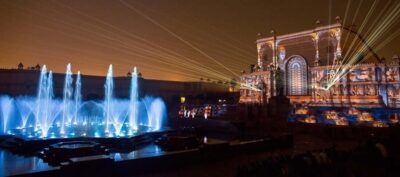
Akshardham Temple Light Show with Custom Add-Ons
Read our review →Browse the lists this tour appears in