
Reviewed · INDIA TEMPLE TOURS
Bhubaneswar city tour & Konark Sun Temple in private car with guide
Konark Sun Temple is the star here, a vast stone chariot built in the 13th century, but the day gains depth from the sites around Bhubaneswar. You begin with Ashoka’s turning point at Dhauli Giri Hills, then see Jain rock-cut cells and a finely carved sandstone temple before returning to the city.
I like the private format, since your group can set the pace, and I like having lunch, a car, hotel pickup, and a guide bundled together. The route also links Buddhist, Jain, and Hindu sites in one day, giving you a better sense of Odisha than a single temple visit would.
The main drawback is the schedule. Nine hours covers a lot of ground, and Konark deserves unhurried attention. Guide communication may also vary, so if you need slow, detailed English, mention that when booking.
Key points to know before booking
- Konark is the main event: Allow your attention to settle on the temple’s enormous chariot form and stone horses.
- Dhauli connects scenery with history: The hill is tied to the 260 BC battle that changed Emperor Ashoka’s life.
- Your group stays private: Only your party joins the car, guide, and sightseeing.
- Lunch is included: Drinks are not, so plan to pay for beverages separately.
- The pace can be flexible: One guide, Surya, is praised for explaining slowly and clearly, and the itinerary can be adjusted to suit your interests.
- You see three religious traditions: The day includes Buddhist Dhauli, Jain caves, and Hindu temples.
Why this Bhubaneswar day works
Bhubaneswar is known for sandstone temples, but its story is not limited to Hindu architecture. This tour gives you a compact look at several layers of Odisha’s past: a Mauryan battlefield, a modern Buddhist Peace Pagoda, ancient Jain retreats, a medieval Hindu temple, and Konark’s grand solar monument.
That range is the strongest reason to choose this outing. If you visit only Bhubaneswar’s temples, you miss the setting that made the region important. If you go only to Konark, you miss the religious and political context around it.
The private car matters, too. You are not tied to a large group’s pace, and the guide can spend more time on the places that interest you. A past itinerary allowed the customer to set the pace, which is useful when one person wants to study carvings while another prefers a quick look.
The tour begins at 8:00 a.m. and lasts about nine hours. That makes it a full day rather than a quick city outing. Hotel pickup and drop-off are offered from hotels in Bhubaneswar, so you do not need to find your own way to a meeting point.
More temple trips with a car and driver in India:
- Angkor Wat in a vintage Jeep with driver – jeep rental
★ 4.8 · 37 reviews - Datong:HangingTemple&Grotto Private Car with Entrance ticket
★ 4.8 · 11 reviews - Angkor Wat Small Circle Private Car Tour in Siem Reap
★ 4.5 · 3 reviews
Dhauli Giri and the story of Ashoka
The first stop is Dhauli Giri Hills, about 45 minutes. The site is linked to a battle fought in 260 BC, when Emperor Ashoka of the Mauryan Empire defeated the Kalinga forces.
The important part of the story is what happened after the victory. Ashoka is said to have been shaken by the bloodshed and turned toward Buddhism. That change influenced his rule and helped spread Buddhist ideas across much of the region.
You can appreciate Dhauli best as both a viewpoint and a historical site. The hill gives the opening stop a little breathing room before the more detailed stonework later in the day. Admission is included, according to the tour details.
Do not expect a long archaeological visit here. The planned stop is 45 minutes, so the guide will likely focus on the battle, Ashoka, and the setting rather than cover every aspect of Kalinga history.
The Peace Pagoda at Dhauli
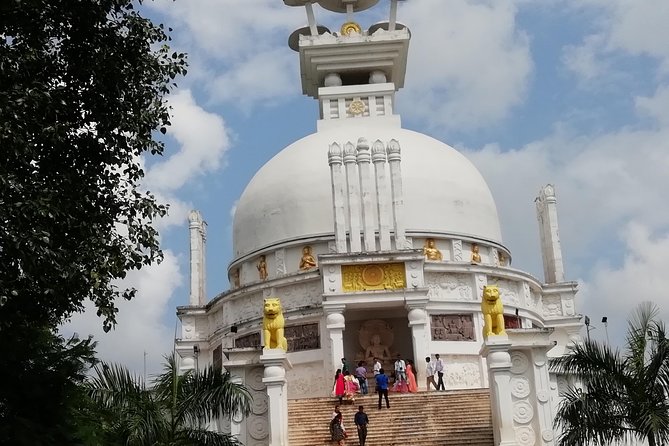
Dhauli’s Shanti Stupa, or Peace Pagoda, adds a more recent layer to the hill. The present structure was built in 1972 through cooperation between the Japan Buddha Sangh and the Kalinga Nippon Buddha Sangh.
The pagoda gives you a clear visual link between Odisha and wider Buddhist traditions. It also changes the mood of the morning. You have just heard about a brutal ancient battle, then you encounter a monument built around peace.
The planned visit is another 45 minutes, with admission included. Since the hill and pagoda are treated as separate stops, you get time for both the historical explanation and the monument itself.
Your guide’s communication will affect how much you take from this section. A guide named Surya has been praised for explaining the history carefully and speaking slowly for visitors who are not fluent in English. That is worth requesting if clear language matters to you, though guide assignment can vary.
Konark Sun Temple and its stone chariot
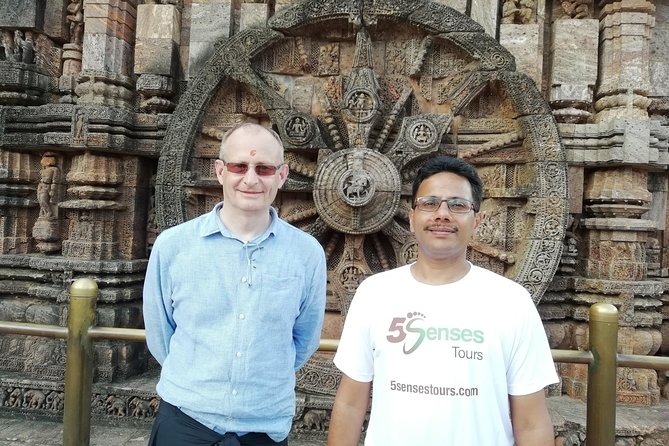
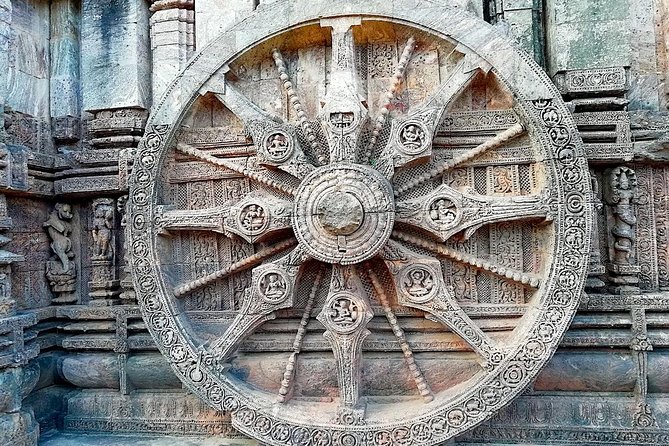
Konark is the reason many people will book this tour. The 13th-century Sun Temple was built by King Narasimhadeva and designed as a colossal chariot. Its form includes seven horses, a powerful image even before you begin studying the carvings.
The one-hour stop gives you a useful introduction, but it is not an unlimited amount of time. Konark is a place where you can spend much longer examining stone details, so tell your guide if you would rather give this temple extra attention than linger at a later city stop.
The temple’s design makes it easy to understand why it is considered one of India’s great architectural achievements. Instead of a simple structure, the building presents the sun god’s chariot in monumental stone. Wheels, horses, and carved surfaces turn the temple into both a religious building and a work of sculpture.
The tour description also points to the erotic carvings at Rajarani Temple, not Konark alone. At Konark, your guide can help you read the building as a whole rather than treating it as a collection of attractive stones. That context is valuable, especially if this is your first visit to Odisha.
Admission is included at this stop, and transport from Dhauli is handled in the private car. The route makes Konark practical as a day trip from Bhubaneswar, without forcing you to arrange a separate driver or navigate the journey yourself.
A practical point: protect this stop in your schedule. If you are most interested in architecture, ask to keep the pace brisk at the earlier locations so you have enough time to look closely at Konark.
Other temple visits near India we have written up
- New Delhi: Akshardham Temple Tour with Water and Light Show
★ 4.8 · 313 reviews - Old Delhi Food-Spice Market-Temples Tour Soon Featured on NETFLIX
★ 5.0 · 304 reviews - Private Guided Spiritual Walk in Banganga Hindu Temples
★ 5.0 · 271 reviews - Taj Mahal Sunrise with Lord Shiva Temple:- All Inclusive
★ 5.0 · 207 reviews
Khandagiri and Udayagiri’s Jain caves
Back in the Bhubaneswar area, the tour visits the Khandagiri and Udayagiri caves for about an hour. These are not natural caves in the usual sense. They are rock-cut cells that served as retreats for Jain ascetics.
The caves were made in the second century BC during the reign of King Kharavela of the Kalinga Kingdom. Their simple chambers and carved surfaces offer a very different experience from Konark’s large temple design.
This stop is especially useful because it shows how religious life was shaped into the rock itself. The scale is smaller and more intimate. You are looking at places connected with meditation and retreat rather than a huge ceremonial monument.
At the top, the tour information notes an 18th-century structure, though it does not give further detail. Admission is included. The site may appeal most to you if you like ancient architecture, religious history, or places that feel less polished than a major temple complex.
The name in the itinerary is Khandagiri Caves, but the description refers to both Khandagiri and Udayagiri. Confirm the exact route with your guide if seeing both cave areas is important to you.
Rajarani Temple and its sandstone carvings
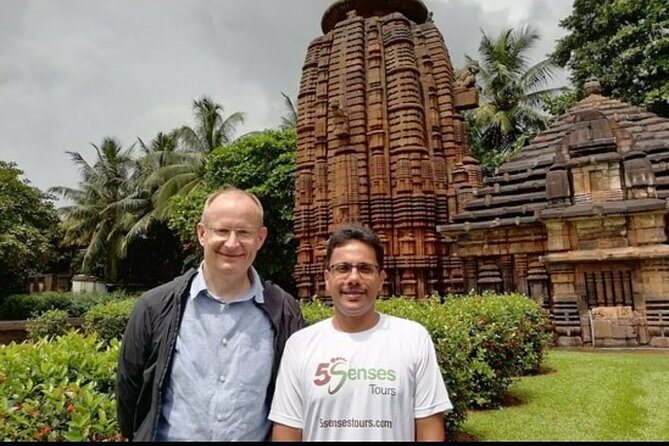
Rajarani Temple is the final listed sightseeing stop, with about an hour set aside. The temple dates to the 11th century and was built from reddish and yellow sandstone. That stone was known locally as Rajarani, which gave the temple its name.
The temple is known for its sculpted figures and erotic carvings. This is a good place to slow down and look closely. Compared with Konark’s massive chariot design, Rajarani gives you a more focused view of medieval temple decoration.
Your guide can help you notice how the stone color and carving style shape the building. The temple’s appeal is not only its religious function. It is also the way the sandstone allows detailed figures and decorative forms to cover the structure.
The stop is long enough for a proper visit, but the overall day is already full. If Konark is your top priority, you may prefer to spend the final hour at Rajarani without adding extra unlisted stops.
The city setting also gives this temple a useful place in the day. You end with Bhubaneswar’s own architecture after visiting sites outside the city. That makes the return feel connected to the beginning rather than simply a drive back from Konark.
Lunch, car, and private pacing
Lunch is included in the price, which makes the day easier to manage. Drinks are not included, so keep that small extra cost in mind. The tour details do not specify the restaurant, menu, or meal style, so you should not book this expecting a particular cuisine or dining setting.
The private car is one of the tour’s practical strengths. You get round-trip transportation from your Bhubaneswar hotel, a professional guide, and a driver without having to coordinate separate bookings.
The private setup also suits mixed interests. One person can ask more questions about Ashoka, another can focus on temple carvings, and the group can discuss how long to stay at each site. The tour information states that only your group participates.
Still, private does not mean slow. The day includes multiple stops and the drive to Konark. You should expect a structured day with a fair amount of time in the vehicle, not a relaxed city walk with no schedule.
Is the $140 price good value?
The price is $140 per person. That includes the private car, professional guide, hotel pickup and drop-off, lunch, all listed taxes and handling charges, and admission at the named stops.
For a solo visitor, that can feel expensive. For a couple, family, or small group, the private arrangement can make more sense because the cost buys a full day of transport and personal service rather than a seat on a large coach.
The value is strongest if you want to combine Konark with Bhubaneswar in one day. Arranging the car, driver, guide, lunch, and site visits separately would take time and could produce a less coherent schedule.
The value is weaker if you want to spend several hours at Konark alone or explore Bhubaneswar at a very slow pace. This tour is designed to cover several major sights, so you are paying for range and convenience.
You can also compare the price with your own priorities. If the Peace Pagoda, Jain caves, and Rajarani Temple all interest you, the day offers a broad introduction. If you only want Konark, a more focused arrangement may suit you better.
What the guide can add
The guide is not just there to point out buildings. The best use of this service is to connect each site to the next: Ashoka’s change at Dhauli, Buddhist influence at the Peace Pagoda, Jain ascetic life in the caves, and Hindu temple design at Rajarani and Konark.
Communication is worth discussing before the day begins. One guide, Surya, has been praised for giving detailed historical explanations and speaking slowly in English. Another experience raised concern about poor English communication, so you should state your language needs clearly when booking.
That does not mean the tour lacks information. It means the quality of the day depends partly on how well the guide’s speaking style matches your needs. Ask for clear, measured explanations if you are not comfortable with fast English.
The strongest guide approach here is probably conversational rather than rushed. You should feel free to ask for more time at a carving, a simpler explanation, or a faster transition when a stop has answered your questions.
Who should book this tour?
I would choose this tour if you are based in Bhubaneswar and want one organized day that reaches Konark without arranging transport yourself. It also suits first-time visitors who want a broad introduction to Odisha’s religious and architectural past.
It is a good fit for couples, families, and small groups who value privacy. The ability to set the pace is useful, especially when some people in your group want detailed explanations and others prefer to keep moving.
History and architecture fans will get the most from it. You see a Mauryan-era battlefield, a modern Buddhist monument, ancient Jain caves, and two major Hindu temple sites in one route.
I would be more cautious if you dislike full days with several stops. I would also ask about the guide’s English communication before booking if detailed spoken explanation is essential to you.
Booking is flexible in one useful way: you can cancel for a full refund up to 24 hours before the 8:00 a.m. start time. Changes or cancellations inside that window are not accepted for a refund.
Should you book the Bhubaneswar and Konark day?
Book it if you want Konark plus the essential Bhubaneswar sights in one private day, with lunch and transport taken care of. The route has real variety, and the private format lets you control the pace better than a large group tour.
Think twice if you want a slow, single-site visit or if you prefer to plan every meal and stop yourself. For most first visits, though, the combination of Dhauli, the Peace Pagoda, Konark, the Jain caves, and Rajarani Temple makes this a sensible use of nine hours.
FAQ
How long does the tour last?
The tour lasts approximately nine hours and starts at 8:00 a.m.
Does the tour include hotel pickup and drop-off?
Yes. Round-trip pickup and drop-off from hotels in Bhubaneswar are included.
Is the tour private?
Yes. Only your group participates in the private tour or activity.
Is lunch included?
Yes. Lunch is included, but drinks are not included.
Are admission tickets included?
Admission is listed as included at Dhauli Giri Hills, the Dhauli Peace Pagoda, Konark Sun Temple, Khandagiri Caves, and Rajarani Temple.
Can I cancel for a full refund?
Yes. You can cancel at least 24 hours before the experience start time for a full refund. Cancellations or changes made less than 24 hours before the start time are not accepted for a refund.
Newly written up around India
- Divine Delhi: Full-Day Tour of Temples & Spiritual Sites★ 4.5 · 3 reviews
- 6-hour Temples tour of Bhubaneswar including hotel pick-up & drop-off★ 4.0 · 3 reviews
- Full Day Tour of Konark Temple and Puri★ 5.0 · 7 reviews
- Puri Jagannath, Konark Sun temple, Pattachitra art in best of Odisha in 2 days★ 5.0 · 10 reviews
- Bandipur Tiger Reserve with Somnathpur Temple Tour★ 5.0 · 21 reviews
- Day trip from Bangalore to Lepakshi for Temple architecture & paintings★ 5.0 · 15 reviews
- Full Day Private Tour of Temples of Bengaluru★ 5.0 · 5 reviews
- Lepakshi Temple and Nandi Hills Day Trip from Bangalore★ 4.5 · 3 reviews
India Temple Tours, compared.
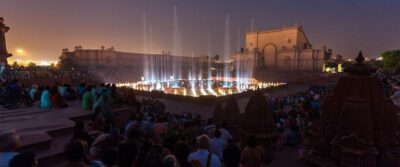
Akshardham Temple Tour with Water and Light Show
Read our review →
Old Delhi Food-Spice Market-Temples Tour Soon Featured on NETFLIX
Read our review →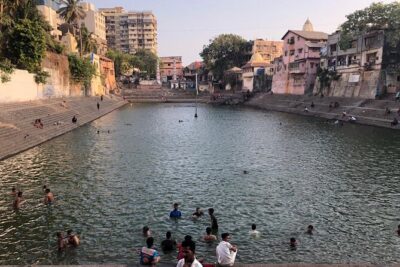
Private Guided Spiritual Walk in Banganga Hindu Temples
Read our review →
Taj Mahal Sunrise with Lord Shiva Temple:- All Inclusive
Read our review →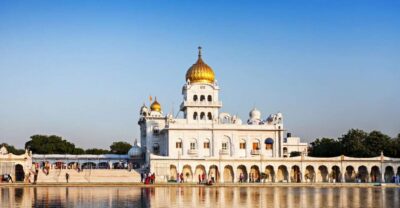
Old Delhi Temples and Spiritual Sites Private 6-Hour Tour
Read our review →
Private Delhi Temples and Spiritual Sites 6 Hours Tour
Read our review →
Tipu Palace + Koté Vishnu + Fort + KR Market + Jain Temple = Bengaluru Pété Walk
Read our review →
Akshardham Temple Light Show with Custom Add-Ons
Read our review →Browse the lists this tour appears in