
Reviewed · NEPAL TEMPLE TOURS
Kathmandu Spiritual Sites: Bodhnath & Pashupatinath Tour
Kathmandu’s most powerful spiritual experience comes at dusk, when prayer wheels turn at Boudhanath Stupa and lamps glow beside the Bagmati River at Pashupatinath. This four-hour tour links two UNESCO World Heritage sites while giving you a taste of local buses or taxis, crowded temple grounds, sadhus, Buddhist prayer, and the evening Aarati ritual.
I like the way the tour combines Buddhist and Hindu traditions in one compact outing, and I like that the small groups, capped at 12, allow guides such as Rita, Amit, Rozit, Subash, and Bipin to answer questions and help you through the crowds. The main drawback is the pace: about two kilometers of walking, public transport, and dense crowds can feel tiring, especially at Pashupatinath.
Key points at a glance
- Two major spiritual sites in one afternoon: Visit Boudhanath Stupa and Pashupatinath Temple during the same four-hour outing.
- The evening Aarati is the finale: Watch an offering of lights to Lord Pashupatinath as worshippers gather beside the Bagmati River.
- Local transport adds real-life texture: You travel from Thamel by public transport rather than spending the whole tour in a private vehicle.
- A guide makes the rituals easier to understand: Learn about prayer wheels, butter lamps, sadhus, cremation customs, and Hindu and Buddhist beliefs.
- Small groups keep the experience personal: The maximum group size is 12, with private arrangements possible.
- Extra costs need watching: Palm reading, butter lamps, and payments to sadhus are not included in the $60.56 price.
Why these two sites work so well together
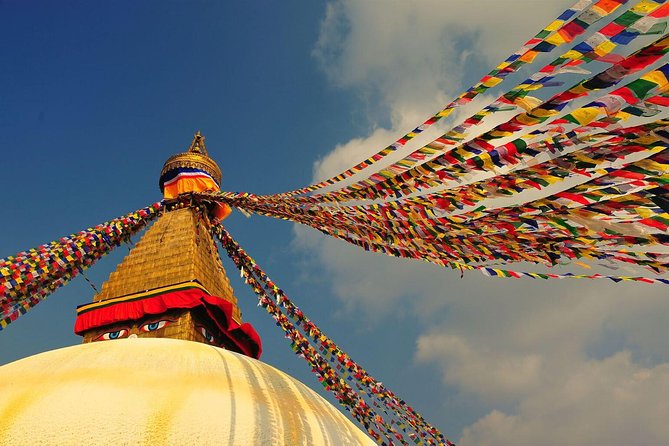
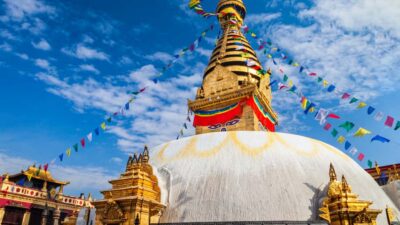
Boudhanath and Pashupatinath show two different sides of Kathmandu’s religious life. Boudhanath is a major center of Tibetan Buddhism, with a huge white dome, a gold pinnacle, painted Buddha eyes, prayer flags, shops, monasteries, and a steady stream of people walking clockwise around the stupa.
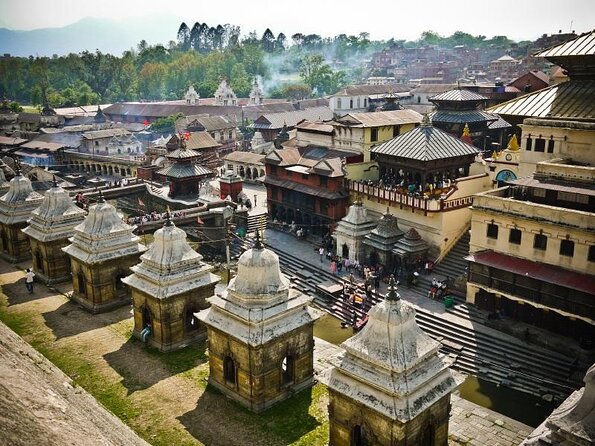
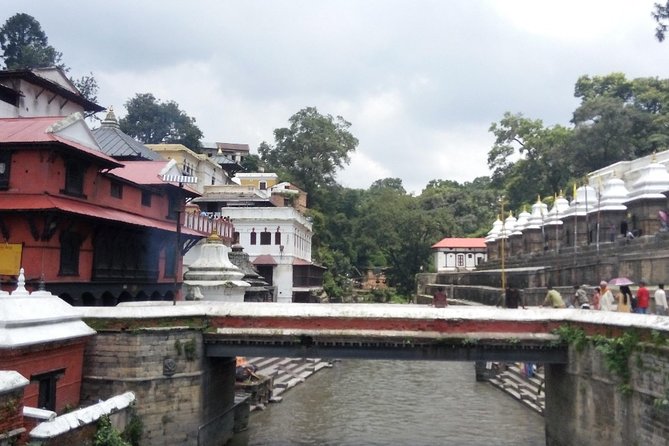
Pashupatinath is one of the most important Hindu shrines in Nepal. It is dedicated to Shiva and sits along the Bagmati River, where worship, daily life, death, and public ceremony meet in one intense setting.
That contrast gives the tour its purpose. You are not simply ticking off two famous monuments. You are seeing how people pray, move through sacred space, seek guidance, honor the dead, and gather for an evening ritual.
The tour begins at 3 pm at Hotel Marshyangdi in Thamel. That timing matters. You reach Boudhanath while there is still daylight, then arrive at Pashupatinath in time for the late-day Aarati. The light changes during the outing, and the atmosphere becomes more dramatic without turning the experience into a staged evening show.
Other temple visits near the world we have written up
- Lisbon: Jerónimos Monastery Entrance Ticket
★ 4.1 · 14,164 reviews - Angkor Wat Sunrise or Sunset Tour with Guide from Siem Reap
★ 5.0 · 12,109 reviews - Teotihuacan, Guadalupe Shrine & Tlatelolco Day Tour with Lunch
★ 5.0 · 11,603 reviews
Boudhanath Stupa: walking the prayer-wheel circuit
Boudhanath is the first major stop, with about an hour and 25 minutes here. You will circle the stupa with local Buddhists, turning prayer wheels as you go. The basic act is simple, but it is far more meaningful when your guide explains why the clockwise circuit, prayers, wheels, and lamps matter.
The stupa’s scale is hard to appreciate from a single photograph. Walking around it gives you time to take in the white dome, the watchful eyes painted above it, the smaller shrines, and the steady movement around the base. The site was damaged in the 2015 earthquakes, but the areas visited on this tour have been renovated.
You can also offer a traditional butter lamp. It is a small, personal ritual rather than a sightseeing prop, and it gives you a direct way to take part respectfully. The cost of the lamp is not included, so ask your guide about the price before paying.
The surrounding area can be busy, especially on holidays. That is part of the appeal, but it also means the stop may not feel quiet or contemplative. Keep your group in sight and expect people to move in different directions around the circuit.
The 15-minute walk to Pashupatinath
After Boudhanath, you walk for about 15 minutes toward Pashupatinath. The total walking distance for the tour is approximately two kilometers, so you should wear comfortable shoes and be ready for uneven or crowded streets.
This short walk is useful because it breaks up the vehicle time and lets you see a little of ordinary Kathmandu between the two sacred sites. It is not a countryside walk or a scenic hike. Think of it as a practical city transfer with your guide still nearby to answer questions and keep the group together.
The tour uses public transport between the starting point and Boudhanath, and again from Pashupatinath to the endpoint. That choice is one of the experience’s most distinctive features. You are not sealed inside a sightseeing bus, and the journey gives you a small taste of how people move around the city.
It can also be the least comfortable part of the outing. Public transport and crowded streets are not as predictable as private transportation. If you prefer a calm, controlled ride, this may feel like a compromise. If you want a more local experience, it adds useful texture.
Pashupatinath: Shiva, sadhus, and the Bagmati River
Pashupatinath receives about two hours and 20 minutes, making it the longer and more emotionally demanding stop. Your guide explains the Hindu idea of the cycle of birth and death, then points out the site’s temples, riverfront spaces, sadhus, and ceremonial areas.
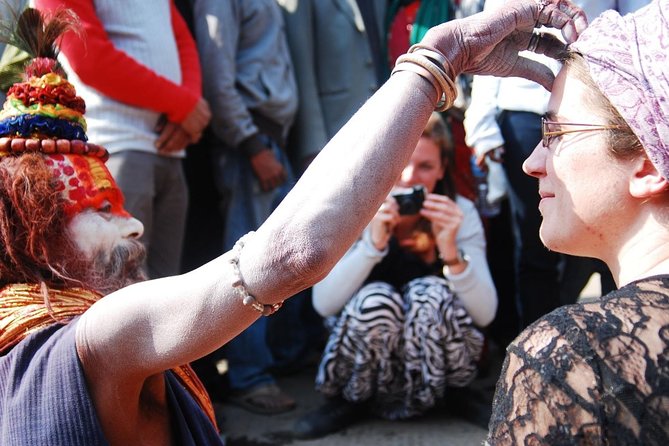
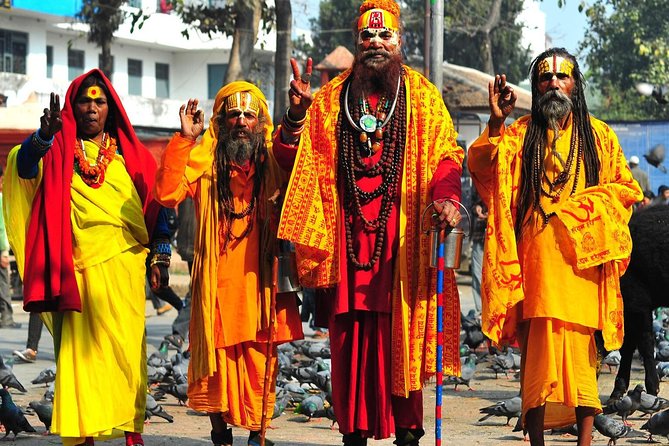
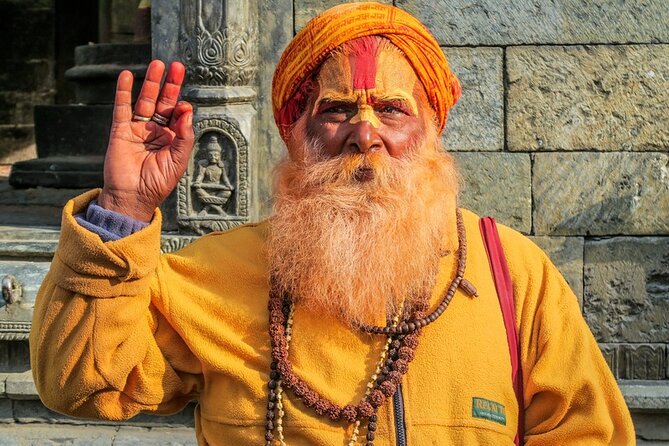
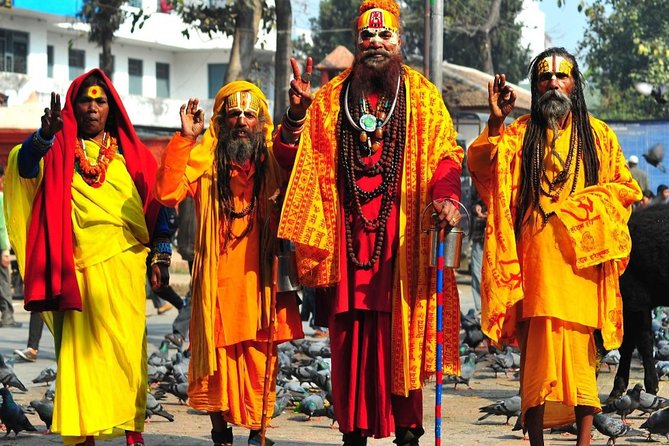
The sadhus are Hindu holy men who have given up ordinary material possessions as part of their religious devotion. Their colorful clothing and ash-covered appearance can attract attention, but treat them as people carrying out a religious life, not as photo decorations.
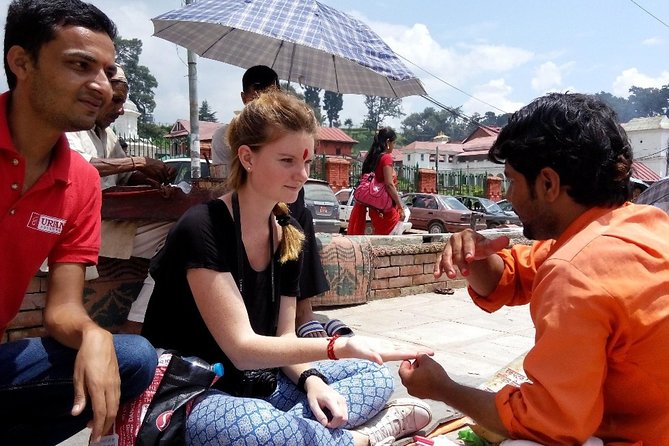
You may be offered the chance to take pictures or interact with sadhus for a fee. The supplied information gives a cost of about $7.50 for this, though prices can vary. Payment supports the local people involved, but you should never feel obliged to take part. Ask your guide to help clarify the price first.
The Bagmati River adds a serious note. Cremation ceremonies take place along its edge. This is not entertainment, and it is not a scene to photograph. The tour information specifically asks you not to take pictures or watch these rituals out of respect for mourning families. Your guide can explain the religious setting, but you should follow instructions and give families privacy.
That distinction is important. Pashupatinath can be visually striking, but the site also contains real grief and personal religious practice. A respectful attitude matters more than getting the perfect image.
A different set of gates, same trip:
- From Bangkok: Ayutthaya Temples Guided Tour with Lunch
★ 4.7 · 10,535 reviews - Siem Reap: Angkor Wat: Small-Group Sunrise or Sunset Tour
★ 5.0 · 9,444 reviews - Athens: Cape Sounion & Poseidon Temple Sunset Half-Day Trip
★ 4.8 · 8,241 reviews - Ubud: Monkey Forest, Jungle Swing, Rice Terrace, and Water Temple
★ 5.0 · 7,160 reviews
The Aarati ceremony after sunset
The tour’s main event comes as daylight fades. Local worshippers gather along the eastern side of Pashupatinath for the Aarati, an offering of lights to Lord Pashupatinath.
You will see lamps, movement, music, and a large crowd focused on the riverfront ritual. The ceremony has a strong communal feeling, and it is one of the clearest moments on the tour for seeing living Hindu worship rather than only architecture.
Stay close to your guide. The crowd can become thick, and it is easy to lose sight of a small group when people shift toward a better view. The guide’s role here is practical as well as educational: keeping everyone together, explaining what is happening, and helping you avoid blocking worshippers.
The Aarati is not guaranteed to feel peaceful. There may be noise, jostling, and limited room. That is part of being present at a public religious gathering. If you want a quiet temple visit, this is not the right expectation. If you want to see Kathmandu’s faith expressed in public, it is the strongest reason to book.
What the guide adds
The tour depends heavily on the guide. Buildings and rituals can be confusing when you first encounter them, and a good explanation prevents the visit from becoming a quick walk past unfamiliar symbols.
Guides named in the feedback include Rita, Amit, Rozit, Subash, Bipin, Ramhavi, and others. The assigned guide will vary, but the consistently useful qualities to look for are clear English, patience, and the ability to manage a group near the river and during the Aarati.
Amit was especially good at helping with phone photography, while Bipin was praised for knowing small alleyways and useful photo locations. Rozit was described as personable and attentive, and Subash was noted for strong English and detailed explanations. These details point to the kind of service this tour aims to provide: not just a route between monuments, but help with timing, questions, photos, and practical choices.
The maximum of 12 people is a real advantage. A group this size is easier to keep together than a large bus party, and you have a better chance of asking questions. Still, the group dynamic is never fully under your control. One person may want more time for photographs, while another may prefer to move on. Private arrangements remove that uncertainty if flexibility matters most.
Is $60.56 good value?
At $60.56 per person, this is not the cheapest way to see Boudhanath and Pashupatinath. The price includes an English-speaking Nepali guide, entrance fees, transportation between the listed points, the two UNESCO sites, and the Aarati experience.
For a first visit to Kathmandu, I consider that a fair price if you value interpretation and want both locations handled in one afternoon. You are also paying for the practical work of navigating public transport, finding the right areas, staying together near the river, and understanding customs that are easy to misread.
The value is weaker if you only want photographs or prefer to explore at your own speed. You will spend about four hours following a set schedule, and some optional activities cost extra. Butter lamps, palm reading, and payments to sadhus are not part of the base price.
Palm reading is optional and costs around $7.50 to $9 per person. It can be a lighthearted addition, but it is not necessary to understand either site. If you choose it, confirm the fee before the reading begins. The guide can help with negotiation.
There is no lunch or dinner included, though the tour starts in the afternoon and finishes after the main ritual. Plan your food around that timing.
Practical points that affect your afternoon
The tour starts at Hotel Marshyangdi, Chaksibari Marg, in Thamel, at 3 pm. It ends back at the meeting point. You receive confirmation when booking, and the activity is offered with a mobile ticket.
Most people can take part, and children under six are allowed to join free. The tour is also described as child-friendly, but parents should think about the walking, public transport, crowds, and the serious atmosphere around the cremation areas.
The 2015 earthquakes damaged parts of the sites, though the areas visited have been renovated. You may still notice repairs or changes in the built environment. That is part of Kathmandu’s present-day story, not a reason to skip the visit.
Cancellation is free if you cancel at least 24 hours before the start time. Changes or cancellations made within 24 hours are not accepted for a refund.
The tour has a 98 percent recommendation rate and a 4.9 rating from 185 reviews. Those figures suggest a strong experience overall, but the isolated no-show complaint points to one practical precaution: arrive early at Hotel Marshyangdi and confirm the meeting details before 3 pm. The pickup point can be shared by several tours, so do not assume that someone will find you automatically.
Who should book this Kathmandu tour?
I would choose this tour if you have limited time in Kathmandu and want a guided introduction to both Hindu and Buddhist practice. It is particularly useful on a first visit, when the customs, symbols, and layout of the sites may otherwise feel hard to read.
It also suits you if you enjoy local transport, walking, public ceremony, and direct contact with daily religious life. The experience is not polished or insulated. You will encounter crowds, noise, emotional scenes, and real worship.
You may want another option if you dislike crowds, want extensive time for photography, or prefer to visit sacred places alone. The public transport and fixed timing may also feel less comfortable than a private vehicle.
Should you book it?
Book this tour if the Aarati ceremony, a guide’s interpretation, and the chance to see Boudhanath and Pashupatinath in one afternoon matter to you. The combination is efficient, culturally focused, and more revealing than visiting either monument without context.
Skip it if you only want a quick photo stop or if you would rather control every minute. For most first-time visitors with four hours to spare, the $60.56 cost is justified by the guide, transport, entrance fees, and careful introduction to two of Kathmandu’s most important spiritual sites.
FAQ
How long does the tour last?
The tour lasts approximately four hours.
What time does the tour start?
The tour starts at 3 pm.
Where does the tour begin?
The meeting point is Hotel Marshyangdi on Chaksibari Marg in Thamel, Kathmandu.
Where does the tour end?
The activity ends back at the meeting point.
Which sites are included?
The tour visits Boudhanath Stupa and Pashupatinath Temple, both UNESCO World Heritage sites.
Is transportation included?
Yes. Transportation from the meeting point to Boudhanath and from Pashupatinath to the endpoint is included. The tour uses public transport.
Is the Aarati ceremony included?
Yes. The tour includes the evening Aarati, an offering of lights to Lord Pashupatinath.
Are palm reading and butter lamps included in the price?
No. Palm reading, butter lamps, and alms or payments to sadhus and monks are extra. Palm reading is listed at approximately $7.50 to $9 per person.
Can children join the tour?
Yes. The tour is described as child-friendly, and children under six may join free of charge.
Newly written up around the world
- Kyoto: Fushimi Inari Taisha Shrine Walking Tour with Guide★ 4.8 · 18 reviews
- Xi’an: Terracotta Army, Lunch, City Wall, Pagoda, Bazaar★ 5.0 · 72 reviews
- Varanasi in a Day Ancient Temples Sarnath and Ghats★ 5.0 · 17 reviews
- Hidden Corners of Varanasi Secret Alleys Temples and Traditions★ 5.0 · 9 reviews
- Terracotta Army, Big Wild Goose Pagoda&City Wall Full Day Tour★ 4.5 · 47 reviews
- Xi’an: Daci’en Temple(Great Wild Goose Pagoda) E-ticket★ 3.3 · 57 reviews
- Bangkok: Grand Palace and Wat Arun Guided Walking Tour★ 4.5 · 118 reviews
- Ex-monk city & temples walking tour: (3.5 hours / 1.7 km.)★ 4.8 · 35 reviews
Nepal Temple Tours, compared.
Day Hiking from Sarangkot to World Peace Stupa from Lakeside
Read our review →
From Lakeside: Pokhara Private Day Tour with Pagoda Hills
Read our review →
Golden Hour at Peace Pagoda – Himalayan Sunset Tour
Read our review →
Pokhara in 5 Hours: Lake, Museum, Cave, Falls & Pagoda Hill
Read our review →Browse the lists this tour appears in