
Reviewed · TICKETS
Beijing: Confucius Temple and the Impercial College E-ticket
Beijing’s Confucius Temple and Imperial College offer a rare look at how China honored learning, trained officials, and selected scholars. The most striking feature is the forest of 198 stone tablets, carved with the names, birthplaces, and ranks of 51,624 successful imperial examination candidates.
I like the simple entry process: show your QR code and original passport and walk in. I also like the pairing of the two sites, since the temple explains Confucius’s place in Chinese culture while the college shows how the state educated future officials. The main drawback is that this is an admission ticket, not a guided tour, so you will need to read the displays or buy an audio guide at the entrance.
Key points to know before you go
- Two historic institutions in one visit: The Confucius Temple and Imperial College sit together under the traditional arrangement of temple on the left and college on the right.
- 51,624 examination names: Stone tablets preserve the names, birthplaces, and ranks of successful candidates from China’s imperial examination system.
- Yuan Dynasty foundations: The complex dates from the early 14th century and includes more than 700 years of architectural and cultural history.
- A $7 ticket with one-day validity: The price is modest for two major historic sites, especially if you want a self-guided visit.
- Passport entry matters: Bring your original passport, not only a phone image or photocopy, along with the electronic ticket.
- Audio guide option: An audio guide may be available to purchase at the Confucius Temple entrance.
Why these two sites belong together
The Confucius Temple and Imperial College are not simply two old compounds placed side by side. Together, they explain the values behind China’s traditional government.
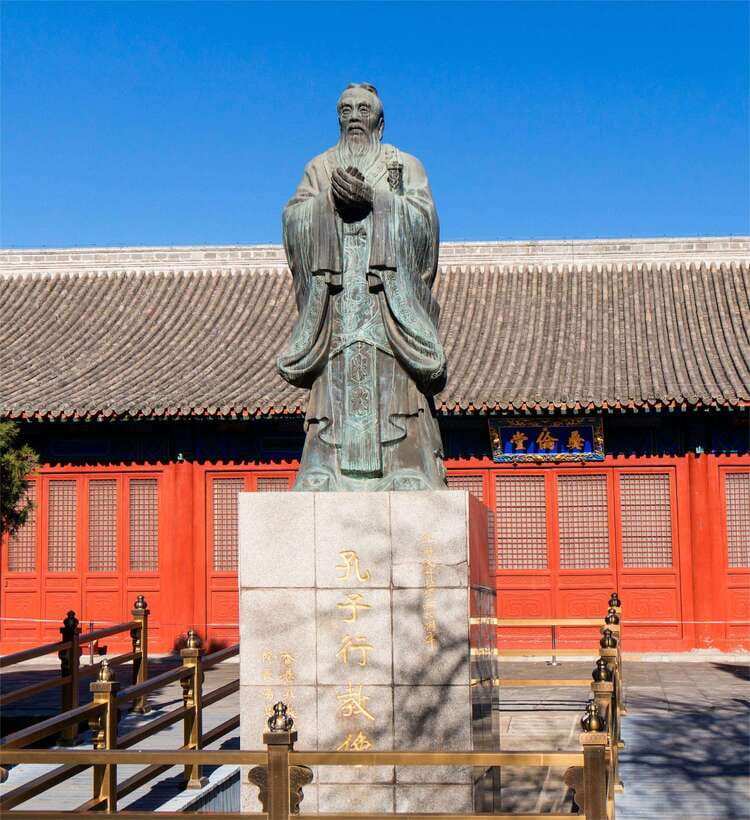
The temple honored Confucius, the philosopher whose teachings shaped education, family life, government, and social conduct for centuries. The college trained students for official service. One site gave the system its moral and intellectual foundation. The other prepared people to work within it.
This arrangement followed the traditional plan of temple on the left and college on the right. You can visit both with one ticket, and the connection between them gives your walk a clear purpose. Rather than seeing an isolated hall or courtyard, you begin to understand the path from study to examination to government office.
The complex was built during the Yuan Dynasty in the early 14th century. The Confucius Temple was founded in 1306, and the Imperial College followed in 1308. Yuan Dynasty rulers established these institutions as part of a wider effort to govern China through established Chinese educational and administrative traditions.
The buildings you see today reflect later changes and restorations as well as their original foundations. Still, the basic plan remains clear, with courtyards, gates, ceremonial halls, side pavilions, and symmetrical axial design.
More Entry Tickets in Beijing:
- Beijing: The Temple of Heaven or Summer Palace Entry Ticket
★ 4.6 · 1,286 reviews - Temple of Heaven Ticket
★ 5.0 · 482 reviews - Beijing: Lama Temple (Yonghe Temple) Admission Ticket
★ 4.8 · 297 reviews
Entering the Confucius Temple
The Confucius Temple covers more than 22,000 square meters, with about 7,400 square meters of built space. Its layout follows three courtyards arranged along a central north-south axis.
Your route moves through the Teacher Gate, Dacheng Gate, Dacheng Hall, and Chong Sheng Temple. The names are not just decorative labels. They reflect the temple’s role as a formal place where Confucius was honored during the Yuan, Ming, and Qing dynasties.
The first courtyards help you read the layout. Gates control the movement from one section to the next, while the open spaces give the main halls room to command attention. This is a ceremonial setting, not a casual neighborhood shrine.
Dacheng Hall is the central focus. It was used for ceremonies honoring Confucius, and its restored appearance helps explain how the site may have looked during formal rites. One exhibition covers the restored hall, while another examines Confucius and his importance. A third presentation traces the history of the Beijing Confucius Temple.
The displays make the visit more useful if you want context rather than only photographs. Without an explanation, the halls can seem similar at first. The exhibitions help connect architecture, ceremony, education, and government.
The stone tablets and the imperial examination
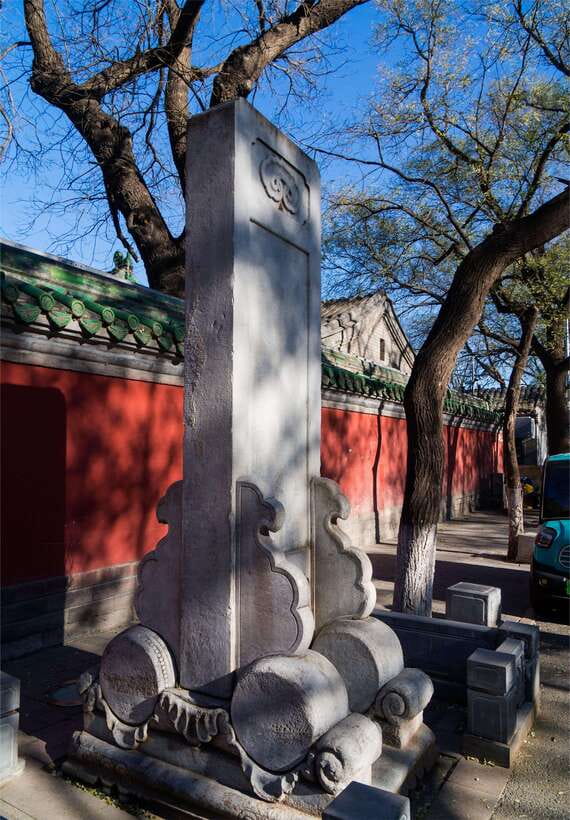
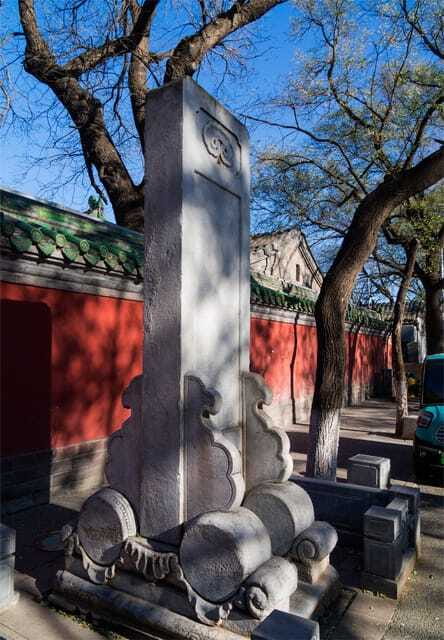
The most distinctive part of the temple is the collection of examination tablets. There are 198 stone tables, arranged in four groups along both sides of the front courtyard.
Across these tablets, 51,624 names, birthplaces, and ranks of successful candidates were carved. They record people who passed the imperial examinations, the demanding system used to select officials for government service.
This is where the site becomes especially meaningful. The examination was not a modern test in the broad sense. It was tied to classical texts, writing, moral learning, and the ability to express ideas in forms valued by the state. Success could change a family’s social position and open the door to official service.
The tablets turn that system into something concrete. Instead of hearing only that education mattered in imperial China, you see thousands of names preserved in stone. The scale is easy to miss, so take time to walk slowly along both sides of the courtyard.
You probably will not recognize most of the names, but that is part of the point. The tablets are not a monument to one famous person. They represent generations of students who spent years preparing for a difficult examination system.
They are also useful historical records. The names, homeplaces, and ranks provide material for studying the imperial examination and the people who succeeded within it.
The Imperial College and its central halls
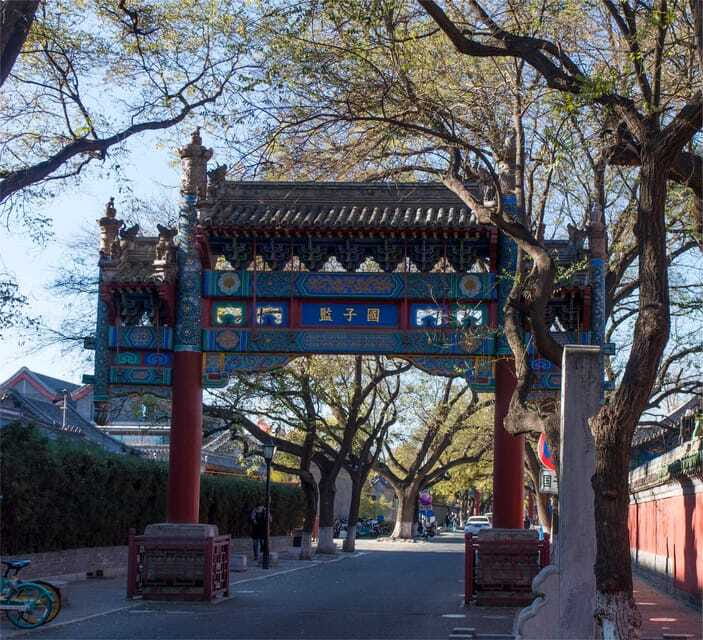
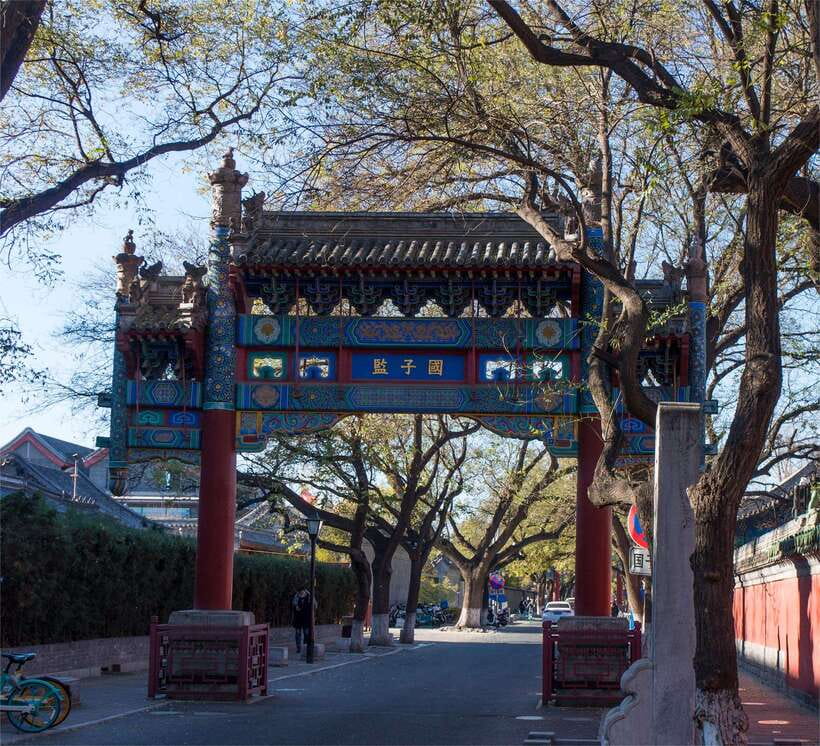
After the temple, continue to the Imperial College, known in Chinese as Guozijian. It covered about 28,000 square meters and also follows a three-courtyard plan.
This was the highest educational institution established by the state during the Yuan, Ming, and Qing dynasties. It also served as an administrative body responsible for education. In plain terms, this was not simply a school for private study. It was part of the machinery of government.
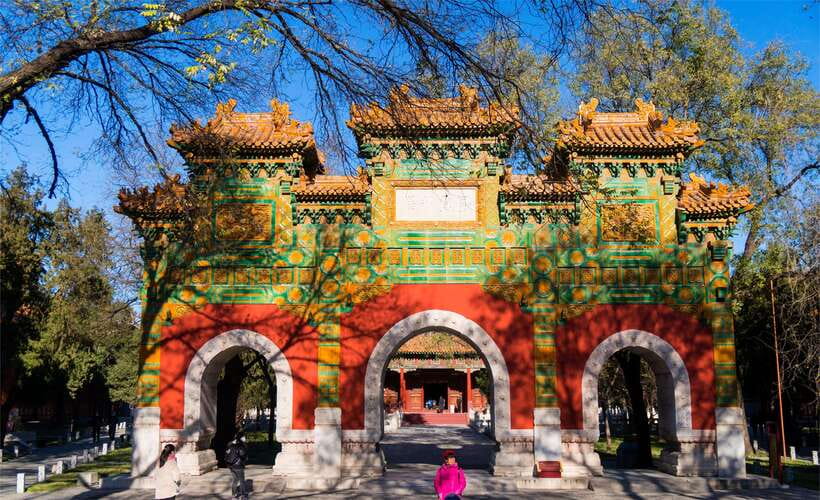
The central axis leads through Jixian Gate and the Taixue, or Imperial College, Gate. From there, you reach the glazed memorial arch, Biyong Hall, Yilun Hall, and Jingyi Hall.
Biyong Hall is a key point in the complex. Its position on the central axis gives the college a ceremonial center, while the surrounding layout reinforces the importance of order and balance.
Two halls and six main rooms are arranged traditionally around the axis. Imperial tablet pavilions, bell pavilions, and drum pavilions sit in a symmetrical pattern. This symmetry is worth noticing. It expresses a political and educational ideal in which learning, ceremony, and authority all fit into an ordered system.
The Imperial College is valuable even if you are not especially interested in Confucian philosophy. It shows how education functioned at a national level. Students were not studying only for personal enrichment. Their studies could lead to official responsibility and a place within the state.
Other temple visits near Beijing we have written up
- Beijing Classic Full-Day Tour including the Forbidden City, Tiananmen Square, Summer Palace and Temple of Heaven
★ 4.0 · 610 reviews - Temple Heaven, Lama Temple, Summer Palace & Peking Duck Bus Tour
★ 5.0 · 377 reviews - Temple Heaven, Summer Palace, Lama Temple, Hutong Bus Tour
★ 4.7 · 319 reviews - Beijing: Entry to Temple of Heaven Park
★ 4.6 · 314 reviews
What the architecture tells you
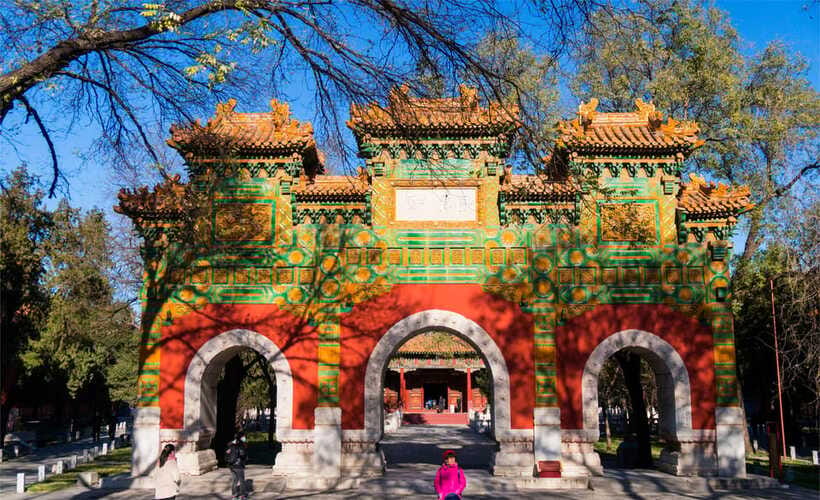
You will see familiar features of traditional Chinese institutional design: formal gateways, tiled roofs, courtyards, axial movement, decorative glazed elements, and balanced side buildings.
The architecture is not intended to feel spontaneous. It is carefully controlled. You enter through one gate, proceed toward another, and gradually approach the most important halls. The structure guides your attention.
That makes the visit rewarding for people who enjoy details. Look at how the buildings relate to the courtyards rather than treating each hall as an isolated object. Notice the repeated use of symmetry and the way open space separates one level of importance from the next.
The complex also helps explain the difference between a temple and a school. The Confucius Temple centers on ritual and remembrance. The Imperial College centers on education and administration. Their shared plan shows how closely those ideas were linked in traditional China.
Because the buildings date back more than 700 years in origin, you should expect a historic complex rather than a single perfectly preserved moment. Restored areas and exhibitions are part of the experience. The restored Dacheng Hall exhibition is especially useful for readers who want to know how the building functioned, not just how it looks.
Exhibitions and the option of an audio guide
Three exhibitions are presented in the Confucius Temple:
- The restored Dacheng Hall exhibition
- An exhibition about Confucius
- An exhibition on the history of the Beijing Confucius Temple
These displays give your visit structure. You can first explore the buildings, then use the exhibitions to understand what you have seen. Or you can begin with the displays if you prefer a little background before walking the courtyards.
An audio guide may be available to buy at the temple entrance. That could be worth considering if you want more explanation but do not want to arrange a private guide. Since the ticket itself includes admission rather than a guided talk, the audio guide is the clearest way to add interpretation on site.
The available information does not identify a personal guide or tour leader. You should plan this as a self-guided cultural visit. That is a strength if you prefer to set your own pace, but it means you need to bring patience and curiosity.
How long to allow and how to pace the visit
The ticket is valid for one day, and the activity is listed with a one-day duration. That does not mean you are joining a full-day guided itinerary. It means you have a day in which to use the admission.
For a focused visit, allow enough time to walk both compounds and read the exhibitions. The exact time depends on how closely you examine the tablets and displays. A quick walk will show you the gates, halls, and courtyards. A slower visit gives the examination records and institutional history a chance to make sense.
I would begin at the Confucius Temple. Its tablets and exhibitions provide the strongest introduction to the education system. Then move to the Imperial College, where the larger institutional plan makes more sense after you have seen the temple’s ceremonial role.
Do not rush the front courtyard. The tablet groups are the feature most difficult to appreciate in a hurry. Their scale is the story. Walk along both sides and notice how the repeated inscriptions create a record of achievement spread across generations.
What the $7 price really buys you
At $7 per person, this is an inexpensive admission for two historic institutions in central Beijing’s cultural story. You are paying for access to a substantial architectural complex, several exhibitions, and one of the most unusual surviving records of the imperial examination system.
The value is strongest if you enjoy history, architecture, education, or traditional Chinese culture. It is also good for independent visitors who want a quiet, self-paced stop rather than a tightly scheduled tour.
The price covers the tourist attraction ticket. It does not include a named guide, transport, meals, or any separate audio guide purchase. That distinction matters. You are getting access, not a complete sightseeing package.
Still, the low price leaves room in your budget for an audio guide if one is available and you want extra explanation. It also makes the site easy to add to a day focused on Beijing’s historic institutions.
Entry, passports, and practical details
The electronic ticket is designed for direct entry. You use the QR code along with your original passport.
Bring the physical passport. The instructions specifically require the original passport and electronic ticket, so do not rely on a photocopy or a passport image on your phone. Keep the QR code easy to open when you reach the entrance.
The attraction is listed as wheelchair accessible. It is also offered for private groups, although the ticket does not describe a private guide or a custom itinerary. If you are booking for a group, confirm what private group treatment means at the time of purchase.
The ticket allows cancellation up to 24 hours in advance for a full refund, and you can reserve while paying later. Those terms are helpful if your Beijing schedule is still shifting. Check the available starting times when booking, since the ticket is valid for one day but entry still depends on availability.
Who will enjoy this visit most
I would recommend this experience to you if you want to see a side of Beijing beyond imperial palaces and major public squares. The focus here is education, ritual, and government, with enough surviving detail to make those subjects tangible.
It suits independent visitors who like to read, pause, and set their own pace. It is also a good choice for anyone interested in the imperial examination, Confucius, Yuan Dynasty architecture, or the way institutions shaped Chinese society.
Families with older children may find the examination tablets useful because they turn an abstract school system into a physical record. Younger children may have less patience for repeated stone inscriptions unless you give the visit a simple challenge, such as looking for the different names, ranks, and places carved into them.
You may want a different experience if you need a guide to explain every building as you walk. No personal guide is included in the information provided. The audio guide option can help, but it is a separate purchase and may not be available in every language.
Should you book the Confucius Temple and Imperial College ticket?
Book it if you want an affordable, self-guided look at Beijing’s educational and ceremonial past. The combination of the 1306 Confucius Temple, the 1308 Imperial College, and the 51,624 examination names gives the visit a clear purpose.
Bring your original passport, save the QR code, and consider buying the audio guide at the temple if you want more help with the displays. If you prefer a guide-led tour with transportation and detailed commentary, this ticket alone will not meet that need.
For $7, it is a sensible choice for history-minded visitors and anyone curious about how learning became a route into government. Give the stone tablets time, and the visit will offer more than a quick look at old halls.
FAQ
What does the ticket include?
The ticket includes admission to the Beijing Confucius Temple and Imperial College tourist attraction.
How much does the experience cost?
The listed price is $7 per person.
How long is the ticket valid?
The ticket is valid for one day. Check availability for the applicable starting times.
What do I need to bring for entry?
Bring your original passport or ID card and your electronic ticket with its QR code. The entry instructions specifically require the original passport.
Is a guide included?
No personal guide is specified. An audio guide may be available to purchase at the entrance of the Confucius Temple.
Can I cancel the booking?
You can cancel up to 24 hours in advance for a full refund. You can also reserve now and pay later, subject to the booking terms.
Newly written up around Beijing
- Private Day to T-Square, Forbidden city, Temple of heaven, Summer palace Tour★ 5.0 · 54 reviews
- Private Day Trip of Forbidden City, Temple of Heaven and Summer Palace★ 4.5 · 3 reviews
- Private Tour to Lama Temple, Tian’anmen Square and Forbidden City★ 5.0 · 3 reviews
- Private Half-Day Temple of Heaven and Lama Temple Tour★ 5.0 · 13 reviews
- Private Day Tour:Tiananmen Square,Forbidden City Temple of Heaven★ 5.0 · 16 reviews
- Private Tour to the Temple of Heaven and Tea tasting at the Maliandao Tea city★ 5.0 · 3 reviews
- Local’s Beijing: Forbidden City Insider Tour +Temple +Duck Feast★ 4.5 · 66 reviews
- Temple of Heaven Ticket with Optional Guide Service★ 5.0 · 120 reviews
Tickets, compared.
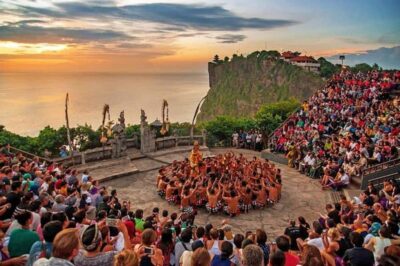
Kecak Fire Dance Show & Uluwatu Temple Entry Ticket
Read our review →
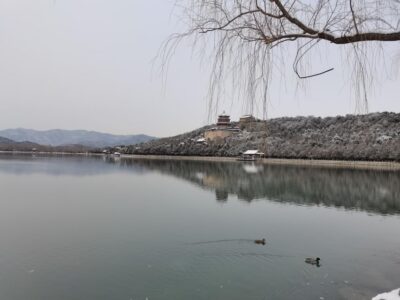
The Temple of Heaven or Summer Palace Entry Ticket
Read our review →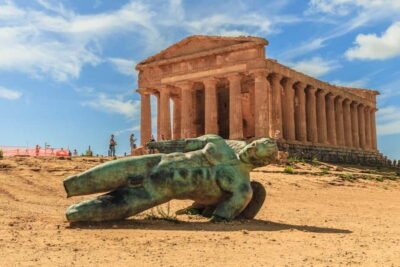
Valley of the Temples Ticket & App Audioguide
Read our review →
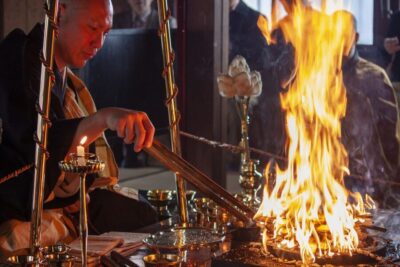
Belém Walking Tour with Jerónimos Monastery Ticket
Read our review →Browse the lists this tour appears in