
Reviewed · SOUTH KOREA TEMPLE TOURS
Best Things to Do – Half Day Seoul Trip (Seoul Palace & Temple)
Seoul’s royal past comes into focus quickly on this three-hour afternoon tour, which links Jogyesa Temple with Gyeongbokgung Palace, the guard ceremony, and the Blue House area. You get a useful first look at central Seoul without wrestling with several subway transfers.
I like the air-conditioned coach and the guides, with names such as Judy, K, Henry, Diane, and Lynn praised for clear explanations, local stories, and practical help. I also like the mix of Buddhist, royal, and modern political history in one compact outing.
The main caution is the ginseng shopping stop. Some departures spend about 30 minutes there, while several accounts describe a longer, commercial sales presentation. Hotel pickup can also require careful confirmation, and there is no hotel drop-off.
Key points at a glance
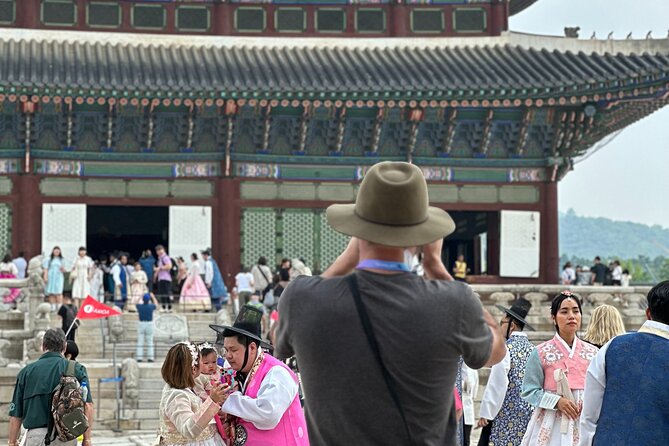
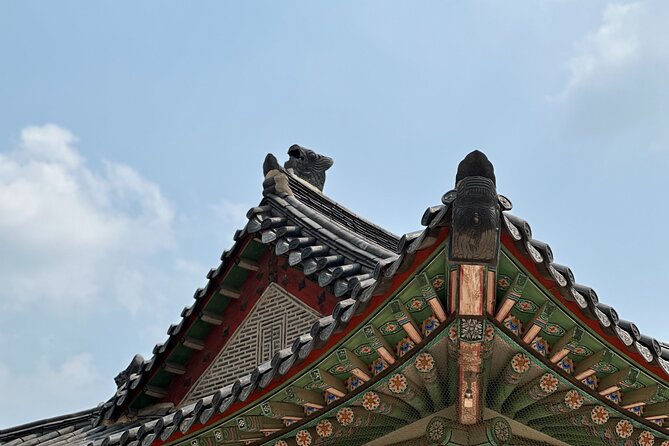
- Royal ceremony and palace architecture: Gyeongbokgung brings you to Geunjeongjeon Hall, Hyangwonjeong Pavilion, Gyeonghoeru Pavilion, and the Changing of the Guard.
- A useful Seoul history primer: Jogyesa, the palace grounds, and Cheongwadae Sarangchae cover religion, monarchy, politics, and modern Korea.
- Comfortable city transport: An air-conditioned coach saves time and offers relief in Seoul’s summer heat or winter cold.
- Strong guide element: Past guides including Judy, K, Henry, Diane, Lynn, and GoGo have been praised for English, stories, and thoughtful assistance.
- Commercial stop to weigh carefully: The ginseng center can feel like a sales pitch rather than a museum visit.
- Good value at $38: Admission, guide service, transport, taxes, and fuel charges are included, but lunch and hotel drop-off are not.
Why this short Seoul tour works
At $38 per person, this is best understood as a guided orientation tour, not a slow, detailed palace visit. In roughly three hours, you move between several important sites, hear the basic story behind them, and leave with a better sense of how Seoul’s old center fits together.
I like that the route does not focus on only one kind of attraction. Jogyesa gives you a look at living Korean Buddhism. Gyeongbokgung introduces the Joseon royal court. Cheongwadae Sarangchae shifts the subject toward government and contemporary national identity.
That range matters if you have only a short stay in Seoul. You will not see every room or read every display, but you will get a practical framework for exploring more on your own.
The tour has a 4.8 rating from 190 reviews and a 95 percent recommendation rate, though the praise is not evenly spread across every part of the day. Guides receive the warmest comments. The ginseng stop is the clear source of disappointment.
Other temple visits near the world we have written up
- Lisbon: Jerónimos Monastery Entrance Ticket
★ 4.1 · 14,164 reviews - Angkor Wat Sunrise or Sunset Tour with Guide from Siem Reap
★ 5.0 · 12,109 reviews - Teotihuacan, Guadalupe Shrine & Tlatelolco Day Tour with Lunch
★ 5.0 · 11,603 reviews
Jogyesa Temple: a calm start in central Seoul
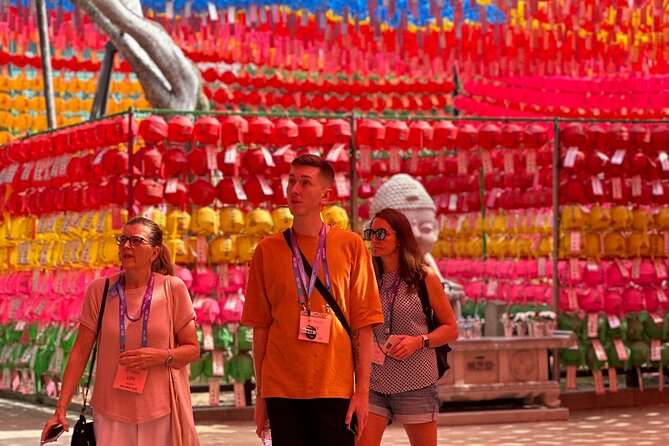
The first stop is Jogyesa Temple, with about 40 minutes scheduled and no admission charge. It is one of the key landmarks of Korean Buddhism and was first established in 1935.
This is not a remote mountain temple. Jogyesa sits in downtown Seoul, so its setting makes the visit especially useful. You see Buddhist practice placed right in the middle of a modern city, rather than separated from daily life.
The temple is known for its old white pine tree, mentioned in the tour material as an ancient white pine. The grounds give you a quiet pause before the more crowded palace stop. Look closely at the roof details, painted woodwork, and large trees while your guide explains the site.
Forty minutes is enough for an introduction and photographs. It is not enough for a long, reflective visit, so I would treat this stop as a focused look rather than a complete temple tour.
Your guide can make a real difference here. Guides praised on past departures, including K, Judy, and GoGo, were noted for keeping the explanations clear and engaging. Ask questions if you want more context about Buddhism in Korea, since the stop itself is fairly compact.
Gyeongbokgung Palace and the Changing of the Guard
The palace portion is the heart of the tour, with about one hour scheduled and admission included. Gyeongbokgung was the main royal palace of the Joseon dynasty, and its broad courtyards give you a strong sense of ceremony and power.
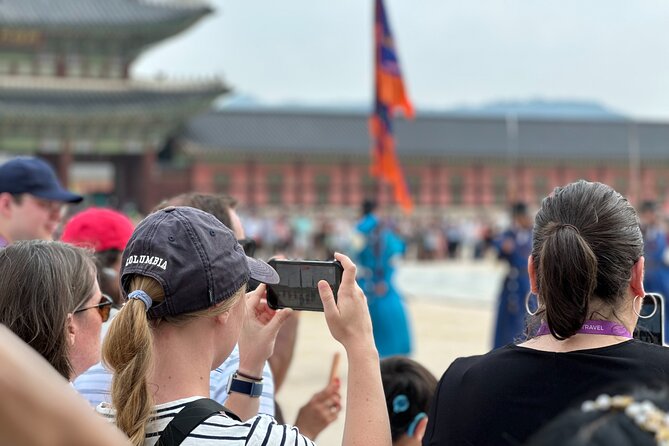
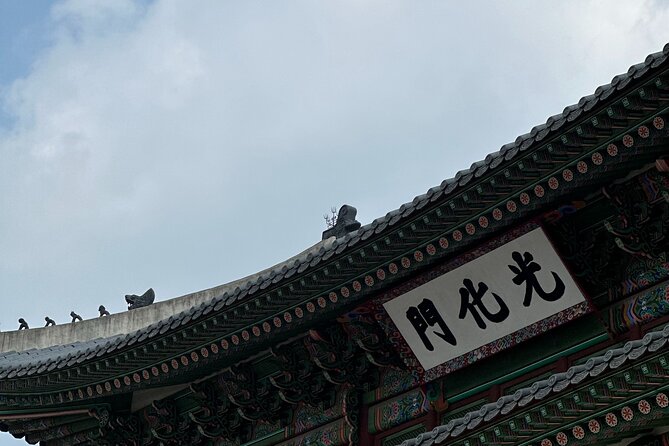
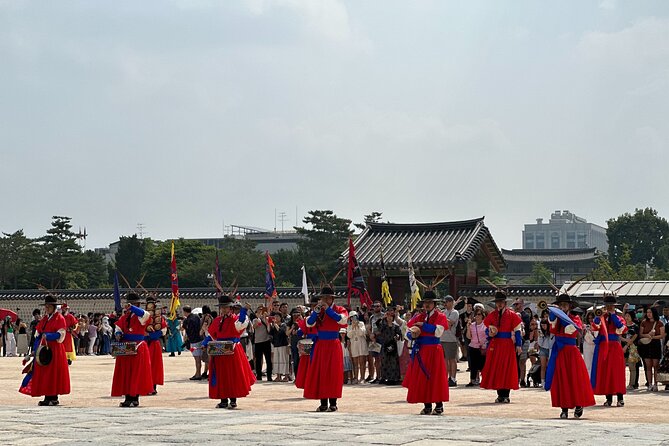
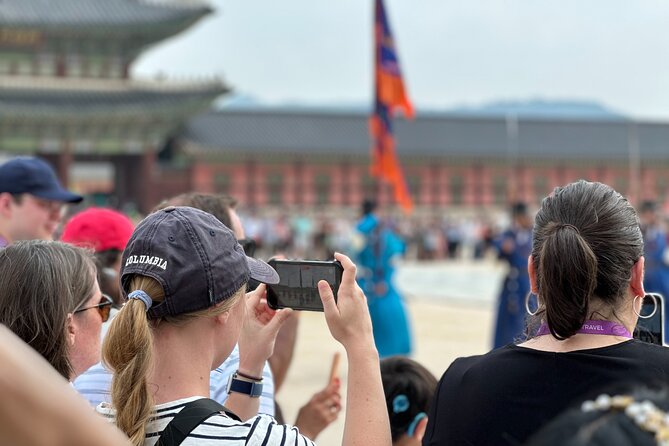
The Changing of the Guard takes place in front of Gwanghwamun Gate. It is colorful, carefully choreographed, and easy to appreciate even if you know little about Korean court customs. One past departure was timed well for the ceremony, while another guide helped the group manage heavy crowds on a Saturday.
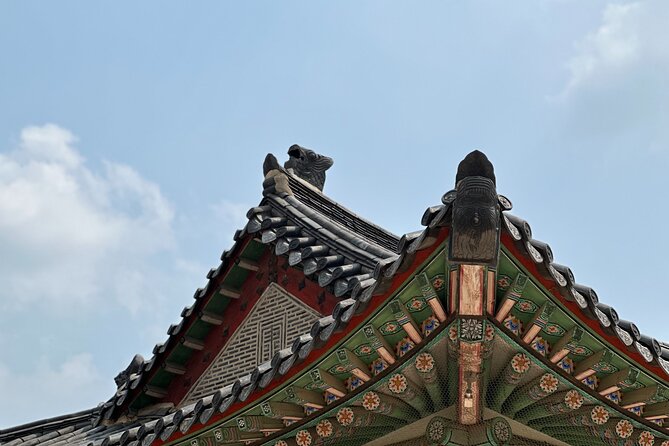
Inside the grounds, the tour calls attention to Geunjeongjeon Hall, Hyangwonjeong Pavilion, and Gyeonghoeru Pavilion. Each offers a different view of palace life. Geunjeongjeon represents formal royal business. Hyangwonjeong, set beside water, gives you the graceful scene most likely to appear in photographs. Gyeonghoeru shows the palace at its grandest and most ceremonial.
The palace stop also connects to Seoul’s difficult modern story. Only a limited number of older buildings survived the Japanese occupation and the Korean War, so what remains carries more weight than a simple collection of pretty structures.
One important scheduling point: Gyeongbokgung is closed on Tuesdays. On that day, the route substitutes Changdeokgung Palace, a UNESCO-listed site. That change is not necessarily a downgrade, but it is a different palace experience. Check the exact departure details if seeing Gyeongbokgung and the guard ceremony is your main reason for booking.
An hour goes quickly. You will see the principal areas, hear stories about royal intrigue, and take photographs, but you should not expect a full architectural study. If you want to explore every courtyard at an unhurried pace, plan a separate palace visit.
The guide is especially valuable here. Diane was praised for answering questions about historical dramas and separating television from real court life. Judy was praised for fluent English and for helping with a souvenir in the market area. Those details point to the best use of the tour: let the guide supply the story, then return later if one site catches your interest.
Cheongwadae Sarangchae and the Blue House area
The next scheduled stop is Cheongwadae Sarangchae, with about 40 minutes provided. This exhibition hall presents Korean artifacts and documents, with displays related to politics, history, and culture.
Its position in front of the Blue House, known in Korean as Cheongwadae, gives the stop a modern political setting after the palace visit. The change in subject helps you see Korea as more than royal gates and traditional roofs.
This part of the tour may appeal most to visitors who want national context. The exhibits can help connect Korea’s past government institutions with the modern state. If your main interest is architecture, you may find the palace more compelling. If you like political history and public museums, the stop adds useful balance.
The 40-minute schedule suggests a guided introduction rather than an exhaustive museum visit. Stay close to the guide and use the time to ask what the displays mean. As with the palace, the explanations are likely to matter more than trying to read every object quickly.
A different set of gates, same trip:
- From Bangkok: Ayutthaya Temples Guided Tour with Lunch
★ 4.7 · 10,535 reviews - Siem Reap: Angkor Wat: Small-Group Sunrise or Sunset Tour
★ 5.0 · 9,444 reviews - Athens: Cape Sounion & Poseidon Temple Sunset Half-Day Trip
★ 4.8 · 8,241 reviews - Ubud: Monkey Forest, Jungle Swing, Rice Terrace, and Water Temple
★ 5.0 · 7,160 reviews
The ginseng center: the part to consider carefully
The final scheduled stop is Cheongha Plus Ginseng Shopping Center, listed for 30 minutes with no admission fee. This is the tour’s weak point for anyone looking for a purely cultural outing.
The center presents ginseng and typically includes information about the product, but the format can become a sales presentation. Several accounts describe pressure to buy expensive ginseng, a commercial atmosphere, or a visit that lasted closer to an hour. One person described leaving before the final sales pitch ended. Another felt the museum-like setting was mainly a route toward a purchase.
That is a serious consideration because a three-hour tour has very little spare time. Thirty minutes spent shopping is one thing. An hour taken from the palace and temple portion changes the value of the entire outing.
The experience is not identical on every departure. One account described the ginseng center as pleasant and free of buying pressure. Still, I would book this tour only if you can tolerate a sales stop, and I would not count on being able to treat it as an entirely optional extra.
If you have no interest in ginseng, set your expectations early. The listing includes the stop, so it should not come as a surprise. The cultural sites are the reason to book. The shopping center is part of the trade-off for the low price.
Transport, pickup, and timing
The air-conditioned coach is a practical advantage. Seoul can be intensely hot in summer and very cold in winter, and one departure was praised for keeping the vehicle cool during extreme heat. Another account appreciated the comfortable van during an unusually hot day.
The coach also reduces the mental work of getting between Jogyesa, the palace district, the Blue House area, and the shopping stop. You do not need to work out each subway connection or find a taxi after the guard ceremony.
Hotel pickup is offered, but handle this carefully. Some departures had punctual pickup, while others involved confusion, early start changes, or a failure to confirm the hotel arrangement. One person had to push to resolve a pickup problem on the day of the tour. Another was surprised that the pickup time was more than an hour earlier than expected.
I recommend confirming the exact pickup time and location before the tour date. Do not assume that selecting hotel pickup means the driver will automatically know where to meet you. The tour does not include hotel drop-off, so plan your return from the final stop.
The listed maximum is 100 people, although some departures have been much smaller. A smaller group makes it easier to hear the guide and stay together in palace courtyards. A large group can slow movement, especially on a crowded weekend.
The tour accepts mobile tickets, confirmation is provided at booking, and most people can participate. Service animals are allowed, and the route is near public transportation. Lunch is not included, so eat before the pickup or plan food after the final stop.
What the guides add
The strongest part of this experience is often the person leading it. The guide roster changes, but past departures have included Judy, K, Henry, Diane, Lynn, GoGo, Wendy, Kelly, Sunny, Gabby, Alex, Andy, and Lina.
The best descriptions point to guides who explain details during the coach rides as well as at the sites. Lynn was praised for speaking excellent English and talking with the group between stops. Henry offered suggestions for other things to do in Seoul. Judy was praised for timing the palace visit well and helping find a desired souvenir.
That personal help is useful on a short tour. You can ask about royal stories, K-drama history, food areas, markets, or what to visit next. Lina was credited with keeping the schedule during intense heat, while another guide handled large crowds effectively on a Saturday.
The tour offers English or Chinese guiding. If language is important to you, check the departure option carefully before paying.
Markets, shopping, and what the schedule really suggests
The tour is promoted with shopping at two popular Seoul markets, but the detailed schedule supplied for this experience names Jogyesa, Gyeongbokgung or Changdeokgung, Cheongwadae Sarangchae, and the ginseng center. A market visit may be folded into the route or vary by departure, but I would not book this specifically for market time.
The shopping help described by one guide is a nice bonus, especially if you want a souvenir and do not know where to look. Still, the dependable shopping element is the ginseng center, not an unhurried browse through neighborhood stalls.
If market food and independent shopping are high on your Seoul list, reserve separate time for them. The half-day format is too tight to guarantee a relaxed market experience.
Is $38 a fair price?
Yes, if you value structure and transport. The fee includes the professional guide, palace admission, taxes, handling charges, and fuel surcharge. You receive a convenient route through several central sights for less than the cost and effort of arranging multiple taxis and admissions yourself.
The price is especially reasonable for a first day in Seoul, an arrival with limited time, or a visitor who wants historical context without planning every detail.
The calculation changes if the ginseng presentation runs long or if hotel pickup creates delays. You are paying partly for convenience, not just time inside monuments. Independent visitors can spend more time at the palace and avoid the sales stop, but they must handle transport, tickets, and research on their own.
Free cancellation is available up to 24 hours before the start time. Changes or cancellations inside that window are not accepted for a refund.
Who should book this tour?
I would choose it for a first-time Seoul visit, a short stopover, or anyone who wants a guided introduction to major cultural sites. It also suits history fans, especially people curious about the difference between Korean royal life and its television version.
It works well for visitors who prefer a coach to navigating Seoul alone, and for people who value a guide’s stories more than having long stretches of free time.
I would skip it if you strongly dislike organized shopping, want a slow palace visit, or need a fixed afternoon schedule. I would also think twice if your hotel is far from central Seoul and the pickup time has not been confirmed in writing.
Final verdict: book it with one clear reservation
This is a good-value Seoul orientation with excellent potential guide support, strong palace content, and a useful mix of Buddhist, royal, and modern Korean history. The $38 price makes sense when you want comfort, admission, and a simple route in one package.
Book it if Jogyesa, Gyeongbokgung, the guard ceremony, and a Blue House area visit are your priorities. Before you commit, confirm the pickup time, check the Tuesday palace substitution, and accept that the ginseng stop may include a firm sales pitch.
If you can live with that trade-off, this compact tour gives you a sound first look at Seoul. If not, visit the palace and temple independently and keep your afternoon free for the city’s markets.
FAQ
How long does the Seoul palace and temple tour last?
The tour lasts approximately three hours.
What sites are included?
The scheduled sites are Jogyesa Temple, Gyeongbokgung Palace, Cheongwadae Sarangchae, and the Cheongha Plus Ginseng Shopping Center. Gyeongbokgung is replaced by Changdeokgung Palace on Tuesdays.
Is hotel pickup available?
Yes, hotel pickup is offered. Confirm the exact time and meeting point in advance because pickup arrangements have varied between departures.
Is hotel drop-off included?
No. Hotel drop-off service is not included.
Is admission to the palace included?
Yes. Palace admission is included in the tour price. Jogyesa Temple has no admission charge.
What language is the guide service offered in?
Professional guiding is offered in English or Chinese.
Can I cancel for a full refund?
Yes, if you cancel at least 24 hours before the local start time. Cancellations or changes made less than 24 hours before the start time are not refunded or accepted.
Newly written up around the world
- Kyoto: Fushimi Inari Taisha Shrine Walking Tour with Guide★ 4.8 · 18 reviews
- Xi’an: Terracotta Army, Lunch, City Wall, Pagoda, Bazaar★ 5.0 · 72 reviews
- Varanasi in a Day Ancient Temples Sarnath and Ghats★ 5.0 · 17 reviews
- Hidden Corners of Varanasi Secret Alleys Temples and Traditions★ 5.0 · 9 reviews
- Terracotta Army, Big Wild Goose Pagoda&City Wall Full Day Tour★ 4.5 · 47 reviews
- Xi’an: Daci’en Temple(Great Wild Goose Pagoda) E-ticket★ 3.3 · 57 reviews
- Kyoto: Fushimi Inari Shrine Walking Tour★ 5.0 · 72 reviews
- Private transfer: Luxor – Dendara Temple – Hurghada★ 5.0 · 14 reviews
South Korea Temple Tours, compared.
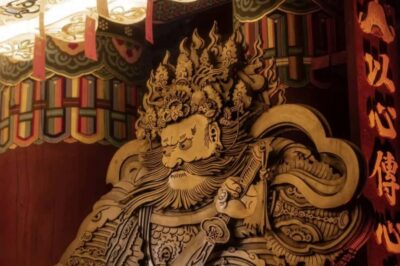
Palace, Temple and Market Guided Foodie Tour at Night
Read our review →
Mt Seorak + Naksansa Temple or Nami Island Group Tour
Read our review →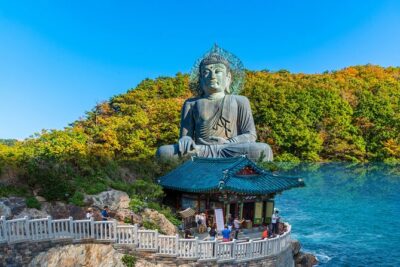
Mount Seorak and Naksansa Temple One Day Tour from Seoul
Read our review →
Full Day Busan Tour Including Haedong Yonggungsa Temple
Read our review →
Private Busan tour with gamcheon culture village and the temple (Customizable)
Read our review →Browse the lists this tour appears in