
Reviewed · E-BIKES
Hiroshima: Peace Park, Castle, and Mitaki Temple E-Bike Tour
Hiroshima’s most moving sights are in the city center, but Mitaki Temple gives this tour its special edge. After the solemn monuments of Peace Park and the cultural setting of Hiroshima Castle, you ride into quieter surroundings for a Buddhist temple among trees and hills.
I like the mix of serious history and easy outdoor travel. I also like the small group, capped at six, and the chance to hear Hiroshima explained in English by a guide such as Joshua, an American who lives in the city. The main consideration is the cycling: you cover about 10 kilometers, and you need to be comfortable on a bike, including the uphill ride toward Mitaki.
Key points to know before you book
- Mitaki Temple is the tour’s unusual stop: You are unlikely to find this quieter temple on a standard first-time city route.
- Peace Park gets proper attention: The guided visit lasts about an hour, giving context to the Atomic Bomb Dome and other memorials.
- The e-bikes soften the ride: The pace is casual, but battery assistance helps on the route toward Mitaki.
- Small groups matter here: With no more than six participants, it is easier to ask questions and stay together.
- Joshua has led several highly praised outings: His local perspective and clear English are a major part of the experience.
- Plan for your own drinks: Stops are possible, but food and beverages are not included, and one booking specifically wished for more drink breaks.
Why this e-bike route gives you a fuller Hiroshima
Many Hiroshima tours focus on the Peace Memorial Park, and for good reason. It is the place where the city’s wartime past is most visible. But Hiroshima is not only a memorial city. It is also a place of castles, rivers, Buddhist temples, and green hills close to the urban center.
This 210-minute e-bike tour connects those different sides without making you spend the day on foot. You begin across from the park, ride through central Hiroshima, then head toward Mitaki Temple before finishing at Yokogawa Station. The route covers roughly 10 kilometers at a relaxed pace.
I see the value in that structure. You get a serious introduction to Hiroshima, a look at its cultural center, and a break in nature. The bicycle also gives you a better sense of how the city fits together than a car or isolated taxi rides would.
The ride is described as casual rather than athletic. Still, this is not a sightseeing bus with a few steps between stops. You need to ride a bike confidently, follow your guide through the city, and manage the uphill approach to the temple. Children under 10 cannot join, and the tour is not suitable for anyone who cannot ride.
More Cycling Tours in Japan:
- E-Bike Nara Highlights – Todaiji, Knives, Deer, Shrine
★ 4.8 · 186 reviews - Kyoto: Fushimi Inari Shrine and Tofukuji Temple E-Bike Tour
★ 5.0 · 75 reviews - Kyoto: Hidden Gems E-Bike Tour Through Backstreets & Temples
★ 4.9 · 54 reviews
Meeting the guide beneath the Atomic Bomb Dome
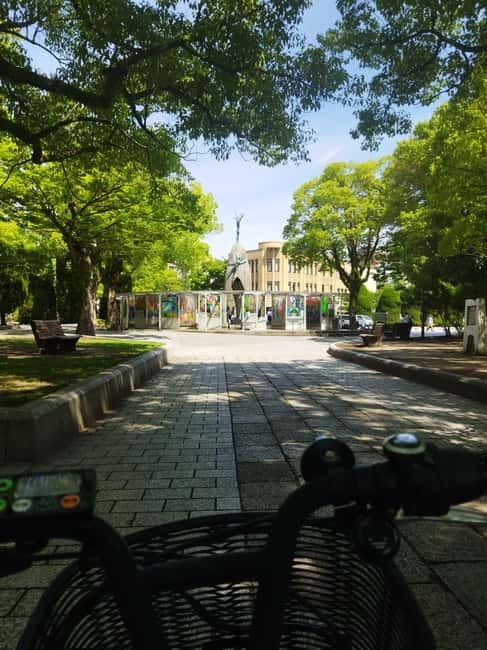
The starting point is LUCKY BAKERY, across the street from Hiroshima Peace Memorial Park. The Atomic Bomb Dome is in full view, so this is a useful place to get your bearings before the tour begins.
Your guide waits with a large orange backpack. That detail should make the meeting point easier to spot, especially in a busy city-center area. The tour begins in one of Hiroshima’s most recognizable settings, rather than at a remote bike shop or hotel.
The guide speaks English. Joshua, also referred to as Josh, has led this experience and is described as an American living in Hiroshima. His role is more than pointing out buildings. He explains what you are seeing and helps place the city’s past within its present-day life.
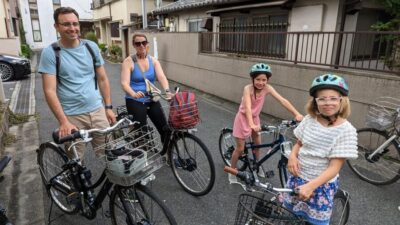
The group limit of six is a real advantage. At a large memorial site, a small group lets you stay close to the guide and ask questions without shouting across a crowd. It also helps keep the cycling pace together.
You receive an e-bike and can request a helmet. Helmets are not listed as automatically included unless requested, so ask for one when you meet the guide if you want to wear it.
One thoughtful hour in Hiroshima Peace Memorial Park
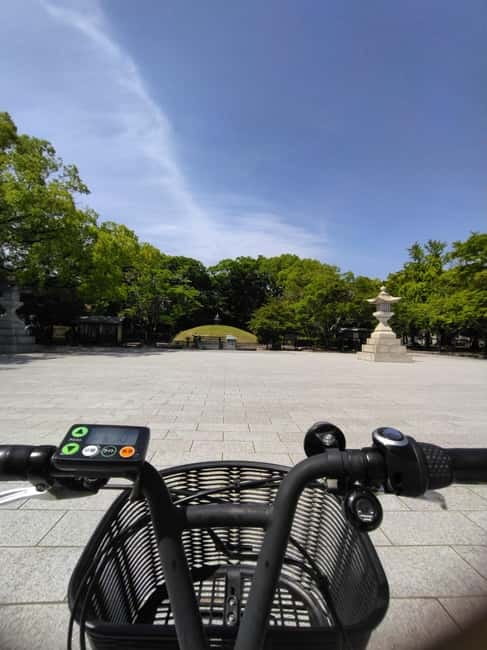
The tour spends about an hour in Hiroshima Peace Memorial Park. That is enough time for a guided introduction, though it is not a full museum day.
The park is where the tour carries its greatest emotional weight. You will learn about the monuments and architecture, including the Atomic Bomb Dome visible near the meeting point. The guide provides the background that can be difficult to absorb from plaques alone.
I like beginning here because it gives the rest of the route meaning. Hiroshima Castle and Mitaki Temple are easier to understand after you have considered what happened to the city and how Hiroshima rebuilt itself.
The park can be a quiet place, but the subject is not easy. You should expect a serious first hour rather than light sightseeing. If you want a detailed visit to the Hiroshima Peace Memorial Museum, you will need to arrange that separately. The tour information names Peace Park, not a museum visit.
An hour also means the guide must keep the visit moving. That is useful if you want to see several parts of Hiroshima in one outing, but it may feel brief if memorial sites are your main reason for coming.
Riding beside the rivers to Hiroshima Castle
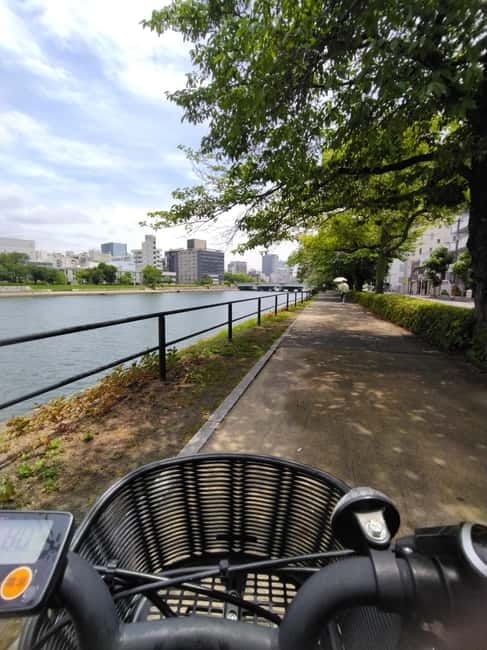
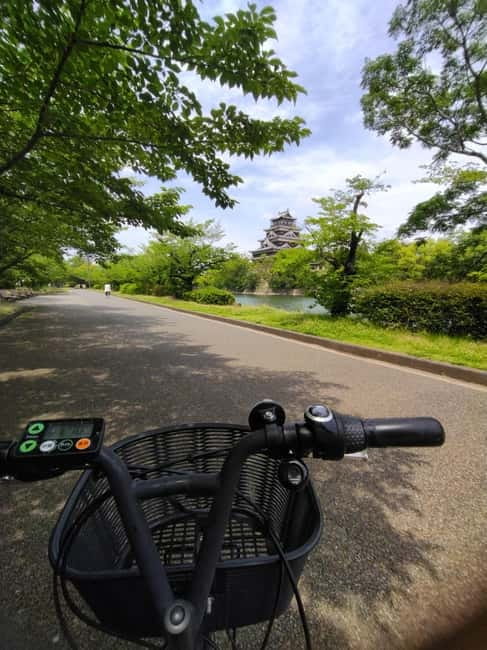
From Peace Park, you get onto the e-bikes and follow scenic riverside paths toward Hiroshima Castle. The ride takes about an hour according to the tour schedule, though the exact rhythm depends on the group and the day.
This is one of the nicest transitions in the experience. You move from a concentrated memorial site into the ordinary city, seeing Hiroshima as a place where people live, commute, and move along its waterways. The bicycle makes that change feel natural.
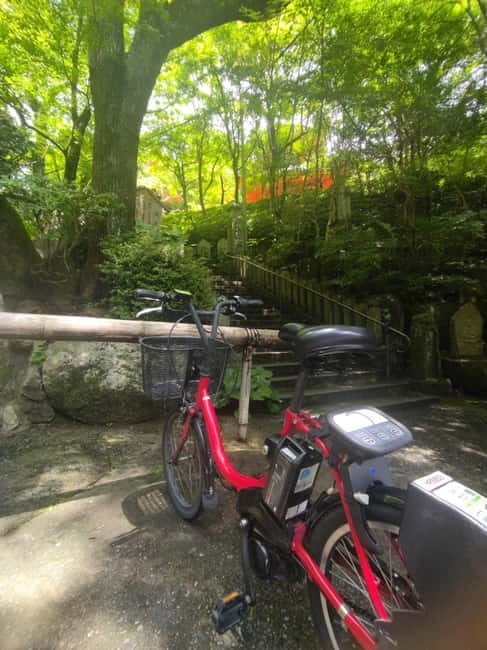
The electric assistance is helpful here. You still pedal, but the motor takes some strain out of the ride and lets the group maintain a comfortable pace. This matters in warm weather, when cycling can become tiring even on relatively easy routes.
At Hiroshima Castle, the guide explains the cultural importance of the area. The castle is not simply another photo stop. It gives you a different view of Hiroshima, one connected to Japanese political and military history before the modern city was destroyed.
The castle area also breaks up the emotional tone of the morning. After the difficult subject of Peace Park, this stop gives you room to think about older layers of the city.
The tour does not promise an extended interior visit to the castle, so you should think of this as a guided look at the site and its setting, not a stand-alone castle museum tour. If you want to explore every exhibit, you may need extra time on another day.
More temple runs by e-bike in Japan:
- Naha: Guided E-Bike Tour of the 12 Zodiac Temples
★ 4.9 · 50 reviews - Kanazawa Ninja Temple Half Day E-bike tour
★ 5.0 · 4 reviews - From Siem Reap: Angkor Wat Sunrise and Temples E-Bike Tour
★ 5.0 · 52 reviews - e-Bike Cycling Tour to Arkadi Monastery Full Lunch included
★ 5.0 · 26 reviews
The uphill ride to Mitaki Temple
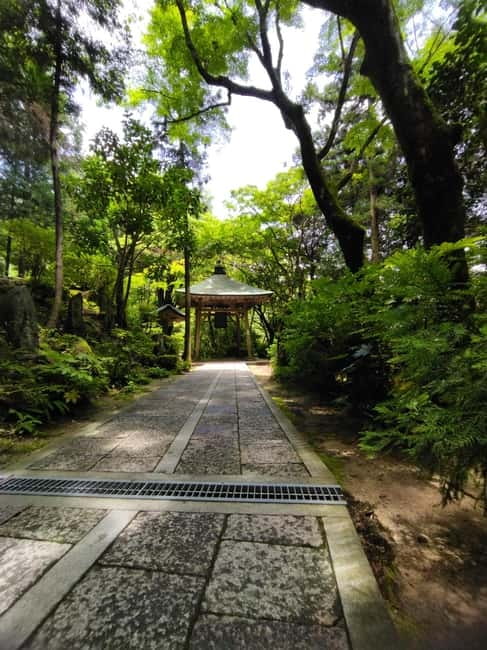
Mitaki Temple is the reason I would choose this tour over a standard Hiroshima city ride. It sits outside the central sightseeing circuit, and reaching it by e-bike makes the visit practical within a half-day outing.
The route from Hiroshima Castle toward Mitaki takes roughly 75 minutes of riding in the supplied schedule. You leave the center behind and head toward the hills. The ride remains casual, but the approach is not flat city cruising all the way. The electric motor is especially useful here.
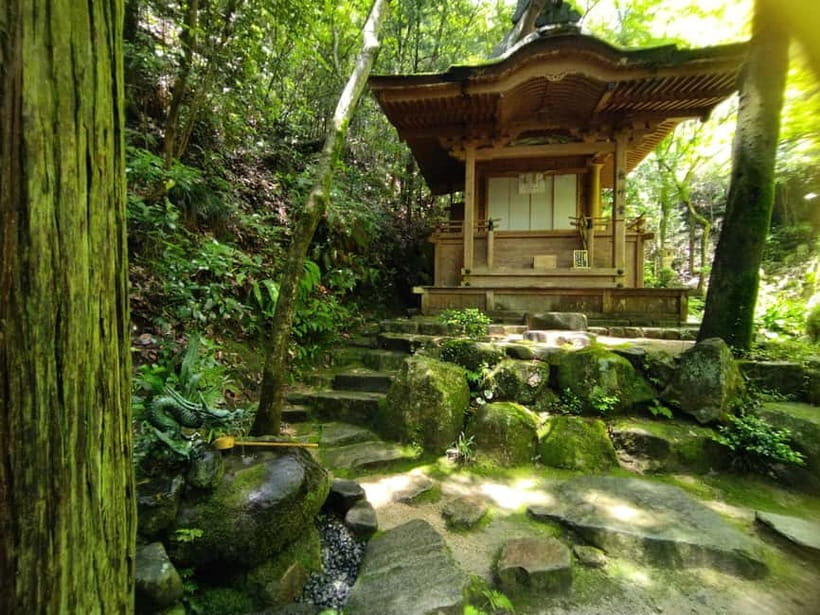
Mitaki Temple brings together nature and Buddhist culture. The setting is a sharp contrast to Peace Park’s open memorial spaces and the castle’s central urban location. Here, the appeal is the quieter atmosphere, trees, hillside paths, and temple architecture.
This is not a stop chosen only because it is famous. In fact, it is less likely to be crowded with international sightseeing groups than Hiroshima’s best-known attractions. That makes the temple feel like a real change of pace rather than another item checked off a city list.
You should allow yourself to slow down here. The value is not only in looking at a building. It is in noticing the change from city streets to a calmer religious setting. The temple gives you a chance to enjoy nature without leaving Hiroshima for a full day.
The timing supplied for the final temple visit is unclear, showing 45 hours, which does not fit a 210-minute tour. In practical terms, the full experience lasts three and a half hours, so the temple portion must be much shorter than 45 hours. Confirm the exact stop length when booking if time at Mitaki is especially important to you.
Snacks, drinks, and the practical rhythm of the ride
There are opportunities to stop for snacks and drinks along the way, but food and beverages are not included in the $70 price. Bring water or budget for a purchase. One participant specifically wanted more drink stops, which is useful feedback if you are visiting during Hiroshima’s hot months.
Do not expect a food tour. The breaks are there to keep the ride comfortable, not to turn the outing into a series of restaurant visits. If you need regular hydration, carry your own bottle and ask the guide early about the next stop.
The casual cycling speed should suit people who want to see a lot without racing. You will not need to train for this outing, but you should be ready to pedal for several hours with stops and to manage the bike in an urban setting.
The tour finishes at Yokogawa Station. That is convenient if you are continuing around Hiroshima by train or heading back toward your accommodation, but there is no hotel pickup or drop-off. You must make your own way to the bakery and from the station afterward.
What the $70 price gets you
At $70 per person, this is not the cheapest way to see Hiroshima’s central sights. You can reach Peace Park and Hiroshima Castle on your own using public transport, and independent visitors pay no guiding fee to walk around the park.
The price makes more sense when you look at the complete route. You get the e-bike, a live English-speaking guide, a small group, and transportation between three very different parts of the city. Mitaki Temple is the key value. Reaching it on your own takes more planning than visiting the central sights.
I would also count the guide’s explanations as part of the cost. Hiroshima’s memorial sites deserve care and context, and a good English-speaking guide can help you understand the place without reducing it to a list of dates.
The strongest praise for this experience has focused on the guide and the route. Joshua has been described as clear, well informed, and easy to communicate with. The pace also seems well judged, giving enough time at the main places while still covering a lot of ground.
One useful extra is that a previous booking included keeping the bikes for further city exploration afterward. Do not assume this is guaranteed, since the standard inclusions only promise the e-bike during the tour. Ask the operator before booking if retaining the bikes matters to you.
With only 11 ratings and an overall score of 4.8, the response is very positive, but the sample is still small. I would treat the price as fair for the guide, bike, and unusual temple stop, especially if you have limited time in Hiroshima.
Who should choose this Hiroshima e-bike tour?
I would recommend it to first-time visitors who want a broad introduction in one morning or afternoon. You get the essential memorial district, a traditional castle site, and a quieter Buddhist temple in a single outing.
It also suits you if you prefer active sightseeing to moving from one indoor attraction to another. The e-bike keeps the ride manageable, while the riverside sections add variety.
This tour is a good fit for:
- Adults and families with children aged 10 or older who can ride confidently
- People who want an English-speaking guide
- Visitors interested in both wartime history and Japanese culture
- Anyone looking for a quieter stop beyond Peace Park and Hiroshima Castle
- People comfortable with a small-group ride of about 10 kilometers
I would hesitate if you dislike bicycles, have trouble riding uphill, or want a slow museum-focused day. I would also choose a different plan if the Peace Memorial Museum is your main goal, since it is not part of the stated route.
Wear comfortable clothes and shoes suitable for cycling. In warm weather, bring water and expect the motor assistance to help, not replace pedaling. If you want a helmet, request one at the start.
Cancellation is flexible enough for most schedules: you can cancel up to 24 hours ahead for a full refund. You can also reserve and pay later, which helps if your Hiroshima plans are still moving around.
Should you book it?
Book this tour if you want Hiroshima’s major themes connected by an active, human-scale route. The Peace Park gives you the city’s painful modern story, the castle adds older cultural context, and Mitaki Temple provides the quiet pause that many central Hiroshima itineraries miss.
The best reason to book is the combination of Joshua’s English guidance, the small group, and the ride into the hills. The main reason to skip it is simple: you must be comfortable on a bicycle and accept that snacks, drinks, hotel transport, and a full museum visit are not included.
For an energetic first look at Hiroshima, $70 is a reasonable price. For a memorial-focused visit or a completely effortless day, choose a walking tour, museum visit, or public transport instead.
FAQ
How long does the Hiroshima e-bike tour last?
The tour lasts 210 minutes, or three and a half hours.
Where does the tour begin?
It begins at LUCKY BAKERY, across the street from Hiroshima Peace Memorial Park and near the Atomic Bomb Dome. The guide waits with a large orange backpack.
Where does the tour finish?
The tour finishes at Yokogawa Station.
Is the tour conducted in English?
Yes. The live tour guide speaks English. Joshua, also called Josh, has led the tour and lives in Hiroshima.
How far do you ride?
The tour covers approximately 10 kilometers at a casual pace.
Is food or drink included?
No. Food and drinks are not included, though there are opportunities to stop for snacks and drinks along the route.
Who can join the tour?
You must be able to ride a bicycle, and children under 10 are not permitted. The group is limited to six participants.
Newly written up around Japan
- From Asakusa: Old Tokyo, Temples, Gardens and Pop Culture★ 5.0 · 47 reviews
- Goshuin Collecting tour at Asakusa Local Temples & Shrines, Tokyo★ 5.0 · 8 reviews
- Private guided tour: Mt. Aso volcano, grasslands, Aso Shrine★ 5.0 · 19 reviews
- Takayama Inari Shrine Tour with Private Transportation★ 5.0 · 5 reviews
- Tokyo: Snow Monkey and Zenkoji Temple Day Trip In Low Price★ 5.0 · 5 reviews
- Tokyo: Gotokuji Culture Walk & Lucky Cat Temple Experience★ 4.9 · 5 reviews
- :Tokyo,Shibuya /Meiji Shrine tour in KIMONO/English-friendly★ 5.0 · 4 reviews
- Tokyo: Sensoji Temple & Street Food: Private Tour with guide★ 4.6 · 8 reviews
E-Bikes, compared.
E-Bike Nara Highlights – Todaiji, Knives, Deer, Shrine
Read our review →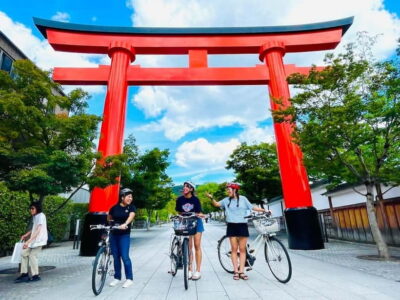
Fushimi Inari Shrine and Tofukuji Temple E-Bike Tour
Read our review →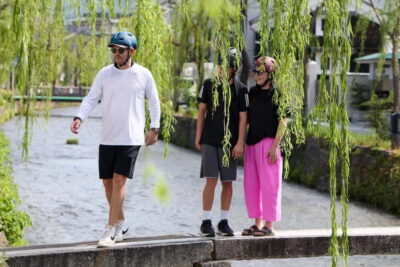
Hidden Gems E-Bike Tour Through Backstreets & Temples
Read our review →
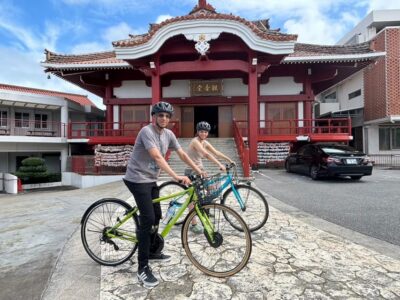
Naha: Guided E-Bike Tour of the 12 Zodiac Temples
Read our review →
e-Bike Cycling Tour to Arkadi Monastery Full Lunch included
Read our review →
Nice: 7 Hills Monastery & Waterfall (EBike Tour Local Guide)
Read our review →
Browse the lists this tour appears in