

Reviewed · E-BIKES
Kyoto: Hidden Gems E-Bike Tour Through Backstreets & Temples
Kyoto is easiest to appreciate when you get away from its most crowded lanes. This four-hour e-bike ride links major sights with quieter temples, tree-lined paths, and local streets that are hard to find on your own. The small group, capped at eight people, keeps the ride personal, while guides such as Ben, Yuki, and Kenji add useful context about religion, customs, and daily life.
I like two things right away: the electric assistance makes Kyoto’s gentle eastern hills manageable, and the route covers a lot of ground without feeling like a race. You also get time to look around, take photographs, and ask questions. The main drawback is the meeting point, which can be hard to identify because signage at Kyoto Tourist Lounge Gion is limited.
Key points to know before you ride
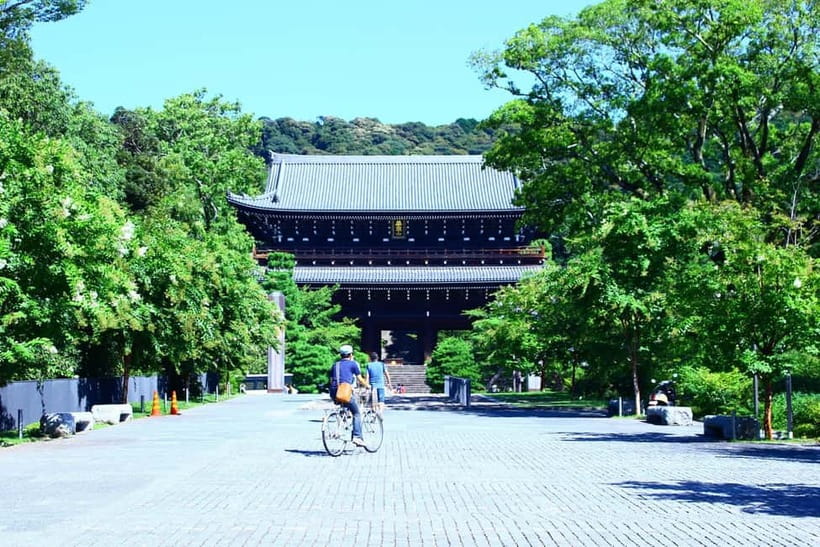
- A smart way to cover Kyoto: Four hours by e-bike lets you reach Gion, Nanzenji, Heian Shrine, Philosopher’s Path, Shimogamo-jinja, and the Imperial Palace.
- Quieter stops are the point: The route avoids many of Kyoto’s packed tourist corridors and includes peaceful religious sites and lesser-known corners.
- Guides shape the experience: Ben, Yuki, Kenji, and Yukio have been praised for clear English, local pride, patience, and helpful stories.
- Electric assistance matters: You will ride around the lower hills on Kyoto’s eastern side, where a little help from the motor makes a real difference.
- Good for confident older children and adults: Riders must be over 145 centimeters tall, and the tour is not suitable for children under 10.
- Bring insect repellent in warm weather: One rider found it useful, especially around greener paths and temple areas.
Why an e-bike works so well in Kyoto
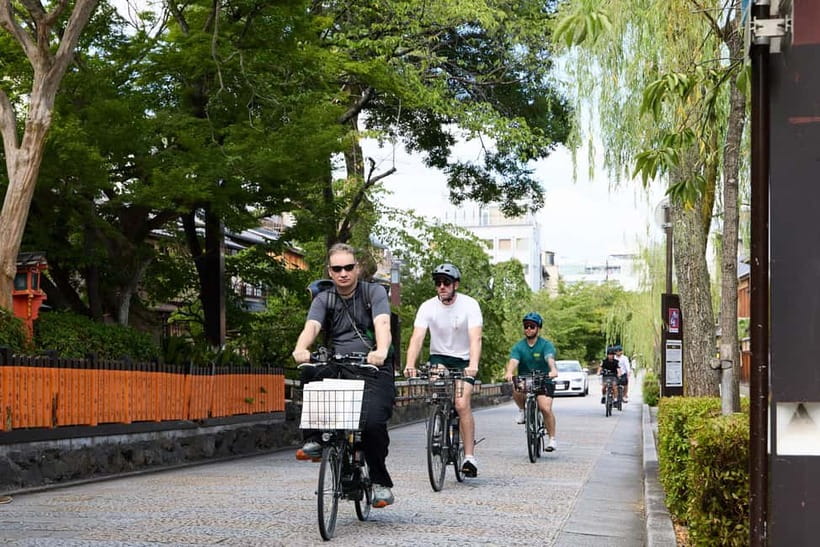
Kyoto’s central sights are spread farther apart than a first-time map suggests. Walking between Gion, Nanzenji, the Philosopher’s Path, Shimogamo-jinja, and the Imperial Palace would take much of a day, while public transport does not always bring you close to the entrance you want.
An e-bike solves that problem without turning the outing into a hard cycling workout. You still pedal, but the motor helps on inclines and makes it easier to keep moving through the city. One rider specifically appreciated the assistance on the lower hills east of central Kyoto. Another described the bikes as comfortable and in good condition.
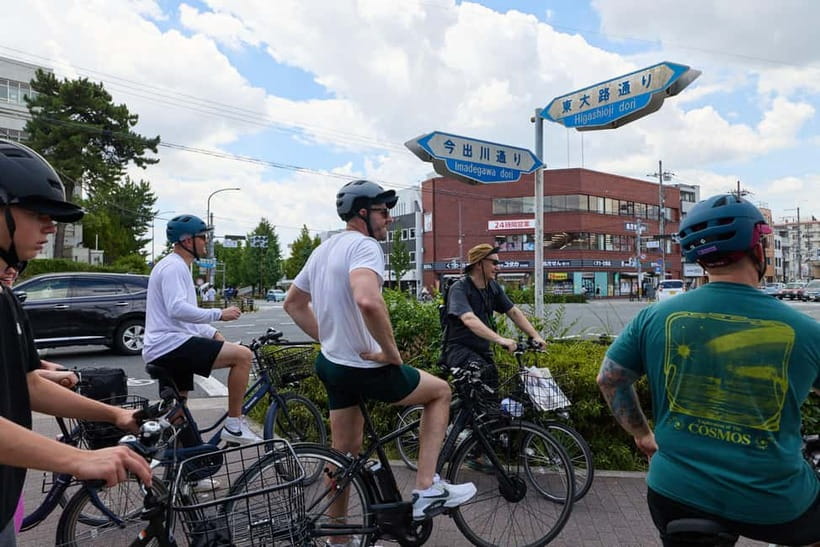
The ride is not presented as a high-speed athletic trip. Guides adjust the pace to the group, with Kenji receiving particular praise for matching the outing to different skill levels and interests. You should still be comfortable riding a bicycle on city streets, but the emphasis is on seeing Kyoto, not setting a personal speed record.
The group limit of eight is another practical advantage. Your guide can keep an eye on the riders, answer questions, and stop for photographs without managing a large crowd. Ben has been praised for checking that everyone was following safely, while other guides were noted for patience when riders needed a slower pace.
More Cycling Tours in Kyoto:
- Kyoto: Fushimi Inari Shrine and Tofukuji Temple E-Bike Tour
★ 5.0 · 75 reviews - Bangkok: Temples, Canals & Local Life Bike Tour
★ 4.9 · 3,511 reviews - Bangkok: Night Bike Tour with Temples & Flower Market Visit
★ 4.8 · 751 reviews
Starting in Gion, where old Kyoto meets the modern city
The meeting point is in front of Kyoto Tourist Lounge Gion on Yamatoooji Dori Street. Your guide waits there with the bikes, but allow extra time to locate the exact spot. Signage at the starting point has been described as limited, so checking the Google Maps location before you leave your hotel is sensible.
Gion gives the tour an atmospheric opening. Its traditional streets, wooden buildings, and connections with geisha culture make it one of Kyoto’s best-known districts. The visit here lasts about 20 minutes, so think of it as an introduction rather than a full Gion walking tour.
That short stop is useful because it gives you a sense of the city’s historic center before the route moves into quieter areas. Your guide can explain local customs and the role of the district, then lead you away from the densest foot traffic. This transition is one of the pleasures of the ride: you begin in a famous part of Kyoto and soon see a calmer side of the city.
Nanzenji and the eastern hills
Nanzenji receives about 30 minutes. It is one of Kyoto’s major Zen temple complexes, known for its spacious grounds and strong connection with the eastern foothills. The tour does not give you an enormous amount of time here, but half an hour is enough for an orientation, photographs, and a look at the temple setting.
This is also one of the places where the e-bike earns its keep. The eastern side of Kyoto is not severely mountainous, but the route includes lower hills. You will appreciate the motor when the road rises, especially if you have already spent a morning sightseeing or are riding in warm weather.
The stop works best if you want a guided overview rather than a long, detailed temple visit. If Nanzenji is high on your personal list, you may want to return later with more time. On the tour, the goal is to connect several parts of Kyoto into one coherent ride.
Heian Shrine and a change of scale
The next stop is Heian Shrine, with roughly 30 minutes to explore. Its large entrance gate and broad grounds create a very different feeling from the more intimate streets of Gion and the wooded setting around Nanzenji.
The contrast helps make the route interesting. You are not seeing six versions of the same temple. Instead, the ride shifts between old neighborhoods, major religious sites, open ceremonial spaces, quiet paths, and city streets.
Your English-speaking guide adds the value here. A good explanation can help you understand the difference between a shrine and a temple, the meaning behind religious customs, and why a site matters beyond its most photographed features. Ben, Yuki, and the other guides have been praised for giving useful historical and cultural background without filling every minute with talk.
You also get time to look around independently. That balance matters. A guide should give you enough information to notice more, then let you enjoy the place at your own pace.
More temple runs by e-bike in Kyoto:
- E-Bike Nara Highlights – Todaiji, Knives, Deer, Shrine
★ 4.8 · 186 reviews - From Siem Reap: Angkor Wat Sunrise and Temples E-Bike Tour
★ 5.0 · 52 reviews - Naha: Guided E-Bike Tour of the 12 Zodiac Temples
★ 4.9 · 50 reviews - e-Bike Cycling Tour to Arkadi Monastery Full Lunch included
★ 5.0 · 26 reviews
Philosopher’s Path without making it the whole day
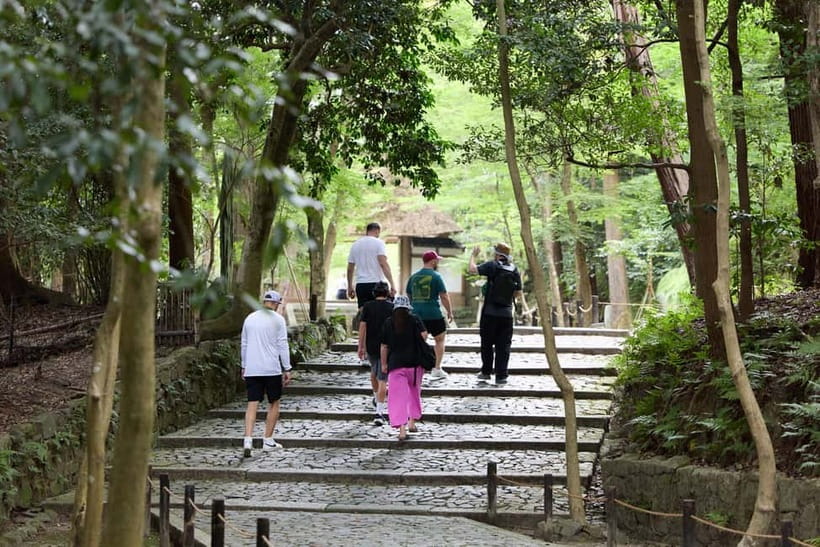
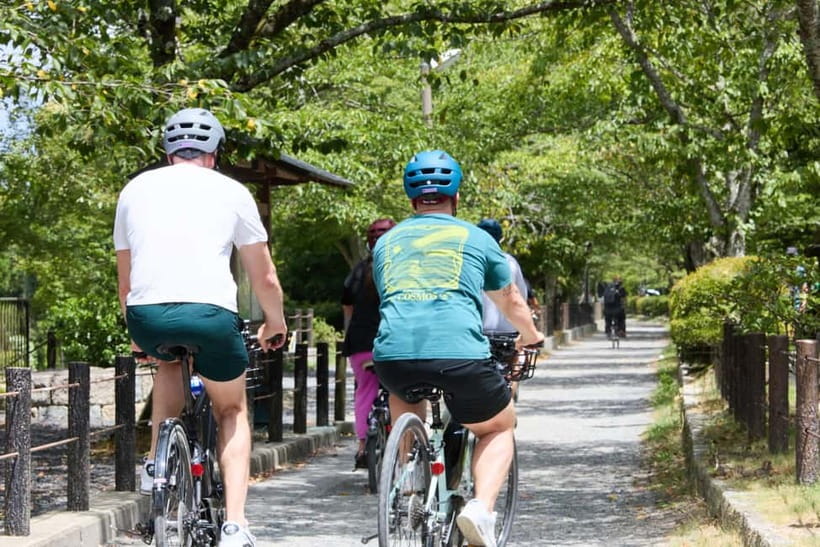
The Philosopher’s Path is scheduled for about 30 minutes. This pleasant route follows a canal between the eastern hills and residential areas, and it is especially attractive when seasonal trees are in bloom. The path is well known, but the ride can still provide a calmer experience than visiting Kyoto’s busiest headline attractions.
There is one practical point to keep in mind: a path beside a canal is not necessarily empty. Conditions can change with the season and time of day. Your guide’s route choice and timing help, but this should not be sold as a guarantee of solitude.
The short stop is enough to enjoy the setting and take photographs, but not enough for a slow walk along every section. That is a fair trade if you want to see a broad sweep of Kyoto in four hours. You can always return on foot later if the canal path becomes a favorite.
One useful benefit is orientation. Cycling through this part of eastern Kyoto shows you how the temple districts, hills, waterways, and residential streets fit together. You get a clearer sense of the city than you would from visiting isolated sights by taxi.
Shimogamo-jinja and a quieter side of Kyoto
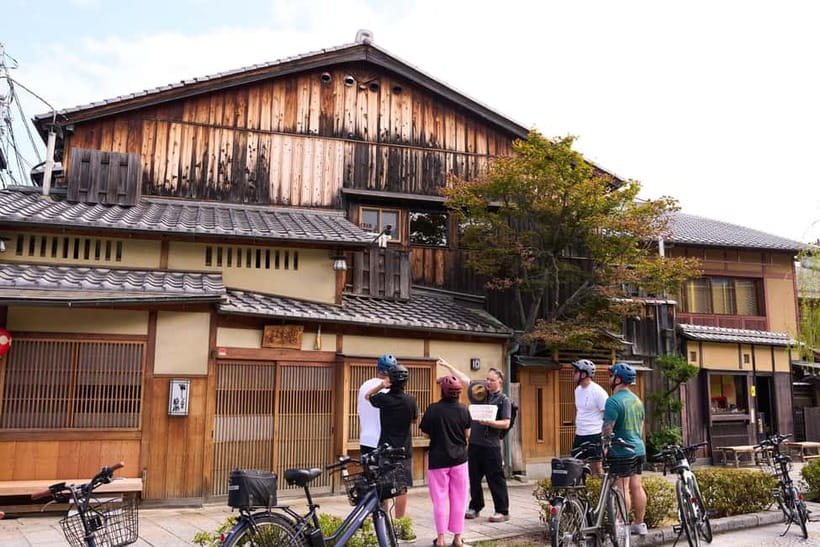
Shimogamo-jinja is allotted about 20 minutes. This shrine provides another shift in mood, with a setting that feels more removed from the busiest sightseeing routes. The stop is brief, but it adds variety to the day and gives your guide another chance to explain Shinto traditions.
Several guides have taken particular care to lead groups to peaceful religious places that are easy to miss. That is the real character of this experience. You are not simply ticking off famous names. You are using the bicycle to reach places that might not appear in a first-time visitor’s plan.
I would pay attention to the guide’s explanations here, especially if you are curious about the difference between Japanese religious practices and the architecture you are seeing. The tour is designed for broad understanding rather than an academic lecture, so questions are welcome and the tone stays approachable.
The Imperial Palace and the ride back to Gion
The Kyoto Imperial Palace is the final major stop, with around 30 minutes to look around. Its broad grounds and formal layout offer a strong contrast to the narrow lanes of Gion and the canal-side route earlier in the day.
The palace area is also a fitting place to end the sightseeing portion. Kyoto served as Japan’s imperial capital for centuries, and the palace helps place the city’s temples, shrines, and old neighborhoods within that larger story. Your guide can connect what you have seen during the ride, from religious sites to the city’s former political center.
After this stop, you return to Kyoto Tourist Lounge Gion. The route gives you a useful first look at several districts, so I especially like the idea of booking it near the start of your Kyoto stay. You can use the guide’s advice afterward to decide which places deserve a longer return visit and when to visit the busiest sights.
What the guides add to the ride
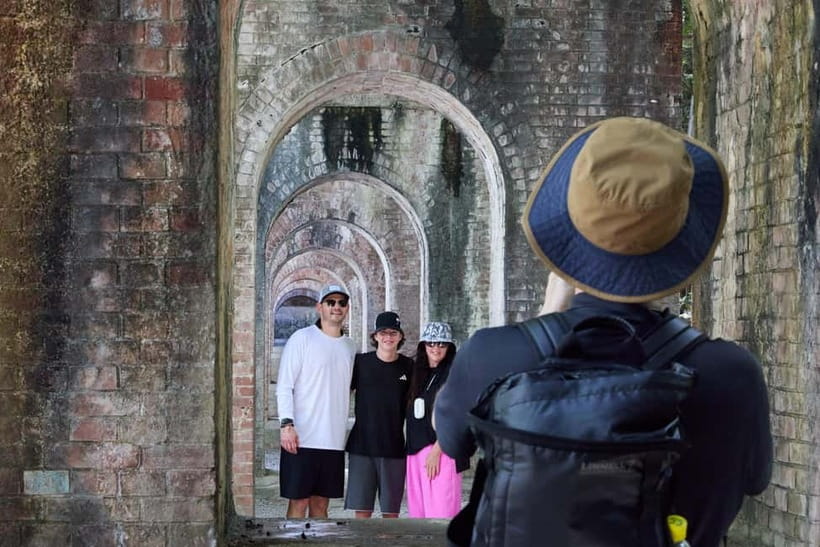
The strongest praise has gone to the guides, not just the bikes or the route. Ben has been described as funny, patient, safe, and good at explaining both major events and small local details. Yuki has been praised for his pride in Kyoto, friendly manner, and ability to find beautiful, quiet places. Kenji has been noted for adapting the route to the group’s interests and cycling ability.
That matters because cycling through a city requires more than pointing out buildings. Your guide must choose safe streets, keep the group together, judge when to stop, and explain what you are seeing without slowing the whole morning to a crawl.
The best moments seem to come when guides leave room for questions and photographs. Ben has taken pictures at scenic stops, and one guide extended the ride to include a tranquil small temple away from the main roads. That kind of flexibility can make the difference between a standard sightseeing loop and a more personal introduction to Kyoto.
The tour is in English. If you want a deeply specialized discussion of architecture or Japanese religious history, this may not be the right format. If you want clear stories, useful cultural background, and a local point of view while moving through the city, it fits well.
Price, pace, and what you receive for $87
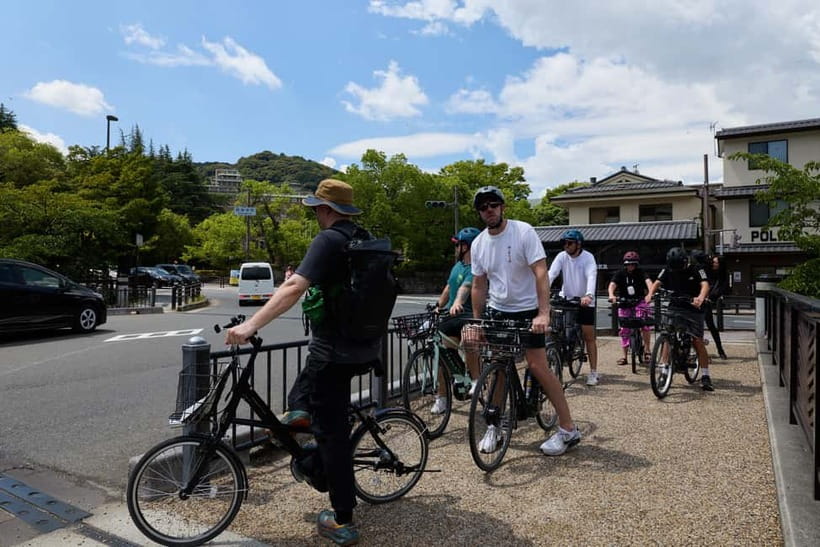
At $87 per person, the tour is not the cheapest way to see Kyoto. You are paying for a four-hour experience that includes the e-bike, a local English-speaking guide, route planning, group supervision, and visits to several major sites and quieter areas.
I consider that reasonable value if you would otherwise spend money on taxis or lose time figuring out connections between districts. The e-bike also lets you see more than a walking tour could cover in the same period. A group of eight or fewer means the guide can give more attention than on a large bus outing.
The value is weaker if you already cycle confidently around Kyoto and prefer to explore temples at your own pace. You may also want more time at each stop than this route allows. The tour is built around variety and coverage, not long visits at one or two sites.
Insurance is not included, so check your own travel arrangements before booking. Free cancellation is available up to 24 hours before the start for a full refund, and you can reserve now and pay later, which helps if your schedule is still changing.
Who should book this Kyoto ride
I would choose this tour for a first or second day in Kyoto, especially if you want a city overview with local guidance. It suits adults and children over 10 who are at least 145 centimeters tall and comfortable riding a bicycle.
It is also a good fit if you have limited time. Four hours gives you a broad introduction, and the guide can suggest where to return later. Couples, friends, solo riders, and small family groups should all fit comfortably within the eight-person limit.
You should think twice if you dislike cycling in urban areas, need a fully private schedule, or want to spend an hour at every temple. The route is designed for movement, and the exact feel can vary with weather, group ability, and traffic.
Wear comfortable clothes and bring water. In warmer months, insect repellent is a sensible addition because some parts of the route pass near trees, canals, or greener temple grounds. If rain is in the forecast, pack accordingly. One rider still enjoyed the tour in wet weather, but dry conditions will make the photography and riding easier.
Should you book it?
Book this Kyoto e-bike tour if you want to cover a lot of ground, avoid spending the morning in the thickest crowds, and hear local stories along the way. The mix of Gion, Nanzenji, Heian Shrine, Philosopher’s Path, Shimogamo-jinja, and the Imperial Palace gives you a well-rounded look at the city.
I would be most inclined to book if Ben, Yuki, or Kenji is guiding your departure, though the experience is built around a capable local guide whichever name appears. Confirm the meeting point carefully, be ready for some gentle hills, and remember that the tour offers snapshots rather than long visits.
For an active, practical introduction to Kyoto at $87, it is a strong choice. For a slow temple morning or a hard-core cycling challenge, choose something else.
FAQ
How long does the Kyoto e-bike tour last?
The tour lasts four hours, including the ride between stops and visits to the listed sights.
Where does the tour begin and end?
It begins and ends at Kyoto Tourist Lounge Gion. The guide waits in front of the lounge on Yamatoooji Dori Street.
What sights are included?
The route includes Gion, Nanzenji Temple, Heian Shrine, Philosopher’s Path, Shimogamo-jinja Shrine, and Kyoto Imperial Palace.
Is the tour conducted in English?
Yes. The tour includes a live English-speaking guide.
How large is the group?
The group is limited to eight participants.
Are e-bikes included in the price?
Yes. Comfortable e-bike rental is included.
How tall must I be to join?
You must be over 145 centimeters tall.
Is the tour suitable for children?
It is not suitable for children under 10 years old or babies under 1 year old.
Is insurance included?
No. Insurance is not included in the tour price.
Can I cancel for a refund?
Yes. You can cancel up to 24 hours in advance for a full refund. You can also reserve now and pay later.
Newly written up around Kyoto
- Kyoto:Kiyomizu-dera Temple Rent a kimono and ride a rickshaw★ 4.8 · 7 reviews
- KYOTO: Tempio Kiyomizu Pagode Gion “Geisya” (Guida Italiana)★ 4.7 · 17 reviews
- Kyoto: Kiyomizudera, Sanjusangendo, Ginkakuji and Higashiyama.★ 5.0 · 3 reviews
- Kyoto: Shakyo & Matcha in Historic Temple Garden★ 5.0 · 4 reviews
- KYOTO: Golden Pagoda, Bamboo Forest, Arashiyama (Italian)★ 4.9 · 5 reviews
- Kyoto:Quiet Arashiyama and Sagano Temples★ 4.8 · 5 reviews
- Kyoto kiyomizu Temple : Maiko and Samurai Couple Photoshoot★ 4.8 · 25 reviews
- Kyoto: Nara, Todaiji, Kasuga Taisha Shrine Private Full Day★ 4.9 · 18 reviews
E-Bikes, compared.

E-Bike Nara Highlights – Todaiji, Knives, Deer, Shrine
Read our review →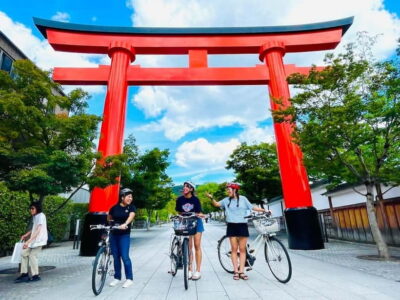
Fushimi Inari Shrine and Tofukuji Temple E-Bike Tour
Read our review →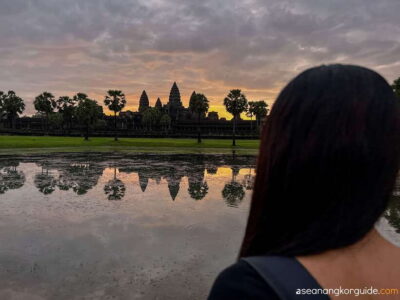
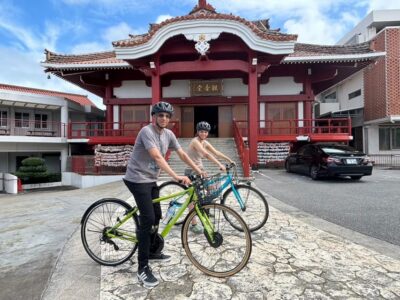
Naha: Guided E-Bike Tour of the 12 Zodiac Temples
Read our review →
e-Bike Cycling Tour to Arkadi Monastery Full Lunch included
Read our review →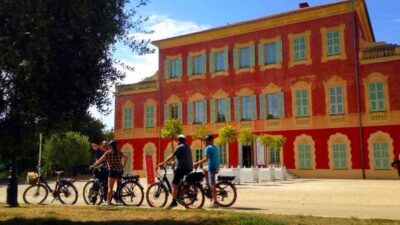
Nice: 7 Hills Monastery & Waterfall (EBike Tour Local Guide)
Read our review →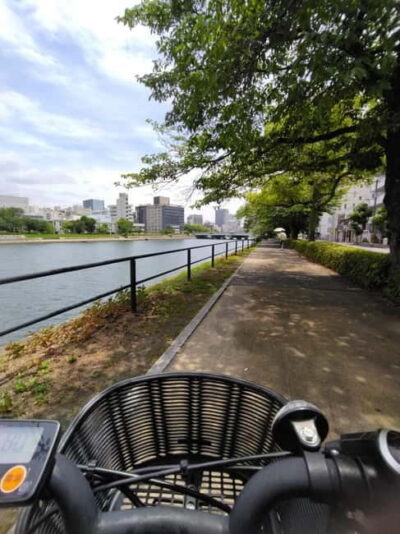
Hiroshima: Peace Park, Castle, and Mitaki Temple E-Bike Tour
Read our review →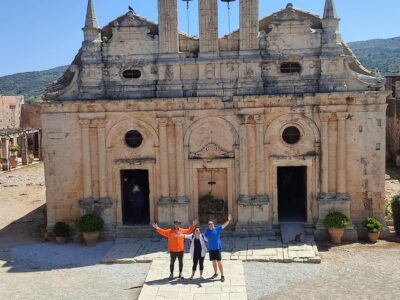
Browse the lists this tour appears in