
Reviewed · MEIJI SHRINE & SENSO-JI TOURS
Goshuin Collecting tour at Asakusa Local Temples & Shrines, Tokyo
Asakusa’s best moments are not limited to Sensoji’s famous gate. This private walk takes you from the big-name temple to quieter corners, including Imado Shrine’s lucky cats and a small mound made with Mt. Fuji lava. You collect goshuin along the way, each one a handwritten or printed record of your visit.
I like the personal format, since your group of up to three gets the guide’s attention. I also like the mix of familiar sights and small local sanctuaries, especially the chance to see a ceremony or pause among cats and trees. The catch is simple: goshuin cost extra, and this is a walking tour that needs decent stamina, water, and sensible rain gear.
Key points to know before you book
- Private for up to three people: The $140 rate covers the group, not each person, making the price much better when three people join.
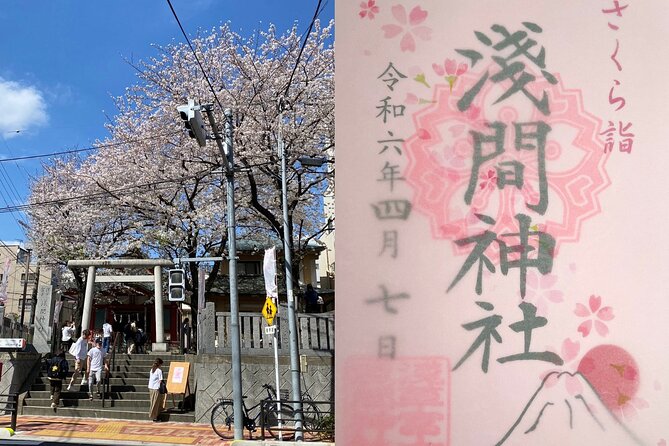
- A goshuin-focused route: Bring or buy a goshuin-cho if you want a proper place to collect the temple and shrine stamps.
- Sensoji is only the beginning: You also visit Imado Shrine, Matsuchiyama Shoden, and Asakusa Fuji Sengen Shrine.
- Cat lovers get a special stop: Imado Shrine is known for its cat decorations and lucky cat connected with love.
- Expect substantial walking: The listed stops total about one hour and 45 minutes, with the remaining time used for walking, explanations, and stamp collecting.
- The route returns to the start: Meet at 1-chōme-1-3 Asakusa, Taito City, and finish back there.
Why goshuin gives this Asakusa walk a purpose
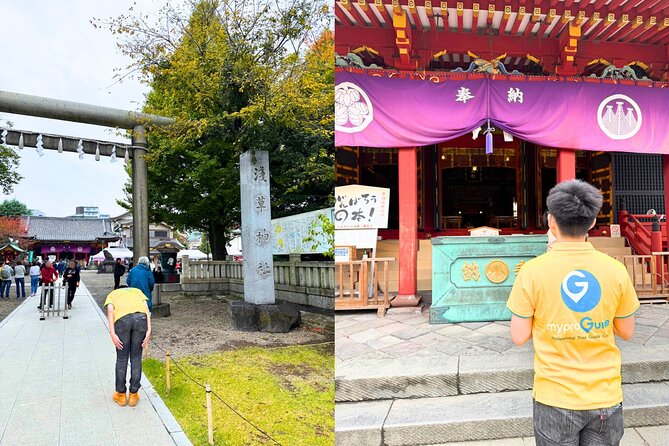
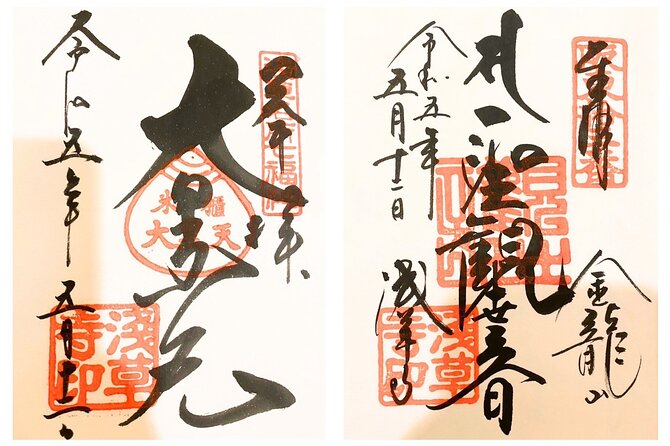
A goshuin is more than a souvenir stamp. It is a record of visiting a Buddhist temple or Shinto shrine, usually written in a dedicated book called a goshuin-cho. The appeal is practical and personal: you leave with something tied to the places you actually visited, rather than another mass-produced Tokyo keepsake.
This tour is built around that small ritual. At each stop, you can ask the guide where to collect a goshuin and how the process works. The stamps, books, and amulets are not included in the price, so carry some spending money and allow room in your budget for each one.
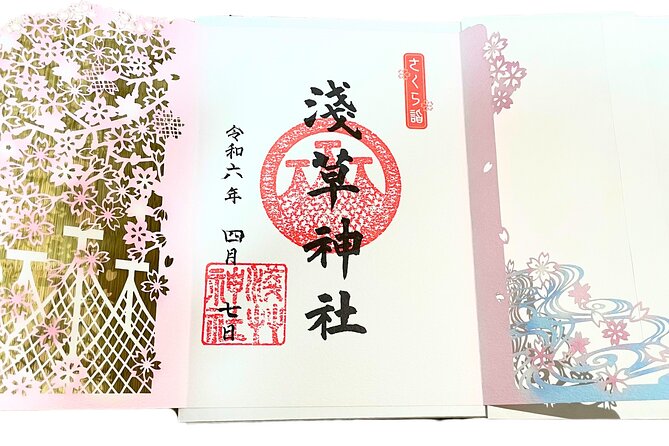
Designs can vary by temple and shrine. Some are bold and graphic, while others have a more traditional look. That variety is part of the fun. You are not simply ticking off four addresses. You are building a small visual record of Asakusa.
The guide also adds context that is easy to miss when you walk alone. At one shrine, the focus may be love and lucky cats. At another, it may be family harmony, health, or a symbolic climb up Mt. Fuji. Those details give the route a clear theme instead of making it a string of unrelated photo stops.
More Meiji Shrine and Senso-ji Tours in Japan:
- Tokyo: Asakusa Walking Tour with Sensoji Temple Visit
★ 4.8 · 1,583 reviews - Tokyo Panoramic 1 Day: Meiji Shrine, Asakusa, Odaiba and SKYTREE®
★ 4.5 · 1,222 reviews - Asakusa Senso-ji Temple and Old Tokyo Walking Tour
★ 5.0 · 560 reviews
Sensoji, Asakusa Shrine, and Nakamise-dori
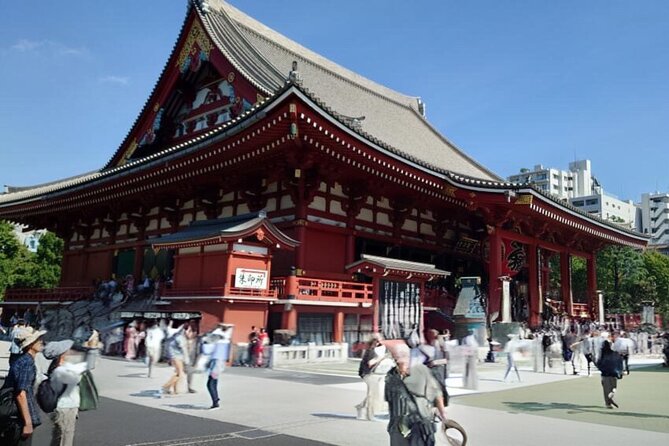
Begin with the Asakusa landmarks that almost everyone associates with old Tokyo: Sensoji, Asakusa Shrine, Nakamise-dori, and the Kaminarimon area. The one-hour stop gives you time to take in the major structures and hear the stories that connect them.
Sensoji is the grand opening act. Its scale, busy approach, and strong visual character make it an important introduction to Asakusa. Nakamise-dori leads toward the temple and adds a shopping stretch filled with food and souvenirs. It can feel far removed from the quieter shrines later in the walk, which is exactly why this first stop works well as a contrast.
Asakusa Shrine adds another layer to the visit. The shrine is connected with the founding story of Sensoji, and it offers a different religious setting beside the Buddhist temple. If a ceremony happens during your visit, the atmosphere can change quickly. One guest had this happen and found the guide, Kayukawa-san, helpful in explaining what was taking place.
The practical drawback is that this part of Asakusa can be crowded and visually overwhelming. You may spend more time moving with the flow of people than standing quietly. A private guide helps by giving the scene structure, but no guide can make one of Tokyo’s most popular areas empty.
This is also the place to ask your basic goshuin questions early. If you are new to the custom, use the first stop to clarify how to present your book and when stamps are collected. That lets you enjoy the smaller shrines with less uncertainty.
Imado Shrine and Asakusa’s lucky cats
The route then shifts to Imado Shrine, a much smaller stop lasting about 15 minutes. Its theme is easy to understand: love, lucky cats, and a calm shrine setting away from the main Sensoji flow.
Imado Shrine is known for cat decorations, and cats appear in the shrine’s visual identity. A lucky cat associated with love gives this stop a playful tone without taking away from its religious setting. If you enjoy Japanese folklore, cute design, or cat photography, this is likely to be one of your favorite pauses.
The shrine has also been used as a filming location for a Japanese drama. That detail gives the visit an extra point of interest, particularly if you enjoy seeing places that have appeared on screen.
The short stop means you should keep your expectations in check. This is not a long cultural lecture or an extended garden visit. It is a focused look at a small shrine, its symbols, and its atmosphere, followed by time to collect a goshuin if available.
The cat theme also makes Imado a useful break in the route. Sensoji asks you to take in scale and history. Imado asks you to notice small details. You may find cat decorations around the grounds, and cats have been seen in the shrine area. The experience can feel gentle and unhurried, even though the scheduled stop is brief.
Matsuchiyama Shoden and the daikon symbol
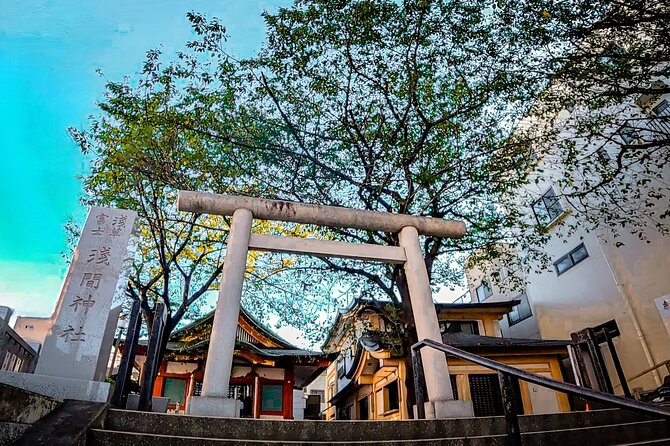
Matsuchiyama Shoden Honryuin brings another unusual symbol into the walk: the daikon. Here, the vegetable represents family harmony and good health. That is the kind of detail a casual visit can easily miss, since the symbol may look like simple decoration without an explanation.
The stop includes a Japanese garden and lasts about 15 minutes. You may also find free daikon offered on some occasions, though this should not be treated as a guaranteed part of the visit. Ask the guide about the symbol and any current offering when you arrive.
This is one of the tour’s better examples of why a local guide can be useful. Without context, a small shrine and a vegetable motif might pass in seconds. With an explanation, the stop becomes a lesson in how everyday objects can carry religious meaning.
The garden setting also changes the pace. After Sensoji and the cat decorations at Imado, Matsuchiyama Shoden gives you a quieter place to look around. Do not expect a huge garden or a long meditation session. The visit is short, but its unusual subject makes it memorable.
If you are collecting goshuin, this is another chance to add a design with a different mood from the major temple. Your guide can help direct you to the proper place, but the stamp itself remains your purchase.
Other temple visits near Japan we have written up
- Kyoto: Tea Ceremony Ju-An at Jotokuji Temple
★ 4.9 · 3,207 reviews - Osaka/Kyoto:Kinkakuji,Arashiyama,FushimiInariShrine,NaraPark
★ 4.1 · 1,596 reviews - Nikko: Kegon Falls, Lake Chuzenji & Toshogu Temple
★ 4.6 · 1,577 reviews - Tokyo: Nikko Toshogu Shrine and Kegon Waterfall Tour
★ 4.5 · 1,266 reviews
Asakusa Fuji Sengen Shrine and its miniature Mt. Fuji
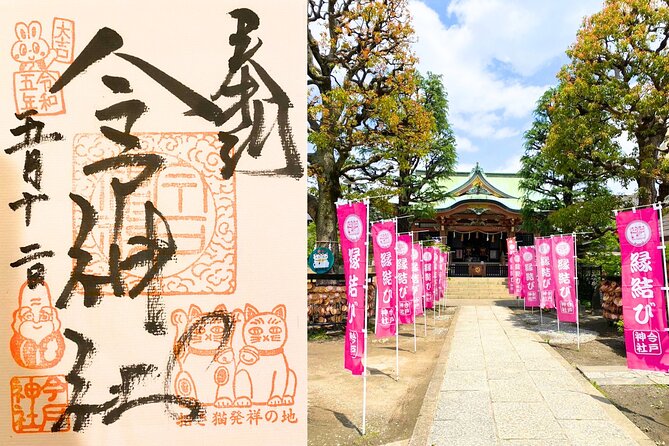
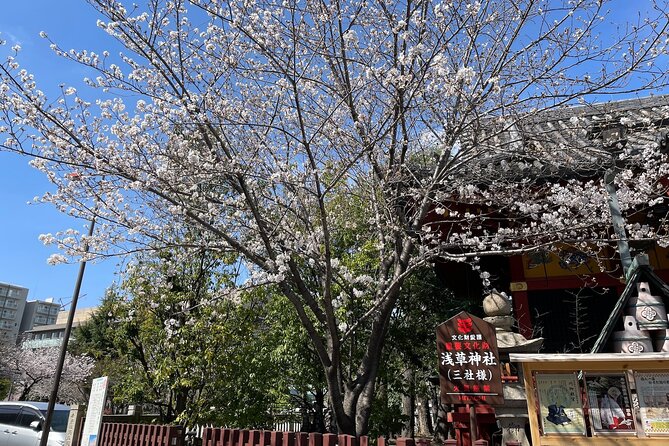
The final listed stop is Asakusa Fuji Sengen Shrine, home to a small Fuji-zuka. This mound is built with lava from Mt. Fuji, allowing visitors to make a symbolic climb and receive the same blessings associated with reaching the real mountain.
You will not be climbing Mt. Fuji here, of course. The point is symbolic access. For people who have no time, equipment, or desire to tackle the actual mountain, the Fuji-zuka offers a compact way to connect with its religious importance.
This stop lasts about 15 minutes, so the value comes from the explanation and the meaning of the site rather than a long visit. It is also a fitting finish for a goshuin route. You end with a shrine that turns a large national symbol into a small, local experience.
The route’s variety is its strongest feature. You move from the scale of Sensoji to love-themed cats, from daikon symbolism to a miniature Mt. Fuji. None of the smaller stops needs to carry an entire afternoon by itself. Together, they create a more rounded picture of Asakusa.
What the three-hour timing feels like
The tour lasts about three hours. The listed time at the four stops adds up to roughly one hour and 45 minutes, so the balance is used for walking between sites, explanations, photos, and goshuin collection.
That timing matters. A stamp is not always a fast souvenir purchase, and a private guide may need to help you understand where to go and what to do. You should not book this expecting to rush through four shrines in a straight line.
The route requires a moderate level of physical fitness and a significant amount of walking. Bring water. Pack rain gear if the forecast is uncertain. The tour requires good weather and may be moved or canceled if conditions are poor.
Because the group is private, you can ask questions and adjust your attention more easily than on a large group outing. One guide was praised for patiently answering questions and helping with photos. Another account described trouble finding the meeting point, but the guide contacted the group and helped locate them. Give yourself enough time to reach 1-chōme-1-3 Asakusa, and keep your phone available before the start.
The activity ends where it begins. That makes it easier to continue exploring Asakusa afterward, provided you still have energy for more walking.
Is $140 a fair price for three people?
At $140 per group, the price works out to about $46.67 per person when three people join. For two people, it is $70 each. For one person, the cost is much harder to justify unless the private format and goshuin focus are especially important to you.
The value comes from the guide, not from included admissions. The listed temple and shrine visits have no admission ticket charge. You are paying for help with the route, explanations, cultural background, photography, and the practical side of collecting goshuin.
That price is most sensible for a small group that wants personal attention. A family of three, a couple, or a small group of friends can share the cost while keeping the guide to themselves. If you are mainly looking for a cheap walking tour of Sensoji, you can explore the main temple area independently for far less.
Budget extra for goshuin-cho, individual goshuin, and any omamori you choose to buy. None of those items is included. The exact cost of each stamp is not specified, so ask your guide or the shrine staff when you arrive.
Who will enjoy this private Asakusa experience?
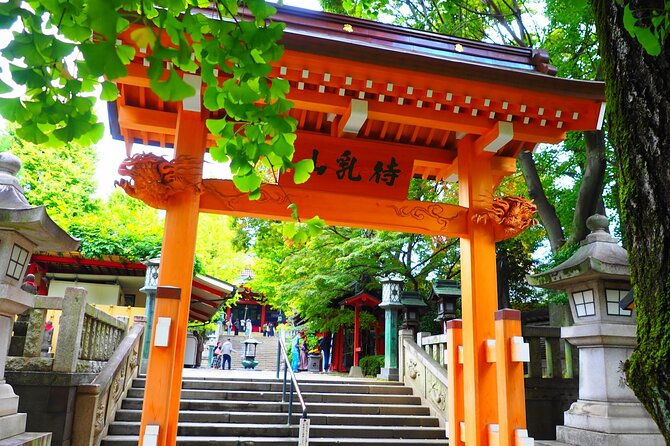
This tour suits you if collecting goshuin is a central reason for your Tokyo visit. It also works well if you want a local guide to connect the symbols, customs, and stories at places that are easy to overlook.
Cat lovers should pay special attention to Imado Shrine. People interested in Japanese religious practice will appreciate the range of themes, from love and health to family harmony and Mt. Fuji blessings. Photographers may also enjoy the contrast between large temple architecture, small shrine details, gardens, and cat decorations.
It is less suitable if you dislike walking, want a slow indoor activity, or prefer to spend most of your time at one major temple. The route moves through several locations, and the short stops mean you need to stay aware of the schedule.
Language support may vary by guide. The tour can offer explanations and help, but one account noted that some questions were difficult to answer and that translation assistance was not always provided. If you need detailed interpretation for every interaction, keep that limitation in mind.
Booking, weather, and cancellation details
Confirmation is sent within 48 hours of booking, subject to availability. The experience is offered as a private activity, and only your group participates.
You can cancel for a full refund up to 24 hours before the start time. Cancellations or changes made inside that window are not accepted for a refund. The cut-off uses Tokyo local time.
Bad weather can cancel the tour. In that case, you are offered another date or a full refund. The same applies if the minimum number of participants is not met.
Service animals are allowed, and the meeting point is near public transportation. Still, the important practical issue is walking comfort. Wear shoes you can use for several hours and bring water, rain protection, and anything else you need for changing weather.
Should you book it?
Book this tour if you want goshuin collection with cultural context, not just a quick photo walk around Sensoji. The private setup is particularly appealing for up to three people, and the smaller stops give you a side of Asakusa that a standard landmark tour may skip.
Think twice if you are alone and price-sensitive, or if you want a highly formal translation service at every shrine. The guide quality may vary in how fully questions are answered, and the stamps and books cost extra.
For a small group that enjoys temples, shrines, cats, symbolic objects, and steady walking, this is a focused way to spend three hours in Asakusa. It gives you a keepsake collection, several distinctive stories, and a better reason to leave the main temple grounds.
FAQ
How much does the tour cost?
The price is $140 per group of up to three people. The cost does not include goshuin, goshuin-cho, or omamori.
How long does the experience last?
The tour lasts approximately three hours.
Where does the tour start and finish?
It starts at 1-chōme-1-3 Asakusa, Taito City, Tokyo 111-0032, Japan, and ends back at the same meeting point.
Which temples and shrines are included?
The route includes Sensoji, Asakusa Shrine, Nakamise-dori, Imado Shrine, Matsuchiyama Shoden Honryuin, and Asakusa Fuji Sengen Shrine.
Is this a private activity?
Yes. Only your group participates, with a maximum of three people.
What should I bring?
Bring sufficient water, rain gear, and other personal items needed for several hours of walking. A goshuin-cho is also useful if you plan to collect stamps, but it is not included.
Newly written up around Japan
- From Asakusa: Old Tokyo, Temples, Gardens and Pop Culture★ 5.0 · 47 reviews
- Private guided tour: Mt. Aso volcano, grasslands, Aso Shrine★ 5.0 · 19 reviews
- Takayama Inari Shrine Tour with Private Transportation★ 5.0 · 5 reviews
- Tokyo: Snow Monkey and Zenkoji Temple Day Trip In Low Price★ 5.0 · 5 reviews
- Tokyo: Gotokuji Culture Walk & Lucky Cat Temple Experience★ 4.9 · 5 reviews
- :Tokyo,Shibuya /Meiji Shrine tour in KIMONO/English-friendly★ 5.0 · 4 reviews
- Tokyo: Visit 5 Shrines & Collect Goshuin on Private Tour★ 5.0 · 3 reviews
- Tokyo War History Tour: Yasukuni Shrine & War Museum★ 4.5 · 6 reviews
Meiji Shrine & Senso-ji Tours, compared.
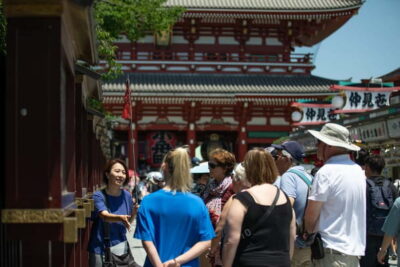
Asakusa Walking Tour with Sensoji Temple Visit
Read our review →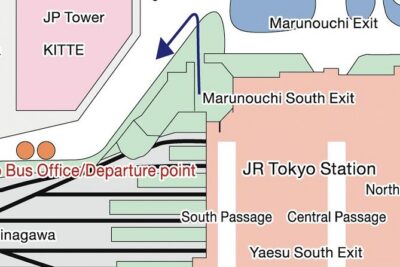
Tokyo Panoramic 1 Day: Meiji Shrine, Asakusa, Odaiba and SKYTREE®
Read our review →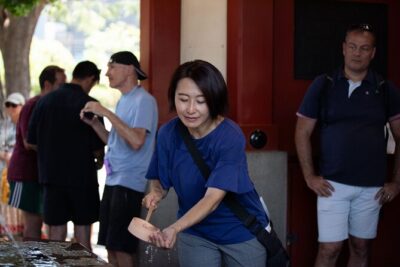
Asakusa Senso-ji Temple and Old Tokyo Walking Tour
Read our review →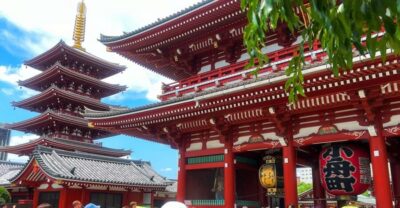
Asakusa and Tokyo’s Oldest Temple Senso-ji Tour
Read our review →
Meiji Shrine Walking Tour — Shinto & Imperial System
Read our review →
Meiji Jingu Shrine and Shinto Culture Walking Tour
Read our review →
Meiji Shrine Walking Tour — Shintoism & Imperial System
Read our review →Browse the lists this tour appears in