
Reviewed · E-BIKES
Kanazawa Ninja Temple Half Day E-bike tour
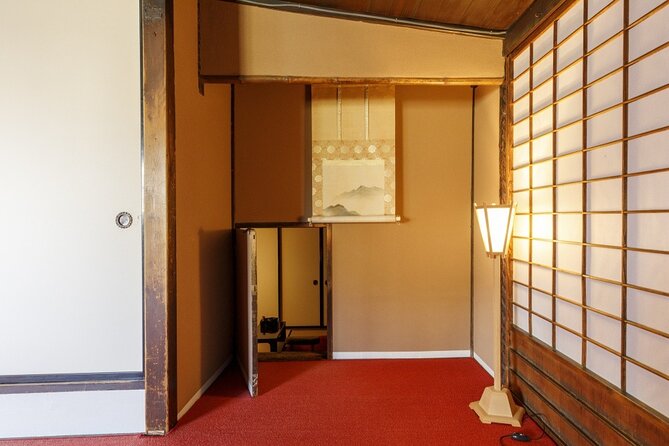
Kanazawa’s Myoryuji, better known as Ninja Temple, is the surprise here. It has no actual ninjas, but its trapdoors, secret passages, false floors, and tucked-away staircases make it feel like a puzzle box. Reaching it by e-bike also lets you connect the temple with the city’s samurai quarter and castle in one tidy morning or afternoon.
I like the small group of no more than eight and the freedom an electric bike gives you on Kanazawa’s flat streets. I also like the local flavor: matcha, Japanese snacks, backstreet riding, and guide Ti’s flexible approach to visitors who have already seen some of the main sights.
The main consideration is weather. Cycling can be canceled for rain, snow, strong winds, or unsafe roads, and the four-hour schedule gives you a useful overview rather than a slow, detailed visit at every stop.
Key Points
- Ninja Temple is the tour’s big payoff: Explore trapdoors, concealed stairs, and secret routes with an included entry ticket and multilingual booklet.
- The e-bike makes Kanazawa easy to cover: Ride between the station, samurai district, castle, and temple without tiring yourself out.
- Guide Ti can adjust the route: Previous tours have been adapted for mobility needs or for people who had already seen the main sights.
- You receive more than a guided ride: Matcha, traditional snacks, entrance fees, and the electric bicycle are included.
- The bike can remain useful after the tour: Keep riding for the rest of the day, then return the e-bike at the designated port.
- This is best for active sightseers: Riders must be at least 145 centimeters tall, and the tour is not suitable for people over 80.
Why an e-bike works so well in Kanazawa
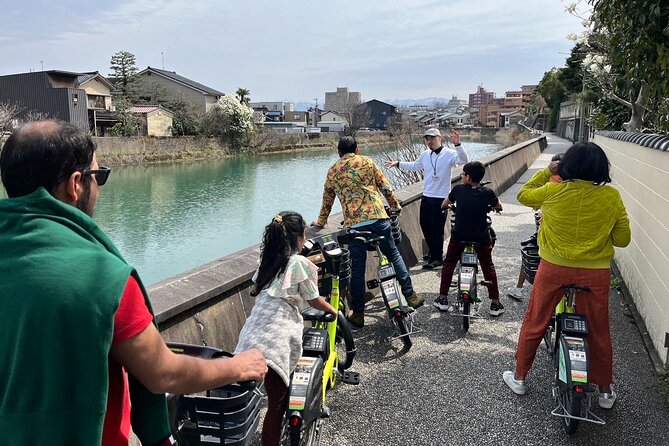
Kanazawa is compact enough to explore on foot, but its main sights are spread across several districts. That can mean a lot of walking between the station, Nagamachi, Kanazawa Castle, Kenrokuen, and the temple area. An e-bike cuts out much of that dead time.
You still see the city at street level. You pass through ordinary lanes, notice the change from modern Kanazawa to preserved Edo-era streets, and stop when the guide points out something worth seeing. The electric motor matters most when you have already spent hours sightseeing and would rather save your legs for the castle or gardens.
The route is also more personal than a standard city transfer. You are not simply being driven from one attraction to the next. You ride with a local guide, hear about the Maeda clan and Kanazawa’s past, and get a feel for how the city fits together.
The group size helps. With a maximum of eight people, the guide can keep the pace manageable and answer questions without shouting across a large crowd. Ti has also adjusted the program for a couple dealing with mobility concerns, which suggests some practical flexibility. You should still be comfortable riding a bicycle and getting on and off it repeatedly.
More Cycling Tours in Japan:
- E-Bike Nara Highlights – Todaiji, Knives, Deer, Shrine
★ 4.8 · 186 reviews - Kyoto: Fushimi Inari Shrine and Tofukuji Temple E-Bike Tour
★ 5.0 · 75 reviews - Kyoto: Hidden Gems E-Bike Tour Through Backstreets & Temples
★ 4.9 · 54 reviews
Meeting your guide at Kanazawa Station
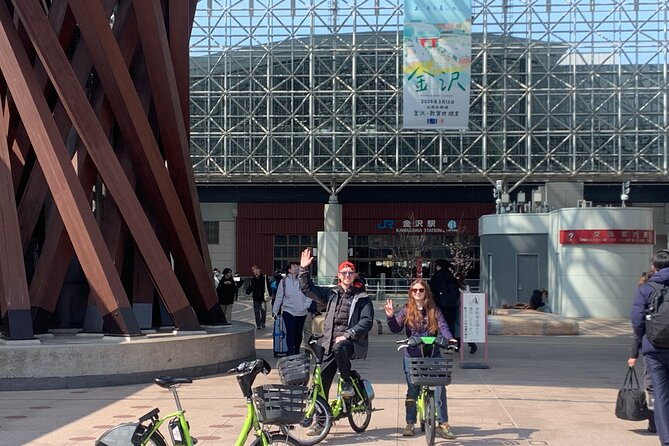
The tour begins outside the McDonald’s at Kanazawa Station. Your guide holds a sign reading Beyond Kanazawa E-bike Tour, so the meeting point should be straightforward to identify.
The station is a sensible starting place. It is the city’s main arrival point, and beginning here means you do not need to arrange a separate hotel transfer. Hotel pickup and drop-off are not included, so you will need to reach the station yourself.
The first station stop lasts about ten minutes and works mainly as an orientation and photo stop. You can expect scenic views along the way as the group gets moving. Do not think of this opening section as a major historical visit. Its value is practical: you get comfortable with the bike, meet the guide, and begin seeing how Kanazawa’s central areas connect.
English is the live tour language. Audio support is available in Chinese, English, Italian, and Spanish. That is useful if someone in your group prefers to follow the explanations in another language, though the personal interaction with the guide takes place in English.
Nagamachi and the samurai quarter
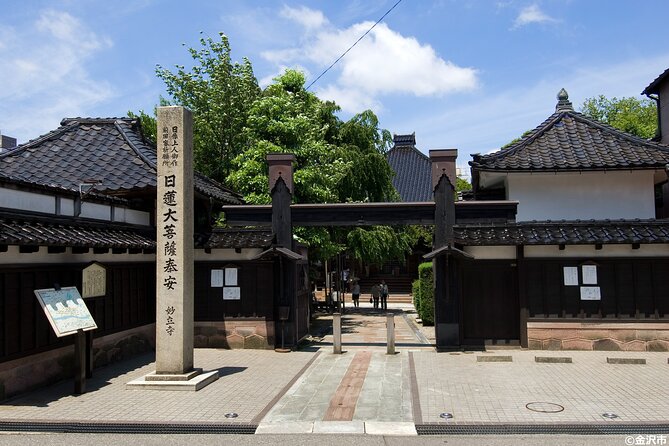
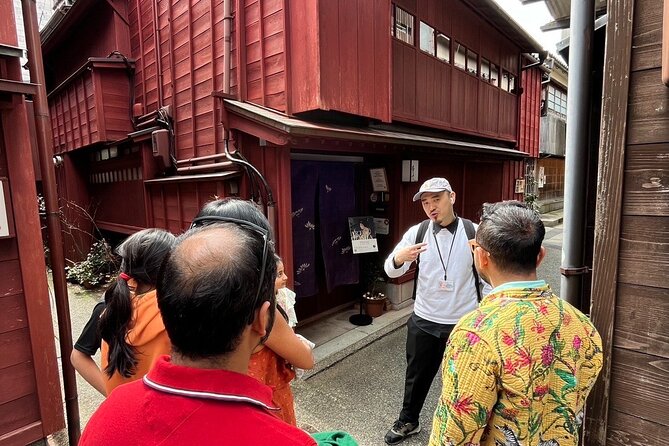
The ride continues toward the Nagamachi Samurai District, one of Kanazawa’s best places to understand the city’s old social order. Preserved walls and traditional streets give this area a quieter feel than the broad avenues around the station.
The district was once associated with samurai households serving the powerful Maeda clan. The value of seeing it with a guide is that the walls and houses stop being mere scenery. You get context about who lived here, how the city was organized, and why Kanazawa developed such a strong cultural identity.
The e-bike is especially useful in Nagamachi because the experience is not limited to one building. You ride through the district, stop for views, and continue toward the next part of the route. The schedule does not promise a long interior visit at a specific samurai residence, so you should book this tour for the neighborhood atmosphere and explanation rather than for an in-depth house museum visit.
The backstreets are part of the appeal. A guide who knows the area can take you away from the most obvious route and show you a more ordinary side of Kanazawa. That is one reason this tour suits someone who wants more than a checklist of famous sights.
Matcha and sweets at Gyokusen-an
Gyokusen-an provides a welcome pause of about 25 minutes. Here, you have time for tea, dessert, local snacks, photographs, and some explanation from the guide.
Matcha gives the break a distinctly Japanese character without turning the stop into a full meal. Traditional snacks are included, which adds value to the $132 price and gives you a chance to try something local without planning another café stop.
You should keep your expectations measured. This is a short refreshment stop, not a full tea ceremony class or a long culinary visit. Still, the timing is well judged. Cycling, sightseeing, and standing in historic districts can make even an enthusiastic sightseer appreciate a quiet drink and a small sweet.
I also like how the stop changes the rhythm of the tour. You move from active riding to a cultural pause, then back onto the bike for the castle and temple. That balance makes the half-day format easier to handle.
More temple runs by e-bike in Japan:
- Naha: Guided E-Bike Tour of the 12 Zodiac Temples
★ 4.9 · 50 reviews - Hiroshima: Peace Park, Castle, and Mitaki Temple E-Bike Tour
★ 4.8 · 11 reviews - From Siem Reap: Angkor Wat Sunrise and Temples E-Bike Tour
★ 5.0 · 52 reviews - e-Bike Cycling Tour to Arkadi Monastery Full Lunch included
★ 5.0 · 26 reviews
Kanazawa Castle and the Maeda story
Kanazawa Castle receives about 30 minutes of sightseeing time. The castle grounds are important for understanding the Maeda family, which ruled the domain and helped make Kanazawa a center for art, craft, gardens, and culture.
The guide’s historical explanation is central here. A castle visit can otherwise become a quick look at walls, gates, and reconstructed buildings. With the Maeda story in hand, you have a reason to pay attention to the scale and design of the site.
Thirty minutes is enough for an introduction and photographs, but not enough for every corner. If you want a detailed visit to the castle interiors, you should plan to return later. The benefit of arriving by e-bike is that you can do exactly that without committing to another long walk from the station.
The route also appears to allow a scenic stop of about 25 minutes after the castle, though the supplied schedule does not name that location. You can expect more sightseeing and views along the way rather than a separate major attraction. Ask your guide at the start how this section will be handled on your date.
Kenrokuen and the scenic ride
One tour version included a lovely walk through Kenrokuen with autumn foliage at its best. The garden is one of Kanazawa’s signature sights, so this can be a pleasant addition when the route and timing allow it.
Because the stated itinerary does not give Kenrokuen a separate fixed stop, you should not assume you will receive a full garden tour. Treat it as part of the scenic connection between the main sights, and confirm the day’s route if Kenrokuen is a priority for you.
The broader point is that the e-bike lets you link major places with attractive streets and short scenic pauses. You are not locked into a single indoor attraction. You can watch the city change as you ride from castle grounds and formal gardens toward the temple district.
This section may also be where the tour feels most flexible. Ti has adjusted routes for people who had already visited some of the standard sights, taking them to other districts instead. If you have already seen Kanazawa Castle or Kenrokuen, tell the guide early. The more the guide knows about your plans, the more useful the ride can be.
Inside Myoryuji, the famous Ninja Temple
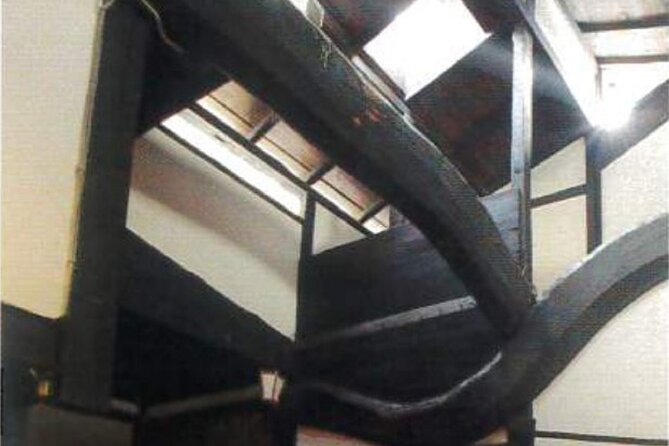
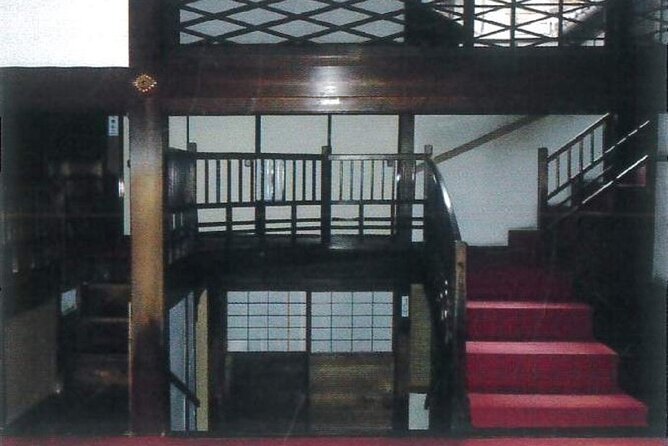
Myoryuji is the tour’s most unusual stop. The temple is often called Ninja Temple because of its tricks in design, not because ninjas lived there. You can expect concealed staircases, trapdoors, hidden passages, and spaces that make the building feel far larger and more complex than it first appears.
The guided temple visit lasts about one hour. That is a good amount of time for a place where the details matter. You are not simply looking at a façade and leaving. The guide helps explain what you are seeing, while multilingual booklets are provided so you can follow the temple’s features more easily.
The visit is also more structured than the cycling portions. You should be ready to follow temple rules and the directions given during the entry. The tour includes the temple ticket, so you do not need to arrange that separately.
I would place the temple visit ahead of the castle if you are choosing the tour mainly for one attraction. The castle and samurai district give you useful context about Kanazawa, but Myoryuji supplies the strongest sense of surprise. It is the place most likely to make you stop and ask how the building was designed.
What the $132 price covers
At $132 per person, this is not the cheapest way to see Kanazawa. The value depends on how much you want from a half-day.
The price includes the electric bicycle, local guide, entrance fees, the Myoryuji ticket, matcha, and traditional snacks. You are paying for transport between several districts, historical explanation, a small group, and a full hour at an unusual temple. If you rented a bike separately, paid for the temple, bought refreshments, and arranged your own route, the gap would narrow.
The strongest value is time. You can see a broad slice of Kanazawa without spending the whole day walking between sights. The bike also remains available after the guided portion, giving you the chance to revisit a favorite area or continue to another part of the city before returning it to the designated port.
That extra bike time is a real benefit, but check the return instructions carefully. The bike is not a personal souvenir or an unlimited rental. You need to return it to the stated port.
Food and drinks beyond the included tea and snacks are your responsibility. Hotel transportation is also excluded, as are personal expenses. If you prefer independent wandering and already know the city, the price may feel high. If you want a guided overview with built-in transport, it is easier to justify.
Who will enjoy this ride most
I would recommend this tour to someone visiting Kanazawa for the first time who wants to cover several key areas without walking all day. It is also a good match for an active couple or small group that likes history but does not want a formal bus tour.
You will get the most from it if you are curious about how the city fits together. The guide’s ability to change the route for people who had already seen certain sights is helpful for repeat visitors, too.
The tour is less suitable if you dislike cycling, need a completely slow pace, or want long, detailed visits inside every attraction. Four hours goes quickly once you include riding, tea, photographs, the castle, and the one-hour temple visit.
The height rule is clear: you must be at least 145 centimeters tall. The experience is not suitable for people over 80. Anyone with mobility concerns should explain their needs before booking, even though the route has been adjusted successfully for one visitor with limited mobility.
Bring rain gear. Cycling depends on safe conditions, and rain, snow, strong winds, or unsafe roads can lead to cancellation. You can cancel up to 24 hours ahead for a full refund, and the reserve-now, pay-later option keeps your plans flexible.
Is the Kanazawa Ninja Temple e-bike tour worth booking?
Book it if you want a lively half-day that combines Kanazawa’s samurai quarter, castle, gardens or scenic streets, and Ninja Temple without exhausting your legs. The included snacks and matcha are a nice touch, but the real value is the e-bike, small group, local guidance, and extra riding time afterward.
Skip it if you prefer to linger at one site, need a guaranteed full visit to Kenrokuen, or would rather explore at your own pace from start to finish. For most active first-time visitors, though, this is a smart way to get your bearings and reach Myoryuji with useful historical context.
FAQ
Where does the Kanazawa e-bike tour start?
Meet your guide outside the McDonald’s at Kanazawa Station. The guide will hold a Beyond Kanazawa E-bike Tour sign.
How long does the tour last?
The guided experience lasts four hours. Afterward, you can keep the e-bike for the rest of the day and return it to the designated port.
Is the electric bicycle included?
Yes. Electric bicycle rental is included in the price.
Is entry to Ninja Temple included?
Yes. The Myoryuji, or Ninja Temple, entry ticket is included, along with a guided visit lasting about one hour.
What languages are available?
The live tour guide speaks English. Audio guides are available in Chinese, English, Italian, and Spanish.
What food and drinks are included?
Traditional Japanese snacks and matcha are included. Additional food and drinks are not included.
What happens if the weather is bad?
Cycling tours may be canceled for rain, snow, strong winds, or unsafe road conditions. Bring rain gear, and cancellations made at least 24 hours in advance qualify for a full refund.
Newly written up around Japan
- From Asakusa: Old Tokyo, Temples, Gardens and Pop Culture★ 5.0 · 47 reviews
- Goshuin Collecting tour at Asakusa Local Temples & Shrines, Tokyo★ 5.0 · 8 reviews
- Private guided tour: Mt. Aso volcano, grasslands, Aso Shrine★ 5.0 · 19 reviews
- Takayama Inari Shrine Tour with Private Transportation★ 5.0 · 5 reviews
- Tokyo: Snow Monkey and Zenkoji Temple Day Trip In Low Price★ 5.0 · 5 reviews
- Tokyo: Gotokuji Culture Walk & Lucky Cat Temple Experience★ 4.9 · 5 reviews
- :Tokyo,Shibuya /Meiji Shrine tour in KIMONO/English-friendly★ 5.0 · 4 reviews
- Tokyo: Sensoji Temple & Street Food: Private Tour with guide★ 4.6 · 8 reviews
E-Bikes, compared.

E-Bike Nara Highlights – Todaiji, Knives, Deer, Shrine
Read our review →
Fushimi Inari Shrine and Tofukuji Temple E-Bike Tour
Read our review →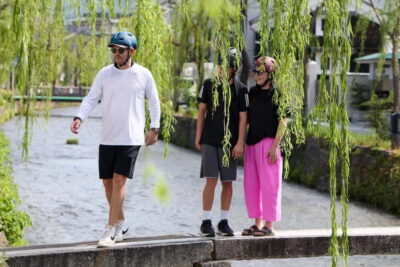
Hidden Gems E-Bike Tour Through Backstreets & Temples
Read our review →
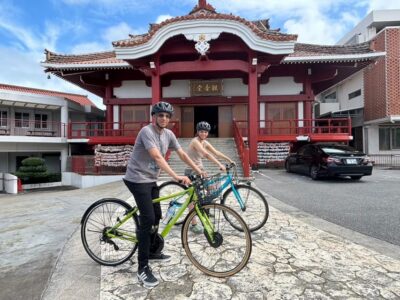
Naha: Guided E-Bike Tour of the 12 Zodiac Temples
Read our review →
e-Bike Cycling Tour to Arkadi Monastery Full Lunch included
Read our review →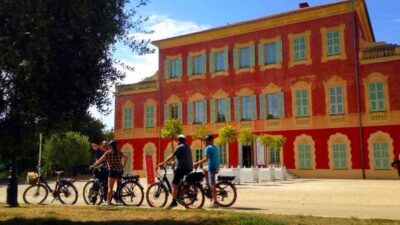
Nice: 7 Hills Monastery & Waterfall (EBike Tour Local Guide)
Read our review →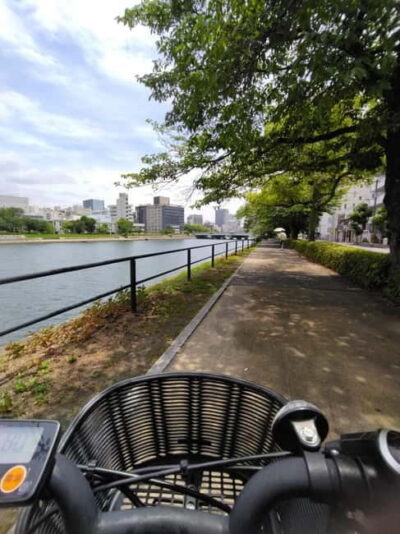
Hiroshima: Peace Park, Castle, and Mitaki Temple E-Bike Tour
Read our review →Browse the lists this tour appears in