
Reviewed · NIKKO & KAMAKURA DAY TRIPS
Kamakura Temples Private Guided Tour from Tokyo
Kamakura’s 13-meter Great Buddha is the star of this day trip, but the real pleasure is seeing how Buddhist temples, Shinto shrines, gardens, and old shopping streets fit together in one compact city. You travel by train from Tokyo, then explore with a private English-speaking guide rather than trying to decode the route alone.
I like the private format and the useful mix of major sights: Hase Temple and its eleven-faced Kannon, followed by Kotokuin and Tsurugaoka Hachimangu. I also like that the day includes Komachi Street, giving you time for lunch and shopping instead of rushing from monument to monument. The main concern is value: at $145 per person, you still pay train fares, entrance fees, lunch, and drinks separately.
Key points at a glance
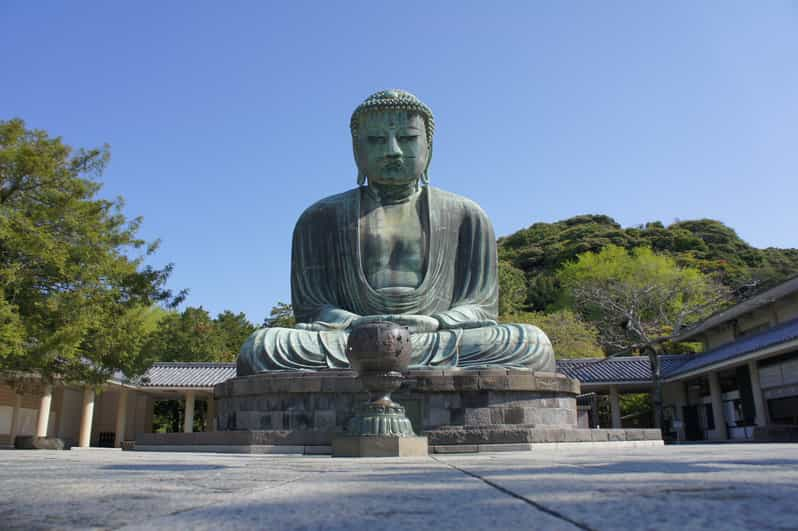
- The Great Buddha is the visual high point: See Kotokuin’s famous bronze figure, which dates to 1292 and rises about 13 meters.
- Hase Temple adds more than a quick photo stop: Its Kannon statue, flower gardens, and rows of Jizo figures give the morning real variety.
- A private guide makes the train day easier: Pickup and drop-off are on foot, and your guide travels with you from Tokyo.
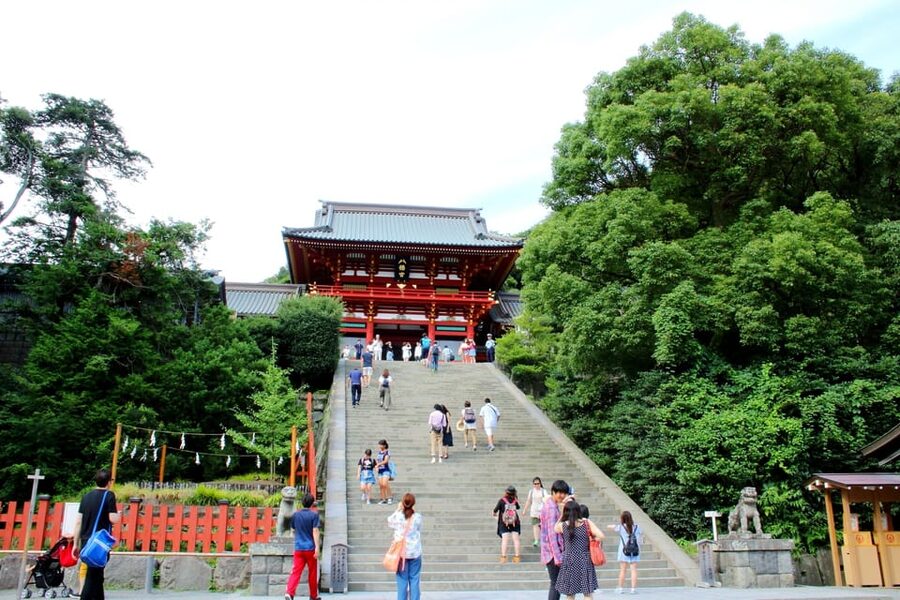
- Tsurugaoka Hachimangu shows Kamakura’s Shinto side: This important shrine sits at the city’s center and is dedicated to Emperor Ojin, the God of War.
- Komachi Street gives you breathing room: You get about 1.5 hours for lunch, free time, and shopping.
- Budget beyond the advertised price: Allow about 2,000 yen per person for public transportation, plus 700 yen for the two listed temple admissions, lunch, and drinks.
Why Kamakura makes a strong day trip from Tokyo
Kamakura gives you a change of pace without requiring a long journey. The train ride takes about 70 minutes each way, and the route brings you from Tokyo’s dense city streets to a place shaped by temples, shrines, and old religious traditions.
I like this destination because the day is not built around a single attraction. You see Buddhist sculpture at Hase Temple, a large outdoor image at Kotokuin, Shinto architecture at Tsurugaoka Hachimangu, and local shopping along Komachi Street. That range helps explain why Kamakura matters.
The day lasts about eight hours, with return to Tokyo expected around 4 or 5 pm. That makes it a practical choice if you want one full outing rather than an overnight stay. You should still expect a fairly active day, since the tour includes about 3 to 4 kilometers of walking, station transfers, temple paths, and shrine grounds.
More Nikko and Kamakura Day Trips in Tokyo:
- Nikko: Kegon Falls, Lake Chuzenji & Toshogu Temple
★ 4.6 · 1,577 reviews - Tokyo: Nikko Toshogu Shrine and Kegon Waterfall Tour
★ 4.5 · 1,266 reviews - From Tokyo: Nikko Toshogu Shrine and Kegon Waterfall Tour
★ 4.0 · 42 reviews
Starting from Tokyo by train
Pickup can be arranged from your hotel, with the guide meeting you on foot. The listed starting points also include Tokyo Station, Tokyo, Shinjuku City, and Shinjuku Station. Since the guide does not provide a private vehicle, you will walk to the station and ride public trains together.
This arrangement has a useful advantage: you experience the same transport system you might use for the rest of your Japan trip. Your guide can help with the route, timing, and station changes, which takes some pressure off a first visit.
The drawback is that a private tour does not mean door-to-door transport. Pickup and drop-off are on foot, and public transportation for both you and the guide is not included. One-way train tickets are listed at about 1,200 yen, while the total public transportation cost is estimated at around 2,000 yen per person. Confirm the exact amount with the guide on the day.
Hase Temple and the eleven-faced Kannon
Hase Temple, also called Hase-dera, is the first main stop. The guided visit lasts about 30 minutes, followed by a short walk of roughly 10 minutes to Kotokuin.
The focus here is Hase Kannon, a Buddhist statue of Kannon, the Goddess of Mercy. The statue has eleven faces, each linked to a different phase in the search for enlightenment. This is the sort of detail that can turn a quick temple visit into something you remember, so a guide who explains the symbolism adds real value.
Outside, you can walk through the temple gardens and visit Jizo-do Hall. Hundreds of small Jizo Bodhisattva figures are displayed there. Jizo is associated with protection, and the repeated small statues create a very different mood from the grand scale of the Great Buddha later in the morning.
The time allowance is short, so you should not expect to explore every corner of the temple grounds. If you care most about gardens or religious art, tell your guide early. The private setup may allow some adjustment, though the overall day still has a fixed rhythm.
Walking to Kotokuin and meeting the Great Buddha
The walk from Hase Temple to Kotokuin takes about 10 minutes. It is a simple but useful connection because the two sites are close enough to visit together without another train ride.
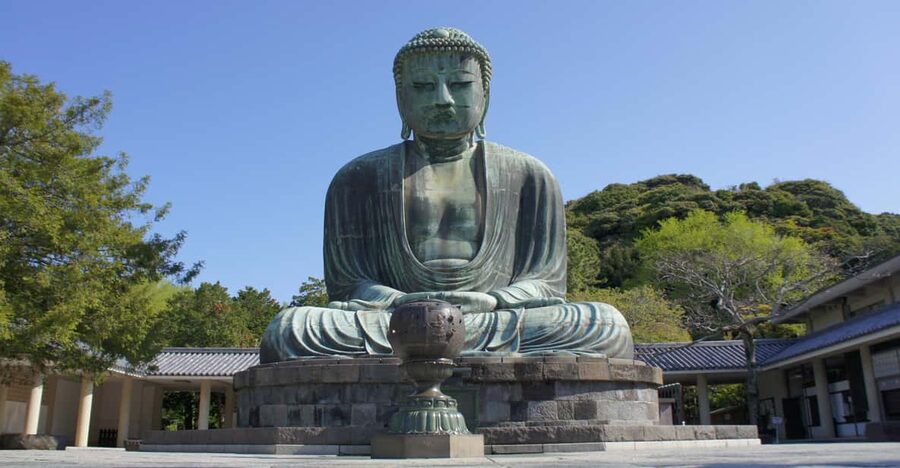
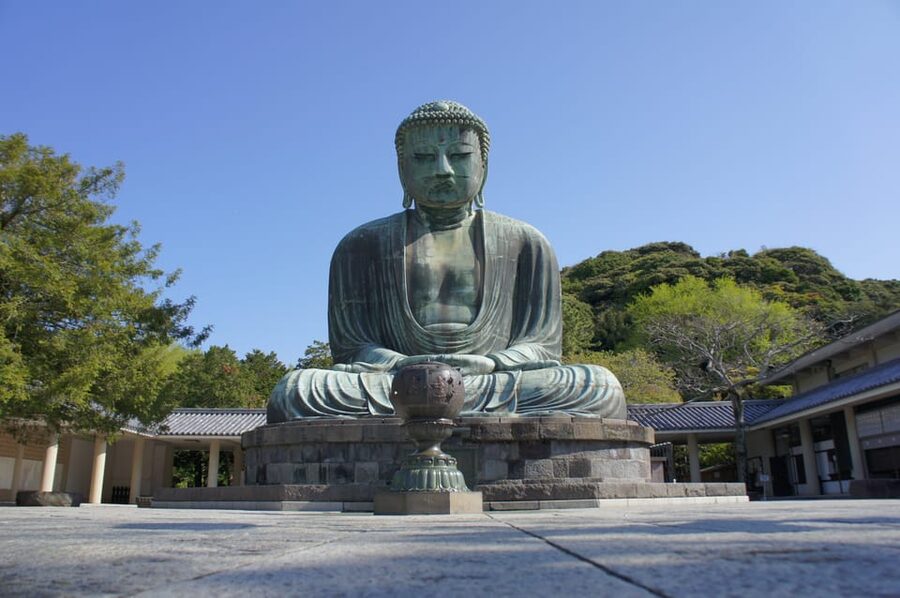
Kotokuin is home to Kamakura’s famous Great Buddha, a bronze statue about 13 meters high. Its scale gives the visit immediate impact, but the date matters too: the statue goes back to 1292. Your guide can explain why this image became such an important symbol of Kamakura.
The scheduled visit lasts around 30 minutes. That gives you time for photographs, a look at the temple setting, and an explanation of the statue’s place in Japanese religious culture. The admission fee is 300 yen per person and is not included.
The Great Buddha is a major sight, so this is one of the places where crowds can slow the group down. Take, one of the guides associated with the tour, has used maps and pictures to explain Kamakura’s past and has handled busy conditions by moving efficiently between points of interest. That kind of visual explanation is especially useful if you prefer context to a rapid list of dates.
Other temple visits near Tokyo we have written up
- Tokyo: Asakusa Walking Tour with Sensoji Temple Visit
★ 4.8 · 1,583 reviews - Tokyo Panoramic 1 Day: Meiji Shrine, Asakusa, Odaiba and SKYTREE®
★ 4.5 · 1,222 reviews - Tokyo: Zen Meditation at a Private Temple with a Monk
★ 5.0 · 510 reviews - Mt. Fuji Heritage Tour: Traditional Villages, Lakes & Shrine
★ 4.5 · 509 reviews
Tsurugaoka Hachimangu and Kamakura’s Shinto center
After Kotokuin, you take another train for about 10 minutes to reach the area of Tsurugaoka Hachimangu. The shrine visit is planned for about 30 minutes.
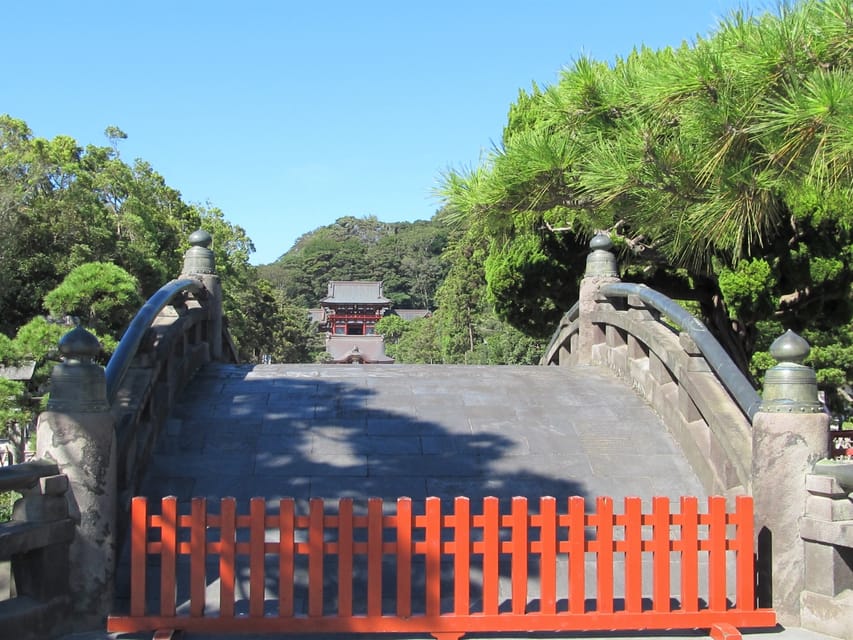
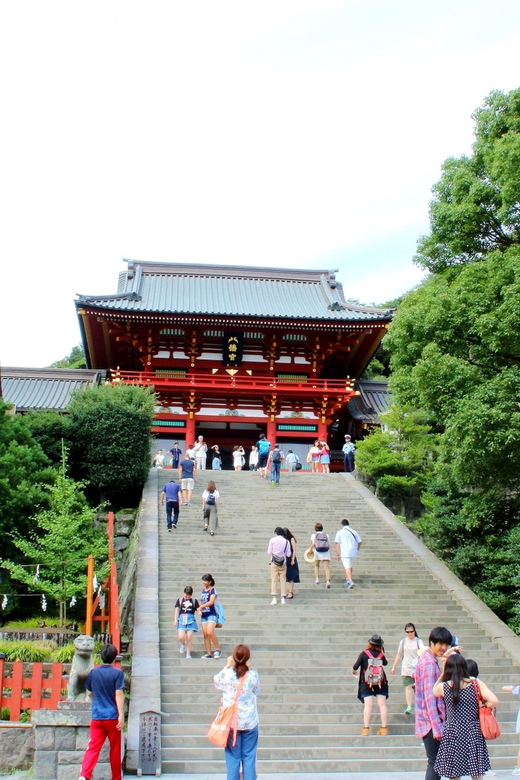
Tsurugaoka Hachimangu was built in 1063 and is dedicated to Emperor Ojin, who is also known as the God of War. It is the most important Shinto shrine in Kamakura and sits at the city’s geographical center. This stop changes the tone of the day. Instead of a Buddhist temple and its statues, you see a major Shinto complex with its own rituals, layout, and traditions.
I like including this shrine because it keeps the tour from becoming a parade of similar temples. Your guide can explain the difference between the Buddhist sites and the Shinto shrine, helping you understand what you are seeing rather than treating every gate and hall as decoration.
Thirty minutes is enough for a guided introduction, but not a slow, unhurried study of the grounds. If you want extensive time for photographs or quiet reflection, you may feel the schedule is brisk. Still, the private format means you can ask questions as you go, which is harder to do on a large group outing.
Lunch and free time on Komachi Street
The tour then moves to Komachi Street for about 1.5 hours. This is the most relaxed section of the day, with time for lunch, shopping, and a little independent wandering.
Lunch is not included for you or the guide. You are expected to choose and pay for the meal, and the guide eats at your own expense as well. This keeps the choice flexible, but it means the final cost is higher than the headline tour price.
Komachi Street is useful because you can choose how to spend this break. You might want a proper Japanese meal, a quick snack, or time to browse shops. The schedule also gives your feet a pause after the morning’s temple and shrine visits.
If you have food preferences or a tight budget, discuss lunch with your guide before sitting down. The supplied details do not name a restaurant or provide a fixed menu, so you should not book this expecting a prepaid dining experience.
The private guide makes the biggest difference
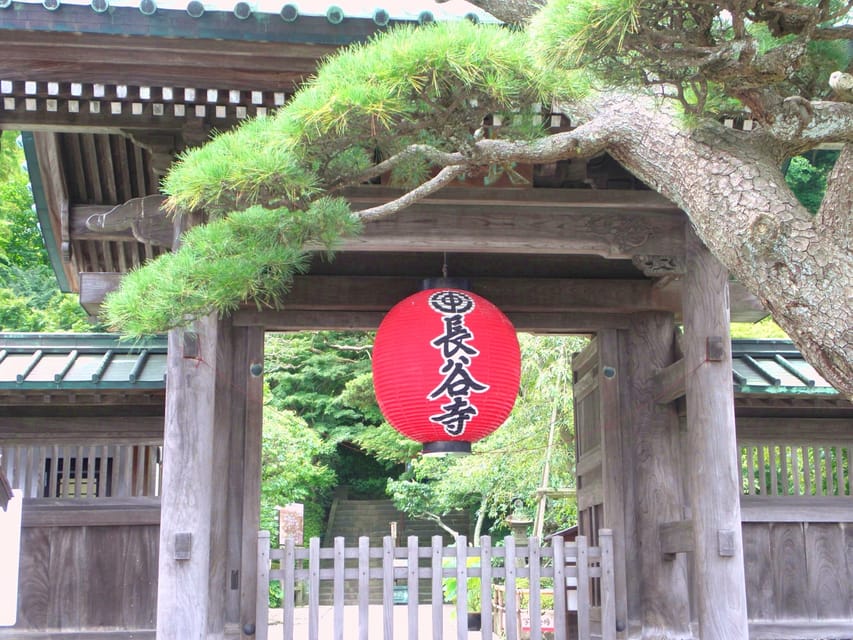
This tour includes a National Government Licensed Guide Interpreter and operates as a private group. That is the main reason to choose it over simply taking the train to Kamakura on your own.
The guide can meet you at your hotel, travel with you, explain the sites, and return with you to Tokyo. Past guide names connected with the experience include Steve, Take, Mizuma-san, and Richie. Individual quality can vary, but the strongest guiding reports point to clear explanations of Japanese culture and history, maps and pictures, and good handling of crowded areas.
Mizuma-san has been praised for introducing Japanese history and culture to families. Steve has been noted for organizing the day well, including a nice lunch stop and green tea. Take has used visual aids and managed busy conditions effectively.
There is also an important caution. One booking reported a polite and flexible guide but felt the explanations at the sights were too limited and judged the overall price far too high. That is fair criticism to keep in mind. A private guide is only good value if you want active interpretation, not simply an escort from station to station.
At the start, tell your guide what matters most to you. You might want more religious detail, more time for photos, help with food choices, or a clearer explanation of Kamakura’s political past. A private tour works best when you use that flexibility.
What the $145 price really covers
The listed price is $145 per person. It covers the guide and hotel pickup and drop-off on foot, but it does not cover transportation, admission, lunch, or drinks.
The two stated admissions total 700 yen per person:
- Hase Temple: 400 yen
- Kotokuin and the Great Buddha: 300 yen
Public transportation is also extra. The information gives an estimate of around 2,000 yen per person, while one-way train tickets are listed at about 1,200 yen. Because those figures are presented differently, ask the guide to confirm the expected transport total before the day begins.
You then add lunch and drinks. This makes the tour a premium purchase, especially for solo visitors or couples. The price becomes easier to justify for families or small groups who want a dedicated guide and do not want to manage the route, train connections, and explanations themselves.
If you are comfortable using trains and researching the temples, you can likely spend less by visiting independently. If you value a private guide’s time, historical explanation, and help in crowded places, the extra cost may be worthwhile. The key question is not simply how much the tour costs. It is how much you want the day interpreted for you.
Walking, timing, and what to bring
You should wear comfortable shoes. The tour includes 3 to 4 kilometers of walking, plus station access, temple paths, shrine grounds, and the walk between Hase Temple and Kotokuin.
The day begins with pickup or a meeting point in Tokyo, followed by about 70 minutes on the train. Hase Temple and Kotokuin take roughly 30 minutes each, with a 10-minute walk between them. Another 10-minute train ride brings you to Tsurugaoka Hachimangu, followed by Komachi Street and its 1.5-hour lunch and free-time period.
The return train to Tokyo takes about one hour. You should arrive around 4 or 5 pm, depending on the start time and the pace of the day. Check available start times when booking, since the activity is described as an eight-hour experience rather than having one fixed departure time.
Crowds can affect the pace. Kamakura is a major day-trip destination, and busy periods may leave less time for quiet viewing. Take’s reported use of maps and pictures, along with his ability to move through crowded areas, is a useful sign of what a capable guide can add.
Who should book this Kamakura day?
I would recommend this tour to you if you want a private introduction to Kamakura and prefer having someone handle the route. It suits first-time visitors, families, and anyone who wants explanations in English while moving between several major sights.
It is also a good fit if you want a balanced day. You see Buddhist and Shinto sites, a famous statue, gardens, a shopping street, and a local lunch break. The schedule gives you a clear sense of Kamakura without asking you to plan every train and entrance.
I would be more cautious if you are traveling on a tight budget or mainly want transportation. Since the $145 fee does not include the train, admissions, or food, the final cost can feel high. You should also ask about the guide’s planned level of explanation, especially if cultural detail is your main reason for booking.
Should you book it?
Book this tour if a private guide and an easy route matter more to you than keeping costs low. Hase Temple, the Great Buddha, Tsurugaoka Hachimangu, and Komachi Street make a strong one-day introduction to Kamakura, and the best guides add useful context with maps, cultural explanations, and crowd management.
Skip it if you are happy navigating Japanese trains and want to spend freely on your own schedule. The separate fees are clear, but they add up, and the value depends heavily on how actively your assigned guide explains the places.
Before confirming, tell the operator your hotel, ask about the pickup time and transport estimate, and make clear what kind of history or cultural detail you want. With the right expectations, this is a well-shaped private day trip, not a bargain excursion.
FAQ
How long does the Kamakura tour last?
The tour lasts about eight hours, including the train journey from Tokyo and the return trip. Arrival back in Tokyo is expected around 4 or 5 pm.
How do I get to Kamakura?
You travel by train from Tokyo with the guide. The journey to Kamakura takes about 70 minutes, and the return trip takes about one hour.
Is hotel pickup included?
Hotel pickup and drop-off are included on foot. You should provide your hotel details when booking so the meeting arrangement can be made.
What attractions are included?
The tour visits Hase Temple, Kotokuin Temple and its Great Buddha, Tsurugaoka Hachimangu Shrine, and Komachi Street.
Are transportation costs included?
No. Public transportation for you and the guide is not included. The estimated cost is around 2,000 yen per person, and one-way train tickets are listed at about 1,200 yen.
Are entrance fees included?
No. Hase Temple costs 400 yen per person, and Kotokuin Temple, including the Great Buddha visit, costs 300 yen per person.
Is lunch included?
No. Lunch and drinks are paid separately by you and the guide. The tour allows about 1.5 hours for lunch, free time, and shopping on Komachi Street.
How much walking is involved?
The tour includes about 3 to 4 kilometers of walking. Comfortable shoes are recommended.
Newly written up around Tokyo
- Tokyo: Snow Monkey and Zenkoji Temple Day Trip In Low Price★ 5.0 · 5 reviews
- Tokyo: Gotokuji Culture Walk & Lucky Cat Temple Experience★ 4.9 · 5 reviews
- :Tokyo,Shibuya /Meiji Shrine tour in KIMONO/English-friendly★ 5.0 · 4 reviews
- Tokyo: Sensoji Temple & Street Food: Private Tour with guide★ 4.6 · 8 reviews
- Tokyo: Visit 5 Shrines & Collect Goshuin on Private Tour★ 5.0 · 3 reviews
- Tokyo War History Tour: Yasukuni Shrine & War Museum★ 4.5 · 6 reviews
- Tokyo: Shibuya Sky, Harajuku & Meiji Shrine Highlights Tour★ 4.5 · 9 reviews
- Tokyo: Private Meiji Shrine & Harajuku Highlights Tour★ 4.5 · 4 reviews
Nikko & Kamakura Day Trips, compared.
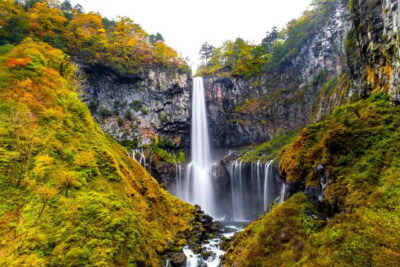
Nikko Toshogu Shrine and Kegon Waterfall Tour
Read our review →
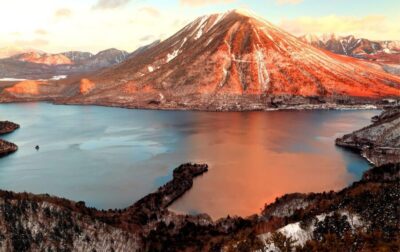
Tokyo Nikko Toshogu Shrine Iroha-zaka Lake Chuzenji Day Tour
Read our review →
Sopporo: Hokkaido Shrine and Atama Daibutsu Full-Day Tour
Read our review →
Browse the lists this tour appears in