
Reviewed · JAPAN TEMPLE TOURS
Nara: Great Buddha, Kasuga Shrine & Deer Park Tour
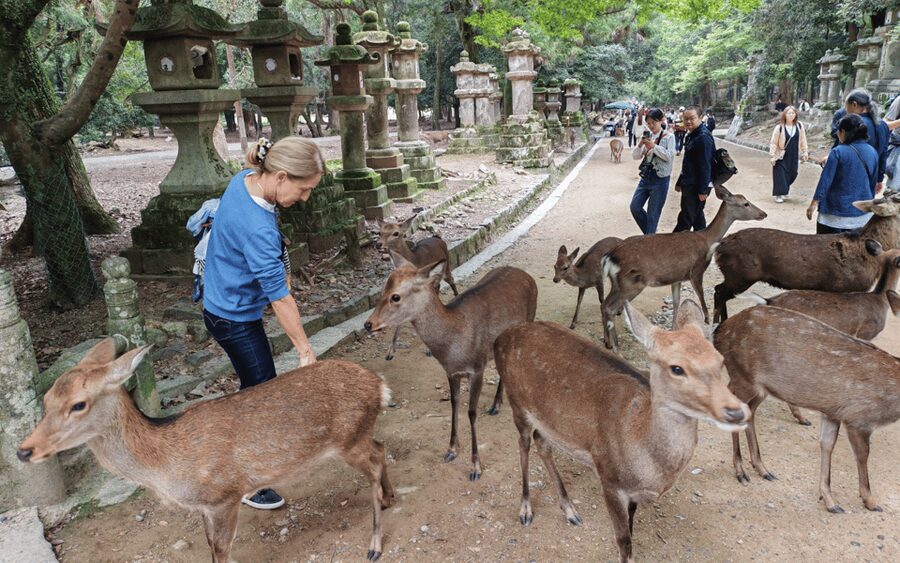
Nara’s deer are the hook, but Todai-ji’s Great Buddha is the moment that stays with you. This three-hour walk links sacred animals, a forest shrine, and one of Japan’s biggest wooden buildings in a sensible route through the old capital. I especially like the chance to feed the deer with proper shika senbei and the way guides such as Eri, Takashi, Teppei, and Nobu add everyday Japanese customs to the formal temple stories.
I also like that the price includes admission to both Todai-ji and Kasuga Taisha’s special inner shrine area. The main consideration is pace: three hours covers a lot, and Nara Park means plenty of walking, steps, and time outdoors. If hot weather or rain slows you down, the schedule may feel brisk.
Key points to know before booking
- The deer encounter comes with proper crackers: Shika senbei are included, so you do not need to sort out feeding supplies yourself.
- You visit Nara’s three essential sights: Nara Park, Kasuga Taisha, and Todai-ji form a strong first visit to the city.
- The route begins at Himuro Shrine: Meet in front of its torii gate, where your guide carries a yellow DeepExperience sign.
- The guiding is the real added value: Eri, Takashi, Teppei, Nobu, Yayoi, Yoshi, and others are praised for clear explanations and practical help.
- Admissions are covered: The price includes Todai-ji and Kasuga Taisha’s special inner shrine admission.
- You finish near Kasuga Taisha: Drop-off is at either Nininotorii or Kasuga Taisha Nininotorii, useful if you plan to continue sightseeing nearby.
Why this three-hour Nara route works
Nara was Japan’s first permanent capital, established in the eighth century. Its main sights are not scattered across a modern city in the way you might expect. Sacred deer graze beside temple paths, old shrine forests begin close to open parkland, and Todai-ji rises at the heart of it all.
That mix gives this tour a clear purpose. You are not simply checking off three attractions. You are seeing how Shinto practice, Buddhist power, nature, and political ambition developed side by side.
The route lasts three hours and is offered as a private or small-group experience. That matters because Nara rewards questions. Ask why the deer are sacred, how shrine lanterns are used, or why the Great Buddha required such a huge hall, and a good guide can connect the answer to Japanese life rather than leaving you with dates alone.
The tour is priced at $77 per person. That is not the cheapest way to walk through Nara Park, since the park itself is free. The value comes from the included admissions, deer crackers, and a guide who helps you understand what you are seeing. If you want only photographs, you can spend less. If you want context and help with the route, the price is reasonable for a private or small-group outing.
More Nikko and Kamakura Day Trips in Japan:
- Nikko: Kegon Falls, Lake Chuzenji & Toshogu Temple
★ 4.6 · 1,577 reviews - Tokyo: Nikko Toshogu Shrine and Kegon Waterfall Tour
★ 4.5 · 1,266 reviews - From Tokyo: Nikko Toshogu Shrine and Kegon Waterfall Tour
★ 4.0 · 42 reviews
Meeting at Himuro Shrine
The tour starts in front of the torii gate of Himuro Shrine. Look for the guide holding a yellow sign with the DeepExperience logo. Transportation to the meeting point is not included, so plan your route across Nara before the start time.
Beginning at a shrine sets the right tone. You meet your guide at a real religious site rather than at a generic city meeting spot, then move naturally toward Nara Park. Your guide may use this first stretch to explain shrine etiquette, purification, and the difference between Shinto and Buddhism.
This is also the point where you should tell the guide what matters most to you. Past guides have helped with photography, Japanese conversation practice, food suggestions, local buses, and onward train plans. Takashi contacted one group before the tour to learn what they wanted to cover, while Nobu helped a visitor buy an express train ticket to Kyoto afterward.
The exact style depends on your guide. Some, such as Yayoi, are described as energetic and especially gentle around the deer. Others, such as Yoshi and Takashi, focus on detailed explanations and open conversation about Japanese life.
Feeding the sacred deer in Nara Park
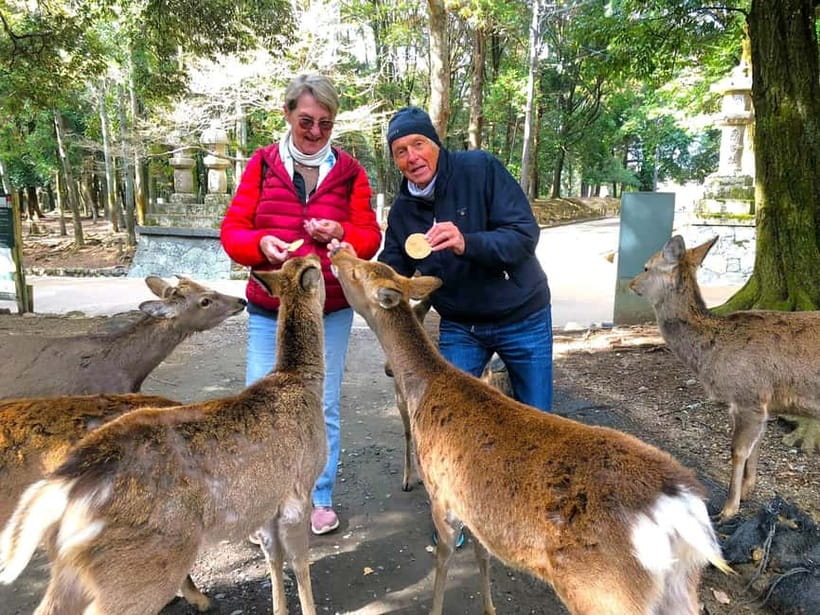
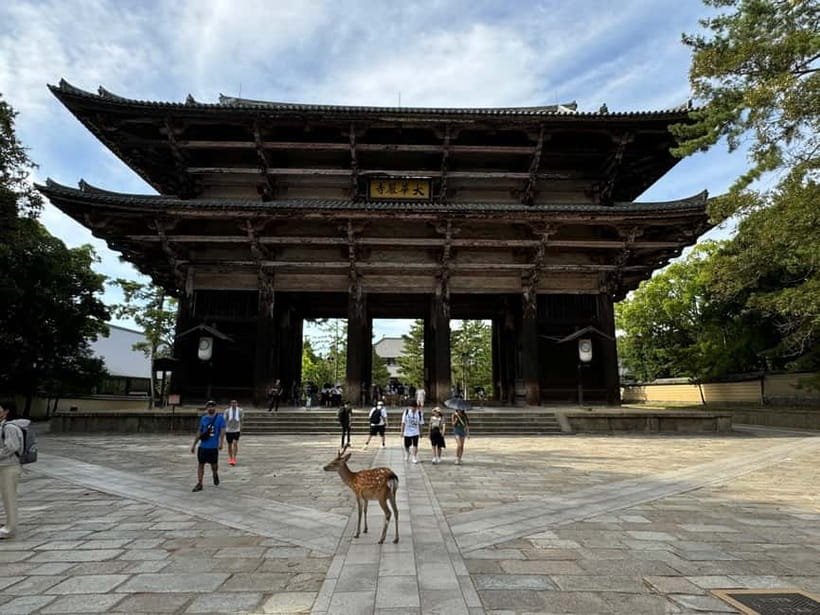
Nara Park is more than a patch of grass between monuments. It is the outdoor thread tying this entire experience together. Deer move freely through the park and are treated as sacred messengers in Shinto tradition, especially in connection with Kasuga Taisha.
You receive shika senbei, the special crackers made for the deer. Feeding them is fun, but it is also a useful way to understand how religious ideas remain part of ordinary public life. The animals are not kept behind a fence for a short wildlife encounter. They are part of the setting, and you see them beside paths, gates, and visitors.
Follow your guide’s instructions when feeding. Hold out a cracker, let the deer take it, and be ready to show empty hands when the food is gone. A few animals can be eager, so keep loose food and belongings under control.
The scheduled Nara Park visit lasts about 30 minutes. That is enough for feeding, photographs, and a short explanation, but it is not a long nature walk. You will not spend the whole tour with the deer, and that is a good thing. Kasuga Taisha and Todai-ji are the main cultural stops.
Weather affects this part most. Summer heat can make the open park tiring, while rain changes the feel of the paths. One guide, Nobu, supplied neck coolers on a hot day, and another group continued happily through heavy rain with Marc. Those personal touches are not guaranteed, but they show why a small group can be useful.
Walking the lantern paths of Kasuga Taisha
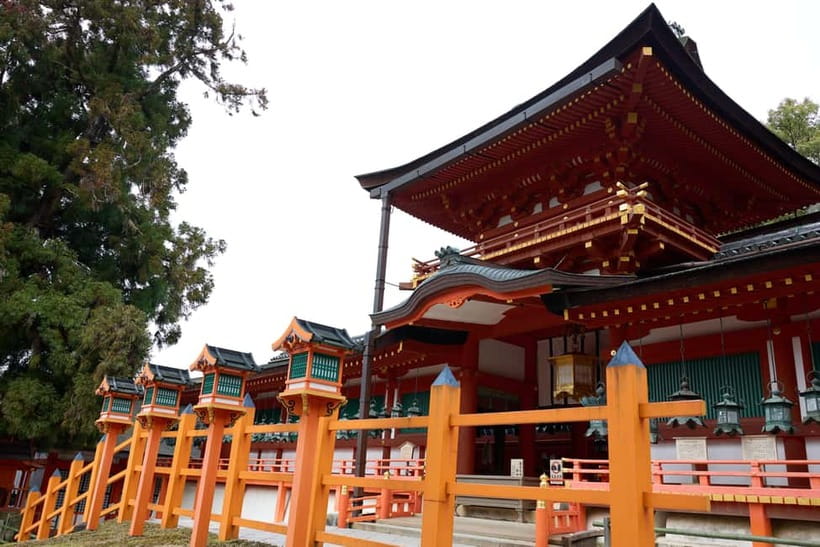
Kasuga Taisha was founded in 768 for the Fujiwara clan, one of the most influential families in early Japan. The shrine sits beside an old forest that has been protected for more than a thousand years, giving this stop a quieter mood than the broad parkland around it.
The approach is known for its stone lanterns, followed by bronze lanterns within the shrine grounds. Worshippers donated them over many generations. During special festivals, the lanterns are lit, but even when they are dark, they create a strong sense of repetition and devotion along the paths.
The tour includes special inner shrine admission, which gives you more than an outside look at the complex. Your guide can point out the layout, explain purification customs, and describe how Shinto worship differs from Buddhist practice at Todai-ji later in the route.
The Kasuga Taisha portion lasts about one hour. That is the longest stop, and rightly so. There is more to notice here than one main building. The forest, lanterns, gates, ritual spaces, and approach all matter.
You should wear shoes suited to walking and be prepared for uneven paths and steps. Cameron specifically noted that the tour involved lots of walking and stairs, but found the effort worthwhile. That is the fair trade: you cover the major sights in a short time, but this is not a sit-down sightseeing experience.
Other temple visits near Japan we have written up
- Kyoto: Tea Ceremony Ju-An at Jotokuji Temple
★ 4.9 · 3,207 reviews - Osaka/Kyoto:Kinkakuji,Arashiyama,FushimiInariShrine,NaraPark
★ 4.1 · 1,596 reviews - Tokyo: Asakusa Walking Tour with Sensoji Temple Visit
★ 4.8 · 1,583 reviews - Tokyo Panoramic 1 Day: Meiji Shrine, Asakusa, Odaiba and SKYTREE®
★ 4.5 · 1,222 reviews
Entering Todai-ji and facing the Great Buddha
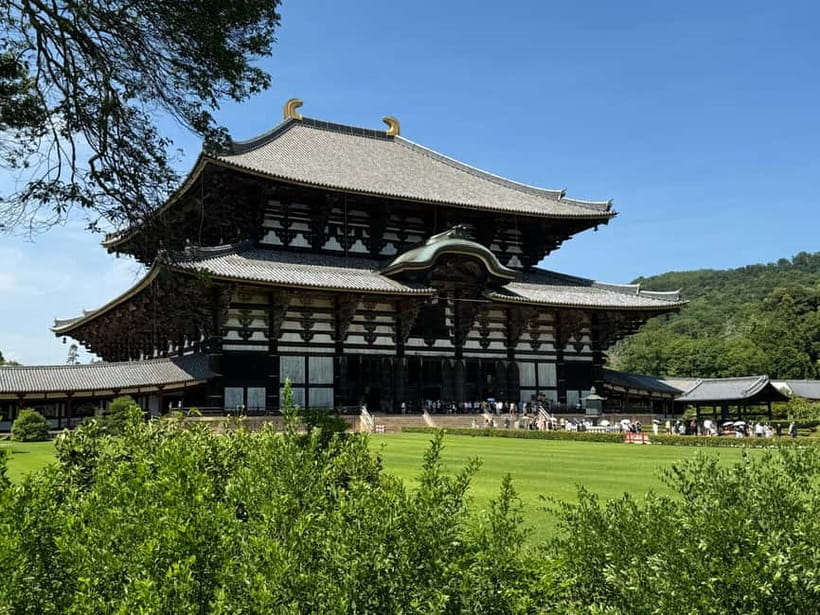
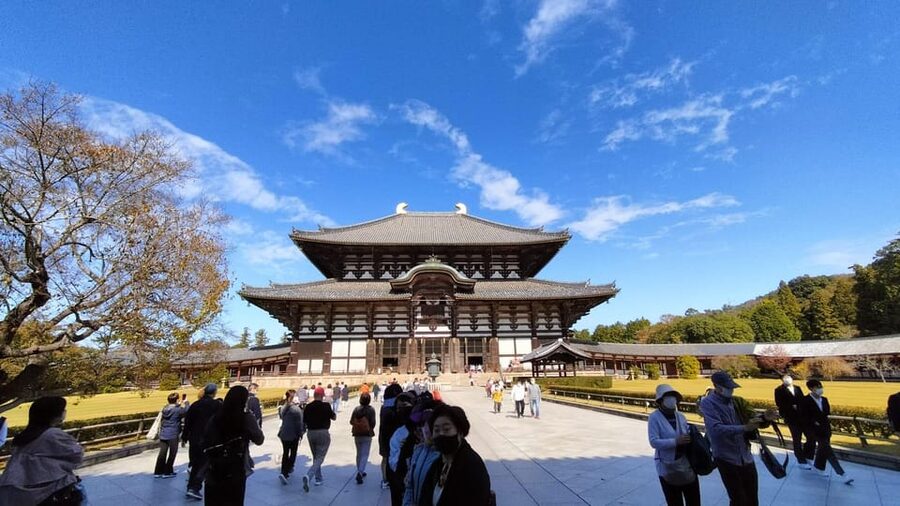
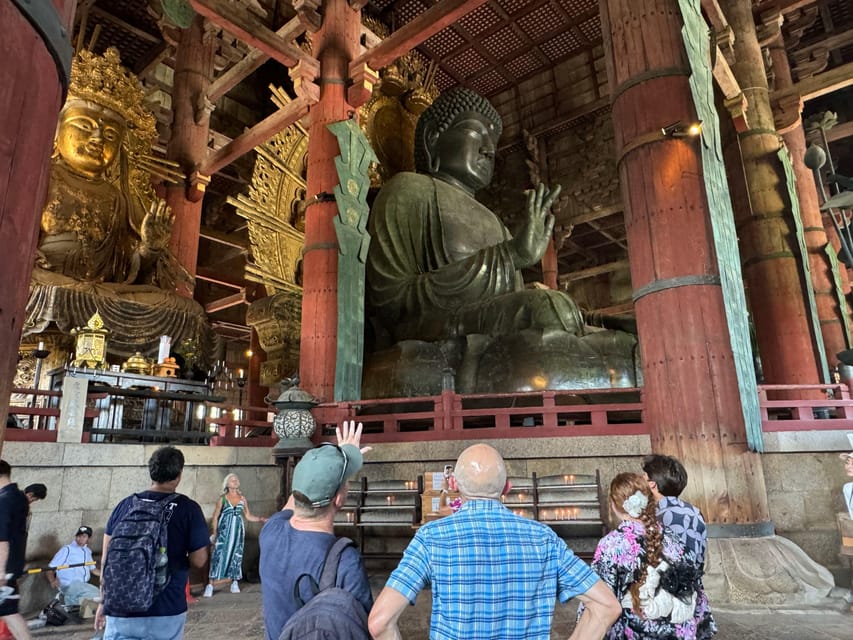
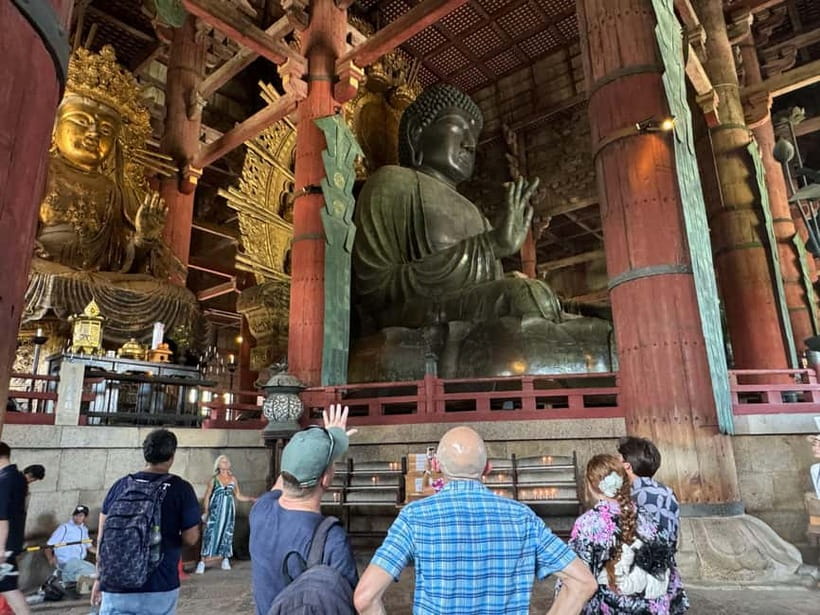
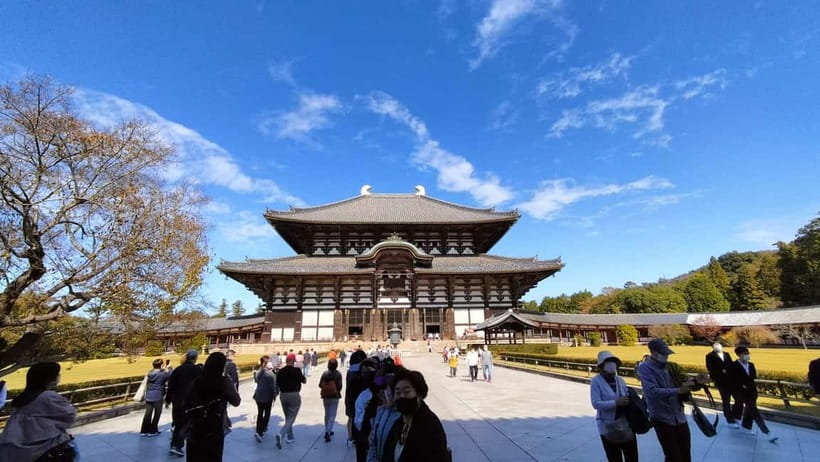
Todai-ji is the final major stop, and it supplies the tour’s biggest visual punch. The Daibutsuden, or Great Buddha Hall, is among the largest wooden structures in the world. Inside sits the bronze Vairocana Buddha, cast in the eighth century.
The statue’s scale is hard to grasp from photographs. Your guide explains not only the religious meaning of Vairocana Buddha, but also the political and practical effort behind the project. Building a monument of this size required enormous resources, skilled workers, and a government willing to link national power with Buddhist protection.
The hall itself matters as much as the statue. Look up at the timber structure, then look back at the calm face of the Buddha. The contrast between the building’s size and the statue’s quiet expression gives the visit its force.
Admission to Todai-ji is included, so there is no extra entrance fee to arrange during the tour. The guided visit lasts about one hour. That provides time for the main hall, the Buddha, questions, and photographs, although a large site can always reward a longer independent return.
This is where the guide’s explanations make the greatest difference. Without context, you see a large Buddha in a large hall. With context, you understand why Nara became such an important center and how the temple reflected the ambitions of early Japan.
The guide makes the difference
The route is fixed, but the feel of the tour depends heavily on the person leading it. The strongest guide qualities here are patience, clear English, local familiarity, and a willingness to answer questions beyond the official facts.
Eri is from Nara and has helped visitors find quieter routes, local food, and less crowded corners. Takashi is praised for detailed explanations and for helping with transportation before or after the walk. Teppei, also known as Takao Fuchigama, is described as warm, patient, and happy to discuss Japanese customs as well as temples.
Nobu has provided practical help in hot weather and walked with a visitor to the station afterward. Yayoi brings energy and care around the deer. Yoshi is comfortable answering questions at length, while Hana has even helped a visitor practice Japanese conversation along the route.
These details matter because Nara can raise many small questions. Can you bow here? Why are the deer connected to this shrine? What is the difference between a torii and a temple gate? What should you eat afterward? A guide who welcomes those questions can turn a pleasant walk into a much clearer visit.
The tour is available in English or Japanese. Private and small-group formats are offered, which should give you a better chance to shape the conversation than a large coach excursion.
Time, walking, and practical comfort
Three hours is enough to see the core sights, but not enough for a slow, aimless afternoon. You move from the meeting point through Nara Park, spend about an hour at Kasuga Taisha, then finish with about an hour at Todai-ji.
Expect outdoor walking, stairs, and time on shrine and temple paths. Wear comfortable shoes, bring water, and dress for the forecast. Food and drinks are not included, and personal expenses are your responsibility.
The tour does not include transport to or from the meeting point. It also finishes at Nininotorii or Kasuga Taisha Nininotorii, not at your hotel or station. That is convenient if you want to continue around Kasuga Taisha, but you should allow extra time to arrange your next move.
The guide may help with local transport afterward, but this is not part of the guaranteed inclusions. If you have a train reservation, mention it early and leave a sensible buffer.
The cancellation policy is flexible: you can cancel up to 24 hours before the start for a full refund. You can also reserve now and pay later, which helps if your Japan plans are still shifting.
Who will get the most from this tour
I would choose this experience for a first visit to Nara, especially if you have only one day or part of a day. It gives you the three sights most people hope to see, without forcing you to work out the order or meaning on your own.
It also suits families and mixed-age groups because the deer provide an immediate point of interest, while the guide can adjust the depth of the temple explanations. A private format may be particularly useful if some people want more photographs, more questions, or slower walking.
Culture-focused visitors will appreciate the contrast between Kasuga Taisha and Todai-ji. The tour helps you see that Shinto and Buddhism are not simply two interchangeable labels. Their spaces, rituals, symbols, and histories feel different, even though they exist close together.
You might skip it if you prefer wandering alone, want several hours at each site, or already have strong background knowledge about Nara. The fixed three-hour route leaves limited room for extended shopping, meals, or extra temples.
Should you book the Nara Great Buddha tour?
Book it if you want a well-planned first look at Nara with a real person to explain the details. The combination of sacred deer, lantern-lined Kasuga Taisha, and Todai-ji’s Great Buddha is hard to improve for a short visit.
At $77, the tour makes the most sense when you value the guide and the included admissions. Look for a private or small-group option if you want a relaxed pace and plenty of questions. If your priority is low cost or complete freedom, visit independently and use the savings for extra time in the park.
For most first-time visitors, I think the guided version earns its price. You leave with more than deer photographs. You understand why Nara’s shrines, temples, forests, and animals belong in the same story.
FAQ
How long does the Nara tour last?
The tour lasts three hours.
Where does the tour begin?
It begins in front of the torii gate of Himuro Shrine. Your guide will hold a yellow sign with the DeepExperience logo.
Which sights are included?
The guided route includes Nara Park, Kasuga Taisha, and Todai-ji Temple.
Is Todai-ji admission included?
Yes. Admission to Todai-ji Temple is included in the tour price.
Is Kasuga Taisha admission included?
Yes. The tour includes special inner shrine admission at Kasuga Taisha.
Are deer crackers included?
Yes. Shika senbei, the special crackers used to feed Nara’s deer, are included.
Which languages are available?
The tour is offered with a live guide in English or Japanese.
Is transportation included?
Transportation to and from the meeting point is not included. The tour finishes at either Nininotorii or Kasuga Taisha Nininotorii.
Newly written up around Japan
- Kyoto: Fushimi Inari Taisha Shrine Walking Tour with Guide★ 4.8 · 18 reviews
- Kyoto: Fushimi Inari Shrine Walking Tour★ 5.0 · 72 reviews
- Tokyo History: Sensoji Temple & Asakusa District Private Tour★ 5.0 · 28 reviews
- Tokyo Private Tour: Temples, Culture & Modern City Highlights★ 5.0 · 56 reviews
- From Tokyo: Snow Monkey Park & Zenko-ji Temple Private Tour★ 4.9 · 42 reviews
- Osaka Temple Cool Foot Bath & Matcha Experience〈45min〉★ 4.9 · 82 reviews
- Nagano/Tokyo: Snow Monkey and Zenkoji Temple Private Tour★ 4.8 · 54 reviews
- Food & Cultural Walking Tour around Zenkoji temple in Nagano★ 5.0 · 58 reviews
Japan Temple Tours, compared.
Osaka/Kyoto:Kinkakuji,Arashiyama,FushimiInariShrine,NaraPark
Read our review →
Asakusa Walking Tour with Sensoji Temple Visit
Read our review →
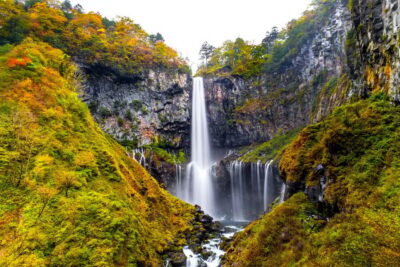
Nikko Toshogu Shrine and Kegon Waterfall Tour
Read our review →
Tokyo Panoramic 1 Day: Meiji Shrine, Asakusa, Odaiba and SKYTREE®
Read our review →
1-Day Snow Monkeys, Zenko-ji Temple & Sake in Nagano
Read our review →
Arashiyama Bamboo, Temple, Monkeys, or Secret Sake Brewery
Read our review →Browse the lists this tour appears in