
Reviewed · FUSHIMI INARI SHRINE TOURS
Kyoto: 3-Hour Fushimi Inari Shrine Hidden Hiking Tour
Fushimi Inari is famous for its thousands of red torii gates, but the best part of this experience comes before you reach the crowded postcard views. You leave the paved route, walk through quiet forest trails and bamboo groves, and approach the shrine from the mountain’s less-used side. I like the peaceful first half and the chance to see small altars that most quick shrine visits miss.
I also like the small-group format, capped at nine people, and the guides’ practical help with shrine customs. Guides such as Hina, Naru, Shiori, and Yuto have been praised for explaining offerings, torii gates, and Shinto traditions while taking photos along the way. The catch is simple: this is a 7-kilometer mountain hike, with stairs, uneven ground, and some steep sections. It is not a casual walk.
Key points at a glance
- A back-route approach to Fushimi Inari: Begin near Tofukuji and reach the shrine through quieter paths rather than joining the main crowd at the front gate.
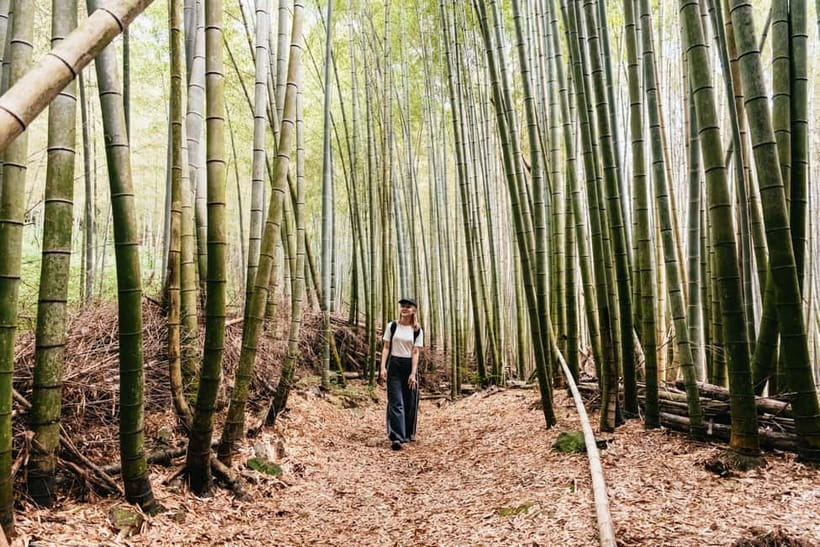
- Two bamboo sections: One appears early on the ascent, and another comes during the forested return toward Fushimi Inari.
- About 7 kilometers in three hours: You will climb stairs and unpaved trails, with regular pauses but no promise of an easy pace.
- The crowd-free window is strongest early: The first half can feel almost private, while the famous torii areas become busier later.
- English-speaking local guides: Guides including Naru, Hina, Shiori, and Yukari have been praised for cultural explanations and taking photographs.
- Good value for active visitors: At $72 per person, the price pays for route-finding, shrine interpretation, photos, and a small group rather than simple admission.
Why this route changes your Fushimi Inari visit
Most people arrive at Fushimi Inari Shrine through the grand entrance and immediately face a wall of people holding phones. The famous vermilion gates are beautiful, but the first sections can feel more like a photo queue than a mountain walk.
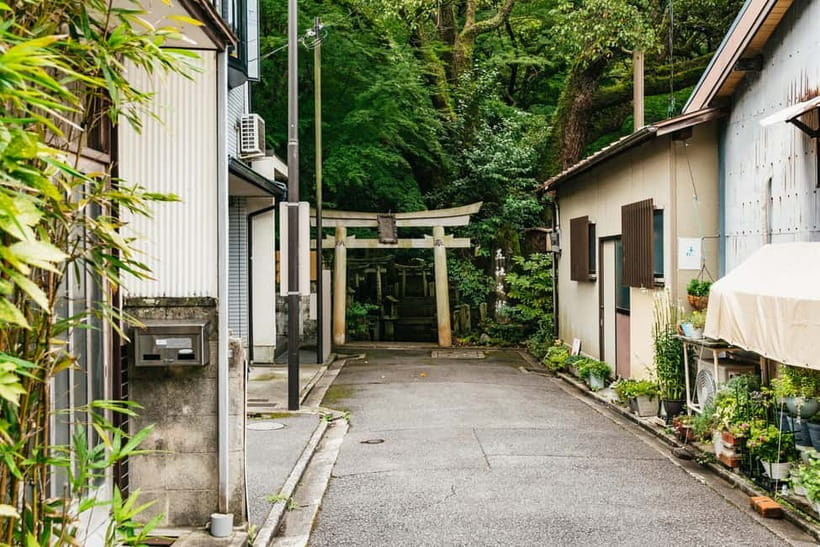
This tour flips the order. You meet outside FamilyMart Nakai Tofukuji, next to Exit 2 at Tofukuji Station, and start in a quiet neighborhood. From there, the route moves toward Mount Inari before joining the better-known shrine paths.
That change matters. You get time to notice the woods, stone altars, bamboo, and smaller shrines before the main sight appears. I like this approach because Fushimi Inari makes more sense as a mountain covered with religious sites, not just as a long tunnel of red gates.
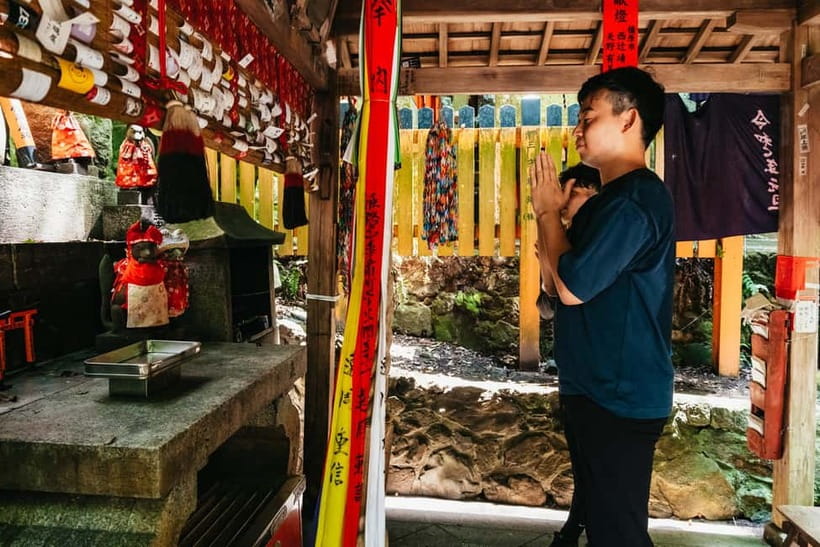
The tour also gives you a guide who can explain how to behave at a Shinto shrine. You learn how to enter a torii respectfully, make an offering, and understand the purpose of amulets and smaller altars. Those details turn a scenic walk into a more meaningful visit.
More Fushimi Inari Shrine Tours in Kyoto:
- Osaka/Kyoto:Kinkakuji,Arashiyama,FushimiInariShrine,NaraPark
★ 4.1 · 1,596 reviews - Osaka/Kyoto: Arashiyama, Nara & Fushimi Inari Shrine w/Lunch
★ 4.4 · 754 reviews - Kyoto Tea Ceremony & Kiyomizu-dera Temple Walking Tour
★ 5.0 · 115 reviews
Starting near Tofukuji Station
The meeting point is the FamilyMart Nakai Tofukuji Store, outside Exit 2 of Tofukuji Station. This is useful because Tofukuji is served by both the JR and Keihan lines.
On the JR line, rapid and local trains can be used. On the Keihan line, use sub-express, semi-express, or local trains. Do not use Keihan express trains for this meeting point.
Arrive ready to walk. There is no need to bring a large day bag, and large luggage is not allowed. Keep your belongings light, since a bulky pack becomes tiring on stairs and narrow forest paths.
The opening neighborhood walk is not the headline attraction, but it helps the tour ease you into the morning. You leave the station area, pass smaller local shrines, and gradually move toward the mountain. It feels less abrupt than stepping straight from a crowded railway platform into Fushimi Inari’s main entrance.
Tofukuji Temple and the quiet approach
The itinerary includes a short visit of about 10 minutes at Tofukuji Temple. This is an early cultural stop rather than the main event, so do not expect a long temple tour.
Its value is in setting the tone. You begin among Kyoto’s religious sites before entering the wooded slopes connected with Fushimi Inari. Your guide can provide context as the route shifts from neighborhood streets to forest paths.
The walk then reaches a less-used trail. This is where the experience begins to feel different from a standard Fushimi Inari visit. The route leaves ordinary paved walking areas and uses actual mountain tracks.
Expect roots, stones, stairs, and changing surfaces. After rain, the ground can become muddy or slippery. One rainy-day report described the trail as especially muddy, while another noted that recent rain made some sections more difficult. Good shoes are important, even though the tour does not specify a particular shoe type.
Bamboo groves, small altars, and forest shade
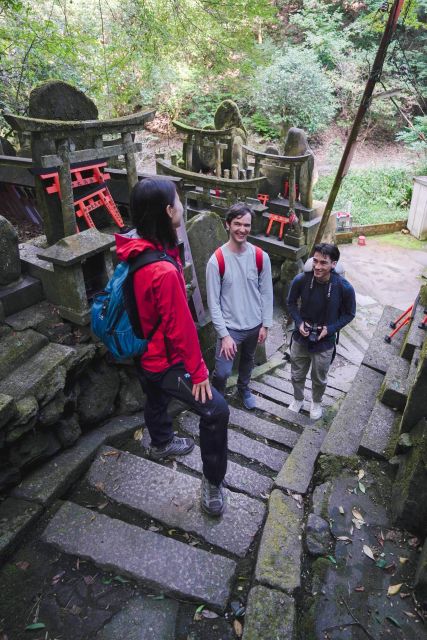
The first major stop is a bamboo grove reached by a forest trail. Bamboo is one of Kyoto’s most recognizable sights, but this setting offers a quieter experience than the well-known Arashiyama area.
You will not have the same polished path or broad sightseeing setup found at a major city attraction. That is part of the appeal. The grove is part of an active hike, surrounded by trees and mountain paths rather than arranged as a short photo stop.
The tour description says roughly half the walk takes place in the forest, which also means less direct sunlight. That can be pleasant in warm weather, but it does not remove the need for water and suitable clothing. Mosquitoes and other insects may be present, so wear long pants and a long-sleeved shirt.
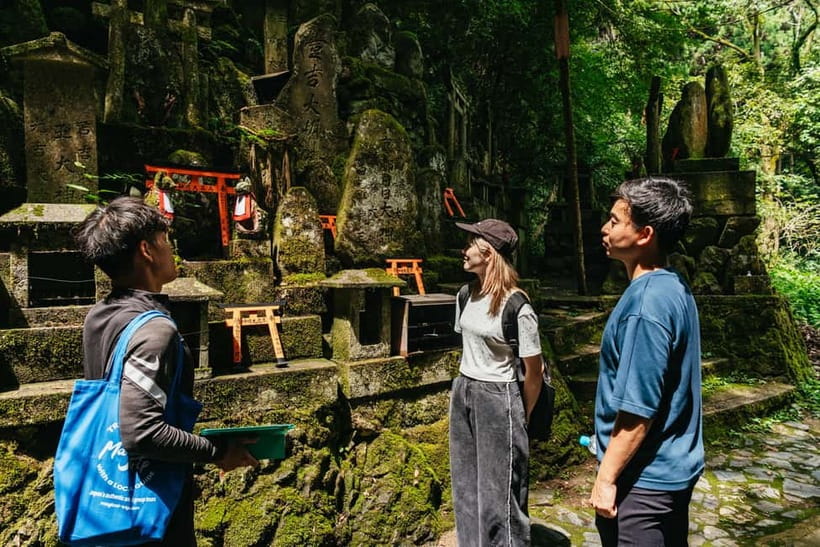
Along the route, you visit small and old altars tucked into the mountain. These are easy to pass if you are walking alone and focused only on the main gates. A guide helps explain why the mountain contains so many religious markers and how they relate to the shrine complex.
This portion is the strongest reason to book the tour. You are not simply taking a shortcut to a famous photo. You are seeing the quieter setting that gives Fushimi Inari its sense of place.
More temple hikes and treks in Kyoto:
- From Barcelona: Montserrat Monastery, Easy Hike, Cable Car
★ 4.9 · 1,021 reviews - From Barcelona: Montserrat Monastery & Scenic Mountain Hike
★ 4.9 · 978 reviews - Chiang Mai – Doi Suthep Temple & Wat Pha Lat Hike
★ 4.6 · 740 reviews - From Sharm: Mount Moses Trekking, Sunrise & Monastery Visit
★ 4.2 · 698 reviews
Reaching Mount Inari and its torii gates
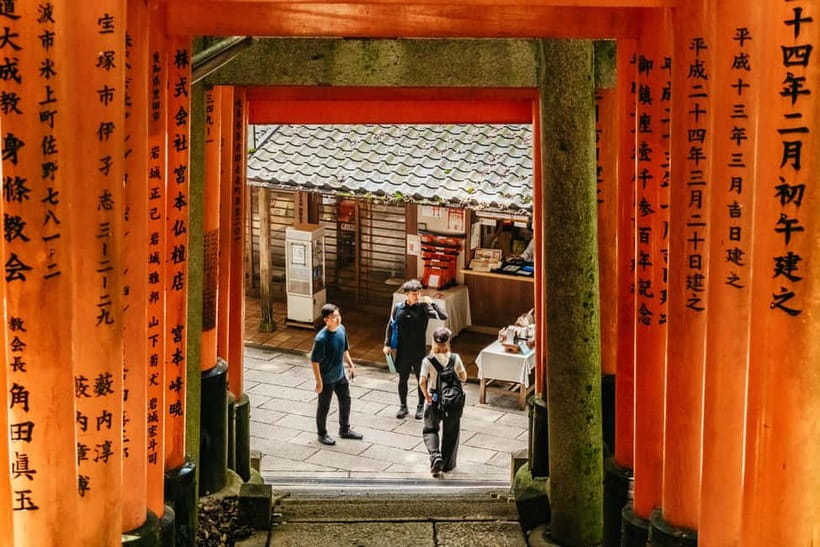
After the bamboo grove and forest paths, the route connects with the main trail of vermilion torii gates. The transition is striking. You move from a quiet wooded track into one of Kyoto’s most recognizable sights.
The gates are dedicated by individuals, families, and businesses, and they form long covered passages up the mountain. The tour gives you a way to see them without spending the entire visit in the busiest lower section.
The exact crowd level depends on the day and time. The quieter trail does not mean the whole mountain will be empty. Once you reach the popular sections, you should expect more people, especially near the most photographed gates and the shrine entrance.
That is an important point for setting expectations. The route avoids crowds for much of the first half, but it does not remove them from Fushimi Inari. Several descriptions of the walk note that the path becomes progressively busier as you approach the famous areas.
The guides help make this part more than a photo stop. Naru has been praised for taking patient photographs, while Shiori and Hina have been praised for explaining local customs and shrine traditions. Guide quality can vary from person to person, but the experience is designed around a live English-speaking guide rather than a recorded explanation.
The summit, stairs, and physical effort
The route continues toward the summit of Mount Inari, where the mountain is covered with shrine altars. This is the most demanding part for many people.
The tour is described as moderate, but the distance and elevation gain deserve respect. One participant recorded the equivalent of about 50 flights of stairs, which gives you a useful sense of the effort. Another described it as more of a hike than a relaxing walk.
You do not need to be an athlete, and regular stops are built into the tour. Extra pauses can be made if needed. Still, you should be comfortable walking for three hours and handling uphill and downhill sections.
This is not suitable for people with limited mobility, and it is not recommended if you are out of regular walking condition. Children under eight are not suitable for the tour. Children eight and older require parent or guardian permission before booking.
I would schedule this experience when you have enough energy. Do not place it after a full day of temples and shopping unless you are used to long walks. The payoff is a stronger feeling of having crossed the mountain rather than simply reached a shrine viewpoint.
The forested descent and second bamboo grove
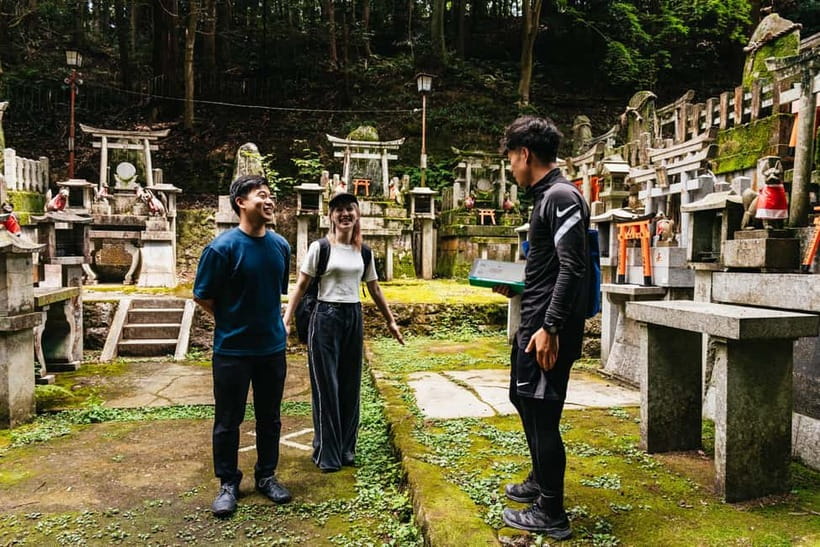
After reaching the upper area, you head back down on a forested trail. This descent visits more small shrines and leads to another bamboo grove before reconnecting with the most famous part of Fushimi Inari.
The return route gives the experience a good rhythm. You climb through gates and mountain paths, then come down through trees and quieter religious sites. The forest also provides a break from the visual and human density of the main torii route.
Downhill walking can be easier on your breathing but harder on your knees, especially on uneven ground. Take your time on wet stones and steep sections. The guide can make regular stops, but you should still tell the guide early if you need a slower pace.
This second approach to the shrine is also useful for photography. The guide can help you find attractive views in both the quieter areas and the popular gate corridors. Photos are included, which adds value if you are traveling without someone who can take pictures of the whole group.
Finishing at Fushimi Inari’s famous lower shrine
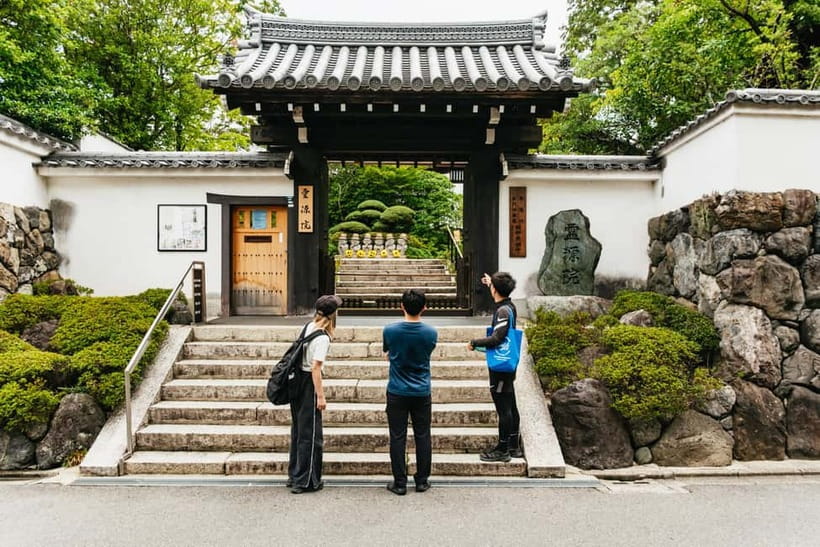
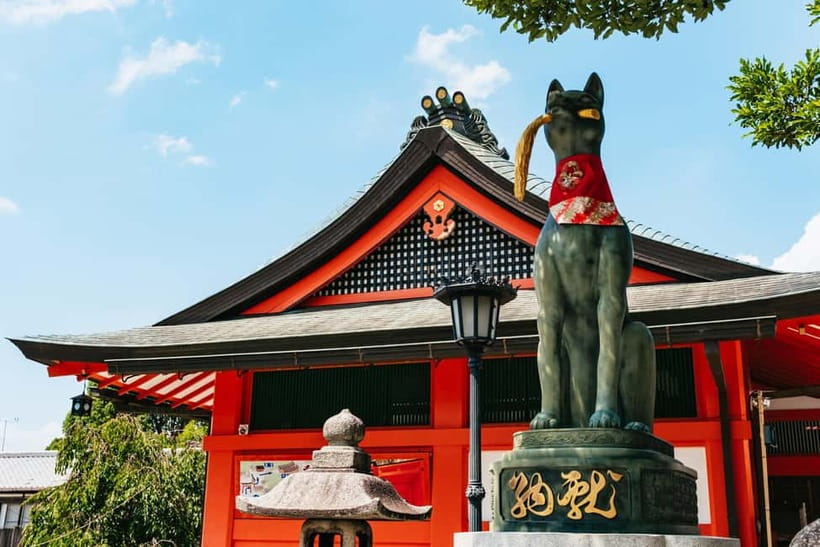
The route eventually reaches the best-known area of Fushimi Inari, then the main shrine at the base of the mountain. This is where the crowd difference becomes most obvious.
You can take your classic torii-gate photographs here, but you will likely share the space with many other people. The tour does not promise solitude at the final section. Instead, it gives you a quieter route before delivering you to the landmark most people came to see.
The stated route description finishes at the main shrine, where you can buy local street food before continuing around Kyoto. The itinerary also lists a return to FamilyMart Nakai Tofukuji, so confirm the exact finishing point when you book. That small detail matters if you have a train reservation or another timed activity afterward.
Do not rush away immediately. The main shrine is the right place to complete your visit, make an offering, and look back on the route. You have seen Fushimi Inari from both sides: the crowded public face and the wooded mountain setting behind it.
Is $72 a fair price?
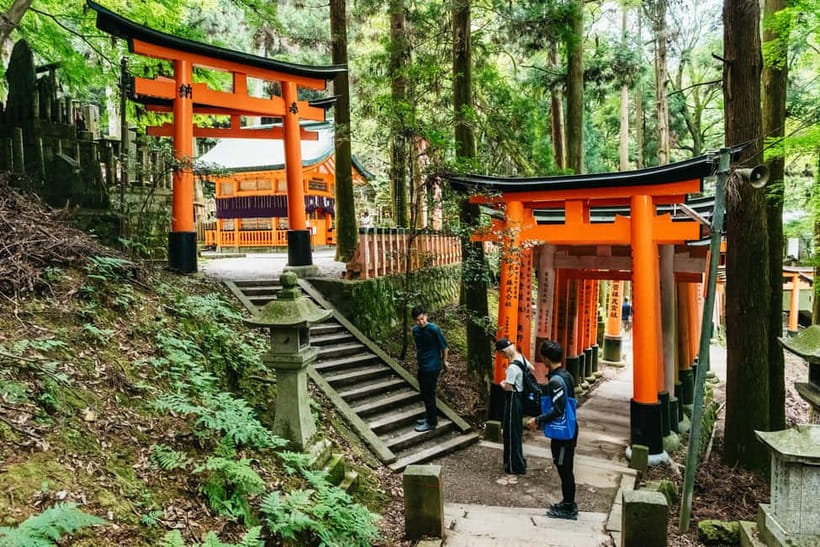
At $72 per person, this is not the cheapest way to see Fushimi Inari. You can visit the shrine without paying an admission fee, and the main torii gates are accessible on your own.
The price makes more sense if you value route-finding and interpretation. The guide leads you onto trails that may be difficult to locate alone, explains shrine customs, keeps the group moving, and takes photos. The small-group limit of nine also gives you a more personal outing than a large walking tour.
The value is strongest for first-time visitors who want nature and culture together. It is weaker for experienced hikers who are comfortable finding their own route and do not need explanations or photos.
The price also includes flexibility in the booking terms. You can reserve and pay later, and cancellation or time changes are allowed up to 24 hours before the start, subject to availability for rescheduling. Extreme weather can cancel the tour, and rain may lead you to cancel if you are not prepared.
What to wear and bring
Wear long pants and a long-sleeved shirt. This protects you from insects and brush, and it is especially useful because much of the route passes through forest.
Use comfortable footwear with a secure grip. The information provided does not require hiking boots, but unpaved, rocky, muddy, and steep sections make flimsy shoes a poor choice.
Bring water and keep your bag small. Food and drinks are not included, although you can enjoy local street food after reaching the shrine. Large bags and luggage are not allowed.
In hot weather, the forest shade helps, but you still need to prepare for exertion. In wet weather, be ready for slippery ground and mud. The tour may be canceled during extreme weather.
Who should book this hike?
I would choose this tour if you want to see Fushimi Inari while spending meaningful time away from the main crowd. It suits active visitors, couples, families with older children, and anyone who prefers a forest walk to a quick shrine photo.
It is also a good fit if you want help with Shinto customs. The guides can explain how to enter torii gates, make offerings, understand amulets, and notice the difference between major shrine areas and small mountain altars.
I would skip it if you want a flat, slow-paced cultural tour. The route covers about seven kilometers, includes stairs and uneven trails, and requires moderate fitness. People with mobility impairments and children under eight should not book it.
Final verdict: a strong choice for an active Kyoto morning
Book this experience if your ideal Fushimi Inari visit includes bamboo, forest shade, mountain effort, small altars, and the famous red gates without spending the entire morning in a crowd.
The best feature is the route itself. You approach from Tofukuji, walk quiet trails, reach the mountain and summit, then return through the shrine’s most famous sections. At $72, you are paying for access to that less obvious route and for a guide who can add cultural meaning and take photos.
Just be honest about your fitness. This is a hike with regular breaks, not an easy stroll. Wear long clothing, pack light, allow room for mud and stairs, and confirm the finishing point if your day is tightly scheduled. If those conditions suit you, this is one of the more satisfying ways to experience Fushimi Inari.
FAQ
How long is the Fushimi Inari hidden hiking tour?
The tour lasts three hours and covers approximately seven kilometers.
Where does the tour meet?
The meeting point is FamilyMart Nakai Tofukuji Store, outside Tofukuji Station Exit 2.
How do I reach the meeting point?
On the JR line, you can use rapid or local trains. On the Keihan line, use sub-express, semi-express, or local trains. Do not use Keihan express trains.
Is this a difficult hike?
It is described as a moderate hike rather than a simple walk. The route includes stairs, uneven and unpaved ground, uphill and downhill sections, and approximately seven kilometers of walking.
Will the tour avoid all crowds?
No. The forest trails are quiet for much of the first half, but the route becomes busier when it reaches the popular torii gates and the main shrine area.
Are the bamboo groves included?
Yes. The route includes a bamboo grove on the way up and another bamboo grove during the forested return route.
Is a guide included?
Yes. A local English-speaking guide is included. Guides may include Hina, Naru, Shiori, Yukari, Yuto, and others.
Are photos included?
Yes. Photos taken during the tour are included.
What should I wear?
Wear long pants and a long-sleeved shirt because mosquitoes and other insects may be present. Comfortable footwear with a good grip is also advisable for the mountain paths.
Can children join the tour?
Children under eight cannot join. Children aged eight or older need permission from a parent or guardian before booking.
Are food and drinks included?
No. Additional food and drinks are not included. You may find local street food near the main shrine after the hike.
Can I cancel the booking?
You can cancel up to 24 hours before the starting time for a full refund. Free date or time changes are also possible up to 24 hours before the start, depending on availability.
More three-hour temple visits in Kyoto
- Chiang Mai: 3 Hour Old City and Temples Guided Walking Tour
★ 4.6 · 1,568 reviews - 3-Hour Private Ephesus, Terrace Houses, Cruiser Only
★ 5.0 · 274 reviews - Cusco: 3-Hour Horse Riding Tour to the Temple of the Moon
★ 5.0 · 105 reviews
Newly written up around Kyoto
- Kyoto: Fushimi Inari Taisha Shrine Walking Tour with Guide★ 4.8 · 18 reviews
- Kyoto: Fushimi Inari Shrine Walking Tour★ 5.0 · 72 reviews
- Kyoto Tea Ceremony & Kiyomizu-dera Temple Walking Tour★ 5.0 · 115 reviews
- Kyoto: Calligraphy class at Buddhist temple in city center★ 5.0 · 167 reviews
- Kyoto: Zen Meditation at a Private Temple with a Monk★ 5.0 · 202 reviews
- Kyoto: Arashiyama Bamboo, Temple, Matcha, Monkeys & secret spots★ 5.0 · 219 reviews
- KYOTO Tea Ceremony with kimono near by Imamiya Jinjya Shrine★ 5.0 · 343 reviews
- Kyoto Zen Meditation & Garden Tour at a Zen Temple with Lunch★ 5.0 · 441 reviews
Fushimi Inari Shrine Tours, compared.
Osaka/Kyoto:Kinkakuji,Arashiyama,FushimiInariShrine,NaraPark
Read our review →
Osaka/Kyoto: Arashiyama, Nara & Fushimi Inari Shrine w/Lunch
Read our review →
Kyoto Tea Ceremony & Kiyomizu-dera Temple Walking Tour
Read our review →Full Day Kyoto Tour : Bamboo Forest, Golden Temple, Fushimi Inari
Read our review →
Fushimi Inari Taisha Shrine Walking Tour with Guide
Read our review →Browse the lists this tour appears in