
Reviewed · SOUTH KOREA TEMPLE TOURS
Seoul: Palace, Temple and Market Guided Foodie Tour at Night
Changgyeonggung Palace after dark is the hook here. Its tiled roofs, courtyards, and gardens take on a quieter mood under the night sky, then the tour turns to Gwangjang Market for jeon, makgeolli, chopped live octopus, beef tartare, and a twisted sugar donut called kkwabaegi. It is an unusually good mix of Seoul sights and local food in one evening.
I like the route because it gives you both Joseon-era Seoul and modern street life without making you plan several separate stops. I also like the guides: Mia, Kim, Jay, Inha, and others are praised for clear explanations, local stories, and patient group handling. The tradeoff is simple: four hours on foot can feel long, especially in cold rain or after sunset, and the food may be adventurous for cautious eaters.
Key points at a glance
- Night visit to Changgyeonggung Palace: Spend about an hour learning the story of this Joseon Dynasty palace while its buildings are lit.
- Four market tastings included: Try assorted jeon, makgeolli, chopped live octopus, and other Korean market foods.
- A proper Jongno walking route: Connect Daehangno, Gwangjang Market, Jongro 3-ga, Ikseondong, and Jogyesa Temple.
- Helpful English-speaking guides: Guides such as Mia and Kim are praised for history, humor, patience, and local food advice.
- Moderate walking required: The tour includes a 10-minute walk to the market and another 15-minute walk toward the later stops, plus sightseeing on foot.
- Good value at $60: Entrance fees, food tastings, rice wine, and a guide are included, but hotel transport is not.
Why this four-hour Seoul night tour works
This experience is best understood as a guided introduction to Jongno, one of Seoul’s most useful areas for combining old landmarks, food, and evening atmosphere. You begin near Hyehwa Station, in the Daehangno arts district, then move through palace grounds, a traditional market, a food-stall street, a hanok neighborhood, and a Buddhist temple.
That is a lot for one evening. You will not study every site in great detail, but you will get a strong sense of how different parts of Seoul fit together. The guide provides the connective thread, explaining Korean history and customs as you go rather than leaving you to stare at buildings without context.
At $60 per person, the price is reasonable if you value structure and food. You are paying for the guide, palace admission, several tastings, makgeolli, and the convenience of moving between well-chosen stops. It is less attractive if you mainly want a cheap dinner or prefer to explore at your own pace.
The tour ends back at the starting point, so you do not need to arrange a late-night taxi from a different neighborhood. Hotel pickup and drop-off are not included, and you meet the guide outside Exit 4 of Hyehwa Station, where the guide holds a Tripper sign.
More temple and food outings in the world:
- Bangkok by Night: Temples, Markets and Food Tuk-Tuk Tour
★ 5.0 · 3,752 reviews - Bangkok: Markets, Temples and Food Night Tour by Tuk Tuk
★ 4.9 · 2,371 reviews - Bangkok: Tuk Tuk Adventure Chinatown Michelin Food & Temples
★ 4.3 · 725 reviews
Starting in Daehangno near Hyehwa Station
The meeting point is outside Hyehwa Station Exit 4. This puts you near Daehak-ro, also known as Daehangno, an arts and theater district. The route passes through this area rather than treating it as a main stop, so think of it as your first glimpse of the neighborhood rather than a full cultural visit.
That is a sensible starting place. You are close to Changgyeonggung Palace, and the station is easy to identify. Still, allow enough time to find Exit 4 and look for the sign. The activity information gives a starting location as 169, but the practical meeting instruction is the station exit, outside, with the guide holding the Tripper sign.
Your guide may be Mia, Kim, Jay, Inha, Thomas, Mindi, or another member of the English and Korean-speaking team. The strongest part of the guiding is the personal explanation. Mia is repeatedly praised for patient storytelling and a good sense of humor, while Kim is noted for local stories and clear cultural explanations. Jay has also helped late arrivals join the group and pointed out food made famous by a Netflix street-food documentary.
The exact guide matters because this is not a headset tour. You are walking together, asking questions, and stopping for explanations. A good guide makes the evening feel relaxed rather than like a race between landmarks.
Changgyeonggung Palace under the night lights
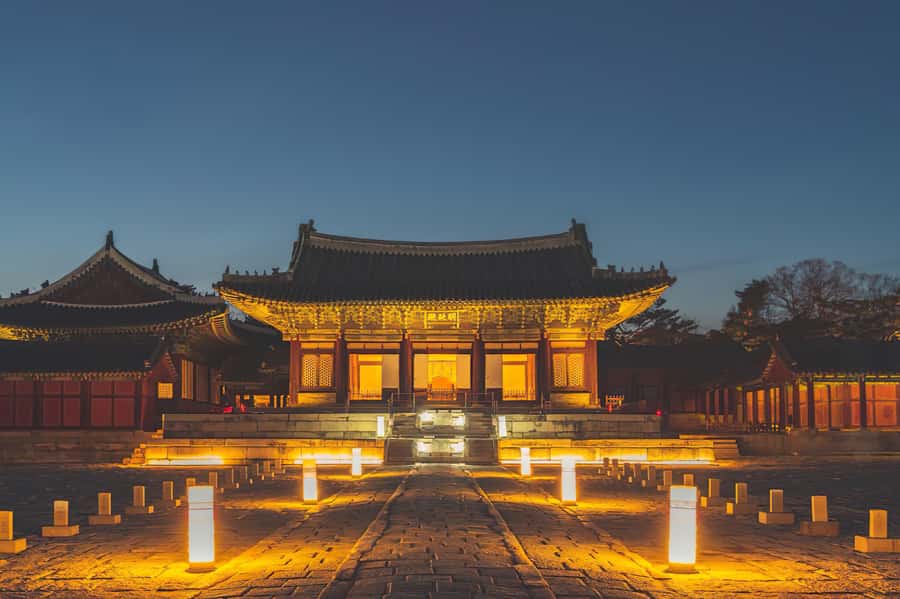
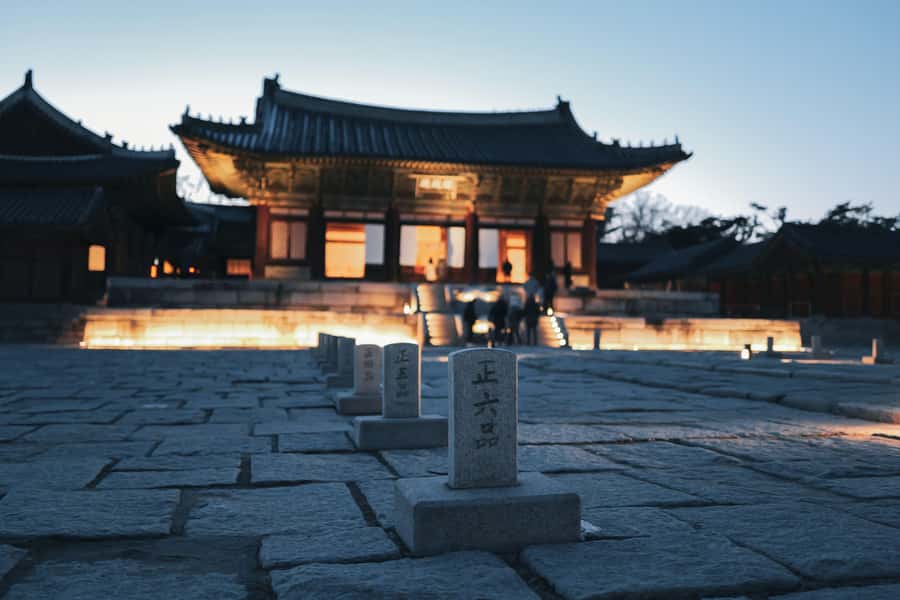
The palace visit lasts about an hour and is the historical center of the tour. Changgyeonggung was built during the Joseon Dynasty, and its courtyards, gates, wooden halls, and gardens look especially striking after dark. Lighting brings out the rooflines and painted details without the daytime crowds and glare.
I like this part because it gives the evening a calm opening. You are not asked to rush straight into food. Instead, you first get a sense of the courtly world that shaped Seoul, then later see how ordinary people ate, traded, and socialized in the market districts.
Your guide explains the palace and its place in Korean history. The value is not just the photo stop. Historical details help you read the layout: formal spaces for ceremonies, enclosed courtyards, and buildings designed around movement and rank. You will get a guided visit rather than a quick look from the outside.
Night access and lighting can make the palace feel atmospheric, but there is a practical limit. The darkness is good for mood and photographs, not always for seeing fine architectural detail. Bring a phone or camera that handles low light well, and wear shoes that are comfortable for walking over palace paths and city sidewalks.
The palace section is also where the tour may feel most traditional. If your main goal is a long, quiet palace visit, a dedicated daytime palace tour would give you more time. Here, the palace is one part of a larger evening, which is exactly why the route suits first-time visitors who want variety.
Gwangjang Market and the evening food spread
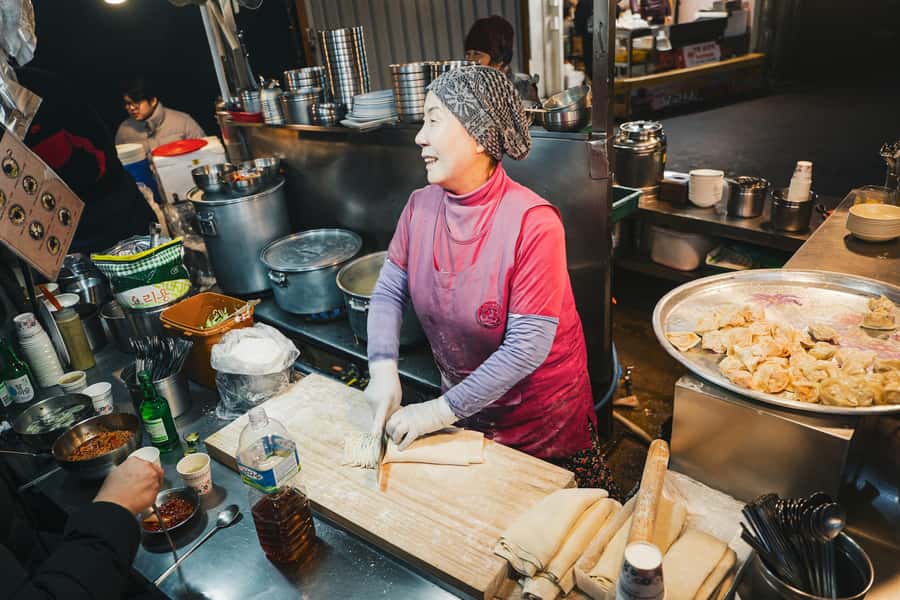
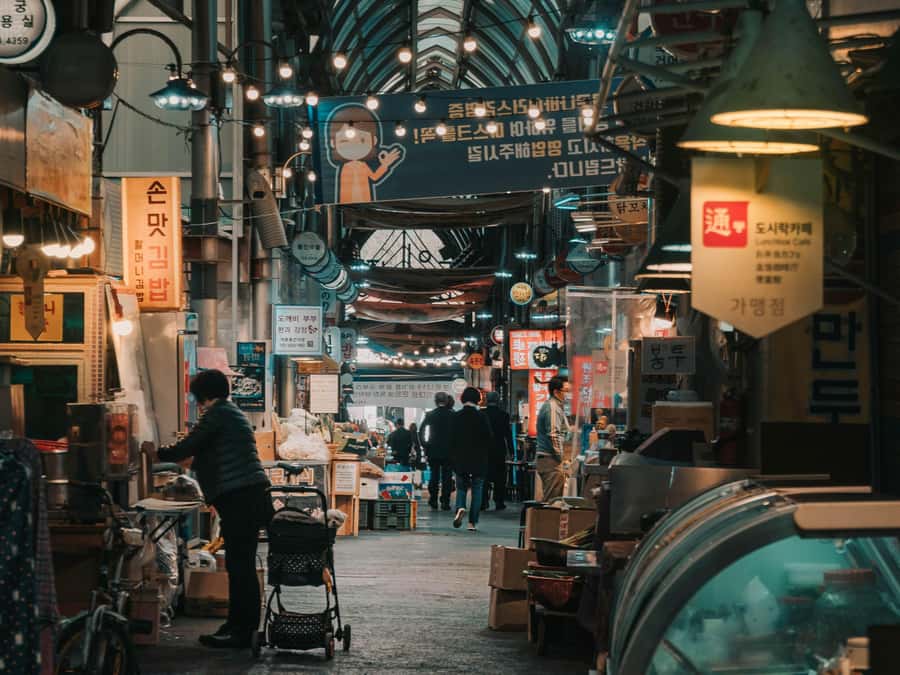
After the palace, you walk about 10 minutes to Gwangjang Market. This is the main eating stop and lasts around an hour. Your guide leads you through the food area, explains what you are seeing, and helps organize the included tastings.
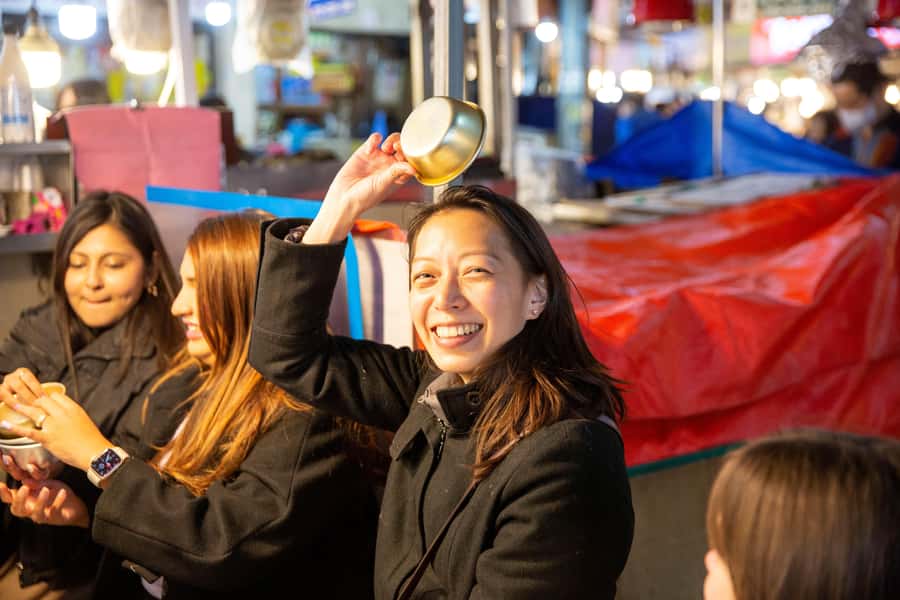
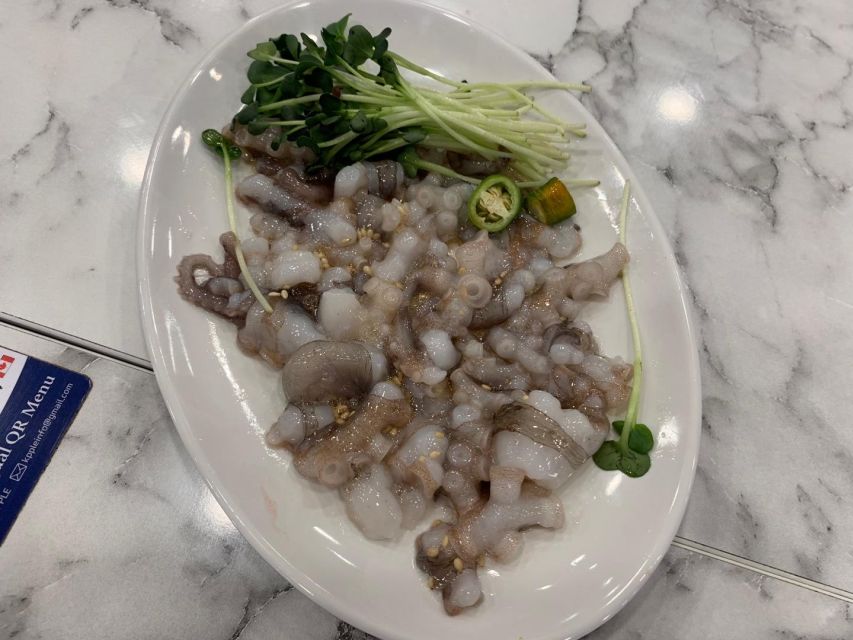
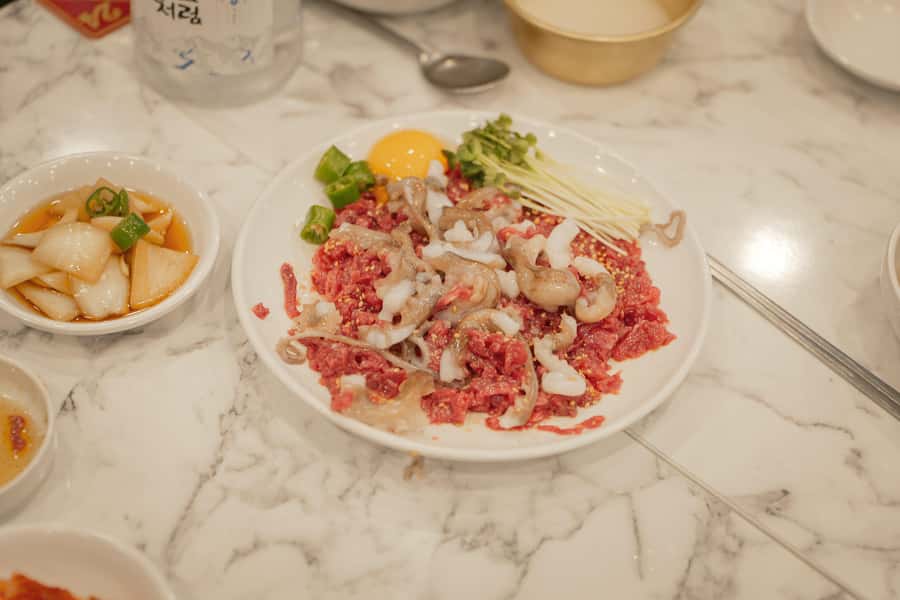
The food list is unusually broad for a short tour. You can expect assorted jeon, including versions made with kimchi, tofu, and meat, along with makgeolli, Korean rice wine. You may also try chopped live octopus, beef tartare, and kkwabaegi, the market’s twisted Korean donut.
Jeon is a particularly good introduction to Korean food. These savory fritters are familiar enough for most visitors, but each filling gives you a different texture and flavor. The market setting makes them more interesting than ordering one generic pancake in a restaurant. Makgeolli adds another traditional element, with a milky appearance and a distinct rice-based taste.
The live octopus is the adventurous bite. It is chopped before serving and may still move slightly because of the tentacles. You are not required to eat it. The tour clearly treats this as a personal choice, so you can try a small amount, pass entirely, or focus on the other foods without making the moment awkward.
Kkwabaegi provides a useful sweet finish. The fried, twisted dough is a popular market snack, and the guide helps you avoid waiting in the line. That does not mean every part of the market is instantly accessible, but the line assistance is valuable when you have only one hour and want to sample several things.
A few cautions will make this stop easier. Food is shared in a public market setting, so this is not a private seated dinner. Portions and exact items may vary, and the experience favors sampling rather than filling up on one large dish. If you have dietary restrictions, vegetarian and halal options are available, but you need to specify them when booking.
More Market Visits in the world:
- Bangkok: City Highlights Temple and Market Walking Tour
★ 4.5 · 3,990 reviews - Mini Group Xian Day Tour to Terracotta Army, City Wall, Pagoda and Muslim Bazaar
★ 5.0 · 1,320 reviews - Bangkok: Railway and Floating Market Tour with Dragon Temple
★ 4.6 · 1,225 reviews - Bangkok: Night Bike Tour with Temples & Flower Market Visit
★ 4.8 · 751 reviews
Jongro 3-ga and Ikseondong after dinner
From Gwangjang Market, the route continues on foot for about 15 minutes toward Jongro 3-ga Pocha Street. You spend around 15 minutes sightseeing and hearing about the area. Pocha refers to the covered street-food and drinking stalls that are part of Seoul’s evening culture.
This brief stop helps you see a different side of the city. The palace presents official history, while the market shows food commerce. Jongro 3-ga adds the social side of Seoul after work, with casual drinking and street dining. You will not have a long meal here, but you get a look at the setting and its role in city life.
Next comes Ikseondong Hanok Village, also for about 15 minutes. The area is known for preserved traditional Korean houses, called hanok, now mixed with cafés, shops, and small restaurants. The tour treats it mainly as a photo stop and guided pass-through.
That short visit is enough to understand the contrast. Old-style low roofs and narrow lanes sit close to the modern city, and the neighborhood gives you a different type of nighttime photograph from the palace. The drawback is that 15 minutes is only an introduction. If you want to browse shops, stop for coffee, or take your time with the lanes, you would need to return independently.
Still, these two stops make the route feel more complete. You are not simply visiting famous monuments one after another. You are seeing how historic streets continue to function as places for food, nightlife, art, and everyday city life.
Lanterns and Buddhist calm at Jogyesa Temple
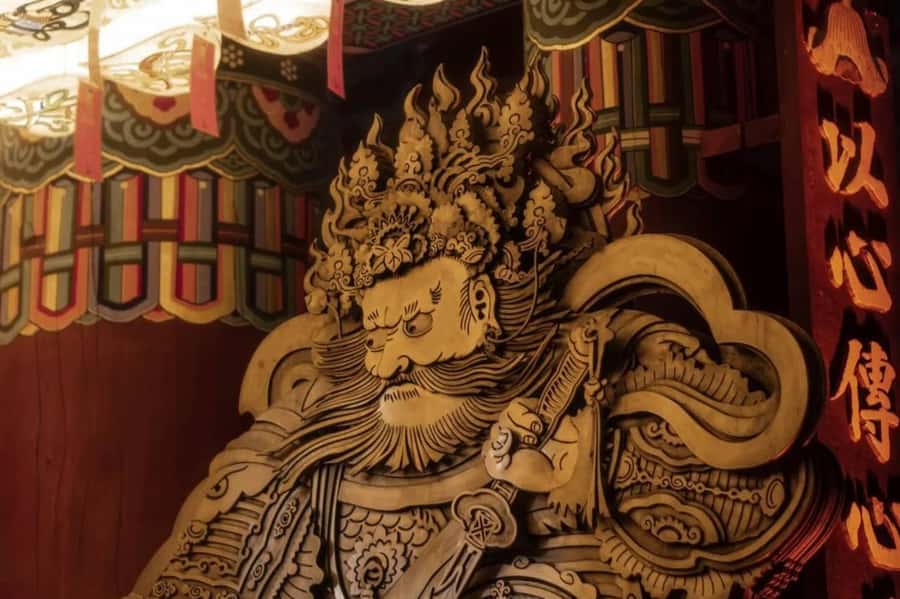
The last major stop is Jogyesa Temple, with about 30 minutes for a visit and guided explanation. Its lanterns and illuminated grounds create a softer ending after the noise and food of Gwangjang Market.
This is more than a quick exterior photo. The guide explains Buddhism and the temple’s role, with one guide even allowing extra time to discuss Buddhist ideas. That added context matters because temple architecture can otherwise seem decorative if you do not know what you are looking at.
Jogyesa is a good counterpoint to the market. At Gwangjang, you are tasting and moving through crowded food lanes. At the temple, you have space to slow down and notice the lanterns, sacred buildings, and quiet atmosphere. The sequence gives the tour a natural rhythm: palace, food, nightlife, old houses, then reflection.
You should not expect a full religious lesson or a long meditation session. The stop is only half an hour, and the tour still has to return to the meeting point. But it is long enough for photographs and a clear introduction to the site.
The activity ends back where it began. That makes the final logistics straightforward, though you will need to arrange your own onward transportation from Hyehwa Station.
Walking, weather, and accessibility
The tour is listed as wheelchair accessible, but you should still consider the route carefully. It includes a moderate amount of walking, palace grounds, market lanes, city sidewalks, and several transitions between stops. Anyone with limited stamina should confirm that the pace and surfaces suit their needs before booking.
Four hours can pass quickly when the group is moving, but it can also feel demanding at night. One person specifically enjoyed the tour despite cold rain, while another advised being ready for four hours of walking and a temperature drop after sunset. That is practical advice.
Wear comfortable shoes and bring an extra layer. The palace and temple may feel cooler than the market streets, and waiting outdoors or walking between stops can be more tiring than the food stops suggest. An umbrella or rain layer is sensible during wet weather.
The tour is conducted in English or Korean. Since the guide’s explanations are a major part of the experience, choose the language in which you can comfortably follow historical and cultural details.
Who will get the most from this tour
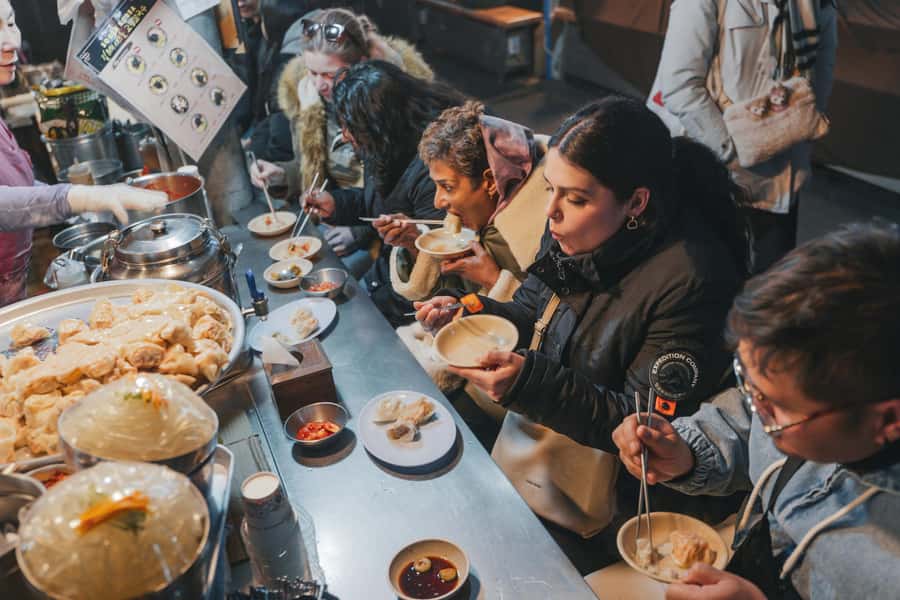
I would choose this tour for a first or second visit to Seoul when you want an organized evening and do not want to solve the food choices yourself. It is especially useful if you want palace history, local snacks, and a look at several Jongno neighborhoods in one outing.
It also suits curious eaters. The jeon and kkwabaegi are approachable, while makgeolli and live octopus offer a chance to try something less familiar. You always have the option to skip the octopus, so adventurous eating is encouraged but not forced.
Couples, solo visitors, and small groups can all fit the format. The guides work to keep the group together and answer questions, and the walk gives solo visitors an easy social setting without requiring a full-day commitment.
I would hesitate if you dislike walking, need a long seated dinner, or want deep time at each landmark. The tour covers many places, which is its strength and its limitation. It gives you a taste of each neighborhood rather than an unhurried visit to one.
Is the $60 price fair?
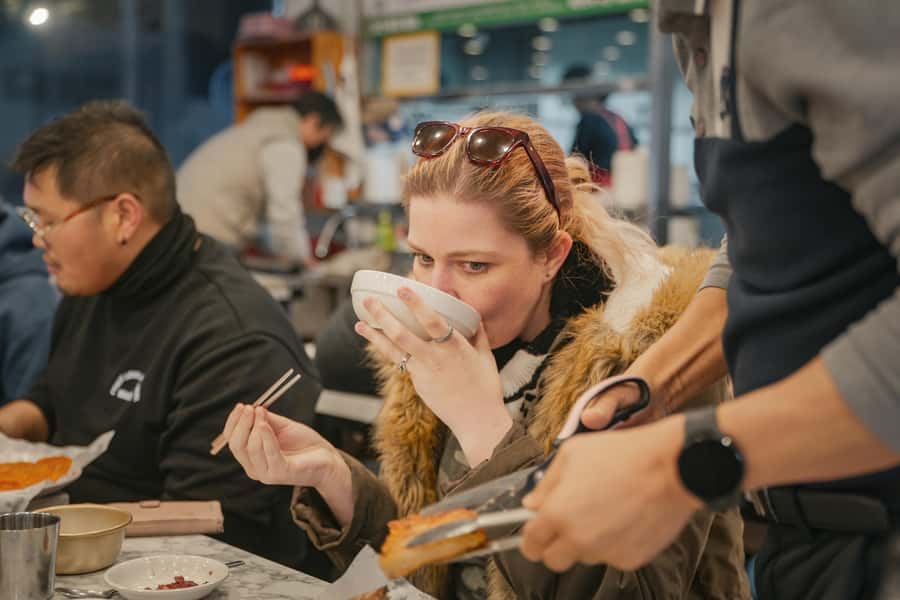
For four hours, $60 is a fair price if you would otherwise pay separately for palace admission, several market dishes, rice wine, and a local guide. The included food is the key value. A casual market visit can be cheap, but first-time visitors may not know what to order, where to stand, or how to approach unfamiliar dishes.
The tour also saves planning time. You do not have to map the walk from Changgyeonggung to Gwangjang, then onward to Ikseondong and Jogyesa. You simply meet the guide and follow the route.
The value is weaker if your appetite is small or you already know Jongno well. In that case, you may prefer to visit the market alone and spend the money on dishes of your choice. For most first-time visitors, though, the combination of food and guided sightseeing justifies the cost.
Free cancellation is available up to 24 hours before the activity, and you can reserve now and pay later. Those terms help if your Seoul schedule is still shifting.
Should you book it?
Book this tour if you want a compact night introduction to Seoul with real food, palace lights, Buddhist lanterns, and plenty of explanation along the way. The strongest reasons are the well-balanced route, the included tastings, and guides such as Mia and Kim who bring history and local stories to life.
Skip it if you want a relaxed palace evening, a full restaurant meal, or an entirely self-directed food crawl. The pace is active, the route is broad, and live octopus will not appeal to everyone.
For a first visit, I think the mix is the point. You see Changgyeonggung, taste Gwangjang Market, pass through Jongro 3-ga and Ikseondong, and end at Jogyesa Temple without spending your whole evening on transportation. Bring good shoes, an open mind, and a warm layer, then let the night unfold.
FAQ
Where does the tour meet?
Meet outside Exit 4 of Hyehwa Station in Hyehwa-dong, Seoul. The guide will be holding a sign that reads Tripper.
Where does the tour end?
The activity ends back at the meeting point near Hyehwa Station.
How long does the tour last?
The tour lasts four hours. Starting times vary, so check availability when booking.
What food and drinks are included?
The tour includes Gwangjang Market street food, makgeolli, assorted jeon fritters such as kimchi, tofu, and meat jeon, and chopped live octopus.
Do I have to eat the live octopus?
No. Eating the live octopus is optional, and you can choose not to try it.
Are vegetarian and halal options available?
Yes. Vegetarian and halal options are available, but you need to specify your requirements when booking.
More temple and market days in the world
- Old Delhi Food-Spice Market-Temples Tour Soon Featured on NETFLIX
★ 5.0 · 304 reviews - Chiang Mai: Elephants, Sticky Waterfalls, Market and Temple
★ 4.9 · 227 reviews - Bangkok: Night Bike Tour with Temples & Flower Market Visit
★ 5.0 · 223 reviews - Chiang Mai Temples and Market Tuk-Tuk Evening Night Tour
★ 4.5 · 201 reviews
Newly written up around the world
- Hidden Corners of Varanasi Secret Alleys Temples and Traditions★ 5.0 · 9 reviews
- Terracotta Army, Big Wild Goose Pagoda&City Wall Full Day Tour★ 4.5 · 47 reviews
- Xi’an: Daci’en Temple(Great Wild Goose Pagoda) E-ticket★ 3.3 · 57 reviews
- Kyoto: Fushimi Inari Taisha Shrine Walking Tour with Guide★ 4.8 · 18 reviews
- Xi’an: Terracotta Army, Lunch, City Wall, Pagoda, Bazaar★ 5.0 · 72 reviews
- Varanasi in a Day Ancient Temples Sarnath and Ghats★ 5.0 · 17 reviews
- Bangkok: Grand Palace and Wat Arun Guided Walking Tour★ 4.5 · 118 reviews
- Ex-monk city & temples walking tour: (3.5 hours / 1.7 km.)★ 4.8 · 35 reviews
South Korea Temple Tours, compared.
Mt Seorak + Naksansa Temple or Nami Island Group Tour
Read our review →
Best Things to Do – Half Day Seoul Trip (Seoul Palace & Temple)
Read our review →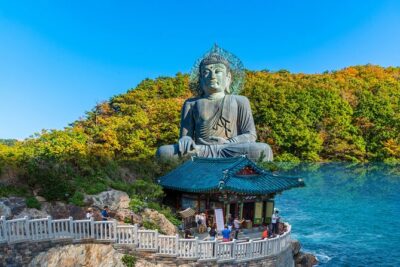
Mount Seorak and Naksansa Temple One Day Tour from Seoul
Read our review →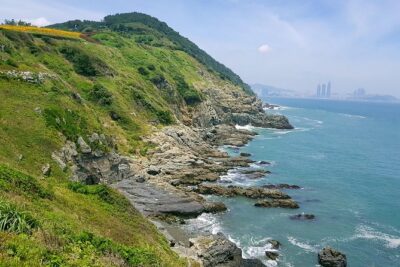
Full Day Busan Tour Including Haedong Yonggungsa Temple
Read our review →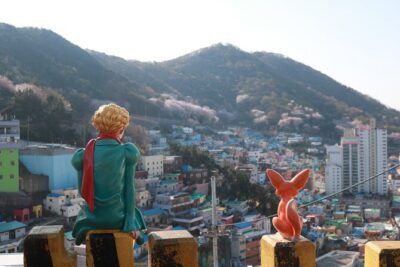
Private Busan tour with gamcheon culture village and the temple (Customizable)
Read our review →Browse the lists this tour appears in