
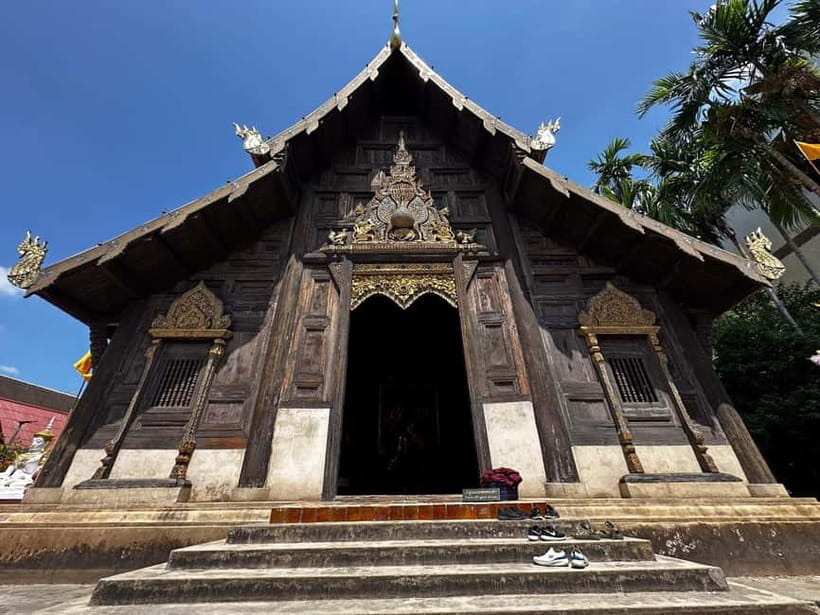
Reviewed · TEMPLE WALKING TOURS
Chiang Mai: Temple And City Walking Tour Part I
Chiang Mai’s temples make much more sense when someone explains what you’re seeing. This four-hour morning walk brings you to Wat Chedi Luang, Wat Phan Tao, and Wat Phra Singh, with Buddhist customs and local history woven into each stop. Some guides, including Son and Katoon, are former monks, so the conversation can go beyond dates and architecture.
I like the 8:20 am start, which gets you walking before the day becomes harsh, and the chance to ask real questions about meditation, Buddha images, prayer, and monastic life. I also like the price: at $15, it is a strong value if you want context rather than just a quick look inside a temple.
The main tradeoff is simple: this is a long, standing-heavy morning in a hot climate. Temple entry fees are extra, the guide may speak quietly in a larger group, and strict clothing rules mean you need to dress for temple visits, not just for the weather.
Key points at a glance
- Former monk guides may lead the walk: Guides such as Son and Katoon have personal experience of monastic life and can explain Buddhist practice from the inside.
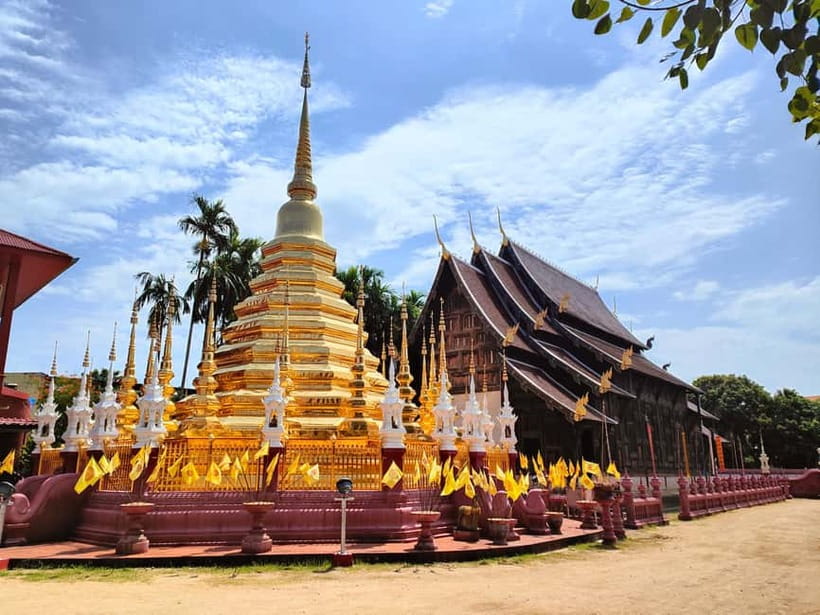
- Three major old-city temples: See the ruined stupa at Wat Chedi Luang, the Lanna-style Wat Phan Tao, and the revered Wat Phra Singh.
- Early start, cooler conditions: The 8:20 am departure helps you avoid the worst of the midday heat.
- Useful cultural detail: Learn why Buddha statues sit in different positions, how to pray, and what temple features mean.
- Low headline price: The $15 fee includes the guide and walking tour, but temple entry costs another 90 THB in total.
- Come prepared to stand: The pace is manageable, but the four-hour visit includes plenty of time on your feet.
Why this temple walk is more than a photo stop
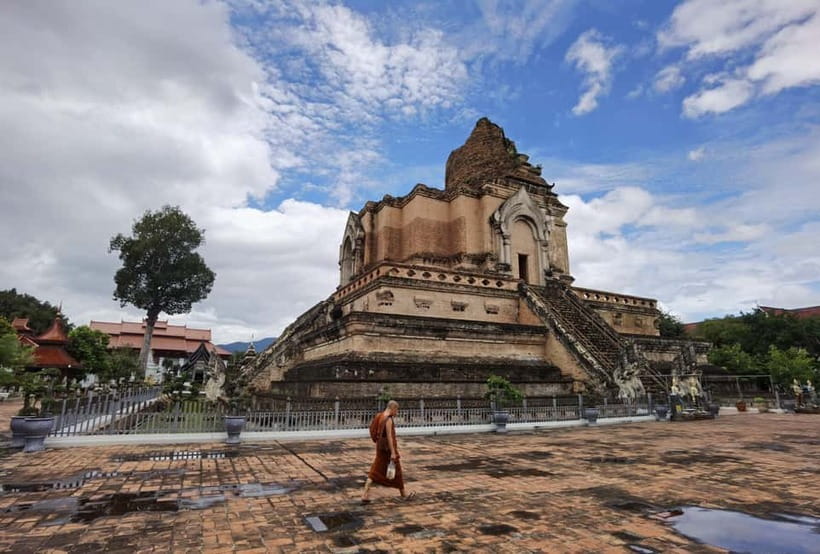
Chiang Mai has enough temples to make casual sightseeing blur together. A roof here, a Buddha image there, another gold doorway for your camera. This walk gives those details a purpose.
The strongest part is the guide’s explanation of Buddhism and Chiang Mai’s past. Son, Katoon, Eddie, Big, and other guides have received especially warm praise for answering questions patiently and making difficult ideas easier to follow. Katoon and Son are former monks, and that background adds a personal layer when the subject turns to daily discipline, meditation, prayer, or how someone enters monastic life.
You may also get a short meditation session or instruction in Buddhist prayer, depending on the guide and group. These activities are not listed as guaranteed parts of every departure, so treat them as possible additions rather than promises. The same applies to blessings, rituals, or an extra temple visit.
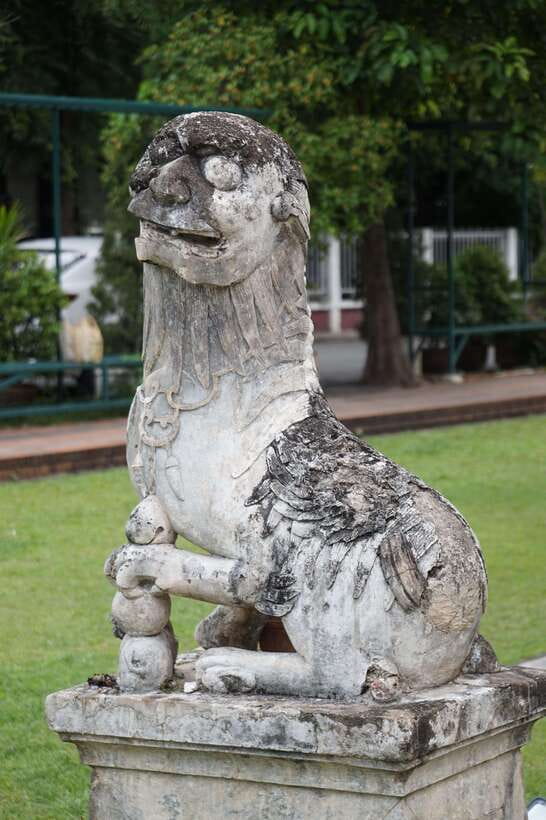
The group format can work well for curious first-time visitors. You can ask why elephants appear around a stupa, why certain Buddha images have particular hand positions, or why names and symbols appear on temple objects. Those are the small questions that turn a pretty building into a place with meaning.
More Temple Walking Tours in Chiang Mai
- Chiang Mai: 3 Hour Old City and Temples Guided Walking Tour
★ 4.6 · 1,568 reviews - Chiang Mai: Historic Temples and City Guided Walking Tour
★ 4.7 · 650 reviews - Ex-monk city & temples walking tour: (3.5 hours / 1.7 km.)
★ 4.8 · 35 reviews
Starting at 8:20 am in Chiang Mai’s old city
The tour begins at 8:20 am and lasts four hours. Hotel pickup and drop-off are not included, so you need to reach the meeting point independently. The supplied details do not specify the exact meeting location, so check your booking information carefully before setting out.
An early start is one of the smartest features of the tour. Chiang Mai can be very hot, and the walking route includes outdoor sections, courtyards, and time standing while the guide explains each site. You will still need water, comfortable shoes, and sun protection, but the morning timing should make the outing easier than a midday visit.
The route is described as an easy walk between the central temples. Even so, easy does not mean effortless. The tour takes four hours, and several people found the standing more demanding than the walking. If heat affects you quickly, take the pace seriously and wear light, respectful clothing.
The walk is not designed for everyone. It is listed as unsuitable for pregnant women, babies under one year, and people over 95. That does not tell you how you will feel on the day, but it does make clear that this is an active cultural walk rather than a vehicle-based sightseeing trip.
Wat Chedi Luang and the ruined great stupa
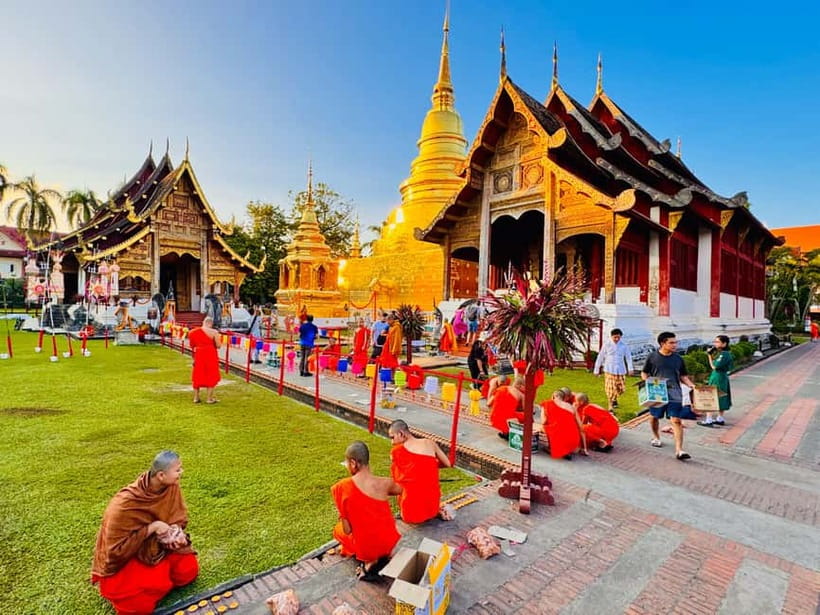
The first stop is Wat Chedi Luang, home to one of Chiang Mai’s most impressive temple ruins. Its great chedi was built in the 14th century and suffered severe damage in an earthquake in 1545. The remaining structure still gives you a sense of the scale and importance the temple once held.
This is the place where a guide’s background helps most. Without explanation, you see a large weathered stupa with worn brick and dramatic proportions. With context, you can consider how religious buildings change over time, how a stupa functions in Buddhist tradition, and why this site remains central to Chiang Mai’s identity.
The temple is one of the two paid stops. Entry costs 50 THB, separate from the $15 tour fee. That is not a large extra charge, but you should carry Thai baht because the advertised price does not cover it.
Expect time for photographs, but do not mistake this for a quick exterior viewing. The guide may stop at different parts of the complex to discuss Buddhist symbols, architecture, and local history. This is also where you may hear explanations about elephants and other decorative elements connected with temple design.
The drawback is exposure to the heat. Much of the interest is outdoors, and the open setting can feel hot even in the morning. Bring water and do not save all your questions for the last stop.
Wat Phan Tao and Lanna craftsmanship
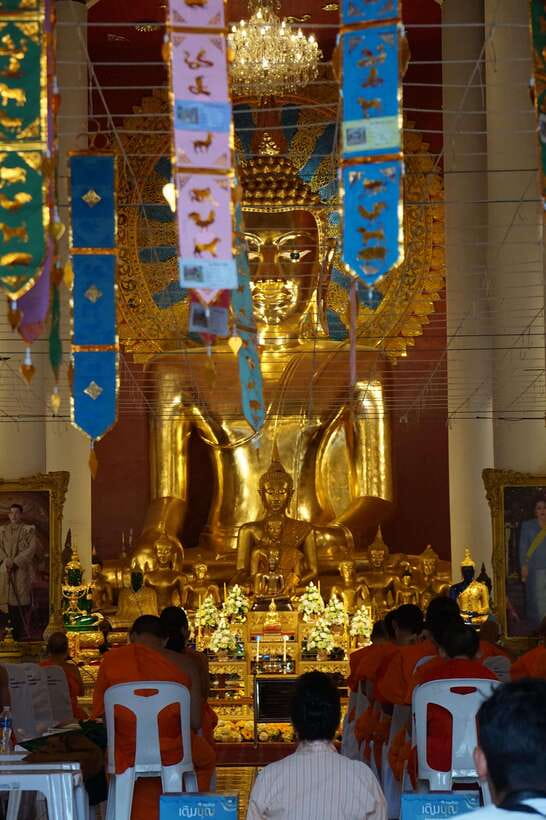
Wat Phan Tao is a short walk from Wat Chedi Luang. It is smaller and more intimate, making a useful contrast with the massive ruined chedi.
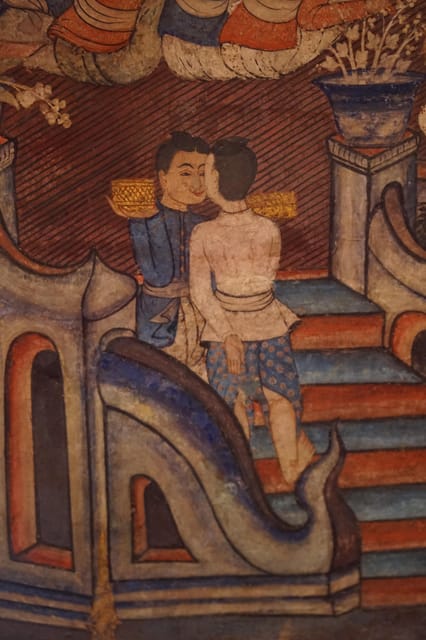
The temple is known for its Lanna-style ordination hall and murals depicting scenes from the Buddha’s life. Here, look closely rather than simply checking off another temple. The value lies in the details of the building, the painted scenes, and the way the guide connects visual elements with Buddhist stories.
A good explanation also helps you understand why a temple complex contains different buildings. An ordination hall is not just another attractive room, and its design reflects the religious life of the community. The supplied tour information does not promise access to every interior space at all times, so the exact viewing experience may depend on temple conditions.
This stop is particularly good for people who like architecture and art. Wat Phan Tao does not need the scale of Wat Chedi Luang to hold your attention. Its smaller size gives the guide room to focus on Lanna design, murals, and the role of Buddhist imagery.
Remember the dress code here and at the other temples. Shorts, short skirts, sleeveless shirts, and other revealing clothing are not allowed. You should also remove shoes when required before entering religious buildings, so footwear that is easy to take off will save time.
More Temple Walking Tours in Thailand
- Bangkok: City Highlights Temple and Market Walking Tour
★ 4.5 · 3,990 reviews - Bangkok: Grand Palace and Wat Phra Kaew Guided Walking Tour
★ 4.4 · 2,417 reviews - Bangkok: Wat Pho and Wat Arun Guided Walking Tour
★ 4.6 · 1,720 reviews - Bangkok: Grand Palace and Wat Arun Guided Walking Tour
★ 4.5 · 118 reviews
Wat Phra Singh, the Lion Buddha monastery
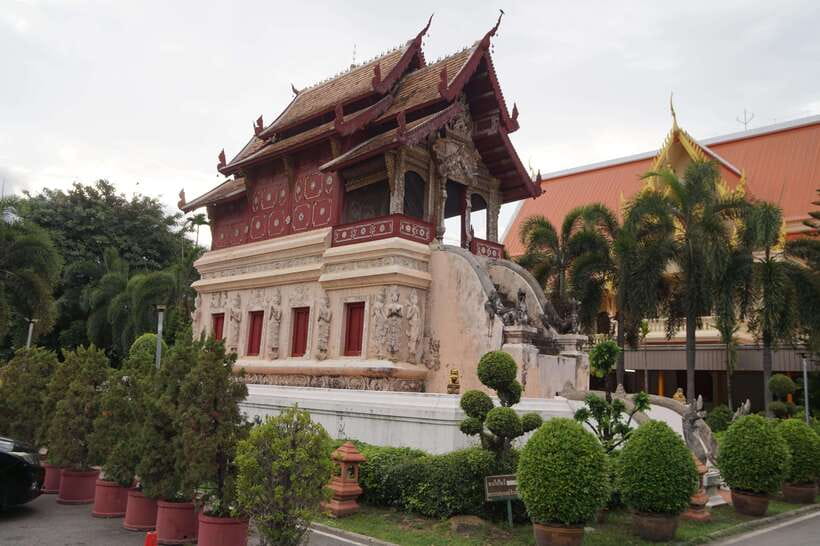
The final major stop is Wat Phra Singh, one of Chiang Mai’s most important temples. It is known as the Monastery of the Lion Buddha and houses the highly revered Phra Singh Buddha image.
This temple gives the tour a strong finish because it combines religious importance, architecture, and attractive grounds. The guide can help you look past the surface beauty and understand why the image is respected, how Buddha statues are interpreted, and how the temple fits into Chiang Mai’s Buddhist life.
Entry costs 40 THB, again paid separately. Together, the two listed entrance fees total 90 THB, so the full basic cost is the $15 booking price plus that local admission charge.
Wat Phra Singh can be a busy place, and the amount of quiet time you get may vary. Still, the guide-led visit gives you a better chance of noticing meaning in the details. Ask about the statue’s posture, the temple’s name, and the difference between seeing a Buddha image as art and approaching it as a sacred object.
This is also a good moment to ask any questions that came up earlier. The best guides are patient with basic questions and more unusual ones alike. If your guide speaks softly, stay close enough to hear, especially when the group spreads out around a courtyard.
Learning Buddhism from a former monk
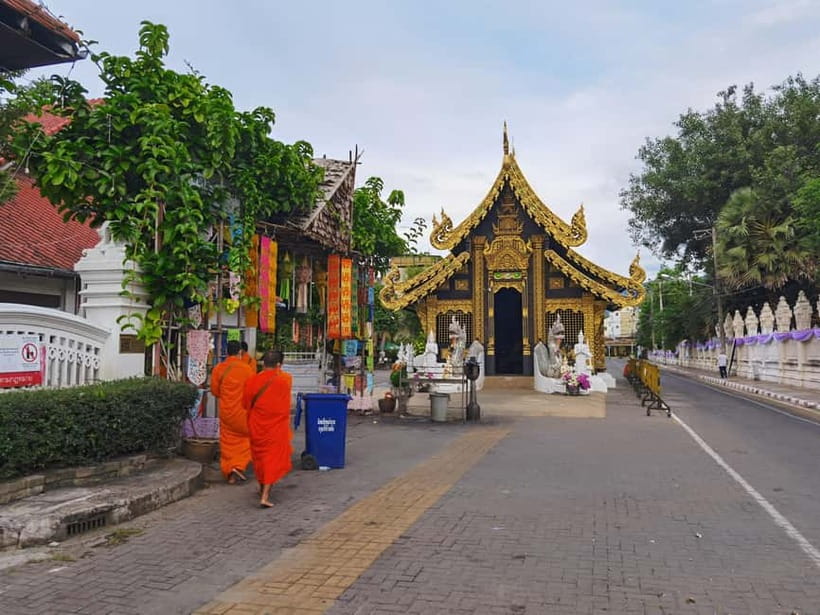
The tour’s most unusual feature is not the route. You can visit these temples independently. The added value comes from the guide.
Several guides associated with this experience have been former monks. Son has been praised for his personal knowledge and willingness to answer questions, while Katoon has led discussions about meditation, prayer, Buddhist traditions, and everyday monastic life. Eddie has also been described as strong on Chiang Mai’s history, Northern Thai culture, and religious practice. Big is known for an energetic style and for taking photographs during the walk.
Guide assignments can change, so you should not book on the assumption that one particular person will lead your departure. Still, the repeated focus on personal Buddhist experience tells you what kind of tour this is trying to offer: less sightseeing script, more open conversation.
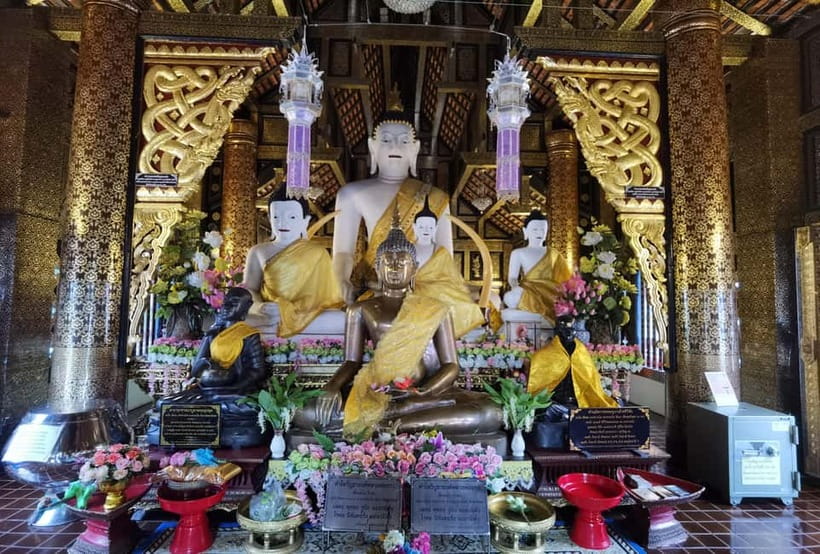
You may learn how to pray in a Buddhist setting, what different Buddha positions mean, or how a person becomes a monk. Some departures have included a few minutes of meditation, a blessing, or a small ritual, but these extras are not guaranteed. The safe expectation is the three-temple walk and live explanations in Thai or English.
The teaching style is generally patient and informal. That works well if you want to ask questions rather than listen silently. It may be less suitable if you prefer a fast route with only short facts at each stop.
Pace, group feel, and communication
The walk is generally described as relaxed, with enough time at each temple to look around and ask questions. Small groups can feel almost private, and one particularly small departure became a one-on-one experience. Larger groups may feel less personal, especially in noisy courtyards.
The guide may take photographs for you. This has been a welcome extra for people who want pictures of themselves with the temples behind them. It is not the main reason to book, but it is useful when you are traveling without anyone to hold the camera.
Communication deserves a realistic note. Most of the feedback about the guides’ English is positive, but some people found a guide’s voice too quiet. If you cannot hear, move closer and ask the guide to repeat the explanation. That small adjustment matters because the tour’s value depends on what is said, not just where you walk.
The four-hour length gives the experience substance, but it can also feel information-heavy. One person described a lot of material packed into the morning. I would plan a lighter activity afterward rather than another demanding excursion.
What the $15 price really includes
At $15 per person, this is inexpensive for a four-hour guided cultural experience. You are paying for a live guide and the walking tour, not transport, meals, or temple admission.
The extra 90 THB for Wat Chedi Luang and Wat Phra Singh is modest, but it should be part of your budget. Wat Phan Tao is listed as part of the route without a separate admission charge in the supplied details.
The value is best if you care about understanding Buddhism, Chiang Mai’s history, and temple design. If you only want quick photographs, you can visit the same old-city temples on your own and spend less. If you want someone to explain what you are looking at, $15 is a sensible spend.
Free cancellation up to 24 hours before the start gives you some flexibility, and you can reserve now and pay later. Those terms are helpful when your Chiang Mai plans may shift, but check the final booking conditions for your selected date.
Dress, behavior, and practical preparation
Temple etiquette is not optional here. Do not wear shorts, short skirts, or sleeveless shirts. Smoking, smoking indoors, drones, climbing, alcohol, drugs, and nudity are prohibited.
Choose breathable clothing that covers your shoulders and knees. You will be walking in warm conditions, so light fabric is useful, but a respectful outfit matters more than beach comfort. Wear shoes that come off easily because temple buildings may require you to remove them.
Bring Thai baht for the 90 THB in listed entrance fees. Water is also important, especially from April onward, when heat can make an otherwise easy walk tiring. The tour does not include hotel pickup, drop-off, food, or drinks.
The tour is offered in Thai and English. You should also be prepared for time standing, not just walking. If you have questions, ask them as you go, when the relevant building or image is in front of you.
Who should book this morning walk?
I would recommend it to first-time visitors who want a foundation in Chiang Mai’s temples and Buddhism. It also suits people who have already seen temples elsewhere in Thailand but still find the symbols, rituals, and building types confusing.
It is a particularly good match for curious adults who enjoy conversation and do not mind a few hours on their feet. The former monk guides can add personal detail that a standard history-only tour may not provide.
I would be more cautious if you dislike long explanations, struggle with heat, or want a fully private and tightly timed visit. The group may include different interests and walking speeds, and guide volume can vary. You also need to arrange your own way to the starting point.
Should you book Chiang Mai Temple and City Walking Tour Part I?
Book it if you want the temples to make sense, not just look beautiful. The route is compact, the early start is sensible, and the $15 price leaves room in your budget for other Chiang Mai experiences.
The best reason to go is the chance to ask a former monk about Buddhism, meditation, prayer, and monastic life. The main caution is the four-hour commitment, extra entrance fees, heat, and required modest dress.
For an easy morning focused on three major old-city temples and thoughtful cultural explanation, this is a very good-value choice. Bring water, cover your shoulders and knees, and stay close enough to hear the guide.
FAQ
What temples does the tour visit?
The tour visits Wat Chedi Luang, Wat Phan Tao, and Wat Phra Singh in Chiang Mai’s old city.
How long does the walking tour last?
The tour lasts four hours and starts at 8:20 am.
Is hotel pickup included?
No. Hotel pickup and drop-off are not included, so you must reach the meeting point yourself.
How much are the temple entrance fees?
Wat Chedi Luang costs 50 THB and Wat Phra Singh costs 40 THB. These fees are not included in the tour price, for a listed total of 90 THB.
What languages are available?
The tour is offered with a live guide in Thai or English.
What should I wear?
Shorts, short skirts, and sleeveless shirts are not allowed. Wear clothing that covers your shoulders and knees, and choose shoes that are easy to remove when entering temple buildings.
Newly written up around Chiang Mai
- Ex-monk city & temples walking tour: (3.5 hours / 1.7 km.)★ 4.8 · 35 reviews
- Doi Suthep and Wat Pha Lat Sunrise Tour (Small Group Only)★ 5.0 · 70 reviews
- Visit Dantewada(Angel Land), Blue Temple, and Sticky Waterfall★ 5.0 · 120 reviews
- One Day Tour Chiang Rai(White Temple , Blue Temple, Black House) Private Tour★ 5.0 · 63 reviews
- 1 day Private Tour to Unseen Temple in Lampang★ 5.0 · 55 reviews
- Doi Suthep Temple and Bau Thong Waterfalls Private Tour★ 5.0 · 114 reviews
- Chiang Mai: Chiang Rai Famous Temples & Hot Springs Day Trip★ 4.0 · 129 reviews
- Chiang Mai City and Temples Half-Day Tour★ 4.5 · 136 reviews
Temple Walking Tours, compared.
City Highlights Temple and Market Walking Tour
Read our review →
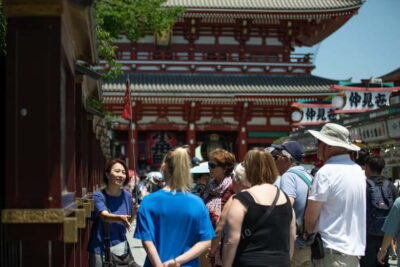
Asakusa Walking Tour with Sensoji Temple Visit
Read our review →
3 Hour Old City and Temples Guided Walking Tour
Read our review →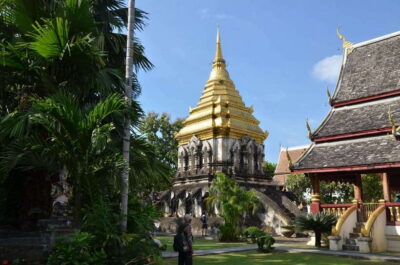
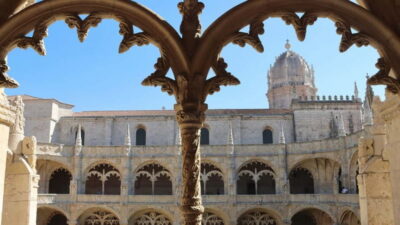
Belém Walking Tour with Jerónimos Monastery Ticket
Read our review →
Asakusa Senso-ji Temple and Old Tokyo Walking Tour
Read our review →Belem Walking Tour with Jeronimos Monastery Ticket
Read our review →Browse the lists this tour appears in