
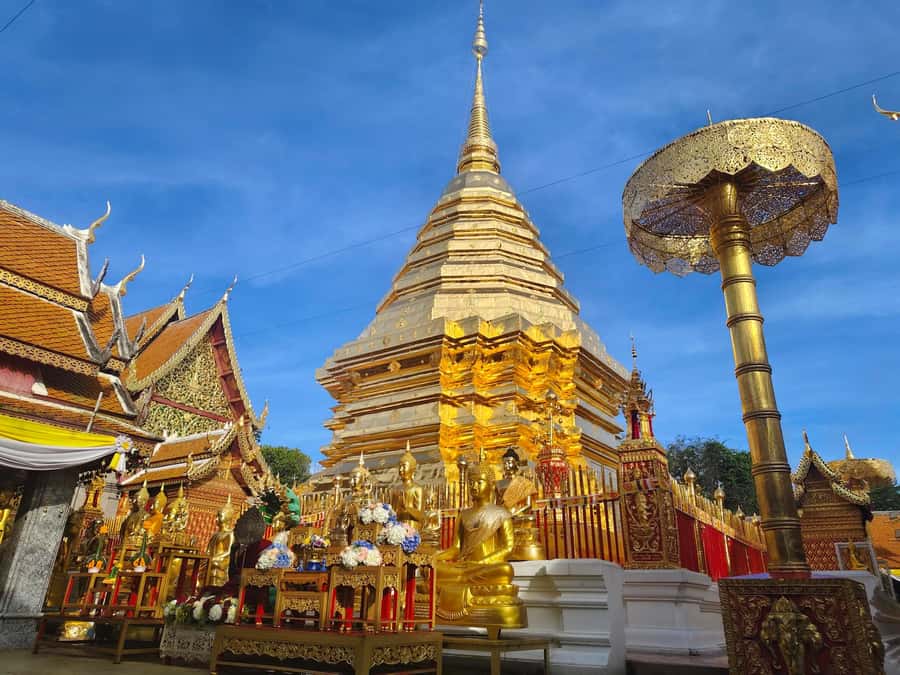
Reviewed · TEMPLE WALKING TOURS
Ex-monk city & temples walking tour: (3.5 hours / 1.7 km.)
Chiang Mai’s old city makes the most sense on foot, and this tour puts its best-known temples into a manageable 3.5-hour walk. You’ll hear how the city grew over more than 700 years, then enter important Buddhist sites rather than simply photographing their roofs.
I like the focus on Wat Chedi Luang and Wat Phra Singh, two temples that tell different parts of Chiang Mai’s story. I also like the chance to hear evening chanting, plus the practical help of a local guide who can suggest a dinner spot afterward.
The main drawback is the price for a short, walking-only outing. At $20 per person, the value depends on how much explanation you want, and temple entry fees of about 20 to 50 baht per temple are extra. The chanting may also be less complete on some days.
Key points before you book
- A short old-city route: You walk about 1.5 to 1.7 km, making this a gentle way to cover major sights without arranging transport.
- Two important temples: Wat Chedi Luang and Wat Phra Singh provide the main cultural focus.
- Evening Buddhist chanting: The schedule aims to include monks’ spiritual chanting, though the exact presence and timing can vary.
- Guide James may lead your visit: He is praised for clear explanations, friendly conversation, and answering questions about temples, Buddha images, and Buddhist education.
- Temple clothing matters: Bring clothing that covers your knees and shoulders. Shorts and short skirts are not allowed.
- Simple logistics: Meet the guide at the Three Kings Monument, where the guide will hold a Thai flag. The walk ends back at the meeting point.
Starting at the Three Kings Monument
The meeting point is the Three Kings Monument, a useful place to begin because it sits in the heart of Chiang Mai’s old city. Your guide will hold a Thai flag, making the meeting easier to spot.
The monument is also more than a convenient landmark. It gives the tour a clear starting point for discussing Chiang Mai’s origins and its long development from an important northern Thai kingdom to the city you see today.
The opening guided portion lasts about 40 minutes. I value this kind of introduction because temples make more sense when you know what you are looking at. A guide can point out the difference between a chedi, a viharn, a Buddha image, and a monastery, then explain how each fits into daily religious life.
This is a walking tour, not a sightseeing ride. You will cover only about 1.5 to 1.7 km in total, but temple visits take time. The pace should suit most people who are comfortable walking around town, though the tour is not suitable for wheelchair users or babies under one year.
More Temple Walking Tours in Chiang Mai
- Chiang Mai: 3 Hour Old City and Temples Guided Walking Tour
★ 4.6 · 1,568 reviews - Chiang Mai: Historic Temples and City Guided Walking Tour
★ 4.7 · 650 reviews - Chiang Mai: Temple And City Walking Tour Part I
★ 4.7 · 244 reviews
Wat Chedi Luang and its pyramid-shaped chedi
Wat Chedi Luang is the first major temple visit and receives about 45 minutes of guided attention. Its most striking feature is the large pyramid-shaped chedi, which rises from the middle of the old city.
The structure gives the tour a strong visual anchor. Instead of moving from one polished temple facade to another, you see a building with a sense of age and scale. Your guide can connect the monument to Chiang Mai’s past and explain why this temple remains so important within the city.
I would not rush this stop. The value is not just the chedi itself, but the explanation around it. If you are new to northern Thai architecture or Buddhist customs, this is where a guide can save you from taking home a string of attractive but disconnected photographs.
The guide also explains aspects of monastic life. That matters because the tour is not limited to old buildings. You learn how temples function as places of worship, study, and community life.
Temple entry costs are not included. The expected charge is about 20 to 50 baht per temple, so carry some Thai cash. The exact fee can vary by site, and you should treat the advertised amount as a guide rather than a fixed total.
Evening chanting and the rhythm of temple life
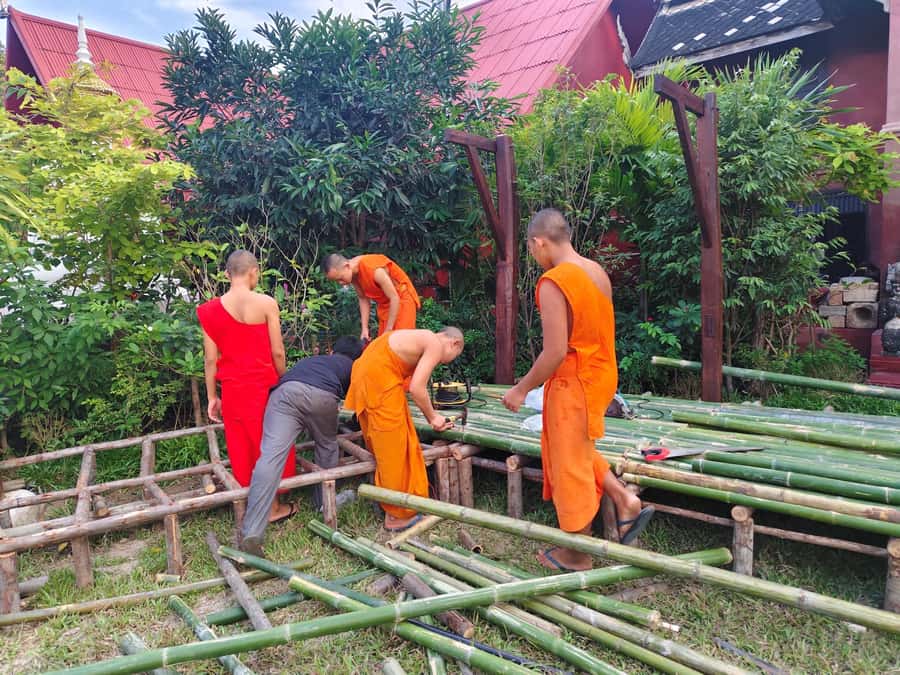
One of the tour’s most distinctive aims is to let you experience monks’ evening chanting. This is a daily spiritual practice, and hearing it gives the visit a quieter, more human side than simply walking through a historic compound.
Timing matters. The tour is built around an evening visit, but the number of monks present and the exact atmosphere can vary. On one occasion, an earthquake meant monks were not as present as expected. That is a useful reminder that this is a real religious setting, not a scheduled stage performance.
I like this part because it asks you to observe rather than rush. You may hear the measured sound of chanting, see people engaged in worship, or simply spend time in a temple at the point when the day is winding down. Keep your voice low and follow your guide’s instructions.
The experience also depends on respectful clothing. You need a long dress or other clothing that covers your knees and shoulders. Shorts and short skirts are not allowed, and the same standard applies to men and women. If your clothing is borderline, it is better to dress more conservatively from the start.
Alcohol and drugs are prohibited, and pets are not allowed. These rules are straightforward, but they matter in an active Buddhist place of worship.
Walking to Wat Phra Singh
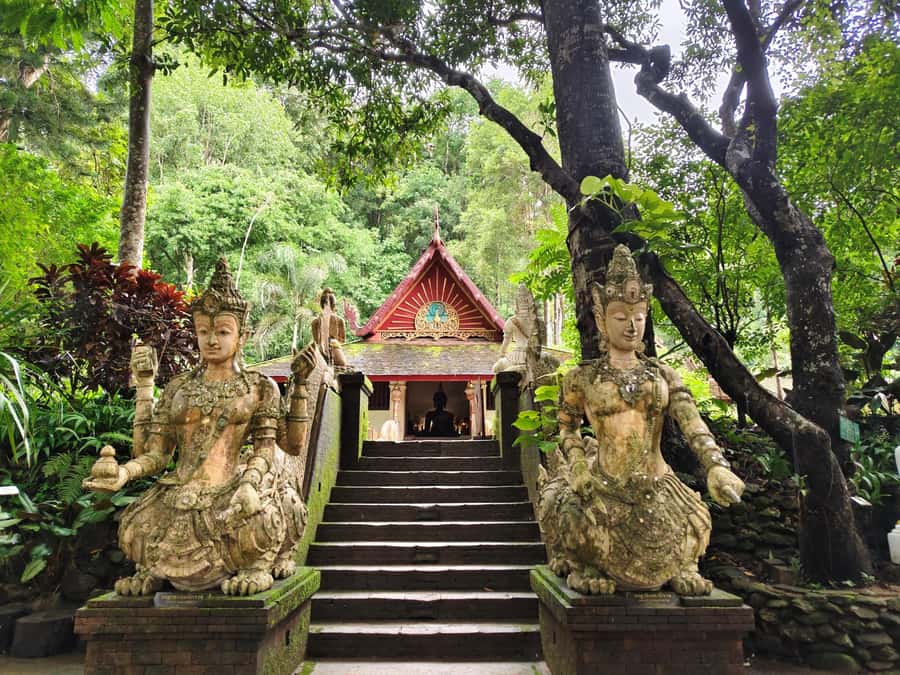
The next temple visit focuses on Wat Phra Singh, described as a major center of Buddhist education and a Royal First Class Monastery. This section of the walk lasts about 35 minutes, followed by another 30-minute guided portion connected with the old city and the Three Kings Monument.
Wat Phra Singh is especially important because it houses Phra Buddha Singh, also described as the golden lion Buddha image. The image is one of Chiang Mai’s most important religious objects and is brought out for local people and visitors to worship during the Thai New Year festival.
That detail gives the temple a living connection to the calendar. You are not only looking at a revered statue behind glass or within a shrine. You are learning how it becomes part of a public celebration and how religious objects can carry meaning for a whole city.
The temple’s role in Buddhist education adds another useful layer. This is a chance to learn that a monastery can be a place of study as well as prayer. One particularly strong part of the guide’s subject range is the ability to explain local Buddhist education, Buddha images, and temple customs in response to your questions.
Guide James is singled out for being friendly, clear, and willing to answer questions in detail. One small but meaningful sign of flexibility is that he completed the tour even when only one person had booked it. If James leads your walk, you may get more room for questions than you would in a large group, though guides can vary by date.
More Temple Walking Tours in Thailand
- Bangkok: City Highlights Temple and Market Walking Tour
★ 4.5 · 3,990 reviews - Bangkok: Grand Palace and Wat Phra Kaew Guided Walking Tour
★ 4.4 · 2,417 reviews - Bangkok: Wat Pho and Wat Arun Guided Walking Tour
★ 4.6 · 1,720 reviews - Bangkok: Grand Palace and Wat Arun Guided Walking Tour
★ 4.5 · 118 reviews
What the guide adds to the walk
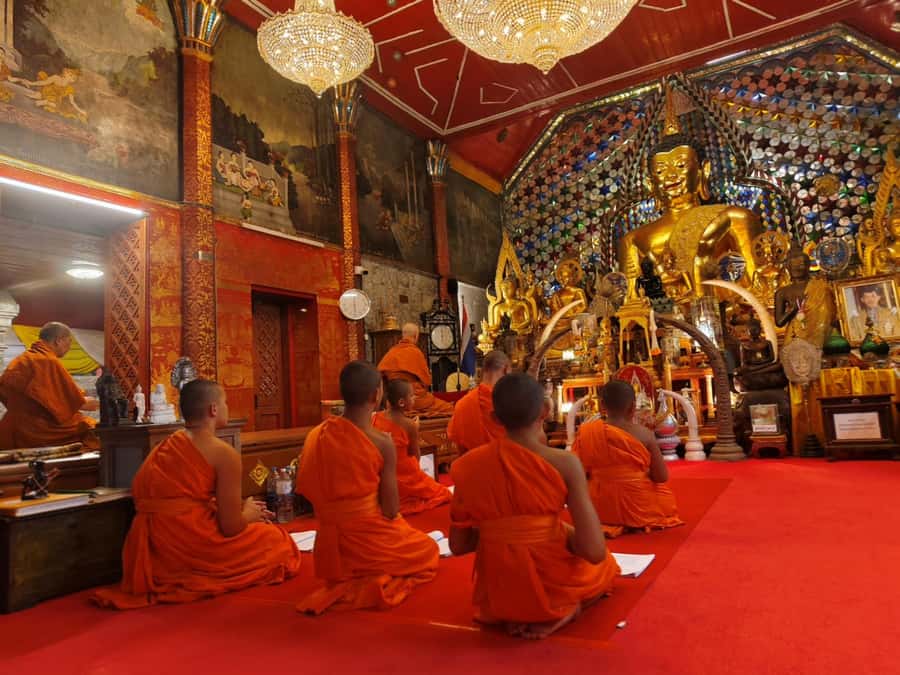
A temple walk without context can become a blur of gold, brick, carved wood, and incense. The guide’s main job is to give those details a place in the story.
The guide is an English-speaking professional with a Tourism Authority of Thailand license. You can ask about the city’s past, Buddha statues, Buddhist education, temple design, and local customs. The tour also allows some flexibility based on the group’s needs, which is helpful if you want to spend more time understanding one site rather than hurrying to the next.
James receives especially strong praise for being friendly and answering questions. The useful point for you is not simply his personality. It is that the tour appears suited to people who want conversation and explanation, not just a guide pointing out photo stops.
You should still keep expectations sensible. Three hours is enough for an introduction, but not enough to cover every important temple in Chiang Mai. This route selects a small number of central highlights. If you already know the old city well, you may find the material familiar. If this is your first visit, the compact format helps you get your bearings quickly.
Is $20 a fair price?
The cost is $20 per person. That is not a bargain if you judge the tour only by walking distance, since you cover less than two kilometers and temple admission is separate.
The price makes more sense if you want a licensed English-speaking guide and prefer to understand what you are seeing. You are paying for the historical explanation, temple interpretation, help with local customs, and the chance to ask questions along the way. A private or very small booking may feel more worthwhile than a large group, especially if you enjoy discussion.
Budget another 20 to 50 baht per temple for entry, and bring your own bottle of water. Water is not included. You may also want a little extra cash for personal expenses, although the tour itself does not include meals.
The ending advice can be practical. If you are unsure where to eat, the guide can suggest dinner options after the walk. That does not add a meal to the price, but it can help you use the evening well.
Who will enjoy this Chiang Mai temple walk?
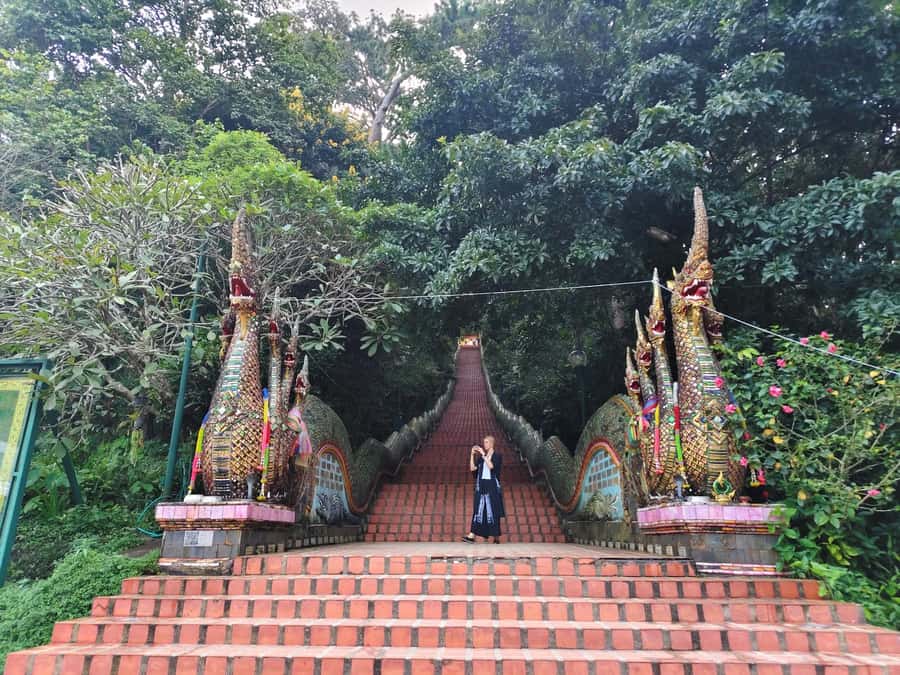
I would recommend it most strongly to first-time visitors who want a clear introduction to the old city. The route is short, the subjects are central to Chiang Mai, and the guide can explain customs that are easy to miss when you explore alone.
It also suits you if you have limited time. In three hours, you get the city’s broad story, two major temples, Buddhist practice, and a chance to ask local questions. It is a useful first-day activity because it helps you decide which parts of Chiang Mai deserve a longer return visit.
The tour should also work well for solo visitors. A guide has completed the walk for a single participant, so the activity does not appear to depend on a large group to operate. If you enjoy asking detailed questions, a small group can be a real advantage.
I would be less likely to choose it if you want a full temple circuit, a food tour, transport between distant sights, or a guaranteed long session of chanting. You should also look elsewhere if walking is difficult or if you need wheelchair access.
Practical advice for a smooth visit
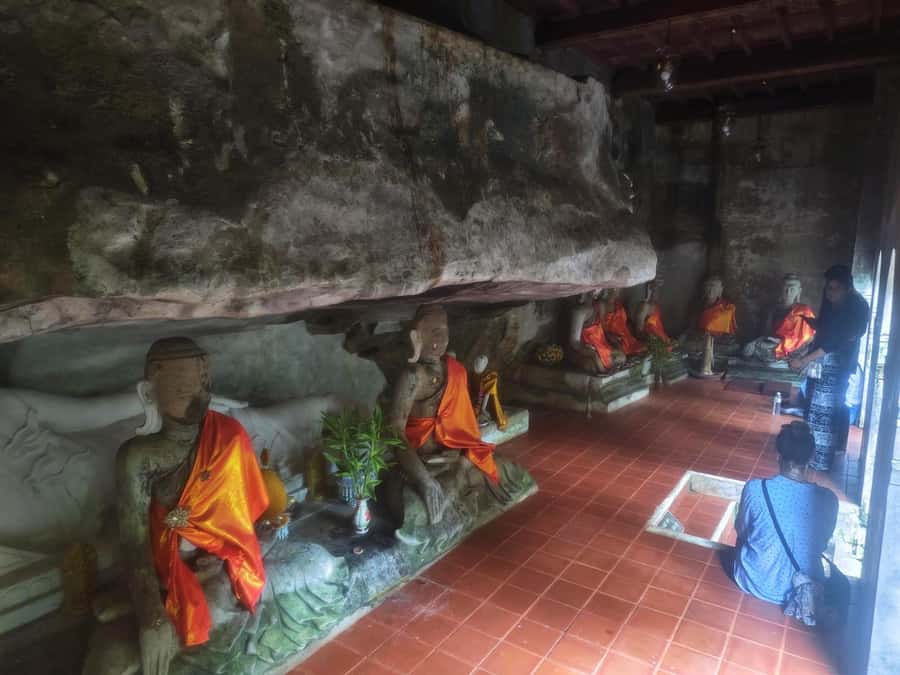
Wear light clothing that covers your shoulders and knees. This avoids the need to adjust your outfit at temple entrances and shows respect for the sites.
Bring water, comfortable shoes, and some Thai baht for entry fees. The total walking distance is modest, but the tour includes standing and moving between temple areas.
Arrive at the Three Kings Monument with enough time to find the guide holding a Thai flag. The activity ends back at the meeting point, so you can plan dinner or another old-city activity from there.
The experience is offered in English, and the guide has a TAT license. You can cancel up to 24 hours in advance for a full refund, and the reserve-now, pay-later option keeps your plans flexible.
Should you book it?
Book this tour if you want a friendly, focused introduction to Chiang Mai’s central temples and prefer explanations to independent wandering. The strongest reasons are Wat Chedi Luang, Wat Phra Singh, the story behind Phra Buddha Singh, and the possibility of hearing evening chanting.
At $20, it is best value for a first visit, a solo booking, or anyone who wants to ask questions about Buddhist customs and local history. Skip it if you are counting every baht, already know the old city well, or need guaranteed access to a full evening ceremony.
The 4.8 rating from 35 ratings reflects the tour’s strongest qualities: guide James is praised for warmth, clear answers, and thorough explanations. Just keep the limits in mind. Temple fees, water, and personal costs are extra, and the chanting experience can change with the day.
FAQ
How long does the walking tour last?
The activity lasts about three hours, with the full experience described as approximately three to three and a half hours.
How far do you walk?
You walk about 1.5 to 1.7 km in total.
Where does the tour start?
The meeting point is the Three Kings Monument in Chiang Mai’s old city.
How will I recognize the guide?
The guide will hold a Thai flag as a meeting symbol.
Where does the tour end?
The walk ends back at the meeting point.
Which temples are included?
The route includes Wat Chedi Luang and Wat Phra Singh, along with guided discussion around the Three Kings Monument and the old city.
Is temple entry included?
No. Temple admission costs approximately 20 to 50 baht per temple.
What should I wear?
Wear clothing that covers your knees and shoulders. Shorts and short skirts are not allowed.
Is water provided?
No. You should bring your own bottle of water.
Is the tour suitable for wheelchair users?
No. The activity is not suitable for wheelchair users. It is also not suitable for babies under one year.
Newly written up around Chiang Mai
- Visit Dantewada(Angel Land), Blue Temple, and Sticky Waterfall★ 5.0 · 120 reviews
- Doi Suthep and Wat Pha Lat Sunrise Tour (Small Group Only)★ 5.0 · 70 reviews
- 1 day Private Tour to Unseen Temple in Lampang★ 5.0 · 55 reviews
- Doi Suthep Temple and Bau Thong Waterfalls Private Tour★ 5.0 · 114 reviews
- One Day Tour Chiang Rai(White Temple , Blue Temple, Black House) Private Tour★ 5.0 · 63 reviews
- Chiang Mai: Chiang Rai Famous Temples & Hot Springs Day Trip★ 4.0 · 129 reviews
- Chiang Mai City and Temples Half-Day Tour★ 4.5 · 136 reviews
- Red, Blue, White Temples & Hot Spring Trip from Chiang Mai★ 4.4 · 143 reviews
Temple Walking Tours, compared.
City Highlights Temple and Market Walking Tour
Read our review →
Asakusa Walking Tour with Sensoji Temple Visit
Read our review →
3 Hour Old City and Temples Guided Walking Tour
Read our review →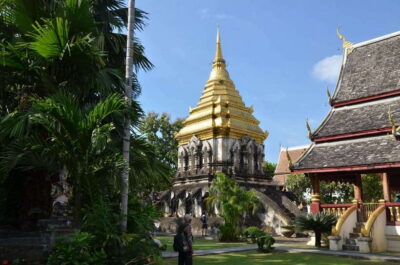
Belém Walking Tour with Jerónimos Monastery Ticket
Read our review →
Asakusa Senso-ji Temple and Old Tokyo Walking Tour
Read our review →Belem Walking Tour with Jeronimos Monastery Ticket
Read our review →Browse the lists this tour appears in