
Reviewed · SOUTH KOREA TEMPLE TOURS
Gyeongju: UNESCO Heritage Tour Including Bulguksa Temple
Gyeongju is Korea’s ancient capital, and this full-day tour gives you the clearest way to see its greatest Silla-era sights in one sweep. You’ll move from royal tombs and an ancient observatory to Bulguksa Temple, Seokguram Grotto, and the evening reflections at Wolji Pond.
I like the air-conditioned van, which saves you from piecing together widely separated sites by bus. I also like the guides’ personal touch: Sue, Steve, Jina, and others are praised for making old history easy to follow, while driver Joe has helped with photos and directions. The main consideration is the pace. Eight hours covers a lot, and a late start or holiday traffic can shorten time at the final stops.
Key points to know before booking
- Bulguksa and Seokguram together: Visit Korea’s best-known Buddhist sites in one mountain outing, with about an hour at each.
- A real Silla history day: Daereungwon, Cheomseongdae, and Wolji Pond show royal life, science, burial customs, and palace design.
- Pickup from Busan or Gyeongju: The tour handles the long transport between sites and returns you to either city.
- Lunch and admission included: You pay one price of $189 per person for transport, guide service, food, water, and entry fees.
- Small groups or private outings: The format suits couples, families, and visitors with only one day for Gyeongju.
- Plan for a full schedule: Crowds, traffic, heat, and a late start can force changes to the order or length of visits.
Why this is an efficient way to see Gyeongju
Gyeongju is often called a museum without walls, but that nickname can hide a practical problem: its major sights are spread across the city and the nearby slopes of Tohamsan Mountain. Bulguksa is not beside Daereungwon, and Seokguram is farther uphill still. Public transport is possible, but it takes planning and patience.
This tour removes that burden. You are collected at your hotel or chosen address in Busan or Gyeongju, then driven between the main sites in an air-conditioned van. That matters most on a hot day, during a busy Korean holiday, or when you have only one day available.
The cost is $189 per person, which is not a bargain-basement day tour. Still, it includes a private vehicle or small-group transport, an English-speaking guide, lunch, water, entrance fees, and pickup and drop-off. If you were arranging taxis between six separate stops, the price could make more sense quickly. The tour is also built around interpretation, not just transport. Sue and Steve receive especially strong praise for clear explanations, humor, and the ability to adjust when traffic or crowds get in the way.
You should not expect a slow, solitary day at each monument. This is a greatest-hits visit. It gives you strong coverage and useful historical context, but you will have limited time to wander freely.
More History Tours in South Korea:
- Chiang Mai: Historic Temples and City Guided Walking Tour
★ 4.7 · 650 reviews - Mt. Fuji Heritage Tour: Traditional Villages, Lakes & Shrine
★ 4.5 · 509 reviews - Malta: Prehistoric Temples, Limestone Heritage & Blue Grotto
★ 4.2 · 412 reviews
Gyochon Village and the old Choi family home
Gyochon Village is a gentle opening to the day. Its traditional hanok buildings and quiet lanes offer a look at the homes and customs of Gyeongju’s established families. The House of the Gyeongju Choi Clan is the key stop, with its old architecture and connection to local heritage.
This visit helps put the grand monuments into human scale. Instead of beginning with a royal tomb or temple, you first see the kind of setting where families lived, worked, and maintained their traditions.
If available, you may try Gyeongju Gyodong Beopju, a traditional liquor associated with the area. Availability is not guaranteed, so treat this as a possible local tasting rather than a promised part of the tour.
The scheduled visit lasts about an hour. That should give you enough time to walk the lanes and listen to the guide, though the exact pace can change if traffic delays the morning. The village is also one of the stops most likely to be adjusted when the group starts late or wants extra time elsewhere.
Daereungwon’s grassy royal tombs
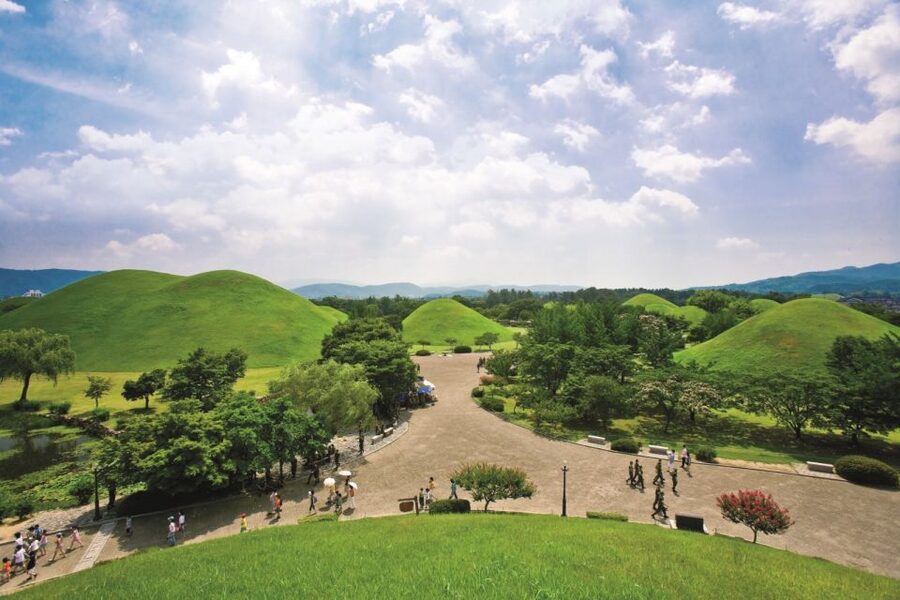
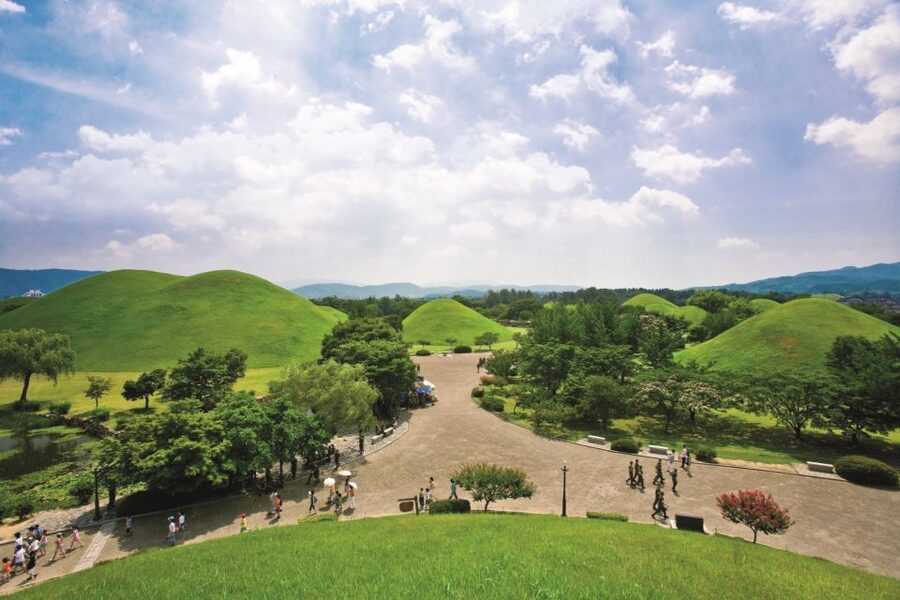
At Daereungwon Tomb Complex, the Silla past rises in broad grassy mounds. These are not low-key museum displays. The tombs sit directly in the city, large enough to shape the view and quiet enough to make you pause.
The visit includes Cheonmachong, the tomb linked with the famous ancient horse painting, and Hwangnamdaechong, one of the largest burial mounds from the period. The guide can explain how the tombs reflect royal rank, burial customs, and the wealth of Silla’s ruling class.
I find this stop especially useful because it makes archaeology visible. You are not simply looking at objects behind glass. You can see how the burial sites altered the ground and how much effort went into honoring the dead.
Allow about an hour. The paths are generally easy to follow, but you should expect some walking in the open air. In summer, the sun can be strong. In autumn and winter, the grassy mounds give the area a calmer, more spacious feel.
Cheomseongdae, Silla science in stone
Cheomseongdae is a short stop, scheduled for about 30 minutes, but it carries more meaning than its size suggests. This stone tower was built during the reign of Queen Seondeok and is recognized as the oldest existing astronomical observatory in Asia.
Your guide will connect the structure to Silla’s interest in astronomy and the practical role of observing the sky. The tower also reminds you that this was not only a kingdom of temples, tombs, and royal ceremony. It had systems for measuring time and watching the heavens.
Because the stop is brief, you should not expect a long museum-style lesson. Instead, use the time to study the unusual shape of the tower and ask questions. The guide’s explanation is important here. Without context, Cheomseongdae can look like a small stone monument. With context, it becomes evidence of a sophisticated court culture.
Other temple visits near South Korea we have written up
- Seoul: Palace, Temple and Market Guided Foodie Tour at Night
★ 4.9 · 750 reviews - Seoul: Mt Seorak + Naksansa Temple or Nami Island Group Tour
★ 4.7 · 422 reviews - Best Things to Do – Half Day Seoul Trip (Seoul Palace & Temple)
★ 5.0 · 190 reviews - Mount Seorak and Naksansa Temple One Day Tour from Seoul
★ 4.5 · 167 reviews
Bulguksa Temple, the day’s central monument
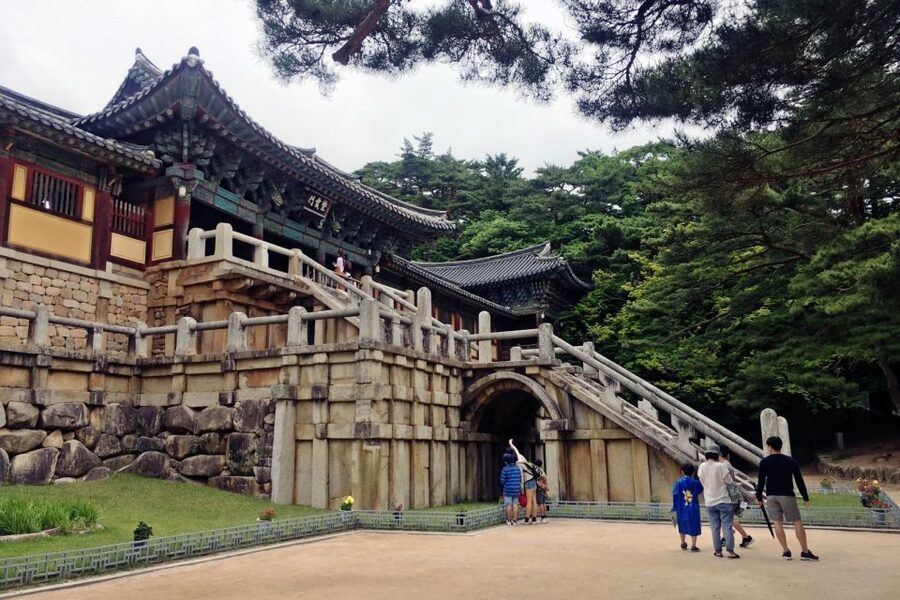
Bulguksa Temple is the centerpiece of the tour for many people. It is a UNESCO World Heritage Site, famous for its stone bridges, carefully arranged courtyards, and the Dabotap and Seokgatap pagodas.
The temple’s design is part of its message. Stone steps, gates, courtyards, and pagodas create a movement from the ordinary world toward a Buddhist sacred space. You do not need to know every architectural term to appreciate the order and balance.
The guided visit lasts about an hour. That is enough to see the principal areas and hear the story of the temple, but not enough for an unhurried study of every corner. If Buddhist art is your main interest, you may wish for more time. If you are trying to see Gyeongju in one day, the visit is a sensible compromise.
Bulguksa can also be busy, especially during Korean holidays. One guide, Steve, was praised for managing crowds and adjusting the route when conditions changed. That kind of local judgment matters more here than a fixed script.
Seokguram Grotto on Tohamsan Mountain
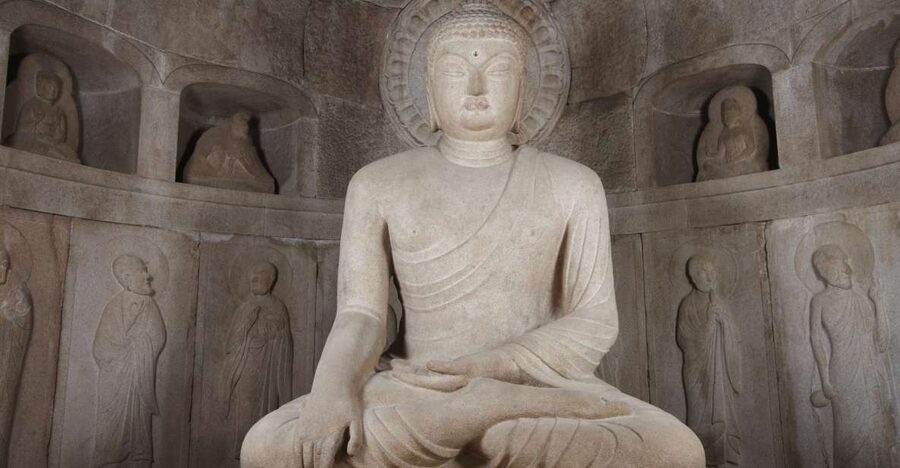
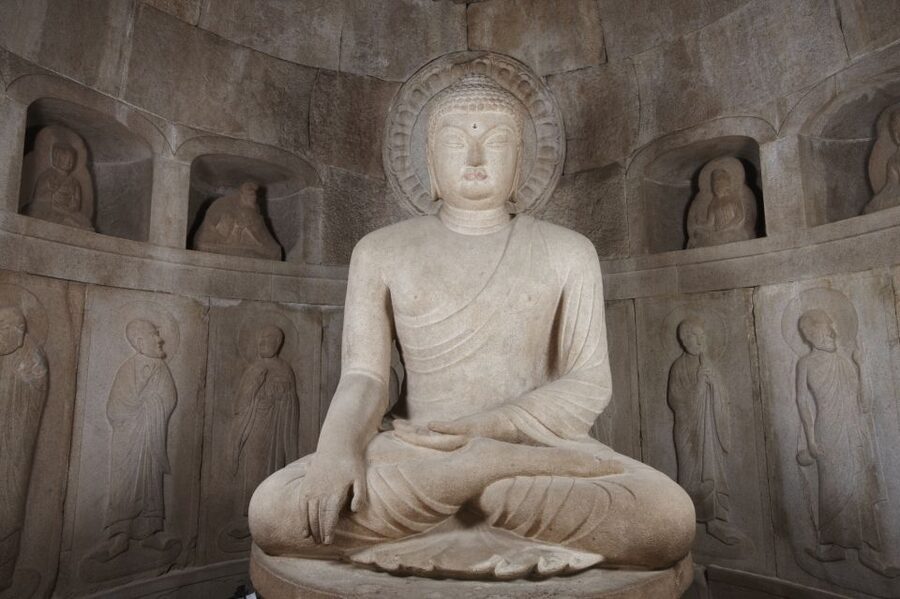
From Bulguksa, the route climbs Tohamsan Mountain to Seokguram Grotto. This is one of the most striking cultural sites in Korea: a granite Buddha surrounded by carved guardian figures in a carefully constructed stone setting.
The grotto is not simply another temple room. Its value comes from the combination of sculpture, engineering, and religious purpose. The Buddha’s calm expression contrasts with the more forceful carved guardians nearby, giving the space a strong sense of order.
The scheduled visit is about an hour. You will need to walk from the vehicle to the grotto, so comfortable shoes are sensible. The mountain setting also means weather can affect how the visit feels, particularly in heat or rain.
This stop can be especially memorable because it feels different from Bulguksa. Bulguksa gives you open courtyards and pagodas. Seokguram gives you a concentrated, enclosed work of Buddhist art. Some tours also allow a little time near the entrance, where local snacks may be available. Sue and the driver Joe were praised for helping people try regional treats and for keeping the group comfortable.
Lunch as part of the cultural experience
Lunch is included, and this is more useful than it may sound. A full day of temple stairs, outdoor paths, and driving is easier when you do not need to stop and search for a restaurant.
The exact meal can vary, but several visitors singled out the food, especially bibimbap in Gyeongju. One guide helped the group understand how to mix and eat it properly, turning a routine meal into a small lesson in local food customs.
The guides may join the group for lunch, depending on the arrangement. That can make the break feel more social and gives you another chance to ask questions. If you prefer a quiet meal, keep in mind that this is a guided small-group experience rather than a completely private day.
Wolji Pond at the Donggung Palace Site
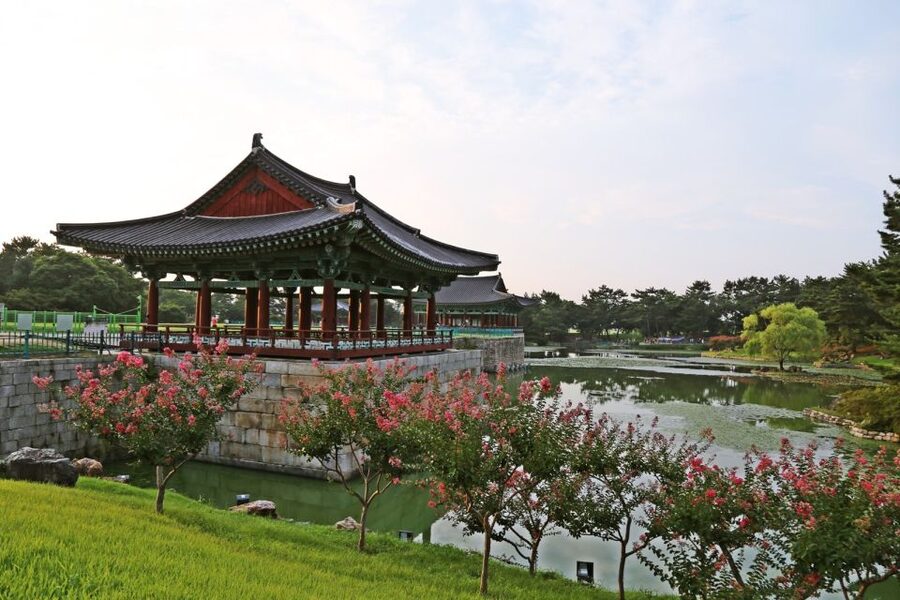
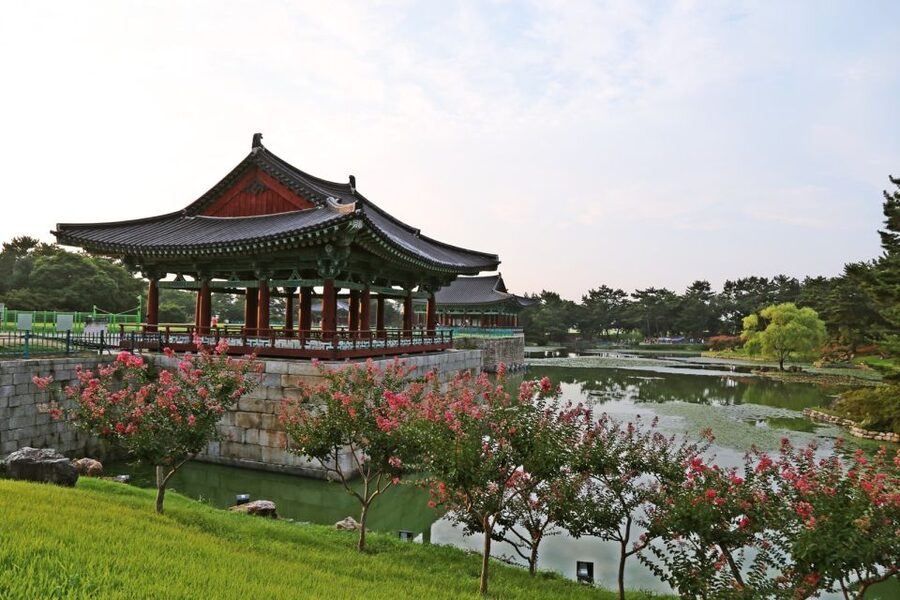
The final major sightseeing stop is Donggung Palace and Wolji Pond, formerly known as Anapji. The pond was part of a palace complex built during the reign of King Munmu, and its pavilions and trees are reflected in the water.
This is one of the prettiest places on the route, especially toward dusk. After a day of tombs, stone towers, and temple architecture, the water adds a softer ending. The reflections also show how Silla designers used gardens as part of royal ceremony and pleasure.
The timing here matters. If traffic, crowds, or a late start eats into the schedule, the final stop may be shortened or adjusted. One booking began late and did not reach the last listed item, though the group accepted the change after visiting another village. If Wolji Pond is your priority, confirm the day’s timing with the guide early on.
Transport, group size, and the day’s pace
The van is one of the strongest practical reasons to choose this tour. Busan to Gyeongju is manageable, but the individual sights around Gyeongju are not arranged in a simple walking route. A driver who knows the roads can save time and reduce the mental work of transfers.
The tour is available as a private or small-group experience. A small group of five was described as comfortable and friendly, while couples also received attentive help with photos and directions. The exact group size is not specified, so ask when booking if privacy is important to you.
Guides vary, but Sue and Steve appear often in the feedback, along with Jina, Chris, Jade, and others. The strongest pattern is not a single personality. It is the combination of historical explanation, humor, flexibility, and personal care. Joe, also called Mr. Jion in one account, was praised for driving, taking photos, and helping people stay oriented.
The day lasts eight hours, but the schedule is full. Expect a mix of walking, short guided visits, and driving. Heat can make the same itinerary feel tiring, so take the provided water and wear shoes suited to uneven paths and temple grounds.
Who should book this Gyeongju tour?
This is a strong choice if you are based in Busan and want to see Gyeongju without arranging several trains, buses, or taxis. It also suits you if you have only one day in Gyeongju and want the major Silla sites explained in English.
Families may appreciate the private or small-group format, the van, and the included lunch. Couples benefit from the photo help and door-to-door transport. First-time visitors will get a clear introduction to Gyeongju’s royal, Buddhist, scientific, and domestic history.
You may prefer a different plan if you want long stretches of free time, extensive museum visits, or a slow photographic walk. The day’s strength is coverage, not lingering. The price may also feel high if you are already staying in Gyeongju and can reach the sites cheaply on your own.
Cancellation is free up to 24 hours before departure, and you can reserve now and pay later. Pickup and drop-off are available in Busan or Gyeongju, and an English-speaking guide is provided.
Should you book it?
Book this tour if you value convenience and context more than the lowest possible price. For $189, you get transport across a spread-out area, lunch, admission, water, and a full day with an English-speaking guide.
I would especially choose it for a first visit from Busan. Bulguksa, Seokguram, Daereungwon, Cheomseongdae, Gyochon Village, and Wolji Pond make a well-rounded introduction to Gyeongju. Just begin on time, expect a brisk schedule, and tell your guide which stop matters most to you.
FAQ
How long is the Gyeongju heritage tour?
The tour lasts eight hours.
Where can the tour pick me up?
Pickup is available from a hotel or chosen location in Busan or Gyeongju.
Where can I be dropped off?
Drop-off is available in Busan or Gyeongju.
Is lunch included?
Yes. Lunch is included in the tour price.
Are entrance fees included?
Yes. All entrance fees are included.
Is bottled water provided?
Yes. A bottle of water is included.
Is the tour offered in English?
Yes. The live tour guide language is English.
Is this a private tour?
Private and small-group options are available.
Which main sites are included?
The route includes Bulguksa Temple, Seokguram Grotto, Daereungwon Tomb Complex, Donggung Palace and Wolji Pond, Cheomseongdae, and Gyeongju Gyochon Traditional Village.
Can I cancel for a full refund?
Yes. You can cancel up to 24 hours in advance for a full refund.
Newly written up around South Korea
- Seoul: War Memorial, Jogyesa Temple & Tapgol Park Tour★ 4.8 · 56 reviews
- Seoul Sunrise & Sunset Hike + Temple & K-Food Adventure★ 4.8 · 6 reviews
- Seoul: Vegan Temple Food Class, Jogyesa & Changdeokgung Tour★ 4.6 · 34 reviews
- Seoul: Temple & Starfield COEX Mall Gourmet Tour in Gangnam★ 4.7 · 22 reviews
- Seoul: UNESCO Sites tour: Palace, Shrine & Bukchon Village★ 4.8 · 26 reviews
- Seoul: Night Bongeunsa Temple Guided Tour★ 5.0 · 11 reviews
- Seoul: 4-Hour Guided Tour to Palace, Bukchon, Jogyesa Temple★ 5.0 · 3 reviews
- Gyeongbokgung Palace, Jogyesa Temple and Bukchon village★ 5.0 · 12 reviews
South Korea Temple Tours, compared.
Palace, Temple and Market Guided Foodie Tour at Night
Read our review →
Mt Seorak + Naksansa Temple or Nami Island Group Tour
Read our review →
Best Things to Do – Half Day Seoul Trip (Seoul Palace & Temple)
Read our review →
Mount Seorak and Naksansa Temple One Day Tour from Seoul
Read our review →
Full Day Busan Tour Including Haedong Yonggungsa Temple
Read our review →
Private Busan tour with gamcheon culture village and the temple (Customizable)
Read our review →
Busan Tour: Gamcheon Village & Yonggungsa Temple + Lunch
Read our review →Browse the lists this tour appears in