
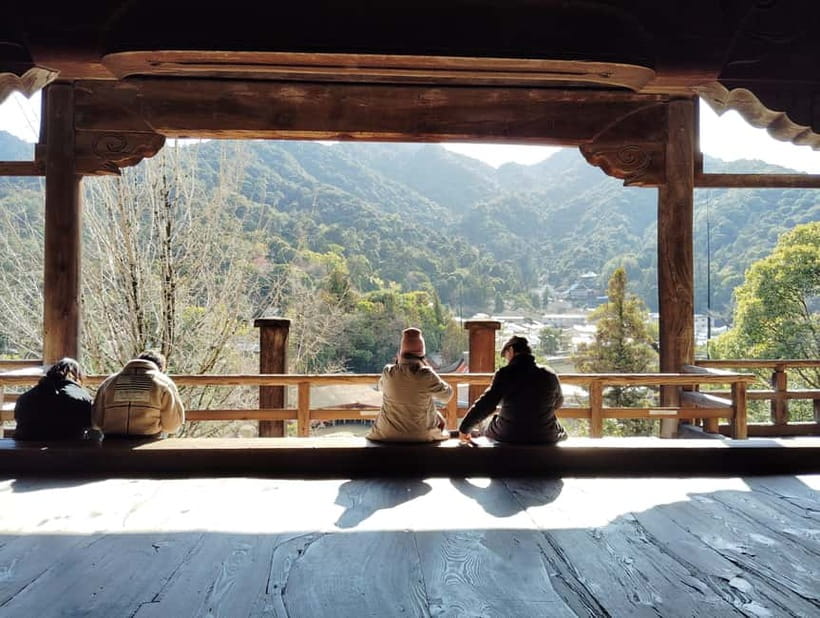
Reviewed · JAPAN TEMPLE TOURS
Hiroshima: Itsukushima Shrine and Miyajima Summit Tour
Miyajima makes you work for its best view. You begin at the famous shrine over the sea, then ride the ropeway and walk toward the island’s summit, where sea worship and mountain practice come together. It is a stronger experience than a quick shrine stop because you see how the island’s religious meaning reaches from the water to the high ground.
I like the way the tour connects Itsukushima Shrine with Shugendo rather than treating them as separate sights. I also like the private format, which gives your guide room to explain Japanese customs, answer questions, and adjust the pace when needed. The main caution is the uphill walking: this is not a gentle sightseeing loop, and one visitor found the ending rushed.
Key points before you book
- The route links sea and mountain worship: You visit Itsukushima Shrine, then continue to Miyajima’s higher ground and learn how both settings shaped local religious practice.
- The ropeway saves energy but does not remove the climb: After the 30-minute cable car segment, you still walk for about 20 minutes and should expect moderate exertion.
- The tour lasts 330 minutes: That gives you a full half-day with a guide, shrine admission, and ropeway fare included.
- The private English format is useful here: Guides such as Gordon Michasiw and Hine have offered detailed explanations of history, culture, and daily Japanese customs.
- The final stops add variety: Senjokaku Pavilion, the five-story pagoda, and free time keep the day from becoming only a shrine visit.
- Comfort matters: Wear walking shoes, carry water, and bring sunscreen and a hat. The route is not suitable for wheelchair users or people with mobility impairments.
Why Miyajima works best as a sea-to-summit visit
Many people come to Miyajima for one famous image: Itsukushima Shrine’s torii gate set against the Seto Inland Sea. That view is memorable, but it only tells part of the island’s story.
Miyajima has long been treated as sacred. The shrine was built over the water so the island itself would not be disturbed by ordinary construction. That design gives the shrine its distinctive appearance, but it also reflects a larger idea: the sea and mountains were both worthy of respect.
This tour follows that idea in physical form. You begin near the water, enter the shrine, then move upward by ropeway and on foot. As you climb, your guide explains the role of mountain worship and Shugendo, a Japanese practice shaped by Buddhism, Shinto, and ascetic training in the mountains.
I find this approach useful because it gives context to what you are seeing. Instead of taking a few photographs at the torii gate and moving on, you can understand why the island’s paths, summit, and religious buildings mattered to people seeking spiritual discipline.
The setting also changes as the day goes on. At the shrine, your attention is on architecture, water, and ceremonial space. Higher up, the focus shifts toward forest, mountain paths, and views across the surrounding area. You get two very different sides of Miyajima in one outing.
Other temple visits near Japan we have written up
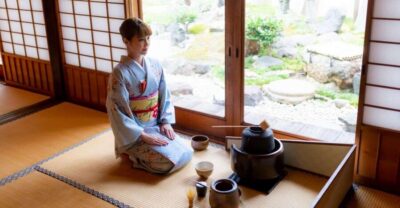
- Kyoto: Tea Ceremony Ju-An at Jotokuji Temple
★ 4.9 · 3,207 reviews - Osaka/Kyoto:Kinkakuji,Arashiyama,FushimiInariShrine,NaraPark
★ 4.1 · 1,596 reviews - Tokyo: Asakusa Walking Tour with Sensoji Temple Visit
★ 4.8 · 1,583 reviews
Starting at Miyajima-guchi and reaching the shrine
The meeting point is in front of the Miyajima-guchi Tourist Information Center. Look for a guide holding a yellow DeepExperience sign. You should plan to arrive ready for the day, since hotel pickup and drop-off are not included.
The information provided does not include the exact ferry arrangements or ferry fare, so check those details when planning your route to the island. The tour finishes at the Miyajima ferry terminal, which makes the end point practical if you plan to continue elsewhere after the visit.
Once the group reaches Miyajima, the first major stop is Itsukushima Shrine. Admission is included, and the guided visit lasts about 30 minutes. That is enough time for an introduction to the shrine’s design, its position over the sea, and the religious ideas behind the site.
The shrine’s most famous feature is its large torii gate, seen in relation to the Seto Inland Sea. Tides and weather affect the view, so the scene can look quite different from one visit to the next. Your guide can help put the architecture into context rather than leaving you to see it as only a scenic photo stop.
Thirty minutes is also a fairly tight window for a site this famous. If you want to linger over every detail, take extensive photographs, or explore independently, you may wish for more time. The advantage is that the tour keeps moving and reserves much of the day for the mountain portion.
Taking the ropeway toward Miyajima’s high ground
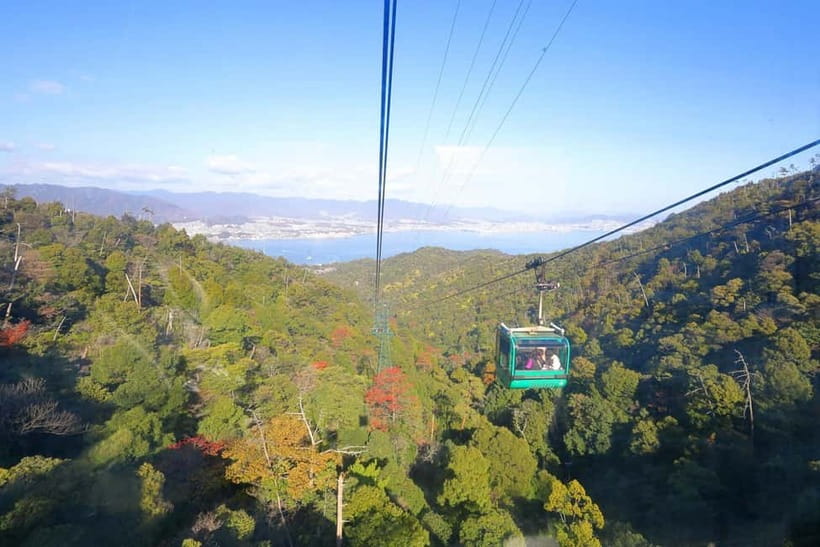
After the shrine, the itinerary allows about 30 minutes for the cable car, referred to locally as the ropeway. This is an important part of the route because it reduces the amount of uphill walking while giving you a wider view of the island and surrounding sea.
Do not mistake the ropeway for the end of the physical effort. A later 20-minute walk is included, and the summit visit lasts around 75 minutes. The full route involves a moderate amount of walking, so comfortable shoes are more than a polite suggestion.
The ropeway also gives your guide a natural pause between the two main themes of the outing. The shrine introduces sea-based worship and sacred architecture. The ascent leads into mountain worship, where the physical act of walking upward becomes part of the subject.
The experience is best suited to someone who wants more than a transport-efficient sightseeing day. You will not spend all 330 minutes walking, but you should be comfortable with uneven or uphill movement and a day that combines several stops rather than one single attraction.
At the summit, Shugendo becomes easier to understand
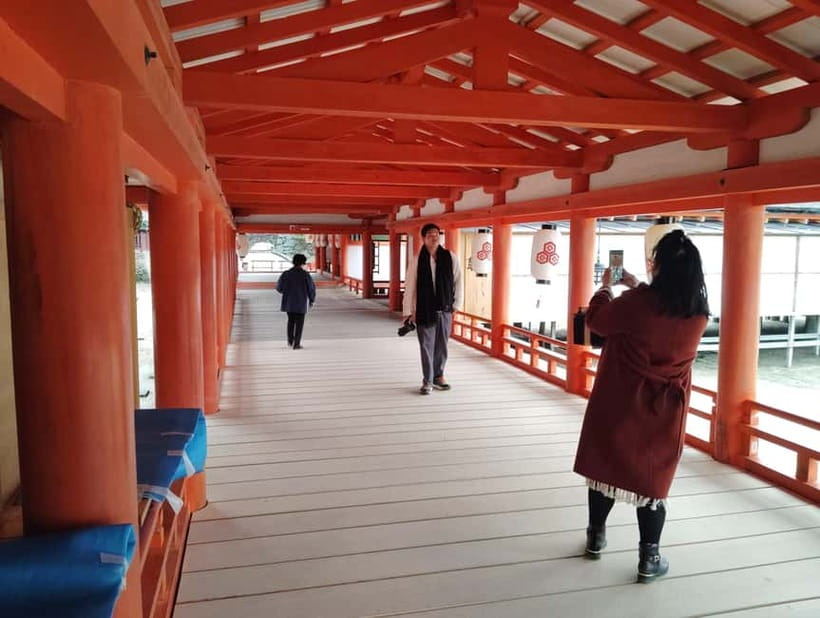
The summit portion is the heart of the tour for anyone interested in Japanese religious traditions. During the guided visit, your guide explains the history and practices connected with Shugendo, including the way Buddhism, Shinto, and mountain asceticism overlap.
You do not need prior knowledge of Japanese religion to get something from this section. A good guide can make the subject practical: mountains were not simply scenic places, and walking difficult paths was not merely exercise. The terrain itself could form part of religious training and personal discipline.
The supplied schedule gives this portion 75 minutes, the longest guided stop of the day. That matters. It suggests time to pause, listen, take in the views, and ask questions rather than rushing through a viewpoint.
The summit offers views of the surrounding area, including the sea and nearby land. Exact visibility depends on conditions, so you should not book this only for a guaranteed panoramic photograph. The reward is the combination of the view and the explanation of why this high place mattered.
One practical point deserves emphasis: the climb can be tiring. A German visitor described the ascent as somewhat strenuous, with roughly 30 minutes of walking up the mountain. The itinerary separates the ropeway and the later walk, but you should still prepare for a real uphill section.
A different set of gates, same trip:
- Nikko: Kegon Falls, Lake Chuzenji & Toshogu Temple
★ 4.6 · 1,577 reviews - Tokyo: Nikko Toshogu Shrine and Kegon Waterfall Tour
★ 4.5 · 1,266 reviews - Tokyo Panoramic 1 Day: Meiji Shrine, Asakusa, Odaiba and SKYTREE®
★ 4.5 · 1,222 reviews - 1-Day Snow Monkeys, Zenko-ji Temple & Sake in Nagano
★ 5.0 · 1,020 reviews
Senjokaku Pavilion and the five-story pagoda
After the summit visit, you walk for about 20 minutes to Senjokaku Pavilion. This transition gives the day a different rhythm. You move away from the summit’s mountain focus and return toward Miyajima’s historic religious buildings.
Senjokaku Pavilion is scheduled for a 15-minute guided visit. The name refers to a large hall, and the stop gives you another example of how scale and open space were used in sacred architecture. With only 15 minutes here, expect an introduction rather than a long, detailed architectural study.
Next comes Itsukushima Jinja Gojunoto, the shrine’s five-story pagoda, with about 10 minutes of guided time. The pagoda adds a vertical landmark to the route and reinforces the mix of Buddhist and Shinto influences found around Miyajima.
These stops are short, but they are useful in combination. The shrine shows architecture over the sea, the summit introduces mountain practice, and the pavilion and pagoda bring you back to historic buildings on the island. You get a broader picture of Miyajima than a single-site visit can provide.
A private guide can change the pace and depth
The private group format is one of the clearest reasons to consider this experience. You are not tied to a large group’s questions or photo stops, and your guide can focus on the parts that interest you most.
Gordon Michasiw has led this experience with an approach that covers both Miyajima’s sights and wider Japanese life, culture, and customs. Hine has also guided the tour, including helping a guest who had difficulty walking after a fall. That does not turn the route into an accessible tour, but it does show the value of having a person present who can pay attention to your needs.
Guide quality matters particularly on this excursion because the subject is not obvious from the buildings alone. You can see the torii gate and pagoda without understanding how sea worship, mountain practice, and Shugendo relate to them. The guide supplies the connecting thread.
There is also room for local suggestions. One guided day included a quiet tea house for lunch away from the busiest areas. Lunch is not included, and the tour does not promise a specific tea house visit, but you can ask your guide for advice if your schedule allows a meal stop.
The final part includes about 15 minutes of guided time and free time before the tour ends at the ferry terminal. That flexibility is welcome, though you should keep an eye on the clock. One visitor felt the end of the activity was rushed, so do not assume the final minutes will allow a long independent wander.
What the $179 price covers
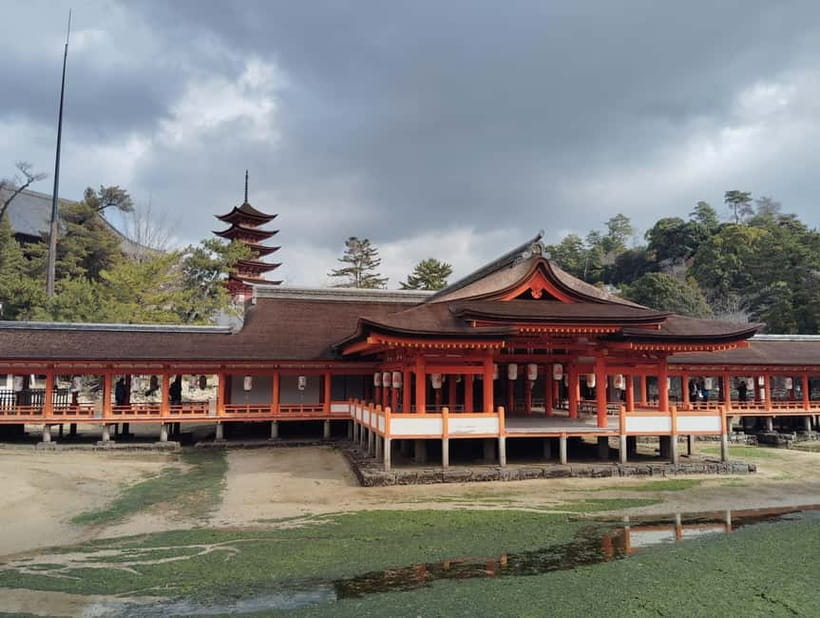
At $179 per person, this is not the cheapest way to see Miyajima. Its value comes from the combination of a private English-speaking guide, admission to Itsukushima Shrine, the ropeway fare, and a five-and-a-half-hour route that includes the summit.
If you only want to photograph the shrine, you can spend far less by visiting independently. The price makes more sense if you want interpretation, help with the sequence of stops, and a serious look at the island’s religious traditions.
The ropeway fare is especially useful because it is included rather than left as a separate expense. The tour also removes some of the planning work involved in combining the shrine, mountain, pavilion, pagoda, and ferry terminal in one outing.
Meals are not included, and hotel pickup and drop-off are not included. You should budget time and money for reaching the meeting point and for any food you want during the day. Since the total duration is 330 minutes, this is a major half-day commitment, not a quick add-on between two short activities.
The price is easiest to justify for couples, families, or small private groups who value personal explanation. For a solo visitor, it may feel expensive unless the cultural side of the tour is a main reason for visiting Miyajima.
Who should book this Miyajima tour
I would recommend it to you if you want three things in one day: the iconic shrine, a mountain view, and an explanation of Japanese religious practice. It also suits anyone who prefers a private guide to a large scheduled group.
You should be reasonably comfortable walking uphill and on paths. Bring water, sunscreen, a hat, and a camera. Smoking is not allowed, and the activity is not suitable for wheelchair users or people with mobility impairments.
This is a good choice for curious visitors who want to ask questions about Japanese customs, Buddhism, Shinto, and Shugendo. It is less suitable if you want a slow, unstructured day with lots of independent shopping or long meals.
The rating attached to the activity is 4.9 from seven verified bookings, with especially strong praise for the guides, the views, the ropeway, and the depth of the explanations. One lower score focused on the feeling of being rushed near the end, which is useful to keep in mind when setting expectations.
Cancellation is flexible up to 24 hours before the start for a full refund, and you can reserve now and pay later. Those terms help if your Hiroshima plans are still shifting, but they do not change the need to prepare for the walking.
Should you book it?
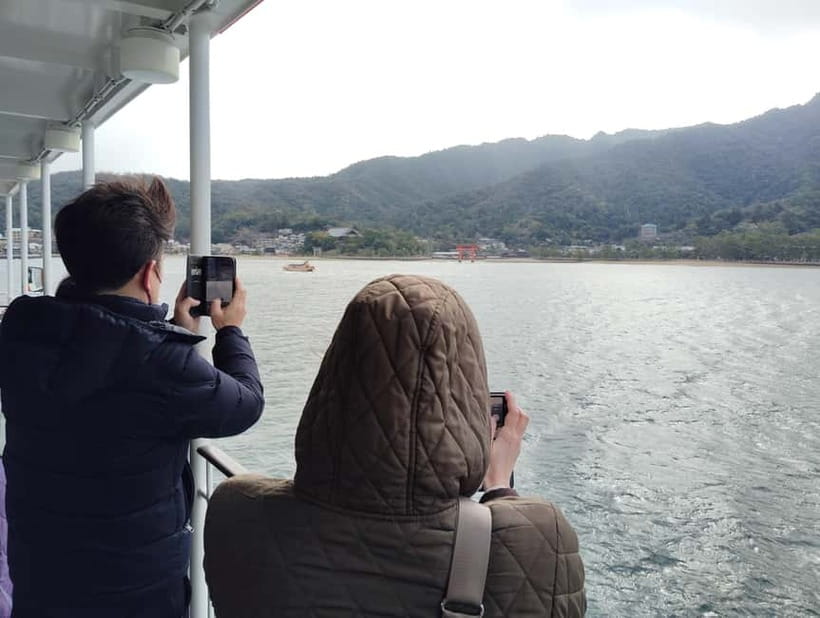
Book this tour if you want Miyajima explained, not simply photographed. The best feature is the complete route from Itsukushima Shrine to the ropeway, summit, pavilion, and pagoda, with sea and mountain worship treated as parts of one story.
Skip it if you have limited mobility, dislike uphill walking, or mainly want free time at the shrine. For everyone else, $179 is a fair price when the private guide, shrine admission, ropeway, and five-and-a-half-hour itinerary match your interests. Ask your guide early about pacing and lunch, then keep enough time at the end to reach the ferry without a scramble.
FAQ
Where does the tour begin?
The meeting point is in front of the Miyajima-guchi Tourist Information Center. Your guide will hold a yellow sign with the DeepExperience logo.
Where does the tour finish?
The tour finishes at the Miyajima ferry terminal.
How long does the activity last?
The activity lasts 330 minutes, or five and a half hours. Starting times vary, so you should check availability when booking.
What language is the tour in?
The live tour guide speaks English.
Is the tour private?
Yes. The activity is offered for a private group.
Are admission and the ropeway included?
Yes. Admission to Itsukushima Shrine and the ropeway fee are included in the price.
Is the tour suitable for wheelchair users?
No. The tour is not suitable for wheelchair users or people with mobility impairments. You should also be prepared for a moderate amount of walking and an uphill section.
Newly written up around Japan
- From Asakusa: Old Tokyo, Temples, Gardens and Pop Culture★ 5.0 · 47 reviews
- Goshuin Collecting tour at Asakusa Local Temples & Shrines, Tokyo★ 5.0 · 8 reviews
- Private guided tour: Mt. Aso volcano, grasslands, Aso Shrine★ 5.0 · 19 reviews
- Takayama Inari Shrine Tour with Private Transportation★ 5.0 · 5 reviews
- Tokyo: Snow Monkey and Zenkoji Temple Day Trip In Low Price★ 5.0 · 5 reviews
- Tokyo: Gotokuji Culture Walk & Lucky Cat Temple Experience★ 4.9 · 5 reviews
- :Tokyo,Shibuya /Meiji Shrine tour in KIMONO/English-friendly★ 5.0 · 4 reviews
- Tokyo: Sensoji Temple & Street Food: Private Tour with guide★ 4.6 · 8 reviews
Japan Temple Tours, compared.
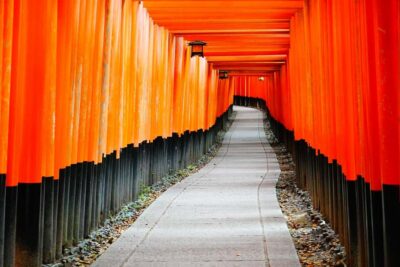
Osaka/Kyoto:Kinkakuji,Arashiyama,FushimiInariShrine,NaraPark
Read our review →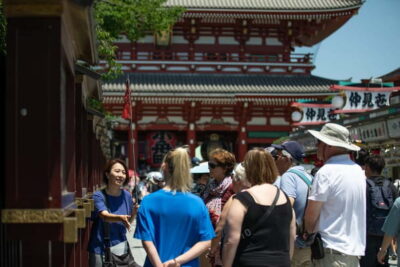
Asakusa Walking Tour with Sensoji Temple Visit
Read our review →
Nikko Toshogu Shrine and Kegon Waterfall Tour
Read our review →
Tokyo Panoramic 1 Day: Meiji Shrine, Asakusa, Odaiba and SKYTREE®
Read our review →
1-Day Snow Monkeys, Zenko-ji Temple & Sake in Nagano
Read our review →
Arashiyama Bamboo, Temple, Monkeys, or Secret Sake Brewery
Read our review →Browse the lists this tour appears in