
Reviewed · FUSHIMI INARI SHRINE TOURS
Kyoto: 1.5-Hour Guided Tour of Fushimi Inari Shrine
Fushimi Inari is famous for its endless rows of red torii gates, but the Omokaruishi stone ritual gives this short tour a more personal twist. You walk from the main shrine to Okusha Back Shrine, then test your fortune by lifting a stone and judging whether it feels lighter or heavier than expected.
I like the clear focus on Japanese spiritual culture, not just photo stops. I also like the small-group or private format, which gives you a better chance to ask questions and, with a guide such as Yoshi, hear about customs beyond the basic shrine facts.
The main drawback is time. Ninety minutes is enough for the central shrine route, but one verified booking found the tour too short and felt it could have been done independently. A bathroom break or a slow pace can leave little room for extra walking.
Key points to know before you book
- The tour starts at JR Inari Station: Meet your guide outside, across from the station’s main entrance, holding a bright yellow DeepExperience signboard.
- You walk through Fushimi Inari’s red torii gates: The guide explains why these gates were donated and what they represent at the shrine.
- Okusha Back Shrine adds a quieter stop: This part feels more intimate than simply seeing the front buildings and taking photographs.
- The Omokaruishi ritual is hands-on: Lift the stones and use the traditional comparison to think about your luck and strength.
- The visit lasts 90 minutes: It covers the main highlights but does not allow for a long climb or an unhurried exploration of the full shrine grounds.
- The price is $32 per person: That is a fair fee if you want cultural context and personal guidance, but less compelling if you only want to see the torii gates.
Meeting your guide at JR Inari Station
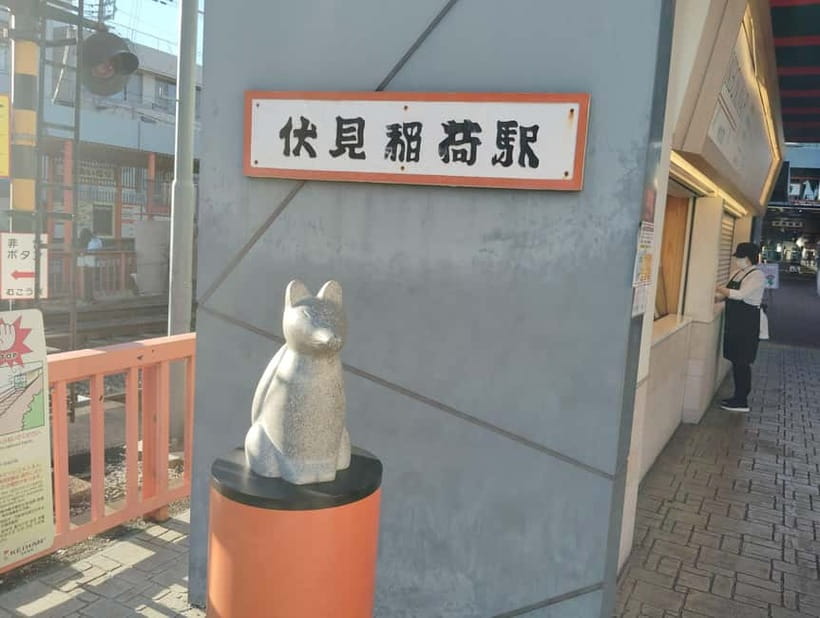
The tour begins outside the main entrance to JR Inari Station, where your guide waits across the way with a bright yellow DeepExperience signboard. This is a useful meeting point because it puts you right beside one of Kyoto’s best-known shrine entrances rather than asking you to find a small office or hotel lobby.
Give yourself enough time to locate the station and get your bearings. The meeting instructions are simple, but a busy station area can still cause needless stress if you arrive at the last minute. Look for the yellow sign before crossing toward the shrine.
Your guide may lead the tour in English or Japanese, depending on the departure you choose. The activity is offered as a private tour or in a small group, so check the available option when booking. Group size matters here: a smaller party makes it easier to hear explanations beneath the torii and to ask about customs that catch your attention.
More Fushimi Inari Shrine Tours in Kyoto:
- Osaka/Kyoto:Kinkakuji,Arashiyama,FushimiInariShrine,NaraPark
★ 4.1 · 1,596 reviews - Osaka/Kyoto: Arashiyama, Nara & Fushimi Inari Shrine w/Lunch
★ 4.4 · 754 reviews - Kyoto: 3-Hour Fushimi Inari Shrine Hidden Hiking Tour
★ 4.9 · 270 reviews
Starting at Fushimi Inari Taisha
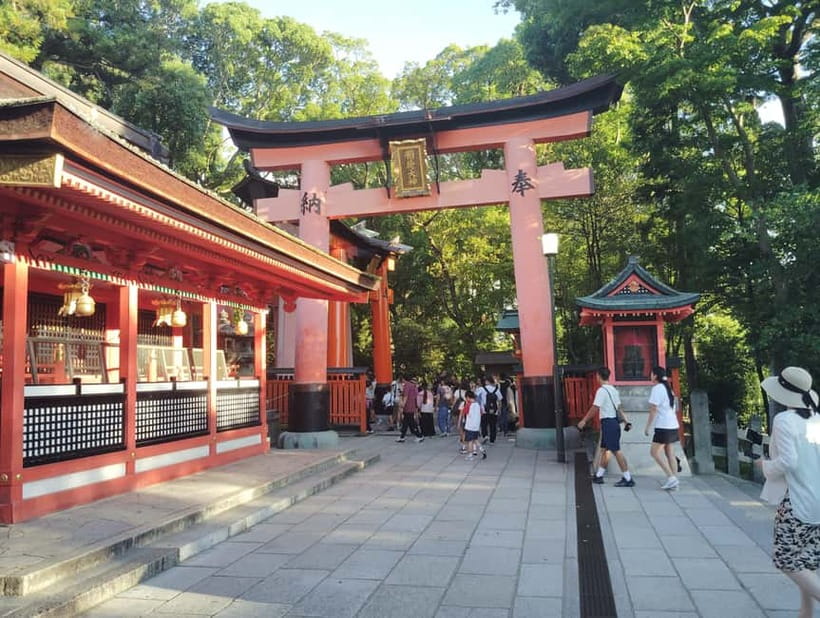
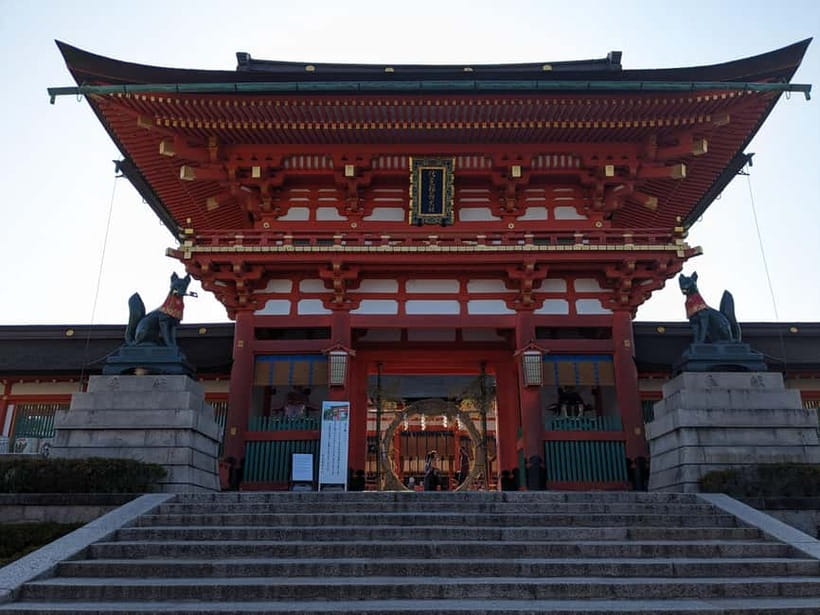
The first part of the visit focuses on Fushimi Inari Taisha, one of Kyoto’s major Shinto shrines. The shrine is connected with Inari, the deity associated with rice and prosperity. That connection helps explain why the site has attracted worshippers and donations for centuries.
A guide adds value at this point because the shrine can look, at first glance, like a series of striking buildings and photo spots. Your guide can give those details a purpose, explaining how the shrine functions and how its symbols fit into Japanese religious life.
You should expect the early part of the tour to be more explanatory than adventurous. The guide sets up the meaning of the site before taking you into the famous torii path. That is useful if you want to understand what you are seeing instead of simply walking beneath a long line of red gates.
The tour’s 90-minute limit makes this opening important. You will not have time for every corner of the shrine grounds, so the guide’s route concentrates on the main shrine, the torii path, and Okusha Back Shrine. If you want a leisurely visit with extended photography, you may need to return on your own afterward.
Walking beneath the red torii gates
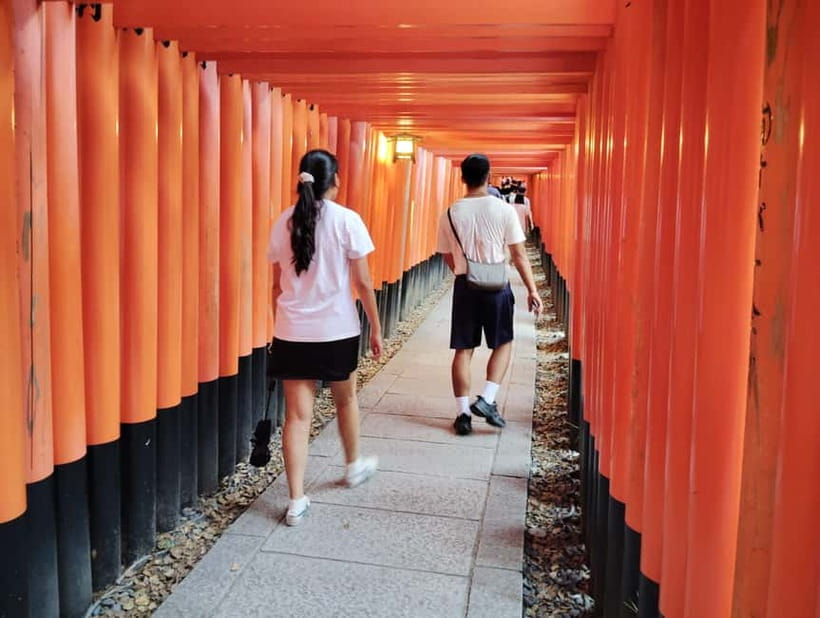
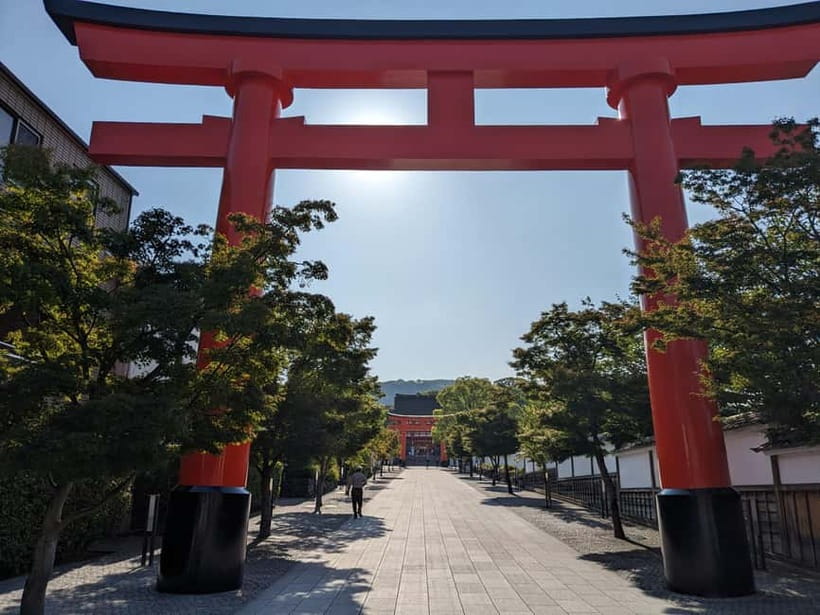
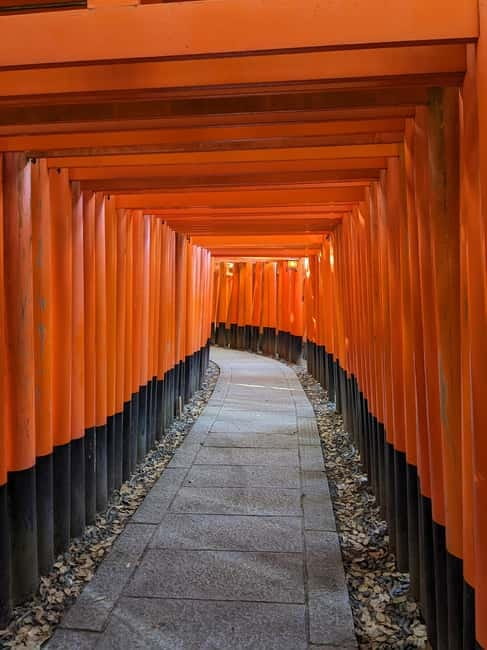
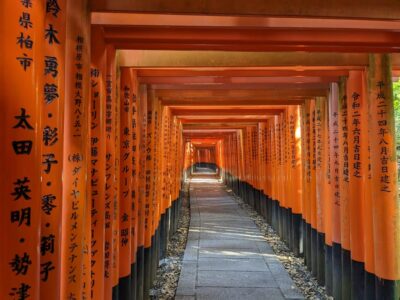
The red torii gates are the main draw. They form a long, memorable passage from the shrine toward the wooded slopes, with each gate marking a boundary between ordinary space and sacred ground. Their color and repeated pattern make this one of Kyoto’s most recognizable walks.
Your guide explains the historical and religious meaning behind the gates rather than treating them as decoration. Many were donated, and their presence reflects personal devotion, business success, and gratitude. That context changes the way you see the path. You are not simply passing through a colorful tunnel. You are walking among visible acts of faith and thankfulness.
The path also works well as a guided experience because it naturally creates pauses. You can look up at the gate inscriptions, listen to the explanation, and then continue into the next section. A good guide keeps the pace moving without turning the visit into a lecture.
Still, the famous gate route can be crowded and noisy, especially near the lower sections. The tour does not promise a quiet walk or a long ascent. If you want the full mountain route, allow extra time beyond this activity. This 90-minute visit is best understood as a focused introduction to Fushimi Inari, not an all-day hike.
Finding a more personal moment at Okusha Back Shrine
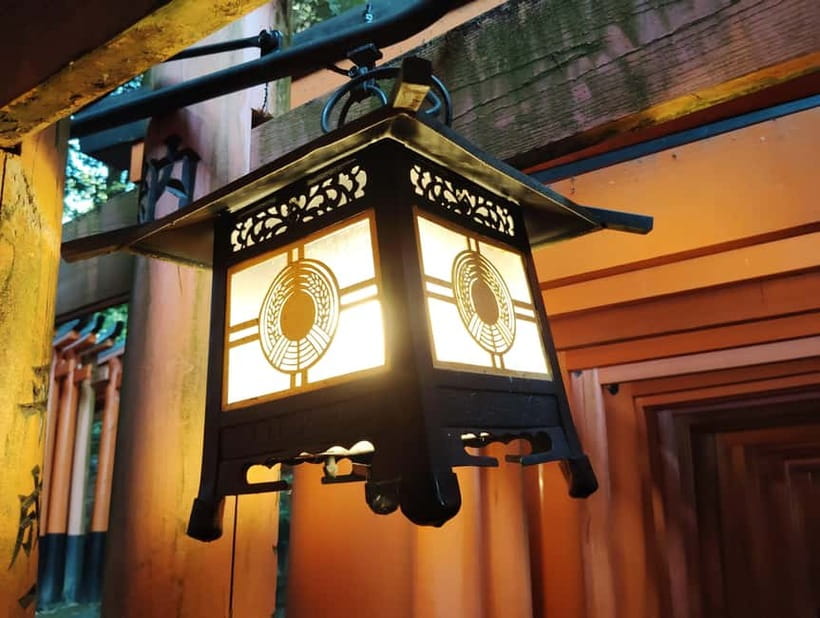
The route continues to Okusha Back Shrine, where the experience becomes more intimate. This stop gives you a break from the broad first impression of Fushimi Inari and lets you see another part of the shrine’s spiritual life.
The appeal is not only the building itself. It is the chance to slow down and consider the customs connected with the place. Your guide can explain how worshippers approach the shrine and why particular rituals matter. For anyone curious about how Japanese religious practice works in daily life, this is likely the most rewarding section.
Okusha also helps balance the visual fame of the torii gates. Photographs may bring you to Fushimi Inari, but the back shrine gives the visit more substance. You get a sense that the site is still a place of worship, not only a popular stop on a Kyoto sightseeing route.
Because the tour is short, your time here will be limited. You should not expect a long period for quiet reflection or independent exploration. Instead, think of Okusha as a carefully chosen stop that adds meaning to the walk.
Other temple visits near Kyoto we have written up
- Kyoto: Tea Ceremony Ju-An at Jotokuji Temple
★ 4.9 · 3,207 reviews - Arashiyama Bamboo, Temple, Monkeys, or Secret Sake Brewery
★ 4.8 · 886 reviews - Kyoto: Arashiyama Bamboo Forest, Monkeys, Matcha & Temple Tour
★ 5.0 · 759 reviews - Kyoto Zen Meditation & Garden Tour at a Zen Temple with Lunch
★ 5.0 · 441 reviews
Trying the Omokaruishi stone ritual
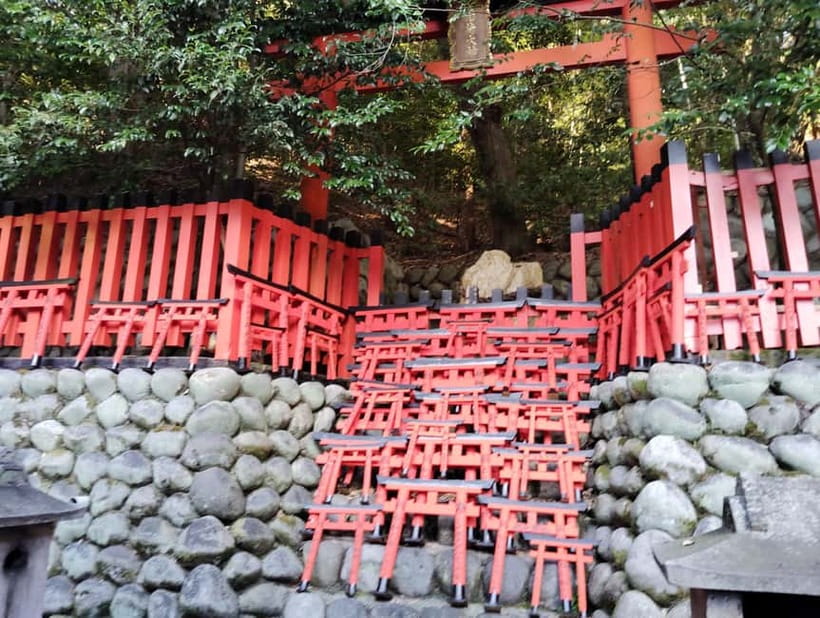
At Okusha Back Shrine, you have the chance to try the Omokaruishi stones. The ritual is simple: make a wish or consider a question, lift the stone, and judge how heavy it feels. The result is traditionally read as a sign of how likely your wish may be to come true.
This is one of the tour’s best features because it asks you to take part. You are not only listening to an explanation or photographing a sacred object. You are performing a small ritual that connects belief, expectation, and personal judgment.
The experience also gives the guide a natural way to discuss Japanese ideas about luck, effort, and inner strength. The stone is not a mechanical test with a fixed answer. Its meaning comes from your own reaction and from the tradition surrounding it.
Do not expect a major physical challenge. The value is symbolic, and the moment is brief. Still, it can become the part you remember most because it gives the visit a personal ending rather than another passive viewing stop.
How much cultural context do you get?
The guide is the main reason to choose this experience instead of walking through Fushimi Inari alone. The route itself is free to visit, and the gates are easy to find. What you pay for is explanation, structure, and the chance to ask questions while you are standing in the actual setting.
One particularly strong example comes from the guide Yoshi. His explanations covered Japanese culture as well as shrine history, and he was available throughout the visit. That combination matters. A guide who only recites dates may tell you what a gate is, but a guide who can connect it to local customs helps you understand why the place still matters.
The tour has a rating of 4.7 from five reviews, so the sample is small. One experience praised the guide and the photographs, while another found the tour too short and felt the route was possible without a guide. Both points are fair.
I would judge the value by your travel style. If you enjoy asking questions and want context in plain English, $32 is reasonable. If you only want to see the torii gates, the cost may feel high because Fushimi Inari can be visited independently.
Is $32 a fair price?
At $32 per person, this is not the cheapest way to see Fushimi Inari, but it is modest compared with a longer private sightseeing tour. The price includes an English-speaking local guide, and the 90-minute format keeps the commitment manageable during a busy Kyoto day.
The value improves if you choose a private or small-group departure. You can ask about Shinto customs, the meaning of the torii, and the Omokaruishi ritual without trying to speak over a large crowd. A guide can also keep you focused on the most useful sections when your time in Kyoto is tight.
The value drops if you expect a full shrine tour or a long climb. You will not have unlimited time for photography, a complete exploration of the mountain route, or a relaxed bathroom stop. One family found that a bathroom break made the already short tour feel even shorter, so plan your needs before meeting the guide.
The flexible booking terms help reduce the risk. You can reserve now and pay later, and cancellation is free up to 24 hours before the activity for a full refund. Those terms are useful if your Kyoto schedule is still changing.
Who will get the most from this visit?
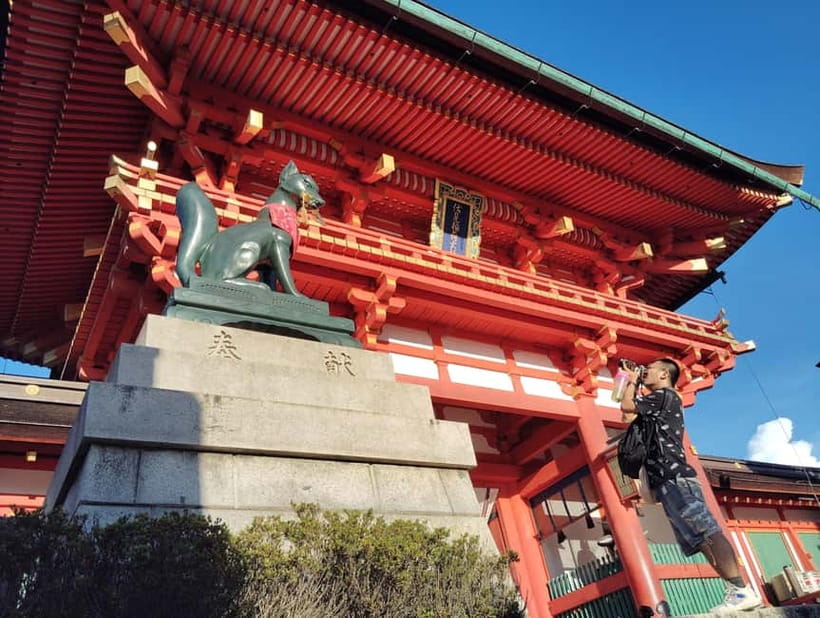
I would recommend this tour to first-time visitors who want a clear introduction to Fushimi Inari without spending half a day on the mountain. It also suits anyone who wants cultural explanations rather than a self-guided photo walk.
Families may appreciate the stone ritual because it gives younger visitors something active to do. Keep the short duration in mind, especially if anyone in your group needs regular breaks.
This is also a good fit for visitors who prefer private or small-group sightseeing. You can ask direct questions, hear the guide more clearly, and set a comfortable pace within the fixed route.
Independent-minded sightseers may want to skip the tour. If you already know the basics of Shinto shrines and feel comfortable researching the torii gates yourself, you can visit the site without paying for a guide. You might then use the $32 for a meal, another attraction, or extra time exploring the shrine at your own pace.
Practical advice for making the 90 minutes count
Arrive early enough to find the yellow signboard without rushing. Wear shoes suitable for walking, since the experience takes place on a shrine route rather than in one building.
Keep your camera ready, but do not let photography take over the visit. The guide’s explanations about the torii and the shrine’s customs are the main reason to book, and stopping constantly can make the 90 minutes feel even shorter.
Use the first part of the tour to ask questions. Once you reach the torii path, you may want to know why gates are donated, how worshippers use the shrine, or what the symbols mean. A guide such as Yoshi can make those details easier to understand in the moment.
Plan your bathroom needs before the start. The available information does not promise a dedicated bathroom stop, and one short tour felt especially constrained when a child needed a break.
If you want more time for the shrine, return after the guided portion. The tour ends back at Inari Station, so you can continue independently if your schedule allows. The guided walk gives you orientation first, then you can revisit your favorite section at your own speed.
Should you book the Fushimi Inari guided tour?
Book it if you want clear cultural context, a small-group setting, and a short route that covers the main shrine, red torii gates, Okusha Back Shrine, and the Omokaruishi ritual. The guide, rather than the entrance itself, is the product you are paying for.
Skip it if you mainly want photographs or a long, independent walk. The 90-minute limit is real, and a bathroom break or slower pace can reduce your time at the shrine.
For most first-time visitors who want more than a quick look, I think the $32 is sensible. Just treat it as a focused introduction, not a complete Fushimi Inari visit.
FAQ
Where does the tour meet?
Meet your guide outside, across from the main entrance to JR Inari Station. The guide will hold a bright yellow DeepExperience signboard.
How long does the tour last?
The guided visit lasts 90 minutes. It begins and ends at Inari Station.
Which languages are available?
The tour is available with a live guide in English or Japanese.
What does the tour include?
It includes an English-speaking local expert guide. The route covers Fushimi Inari Taisha, the red torii gates, Okusha Back Shrine, and the Omokaruishi stone ritual.
Can I book a private tour?
Yes. Private and small-group options are available.
What is the cancellation policy?
You can cancel up to 24 hours in advance for a full refund. You can also reserve now and pay later.
Newly written up around Kyoto
- Kyoto:Kiyomizu-dera Temple Rent a kimono and ride a rickshaw★ 4.8 · 7 reviews
- Kyoto: Shakyo & Matcha in Historic Temple Garden★ 5.0 · 4 reviews
- KYOTO: Tempio Kiyomizu Pagode Gion “Geisya” (Guida Italiana)★ 4.7 · 17 reviews
- Kyoto: Kiyomizudera, Sanjusangendo, Ginkakuji and Higashiyama.★ 5.0 · 3 reviews
- KYOTO: Golden Pagoda, Bamboo Forest, Arashiyama (Italian)★ 4.9 · 5 reviews
- Kyoto:Quiet Arashiyama and Sagano Temples★ 4.8 · 5 reviews
- Kyoto kiyomizu Temple : Maiko and Samurai Couple Photoshoot★ 4.8 · 25 reviews
- Kyoto: Nara, Todaiji, Kasuga Taisha Shrine Private Full Day★ 4.9 · 18 reviews
Fushimi Inari Shrine Tours, compared.
Osaka/Kyoto:Kinkakuji,Arashiyama,FushimiInariShrine,NaraPark
Read our review →
Osaka/Kyoto: Arashiyama, Nara & Fushimi Inari Shrine w/Lunch
Read our review →
Kyoto Tea Ceremony & Kiyomizu-dera Temple Walking Tour
Read our review →Full Day Kyoto Tour : Bamboo Forest, Golden Temple, Fushimi Inari
Read our review →
Fushimi Inari Shrine and Tofukuji Temple E-Bike Tour
Read our review →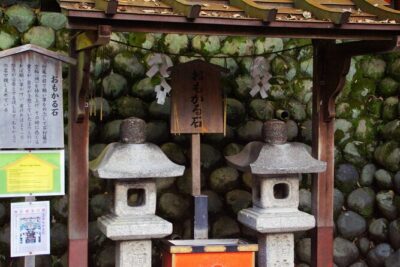
Early Morning Fushimi Inari Shrine – Beat the Crowds
Read our review →Browse the lists this tour appears in