
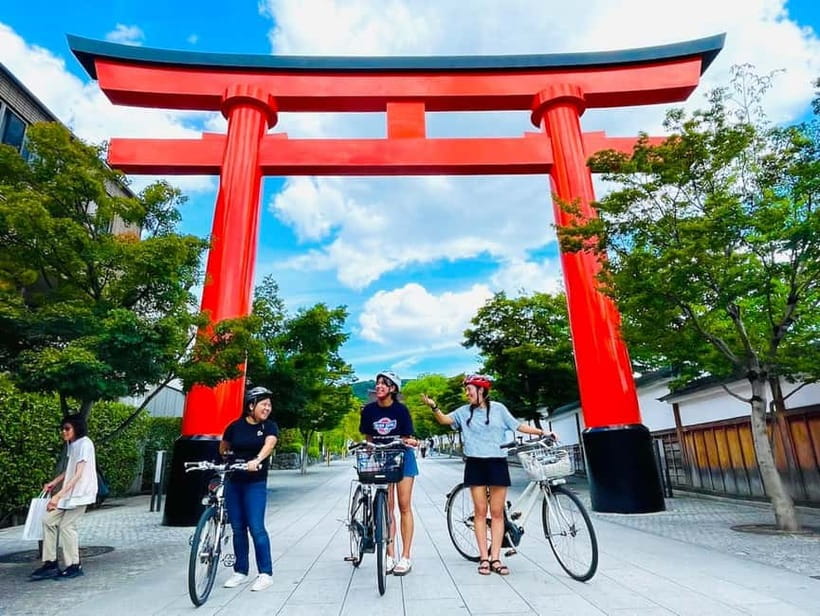
Reviewed · FUSHIMI INARI SHRINE TOURS
Kyoto: Fushimi Inari Shrine and Tofukuji Temple E-Bike Tour
Kyoto’s famous sights make more sense when you reach them by bicycle. This four-hour ride links Gion, Fushimi Inari Shrine, and Tofukuji Temple with quieter streets, riverside paths, and ordinary neighborhoods you would likely miss from a bus or train. Guide Maki gives the tour its character, mixing history with personal stories, humor, and practical explanations of Japanese customs.
I like the small group of up to eight and the sturdy electric bikes, which help on steeper sections and keep the pace comfortable. I also like the balance between major sights and peaceful places, including time to sit quietly in a Zen garden. The main consideration is that this is still a cycling tour, with some road riding, walking, and limited time at each stop.
Key points to know before you book
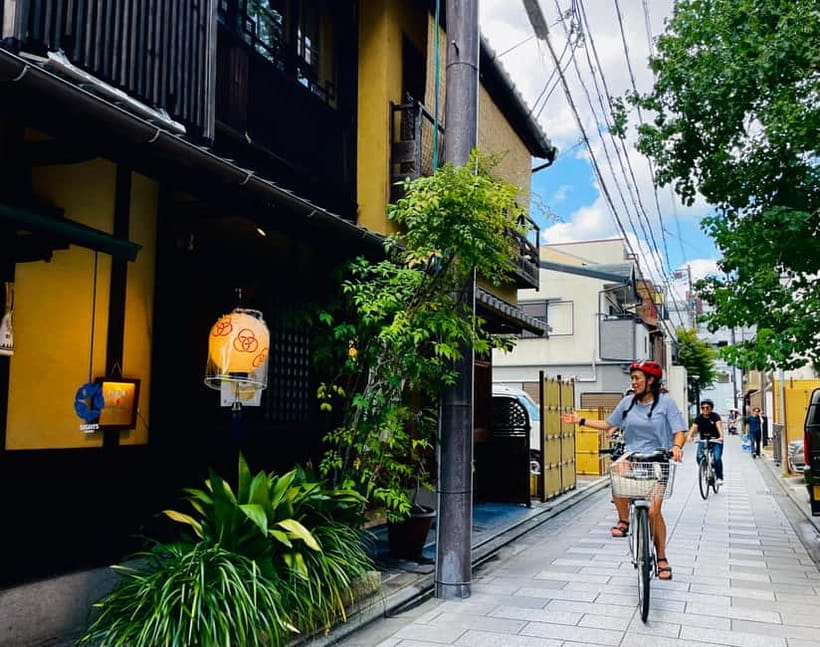
- Gion sets the cultural tone: Learn about geisha, local customs, and Kyoto life while riding through one of the city’s best-known districts.
- Fushimi Inari is the headline stop: Your guide explains the shrine and Shinto traditions before you explore the famous torii gates.
- Tofukuji offers a quieter pause: The Zen garden gives you time to slow down after the ride and consider what you have seen.
- Maki is a major part of the experience: Her humor, personal stories, English, and care with group safety receive especially strong praise.
- Electric bikes reduce the effort: The bikes help with hills and fatigue, though you still need to be comfortable cycling near traffic.
- The tour costs $83 per person: That includes the guide, e-bike, helmet, insurance, water, a snack, and entrance fees for two places.
Why an e-bike is a smart way to see Kyoto
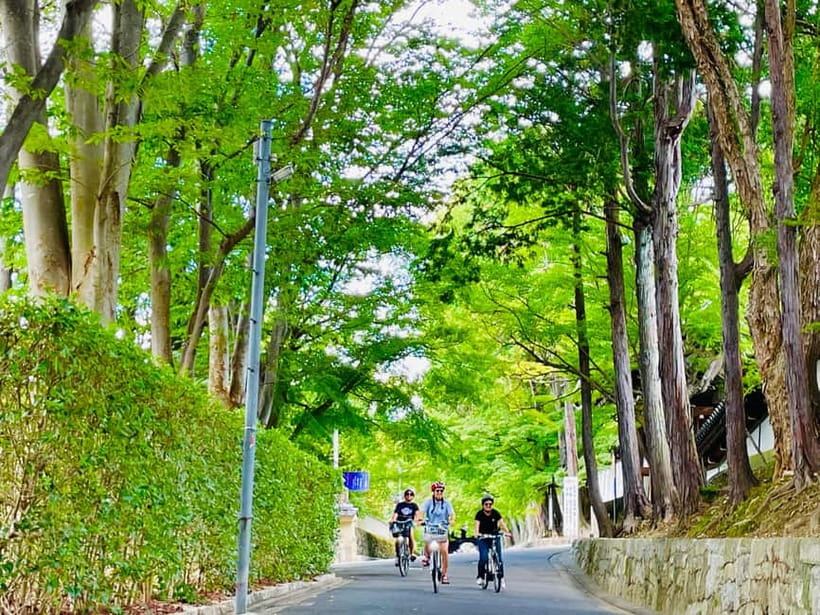
Kyoto is spread out, and its most interesting sights do not all sit beside one train station. Public transport can get you close, but it does not show you the spaces between the headline attractions. An e-bike fills that gap nicely.
You ride through Gion, residential streets, quiet lanes, and routes beside the river. The journey itself becomes part of the experience. You get a look at the city as a place where people live, not only as a line of temples on a sightseeing map.
The electric assistance matters most when the route rises or when your legs begin to tire. You still pedal, but the bike takes away much of the strain. Several families and groups with teenagers found the ride easy to manage, and older adults also handled the route comfortably.
That said, an e-bike is not a motor scooter. You need to balance, steer, follow directions, and ride in a line. The tour includes some busy roads, although Maki uses side streets when possible and gives clear instructions at crossings and traffic points.
At the start, you receive an orientation on riding in Japan and using the electric bike. This is important if you are nervous about cycling on the left side of the road or about riding in a group. The guide also controls the pace and stops often enough for explanations and questions.
More Fushimi Inari Shrine Tours in Kyoto:
- Osaka/Kyoto:Kinkakuji,Arashiyama,FushimiInariShrine,NaraPark
★ 4.1 · 1,596 reviews - Osaka/Kyoto: Arashiyama, Nara & Fushimi Inari Shrine w/Lunch
★ 4.4 · 754 reviews - Kyoto: 3-Hour Fushimi Inari Shrine Hidden Hiking Tour
★ 4.9 · 270 reviews
Starting near Higashiyama-Sanjyo
The tour begins at Pedal Adventure Kyoto, at a temple near Higashiyama-Sanjyo. There is no hotel pickup or drop-off, so you need to make your own way to the meeting point.
The first part is practical. You learn how the bike works, receive a helmet, and go over basic road rules. This short briefing helps you get your bearings fast, especially if you have not cycled in Japan before.
The group size is limited to eight people. That is small enough for the guide to keep an eye on everyone and answer questions without turning the outing into a lecture. It also means the pace may be affected by the least confident rider, a point worth keeping in mind if you are a very strong cyclist.
Maki is frequently praised for making everyone feel included. She explains clearly, checks that riders are comfortable, and takes care around busy streets. Her light humor helps the safety talk feel less like a formal lesson.
Riding through Gion and everyday Kyoto
Gion is best known for traditional wooden buildings, tea houses, and geisha culture. On this tour, you do not simply pass through and take a few photographs. Maki explains the customs connected with the district and helps you understand the difference between what you see and what you may have assumed before arriving in Japan.
The route also moves beyond the polished parts of central Kyoto. You ride through residential areas where the pace is slower and the buildings feel more connected to daily life. This is one of the strongest reasons to choose a bicycle tour: you can cover ground while still noticing small streets, streams, alleys, and local corners.
Maki’s explanations range across geisha traditions, samurai stories, Japanese religion, infrastructure, family life, and everyday etiquette. She uses photographs in a binder to make some subjects easier to understand, and she welcomes questions throughout the ride.
You should not expect a long stop at every temple or shrine. The value lies in the variety. Instead of spending four hours at one major site, you get a moving introduction to several sides of Kyoto, with the guide providing the thread that connects them.
Fushimi Inari Shrine and the meaning of Shinto
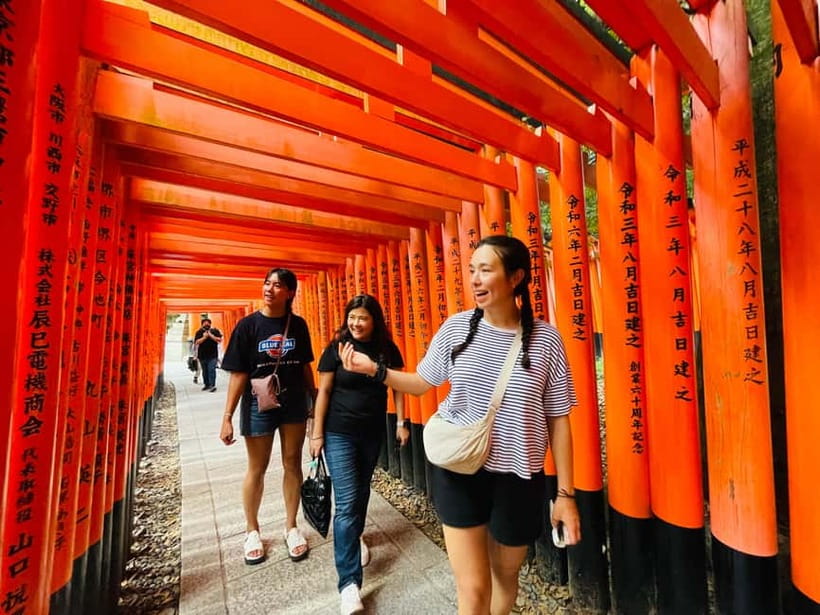
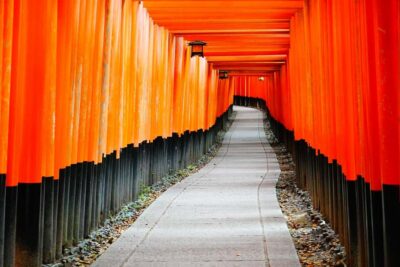
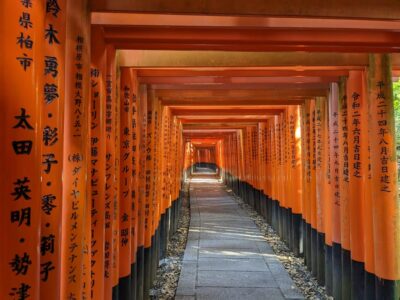
Fushimi Inari is the tour’s best-known destination. The shrine is famous for its long rows of orange torii gates, which climb the wooded slopes behind the main buildings. Even if you have already seen photographs, the scale and repetition of the gates are striking in person.
The tour focuses not only on photographs but also on Shinto. Maki explains the shrine’s history, customs, and religious meaning, helping you understand what you are looking at rather than treating the site as a colorful backdrop.
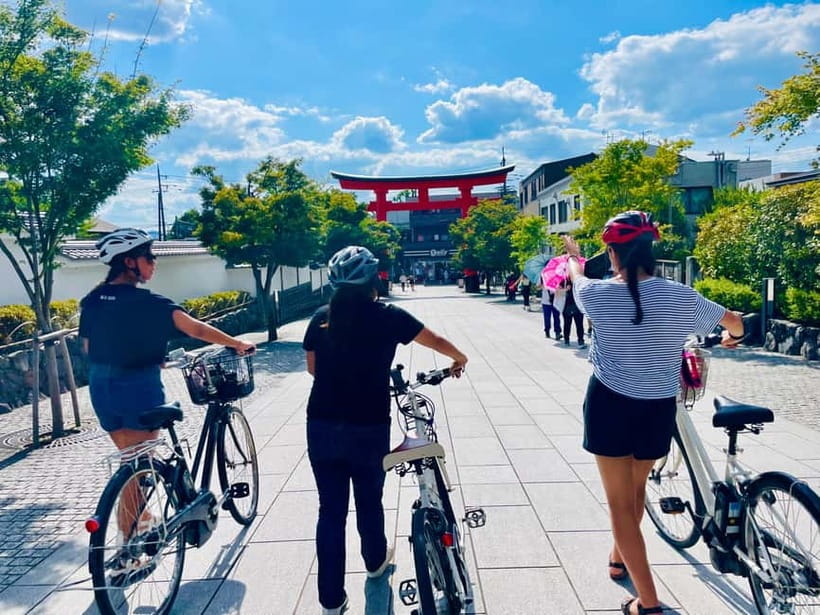
Fushimi Inari can be crowded, especially around the main entrance and lower paths. The bike gets you efficiently to the area, but bicycles do not solve the congestion inside the shrine grounds. You should be prepared to walk your bike or leave it where instructed, then continue on foot.
Time is the main limitation here. One participant would have preferred longer at the shrine, and that is a fair point. With a four-hour schedule, the tour must keep moving so you can also reach Tofukuji and return to the starting point.
If Fushimi Inari is your top priority and you want to climb far up the mountain, this tour may feel too brief. If you want a guided introduction, a taste of the shrine, and several other Kyoto experiences in the same morning or afternoon, the timing makes good sense.
More Cycling Tours in Kyoto:
- Kyoto: Hidden Gems E-Bike Tour Through Backstreets & Temples
★ 4.9 · 54 reviews - Bangkok: Temples, Canals & Local Life Bike Tour
★ 4.9 · 3,511 reviews - Bangkok: Night Bike Tour with Temples & Flower Market Visit
★ 4.8 · 751 reviews - Siem Reap: Bike the Angkor Temples – Full-Day 30km Tour
★ 5.0 · 463 reviews
Tofukuji Temple and a quiet Zen garden
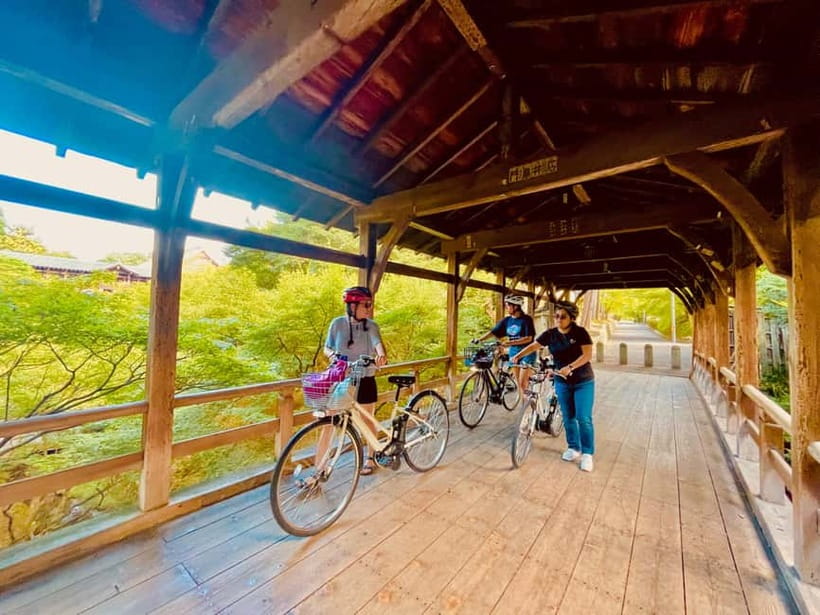
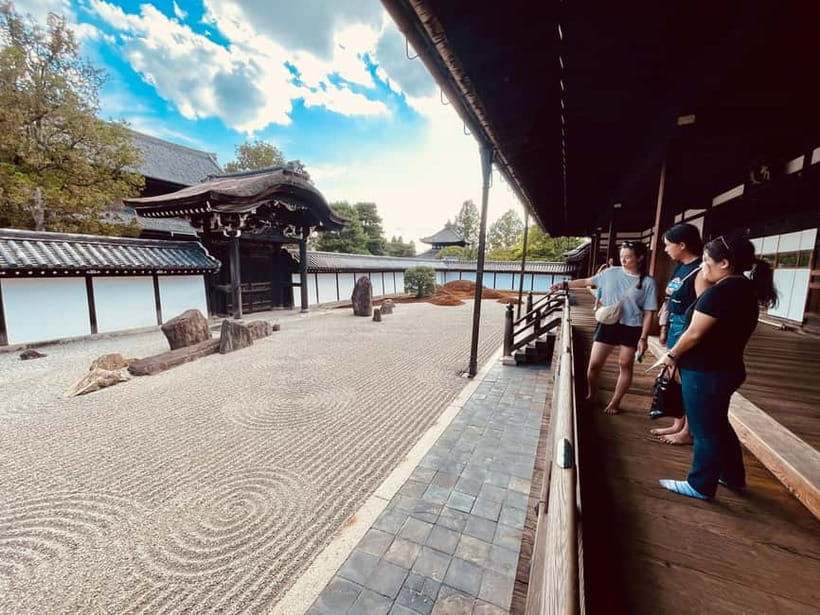
Tofukuji provides a useful change of mood. After the movement and crowds around Fushimi Inari, the temple gives you a calmer place to pause. The Zen garden is not just another photograph stop. You receive time to sit, look, and take in the setting without immediately rushing to the next attraction.
Maki explains the difference between Buddhist temples and Shinto shrines, a distinction that can be confusing on a first visit to Japan. You also learn about customs and religious practices in a way that connects the buildings, gardens, and rituals around you.
This stop is especially valuable if you tend to race through sightseeing. Kyoto rewards a slower pace, and the garden creates a short period of quiet within an active half-day. You may find it is the part of the tour that stays with you after the more famous sights blur together.
The entrance fee for two places is included. The exact balance of temple, shrine, and additional stops can depend on the group and the route, but Tofukuji is clearly one of the planned highlights.
The ride back along the river
The return route includes a riverside stretch, which gives the tour a pleasant finish. Several riders particularly enjoyed this part because it offers a change from city roads and a chance to ride at an easier pace.
You may also stop at other shrines, temples, or quiet places along the way. The appeal is the contrast between popular sites and less crowded corners. Some groups have also visited a local coffee shop, although you should not treat that as a guaranteed part of every departure.
The guide may take photographs during the outing. That is useful for families and couples who want pictures of the whole group without handing a camera to a stranger. Bring your own camera or phone as well, since the route includes scenic streets, temple grounds, and river views.
Water and a snack are included. The water matters on warm days, particularly in summer, when cycling and walking can become tiring. You should still bring a water bottle if you drink frequently, and sunscreen is sensible in sunny weather.
How Maki shapes the experience
A route can be well planned and still feel flat without a good guide. Here, Maki is central to the experience. She combines strong English with humor, personal stories, and clear explanations of Japanese culture.
Her approach is conversational rather than formal. You can ask about religion, food, history, customs, or places you will visit later in your trip. She also offers local suggestions and, in at least one case, followed up after the tour with ideas for the rest of the visit.
Her humor is part of the appeal. She has an energetic style, and her personality keeps the ride lively during stretches between temples. At the same time, she gives you quiet time at the Zen garden instead of filling every minute with talk.
One practical note came up from a rider who suggested a microphone or earpiece. Since the group rides in a line, explanations happen after everyone stops, not while you are moving. You should be able to hear the guide when gathered around her, but stay close during stops so you do not miss the details.
Fitness, safety, and who should book
You do not need to be a serious cyclist. The e-bike assistance, frequent stops, and moderate pace make this suitable for many casual riders. Families with teenagers enjoyed it, and groups of middle-aged adults handled the route without major difficulty.
You should be comfortable with a mix of cycling and walking. The ride includes city streets, some busier areas, and possible hills. The tour is not suitable for children under 12, pregnant women, or people with mobility impairments.
Wear comfortable clothes and shoes that work for both pedals and temple paths. Sunscreen is recommended, and alcohol and smoking are not allowed in the vehicle or during the included transport elements.
The strongest safety feature is the guide’s route management. Maki usually favors quieter streets but cannot avoid main roads entirely. If road cycling makes you very anxious, a walking tour may be a better fit. If you can ride a bicycle and follow instructions, the e-bike makes Kyoto feel far more manageable.
Is $83 a fair price?
At $83 per person, this is not the cheapest way to see Fushimi Inari. But the price includes a four-hour English-speaking guide, electric bicycle, helmet, insurance, snack, water bottle, and entrance fees for two sites.
You are also paying for route planning and local context. Without a guide, you could visit Gion, Fushimi Inari, and Tofukuji independently, but you would need to work out the transport, timing, cycling route, and cultural background yourself. The tour adds the quiet streets and river route that public transport would skip.
The value is strongest for a first Kyoto visit or for anyone who wants an overview before exploring more temples alone. It is less useful if you already know the city well, dislike group activities, or want to spend a long time at Fushimi Inari.
Free cancellation up to 24 hours before the start and the reserve-now, pay-later option make the booking less rigid. Check available starting times when you choose your date, since the listed duration is four hours.
Should you book this Kyoto e-bike tour?
I would book it if you want a lively introduction to Kyoto that combines famous sights with ordinary streets. The tour gives you Gion, Fushimi Inari, Tofukuji, several cultural subjects, and a pleasant riverside ride in one manageable half-day.
Choose it especially if you like learning while moving and want a guide who can explain the difference between Shinto and Buddhism without making the subject dry. Maki’s humor, care with safety, personal stories, and willingness to take photographs add real value.
Think twice if you want extended time at Fushimi Inari, prefer private sightseeing, or are not comfortable cycling near traffic. For most visitors who can ride a bike, though, this is a well-priced way to see more of Kyoto without spending the whole day on trains and crowded buses.
FAQ
How long is the Kyoto e-bike tour?
The tour lasts four hours, including cycling, walking, sightseeing stops, explanations, and the return ride.
What sights are included?
The route includes Gion, Fushimi Inari Shrine, and Tofukuji Temple. You also ride through residential areas, quiet streets, and a riverside route, with possible additional shrine or temple stops.
Is the electric bicycle included?
Yes. The price includes an electric bicycle, helmet, insurance, water bottle, snack, and entrance fees for two places.
Who leads the tour?
The tour is led in English by a live local guide. The guide highlighted in the available information is Maki.
Is the tour suitable for children?
Children under 12 are not permitted. Teenagers and families with older children have enjoyed the ride, but every participant should be comfortable cycling and walking.
What should I bring?
Wear comfortable clothing and shoes suitable for cycling and walking. Sunscreen and a water bottle are recommended, and a camera is useful for the route and temple views.
More temple runs by e-bike in Kyoto
- E-Bike Nara Highlights – Todaiji, Knives, Deer, Shrine
★ 4.8 · 186 reviews - From Siem Reap: Angkor Wat Sunrise and Temples E-Bike Tour
★ 5.0 · 52 reviews - Naha: Guided E-Bike Tour of the 12 Zodiac Temples
★ 4.9 · 50 reviews - e-Bike Cycling Tour to Arkadi Monastery Full Lunch included
★ 5.0 · 26 reviews
Newly written up around Kyoto
- Kyoto:Kiyomizu-dera Temple Rent a kimono and ride a rickshaw★ 4.8 · 7 reviews
- Kyoto: Kiyomizudera, Sanjusangendo, Ginkakuji and Higashiyama.★ 5.0 · 3 reviews
- Kyoto: Shakyo & Matcha in Historic Temple Garden★ 5.0 · 4 reviews
- KYOTO: Tempio Kiyomizu Pagode Gion “Geisya” (Guida Italiana)★ 4.7 · 17 reviews
- KYOTO: Golden Pagoda, Bamboo Forest, Arashiyama (Italian)★ 4.9 · 5 reviews
- Kyoto:Quiet Arashiyama and Sagano Temples★ 4.8 · 5 reviews
- Kyoto kiyomizu Temple : Maiko and Samurai Couple Photoshoot★ 4.8 · 25 reviews
- Kyoto: Nara, Todaiji, Kasuga Taisha Shrine Private Full Day★ 4.9 · 18 reviews
Fushimi Inari Shrine Tours, compared.
Osaka/Kyoto:Kinkakuji,Arashiyama,FushimiInariShrine,NaraPark
Read our review →
Osaka/Kyoto: Arashiyama, Nara & Fushimi Inari Shrine w/Lunch
Read our review →
Kyoto Tea Ceremony & Kiyomizu-dera Temple Walking Tour
Read our review →Full Day Kyoto Tour : Bamboo Forest, Golden Temple, Fushimi Inari
Read our review →
Early Morning Fushimi Inari Shrine – Beat the Crowds
Read our review →
Kyoto kiyomizu Temple : Maiko and Samurai Couple Photoshoot
Read our review →Browse the lists this tour appears in