
Reviewed · TEMPLE WALKING TOURS
Osaka: Japan’s Oldest Temple & Bone Buddha Walking Tour
Osaka’s oldest religious story is written in two very different temples. At Shitennoji, you see the ordered design of early Japanese Buddhism. At nearby Isshinji, cremated ashes become communal Buddha statues. That contrast makes this more than a standard temple visit.
I like the tour’s clear historical arc, from Prince Shotoku’s 593 foundation to a modern city temple serving generations of Osaka families. I also like the small-group format, which gives you room to ask about Buddhist symbols, cremation customs, and the meaning of the Pure Land Garden. The main consideration is time: two hours goes quickly, and the visit is focused on religious sites rather than Osaka’s broader neighborhoods.
Key points at a glance
- Shitennoji dates to 593: Learn why Prince Shotoku helped bring Buddhism into early Japanese society.
- The central precinct follows an early Buddhist plan: Your guide explains the meaning behind its symmetrical layout.
- The Pure Land Garden adds a quieter pause: Its ponds, paths, and sunset symbolism connect to Amida’s Western Paradise.
- Isshinji offers an unusual Buddhist tradition: Its Bone Buddhas are formed from the cremated ashes of more than two million people.
- The two temples tell different stories: Shitennoji represents early national Buddhism, while Isshinji shows a personal and urban form of faith.
- The $65 price includes key admissions: You pay for a private guided visit, Shitennoji’s main complex, and the Pure Land Garden, but not transport, food, or personal costs.
Why these two temples make a strong Osaka pairing
Osaka is easy to reduce to food stalls, neon signs, and shopping arcades. This tour gives you another side of the city, one shaped by prayer, funerary customs, architecture, and long family ties.
The pairing works because the temples are not simply two old buildings. They show how Buddhism changed over time. Shitennoji reflects the religion’s early public role in Japan. Isshinji presents a later, more intimate form of faith, linked to mourning and remembrance in a large city.
I find that kind of comparison more useful than visiting several temples that look and feel similar. You begin with grand ideas about protecting the nation and end with a place where ordinary families remember the dead. The story moves from courtly Japan to urban Osaka.
The tour is also a good choice if you want a guide to explain what you are seeing. Temple grounds can look calm and beautiful even when their symbols mean little to an outsider. Here, the guide connects the buildings, gardens, statues, and rituals to Buddhist beliefs.
More Temple Walking Tours in Japan
- 1-Day walking tour in Osaka:Castle, temples and Ukiyoe
★ 5.0 · 4 reviews - Tokyo: Asakusa Walking Tour with Sensoji Temple Visit
★ 4.8 · 1,583 reviews - Asakusa Senso-ji Temple and Old Tokyo Walking Tour
★ 5.0 · 560 reviews
Meeting at Shitennoji’s stone torii
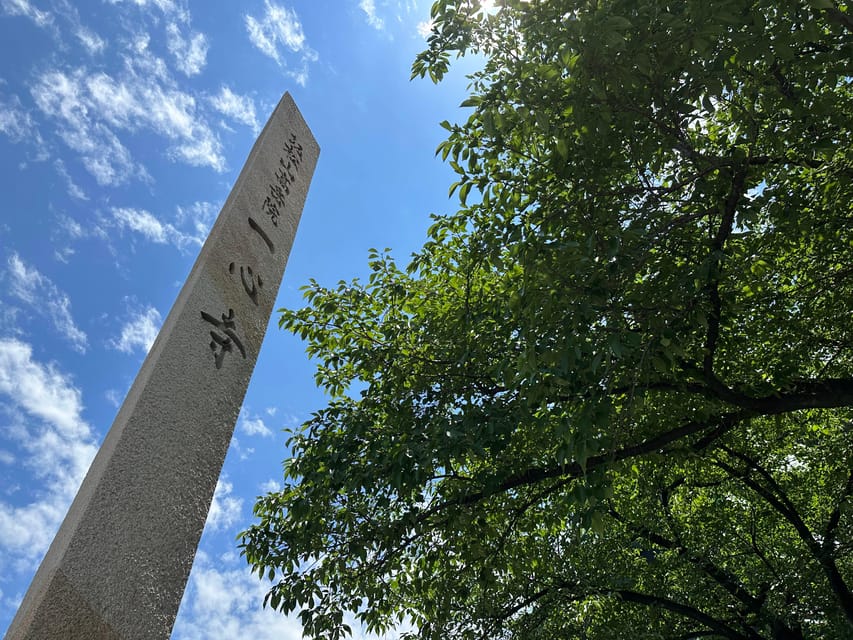
Your meeting point is the stone torii gate at Shitennoji’s main entrance. The Japanese name is Ishidori. It is a short walk from Shitennoji-mae Yuhigaoka Station, and your guide will hold a sign with your name.
This is a practical starting point. You do not need to search for a small shop or office in a busy commercial district. You arrive at one of Osaka’s major religious entrances, and the subject of the tour begins before the walking does.
Give yourself enough time to reach the gate without rushing. Transportation to the meeting point is not included, so you handle your own train or subway fare. Food and drinks are also not included, though this is a short tour rather than a half-day outing.
Because the group is private, the pace can suit your interests better than a large shared walk. If you want to ask why a temple uses a certain arrangement, or how Pure Land beliefs differ from other Buddhist ideas, you can raise the question as you go.
Shitennoji and the Buddhist beginnings of Japan
Shitennoji was founded in 593 by Prince Shotoku, an important early advocate of Buddhism. The temple is recognized as Japan’s oldest officially established Buddhist temple, which gives the first part of the tour real weight.
Your guide introduces the Four Heavenly Kings, known as the Shitenno. These guardian deities were believed to protect the nation, and their presence helps explain the temple’s name and original purpose.
This was not Buddhism as a private hobby or a quiet personal practice. In its early Japanese setting, it was tied to government, social order, and the protection of the country. That makes Shitennoji a useful place to learn how imported religious ideas became part of Japanese public life.
I especially like that the guide explains the temple’s layout rather than leaving you to admire it from a distance. The central precinct follows a symmetrical arrangement associated with early Japanese Buddhist design. The order is not merely decorative. It reflects a way of organizing sacred space and directing attention toward the central buildings.
Shitennoji has survived fires, wars, and repeated rebuilding. You should not expect every visible feature to be original from the sixth century. The important point is the continuity of the site and its religious identity. The buildings have changed, but the temple’s role and plan preserve a link to the early period.
That distinction matters in Japan. A rebuilt temple is not automatically a lesser temple. Fires and disasters have repeatedly shaped Japanese architecture, and reconstruction is part of the country’s religious story. At Shitennoji, your guide can help you separate ancient foundation from later physical fabric.
The central precinct is the most structured part of the visit. It is where the history lesson becomes visual. You see how a Buddhist temple can use gateways, courtyards, and aligned buildings to create a deliberate route through sacred space.
The Pure Land Garden and the promise of the west
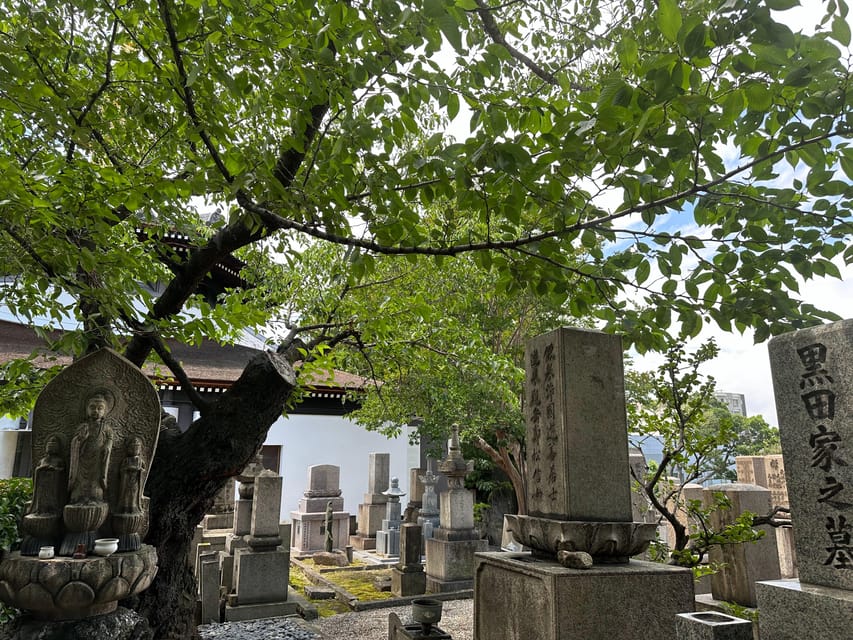
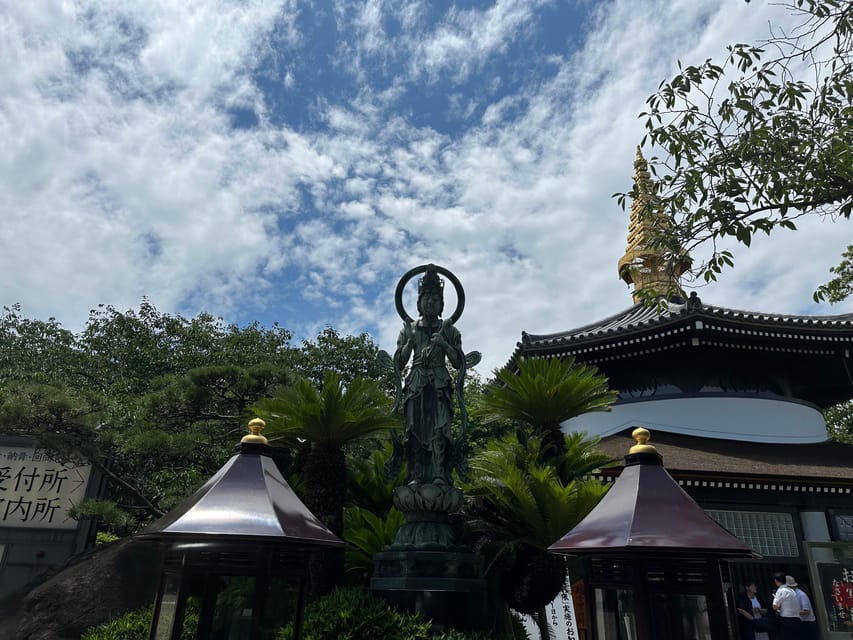
The Pure Land Garden changes the tone. After the formal central precinct, the garden offers a more reflective setting connected to visions of the Western Paradise.
Pure Land Buddhism centers on Amida, a Buddha associated with rebirth in a paradise in the west. Your guide explains the relationship between the setting sun and this promise of rebirth, a theme with a special connection to the Osaka area and its sunset views.
You do not need a background in Buddhist doctrine to appreciate the idea. The garden gives the teaching a physical setting. Water, paths, and the direction of the sun become part of a larger religious image.
This is also the spot where the tour may feel most peaceful. The garden is not just a pleasant green space inserted into the temple grounds. It helps you understand how Japanese religious sites use scenery to express belief.
The Pure Land Garden admission is included, along with entry to Shitennoji’s main temple complex. That adds value to the $65 cost, since you are not only walking around the outside of the temple. You receive access to the key areas and an explanation of what they mean.
Still, keep your expectations measured. This is a guided introduction, not an extended garden study. The full tour lasts about two hours, and Shitennoji receives the larger share of the scheduled attention, listed as about an hour and a half. If you want long periods for photography or quiet sitting, you may find the pace brisk.
More Temple Walking Tours in Osaka:
- Bangkok: City Highlights Temple and Market Walking Tour
★ 4.5 · 3,990 reviews - Bangkok: Grand Palace and Wat Phra Kaew Guided Walking Tour
★ 4.4 · 2,417 reviews - Bangkok: Wat Pho and Wat Arun Guided Walking Tour
★ 4.6 · 1,720 reviews - Chiang Mai: 3 Hour Old City and Temples Guided Walking Tour
★ 4.6 · 1,568 reviews
Walking toward Isshinji’s modern entrance
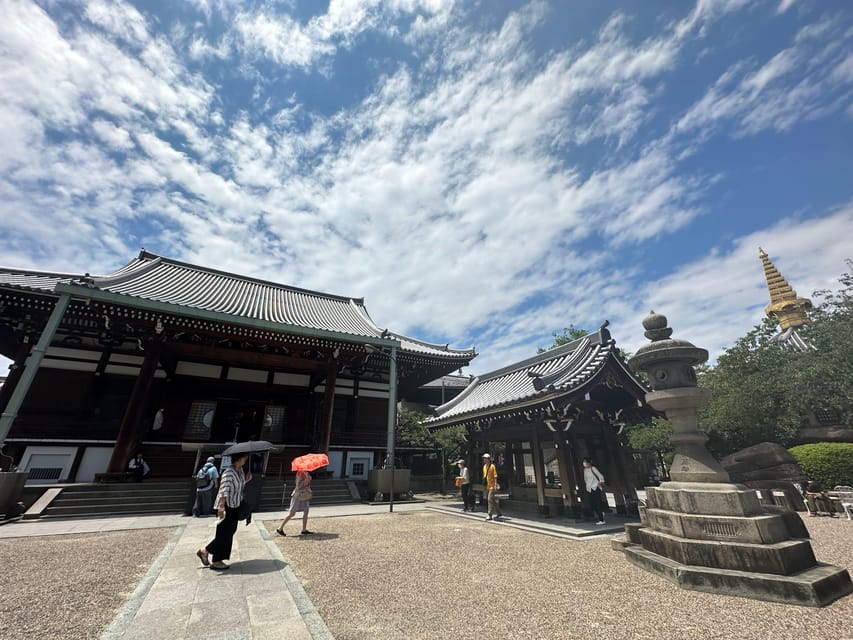
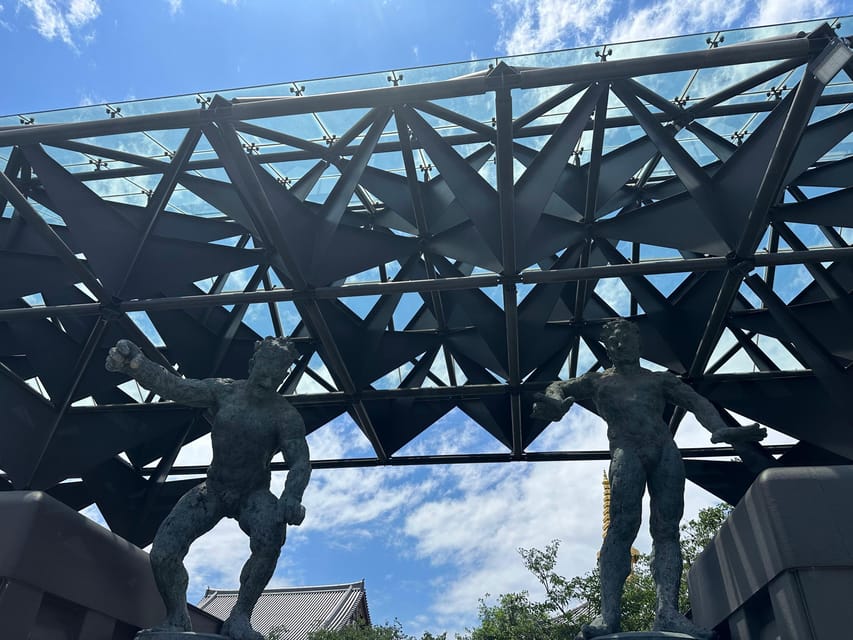
The transition to Isshinji provides one of the tour’s best visual contrasts. Shitennoji presents an early Buddhist plan, while Isshinji greets you with a striking modern gate designed by its current head priest.
That entrance makes an immediate point: a temple with centuries of history does not need to look frozen in the past. Behind the contemporary gate is a temple with nearly 900 years of history, yet its architecture shows a willingness to speak to the present.
I like this change because it prevents the tour from becoming a single note. You move from formal ancient design to a bold, modern interpretation of temple architecture. It is a useful reminder that Japanese religious institutions continue to adapt.
The walk also links two important Osaka sites without requiring a separate transportation plan between them. You finish at Isshinji, so you should think of the tour as a one-way visit. Plan your next stop from Isshinji rather than assuming you will return to the original meeting point.
The supplied schedule describes a two-hour experience, with about 1.5 hours at Shitennoji and a guided Isshinji portion afterward. Exact starting times depend on availability, so check the selected date before booking.
The Bone Buddhas at Isshinji
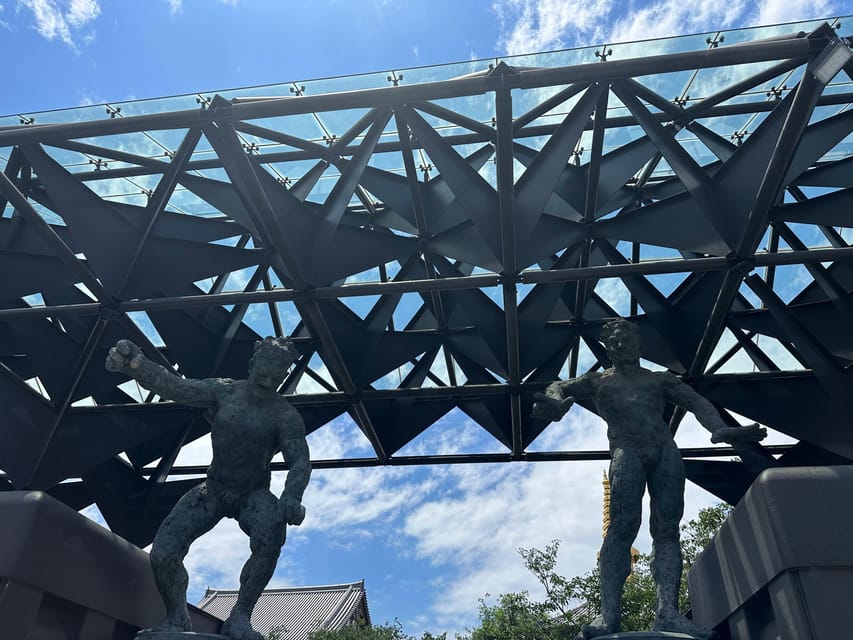
Isshinji is best known for its Bone Buddhas, called Kotsubotoke. The statues are made from cremated ashes, and more than two million ancestors of Osaka residents are connected to the temple’s collection of remains.
This is the tour’s most unusual subject, and also the part that deserves the most respect. The Bone Buddhas are not a novelty or a strange display. They express a communal form of remembrance, bringing the remains of many people together in a Buddhist setting.
Your guide explains how the practice began and how it continues to serve families across generations. The custom shows how a temple can become part of everyday urban life. People come not only to admire architecture or study doctrine, but to maintain a connection with relatives who have died.
The idea may feel unfamiliar to you, especially if you come from a culture where cremated remains are kept by individual families. Isshinji presents another approach, one that joins memory, ritual, and community. The statue becomes a shared focus rather than a private object.
This is also where the tour moves beyond broad historical labels. Shitennoji helps you understand Buddhism’s arrival and public role in Japan. Isshinji helps you see how Buddhist practice can become personal, practical, and connected to family life.
You may find this section emotionally heavier than the first temple. That is not a flaw, but it is worth knowing in advance. If you prefer light sightseeing with little discussion of death or funerary customs, this tour may not suit your mood.
What the $65 price buys you
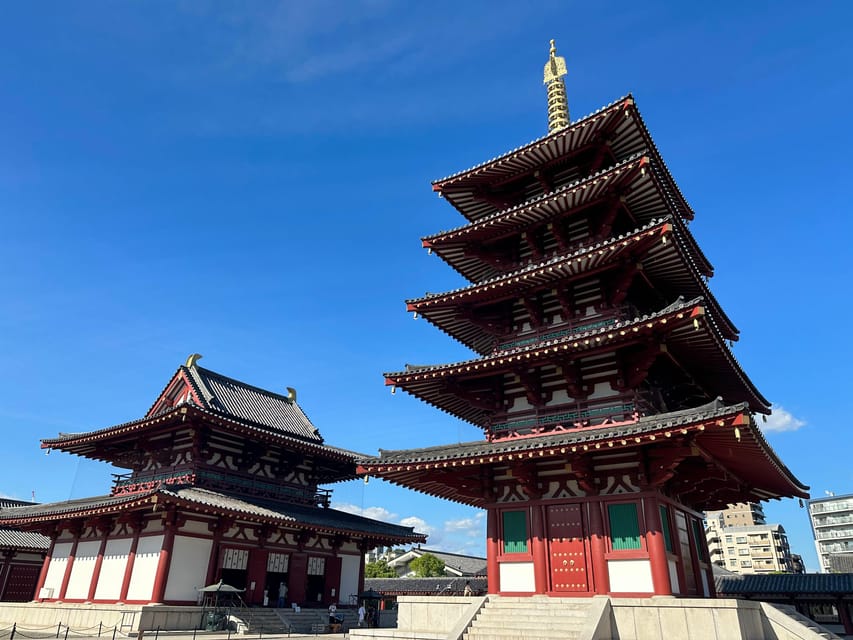
At $65 per person, the tour is priced above a self-guided temple visit, but you are paying for interpretation and access rather than transportation. The fee includes a professional English-speaking guide, guided visits to both temples, entry to Shitennoji’s main complex, and entry to the Pure Land Garden.
The private-group format improves the value for people who want questions answered. A guide can explain the Four Heavenly Kings, the temple plan, Pure Land beliefs, and the Bone Buddhas in one connected story. Without that context, you would still see attractive gates and buildings, but much of the meaning would remain hidden.
The price is less compelling if you only want a quick look at temple exteriors. You will need to arrange your own transportation to the Ishidori gate, and the tour ends at Isshinji. There is no food, drink, or personal spending included.
For a visitor who values cultural explanation, the cost is reasonable. The experience covers two significant sites and offers access to the most important paid parts of Shitennoji. For a casual sightseer with limited interest in religion, a cheaper self-guided visit may be enough.
The booking terms also give you some flexibility. You can cancel up to 24 hours in advance for a full refund, and you can reserve now while paying later. Starting times vary, so check availability for your chosen day.
Who should book this temple walk
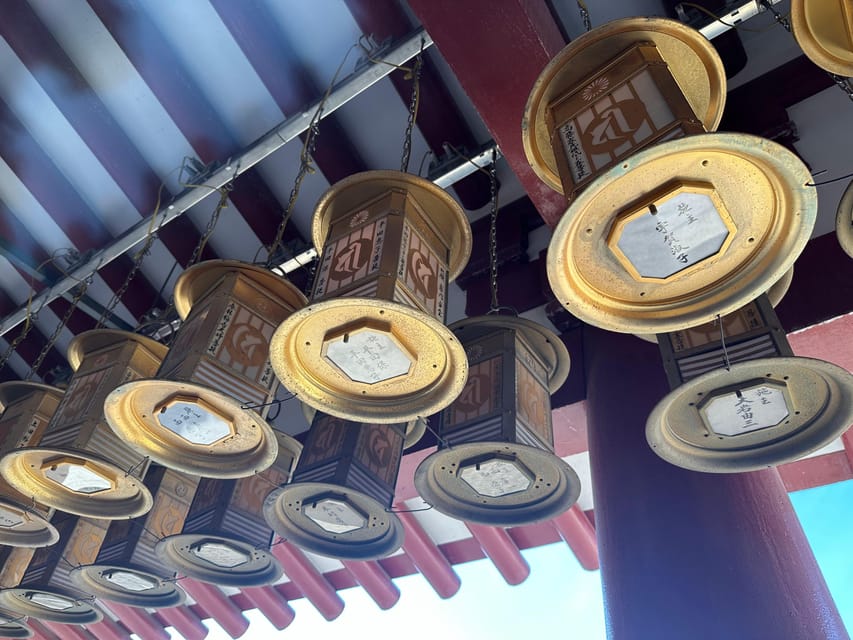
I would choose this tour if you want to understand Osaka beyond food and shopping. It suits first-time visitors who want a clear introduction to Japanese Buddhism, as well as repeat visitors looking for a quieter side of the city.
It is particularly good for you if:
- You enjoy architecture with an explanation of how it works.
- You want a private group rather than a large scheduled crowd.
- You are curious about Japanese funerary traditions.
- You prefer a focused two-hour visit instead of a full-day religious tour.
- You want a guide who can speak English or Japanese.
- You appreciate a tour with a strong beginning, middle, and end.
Families may find the Bone Buddhas especially thought-provoking, though the subject of cremation may not suit very young children. Anyone seeking a relaxed garden visit should remember that the Pure Land Garden is one part of a broader history tour, not the entire focus.
The strongest praise connected to this experience centers on the guide’s ability to explain Japanese culture and religion in a way that helps you understand the country better. That is the real reason to book. The buildings are worth seeing, but the guide turns them into a story you can follow.
Final call: book it for meaning, not just scenery
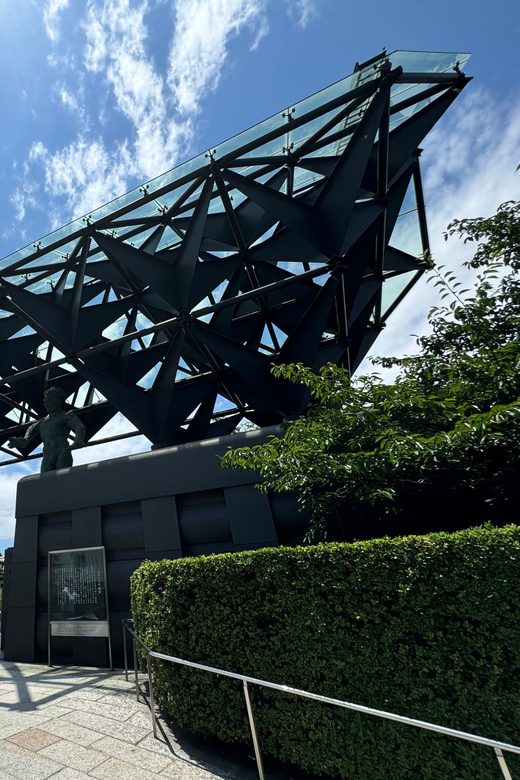
Book this tour if you want two very different temples and a clear lesson about how Buddhism shaped Japan. Shitennoji gives you the early national story, while Isshinji brings the subject into modern Osaka through its Bone Buddhas and family remembrance.
Skip it if you want a fast sightseeing loop, a food-focused walk, or a long garden visit with no discussion of death and religious practice. The tour asks for curiosity and a little seriousness.
For $65, the strongest value comes from the private guide, the included Shitennoji admissions, and the connection between the two sites. You leave with more than photographs of temple gates. You gain a practical sense of how Buddhism moved from an early public tradition to a personal part of urban life.
FAQ
How long does the Osaka temple tour last?
The tour lasts two hours.
Where does the tour begin?
It begins in front of the stone torii gate, or Ishidori, at the main entrance of Shitennoji Temple.
How do I find the guide?
The guide will be holding a sign with your name.
Is the meeting point close to public transportation?
Yes. The meeting point is a short walk from Shitennoji-mae Yuhigaoka Station.
Which languages are available?
The tour is available with a live guide in English or Japanese.
Is the tour private?
Yes. It is offered for a private group.
What does the price include?
The $65 price includes a professional English-speaking guide, guided visits to Shitennoji and Isshinji, admission to Shitennoji’s main temple complex, and admission to the Pure Land Garden. Transportation, food, drinks, and personal expenses are not included.
Newly written up around Osaka
- Osaka: Mind & Spirit Balance Temple Reiki Healing★ 5.0 · 41 reviews
- Osaka Temple :Warm Bamboo Oil Massage – Deep Restore〈90min〉★ 5.0 · 14 reviews
- Osaka Temple :Warm Bamboo Oil Massage – Deep Restore〈60min〉★ 4.9 · 19 reviews
- Osaka Temple Head Spa &Matcha Facial – Refresh & Glow〈90min〉★ 5.0 · 24 reviews
- Osaka: Temple Tour and Traditional Calligraphy Lesson★ 4.9 · 24 reviews
- Osaka Morning Tour: Shitennoji Temple, Shinsekai &Doutonbori★ 5.0 · 23 reviews
- Osaka: Minoh Waterfall & Katsuo-ji Temple Half-Day Tour★ 4.7 · 27 reviews
- Osaka: Private Tour of Shitennoji, Osaka’s Oldest Temple★ 4.5 · 6 reviews
Temple Walking Tours, compared.
City Highlights Temple and Market Walking Tour
Read our review →
Asakusa Walking Tour with Sensoji Temple Visit
Read our review →
3 Hour Old City and Temples Guided Walking Tour
Read our review →
Belém Walking Tour with Jerónimos Monastery Ticket
Read our review →
Asakusa Senso-ji Temple and Old Tokyo Walking Tour
Read our review →Belem Walking Tour with Jeronimos Monastery Ticket
Read our review →Browse the lists this tour appears in