
Reviewed · JAPAN TEMPLE TOURS
Itsukushima Shrine: Guided Tour with a Local
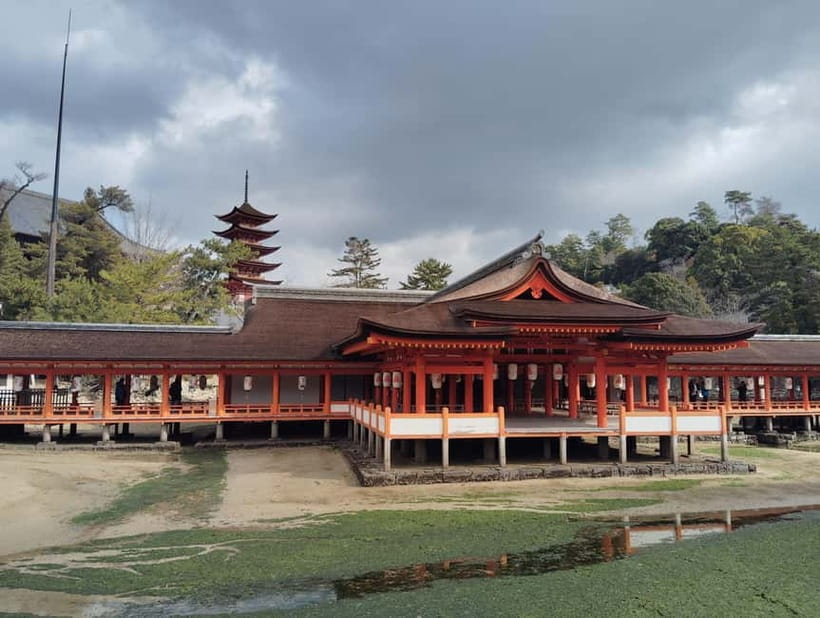
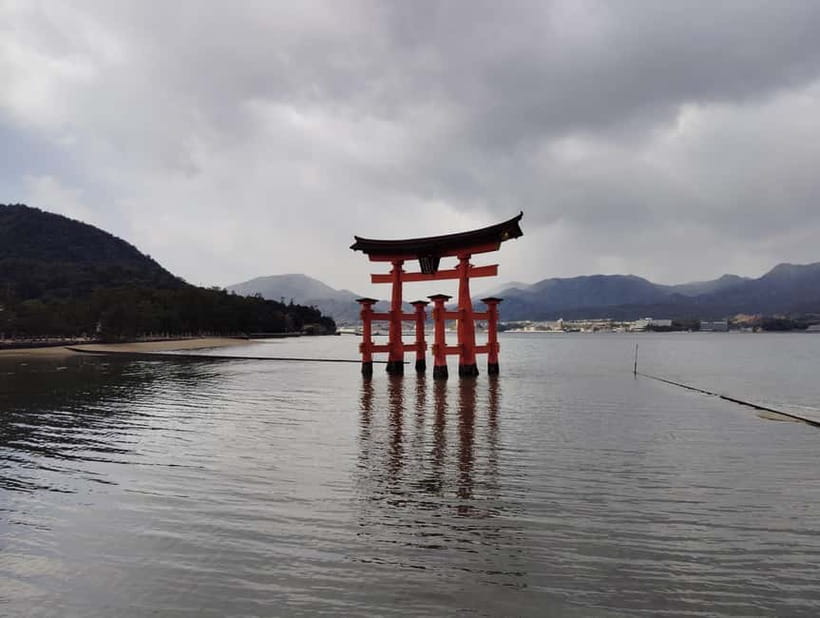
Itsukushima Shrine is built to appear as if it floats on the sea, a bold religious and architectural choice that makes this one of Miyajima’s most memorable sights. This private 90-minute tour helps you understand why the shrine was built this way, rather than leaving you to admire the red corridors and move on.
I like the small private-group format, which gives you room to ask questions and set a comfortable pace. I also like the attention to small construction details, including the shrine’s connection to the sea goddesses and the island behind it. The main drawback is practical: the experience is not suitable for wheelchair users, and $59 is more than a simple self-guided visit.
Key points
- A sea-facing shrine with an unusual design: Learn why the buildings were placed above the water instead of directly on the island.
- Three focused stops in 90 minutes: See Itsukushima Shrine, Senjokaku Pavilion, and Itsukushima Jinja Gojunoto.
- Private guiding in English or Japanese: Guides such as Gordon and Jochy have led this experience.
- Admission is included: Your ticket covers entry to Itsukushima Shrine.
- A useful choice for first-time visitors: The guide explains the religious meaning and architectural decisions that are easy to miss alone.
- A relaxed pace is possible: Gordon has been praised for allowing breaks during hot weather, useful for older family members.
Why Itsukushima Shrine needs a guide
Miyajima is easy to admire and surprisingly easy to misunderstand. The red gates, long wooden walkways, and open views across the water make fine photographs, but the design has a purpose beyond appearance.
Itsukushima Shrine is dedicated to the goddesses of the sea. The shrine’s placement above the water is tied to the sacred character of the island and to the wish to avoid damaging the land behind it. Your guide explains how religion, geography, and building technique meet in one place.
That context is the real reason to book this experience. Without it, you may notice that the shrine seems to float, but not understand why the architects chose such a demanding arrangement. You may also miss the link between the sea, the island, and the shrine’s worship.
A guide can also answer questions as they come up. The experience is private, so you are not trying to hear a distant voice in a large group or waiting for a general explanation to finish before asking about a detail that caught your eye.
Other temple visits near Japan we have written up
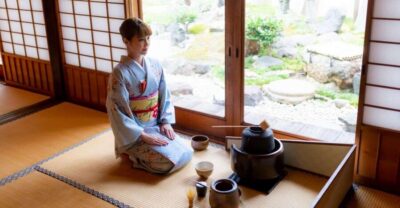
- Kyoto: Tea Ceremony Ju-An at Jotokuji Temple
★ 4.9 · 3,207 reviews - Osaka/Kyoto:Kinkakuji,Arashiyama,FushimiInariShrine,NaraPark
★ 4.1 · 1,596 reviews - Tokyo: Asakusa Walking Tour with Sensoji Temple Visit
★ 4.8 · 1,583 reviews
Meeting by the Taira no Kiyomori statue
The tour begins in front of the Taira no Kiyomori statue on Miyajima. Your guide waits with a yellow sign marked DeepExperience, which gives you a clear visual marker in an area where finding the right person can otherwise take time.
This meeting point also sets the tone for the tour. Taira no Kiyomori is closely connected with the development of Itsukushima Shrine, so the statue is not just a random place to gather. Your guide can begin placing the shrine within the island’s religious and historical setting before you enter.
Allow yourself enough time to reach the statue. The experience information does not include transportation from Hiroshima or the ferry terminal, so you should plan that part separately. One Japanese guest had a guide meet them at Hiroshima Station and provide explanations during a lengthy train delay, but that should not be treated as the standard meeting arrangement for this booking. The stated meeting point is on Miyajima, by the statue.
Inside Itsukushima Shrine for 50 minutes
The largest part of the tour, about 50 minutes, is spent at Itsukushima Shrine. This is where the experience earns its price if you value explanation rather than simply admission.
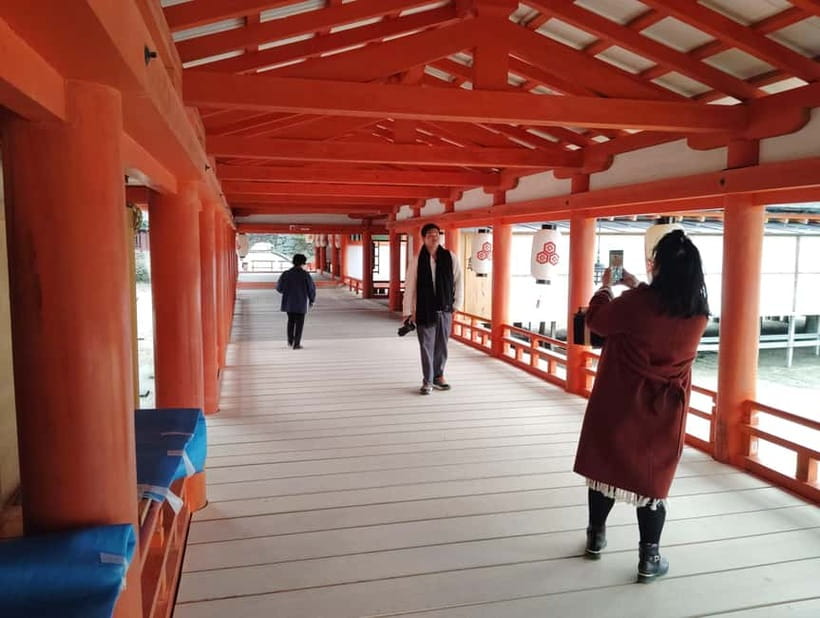
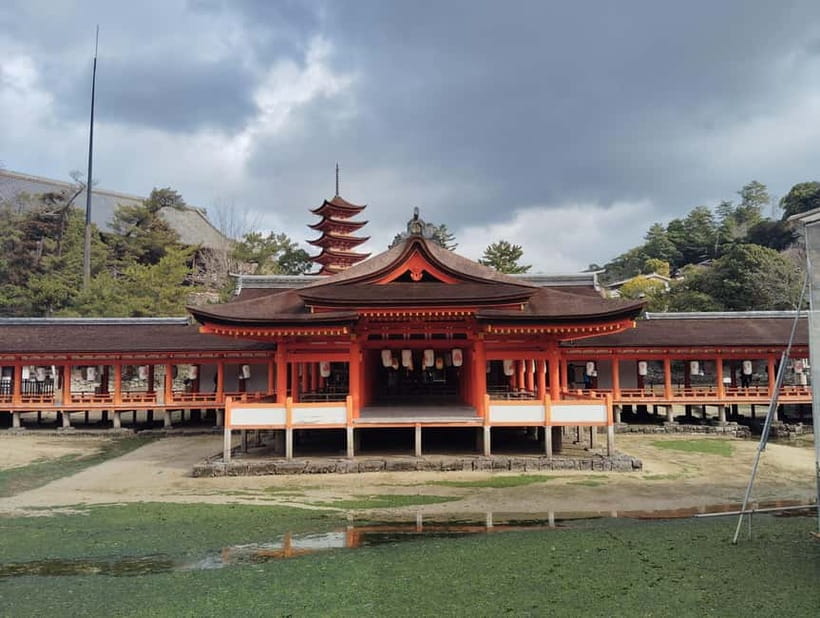
You will see the shrine’s wooden buildings and corridors arranged above the sea. The design creates a strong visual effect, but the guide’s job is to explain the practical and religious reasons behind it. You learn about the sea goddesses, the island’s connection to the gods, and the architectural choices that help the shrine function in such an unusual setting.
I would pay close attention to the transitions between land, building, and water. The shrine is memorable because those three elements are treated as one setting. The guide can point out how the structure was planned to preserve the sacred island behind it, giving the buildings a role that is more than decorative.
The tour also covers the shrine’s World Heritage status. That designation is useful here because it tells you that the site is valued for its cultural and architectural importance, not only for its photogenic red color. Your guide connects the formal recognition with what you are seeing on the ground.
The private format should help if your group has mixed interests. You can ask about construction, religion, photography, or the island’s traditions without needing to fit into a fixed lecture. Guides such as Gordon and Jochy have been singled out for clear English, patience, enthusiasm, and willingness to answer questions.
Do not expect a long, slow historical seminar. Ninety minutes covers several important places, and the shrine visit itself takes roughly half that time. The benefit is focus: you receive a clear explanation of the main ideas without giving up an entire morning or afternoon.
Senjokaku Pavilion and its open scale
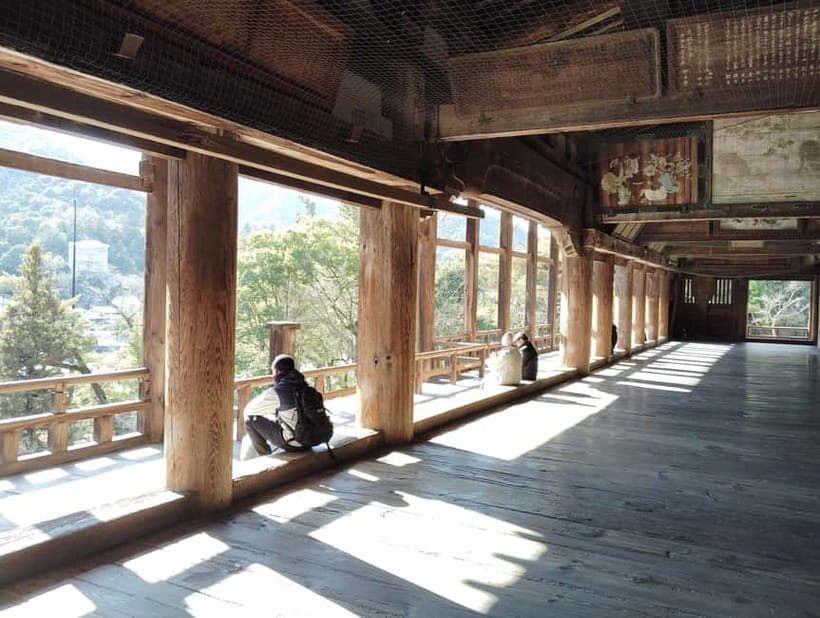
The next stop is Senjokaku Pavilion, with about 20 minutes for visiting, guiding, and sightseeing. Its name is often translated as Hall of a Thousand Tatami Mats, which gives you a sense of its intended scale, even if you do not need to spend long here to appreciate it.
The pavilion offers a useful contrast with the shrine. Its broad, open character helps you think about how religious buildings can serve different purposes and create different moods. Your guide can add architectural details that make the stop more than a quick photo break.
Twenty minutes is enough for a guided look, but not enough for an unhurried exploration of every corner. If you like to photograph architecture from several angles, tell your guide early. The private group makes that conversation easier, though the total tour time remains fixed at 90 minutes.
This stop also gives the experience some breathing room. The shrine can feel detailed and linear, with its corridors and water-facing structure. Senjokaku provides a change of scale before the tour ends near the pagoda.
A different set of gates, same trip:
- Nikko: Kegon Falls, Lake Chuzenji & Toshogu Temple
★ 4.6 · 1,577 reviews - Tokyo: Nikko Toshogu Shrine and Kegon Waterfall Tour
★ 4.5 · 1,266 reviews - Tokyo Panoramic 1 Day: Meiji Shrine, Asakusa, Odaiba and SKYTREE®
★ 4.5 · 1,222 reviews - 1-Day Snow Monkeys, Zenko-ji Temple & Sake in Nagano
★ 5.0 · 1,020 reviews
The five-story pagoda in five minutes
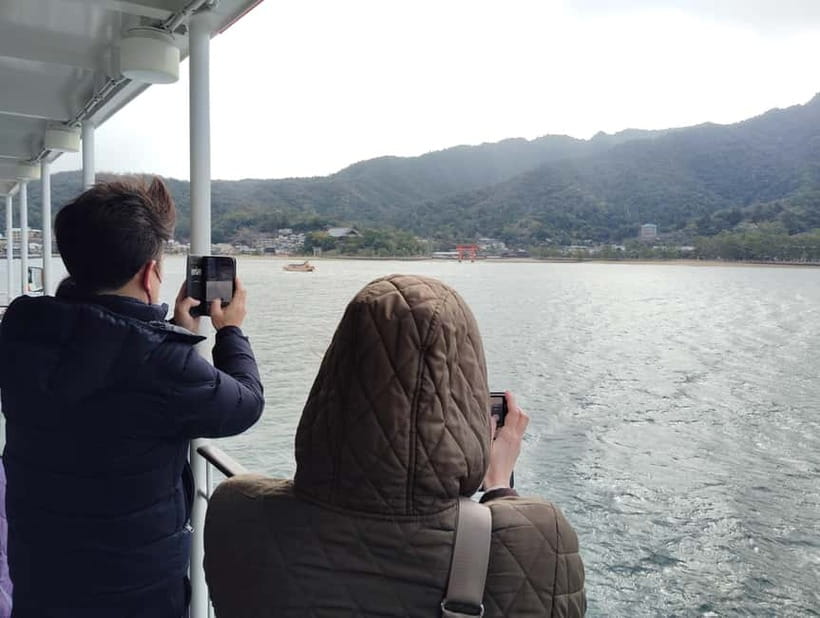
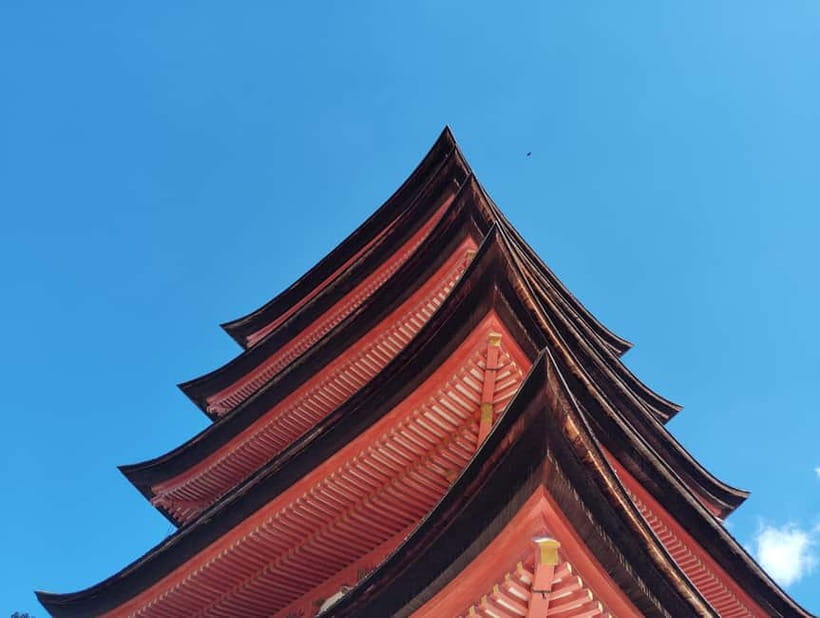
The final sight is Itsukushima Jinja Gojunoto, the five-story pagoda. The scheduled visit is brief, about five minutes, so treat it as a concise explanation and viewing stop rather than a full interior tour.
The pagoda adds a strong vertical element to the surrounding architecture. After spending time with the low, horizontal lines of the shrine above the water, you can compare the pagoda’s height and form with the rest of the complex.
The tour finishes at the pagoda, which means you are not returned to the starting statue. That is convenient if you plan to continue exploring Miyajima from there, but it is worth noting if you have a strict onward appointment. The information provided does not promise additional sightseeing, transportation, or a return escort after the final stop.
What the guide adds to the experience
The strongest reason to choose this tour is the guide, not simply access to the shrine. Admission on its own lets you enter, but it does not necessarily explain why the shrine is designed to float above the sea or how the sea goddesses shape the meaning of the site.
Gordon has led tours in clear English and has been especially effective with groups that include older family members. A useful detail from his guiding style is that he made time for breaks during hot weather. That matters on Miyajima, where heat, sun, and a steady walking pace can make a short tour feel longer than expected.
Jochy has also led the experience, bringing an enthusiastic and patient approach. If you have questions, this kind of guide can turn a standard sightseeing stop into a conversation about the shrine, the island, and the choices behind the buildings.
You should not assume that a particular guide is guaranteed unless the booking page confirms it. English and Japanese are available, and the private format gives you a better chance to shape the discussion around your group’s interests.
The tour can also work well for personal photographs. One booking included time for the guide to help with photographs involving a favorite character stand. That is a small point, but it shows how a private guide may be more flexible than a large scheduled group.
Is $59 good value?
At $59 per person, this is not the cheapest way to see Itsukushima Shrine. You are paying for admission, a 90-minute private experience, and a guide who explains the site in English or Japanese.
The value depends on how you like to travel. If you enjoy reading signs, studying buildings, and making your own connections, you can visit independently for less. If you want someone to explain the sea goddesses, the floating design, and the World Heritage importance as you walk, the fee is easier to justify.
The private group is important here. A shared tour can cost less, but you may have less control over questions, photo stops, and walking speed. For a family or a small group with different ages, that flexibility can be worth paying for.
I would consider the price fair for a first visit, especially if this is your only organized experience on Miyajima. I would think twice if you already have a guide for the island or prefer to spend a long stretch of time exploring at your own pace.
Timing, comfort, and practical limits
The tour lasts 90 minutes, with 50 minutes at the shrine, 20 minutes at Senjokaku Pavilion, and five minutes at the pagoda. The remaining time is used for meeting, walking, and transitions between the stops.
Wear comfortable shoes. The experience involves moving between several sites, and the guide’s explanations are easier to enjoy when you are not distracted by sore feet. Sunscreen is also sensible, particularly because the shrine’s open design and water-facing setting can leave you exposed to sun.
Bring a camera, but do not use flash photography. Smoking is not allowed. These rules are simple, yet remembering them helps you concentrate on the buildings and keeps the visit respectful.
The tour is not suitable for wheelchair users. The information provided does not give a detailed accessibility assessment, so anyone with mobility concerns should ask the provider for current conditions before booking. The experience may suit older adults if they can walk the route comfortably, especially since breaks can be requested in a private group.
Free cancellation is available up to 24 hours before the start time for a full refund. You can also reserve now and pay later, which is useful when your Miyajima plans depend on transport, weather, or a wider Hiroshima schedule.
Who should book this Miyajima tour?
I would recommend this experience to a first-time visitor who wants the shrine to make sense, not just look beautiful. It is also a good fit for couples, families, and private groups that want to ask questions in English or Japanese.
It suits people interested in architecture and religion particularly well. The tour does not treat the shrine as a quick photo stop. It explains the sea goddesses, the relationship between the buildings and the island, and the reason for constructing the complex above the water.
It may be less suitable for an independent visitor who wants several hours for photography, quiet observation, or wandering without a schedule. The 90-minute route is focused, and the five-minute pagoda stop is brief.
Hot weather is another reason to consider the private format. A guide can help set a manageable pace, and Gordon’s approach included rest breaks for older members of a group. Still, you should bring sunscreen, wear comfortable shoes, and avoid expecting the guide to replace your own planning for the rest of Miyajima.
Should you book it?
Book this tour if you want a clear explanation of why Itsukushima Shrine floats above the sea and how its religious purpose shaped its architecture. The combination of included admission, a private guide, and three well-chosen stops gives you a focused introduction to Miyajima.
Skip it if you are mainly looking for the lowest possible cost or several hours of unscheduled exploration. For most first-time visitors who want context, the $59 fee buys more than entry: it gives you a guide who can turn an impressive view into a meaningful place.
FAQ
How long does the Itsukushima Shrine tour last?
The tour lasts 90 minutes. It includes about 50 minutes at Itsukushima Shrine, 20 minutes at Senjokaku Pavilion, and five minutes at the five-story pagoda, with the remaining time used for transitions and guiding.
Where does the tour begin?
Meet your guide in front of the Taira no Kiyomori statue on Miyajima. The guide will hold a yellow sign marked DeepExperience.
Which languages are available?
The tour is available with a live guide in English or Japanese.
Is admission to Itsukushima Shrine included?
Yes. Admission to Itsukushima Shrine is included in the price.
Is this a private tour?
Yes. The experience is operated as a private group tour.
Can I cancel the booking?
You can cancel up to 24 hours in advance for a full refund. Reserve now and pay later is also available.
Newly written up around Japan
- From Asakusa: Old Tokyo, Temples, Gardens and Pop Culture★ 5.0 · 47 reviews
- Goshuin Collecting tour at Asakusa Local Temples & Shrines, Tokyo★ 5.0 · 8 reviews
- Private guided tour: Mt. Aso volcano, grasslands, Aso Shrine★ 5.0 · 19 reviews
- Takayama Inari Shrine Tour with Private Transportation★ 5.0 · 5 reviews
- Tokyo: Snow Monkey and Zenkoji Temple Day Trip In Low Price★ 5.0 · 5 reviews
- Tokyo: Gotokuji Culture Walk & Lucky Cat Temple Experience★ 4.9 · 5 reviews
- :Tokyo,Shibuya /Meiji Shrine tour in KIMONO/English-friendly★ 5.0 · 4 reviews
- Tokyo: Visit 5 Shrines & Collect Goshuin on Private Tour★ 5.0 · 3 reviews
Japan Temple Tours, compared.
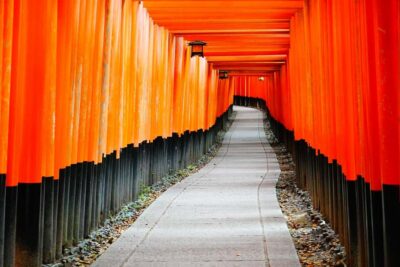
Osaka/Kyoto:Kinkakuji,Arashiyama,FushimiInariShrine,NaraPark
Read our review →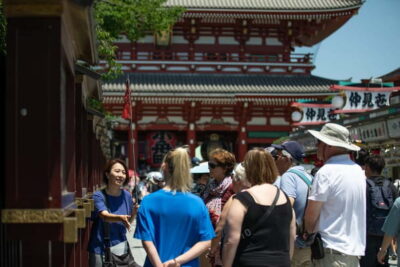
Asakusa Walking Tour with Sensoji Temple Visit
Read our review →
Nikko Toshogu Shrine and Kegon Waterfall Tour
Read our review →
Tokyo Panoramic 1 Day: Meiji Shrine, Asakusa, Odaiba and SKYTREE®
Read our review →
1-Day Snow Monkeys, Zenko-ji Temple & Sake in Nagano
Read our review →
Arashiyama Bamboo, Temple, Monkeys, or Secret Sake Brewery
Read our review →Browse the lists this tour appears in