
Reviewed · KYOTO TEMPLE TOURS
Kyoto: Zen Experience in a Hidden Temple
The most striking part of this Kyoto experience is the chance to sit in a quiet sub-temple with Eitetsu Nishida, Jusho-in’s 16th-generation abbot. You practice two 20-minute rounds of zazen, then look out over a garden created about 400 years ago while learning how tea fits into Zen life.
I like the thoughtful break between meditation sessions, which gives you time to stretch and ask questions. I also like the small-group setting, the warm English-speaking support, and the professional photographs sent after the experience. The main caution is physical: sitting upright for 20 minutes can be tough, especially in a kimono or on a cold day.
Key points at a glance
- Two guided 20-minute zazen sessions: A manageable introduction for beginners, with a pause between sittings.
- A rare meeting with a Zen abbot: Eitetsu Nishida explains Zen in an approachable way and shares the session with you.
- Jusho-in’s historic garden: The garden is attributed to painter Eitoku Kano and changes character with every season.
- Matcha with seasonal wagashi: The tea portion shows you how to receive, appreciate, and drink powdered green tea.
- Quiet surroundings inside Myoshin-ji: You step away from Kyoto’s busiest sightseeing routes without leaving the city.
- Photos included afterward: A photographer records the occasion so you can focus on meditation rather than taking pictures.
Why this quiet Kyoto experience feels different
Kyoto has no shortage of temples, but most visits involve walking through halls, admiring gardens, and moving on to the next sight. At Jusho-in, you slow down and take part in a practice rather than simply looking at one.
The temple belongs to Myoshin-ji, one of Japan’s largest Zen temple complexes. Jusho-in was founded in 1599 and is one of 46 sub-temples within the complex. The approach from Myoshin-ji’s north gate is part of the experience. Your guide leads you through the grounds, helping you find the right entrance and explaining where you are going.
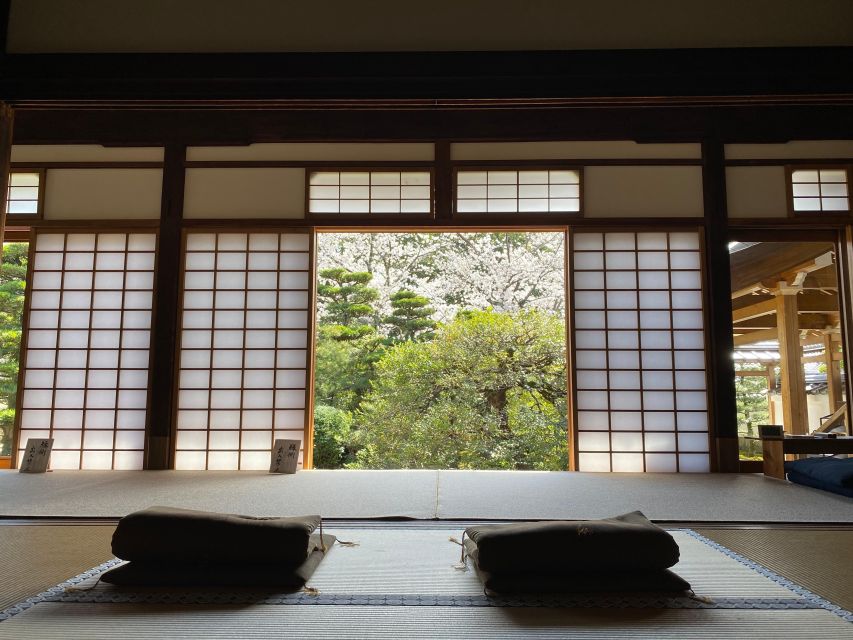
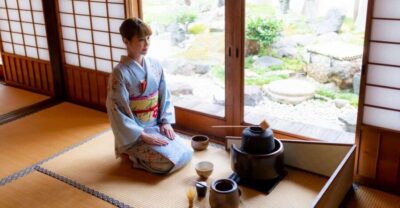
The setting feels removed from central Kyoto’s busy sightseeing circuit. You are still close to the city, but once you enter the small temple building, the pace changes. The open view toward the garden gives the meditation a strong sense of place. You are not sitting in a plain classroom or hotel room. You are practicing in a working Zen setting with a priest.
I would allow extra time to explore the wider Myoshin-ji grounds before or after the session. The activity itself lasts two hours, but the larger complex rewards a quiet walk. Access to other parts of the temple grounds may involve a separate fee, so ask your guide what is open on the day.
Other temple visits near Kyoto we have written up
- Kyoto: Tea Ceremony Ju-An at Jotokuji Temple
★ 4.9 · 3,207 reviews - Osaka/Kyoto:Kinkakuji,Arashiyama,FushimiInariShrine,NaraPark
★ 4.1 · 1,596 reviews - Arashiyama Bamboo, Temple, Monkeys, or Secret Sake Brewery
★ 4.8 · 886 reviews
Meeting Abbot Eitetsu Nishida at Jusho-in
Eitetsu Nishida brings an unusual path to his role. Before becoming a monk, he worked for 10 years as a national public servant. He then completed three and a half years of rigorous training before becoming the 16th-generation abbot of Jusho-in.
That background helps explain the tone of the experience. This is not presented as a stern religious lesson. Nishida is known for his cheerful manner, humor, and love of animals. He explains the basics of Zen and zazen in a way that works for first-time meditators, while still giving people with meditation experience something to consider.
English support is provided throughout. Guides and interpreters help explain the priest’s teaching and the practical details of the sitting posture. The quality of interpretation can vary with the individual guide, and one recent participant found the abbot’s strong English accent difficult to follow at times. If a point is unclear, ask for it to be translated again. The guides are there to help, and the schedule allows time for questions.
You should not expect a long academic lecture on Buddhist history. The value is more direct. You learn what to do with your body, where to place your attention, and how Zen favors direct experience over relying only on religious texts.
What two 20-minute meditation sessions are really like
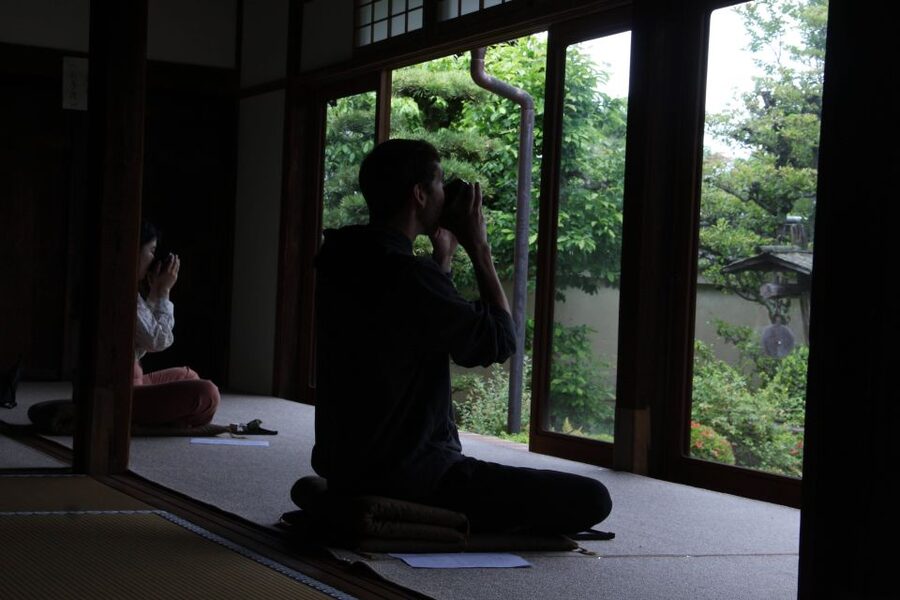
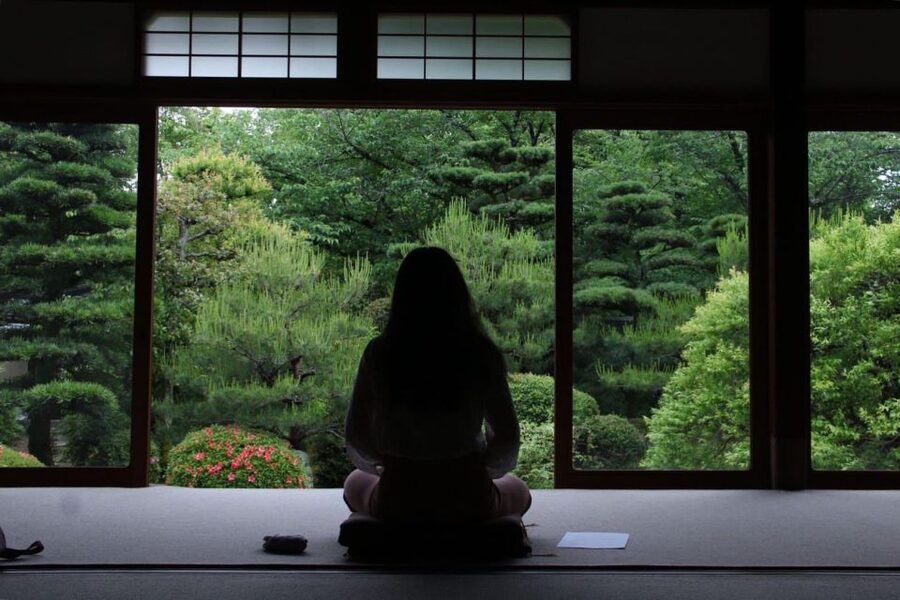
The zazen practice is divided into two 20-minute sessions. Before the first sitting, the priest or temple assistants explain the basics, including posture and the purpose of meditation. The pause between sessions lets you move, stretch, and ask questions before starting again.
For a beginner, 20 minutes can feel both short and surprisingly demanding. The point is not to force your mind to become blank. You learn to sit still, notice distractions, and return your attention to the practice. That makes the session accessible even if you have never meditated before.
The temple team is used to helping people who cannot sit comfortably on the floor. Chairs are available, so tell the guide if your knees, hips, or back make floor sitting difficult. You can take part without copying a perfect cross-legged pose.
The room may be open to the garden, which adds beauty but can also mean cool air depending on the season. Blankets have been available when needed. Dress for comfort rather than appearance. A rented kimono may look wonderful in photographs, but its tight sleeves and restricted shape can make meditation awkward. Comfortable clothing is the sensible choice.
This is also a rain-or-shine activity. That is not a major problem because the central experience takes place indoors, but weather can affect how the garden feels and how comfortable you are near open doors.
The garden view and the value of sitting still
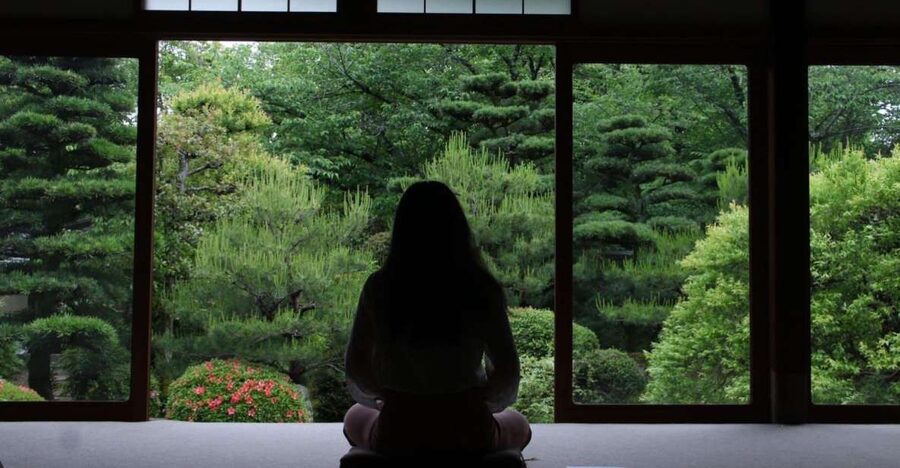
Jusho-in’s garden is attributed to Eitoku Kano, a celebrated 16th-century painter. Its design has remained unchanged since it was created, giving the tea and meditation portions a strong connection to the temple’s past.
The garden’s character depends on the season. Spring brings cherry blossoms, summer offers fresh greenery, autumn brings colored leaves, and winter may frame the garden with snow. You may not see every feature described in a seasonal brochure, but the view itself gives you a calm focus during and after zazen.
I like the way the garden is used here. It is not merely a backdrop for photographs. You sit facing it while your attention shifts between the natural view and the instructions for meditation. After the formal sitting ends, there is time to appreciate the garden more casually and talk with the priest.
The quiet is part of what you are paying for. Kyoto’s major sights can be crowded and noisy, especially during popular seasons. Jusho-in gives you a protected two-hour pause. You still receive cultural context, but the visit does not feel rushed from one photo stop to the next.
A different set of gates, same trip:
- Kyoto: Arashiyama Bamboo Forest, Monkeys, Matcha & Temple Tour
★ 5.0 · 759 reviews - Osaka/Kyoto: Arashiyama, Nara & Fushimi Inari Shrine w/Lunch
★ 4.4 · 754 reviews - Kyoto Zen Meditation & Garden Tour at a Zen Temple with Lunch
★ 5.0 · 441 reviews - KYOTO Tea Ceremony with kimono near by Imamiya Jinjya Shrine
★ 5.0 · 343 reviews
Matcha, wagashi, and the Zen connection
After zazen, the focus turns to tea. Eitetsu Nishida explains matcha and its place in Japanese culture, while a tea specialist or assistant demonstrates how to receive and drink it. You are served powdered green tea with a traditional seasonal sweet, known as wagashi.
The sweet is not just a snack. Its flavor balances the bitterness of matcha, and the order of the ritual encourages you to notice small details. You learn the etiquette of receiving the bowl, appreciating its appearance, eating the sweet, and drinking the tea.
This is not a full-length formal tea ceremony with an elaborate series of utensils and procedures. It is a focused introduction designed to fit into a two-hour experience. That makes it a good choice if you want cultural understanding without committing half a day to a formal ceremony.
The tea portion also gives the experience a natural change of pace. The first half asks you to sit quietly and control your attention. The second half lets you talk, taste, and ask questions while still keeping the mood calm. The seasonal wagashi is carefully paired with the tea, and the presentation is part of the pleasure.
The photo session is more useful than it sounds
A photographer uses a single-lens reflex camera to record moments during the experience. The photo data is sent within a few days after the session.
That small detail has practical value. During a meditation class, you do not want to worry about where to place your phone or when to take pictures. You can remain present while someone else records the temple setting, tea service, and group moments.
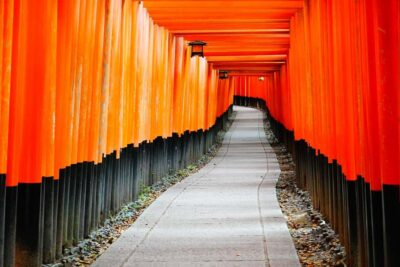
Do not treat the photography as a studio portrait session. It is a record of the experience, not a replacement for being there. The result gives you something more personal than another snapshot of a famous Kyoto gate, especially because it captures you taking part in the activity.
Price, group size, and overall value
The price is $109 per person for two hours. That is more than a basic temple entrance fee, but you are paying for several elements together: entry to Jusho-in, an English-speaking guide, instruction from the chief priest, two meditation sessions, matcha and seasonal sweets, and professional photographs afterward.
The value is strongest if you want personal access and guidance. You could visit a temple for less money and sit quietly on your own, but you would not receive the same explanation of zazen, direct time with the abbot, or help with the tea customs. The small-group or private format also gives you more room to ask questions than a large sightseeing tour.
Private sessions are available, although availability and pricing may depend on the option you choose. Small groups are the better middle ground for many people. You get the shared atmosphere of a group while keeping the setting quiet and personal.
The experience is especially good value for people who have already seen Kyoto’s major temples and want a more participatory activity. If your main goal is simply to check another famous building off your list, the price may feel high. If you want an hour of guided meditation, a cultural lesson, and a meaningful setting, it is easier to justify.
Who should book this, and who should think twice
You should consider booking this if you:
- Want an introduction to Zen without needing prior meditation experience
- Prefer quiet cultural activities to large sightseeing groups
- Are curious about how matcha and Zen relate to one another
- Enjoy asking questions and having time with a local religious teacher
- Want a Kyoto activity suitable for different ages
- Need a slower morning or afternoon away from crowded streets
Families can take part, and the activity has welcomed groups containing children, young adults, and older adults. The main issue is comfort during the sitting periods, not age or experience.
You should think twice if you dislike sitting still, have severe difficulty getting down to the floor, or want a highly active tour. Chairs are available, but the heart of the experience remains quiet sitting. The temple is not wheelchair accessible, which is an important limitation.
Also avoid wearing a rented kimono for this activity. Traditional clothing may be suitable for photographs elsewhere in Kyoto, but it can make the meditation posture uncomfortable here.
Practical details before you go
The meeting point is at the north gate of Myoshin-ji Temple, listed at 18 Taniguchisonomachi. The exact meeting arrangement can vary by the option you book, so check your confirmation carefully.
You meet an English-speaking guide and walk to Jusho-in. Hotel pickup and drop-off are not included. Plan enough time to reach Myoshin-ji without rushing, since arriving late could cut into the quiet opening of the session.
There are no special items you must bring. Wear loose, comfortable clothing and socks or footwear suitable for entering a temple. Weapons, sharp objects, alcohol, and drugs are not allowed.
The activity runs in rain or shine. You can cancel for a full refund up to 24 hours before the start time. A reserve-now, pay-later option is available, which helps if you are still arranging your Kyoto schedule.
A calm break from Kyoto’s busy side
The best part of this experience is its balance. You get a real introduction to zazen, but you are not expected to become a Zen practitioner in two hours. You meet a monk, but the tone remains friendly rather than formal. You learn tea etiquette, but you are not asked to sit through a lengthy ceremony.
I also like that the two meditation sessions are separated by conversation and stretching. That structure makes the activity much more approachable than one long period of silence. It gives you a chance to understand what you are doing before trying it again.
Some details may vary with the guide, interpreter, season, and group size. The abbot’s English may be easier for some people to follow than others, so make use of the translation support. The floor seating can be challenging, but chairs and blankets help.
Should you book the Jusho-in Zen experience?
Book it if you want to experience Kyoto through participation rather than sightseeing alone. The combination of zazen with Abbot Eitetsu Nishida, a historic garden, matcha, wagashi, and photographs creates a focused two-hour encounter with Japanese culture.
Skip it if you want a fast temple visit, a low-cost attraction, or an activity without floor sitting. For everyone else, especially first-time meditators and repeat visitors to Kyoto, this is a thoughtful use of two hours and one of the stronger choices for getting beyond the usual temple route.
FAQ
Where does the experience begin?
You meet at the north gate of Myoshin-ji Temple, listed at 18 Taniguchisonomachi. The exact meeting point may vary depending on the option booked.
How long does the experience last?
The experience lasts about two hours, including explanations of zazen, meditation, the tea portion, and the garden visit.
Is the activity available in English?
Yes. An English-speaking live guide is provided, along with translation support for the priest’s explanations.
Who leads the meditation?
Eitetsu Nishida, the 16th-generation abbot of Jusho-in, guides the experience and explains the practice of zazen.
Do I need meditation experience?
No. The activity is open to beginners, and the basics of zazen are explained before the meditation sessions.
How long are the meditation sessions?
You take part in two separate 20-minute zazen sessions, with a break between them for stretching and questions.
Can I use a chair during meditation?
Yes. Chairs are available for people who need help sitting on the floor.
Is the temple wheelchair accessible?
No. The experience is not wheelchair accessible.
What is included in the price?
The price includes the guide, temple entry, the chief priest’s teaching, matcha, Japanese sweets, and photographs taken with a single-lens reflex camera. Hotel transportation is not included.
Newly written up around Kyoto
- Kyoto: Fushimi Inari Taisha Shrine Walking Tour with Guide★ 4.8 · 18 reviews
- Kyoto: Fushimi Inari Shrine Walking Tour★ 5.0 · 72 reviews
- Kyoto Tea Ceremony & Kiyomizu-dera Temple Walking Tour★ 5.0 · 115 reviews
- Kyoto: Calligraphy class at Buddhist temple in city center★ 5.0 · 167 reviews
- Kyoto: Zen Meditation at a Private Temple with a Monk★ 5.0 · 202 reviews
- Kyoto: Arashiyama Bamboo, Temple, Matcha, Monkeys & secret spots★ 5.0 · 219 reviews
- Kyoto: 3-Hour Fushimi Inari Shrine Hidden Hiking Tour★ 4.9 · 270 reviews
- KYOTO Tea Ceremony with kimono near by Imamiya Jinjya Shrine★ 5.0 · 343 reviews
Kyoto Temple Tours, compared.
Osaka/Kyoto:Kinkakuji,Arashiyama,FushimiInariShrine,NaraPark
Read our review →
Arashiyama Bamboo, Temple, Monkeys, or Secret Sake Brewery
Read our review →
Arashiyama Bamboo Forest, Monkeys, Matcha & Temple Tour
Read our review →
Osaka/Kyoto: Arashiyama, Nara & Fushimi Inari Shrine w/Lunch
Read our review →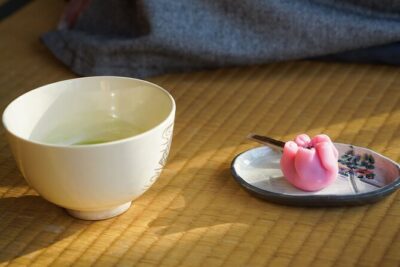
Kyoto Zen Meditation & Garden Tour at a Zen Temple with Lunch
Read our review →
KYOTO Tea Ceremony with kimono near by Imamiya Jinjya Shrine
Read our review →
Browse the lists this tour appears in