
Reviewed · JAPAN TEMPLE TOURS
Miyajima: Cultural Experience in Zen Temple
Miyajima’s Tokujuji Temple offers a welcome change from the island’s crowded paths near the famous torii gate. You choose a kimono, learn a traditional craft, and spend time in a quiet temple setting. The best part is the personal touch: staff help with dressing, explain each step patiently, and take photos for you.
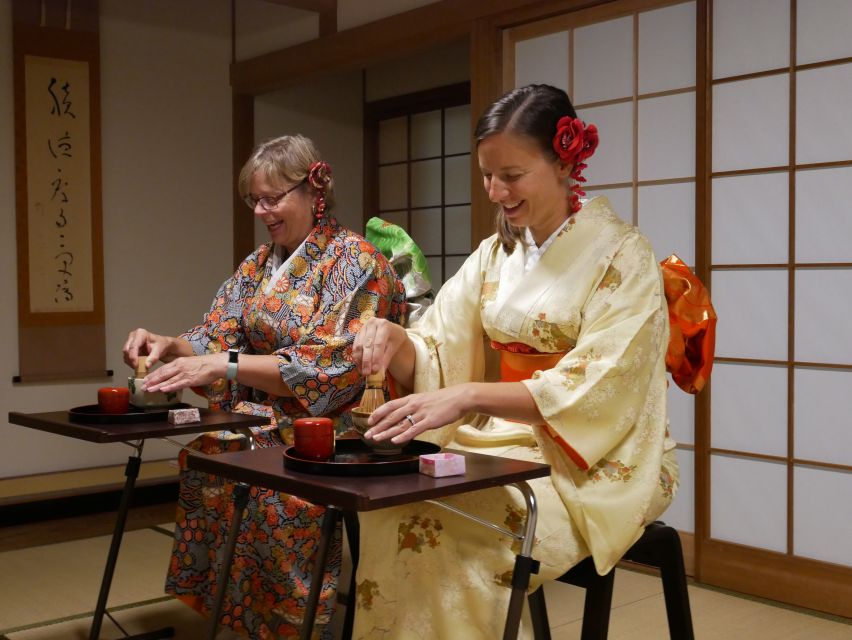
I especially like the hands-on souvenirs. Your calligraphy becomes a finished piece with your name in Japanese, while amulet making lets you choose fabric, cord, and a wish. I also like the calm tea ceremony, served at a table and chairs in Ryurei style, which is easier for many people than sitting on the floor.
The main consideration is that the experience can feel short if you want to do every activity. It lasts about one to two hours, and the exact program depends on the option you book. You must remove your shoes, and the temple is not suitable for people with limited mobility or children under six.
Key points before you book
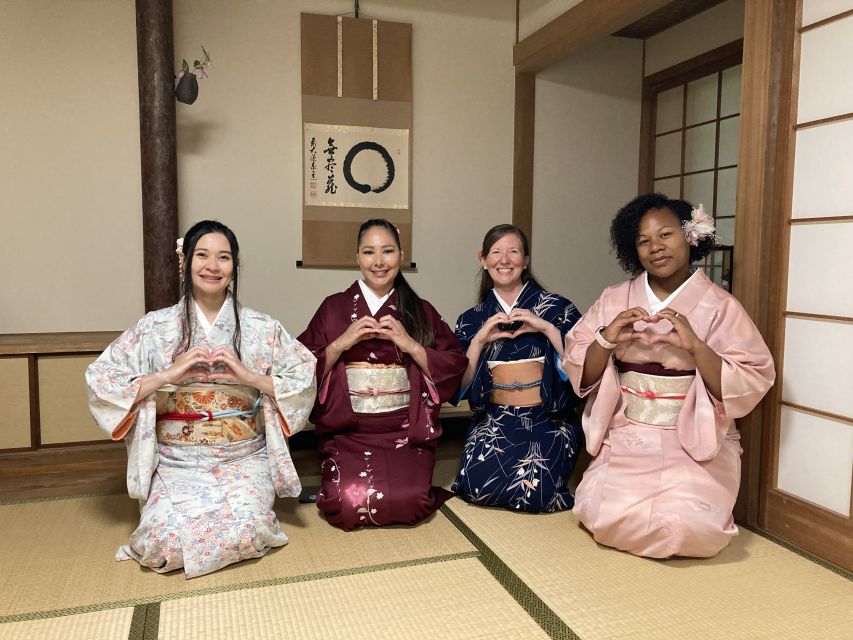
- Choose a kimono from a large selection: Staff dress you properly, including the obi, and help coordinate the rest of the outfit.
- Learn the meaning behind tea service: You watch the tools being purified, tea prepared, utensils cleaned, and the ceremony formally closed.
- Take home Japanese calligraphy: Practice Kanji, Hiragana, or Katakana before signing and wrapping your finished work.
- Make a personal amulet: Select from more than 300 handmade kimono-fabric bags, then add a Kumihimo cord and written wish.
- Get photos in the temple garden: Staff take pictures during the activities and send them by email or AirDrop.
- Plan for about 90 minutes to two hours: The pace is gentle, but the meeting point changes according to your selected activity.
Why Tokujuji Temple makes a good cultural stop
Miyajima is easy to enjoy at surface level. You see the red torii, feed or avoid the deer, walk through the shrine grounds, and perhaps ride the ropeway. This experience gives you a quieter way to spend part of your time on the island.
Tokujuji Temple provides the setting, but the appeal is not simply the building. You take part in customs that can otherwise feel distant or hard to understand. The staff show you how to hold a tea bowl, guide your brush strokes, and explain the purpose of the items used in an amulet.
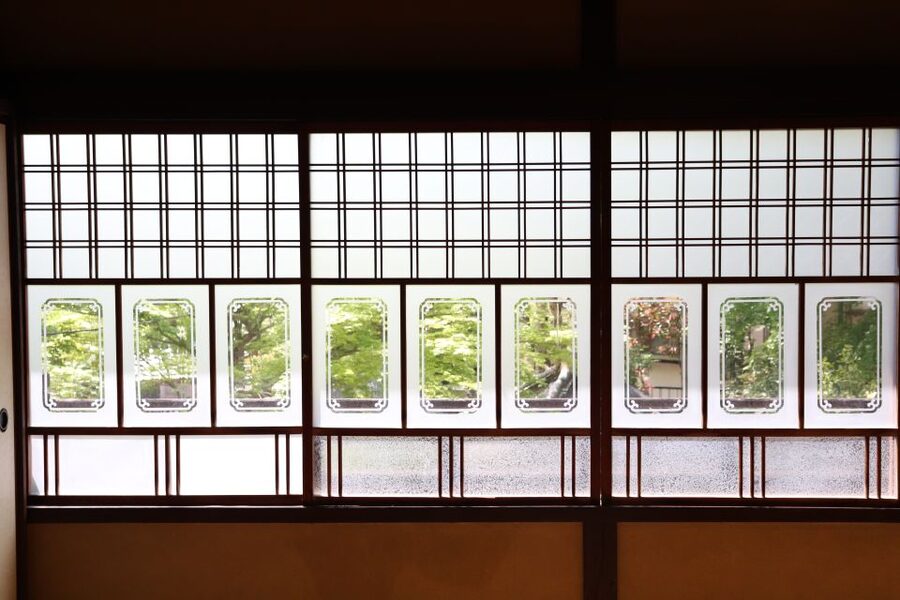
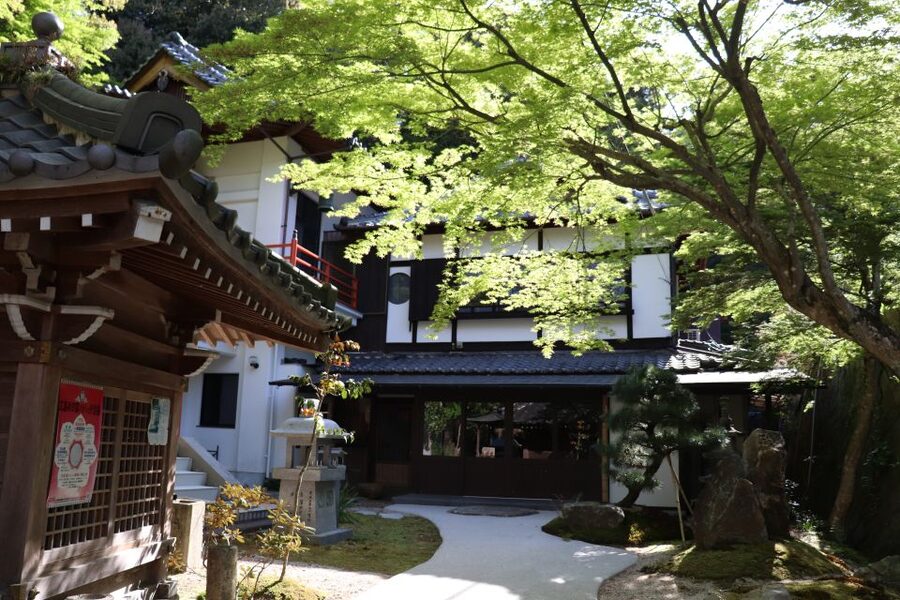
The setting also helps. Several people describe the temple and garden as peaceful, and that matters on a busy Miyajima day. You can step away from the main sightseeing route, slow down, and focus on one activity at a time.
The atmosphere is friendly rather than stiff. English instruction is available, and Yoko is specifically noted for speaking fluent English. Other instruction is offered in English or Japanese, so you can ask questions as you go.
Other temple visits near Japan we have written up
- Kyoto: Tea Ceremony Ju-An at Jotokuji Temple
★ 4.9 · 3,207 reviews - Osaka/Kyoto:Kinkakuji,Arashiyama,FushimiInariShrine,NaraPark
★ 4.1 · 1,596 reviews - Tokyo: Asakusa Walking Tour with Sensoji Temple Visit
★ 4.8 · 1,583 reviews
Choosing your kimono and getting dressed
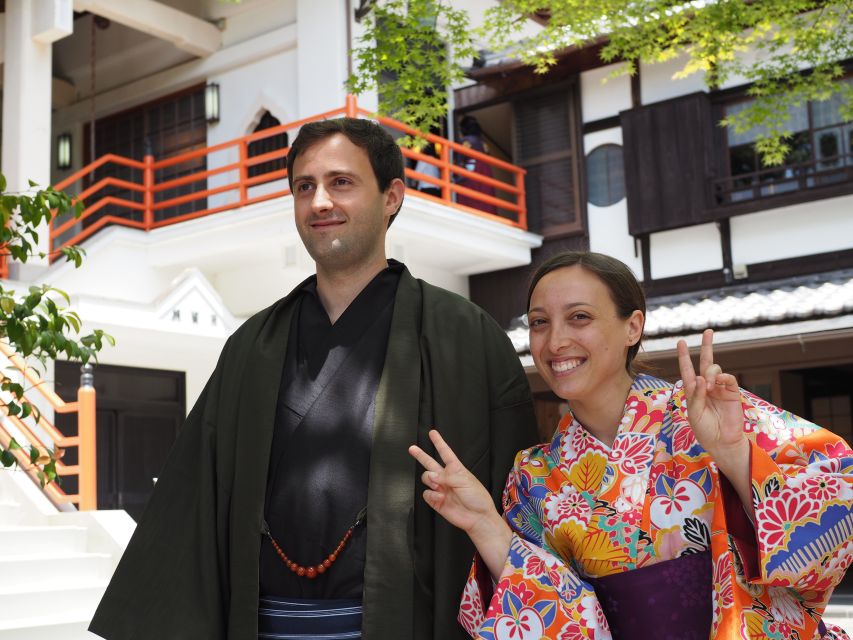
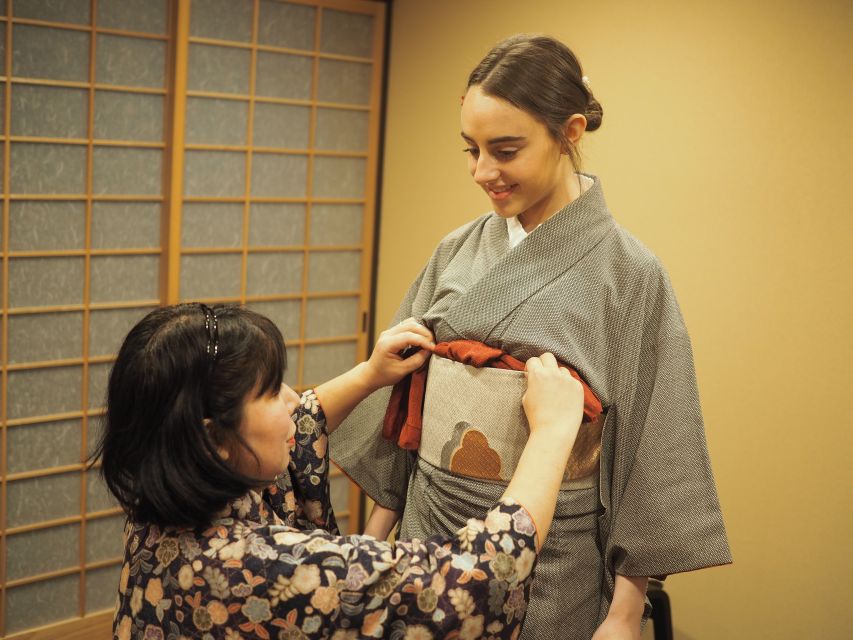
The experience begins with a practical pleasure: choosing what to wear. You select a kimono from the available collection, then staff help dress you and tie the obi. The obi is the wide sash that holds the outfit in place, and the final look depends greatly on how it is tied.
This is more than a quick costume change. The dressing process lets you see how many details go into wearing traditional Japanese clothing. Staff help select suitable scarves and obi colors, and they adjust the outfit so it looks right in photographs.
You should expect the clothing to feel formal and restrictive compared with everyday clothes. That is part of the point, but it may not suit anyone who dislikes being dressed by another person or standing for a period of time. The activity is also not recommended for people with limited mobility.
Once dressed, you can take pictures in the Japanese garden. Staff suggest good poses and take photographs themselves, so you do not need to rely entirely on a companion’s camera skills. The finished pictures are sent by email or provided by AirDrop on site.
Lighting can vary in the garden. If a photograph matters to you, ask staff to check the light on your face before taking a full set. The garden is a lovely backdrop, but even a beautiful setting cannot rescue a shadow across your eyes.
The tea ceremony, explained step by step
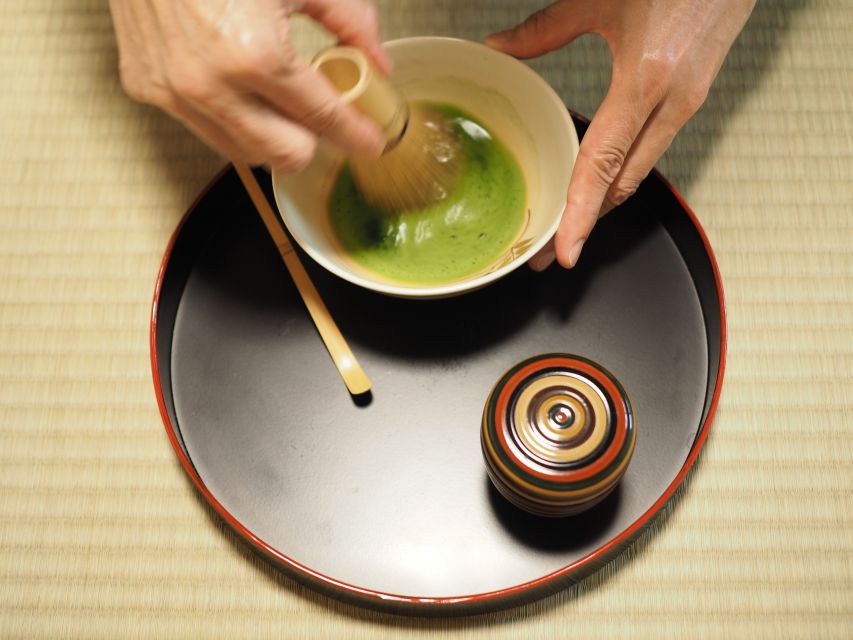
The tea ceremony is not simply a cup of matcha with a sweet. Its value comes from the order of the actions and the care given to each tool.
The ceremony begins with a greeting. The tea master then purifies the utensils, prepares the tea, cleans the tools, and formally closes the ceremony. You learn how to drink the matcha correctly and get a chance to prepare it yourself.
This is done in Ryurei style, using a table and chairs. That detail makes the activity more accessible than a traditional floor-based arrangement, especially if you are not comfortable kneeling. You receive two bowls of matcha and two types of sweets, so the tea portion feels like a real lesson rather than a quick sample.
The ceremony also gives you useful cultural context. Each movement has a purpose, and the instructor explains the symbolism and intent behind the process. I like this format because you do not have to pretend you already know the rules. You are shown what to do, then given time to try it.
Matcha has a strong, grassy flavor and a fine texture. The sweets provide a contrast, so try them as instructed rather than treating them as separate snacks. If you are mainly looking for a sweet drink, this may feel formal. If you want to understand why tea preparation is treated as a practice, it is one of the strongest parts of the visit.
Calligraphy that becomes your souvenir
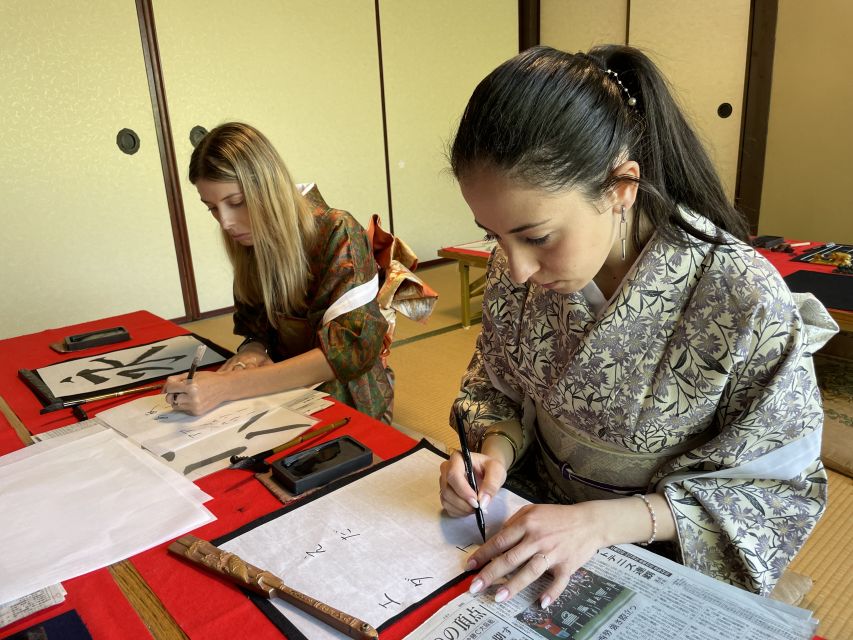
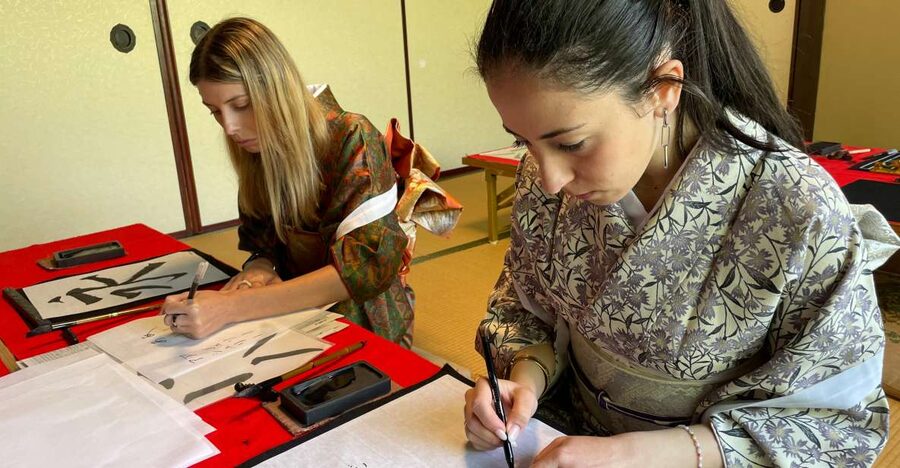
The calligraphy lesson is well suited to people who want to make something rather than simply watch. You receive the necessary tools and begin with step-by-step instruction on how to draw the lines.
You can practice one or more Kanji, the Chinese characters used in Japanese writing. The instructor also prepares a sample of your name. After working with Kanji, you practice writing your name in Japanese alphabet characters, using either Hiragana or Katakana.
This is a slow activity. You first work on practice paper, then create the finished version. You sign your work in Japanese and wrap it safely to take home.
The lesson is useful even if your handwriting is not artistic. The goal is not to produce a museum piece. It is to understand the order, pressure, and movement behind the characters, then leave with something you made yourself.
Calligraphy can be especially good for families with older children and teenagers. The instructor can encourage beginners without making the activity feel like a test. Children under six cannot take part, so check the age rule carefully before booking for a young family.
A different set of gates, same trip:
- Nikko: Kegon Falls, Lake Chuzenji & Toshogu Temple
★ 4.6 · 1,577 reviews - Tokyo: Nikko Toshogu Shrine and Kegon Waterfall Tour
★ 4.5 · 1,266 reviews - Tokyo Panoramic 1 Day: Meiji Shrine, Asakusa, Odaiba and SKYTREE®
★ 4.5 · 1,222 reviews - 1-Day Snow Monkeys, Zenko-ji Temple & Sake in Nagano
★ 5.0 · 1,020 reviews
Making an amulet from kimono fabric
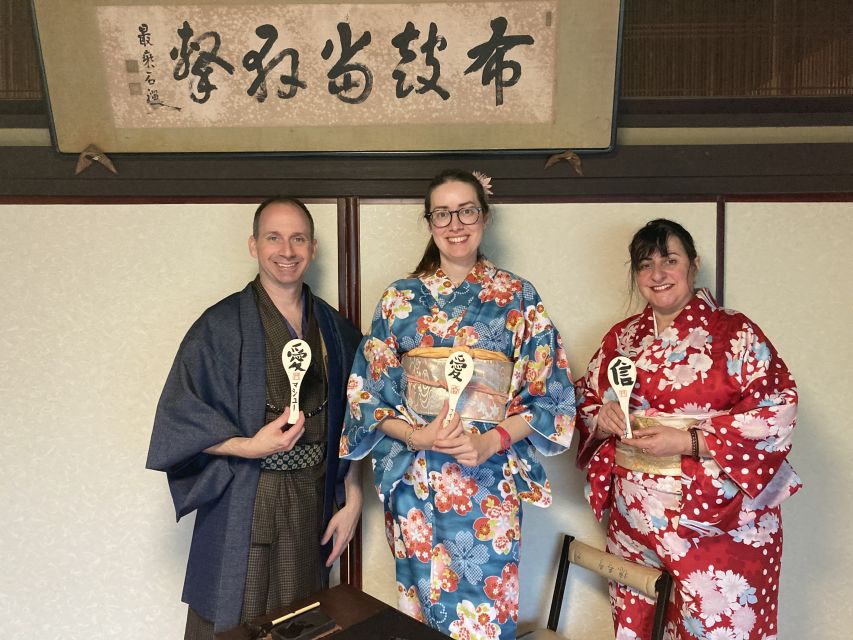
Amulet making is the most personal option. You choose from more than 300 amulet bags, all handmade from kimono fabric. The selection gives you room to choose a color and pattern that feels right to you rather than accepting a standard souvenir.
Next, you choose a Kumihimo cord. Kumihimo is a Japanese braided cord tied in a special way. You then select a wish and write or stamp it onto a small rice scoop, which carries the wish.
You assemble the fabric bag, cord, and rice scoop into one original amulet. When it is finished, you greet Kinseki Jizou, the temple’s Buddha, to report that you have come to make a wish.
This option works well if you want a souvenir with a clear connection to the place. A shop-bought charm may be attractive, but making your own lets you remember the decisions involved: the fabric, the cord, and the wish.
The amulet activity takes place in the temple’s main hall. If you are choosing between amulet making and calligraphy, think about what you want to bring home. Calligraphy gives you a piece of your own writing. The amulet gives you a small handmade object tied to a personal intention.
How the activities fit into one visit
The exact combination depends on the option you reserve. Some people choose kimono, tea ceremony, and calligraphy. Others add amulet making. The supplied activity details describe these as choices, so do not assume every booking includes every part.
A typical visit can include:
- Choosing and putting on a kimono
- Photographing the outfit in the garden
- Taking part in a tea ceremony and tasting matcha
- Practicing Japanese calligraphy
- Making a fabric amulet
- Receiving photos by email or AirDrop
The stated duration is one to two hours. Some sessions may run longer when the pace is relaxed, but you should not build a tight connection or timed attraction immediately afterward. Allow extra time if you want to enjoy the garden photos without rushing.
This is a small-group activity when that option is available. A smaller group makes it easier to ask questions and gives staff more time to help with dressing and photographs. The meeting point may differ depending on your selected option, so check the booking details rather than assuming every activity begins in the same place.
The value of $90 per person
At $90 per person, this is not the cheapest way to spend an hour on Miyajima. The price makes more sense if you use it as a cultural workshop and photo session, not as a simple kimono rental or tea tasting.
Your fee includes the calligraphy tools, two kinds of sweets, and two bowls of matcha. Depending on your chosen option, you also receive instruction, a handmade calligraphy piece or amulet, kimono dressing, garden photographs, and digital copies of pictures taken during the experience.
The strongest value comes from the amount of personal help involved. Staff dress you, explain procedures, correct your writing, guide your tea preparation, and take photographs. If you tried to arrange those pieces separately, you would spend more time managing details and less time enjoying the setting.
The value drops if you only want a quick photo in a kimono. In that case, a shorter dressing experience may suit you better. But if you want a guided activity with a souvenir and cultural explanation, the price is reasonable for a special stop on Miyajima.
What to wear and what to expect physically
Wear clothing that is easy to change out of. You must remove your shoes before entering, so clean socks are a sensible choice. The information provided does not specify footwear for the garden, so ask the staff what is appropriate when you arrive.
The kimono is carefully arranged and may feel snug. You will also spend time standing during dressing and moving around the temple and garden. For that reason, the activity is not recommended for people with mobility impairments.
The tea ceremony uses chairs, which helps, but the whole visit is not necessarily seated. The calligraphy lesson and amulet making require hand use and concentration. If you have a condition that affects standing, walking, or hand movement, consider that before paying.
Who will enjoy this experience most
I would recommend this for couples, families with children over six, solo visitors, and anyone who wants a quieter activity between Miyajima’s major sights.
It suits people who want photographs but also want to do something meaningful in the outfit. It is a good choice for first-time visitors who know little about tea ceremony or Japanese writing because the instruction begins with the basics.
Families can split their interests. One person may prefer calligraphy, another may like the amulet, and everyone can enjoy the kimono and garden photos. The calm pace also works well for mixed-age groups, including grandparents and teenagers.
It is less suitable if you dislike formal procedures, do not want to remove your shoes, or prefer an unstructured visit. It is also a poor fit for anyone trying to squeeze in a quick stop between fixed ferry or train times. Give yourself room to enjoy the experience.
Booking details worth checking
You can cancel up to 24 hours in advance for a full refund, and the reserve-now, pay-later option helps keep your schedule flexible. Starting times depend on availability.
Instruction is offered in English or Japanese. Small-group availability is listed, but you should check whether it applies to your selected time and activity.
Children under six cannot participate. Since the meeting point varies by option, read the exact directions attached to your booking. Plan to arrive with enough time to find the correct temple location, especially if this is your first visit to Miyajima.
Should you book Tokujuji Temple?
Book it if you want more than a photograph and a quick taste of matcha. The combination of kimono dressing, garden pictures, tea instruction, calligraphy, and amulet making gives you several ways to connect with Japanese customs in one well-paced visit.
I would choose the calligraphy option if you want the most obvious take-home keepsake. Choose amulet making if you prefer fabric, color, and a personal wish. Add the tea ceremony if you want to understand the quiet precision behind the ritual.
At $90, it deserves a place in your Miyajima budget rather than an impulse purchase. For many visitors, the kind staff, peaceful temple setting, carefully arranged kimono, and photos taken for you are the real reasons to go. Just confirm which activities your booking includes, allow up to two hours, and do not expect a fully accessible experience.
FAQ
Where does the experience take place?
The activities take place at Tokujuji Temple on Miyajima in Japan’s Chugoku Region.
How long does the experience last?
The experience lasts about one to two hours. Check availability for the specific starting times.
How much does the experience cost?
The stated price is $90 per person.
What cultural activities can I choose?
Depending on the option booked, you can take part in a tea ceremony, calligraphy lesson, amulet making, and traditional kimono dressing.
Is kimono rental included?
The experience includes choosing a kimono and being dressed for the activity, depending on the option selected.
What happens during the tea ceremony?
You learn the order of the ceremony, including greeting, purifying the tools, preparing matcha, cleaning the tools, and formally closing the ceremony. You also learn how to drink and make matcha.
What food and drink are included?
The experience includes two types of sweets and two bowls of matcha tea.
Can I take home my calligraphy?
Yes. You practice Kanji and your name in Hiragana or Katakana, sign your work, and wrap it so you can take it home.
How are the activity photos delivered?
Photos taken during the experience are sent by email or provided by AirDrop on site.
Is the experience suitable for young children or people with limited mobility?
Children under six cannot participate. The activity is not recommended for people with mobility impairments, and you must remove your shoes to enter.
Newly written up around Japan
- Kyoto: Fushimi Inari Taisha Shrine Walking Tour with Guide★ 4.8 · 18 reviews
- Kyoto: Fushimi Inari Shrine Walking Tour★ 5.0 · 72 reviews
- Tokyo History: Sensoji Temple & Asakusa District Private Tour★ 5.0 · 28 reviews
- From Tokyo: Snow Monkey Park & Zenko-ji Temple Private Tour★ 4.9 · 42 reviews
- Tokyo Private Tour: Temples, Culture & Modern City Highlights★ 5.0 · 56 reviews
- Osaka Temple Cool Foot Bath & Matcha Experience〈45min〉★ 4.9 · 82 reviews
- Food & Cultural Walking Tour around Zenkoji temple in Nagano★ 5.0 · 58 reviews
- Full Day Kyoto Tour : Bamboo Forest, Golden Temple, Fushimi Inari★ 5.0 · 84 reviews
Japan Temple Tours, compared.
Osaka/Kyoto:Kinkakuji,Arashiyama,FushimiInariShrine,NaraPark
Read our review →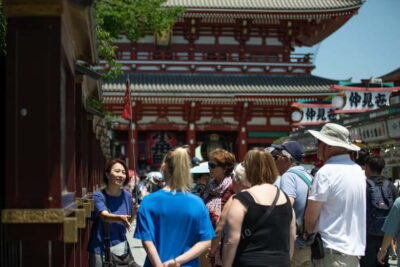
Asakusa Walking Tour with Sensoji Temple Visit
Read our review →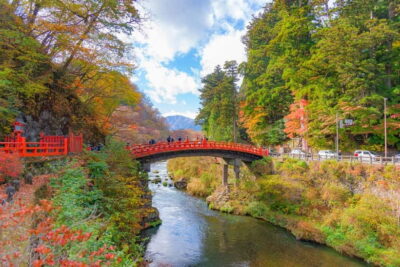
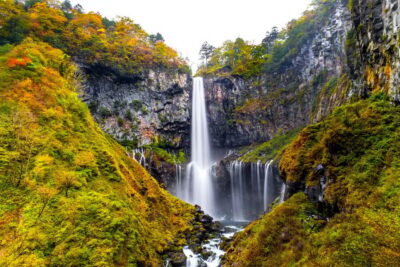
Nikko Toshogu Shrine and Kegon Waterfall Tour
Read our review →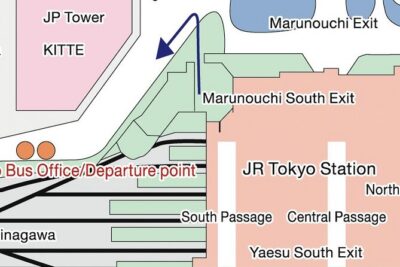
Tokyo Panoramic 1 Day: Meiji Shrine, Asakusa, Odaiba and SKYTREE®
Read our review →
1-Day Snow Monkeys, Zenko-ji Temple & Sake in Nagano
Read our review →
Arashiyama Bamboo, Temple, Monkeys, or Secret Sake Brewery
Read our review →Browse the lists this tour appears in