
Reviewed · JAPAN TEMPLE TOURS
Todaiji Temple, Kasuga Shrine and Nara Park Guided Full Tour
Nara’s best sights come together on foot in one well-packed morning, from deer wandering through Nara Park to the huge bronze Buddha inside Todaiji. Guide Artur adds more than dates and names, with practical insight into Japanese customs and daily life drawn from his years living in Japan.
I like the small group of eight and the fact that Todaiji and Kasuga Taisha admission are included. I also like the route’s variety: temple grandeur, forest paths, shrine lanterns, a pond pavilion, and open views from Nigatsu-do. The catch is simple: this is a walking tour with lots of stairs, so it is not a good fit if you have mobility limits.
Key points to know before booking
- Great Buddha at Todaiji: Enter one of Japan’s most important temple buildings and see the enormous 8th-century Daibutsu.
- Free-roaming Sika deer: Feed deer in Nara Park and see how closely daily life here is tied to the animals.
- Artur’s cultural commentary: Expect site information plus stories about Japanese customs and ordinary life.
- Six major stops in 5.5 hours: The schedule is full, with little room for a slow, unplanned wander.
- Tickets included, lunch extra: Todaiji and Kasuga Taisha admissions are covered, but you pay for your own meal and souvenirs.
- Walking and stairs: Comfortable shoes are essential, and strollers are not allowed.
Starting at Kintetsu Nara Station
The tour begins at Exit 2 of Kintetsu Nara Station, next to the fountain. That is a useful meeting point because you start near Nara’s main sightseeing area rather than spending your limited tour time on a long transfer.
You return to the same meeting point at the end. The experience lasts 5.5 hours, though exact starting times depend on availability. I would allow a little extra time before the start so you can locate Exit 2 without rushing.
This is a small-group outing, capped at eight participants. That size matters in Nara, where busy temple grounds and deer-filled paths can make a large group awkward. A small party also gives you a better chance to ask Artur about details that catch your eye.
Guiding is available in English, Russian, and Lithuanian. The supplied information also says the tour can accommodate more than one language at the same time, so confirm your language needs when booking.
Other temple visits near Japan we have written up
- Kyoto: Tea Ceremony Ju-An at Jotokuji Temple
★ 4.9 · 3,207 reviews - Osaka/Kyoto:Kinkakuji,Arashiyama,FushimiInariShrine,NaraPark
★ 4.1 · 1,596 reviews - Tokyo: Asakusa Walking Tour with Sensoji Temple Visit
★ 4.8 · 1,583 reviews
Nara Park and the deer
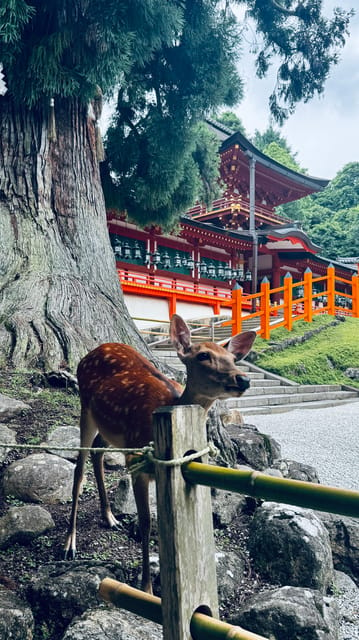
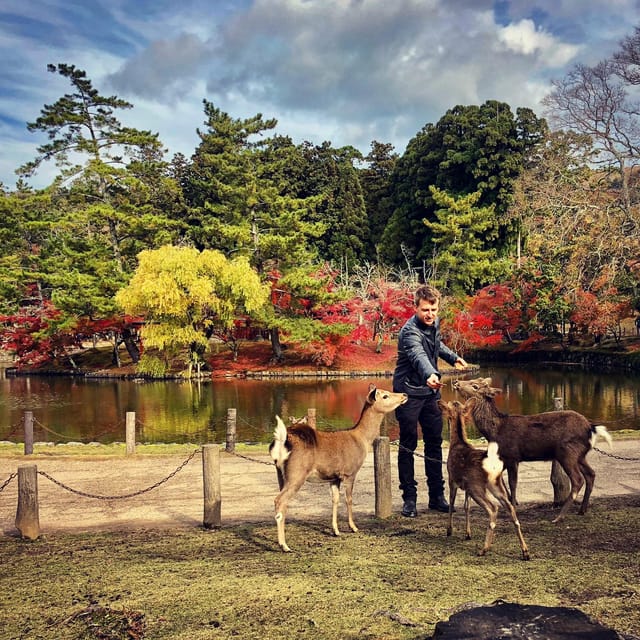
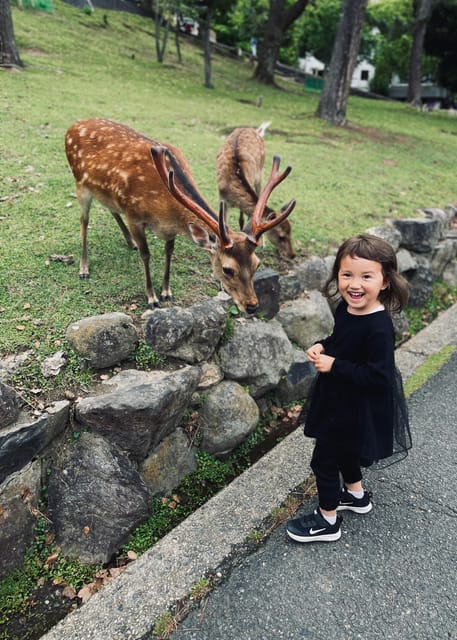
Nara Park is the tour’s most immediately charming stop. Sika deer roam freely among the trees, temple grounds, and paths, creating the unusual feeling that the animals are part of the town rather than an attraction kept behind fences.
You can feed the deer and take photographs. Bring cash, since it is listed as something to carry, and keep your attention on the animals while feeding them. The deer are accustomed to people, but this is still an outdoor animal encounter, not a staged show.
The park is especially attractive during cherry blossom season, although the tour description does not promise blossoms on any particular date. You will see a mix of natural scenery and historic religious sites rather than a single enclosed park.
I like beginning here because it gives you an easy introduction to Nara. Before the grand architecture, you see the city’s most memorable living symbols. Artur can also provide context for the connection between the deer and the area, giving this first stop more meaning than a quick photo break.
Do not expect a quiet, slow stroll through every corner of the park. The tour has several major stops ahead, so you will need to stay with the group and keep moving.
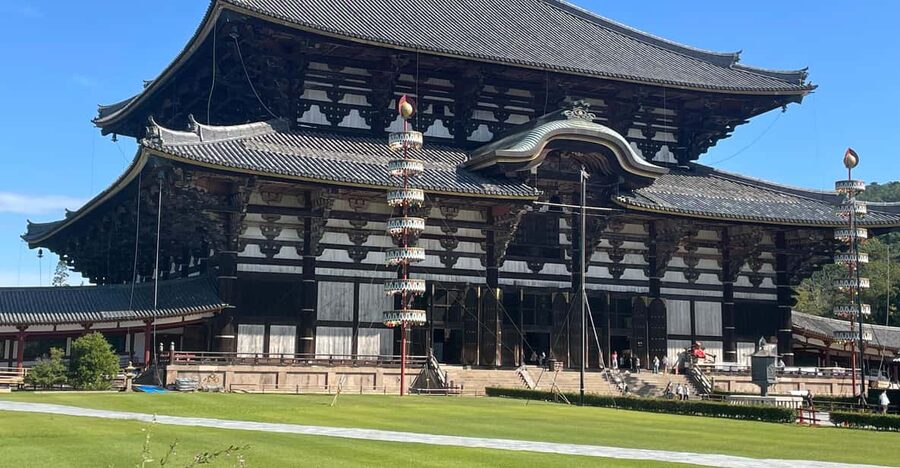
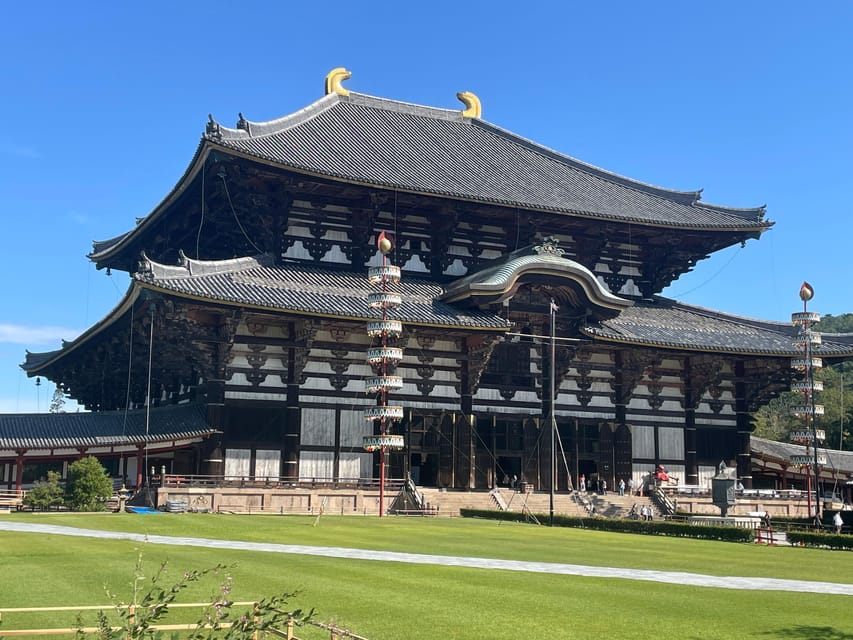
Todaiji and the Great Buddha
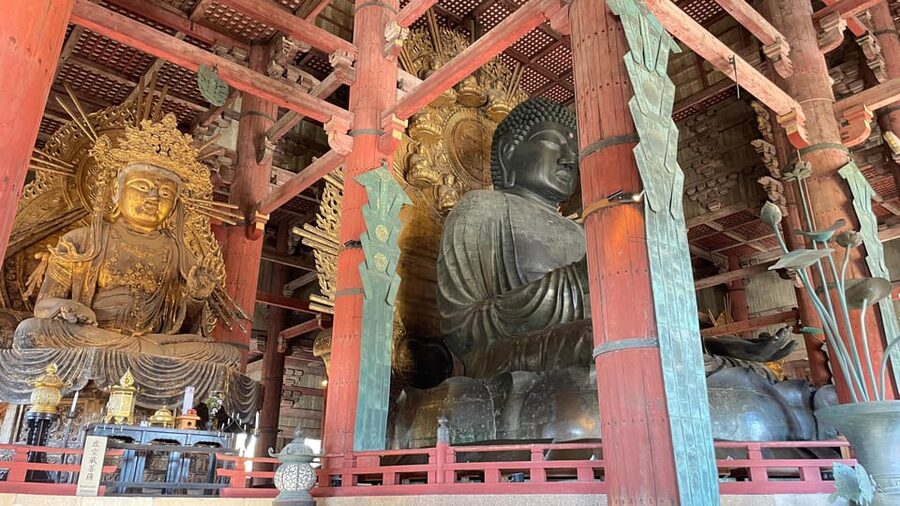
Todaiji is the central heavyweight of the route. The temple is home to the Great Buddha, known as the Daibutsu, a monumental statue made in the 8th century.
The statue is housed inside Japan’s largest wooden structure. That combination is what makes the visit so powerful: the building is vast, but the Buddha still dominates the interior. You are not simply looking at an old object in a display case. You are entering a working religious site built around a figure of enormous scale.
Admission to Todaiji is included, which improves the value of the tour. You avoid handling that part of the visit yourself, and Artur’s guided explanation can help you notice the religious and architectural details that are easy to miss when you only walk in, take a picture, and leave.
The stop is also likely to be one of the busier parts of the day. Todaiji is one of Nara’s best-known sights, so the small group will help, but it will not turn the temple into a private visit.
Give yourself room to look upward and take in the building before focusing on the Buddha. The scale is the point. A rushed visit can reduce this stop to a quick photograph, while a guided explanation helps turn it into the tour’s main cultural experience.
Nigatsu-do and views over Nara
Nearby Nigatsu-do adds a different mood. Rather than another enormous interior, you get an elevated temple setting and views across Nara.
The route includes stairs, and Nigatsu-do is one reason you should take the walking requirement seriously. The effort is worthwhile if you enjoy seeing a place from above, but it may be tiring after the earlier temple visit and the park walking.
This is a good place to pause and understand how Nara’s temples, wooded areas, and open spaces fit together. I would bring your camera here, but keep in mind that the tour continues through several more sites. You are getting a scenic stop within a larger route, not a long photography session.
The combination of Todaiji and Nigatsu-do works well. Todaiji gives you scale and ceremony. Nigatsu-do gives you air, height, and a broader view.
A different set of gates, same trip:
- Nikko: Kegon Falls, Lake Chuzenji & Toshogu Temple
★ 4.6 · 1,577 reviews - Tokyo: Nikko Toshogu Shrine and Kegon Waterfall Tour
★ 4.5 · 1,266 reviews - Tokyo Panoramic 1 Day: Meiji Shrine, Asakusa, Odaiba and SKYTREE®
★ 4.5 · 1,222 reviews - 1-Day Snow Monkeys, Zenko-ji Temple & Sake in Nagano
★ 5.0 · 1,020 reviews
Passing Mt. Wakakusa toward Kasuga Taisha
The route continues past Mt. Wakakusa toward Kasuga Taisha, also called Kasuga Shrine. This section shifts away from the huge temple buildings and into a more wooded setting.
Kasuga Taisha is known for vermilion-lacquered buildings and thousands of hanging lanterns. The color and lanterns create a strong contrast with the surrounding forest, and the shrine feels more secluded than the open areas of Nara Park.
The tour includes a Kasuga Taisha ticket, another useful saving within the $116 price. Artur guides you through the shrine rather than leaving you to guess which buildings and customs matter.
This is one of the stops where the guide’s broader cultural explanation can add real value. The strongest feedback about Artur focuses on his personal stories, Japanese customs, and the perspective of someone who has lived in Japan for several years. That kind of commentary helps connect the shrine’s rituals and design to life beyond the tourist route.
The phrase mystical atmosphere fits this stop better than it does the rest of the itinerary, but do not expect total solitude. The shrine is a major Nara sight. The appeal comes from the forest setting, lanterns, and sense of age, not from being alone.
Ukimido Pavilion at Sagi Pond
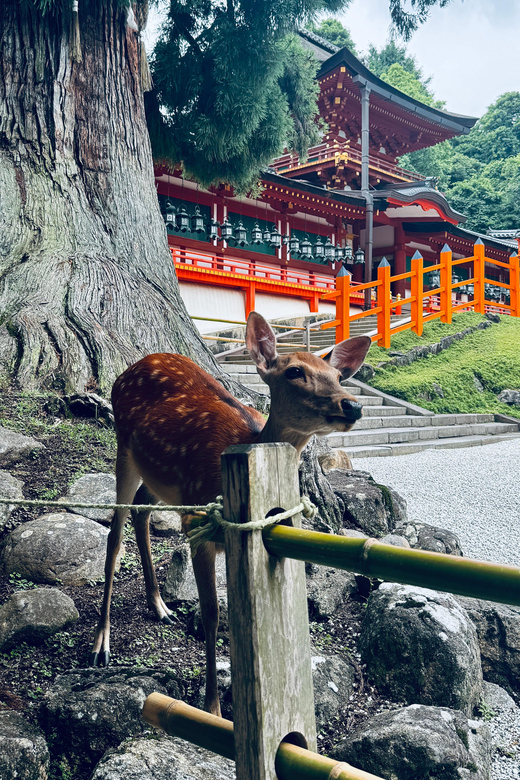
Ukimido Pavilion offers a change of pace. This hall appears to float above Sagi Pond in Nara Park, creating one of the gentler scenes on the route.
After the scale of Todaiji and the strong colors of Kasuga Taisha, Ukimido gives you time to look at Japanese architecture in relation to water. The pavilion is a visual stop, but it also provides a quieter moment to catch your breath.
I would not book this tour expecting long periods of unstructured reflection. The 5.5-hour schedule has a lot in it. Still, Ukimido is well placed as a calm pause between larger sites, and it shows that Nara’s appeal is not only about famous statues and shrine buildings.
The pavilion may be especially welcome if you enjoy composition and photography. Water, reflected architecture, and the surrounding park create a different kind of subject from the deer and temple interiors.
Kofukuji and the final temple stop
Kofukuji is the last major sightseeing stop before lunch and the return to Kintetsu Nara Station. Its origins reach back to the 7th century, and the complex is known for its striking pagoda and temple treasures.
This stop rounds out the day by showing another side of Nara’s religious heritage. Todaiji is the grand, monumental experience. Kasuga Taisha is the forest shrine. Kofukuji brings you back to a temple complex with an important pagoda and a long story of its own.
The order gives you plenty to compare: wooden halls, a bronze Buddha, vermilion shrine details, lanterns, water, and pagoda architecture. That variety is one of the tour’s strengths. You are not spending five and a half hours looking at similar buildings.
The schedule may feel full by this point. If you like lingering over every detail, a self-guided visit spread over a full day would give you more freedom. If you want to cover Nara’s key cultural sights in one organized route, the pace is useful.
What Artur adds to the experience
The guide can make or break a sightseeing route, especially one with several historic sites. Here, Artur is the person most strongly associated with the tour’s appeal.
His guiding goes beyond standard site facts. The feedback highlights insights into Nara and Japanese culture, practical recommendations, personal stories, and observations about everyday customs. His perspective as someone who has lived in Japan for several years can help you look at familiar scenes from a less obvious angle.
That does not mean every moment will be tailored to your personal interests. The group is small, but it is still a shared tour, and the route has a fixed list of stops. You should book this if you want conversation and explanation as you walk, rather than only transport between photo locations.
The guide languages are English, Russian, and Lithuanian. If you need one language in particular, check availability before paying.
Lunch, walking, and what to bring
Lunch comes after the sightseeing portion at a local restaurant, but it is not included in the $116 price. Budget separately for the meal, as well as souvenirs.
The phrase full tour can make this sound like a full-day outing, but the stated duration is 5.5 hours. It is best understood as a substantial half-day route with lunch included in the schedule but not in the price.
Wear comfortable shoes. The entire route is on foot, and there are lots of stairs. This is not suitable for people with mobility impairments, and baby strollers are not allowed.
Bring:
- Comfortable shoes
- A camera
- Cash
The cash recommendation is practical for food, souvenirs, or deer-related purchases, though the exact amount you may need is not specified.
Is $116 a fair price?
At $116 per person, this tour is not the cheapest way to see Nara. You could visit some public areas independently and build your own route. The value comes from the number of stops, the included admission to Todaiji and Kasuga Taisha, the small group, and Artur’s cultural guidance.
You are also paying for structure. Nara’s sights are spread across a large area, and it is easy to spend too long at one place or miss a less obvious stop. This itinerary keeps you moving from deer and temples to a shrine, pavilion, pagoda, and lunch.
The price makes more sense if you have limited time in Nara or want a guide who discusses Japanese life as well as architecture. It makes less sense if you prefer to set your own pace, eat wherever you choose, or spend an entire morning inside one temple.
Free cancellation up to 24 hours before the activity and the reserve-now, pay-later option reduce the risk of booking. Those policies are useful if your Kansai schedule is still changing.
Who should book this Nara tour?
I would recommend it to first-time visitors who want a strong introduction to Nara without arranging each temple separately. It also suits anyone who enjoys walking, asks questions, and wants cultural context rather than a list of dates.
It is a good match for solo visitors and couples who like small groups. A limit of eight keeps the outing more personal than a large coach tour, while still giving you the ease of an organized schedule.
You should think twice if you have difficulty with stairs, dislike walking for several hours, or want a relaxed day with plenty of free time. The route is active and full. It covers a lot, but it does not linger everywhere.
Should you book it?
Book this tour if you want Nara’s major sights in one carefully arranged walking route, with temple tickets handled and Artur’s cultural perspective along the way. The deer, Great Buddha, lantern-filled shrine, pond pavilion, and Kofukuji pagoda give you a satisfying range of experiences.
Skip it if your priority is independence or a slow pace. For most visitors with one day or less in Nara, though, the combination of small-group guiding, included admissions, and a broad route makes the $116 cost reasonable, provided you are ready for stairs and an extra lunch bill.
FAQ
Where does the tour start?
The tour starts at Exit 2 of Kintetsu Nara Station, next to the fountain.
Where does the tour end?
The activity ends back at the same meeting point.
How long does the tour last?
The tour lasts 5.5 hours. Starting times depend on availability.
Which languages are available?
Live guiding is available in English, Russian, and Lithuanian. The activity information also says that multiple languages can be accommodated at the same time.
Is lunch included?
No. Lunch is not included in the tour price.
Are temple admission fees included?
The Todaiji entrance ticket and Kasuga Taisha ticket are included.
How large is the group?
The tour is limited to eight participants.
Is the tour suitable for people with mobility impairments?
No. The route is entirely on foot and includes lots of stairs. Baby strollers are also not allowed.
Newly written up around Japan
- From Asakusa: Old Tokyo, Temples, Gardens and Pop Culture★ 5.0 · 47 reviews
- Goshuin Collecting tour at Asakusa Local Temples & Shrines, Tokyo★ 5.0 · 8 reviews
- Private guided tour: Mt. Aso volcano, grasslands, Aso Shrine★ 5.0 · 19 reviews
- Takayama Inari Shrine Tour with Private Transportation★ 5.0 · 5 reviews
- Tokyo: Snow Monkey and Zenkoji Temple Day Trip In Low Price★ 5.0 · 5 reviews
- Tokyo: Gotokuji Culture Walk & Lucky Cat Temple Experience★ 4.9 · 5 reviews
- :Tokyo,Shibuya /Meiji Shrine tour in KIMONO/English-friendly★ 5.0 · 4 reviews
- Tokyo: Sensoji Temple & Street Food: Private Tour with guide★ 4.6 · 8 reviews
Japan Temple Tours, compared.
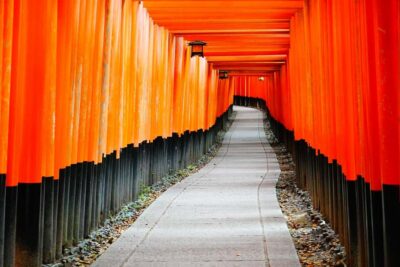
Osaka/Kyoto:Kinkakuji,Arashiyama,FushimiInariShrine,NaraPark
Read our review →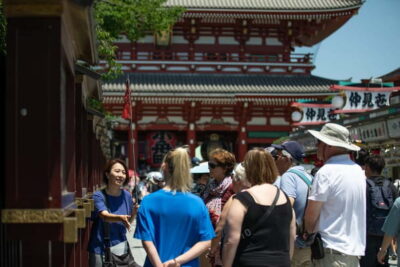
Asakusa Walking Tour with Sensoji Temple Visit
Read our review →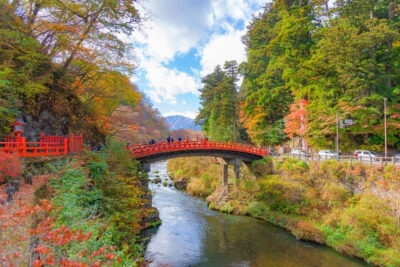
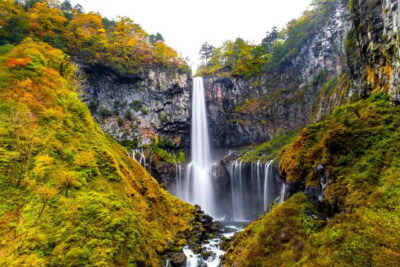
Nikko Toshogu Shrine and Kegon Waterfall Tour
Read our review →
Tokyo Panoramic 1 Day: Meiji Shrine, Asakusa, Odaiba and SKYTREE®
Read our review →
1-Day Snow Monkeys, Zenko-ji Temple & Sake in Nagano
Read our review →
Arashiyama Bamboo, Temple, Monkeys, or Secret Sake Brewery
Read our review →Browse the lists this tour appears in